

The wall construction in the stairwell shows bulging joints at the transitions between floors. I wonder if this is a technical necessity and unavoidable, or if the problem is related to poor workmanship.
The side walls in the stairwell are built from 100mm (4 inch) thick gypsum blocks with tongue and groove joints. These were leveled with approximately a 0.5mm (0.02 inch) layer of plaster, then covered with a non-woven wallpaper. The non-woven wallpaper was treated, and the bulges were repaired with a finishing plaster. The finish was supposed to meet Q3 quality standards. The entire surface was then treated against chalking and painted over. At the joints between floors (where the bulges are), only a perforated metal profile can be seen, which is typically used for corners in drywall construction.
When cutting open the wallpaper, the plaster crumbled completely, and the paint peeled off from the wallpaper. I am attaching some pictures and would appreciate your feedback. In my opinion, this issue is still subject to a claim.
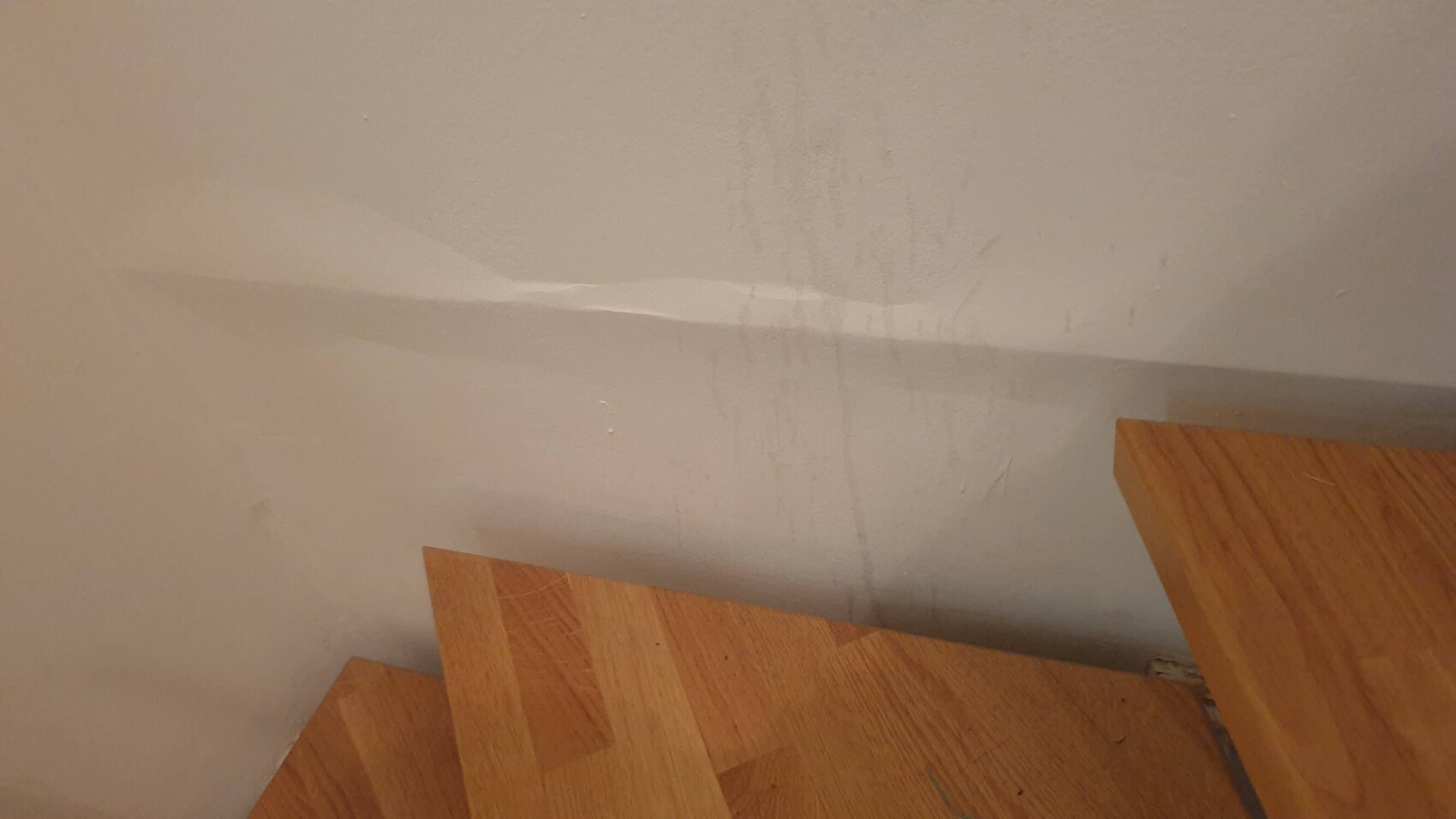
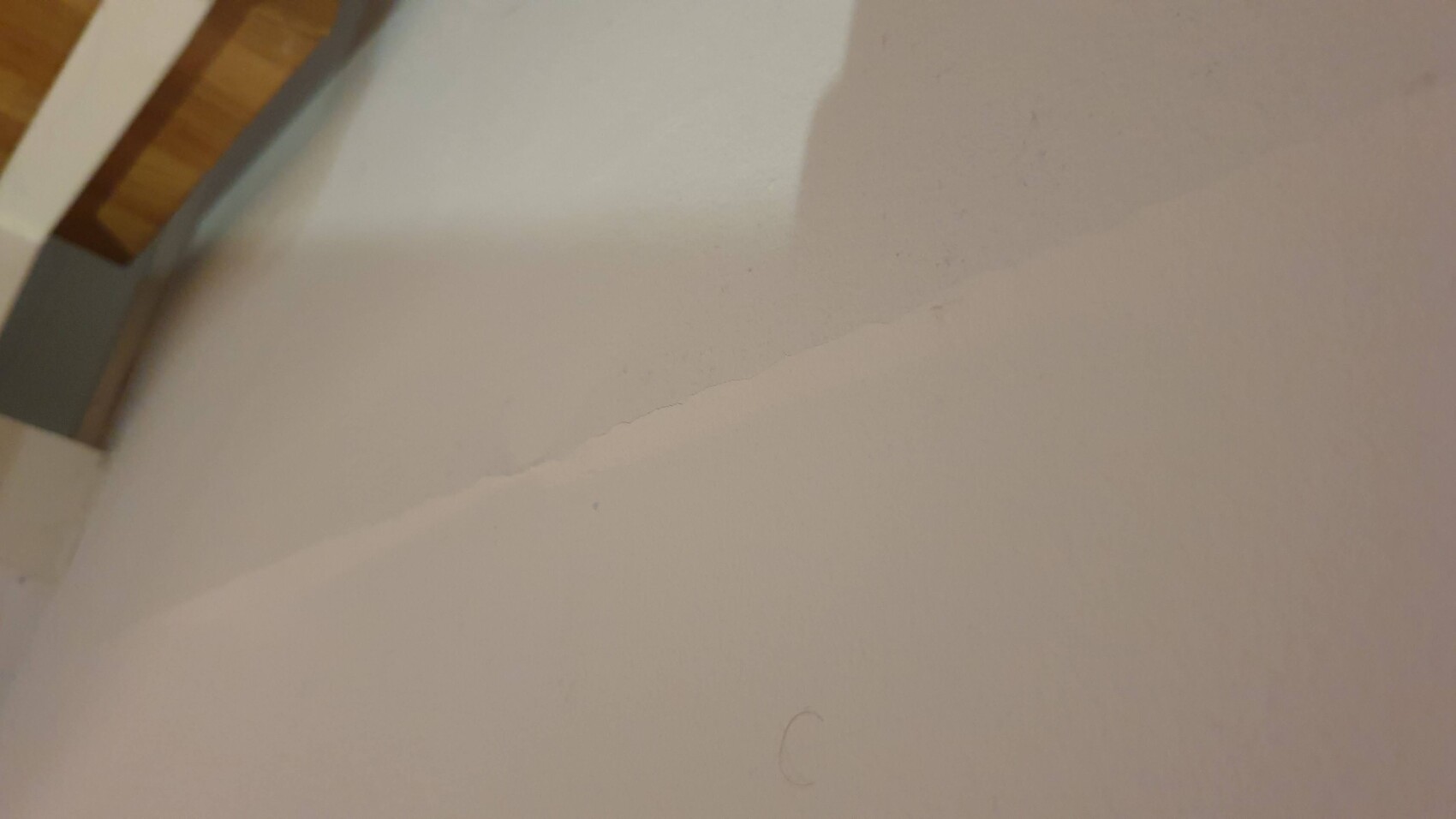
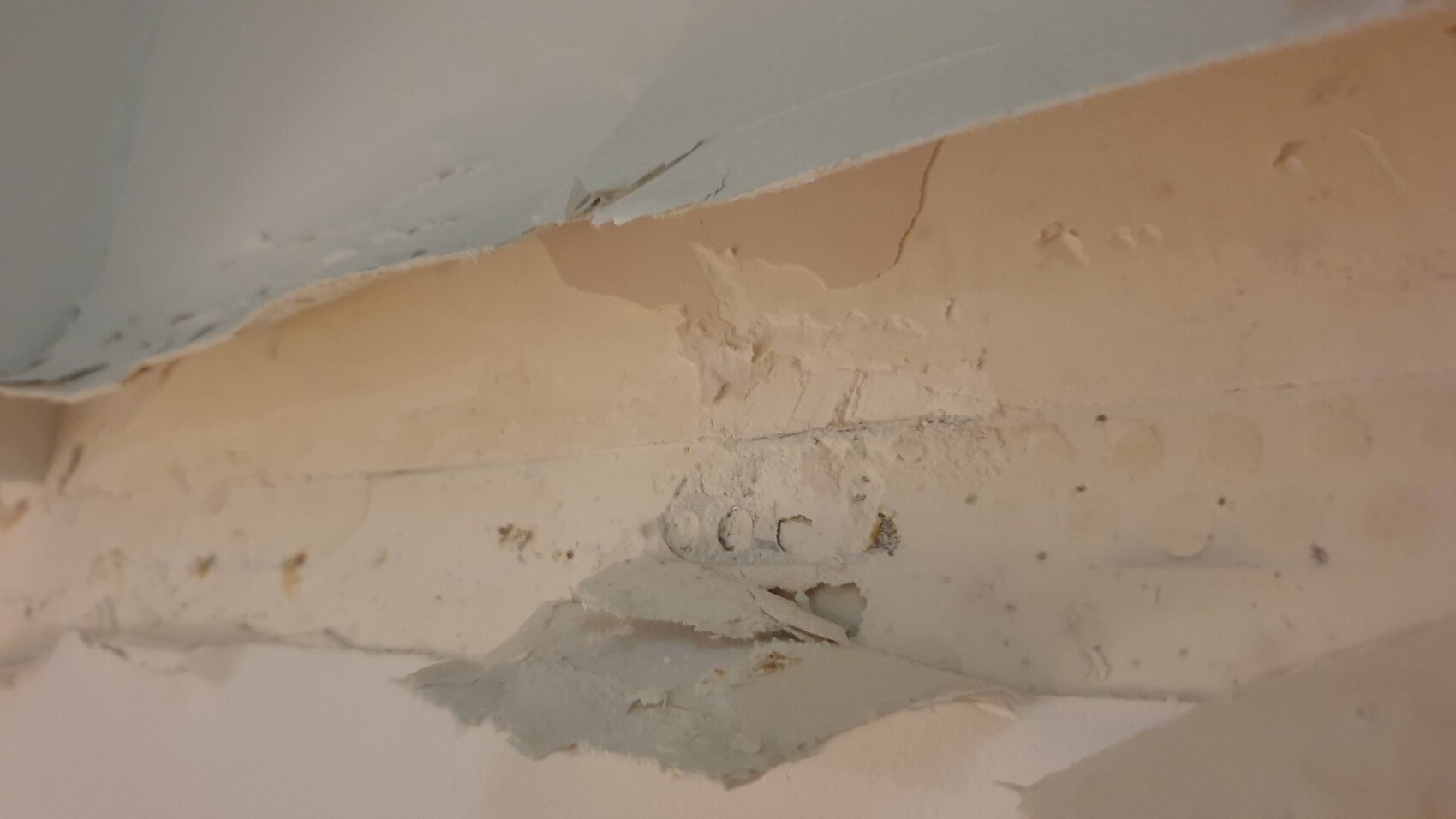
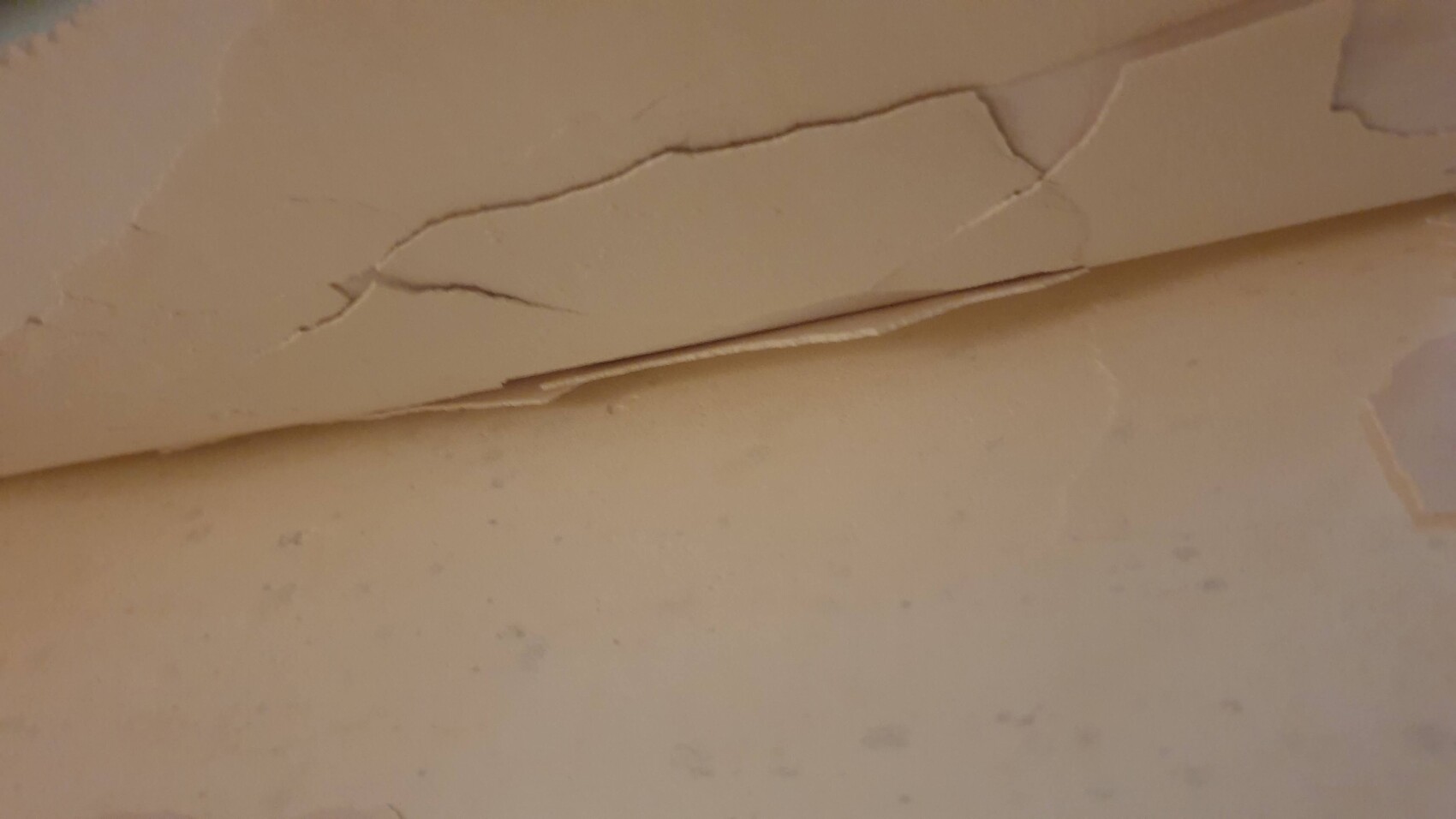
The side walls in the stairwell are built from 100mm (4 inch) thick gypsum blocks with tongue and groove joints. These were leveled with approximately a 0.5mm (0.02 inch) layer of plaster, then covered with a non-woven wallpaper. The non-woven wallpaper was treated, and the bulges were repaired with a finishing plaster. The finish was supposed to meet Q3 quality standards. The entire surface was then treated against chalking and painted over. At the joints between floors (where the bulges are), only a perforated metal profile can be seen, which is typically used for corners in drywall construction.
When cutting open the wallpaper, the plaster crumbled completely, and the paint peeled off from the wallpaper. I am attaching some pictures and would appreciate your feedback. In my opinion, this issue is still subject to a claim.

H
HilfeHilfe17 Jun 2021 05:32logo magepfusch, get rid of it........................?!?!? craftsman should come
N
nordanney17 Jun 2021 09:24Are you sure that was a tradesperson and not a butcher? It looks disastrous...
What is the purpose of an expansion joint? It looks as if the thin layer of filler is not adhering to the substrate. For example, the wrong material might have been used for filling. I have seen on construction sites where gypsum plaster was used for filling. Why is the aluminum corner bead placed there?
Similar topics