
ᐅ Poor workmanship on the interior staircase, or is this something I just have to accept?
Created on: 6 Jan 2024 11:18
B
Berlinho2
Hello dear forum,
I am at the final stage of my construction project with a general contractor.
Yesterday, my interior staircase was installed, and I was really shocked by the quality, appearance, and the staircase builder’s decision to install everything exactly like this.
I want to set aside the “Frankenstein” look for now, since the staircase builder says we approved it this way, but I believe that nowhere in the world would anyone “voluntarily” approve something like this.
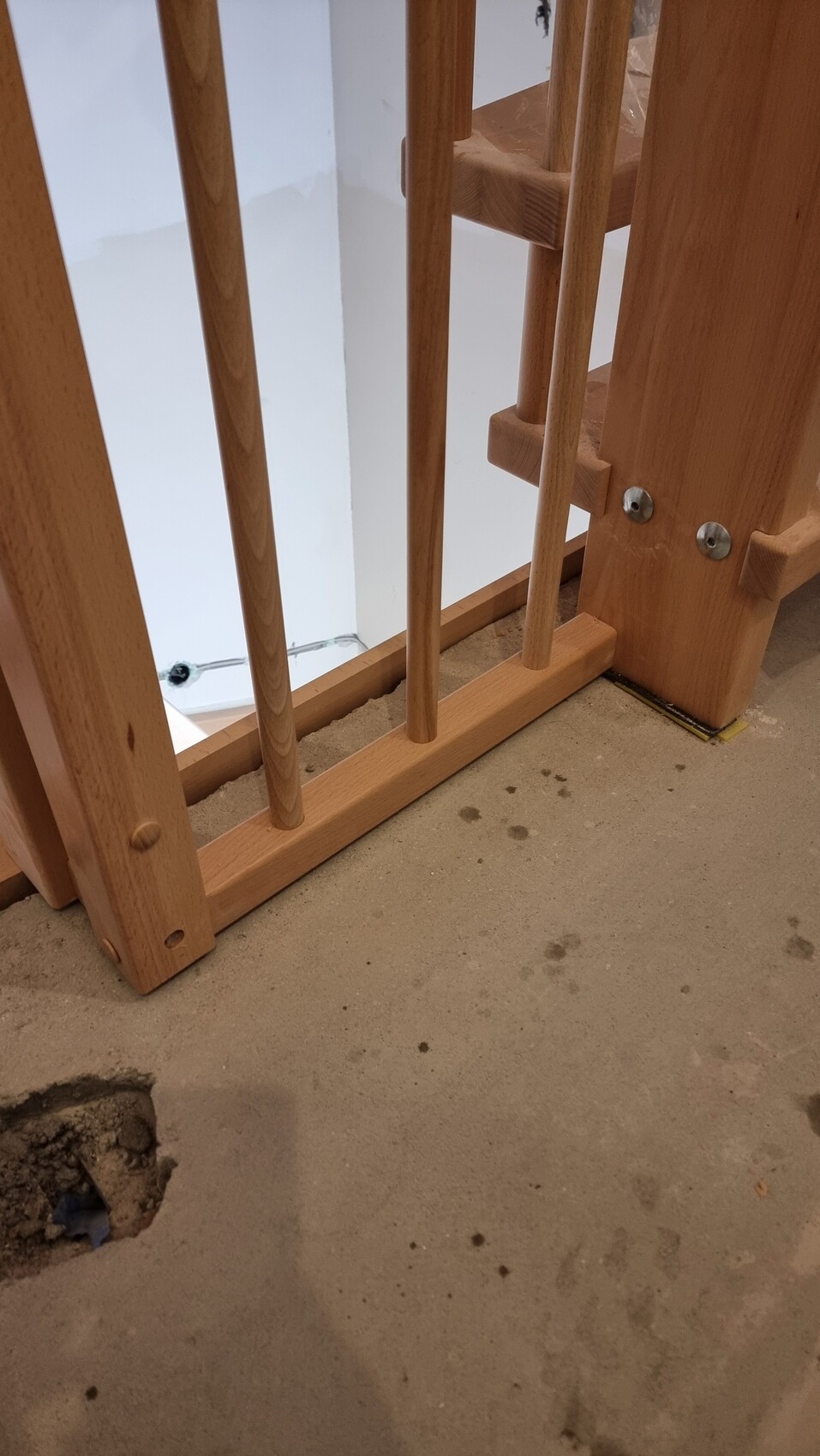
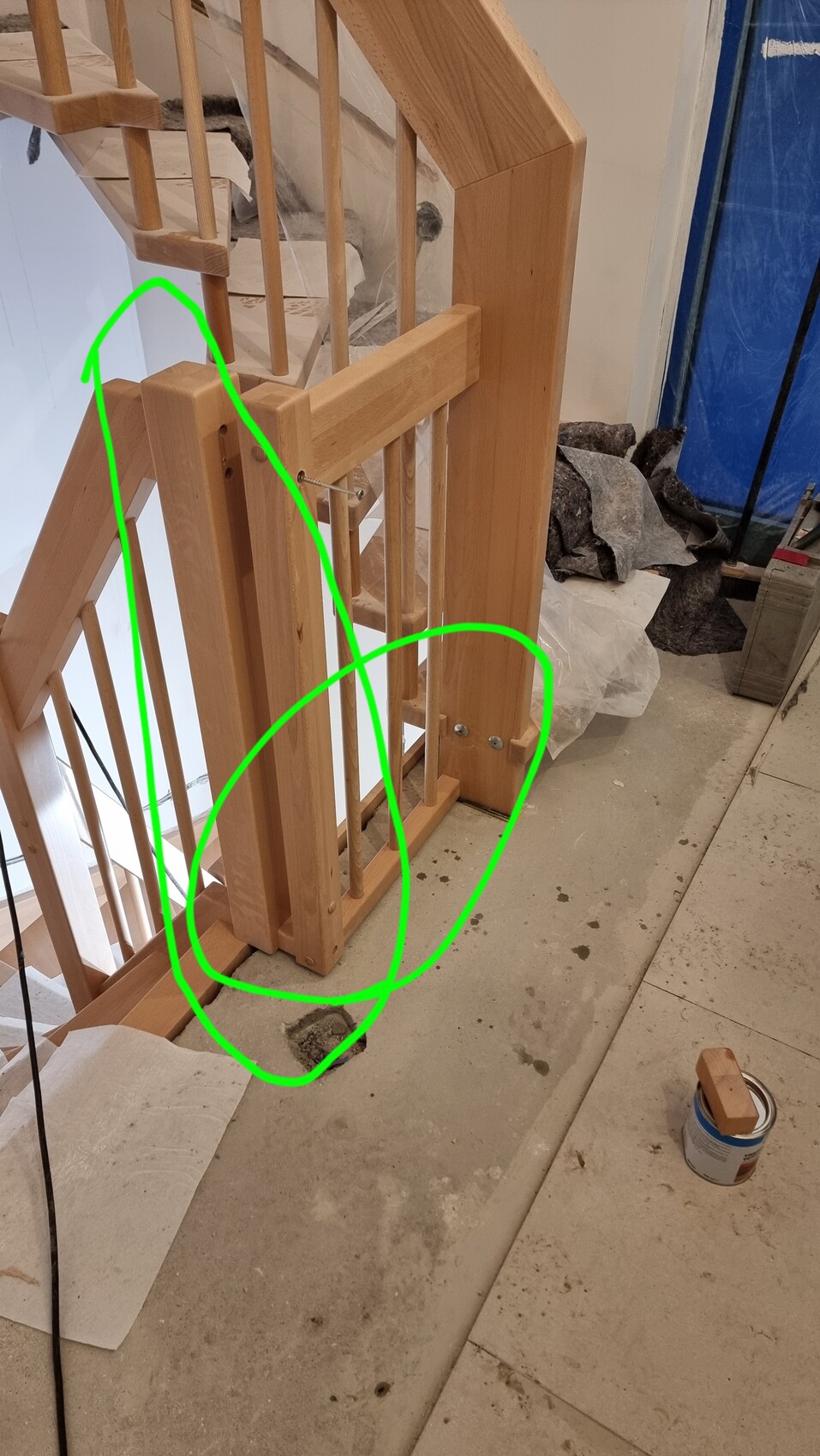
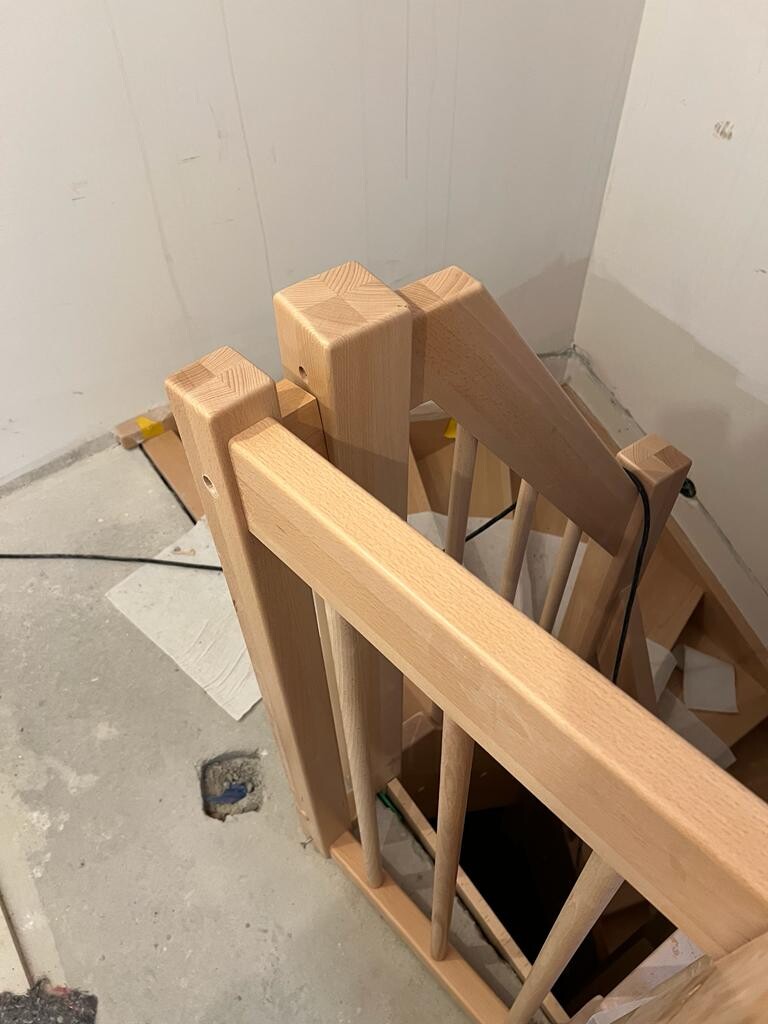
What really bothers me right now is this unbelievably ugly railing structure on the ground floor with posts of different sizes and this unnecessary grated dust barrier between the stair stringer and the railing itself. I have never seen anything like this and never expected that with a new build, despite detailed measurements and enough planning and preparation time by the staircase builder/carpenter, such an on-site improvisation would have to be accepted in the end.
Is this already poor workmanship, or is this something one has to accept?
No payment has been made yet, as a retention is in place and the general contractor is still owed significantly more money overall than the value of the services delivered.
Thank you very much for your assessments.

I am at the final stage of my construction project with a general contractor.
Yesterday, my interior staircase was installed, and I was really shocked by the quality, appearance, and the staircase builder’s decision to install everything exactly like this.
I want to set aside the “Frankenstein” look for now, since the staircase builder says we approved it this way, but I believe that nowhere in the world would anyone “voluntarily” approve something like this.
What really bothers me right now is this unbelievably ugly railing structure on the ground floor with posts of different sizes and this unnecessary grated dust barrier between the stair stringer and the railing itself. I have never seen anything like this and never expected that with a new build, despite detailed measurements and enough planning and preparation time by the staircase builder/carpenter, such an on-site improvisation would have to be accepted in the end.
Is this already poor workmanship, or is this something one has to accept?
No payment has been made yet, as a retention is in place and the general contractor is still owed significantly more money overall than the value of the services delivered.
Thank you very much for your assessments.
X
xMisterDx9 Jan 2024 12:55Hmm, no?
Google says that the payment is made if the client fails to pay despite being requested to do so.
As I said, if the client’s approval were required for that, this guarantee would make no sense for the general contractor.
That’s exactly why he wants this guarantee. Because, at the end of the construction, the client sometimes simply runs out of money and cannot pay… or withholds large amounts due to minor defects.
What I mean is: Once you have this guarantee, you basically have no leverage because the general contractor gets paid. It’s a misconception that the contractor is missing €11,000 (about $12,000) and must do everything to get this money from the client, even if it means ordering a new staircase. That’s not true.
Google says that the payment is made if the client fails to pay despite being requested to do so.
As I said, if the client’s approval were required for that, this guarantee would make no sense for the general contractor.
That’s exactly why he wants this guarantee. Because, at the end of the construction, the client sometimes simply runs out of money and cannot pay… or withholds large amounts due to minor defects.
What I mean is: Once you have this guarantee, you basically have no leverage because the general contractor gets paid. It’s a misconception that the contractor is missing €11,000 (about $12,000) and must do everything to get this money from the client, even if it means ordering a new staircase. That’s not true.

Well, the bank will certainly verify the construction progress before they actually release any funds. They won’t do it blindly. However, whether they do this by contacting the client, an expert, or simply based on photos from the contractor, I don’t know.
I can well imagine that, for example, a defect report from a certified inspector could quickly stop such a payment.
That’s the general situation.
In this specific case, I’m afraid it will probably be considered a cosmetic defect. Because if there is no record of the sample selection process and no detailed planning, then it’s just one statement against another, and the construction standard of the general contractor (GC, or main contractor, whatever the term) will likely apply. And they will simply claim that this is the standard.
To my knowledge, the statements of a couple do not carry much weight; in case of doubt, you are regarded as one party (but I’m just an amateur, not an expert).
I can well imagine that, for example, a defect report from a certified inspector could quickly stop such a payment.
That’s the general situation.
In this specific case, I’m afraid it will probably be considered a cosmetic defect. Because if there is no record of the sample selection process and no detailed planning, then it’s just one statement against another, and the construction standard of the general contractor (GC, or main contractor, whatever the term) will likely apply. And they will simply claim that this is the standard.
To my knowledge, the statements of a couple do not carry much weight; in case of doubt, you are regarded as one party (but I’m just an amateur, not an expert).
xMisterDx schrieb:
He wants this guarantee precisely for that reason. Because sometimes, at the end of the construction, the client simply runs out of money and can’t pay... or because they withhold huge amounts due to minor defects. But actually, the opposite is true. The guarantee is issued by the general contractor (GC) in the client’s name, so the client does not withhold the usual 5%. The relevant document is handed over to the client, and the guarantee can only be released once it is returned. It goes without saying that the GC has claims against the client if the guarantee is withheld without justification.
J
jens.knoedel9 Jan 2024 17:31A bit of clarity on guarantees (BÜ) from a banker’s perspective:
1. Guarantees issued in Germany are usually unconditional surety bonds with waiver of defenses.
2. The guarantee is equivalent to cash.
3. The beneficiary of the guarantee can demand payment at any time (!!!) without giving any reason (!!!) (if the guarantee is structured as described in point 1, which is the standard case).
4. The bank or insurance company providing the guarantee does not check anything at all. They don’t have to, since there is a clearly defined guarantee contract stating “payable on first demand.”
5. The bank then recovers the money from the party who requested the guarantee.
6. If the guarantee was called unlawfully, legal action must be taken between the guarantor and the beneficiary.
And finally: This is impossible. The client commissions the bank (if they are to provide the guarantee) or the contractor (if they are to provide the guarantee). A guarantee is like a loan. Creditworthiness is also checked or reviewed.
1. Guarantees issued in Germany are usually unconditional surety bonds with waiver of defenses.
2. The guarantee is equivalent to cash.
3. The beneficiary of the guarantee can demand payment at any time (!!!) without giving any reason (!!!) (if the guarantee is structured as described in point 1, which is the standard case).
4. The bank or insurance company providing the guarantee does not check anything at all. They don’t have to, since there is a clearly defined guarantee contract stating “payable on first demand.”
5. The bank then recovers the money from the party who requested the guarantee.
6. If the guarantee was called unlawfully, legal action must be taken between the guarantor and the beneficiary.
Pacmansh schrieb:
The guarantee is issued by the general contractor in the name of the client
And finally: This is impossible. The client commissions the bank (if they are to provide the guarantee) or the contractor (if they are to provide the guarantee). A guarantee is like a loan. Creditworthiness is also checked or reviewed.
jens.knoedel schrieb:
And finally: Something like this is impossible. I probably mixed up the terms. It should have said the developer, not the general contractor. Because I actually have that exact situation.
In my case, there is a developer = builder and a buyer = me. The developer has entered into a surety bond with an insurance company, which includes a payment guarantee in the form of an independent suretyship from the insurance company in my favor to secure that the developer completes the work on time and without significant defects.
Here, the term general contractor is also being used, so maybe the situation is different in that case. If so, I apologize for causing any confusion.
Both situations exist. One is a guarantee from the construction company to you, usually covering the 10% retention amount you are entitled to hold back under the building code, so that you don’t withhold payment but pay out because you have the guarantee.
Then there is also the case where the company requires a guarantee from you to ensure they actually receive the payment.
Based on the explanations by @jens.knoedel, I personally wouldn’t sign that anymore.
In my case, it went well. The guarantee (the second one) was included in my contract too, but the general contractor never actually demanded it. They probably didn’t even realize it was in the contract. Haha
Then there is also the case where the company requires a guarantee from you to ensure they actually receive the payment.
Based on the explanations by @jens.knoedel, I personally wouldn’t sign that anymore.
In my case, it went well. The guarantee (the second one) was included in my contract too, but the general contractor never actually demanded it. They probably didn’t even realize it was in the contract. Haha
Similar topics