
ᐅ Poor workmanship on the interior staircase, or is this something I just have to accept?
Created on: 6 Jan 2024 11:18
B
Berlinho2
Hello dear forum,
I am at the final stage of my construction project with a general contractor.
Yesterday, my interior staircase was installed, and I was really shocked by the quality, appearance, and the staircase builder’s decision to install everything exactly like this.
I want to set aside the “Frankenstein” look for now, since the staircase builder says we approved it this way, but I believe that nowhere in the world would anyone “voluntarily” approve something like this.
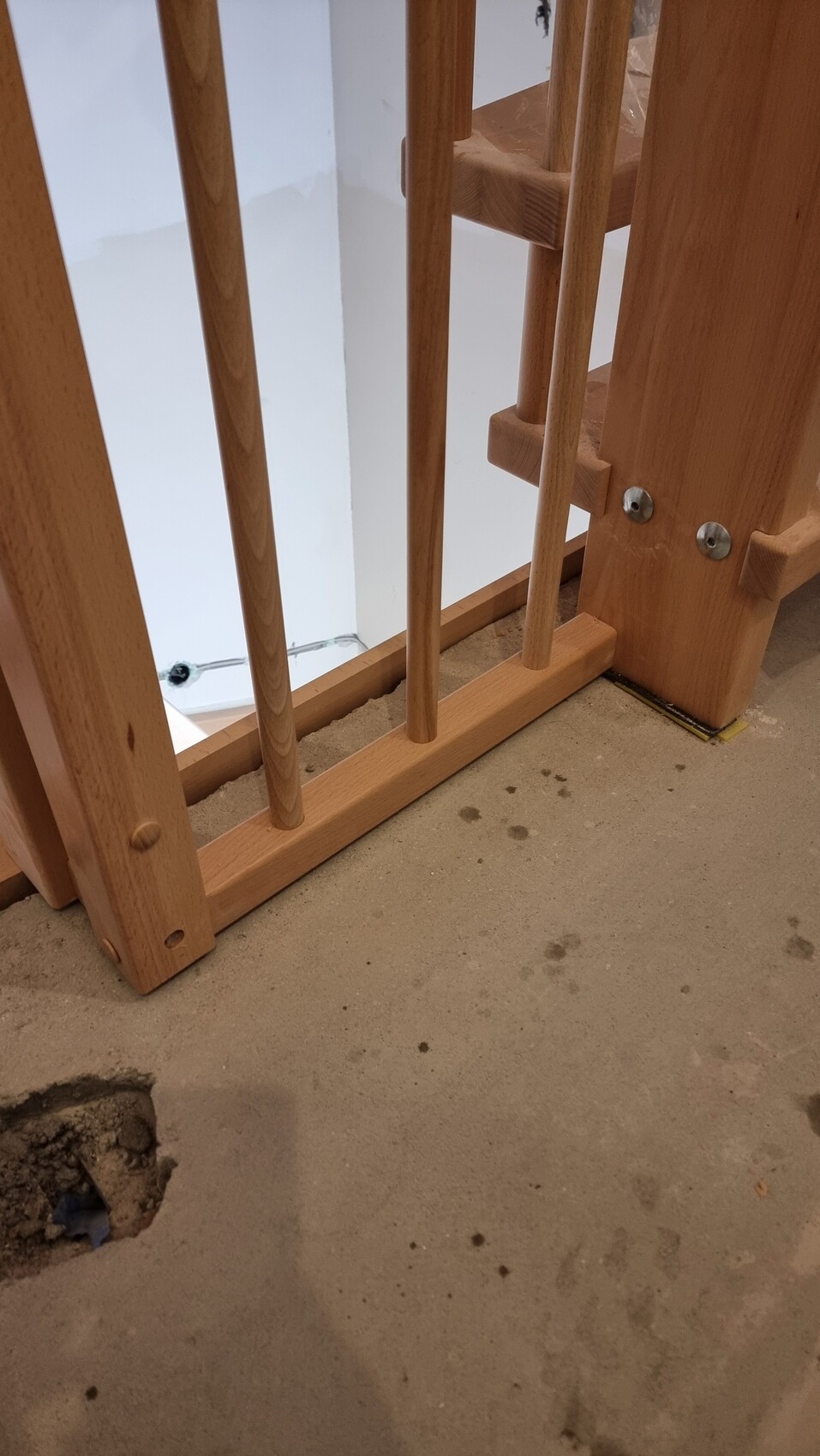
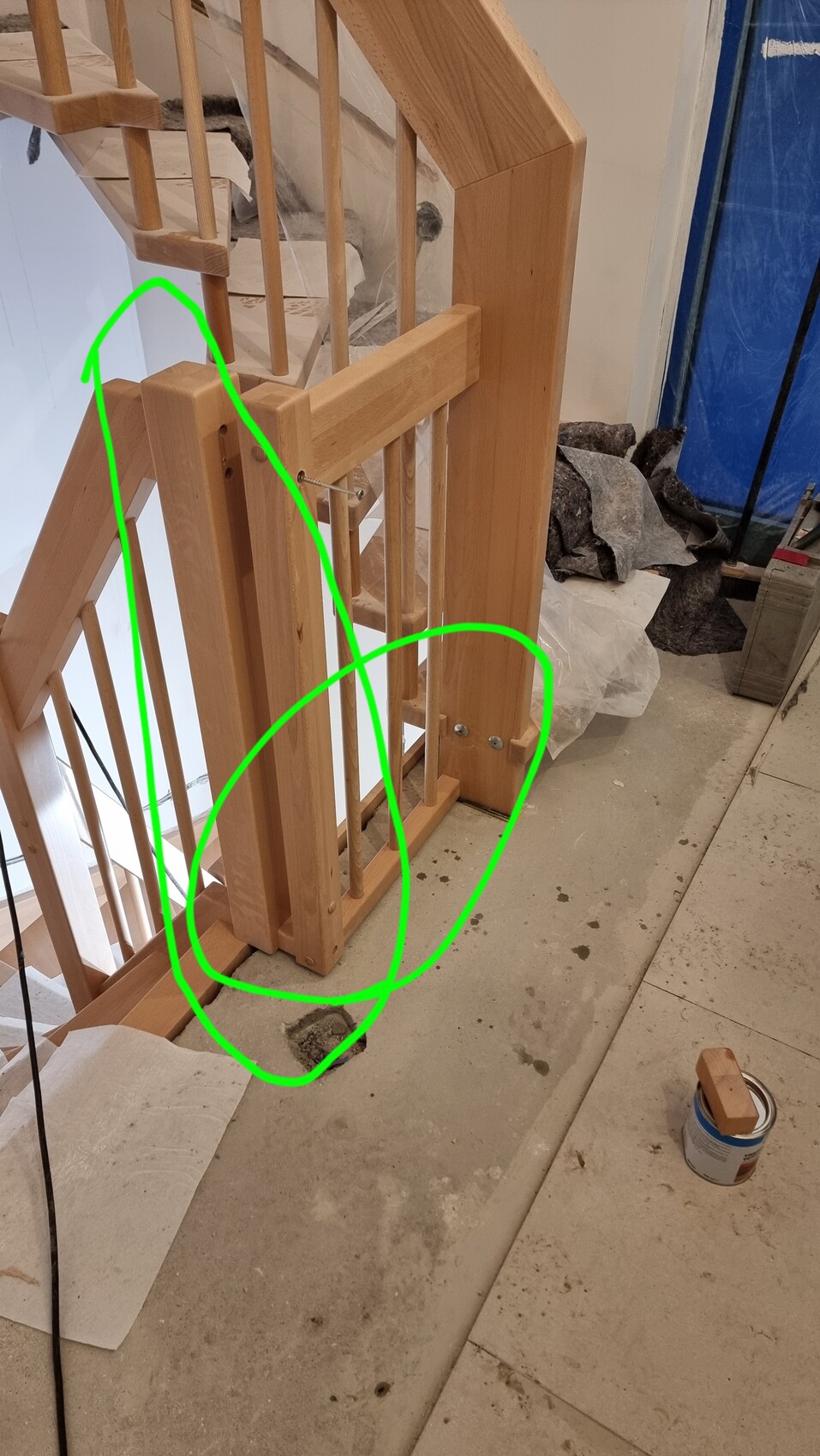
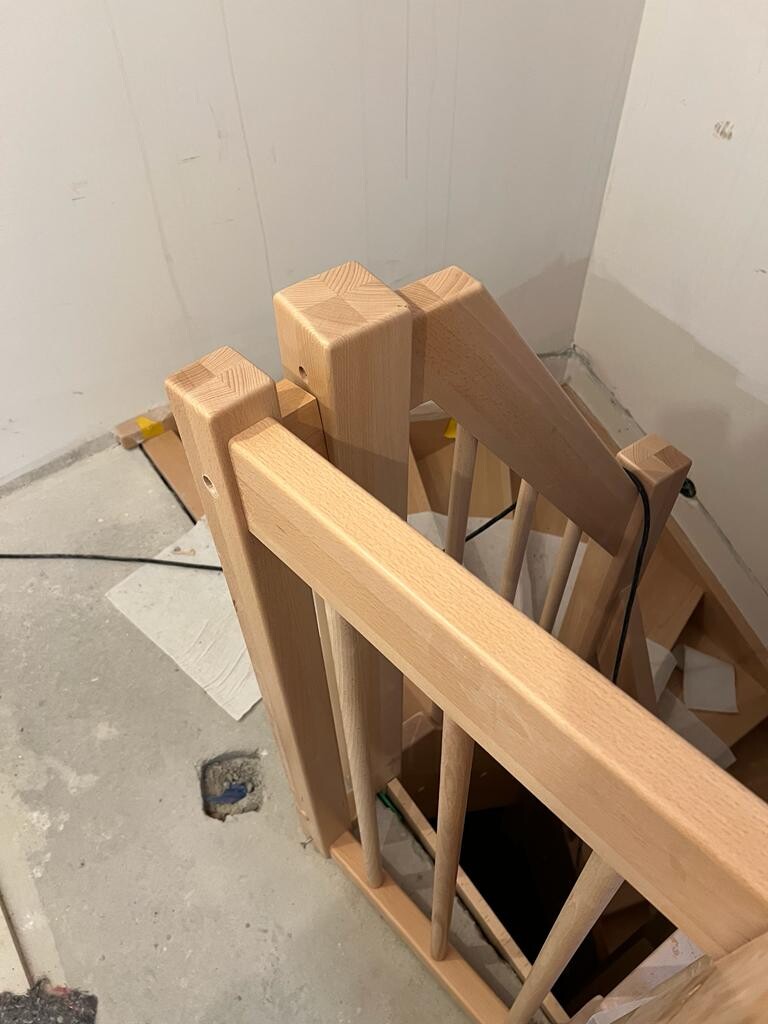
What really bothers me right now is this unbelievably ugly railing structure on the ground floor with posts of different sizes and this unnecessary grated dust barrier between the stair stringer and the railing itself. I have never seen anything like this and never expected that with a new build, despite detailed measurements and enough planning and preparation time by the staircase builder/carpenter, such an on-site improvisation would have to be accepted in the end.
Is this already poor workmanship, or is this something one has to accept?
No payment has been made yet, as a retention is in place and the general contractor is still owed significantly more money overall than the value of the services delivered.
Thank you very much for your assessments.

I am at the final stage of my construction project with a general contractor.
Yesterday, my interior staircase was installed, and I was really shocked by the quality, appearance, and the staircase builder’s decision to install everything exactly like this.
I want to set aside the “Frankenstein” look for now, since the staircase builder says we approved it this way, but I believe that nowhere in the world would anyone “voluntarily” approve something like this.
What really bothers me right now is this unbelievably ugly railing structure on the ground floor with posts of different sizes and this unnecessary grated dust barrier between the stair stringer and the railing itself. I have never seen anything like this and never expected that with a new build, despite detailed measurements and enough planning and preparation time by the staircase builder/carpenter, such an on-site improvisation would have to be accepted in the end.
Is this already poor workmanship, or is this something one has to accept?
No payment has been made yet, as a retention is in place and the general contractor is still owed significantly more money overall than the value of the services delivered.
Thank you very much for your assessments.

Well, to be honest, the lightweight staircase should have been installed completely after the tiling work was finished. That was the case with me.
He probably just had time and wanted to get the job done quickly.
It looks like a standard general contractor’s staircase.
The stair builder my general contractor used would probably have done it similarly. Since the desired pattern options were about twice as expensive, I had that part removed from the scope of work.
I then found a pretty good stair builder from Poland with a sales office in Berlin.
Sorry to hear things are going so poorly for you now. I’m afraid you may have a hard time claiming genuine workmanship defects.
You should talk to the tiler about whether they can lay the tiles directly under the posts or if it’s better to tile around them.
He probably just had time and wanted to get the job done quickly.
It looks like a standard general contractor’s staircase.
The stair builder my general contractor used would probably have done it similarly. Since the desired pattern options were about twice as expensive, I had that part removed from the scope of work.
I then found a pretty good stair builder from Poland with a sales office in Berlin.
Sorry to hear things are going so poorly for you now. I’m afraid you may have a hard time claiming genuine workmanship defects.
You should talk to the tiler about whether they can lay the tiles directly under the posts or if it’s better to tile around them.
B
Berlinho27 Jan 2024 13:54@Araknis
Originally, the "architect" planned wooden stairs with risers and treads. There was no visualization or anything similar.
During the selection process, the staircase builder convinced us to choose a bolt-on staircase instead, as it would look lighter in the small stairwell and even be cheaper. We found a model that we liked visually, with a handrail without posts, and selected this for the staircase from the ground floor to the first floor.
For the stairs to the basement, we wanted to keep a staircase with risers and treads to potentially store things under the basement stairs without everything falling through.
Our specific question was whether the same handrail used for the ground floor to first floor staircase could also be installed on the basement-to-ground floor stairs, so that we would have a consistent appearance and no posts (which are annoying for cleaning, aesthetics, etc.).
This was confirmed to us.
Afterwards, the materials were selected.
After waiting for months, we received an additional agreement from the main contractor (probably the staircase builder had long forgotten everything by the time the offer was prepared). I didn’t read it carefully because the offer states:
Stair system basement-ground floor-first floor
Start and end posts 80x80mm with handrail HL1, approx. 12x4cm (5x1.6 inches)
Bolt-on staircase ground-first floor:
Start and end posts PS (no dimensions given)
Handrail BTB (no dimensions given)
I don’t know what these abbreviations mean, since I’m not a staircase builder. My wife and I naturally assumed that this corresponded to the material selection.
There was no material selection protocol, but I believe this is actually a contractual requirement according to the main contractor’s building contract to make selections and changes effective. Whether the selection is therefore legally valid, I cannot say—maybe yes, but maybe not, which might work in my favor.
Furthermore, the additional agreement mentions only two posts—specifically at the start and end points.
Also, one handrail is listed as 12x4 (5x1.6 inches), but it is actually 10x4 (4x1.6 inches).
Even if they now acted unfairly and said I signed it and “a contract is a contract,” I only commissioned a maximum of two posts, not all the others. Also, if “a contract is a contract,” then the size of the handrail would be wrong and not in accordance with the additional agreement.
For details not mentioned in the additional agreement, such as the balustrade construction, it is simply one statement (the staircase builder) versus two statements (my wife and me).
Given this background, I am trying to assess what I can reasonably demand. Fortunately, I have the money, and the main contractor no longer has leverage such as a construction stop until payment, because both the interior and exterior stairs were the last obstacles for moving into the house. Everything else is done.
My point is not to force anyone to perform services that were not agreed upon or to say after the fact, “No, it doesn’t look nice, we want something different now.”
The "German master staircase builder" not only delivered a staircase system we consider substandard (sorry for the expression), but also did not install what was selected.
Any opinions or assessments on these new details?
Originally, the "architect" planned wooden stairs with risers and treads. There was no visualization or anything similar.
During the selection process, the staircase builder convinced us to choose a bolt-on staircase instead, as it would look lighter in the small stairwell and even be cheaper. We found a model that we liked visually, with a handrail without posts, and selected this for the staircase from the ground floor to the first floor.
For the stairs to the basement, we wanted to keep a staircase with risers and treads to potentially store things under the basement stairs without everything falling through.
Our specific question was whether the same handrail used for the ground floor to first floor staircase could also be installed on the basement-to-ground floor stairs, so that we would have a consistent appearance and no posts (which are annoying for cleaning, aesthetics, etc.).
This was confirmed to us.
Afterwards, the materials were selected.
After waiting for months, we received an additional agreement from the main contractor (probably the staircase builder had long forgotten everything by the time the offer was prepared). I didn’t read it carefully because the offer states:
Stair system basement-ground floor-first floor
Start and end posts 80x80mm with handrail HL1, approx. 12x4cm (5x1.6 inches)
Bolt-on staircase ground-first floor:
Start and end posts PS (no dimensions given)
Handrail BTB (no dimensions given)
I don’t know what these abbreviations mean, since I’m not a staircase builder. My wife and I naturally assumed that this corresponded to the material selection.
There was no material selection protocol, but I believe this is actually a contractual requirement according to the main contractor’s building contract to make selections and changes effective. Whether the selection is therefore legally valid, I cannot say—maybe yes, but maybe not, which might work in my favor.
Furthermore, the additional agreement mentions only two posts—specifically at the start and end points.
Also, one handrail is listed as 12x4 (5x1.6 inches), but it is actually 10x4 (4x1.6 inches).
Even if they now acted unfairly and said I signed it and “a contract is a contract,” I only commissioned a maximum of two posts, not all the others. Also, if “a contract is a contract,” then the size of the handrail would be wrong and not in accordance with the additional agreement.
For details not mentioned in the additional agreement, such as the balustrade construction, it is simply one statement (the staircase builder) versus two statements (my wife and me).
Given this background, I am trying to assess what I can reasonably demand. Fortunately, I have the money, and the main contractor no longer has leverage such as a construction stop until payment, because both the interior and exterior stairs were the last obstacles for moving into the house. Everything else is done.
My point is not to force anyone to perform services that were not agreed upon or to say after the fact, “No, it doesn’t look nice, we want something different now.”
The "German master staircase builder" not only delivered a staircase system we consider substandard (sorry for the expression), but also did not install what was selected.
Any opinions or assessments on these new details?
X
xMisterDx7 Jan 2024 17:48Haven't you already arranged a final payment guarantee, as is common and often required with many general contractors?

Berlinho2 schrieb:
It could have been tiled already two months ago... (Assuming proper scheduling, including process-related planning, which seems generally lacking here :-(
Berlinho2 schrieb:
To me, it now seems he pushed us into something that reduces his workload but significantly increases the effort for all subsequent tasks, which was not clear to me at all. This phenomenon has a technical term: "time charges," and regularly leads to major budget overruns.
Planning is (approximately, without guarantee of cost limitation) twice as expensive if omitted. Poor planning >> 10% more expensive house, seriously inadequate planning >> 20% more expensive house (scale open-ended upwards).
https://www.instagram.com/11antgmxde/
https://www.linkedin.com/company/bauen-jetzt/
B
Berlinho27 Jan 2024 18:00xMisterDx schrieb:
Didn’t you already arrange a final payment guarantee, as is common and often required with many general contractors?@xMisterDx Yes, I did. Why do you ask?
Would you be so kind as to answer my other questions as well?
B
Berlinho27 Jan 2024 18:15@11ant
What does this mean practically for me? I’m not asking about the advantages of proper planning, but have a specific issue and would appreciate concrete advice on how you would handle this urgent problem now to achieve the best possible outcome, and which arguments you would base your approach on.
Please be specific here, 11ant, as that would really help me.
What does this mean practically for me? I’m not asking about the advantages of proper planning, but have a specific issue and would appreciate concrete advice on how you would handle this urgent problem now to achieve the best possible outcome, and which arguments you would base your approach on.
Please be specific here, 11ant, as that would really help me.
Similar topics