
ᐅ Height difference at the property boundary – Neighbor has built up the ground twice
Created on: 25 Mar 2018 00:46
E
EldeaWe have not moved in yet and have already had the first discussions with the neighbors.
The issue concerns the difference in ground levels at our property boundary. At the moment, there is quite a gap between us. Our neighbor has raised their ground twice, while on our side the topsoil was removed once and later several more layers were taken off, and a strip foundation was installed along the boundary for our prefabricated garage.
Some time ago, we already mentioned that something needs to be done about the height difference, especially since our neighbors raised their ground and we plan to return to street level after raising and paving our area.
Today the topic came up again, and we were told that they will lower their ground by half a meter and that we would have to cover the entire cost of the supports, as we supposedly removed so much soil. €20,000 would be too much money for them (which I can understand). But actually, we only excavated for the strip foundation, and later we want the garage to be at street level. Therefore, we believe that if anything is done and they lower their ground, the costs should be split 50/50.
I should add that they claim they did not raise their ground and that the difference occurred because of our excavation. For this reason, they don’t want to pay anything and apparently cannot afford it at the moment.
We suggested that we might be able to avoid using L-shaped retaining walls if the garage can handle it. However, the height difference must not be too large. We still need to inquire about how much difference is acceptable. They want to ensure that trucks can still access their property for various works (garden design, pool construction, etc.) and that the ground level remains high enough so that their slab foundation stays covered (the slab foundation part is understandable). I believe they also want to park their motorhome there in the future.
Do you have any advice on what options are available here?
I think our general contractor can measure again with us and explain the final levels we will reach. I believe the state of Hesse says if you stay close to the natural ground level, then both parties must share the costs.
If necessary, everything except our garage and driveway must be gradually leveled over time, but even then I think this should be a shared responsibility.
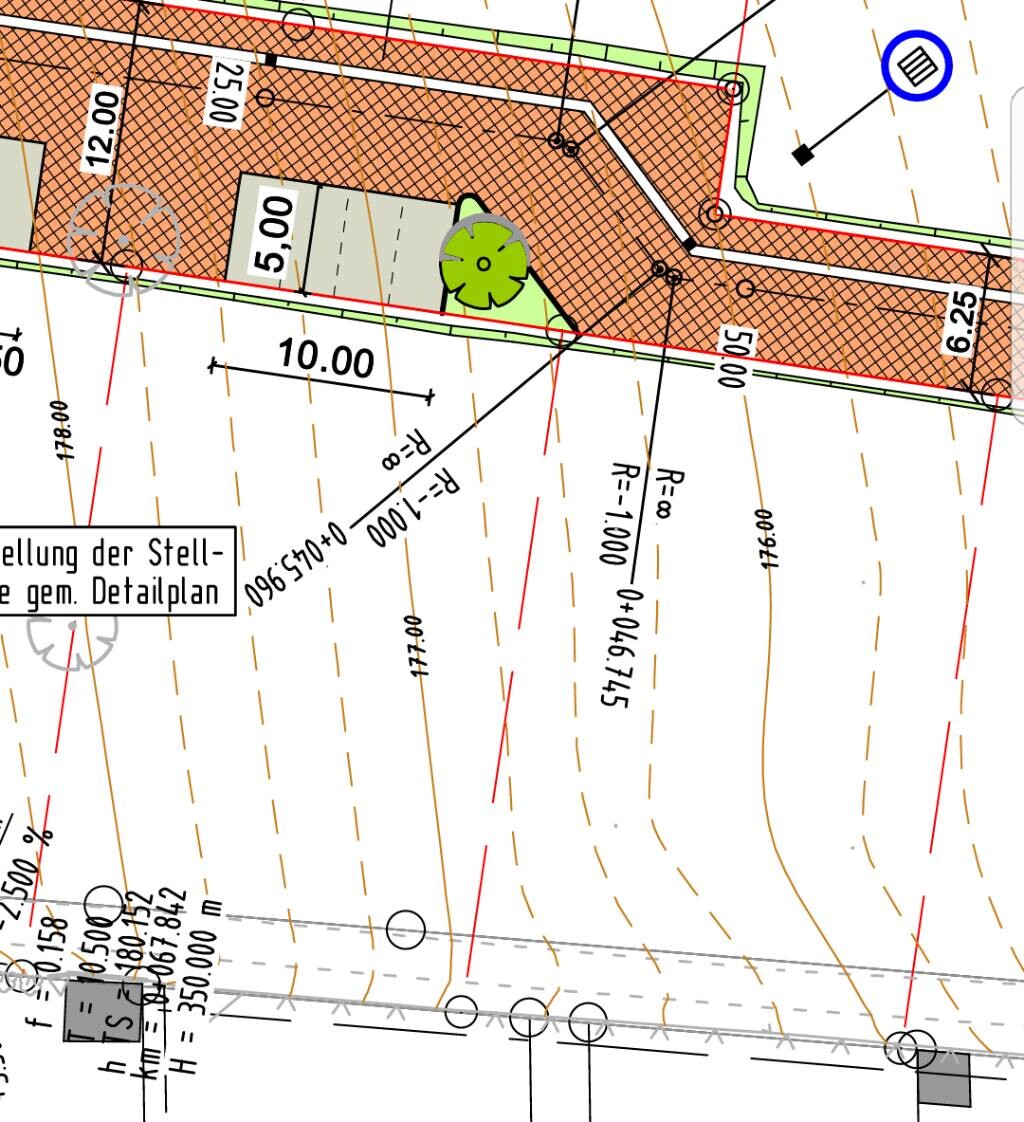
What I find critical and want to question further is the slope that the property has towards the back. I will upload a plan soon.
Ideally, I would like a solution that satisfies both parties, but I am not willing to cover the full costs alone. Maybe I am misjudging the situation, so it would be helpful if someone familiar with this topic could weigh in.
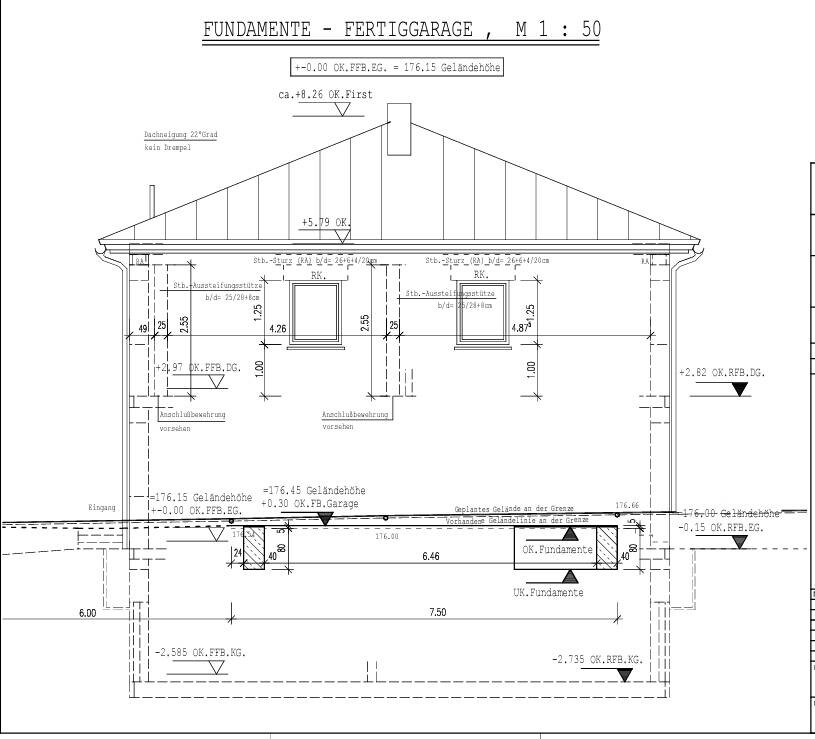
The issue concerns the difference in ground levels at our property boundary. At the moment, there is quite a gap between us. Our neighbor has raised their ground twice, while on our side the topsoil was removed once and later several more layers were taken off, and a strip foundation was installed along the boundary for our prefabricated garage.
Some time ago, we already mentioned that something needs to be done about the height difference, especially since our neighbors raised their ground and we plan to return to street level after raising and paving our area.
Today the topic came up again, and we were told that they will lower their ground by half a meter and that we would have to cover the entire cost of the supports, as we supposedly removed so much soil. €20,000 would be too much money for them (which I can understand). But actually, we only excavated for the strip foundation, and later we want the garage to be at street level. Therefore, we believe that if anything is done and they lower their ground, the costs should be split 50/50.
I should add that they claim they did not raise their ground and that the difference occurred because of our excavation. For this reason, they don’t want to pay anything and apparently cannot afford it at the moment.
We suggested that we might be able to avoid using L-shaped retaining walls if the garage can handle it. However, the height difference must not be too large. We still need to inquire about how much difference is acceptable. They want to ensure that trucks can still access their property for various works (garden design, pool construction, etc.) and that the ground level remains high enough so that their slab foundation stays covered (the slab foundation part is understandable). I believe they also want to park their motorhome there in the future.
Do you have any advice on what options are available here?
I think our general contractor can measure again with us and explain the final levels we will reach. I believe the state of Hesse says if you stay close to the natural ground level, then both parties must share the costs.
If necessary, everything except our garage and driveway must be gradually leveled over time, but even then I think this should be a shared responsibility.
What I find critical and want to question further is the slope that the property has towards the back. I will upload a plan soon.
Ideally, I would like a solution that satisfies both parties, but I am not willing to cover the full costs alone. Maybe I am misjudging the situation, so it would be helpful if someone familiar with this topic could weigh in.
I haven’t looked at the plans yet (they’re too small on my phone), but usually the natural ground level is the reference point. In our development plan, it states that no more than 50cm (20 inches) of fill may be added along the property boundaries, measured from the natural ground surface. If your neighbor decides to add fill, they must also ensure proper containment, as they are responsible for keeping rainwater on their property and preventing it from flowing onto yours – this should logically apply to soil as well. In my opinion, your neighbor is therefore obligated to secure their property in relation to yours. If necessary, you could check with the local building authority/planning department, municipal office, or a qualified expert to clarify the specific situation.
Whether he added fill or not should be indicated in his site plan, as the natural terrain contour is usually shown there, just as it is in yours. Alternatively, the contour lines can provide a rough reference. Aren’t the boundary markers also surveyed?
I can’t tell you whether your general contractor can perform a survey; he would know that better [emoji6]
In my opinion, if you are building on an undeveloped piece of land, the ground level should correspond to the natural terrain surface (before topsoil was removed). If his land was higher, then he must have added fill. It seems unlikely that such terrain would be uneven with sudden changes—especially right at the property boundary...
I can’t tell you whether your general contractor can perform a survey; he would know that better [emoji6]
In my opinion, if you are building on an undeveloped piece of land, the ground level should correspond to the natural terrain surface (before topsoil was removed). If his land was higher, then he must have added fill. It seems unlikely that such terrain would be uneven with sudden changes—especially right at the property boundary...

How was it again: You are the ones with the tree and the parking spaces, and the neighbor in question is the one next to you, opposite the bend in the road?
In the plan, I at least see contour lines that refer to the existing terrain during the road design or zoning plan preparation. You can compare these with the actual condition to check if the textual regulations mean that they are within tolerance.
From what I have read in various threads about elevation issues, it is generally standard in all federal states that the person altering the terrain is not allowed to extend their desired elevation all the way to the property boundary. Instead—which is also done in such a way that no drainage flows onto the neighboring property—they have to slope the terrain so that at the boundary it essentially returns to the original height.
Retaining walls (L-shaped concrete blocks) must be on the side of the higher landowner; otherwise, they are of little use. Without retaining walls, would the fill then be pressuring against your garage wall, or how should I imagine that?
https://www.instagram.com/11antgmxde/
https://www.linkedin.com/company/bauen-jetzt/
In the plan, I at least see contour lines that refer to the existing terrain during the road design or zoning plan preparation. You can compare these with the actual condition to check if the textual regulations mean that they are within tolerance.
From what I have read in various threads about elevation issues, it is generally standard in all federal states that the person altering the terrain is not allowed to extend their desired elevation all the way to the property boundary. Instead—which is also done in such a way that no drainage flows onto the neighboring property—they have to slope the terrain so that at the boundary it essentially returns to the original height.
Retaining walls (L-shaped concrete blocks) must be on the side of the higher landowner; otherwise, they are of little use. Without retaining walls, would the fill then be pressuring against your garage wall, or how should I imagine that?
https://www.instagram.com/11antgmxde/
https://www.linkedin.com/company/bauen-jetzt/
The question is: who changed the terrain, where, and by how much, and at what time?
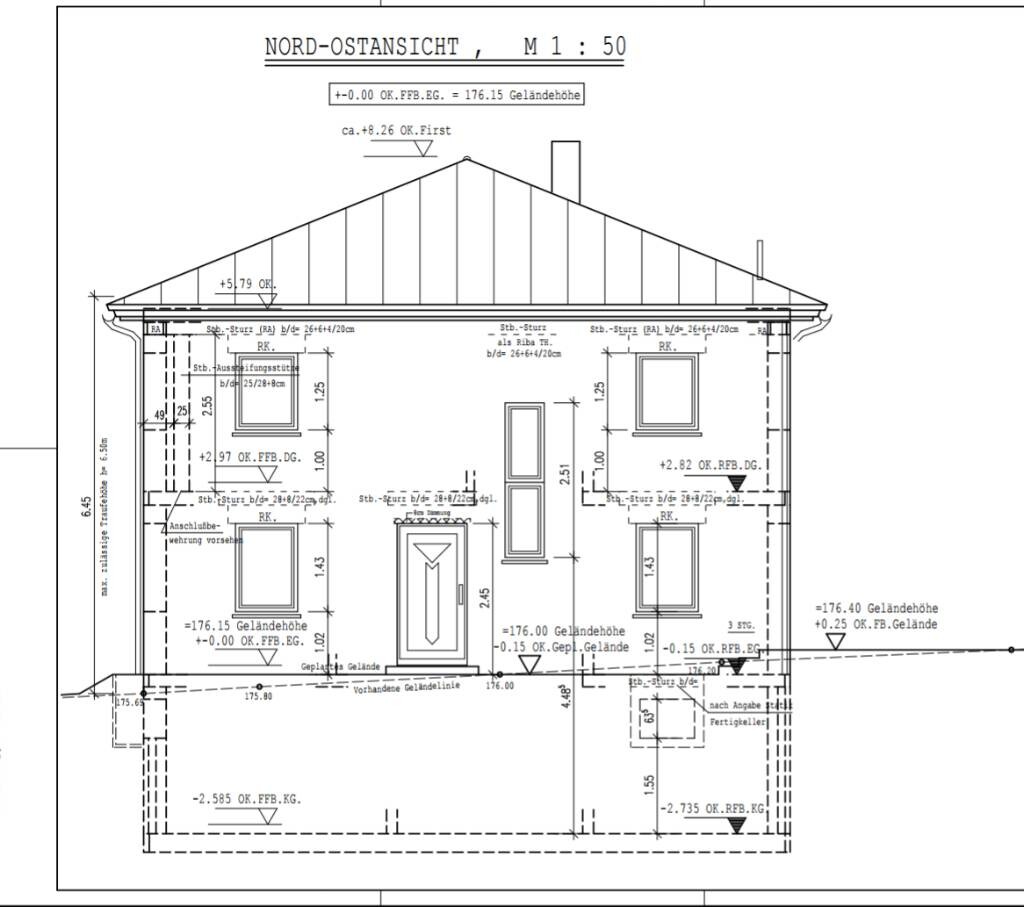
According to your plan excerpt, the terrain originally had a fairly consistent slope of about 6%. Your finished floor level on the ground floor is at 176.15, your garage at 176.45, and the neighbor’s finished floor level presumably about 80cm (31 inches) higher. In the area of your garage, the planned terrain is drawn to match the existing terrain. I don’t understand where and why so much soil was excavated. If this was done only for construction purposes and you plan to restore the natural ground level afterward, then you are not causing any disturbance. What does the terrain look like currently? How many centimeters has the neighbor filled in and over what distance, and how does the transition to your property appear?
The slope is not steep enough to require complex slope stabilization. The incline at the back is only about half a meter (20 inches) over the entire length of the property. Has a professional assessed this? Maybe you are concerned about issues that do not actually exist.
According to your plan excerpt, the terrain originally had a fairly consistent slope of about 6%. Your finished floor level on the ground floor is at 176.15, your garage at 176.45, and the neighbor’s finished floor level presumably about 80cm (31 inches) higher. In the area of your garage, the planned terrain is drawn to match the existing terrain. I don’t understand where and why so much soil was excavated. If this was done only for construction purposes and you plan to restore the natural ground level afterward, then you are not causing any disturbance. What does the terrain look like currently? How many centimeters has the neighbor filled in and over what distance, and how does the transition to your property appear?
The slope is not steep enough to require complex slope stabilization. The incline at the back is only about half a meter (20 inches) over the entire length of the property. Has a professional assessed this? Maybe you are concerned about issues that do not actually exist.
Similar topics