
Hello everyone,
I would appreciate your expert opinion on cavity insulation (approximately 55 m² (590 ft²)).
House & wall (built in 1954):
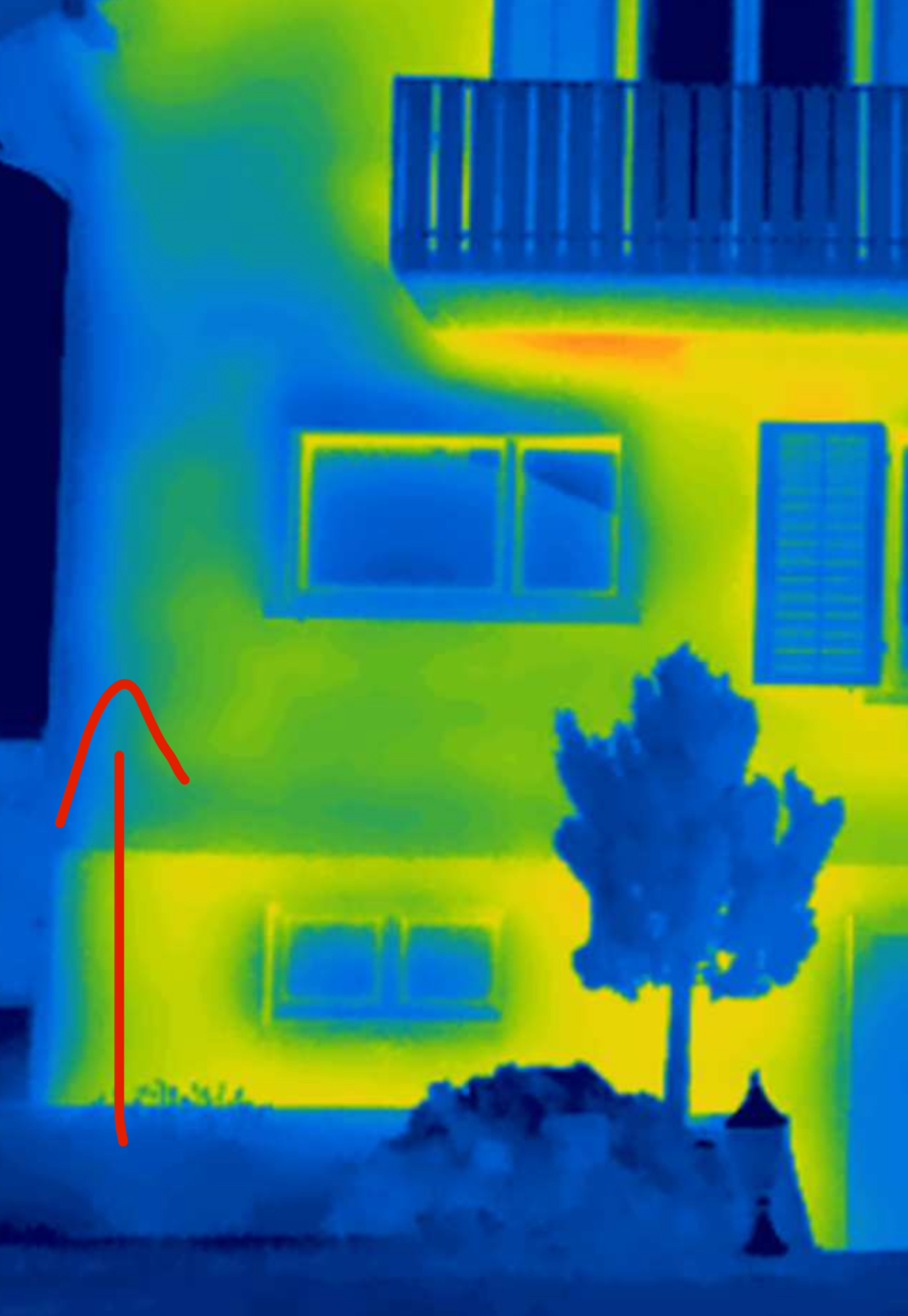
Currently, at 0°C (32°F) outside, I only measure about 15–16°C (59–61°F) in the coldest corner. The rest is around 19°C (66°F).
My questions:
In the end, will we face new problems like moisture or mold? Who has experience with blown-in insulation?
Thanks for your advice!
PS: The blown-in insulation will only be used for the old building. We have an extension insulated with EPS foam boards applied externally. That’s why the area is relatively small.
The basement is just concrete—very cold—and partly there is a single-layer wall under the screed (which is terrible).
The main issue is the cold corner (thermal image red arrow).
I would actually like to insulate the base from the outside slightly (about 5 cm (2 inches) without perimeter insulation, since that is very expensive and complicated) but worry this might cause new problems.
I would appreciate your expert opinion on cavity insulation (approximately 55 m² (590 ft²)).
House & wall (built in 1954):
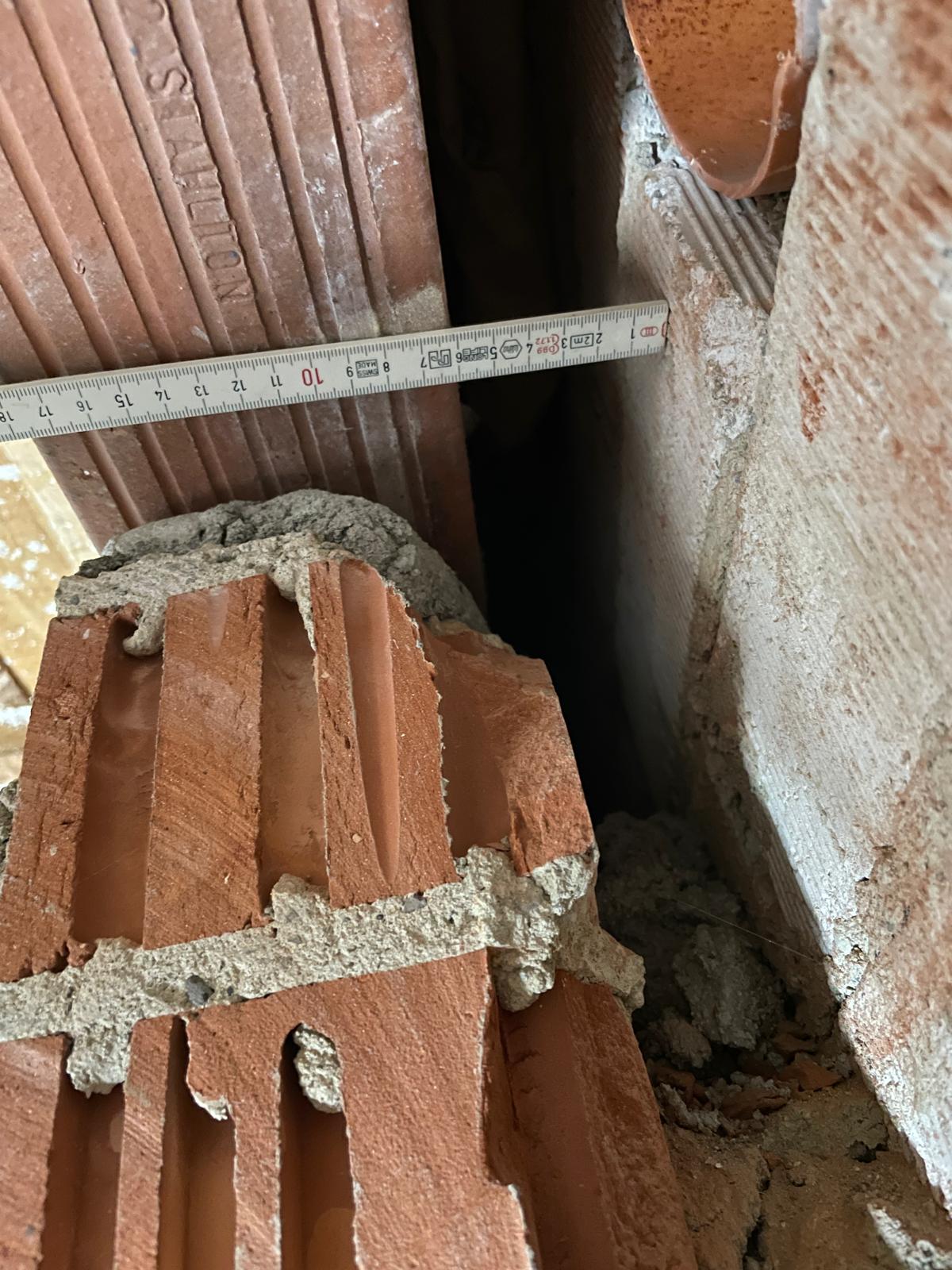
- Interior: 2 cm (1 inch) plaster + 12.5 cm (5 inches) hollow brick
- Middle: 5 cm (2 inches) cavity (open at the top toward the cold screed)
- Exterior: 12.5 cm (5 inches) sand-lime brick + 3 cm (1 inch) plaster
- Occupied by 4 people
Currently, at 0°C (32°F) outside, I only measure about 15–16°C (59–61°F) in the coldest corner. The rest is around 19°C (66°F).
My questions:
- Material: Is the high cost of aerogel worth it for a 5 cm (2 inch) layer, or is SLS 20 or EPS better for mixed hollow brick/sand-lime brick walls?
- Physics: We are four people. Which material is safer regarding condensation and vapor diffusion with the rather dense sand-lime brick exterior shell?
- Statics: The wire anchors are 70 years old. Should I be concerned about blowing in SLS 20 (which is finer/heavier)?
In the end, will we face new problems like moisture or mold? Who has experience with blown-in insulation?
Thanks for your advice!
PS: The blown-in insulation will only be used for the old building. We have an extension insulated with EPS foam boards applied externally. That’s why the area is relatively small.
The basement is just concrete—very cold—and partly there is a single-layer wall under the screed (which is terrible).
The main issue is the cold corner (thermal image red arrow).
I would actually like to insulate the base from the outside slightly (about 5 cm (2 inches) without perimeter insulation, since that is very expensive and complicated) but worry this might cause new problems.

Simu73 schrieb:
Center: 5 cm cavity (open at the top to the cold screed) [...] The basement is simply concrete. Freezing cold, and in the screed we partly have a single-skin wall (terrible). Shouldn't the "Moin" rather be a "Grüezi" – with screed here probably meaning what is called an attic in Moin country?
The detail photo seems to show from below a newer precast lintel (over what exactly, and why not an opening going through both masonry leaves?).
Are there different rooms in the extension, or are there rooms located both in the original and the extension parts? (In that case, I would want to avoid changing the wall construction.)
A section of an exterior wall including both floor slabs would probably be helpful.
For an unheated basement, I would probably insulate only the ceiling.
https://www.instagram.com/11antgmxde/
https://www.linkedin.com/company/bauen-jetzt/
In Zurich, people greet each other with "Grüezi," but that's not popular everywhere. Here, we say "Hoi" or "Grüessech."
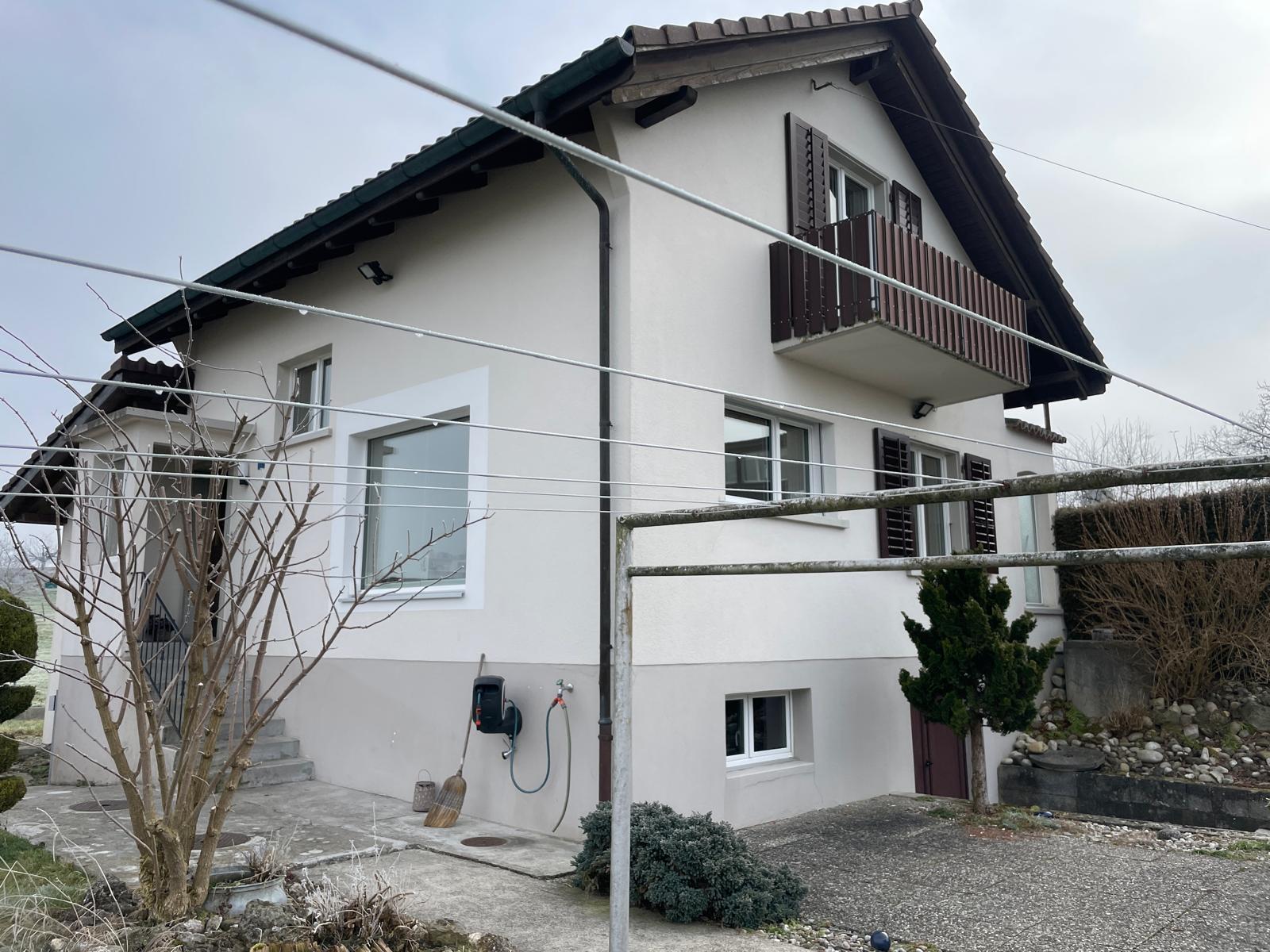
Oh, my photo is quite confusing. This picture was taken before the outer shell was cut. The large new window (white frame) is installed there.
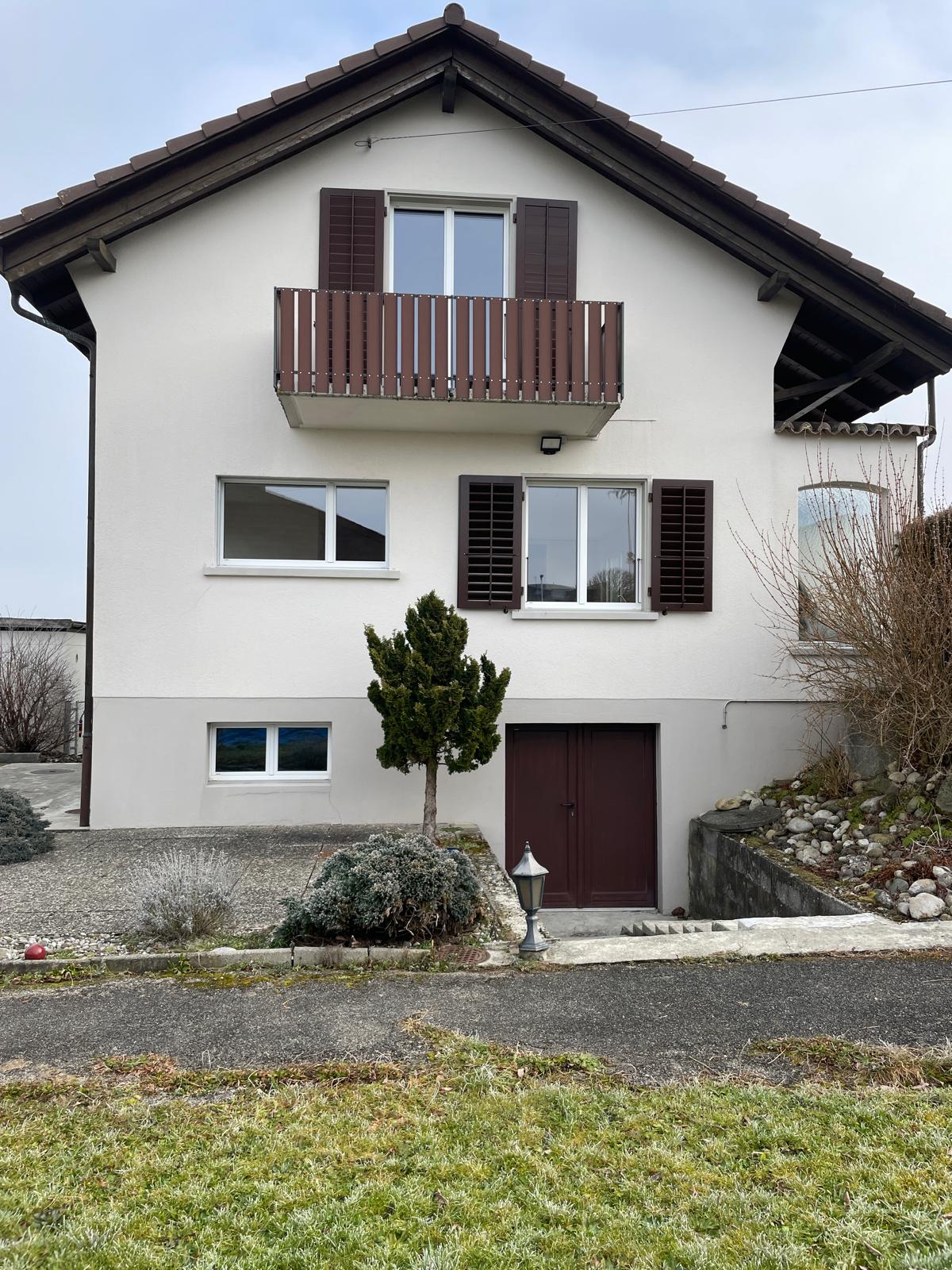
In the old building, the living room and kitchen are on the ground floor, and there are two rooms on the upper floor.
In Switzerland, the term "Estrich" refers to the attic, which was my mistake. We have two attic rooms on the upper floor that are built with only a single layer of masonry, so they are cold.
Why would you want to avoid adding a connecting structure? Do you mean changing from the old building to an extension?
Oh, my photo is quite confusing. This picture was taken before the outer shell was cut. The large new window (white frame) is installed there.
In the old building, the living room and kitchen are on the ground floor, and there are two rooms on the upper floor.
In Switzerland, the term "Estrich" refers to the attic, which was my mistake. We have two attic rooms on the upper floor that are built with only a single layer of masonry, so they are cold.
Why would you want to avoid adding a connecting structure? Do you mean changing from the old building to an extension?
Simu73 schrieb:
In Zurich, people greet each other with "Grüezi" [...] In the old building, the living room and kitchen are located there, as well as two rooms on the upper floor. [...] Why would you want to avoid a transition? Do you mean from the old building to the extension? Down here, south of the N3 broadcast area, only people who want to show they prefer vacationing at the coast rather than in the Alps (and/or admire the relaxed attitude of coastal residents) say "Moin." I would primarily want to avoid having rooms that connect between the two building sections with inconsistent heating or cooling.
https://www.instagram.com/11antgmxde/
https://www.linkedin.com/company/bauen-jetzt/
Similar topics