
ᐅ Berlin-style temporary retaining structure for securing the excavation pit
Created on: 21 Sep 2023 10:54
B
Bayernbors
Hello everyone,
There are several issues with the excavation at our construction project. The general contractor (GC) says the planned house is large (2 semi-detached houses, each 11 by 7 meters (36 by 23 feet)) and the plot is small (~450 m² (4844 ft²)), which brings some technical challenges.
The work on the excavation started with the demolition of the old house, as it already had a basement.
The worst part is that we discovered all these problems gradually, not as originally planned:
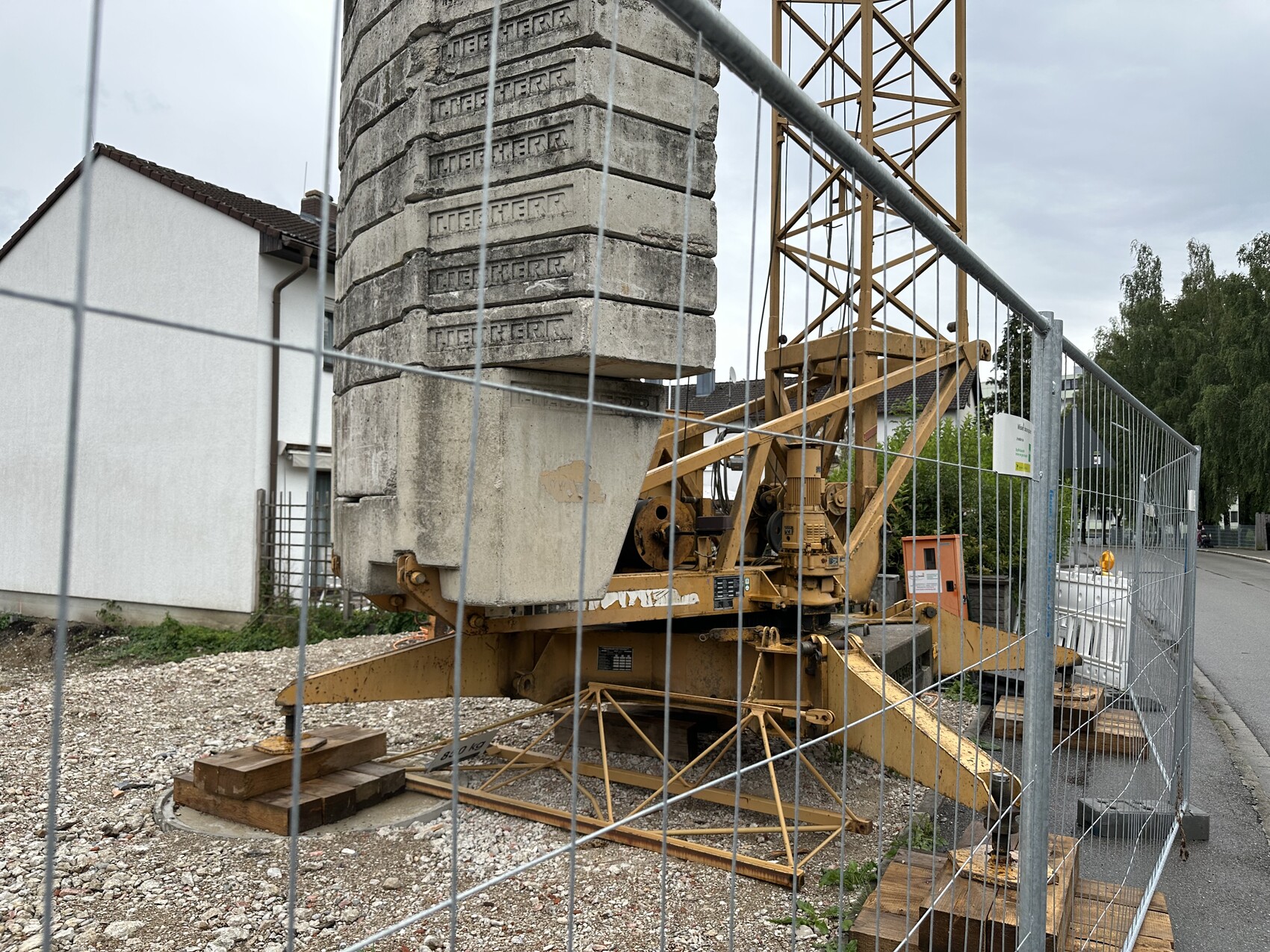
1) First, it turned out that the edges of the excavation were unstable, requiring support for the crane, so a crane foundation was built.
2) Secondly, it was found that the plot was still too small for the crane, and a permit was needed to place the crane partially on the sidewalk.
The first two steps were completed by the end of June, and then work was completely halted (except for the crane setup).
At the end of August, my new neighbors contacted me and were concerned because they saw that the sides of the excavation were slipping more and more, causing the excavation to slope toward their property and compromising the slope’s stability.
At this point, the GC said they had already discussed this issue with the relevant authorities. They suggested increasing the slope of the excavation, but this proposal was rejected because it would affect the sidewalk.
The only remaining solution was then to provide a bond to secure the stability of the sidewalk.
After an additional geotechnical investigation, it was determined that sheet piling is required on all sides, not just along the sidewalk.
My questions are:
Does all this make sense?
Is it normal to discover these issues so late? Does it really take about three months to reach this conclusion? Should I hold the GC accountable for these delays?
Note: At the end of June, I agreed with the GC that the house should be completed by the end of February 2024, as our contract states: “The contractor commits to delivering the project ready for occupancy within 8 months from the start of excavation, weather permitting.”
Finally, how much more time should I expect to complete this Berliner trench sheet pile installation and finally begin construction?
I have read online that the costs could be several tens of thousands— is that realistic?
Thank you very much.
Best regards
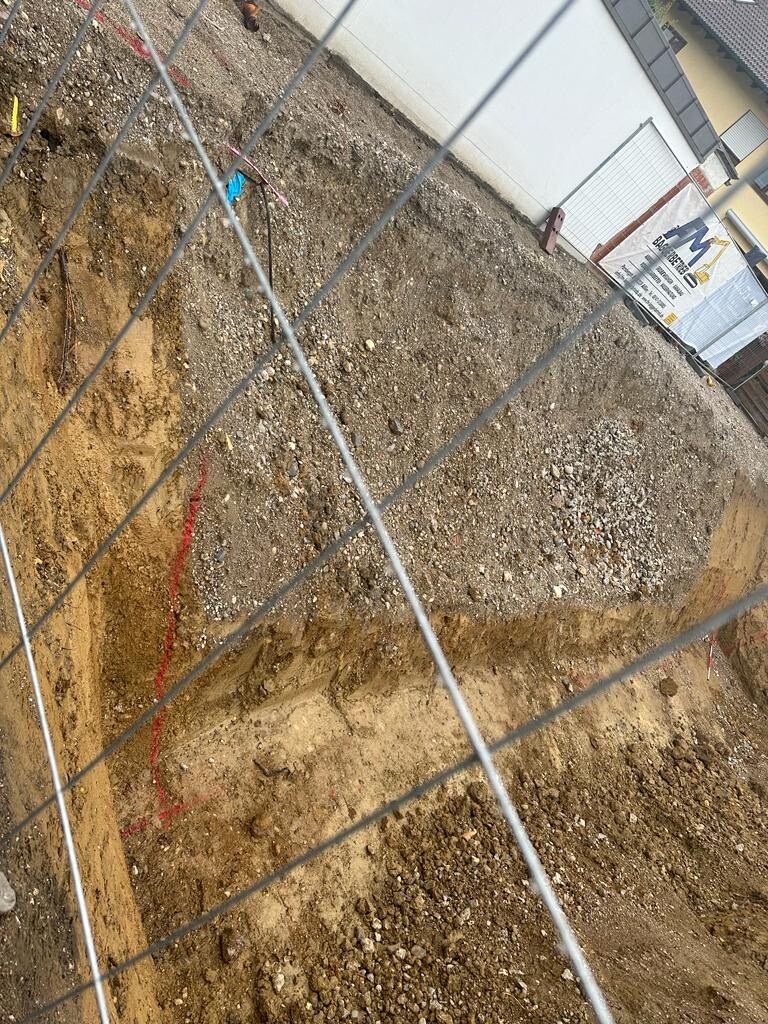
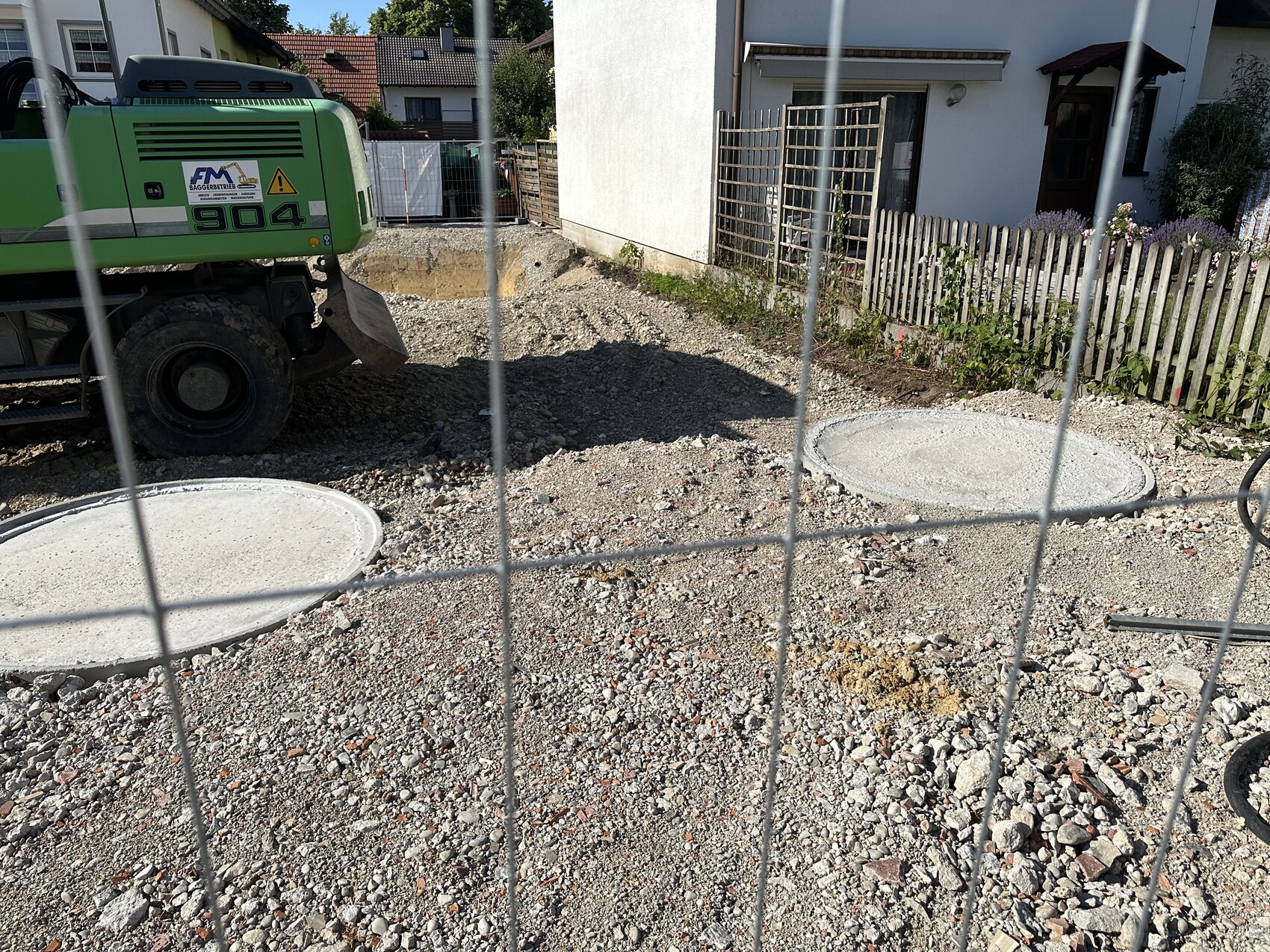
There are several issues with the excavation at our construction project. The general contractor (GC) says the planned house is large (2 semi-detached houses, each 11 by 7 meters (36 by 23 feet)) and the plot is small (~450 m² (4844 ft²)), which brings some technical challenges.
The work on the excavation started with the demolition of the old house, as it already had a basement.
The worst part is that we discovered all these problems gradually, not as originally planned:
1) First, it turned out that the edges of the excavation were unstable, requiring support for the crane, so a crane foundation was built.
2) Secondly, it was found that the plot was still too small for the crane, and a permit was needed to place the crane partially on the sidewalk.
The first two steps were completed by the end of June, and then work was completely halted (except for the crane setup).
At the end of August, my new neighbors contacted me and were concerned because they saw that the sides of the excavation were slipping more and more, causing the excavation to slope toward their property and compromising the slope’s stability.
At this point, the GC said they had already discussed this issue with the relevant authorities. They suggested increasing the slope of the excavation, but this proposal was rejected because it would affect the sidewalk.
The only remaining solution was then to provide a bond to secure the stability of the sidewalk.
After an additional geotechnical investigation, it was determined that sheet piling is required on all sides, not just along the sidewalk.
My questions are:
Does all this make sense?
Is it normal to discover these issues so late? Does it really take about three months to reach this conclusion? Should I hold the GC accountable for these delays?
Note: At the end of June, I agreed with the GC that the house should be completed by the end of February 2024, as our contract states: “The contractor commits to delivering the project ready for occupancy within 8 months from the start of excavation, weather permitting.”
Finally, how much more time should I expect to complete this Berliner trench sheet pile installation and finally begin construction?
I have read online that the costs could be several tens of thousands— is that realistic?
Thank you very much.
Best regards

Bayernbors schrieb:
It took quite a while until it was finally finished. [...] It cost about 35K.
Now the excavation is complete and work in the basement is starting. 35K "advertising costs" (or whatever you call them and where do you account for them: cost center excavation/basement?), with no created assets in return. Where do these costs come back from, who do you hold liable for damages – for an architect this would be a professional liability case, but for a general contractor with inclusive planning it’s a personal financial loss, also known as a learning experience...
https://www.instagram.com/11antgmxde/
https://www.linkedin.com/company/bauen-jetzt/
ypg schrieb:
The contingency budget always gets used up during earthworks, and the remaining shortfall is cut from the interior finishes… However, a contingency fund is not really meant to be used to "save" on proper planning and to entrust your homeowner fate to a project manager who thinks "if I don’t think about it, it won’t cost my money." As a former window specialist, I am well aware of where the budget overruns usually come from.
ypg schrieb:
But somehow it works out. Yes, exactly through the kind of cost shifting you described. The value of the loan security decreases. Anyone who cannot recover this financial loss from the (co-)responsible planner is out of luck. An architect, on the other hand, would have been insured (and would have tried to avoid such mistakes for the sake of their premium).
https://www.instagram.com/11antgmxde/
https://www.linkedin.com/company/bauen-jetzt/
B
Bayernbors13 Nov 2023 07:56Mucuc22 schrieb:
Interesting, how many meters roughly had to be secured? Probably about 1300 euros per meter, right? It’s calculated by square meters. There are 140 sqm (square meters), so about 250 EUR/sqm (gross).
11ant schrieb:
35k "advertising costs" (or whatever you call it and where do you book it: excavation/basement cost center?), without any created value in return. Where do these come back from, who do you claim damages from – for an architect it would be a professional liability case, but with a general contractor inclusive planning it’s your own financial loss aka tuition fee... These are additional costs for the excavation. It was always clear that any extra measures required for the excavation were not included in the original offer. This was the case with every company I spoke to.
Why should this be considered damage? My issue here is poor planning, which costs time and even more hidden money (which probably isn’t very high), not the fact that some additional measures are necessary.
This is something to discuss with the lawyer regarding the general contractor’s responsibility for missing the delivery deadline.
Bayernbors schrieb:
These are additional costs for the excavation. It was always clear that extra measures required for the excavation were not included in the quote. This was the case with every company I spoke to. However, this "x" in the calculation does not exist because of the specific features of the site, but due to the lack of professionalism in the planning and tendering process.
Bayernbors schrieb:
Why should this be considered a loss? My issue here is the poor planning, which costs time and even more hidden money (which is probably not very high), not the fact that some additional measures are necessary. The actual loss lies precisely in the connection between poor planning and the additional measures. The extra measures are by no means unexpected here (even if the contractor pretends otherwise) and should have influenced the planning.
Bayernbors schrieb:
This is something that should be discussed with a lawyer regarding the main contractor’s responsibility for missing the delivery deadline. You mean the unnecessary delay, which is not caused by the measures themselves but by the unwillingness to anticipate them, and the resulting consumption of time during the validity period of the offer?
https://www.instagram.com/11antgmxde/
https://www.linkedin.com/company/bauen-jetzt/
B
Bayernbors15 Nov 2023 16:2111ant schrieb:
The damage is directly related to the combination of poor planning and additional measures. These additional measures are by no means surprising (even if the contractor acts otherwise) and should have influenced the planning.Yes, the poor planning is clearly a problem. It should not have come as a surprise. It should have been recognized and properly planned from day one.11ant schrieb:
You mean the unnecessary delay that is not caused by the measures themselves, but because of the refusal to acknowledge them, and the resulting time loss regarding the offer validity period?Not exactly. The general contractor handled the task themselves. The issue is that the problem was not really anticipated, which caused the definition of the necessary measures to take forever (from mid-June until the end of October)!I believe the measurable damage is the delay in handover and final acceptance.