
ᐅ Modernist Concrete Villa with Cavity Wall Insulation – Experiences
Created on: 11 Sep 2018 07:32
R
rick2018
Hello everyone,
I just wanted to briefly introduce myself and say thank you.
For about a year and a half, I have been a silent reader here to gather inspiration and especially to gain more knowledge about construction technology.
Now a bit about me:
After more than a year of searching for a plot of land, I was able to purchase one from a developer who couldn’t move forward quickly with his plans.
So we found our dream plot (good location, 2500 m² (0.62 acres), slight slope, underground private spring that we have to preserve and are allowed to use).
There was an old house on the property, which we have since demolished.
There is no zoning plan, so §34 applies. During an initial informal inquiry at the building authority, almost everything we planned was rejected.
So we submitted an official preliminary building inquiry, involved the right people, and had lengthy discussions. In the end, we received a positive decision.
Therefore, there is nothing standing in the way of the building permit. The building permit should be granted within the next few weeks as there are no changes from the preliminary inquiry.
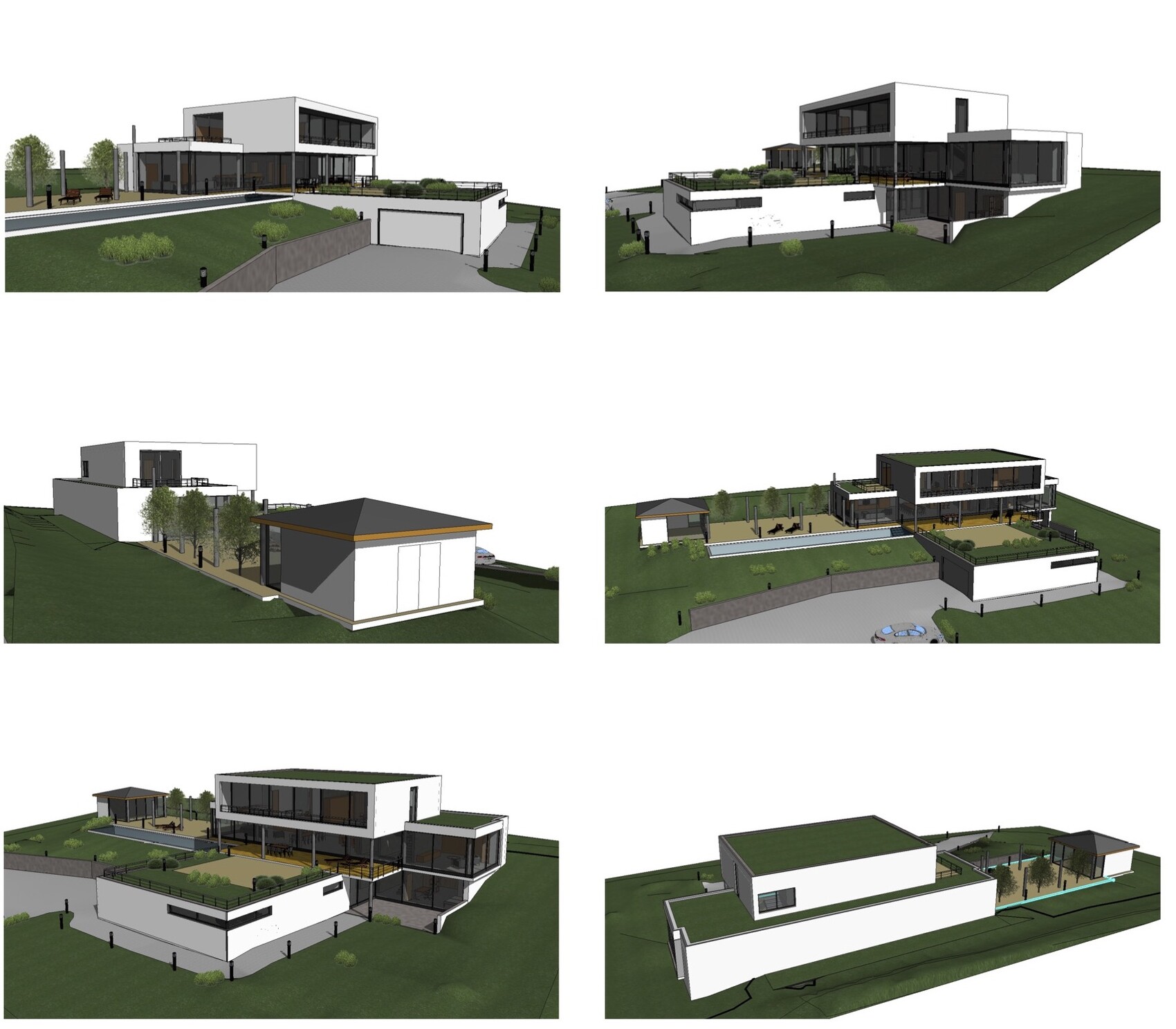
My wife (37) and I (36) want to build a Bauhaus-style villa in southern Baden-Württemberg.
It will be constructed from concrete (with core insulation) or in combination with insulated precast elements.
A lot of glass (full-glass system), textile shading, KNX, fast network both wired and wireless, strong mechanical ventilation with additional cooling coils, stainless steel pool, large cistern, and more.
The electrical planning must be 100% spot on since it’s almost impossible to make changes afterward.
Since I am friends with an architect from a larger firm, it was clear which route we would take. Such a house can basically only be realized with an architect.
I also personally know the electrician and KNX system integrator, as well as the owners and work approach of the heating, plumbing, and ventilation companies involved.
Some trades have already been contracted, and part of the equipment has already been ordered.
I’m really looking forward to getting started and to the final result. The goal is to move in by the end of 2019.
Once again, many thanks for the information I have received from you so far.
If you have any questions, just let me know.
Attached is the design, though not the final version. There have been a few minor changes.
Greetings from Swabia
I just wanted to briefly introduce myself and say thank you.
For about a year and a half, I have been a silent reader here to gather inspiration and especially to gain more knowledge about construction technology.
Now a bit about me:
After more than a year of searching for a plot of land, I was able to purchase one from a developer who couldn’t move forward quickly with his plans.
So we found our dream plot (good location, 2500 m² (0.62 acres), slight slope, underground private spring that we have to preserve and are allowed to use).
There was an old house on the property, which we have since demolished.
There is no zoning plan, so §34 applies. During an initial informal inquiry at the building authority, almost everything we planned was rejected.
So we submitted an official preliminary building inquiry, involved the right people, and had lengthy discussions. In the end, we received a positive decision.
Therefore, there is nothing standing in the way of the building permit. The building permit should be granted within the next few weeks as there are no changes from the preliminary inquiry.
My wife (37) and I (36) want to build a Bauhaus-style villa in southern Baden-Württemberg.
It will be constructed from concrete (with core insulation) or in combination with insulated precast elements.
A lot of glass (full-glass system), textile shading, KNX, fast network both wired and wireless, strong mechanical ventilation with additional cooling coils, stainless steel pool, large cistern, and more.
The electrical planning must be 100% spot on since it’s almost impossible to make changes afterward.
Since I am friends with an architect from a larger firm, it was clear which route we would take. Such a house can basically only be realized with an architect.
I also personally know the electrician and KNX system integrator, as well as the owners and work approach of the heating, plumbing, and ventilation companies involved.
Some trades have already been contracted, and part of the equipment has already been ordered.
I’m really looking forward to getting started and to the final result. The goal is to move in by the end of 2019.
Once again, many thanks for the information I have received from you so far.
If you have any questions, just let me know.
Attached is the design, though not the final version. There have been a few minor changes.
Greetings from Swabia

@Golfi90 Which photo do you mean? Today’s or yesterday’s? Yesterday’s was the bedroom.
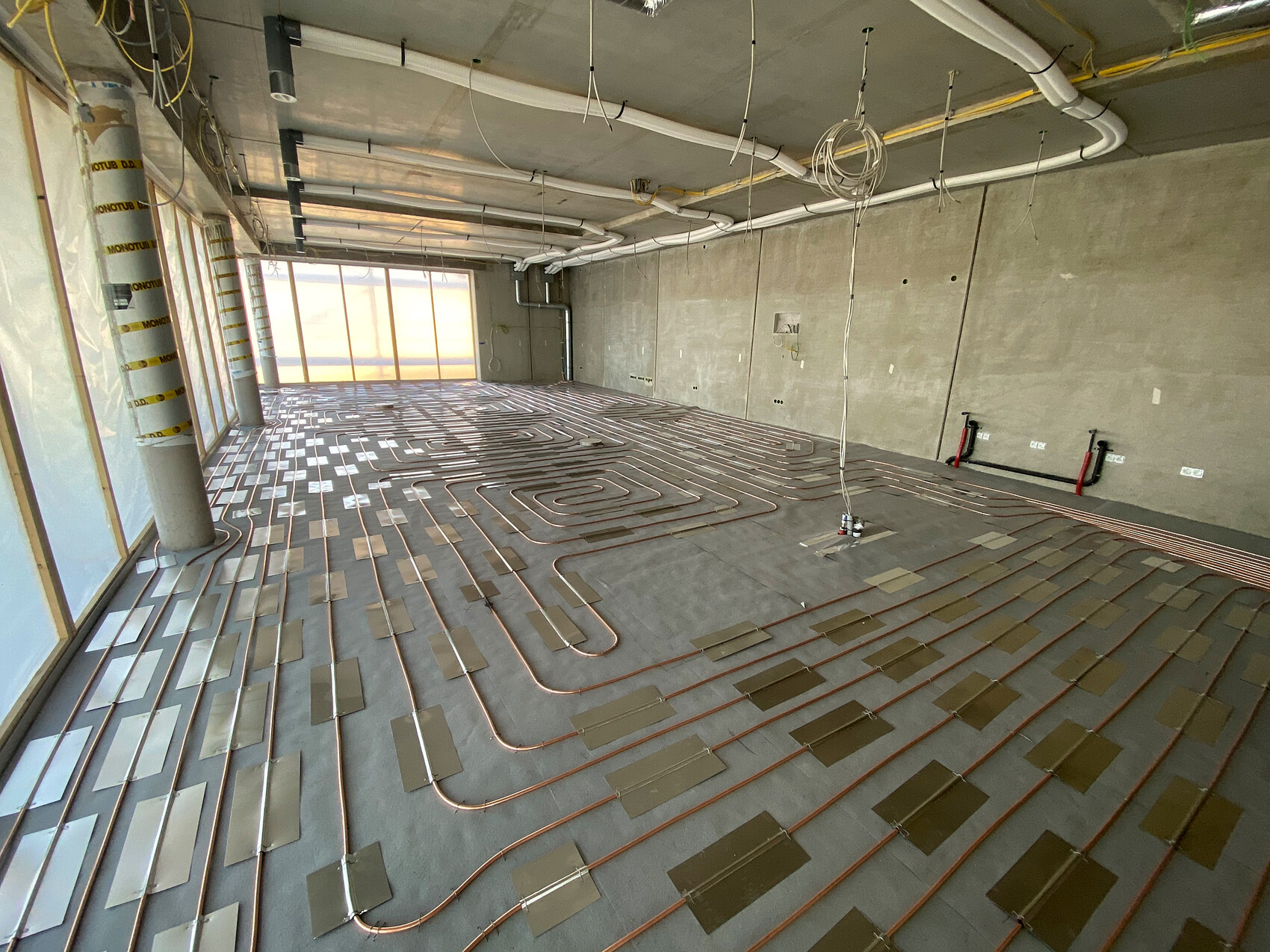
@Bookstar Which pipes are you referring to? The ones on the floor? Those are the copper pipes for the underfloor heating. The spacing looks a bit distorted due to the wide-angle lens. But the spacing is actually larger than usual. This is because of our floor construction. We don’t have a traditional screed but rather cast asphalt, also known as bituminous terrazzo.
That means next week a thin layer of cast asphalt will be applied to fix the pipes firmly to the floor (this ensures there will be no visible indentations on large areas). Then another thin layer mixed with additives will follow. At the very end, about 3mm (0.1 inches) will be sanded off.
This way, the underfloor heating is installed very shallow, just beneath the final surface, and the thermal properties of the asphalt are better. Hence the wider pipe spacing.
The entire surface has no visible joints, is waterproof, warm to the touch, slightly flexible, and very durable. The surface can be polished to different gloss levels or slip resistance classes. We will also have this surface in the shower. After just one night, the surface cools down and is immediately ready for full use. No additional heating or drying is needed. No extra moisture enters the house.
Since the surface is applied at over 200°C (392°F), everything on it has to be adapted accordingly. Plastic would simply melt. This is also one of the reasons why the windows haven’t been installed yet.
Where the underfloor heating is omitted, the kitchen island will be placed.
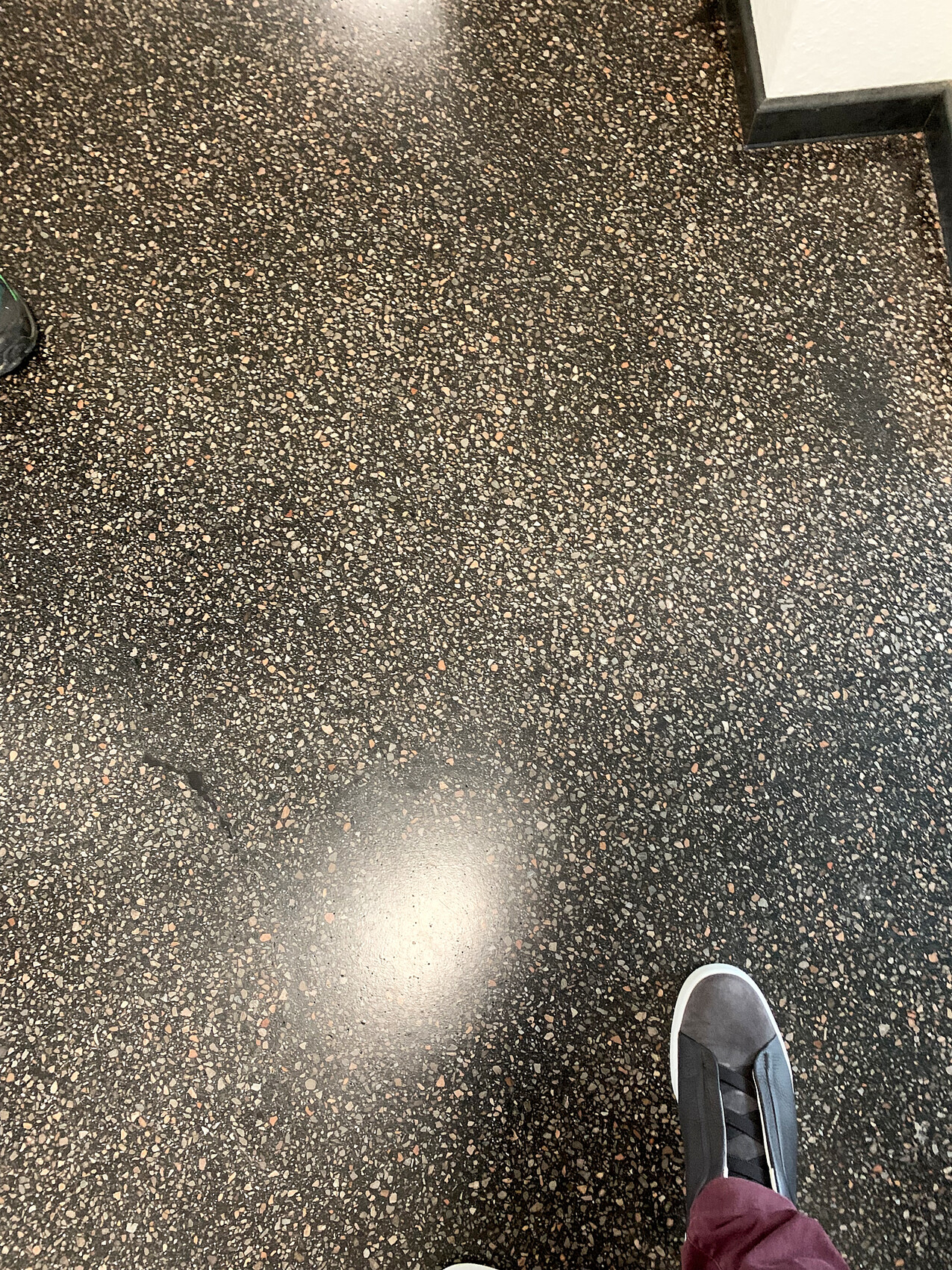
Here’s an example photo (the floor is scratched and not well maintained). This was taken at our supplier’s location.
You can find more examples on Google under Bituminous Terrazzo.
The appearance can be influenced by the additives (grain size, color, etc.). The base color is always black.
@Bookstar Which pipes are you referring to? The ones on the floor? Those are the copper pipes for the underfloor heating. The spacing looks a bit distorted due to the wide-angle lens. But the spacing is actually larger than usual. This is because of our floor construction. We don’t have a traditional screed but rather cast asphalt, also known as bituminous terrazzo.
That means next week a thin layer of cast asphalt will be applied to fix the pipes firmly to the floor (this ensures there will be no visible indentations on large areas). Then another thin layer mixed with additives will follow. At the very end, about 3mm (0.1 inches) will be sanded off.
This way, the underfloor heating is installed very shallow, just beneath the final surface, and the thermal properties of the asphalt are better. Hence the wider pipe spacing.
The entire surface has no visible joints, is waterproof, warm to the touch, slightly flexible, and very durable. The surface can be polished to different gloss levels or slip resistance classes. We will also have this surface in the shower. After just one night, the surface cools down and is immediately ready for full use. No additional heating or drying is needed. No extra moisture enters the house.
Since the surface is applied at over 200°C (392°F), everything on it has to be adapted accordingly. Plastic would simply melt. This is also one of the reasons why the windows haven’t been installed yet.
Where the underfloor heating is omitted, the kitchen island will be placed.
Here’s an example photo (the floor is scratched and not well maintained). This was taken at our supplier’s location.
You can find more examples on Google under Bituminous Terrazzo.
The appearance can be influenced by the additives (grain size, color, etc.). The base color is always black.
The pipes on the ceiling are for the ventilation system. There has already been a lot of discussion and speculation about this system. Our controlled residential ventilation is significantly oversized (up to 10 times) compared to standard DIN guidelines.
We also have almost no shared airflow zones, instead using separate supply and exhaust air. This allows us to achieve different air exchange rates in various areas. Effective cooling is only possible with high air exchange rates. We have a central climate unit that can also function as a heat pump. Additionally, there is a cooling buffer. In theory, this could also be used for some heating.
However, this is not necessary since we have a large gas boiler. It exceeds the heating demand of the house by a factor of 2–3. This peak capacity is needed in case we want to heat the pool.
The pipes on the wall are for the supply and drainage of water to the ice maker, dishwasher, steam oven, and coffee machine.
We also have almost no shared airflow zones, instead using separate supply and exhaust air. This allows us to achieve different air exchange rates in various areas. Effective cooling is only possible with high air exchange rates. We have a central climate unit that can also function as a heat pump. Additionally, there is a cooling buffer. In theory, this could also be used for some heating.
However, this is not necessary since we have a large gas boiler. It exceeds the heating demand of the house by a factor of 2–3. This peak capacity is needed in case we want to heat the pool.
The pipes on the wall are for the supply and drainage of water to the ice maker, dishwasher, steam oven, and coffee machine.

Your reports are always fascinating. Everything is very well thought out and far from mainstream. I really like it... especially the technical details of your house.
Are you planning to add more photovoltaic panels to the roof? You still have space, and you can surely make very good use of the electricity yourselves...
Are you planning to add more photovoltaic panels to the roof? You still have space, and you can surely make very good use of the electricity yourselves...
@seth0487 Thanks.
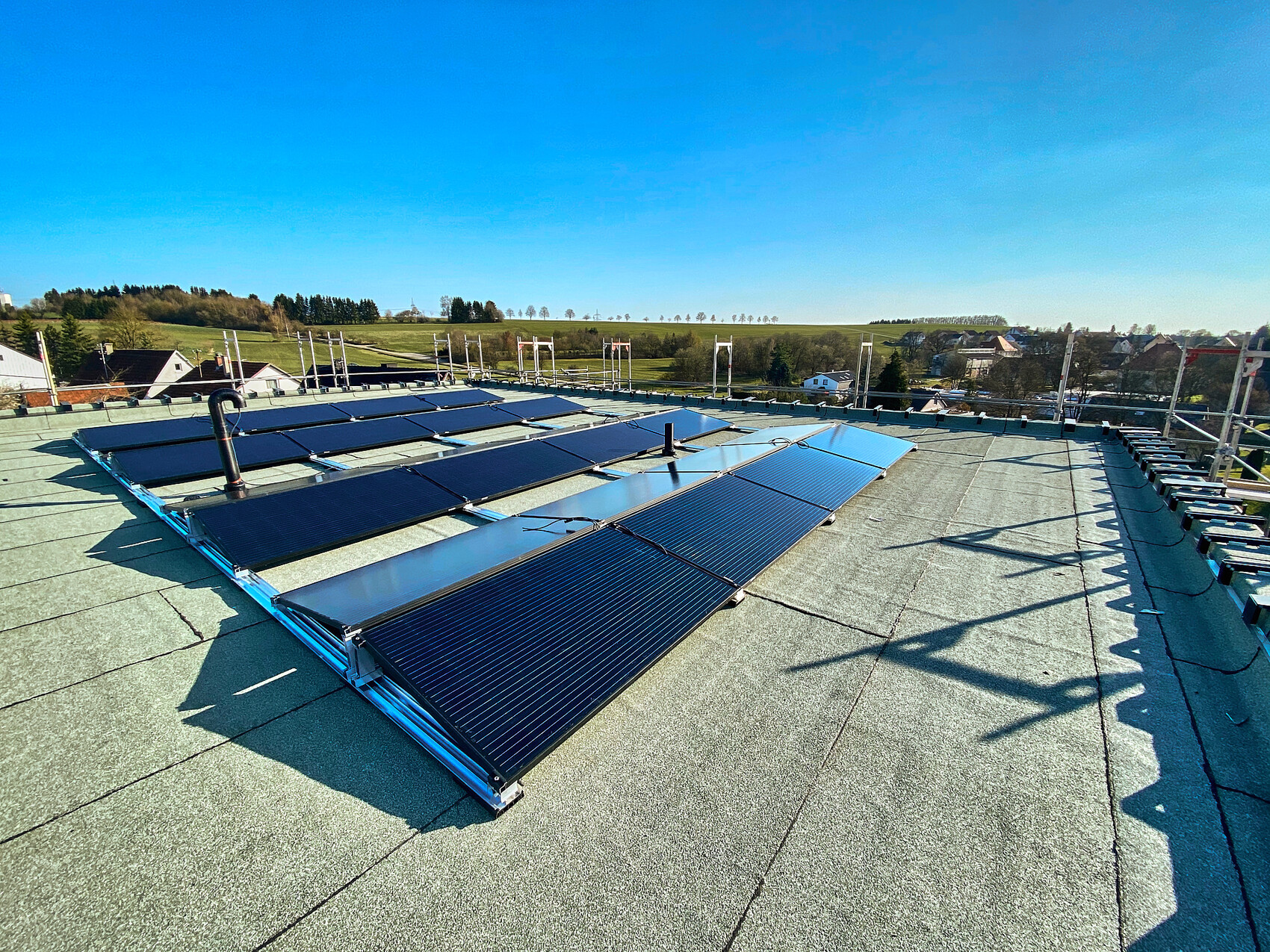
No, there won’t be any additional modules. The system has 9.920 kWp (kilowatt peak).
Even though it’s not cost-effective, we have a system with a battery. The offer was very good...
It only makes sense to go over 10 kWp (kilowatt peak) if you exceed it significantly. Since clearance distances to the parapet and so on must be maintained, we couldn’t add many more modules than the current ones.
We will operate the system with dynamic active power reduction. Because we always have a high base load, the system can run at 100%. This way, at least there won’t be the strict 70% limitation, as self-consumption is taken into account.
We could definitely use more photovoltaic electricity.
Our other roof sections are too small, partially shaded, greened, or used otherwise.
No, there won’t be any additional modules. The system has 9.920 kWp (kilowatt peak).
Even though it’s not cost-effective, we have a system with a battery. The offer was very good...
It only makes sense to go over 10 kWp (kilowatt peak) if you exceed it significantly. Since clearance distances to the parapet and so on must be maintained, we couldn’t add many more modules than the current ones.
We will operate the system with dynamic active power reduction. Because we always have a high base load, the system can run at 100%. This way, at least there won’t be the strict 70% limitation, as self-consumption is taken into account.
We could definitely use more photovoltaic electricity.
Our other roof sections are too small, partially shaded, greened, or used otherwise.
rick2018 schrieb:
The workers really put in a lot of effort today. The underfloor heating has been fully installed throughout the entire house. They are currently cleaning up together. Originally, one more day had been planned.
The nice weather was also used to finally install the photovoltaic panels on the roof. They are fully mounted on the racks but not yet fully wired.
Why did you have the roof built with a bitumen membrane?
Similar topics