
ᐅ Modernist Concrete Villa with Cavity Wall Insulation – Experiences
Created on: 11 Sep 2018 07:32
R
rick2018
Hello everyone,
I just wanted to briefly introduce myself and say thank you.
For about a year and a half, I have been a silent reader here to gather inspiration and especially to gain more knowledge about construction technology.
Now a bit about me:
After more than a year of searching for a plot of land, I was able to purchase one from a developer who couldn’t move forward quickly with his plans.
So we found our dream plot (good location, 2500 m² (0.62 acres), slight slope, underground private spring that we have to preserve and are allowed to use).
There was an old house on the property, which we have since demolished.
There is no zoning plan, so §34 applies. During an initial informal inquiry at the building authority, almost everything we planned was rejected.
So we submitted an official preliminary building inquiry, involved the right people, and had lengthy discussions. In the end, we received a positive decision.
Therefore, there is nothing standing in the way of the building permit. The building permit should be granted within the next few weeks as there are no changes from the preliminary inquiry.
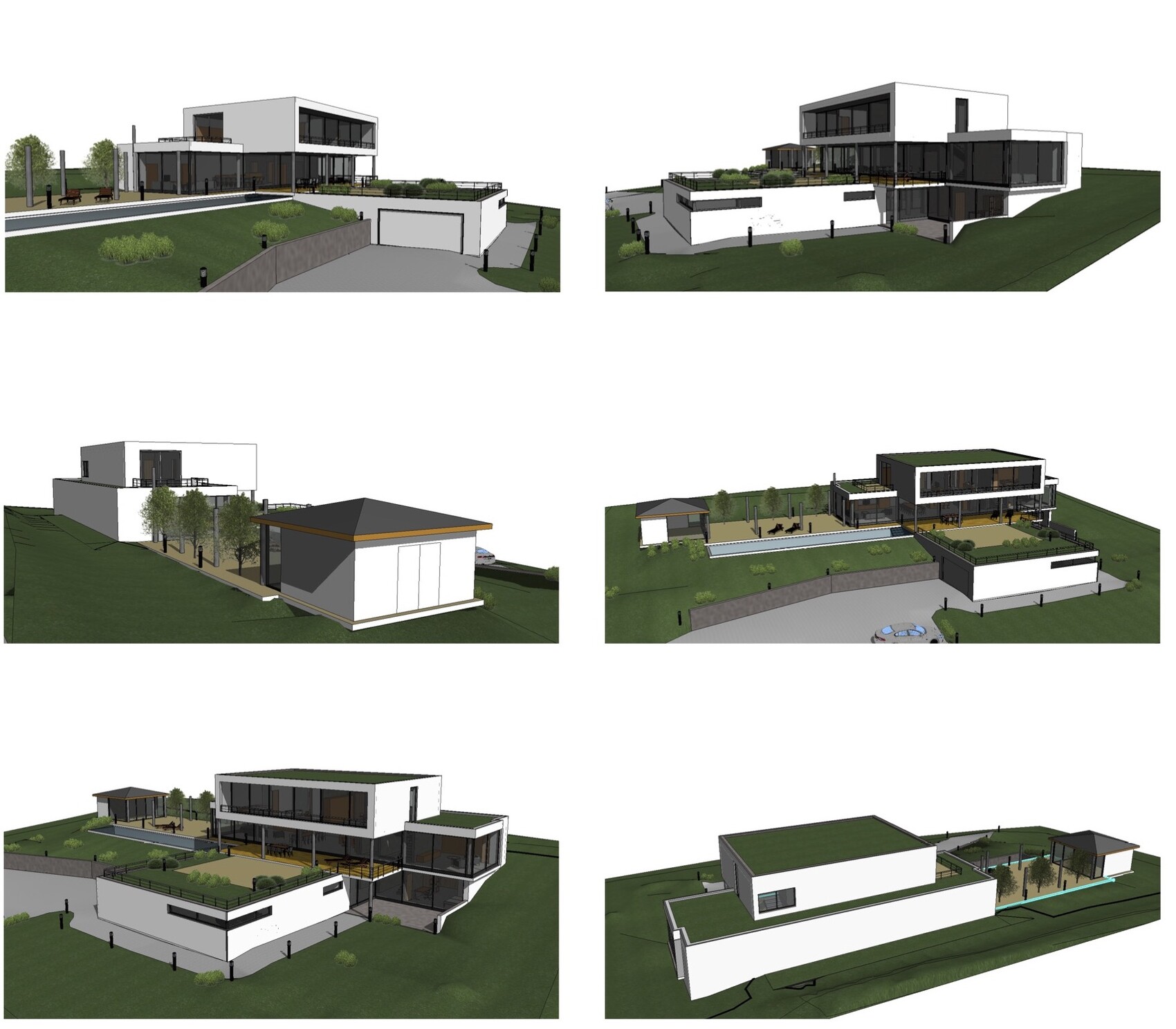
My wife (37) and I (36) want to build a Bauhaus-style villa in southern Baden-Württemberg.
It will be constructed from concrete (with core insulation) or in combination with insulated precast elements.
A lot of glass (full-glass system), textile shading, KNX, fast network both wired and wireless, strong mechanical ventilation with additional cooling coils, stainless steel pool, large cistern, and more.
The electrical planning must be 100% spot on since it’s almost impossible to make changes afterward.
Since I am friends with an architect from a larger firm, it was clear which route we would take. Such a house can basically only be realized with an architect.
I also personally know the electrician and KNX system integrator, as well as the owners and work approach of the heating, plumbing, and ventilation companies involved.
Some trades have already been contracted, and part of the equipment has already been ordered.
I’m really looking forward to getting started and to the final result. The goal is to move in by the end of 2019.
Once again, many thanks for the information I have received from you so far.
If you have any questions, just let me know.
Attached is the design, though not the final version. There have been a few minor changes.
Greetings from Swabia
I just wanted to briefly introduce myself and say thank you.
For about a year and a half, I have been a silent reader here to gather inspiration and especially to gain more knowledge about construction technology.
Now a bit about me:
After more than a year of searching for a plot of land, I was able to purchase one from a developer who couldn’t move forward quickly with his plans.
So we found our dream plot (good location, 2500 m² (0.62 acres), slight slope, underground private spring that we have to preserve and are allowed to use).
There was an old house on the property, which we have since demolished.
There is no zoning plan, so §34 applies. During an initial informal inquiry at the building authority, almost everything we planned was rejected.
So we submitted an official preliminary building inquiry, involved the right people, and had lengthy discussions. In the end, we received a positive decision.
Therefore, there is nothing standing in the way of the building permit. The building permit should be granted within the next few weeks as there are no changes from the preliminary inquiry.
My wife (37) and I (36) want to build a Bauhaus-style villa in southern Baden-Württemberg.
It will be constructed from concrete (with core insulation) or in combination with insulated precast elements.
A lot of glass (full-glass system), textile shading, KNX, fast network both wired and wireless, strong mechanical ventilation with additional cooling coils, stainless steel pool, large cistern, and more.
The electrical planning must be 100% spot on since it’s almost impossible to make changes afterward.
Since I am friends with an architect from a larger firm, it was clear which route we would take. Such a house can basically only be realized with an architect.
I also personally know the electrician and KNX system integrator, as well as the owners and work approach of the heating, plumbing, and ventilation companies involved.
Some trades have already been contracted, and part of the equipment has already been ordered.
I’m really looking forward to getting started and to the final result. The goal is to move in by the end of 2019.
Once again, many thanks for the information I have received from you so far.
If you have any questions, just let me know.
Attached is the design, though not the final version. There have been a few minor changes.
Greetings from Swabia

Today, work began on the floor. Since this is not very common, I will gladly share a few pictures.
I already described the process a few pages ago.
The whole crew was on site punctually at 8 a.m. Due to the complexity, a team of 12 people is currently working.
They also brought the inclined lift and the first truckload of asphalt.
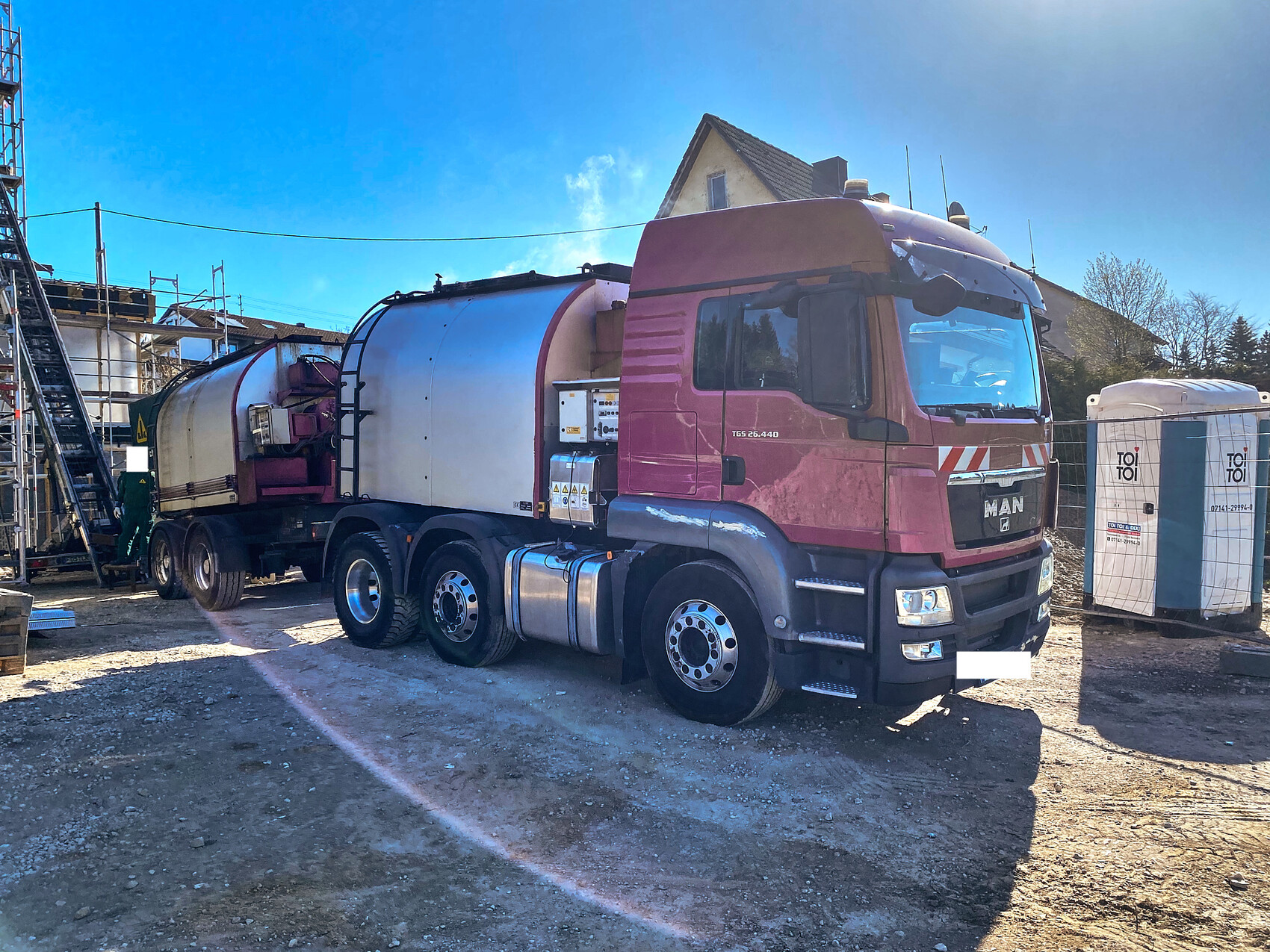
The inclined lift is used for the balcony on the upper floor. Inside the house and later to the lower levels, the transport is done manually as before.
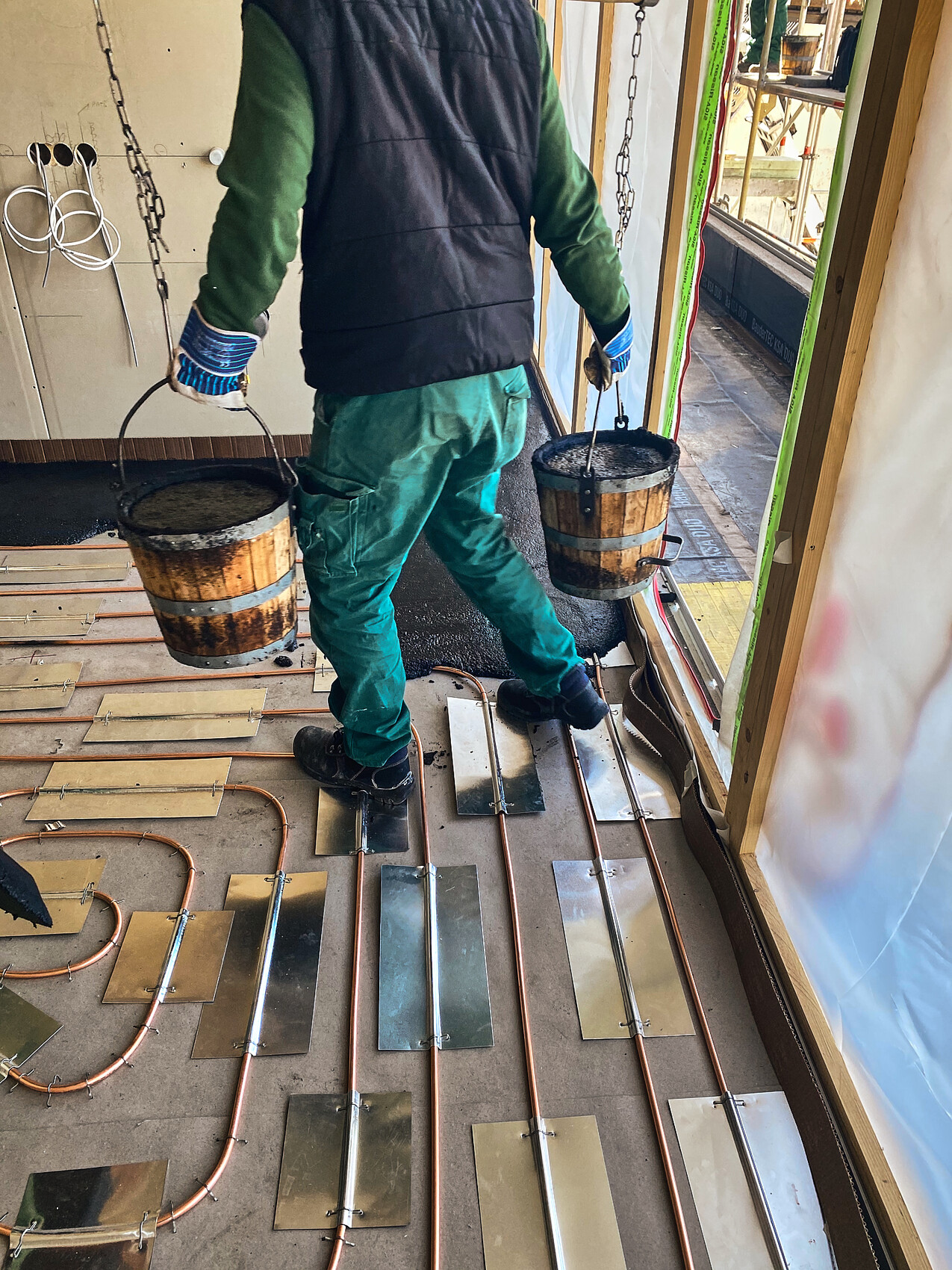
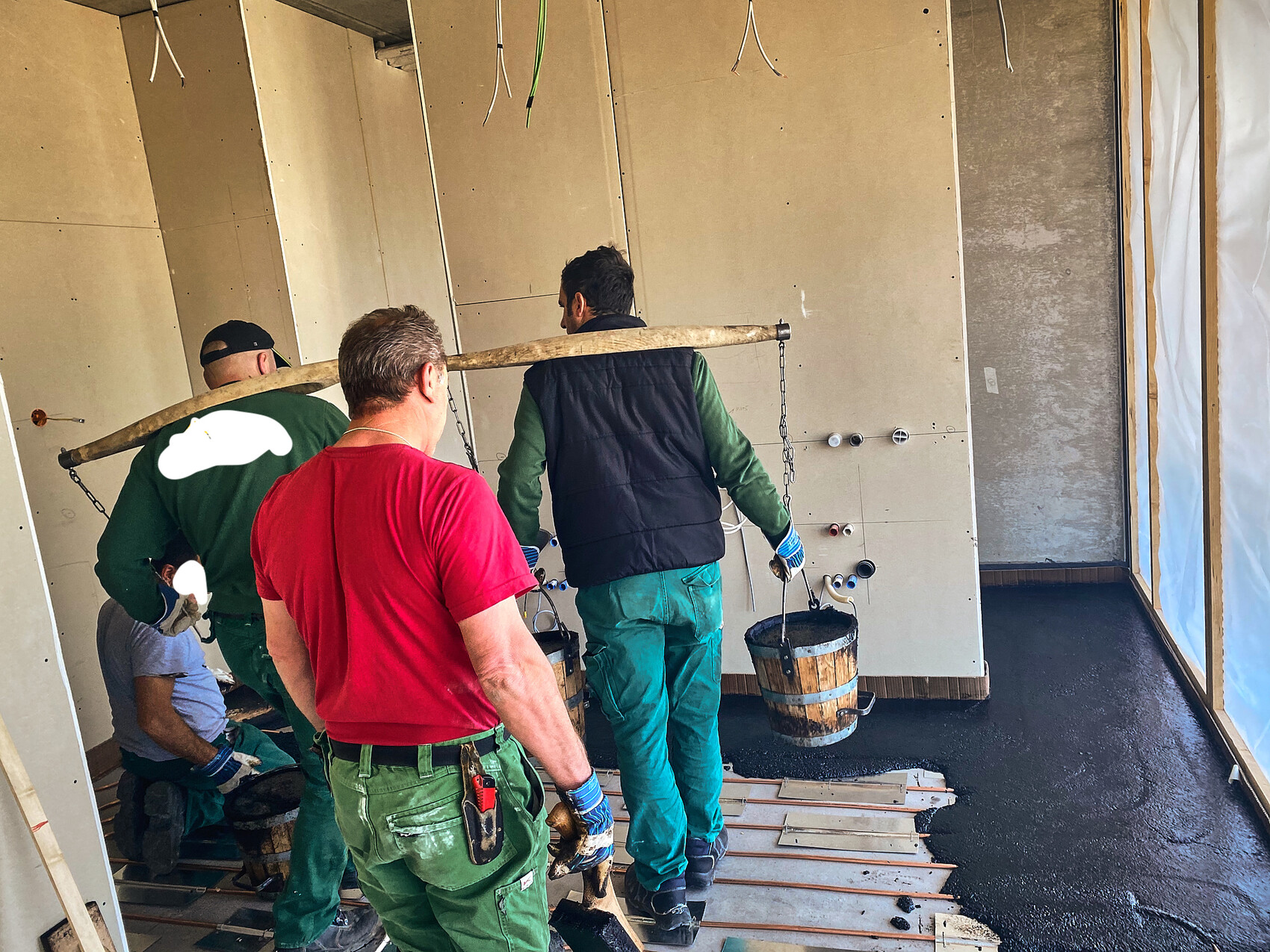
The over 200°C (392°F) hot material is poured and spread, smoothed, etc., using a piece of wood.
It is tough work. Besides the weight and temperature, there is also the smell. In the past, asphalt was heated even more, but this is no longer allowed for several reasons.
Currently, this is the first layer to bond the installation at the floor level.
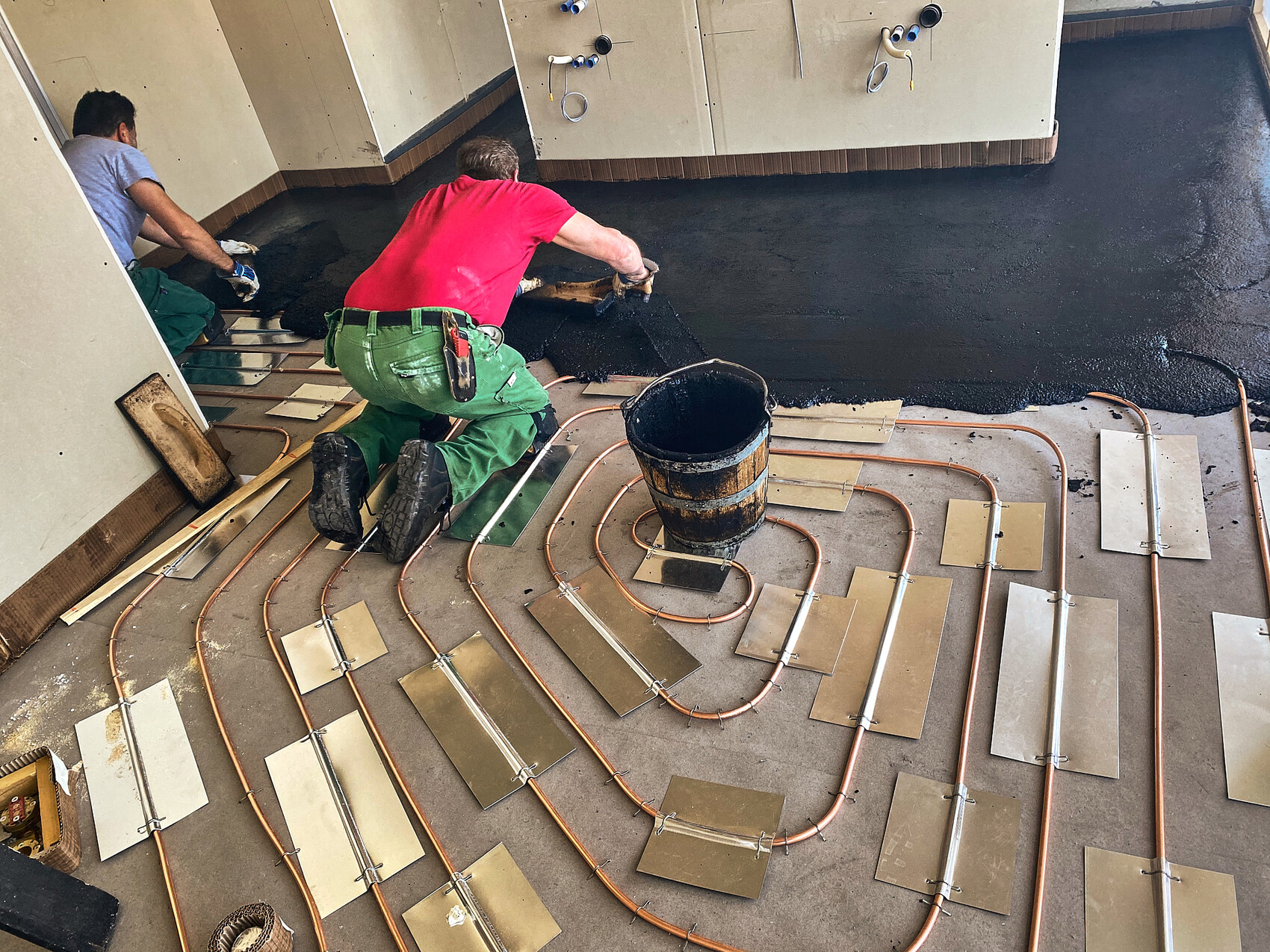
The goal is to finish the first layer by tomorrow evening and the second layer by the end of the week.
The garage will be completed much later since we need it for storage, and the specialist for the preliminary work cannot come right now.
I already described the process a few pages ago.
The whole crew was on site punctually at 8 a.m. Due to the complexity, a team of 12 people is currently working.
They also brought the inclined lift and the first truckload of asphalt.
The inclined lift is used for the balcony on the upper floor. Inside the house and later to the lower levels, the transport is done manually as before.
The over 200°C (392°F) hot material is poured and spread, smoothed, etc., using a piece of wood.
It is tough work. Besides the weight and temperature, there is also the smell. In the past, asphalt was heated even more, but this is no longer allowed for several reasons.
Currently, this is the first layer to bond the installation at the floor level.
The goal is to finish the first layer by tomorrow evening and the second layer by the end of the week.
The garage will be completed much later since we need it for storage, and the specialist for the preliminary work cannot come right now.

Very exciting! As I said, it's not quite my style visually because it’s too dark, but I’m not familiar with this type of flooring at all, so I’m curious to see how it will turn out in the end.
Do they actually bring them in with those old-fashioned wooden buckets on the yoke? That’s probably the only material that works well with the asphalt, right? But somehow it looks like it’s from another era...
Do they actually bring them in with those old-fashioned wooden buckets on the yoke? That’s probably the only material that works well with the asphalt, right? But somehow it looks like it’s from another era...
This is just the bottom layer. It is the same asphalt that is sometimes used in renovations.
Only after the second layer and sanding do you see the final result. However, it still might not suit your taste.
We will have the wood on the ceiling afterwards.
It remains the only way to process it. Only transportation and heating have become more modern. The last meters and installation are still the same. #HardWork
Only after the second layer and sanding do you see the final result. However, it still might not suit your taste.
We will have the wood on the ceiling afterwards.
It remains the only way to process it. Only transportation and heating have become more modern. The last meters and installation are still the same. #HardWork
H
hampshire15 Apr 2020 09:51Actually, the combination and placement of the materials (hard/rocky on the floor and wood on the ceiling) feels quite natural. The only thing missing is the foliage.
I believe that the floor, in interaction with the building, will suit my taste very well, even though we chose a completely different type of house ourselves.
I had concerns about bringing any materials with strong unpleasant odors into the house, which was a deciding factor for us. Whether it is truly healthier, I cannot prove and won’t even try – the decision was made based on emotional reasons, and that’s that.
What I particularly appreciate about your project is the clear respect you show towards your craftsmen.
I believe that the floor, in interaction with the building, will suit my taste very well, even though we chose a completely different type of house ourselves.
I had concerns about bringing any materials with strong unpleasant odors into the house, which was a deciding factor for us. Whether it is truly healthier, I cannot prove and won’t even try – the decision was made based on emotional reasons, and that’s that.
What I particularly appreciate about your project is the clear respect you show towards your craftsmen.
@hampshire I understand your concerns, but the smell disappears after cooling down and a few days.
Here is an excerpt from the Building Biology magazine:
“Cast asphalt screed is a bitumen-bound screed. A filler mixture of stone dust, sand, and gravel in approximately a 1:2:2 ratio is combined with about 8% bitumen as a binder in hot form, mixed thoroughly, and poured in at around 250 degrees Celsius (482°F).
Cast asphalt screed offers several advantages: it is water-free (so no moisture is introduced into the building), provides impact sound insulation (low longitudinal sound conductivity due to its ‘rubber-like’ behavior), and can be walked on and covered after just a few hours.
Although the binder bitumen is derived from petroleum, it should not be confused with tar binder, whose emissions are considered highly hazardous to health.
During the hot phase, such as during installation, health-hazardous emissions from the bitumen content can occur. Therefore, protective measures according to technical regulations must be strictly followed.
In its cold state, however, no significant toxic emissions are known. Installed cast asphalt is therefore not considered harmful to health based on current knowledge.”
So, from a building biology perspective, we have no concerns here.
Here is an excerpt from the Building Biology magazine:
“Cast asphalt screed is a bitumen-bound screed. A filler mixture of stone dust, sand, and gravel in approximately a 1:2:2 ratio is combined with about 8% bitumen as a binder in hot form, mixed thoroughly, and poured in at around 250 degrees Celsius (482°F).
Cast asphalt screed offers several advantages: it is water-free (so no moisture is introduced into the building), provides impact sound insulation (low longitudinal sound conductivity due to its ‘rubber-like’ behavior), and can be walked on and covered after just a few hours.
Although the binder bitumen is derived from petroleum, it should not be confused with tar binder, whose emissions are considered highly hazardous to health.
During the hot phase, such as during installation, health-hazardous emissions from the bitumen content can occur. Therefore, protective measures according to technical regulations must be strictly followed.
In its cold state, however, no significant toxic emissions are known. Installed cast asphalt is therefore not considered harmful to health based on current knowledge.”
So, from a building biology perspective, we have no concerns here.
Similar topics