
ᐅ Bathtub placed in front of window, parapet too low, general contractor is refusing to cooperate
Created on: 20 Sep 2021 14:02
B
BananaJoe
Hello everyone,
we are building our house with a general contractor (GC) and have agreed on a fixed price.
In the bathroom, we have a window with a sill height of 1.12 m (3 ft 8 in) finished floor level (FFL), which is partially located above the bathtub and a small shelf (between the bathtub and the exterior wall), on the right side in the picture.
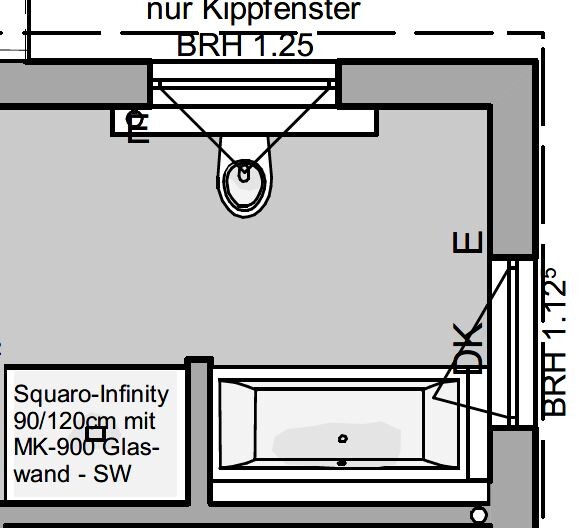
Both I and our expert noticed that according to the building regulations (Hessen), parapet or railing heights must be at least 80 cm (31.5 inches), measured either from finished floor level (which is complied with here) or from any steps, platforms, or similar climbing aids located in front of it (which is not the case here due to the bathtub and shelf). Although we have lockable handles on the upper floor window, our expert says an additional safety measure is required, for example, the installation of a (glass) railing similar to those used on French balconies.
This is also reflected in the recommendations for enforcement of the Hessian Building Code issued by the Ministry of Economic Affairs (marginal note 35.3.1):
“The height of the parapet is generally measured from the top edge of the finished floor to the top edge of the window sill or another fixed parapet-like element, excluding the window frame. If there are elements in front of the parapet, such as cable ducts or ventilation channels, which could be used to climb up, the measurement must be taken from the top edge of those elements.”
Since we have two small children who will eventually bring friends home to play, we strongly believe that some safety provision is necessary here. Our GC, however, sees no need for action because the window has a lockable handle. I have already informed the GC that we would report this issue to the responsible building authority if necessary, so they can verify whether this is compliant (we have built under an exemption procedure, so the building application has not yet been reviewed in detail). Based on the Ministry’s recommendation, I am quite confident that the authority will agree with our expert.
Now to my question: who pays for the additional safety measure (assuming the building authority requires it)?
From a brief search, I found fairly good glass railings (since our bathroom window faces the street, we want the railing to be as discreet as possible, e.g., no bars or similar) for about 500 euros. Including installation, I expect the total cost would not exceed 1,000 euros.
In my view, it’s simple: I purchased a house that complies with legal requirements. If the GC’s planning does not meet these standards and requires rework, they should cover the cost. The GC (or our site manager), on the other hand, argues that if the building authority demands the railing, it was simply overlooked in the planning and therefore not included in the fixed price. If they had known the railing was needed, the price would have been higher, meaning we should bear the cost.
I consider that unreasonable; otherwise, fixed prices are pointless. As a layperson, I assume that the fixed price guarantees a house that meets legal standards. Otherwise, the GC could plan anything and later—if it turns out the structure is unsafe, violates the zoning plan, or is otherwise incorrect—increase the price by whatever amount is necessary to fix the planning mistake...
What’s your opinion?
we are building our house with a general contractor (GC) and have agreed on a fixed price.
In the bathroom, we have a window with a sill height of 1.12 m (3 ft 8 in) finished floor level (FFL), which is partially located above the bathtub and a small shelf (between the bathtub and the exterior wall), on the right side in the picture.
Both I and our expert noticed that according to the building regulations (Hessen), parapet or railing heights must be at least 80 cm (31.5 inches), measured either from finished floor level (which is complied with here) or from any steps, platforms, or similar climbing aids located in front of it (which is not the case here due to the bathtub and shelf). Although we have lockable handles on the upper floor window, our expert says an additional safety measure is required, for example, the installation of a (glass) railing similar to those used on French balconies.
This is also reflected in the recommendations for enforcement of the Hessian Building Code issued by the Ministry of Economic Affairs (marginal note 35.3.1):
“The height of the parapet is generally measured from the top edge of the finished floor to the top edge of the window sill or another fixed parapet-like element, excluding the window frame. If there are elements in front of the parapet, such as cable ducts or ventilation channels, which could be used to climb up, the measurement must be taken from the top edge of those elements.”
Since we have two small children who will eventually bring friends home to play, we strongly believe that some safety provision is necessary here. Our GC, however, sees no need for action because the window has a lockable handle. I have already informed the GC that we would report this issue to the responsible building authority if necessary, so they can verify whether this is compliant (we have built under an exemption procedure, so the building application has not yet been reviewed in detail). Based on the Ministry’s recommendation, I am quite confident that the authority will agree with our expert.
Now to my question: who pays for the additional safety measure (assuming the building authority requires it)?
From a brief search, I found fairly good glass railings (since our bathroom window faces the street, we want the railing to be as discreet as possible, e.g., no bars or similar) for about 500 euros. Including installation, I expect the total cost would not exceed 1,000 euros.
In my view, it’s simple: I purchased a house that complies with legal requirements. If the GC’s planning does not meet these standards and requires rework, they should cover the cost. The GC (or our site manager), on the other hand, argues that if the building authority demands the railing, it was simply overlooked in the planning and therefore not included in the fixed price. If they had known the railing was needed, the price would have been higher, meaning we should bear the cost.
I consider that unreasonable; otherwise, fixed prices are pointless. As a layperson, I assume that the fixed price guarantees a house that meets legal standards. Otherwise, the GC could plan anything and later—if it turns out the structure is unsafe, violates the zoning plan, or is otherwise incorrect—increase the price by whatever amount is necessary to fix the planning mistake...
What’s your opinion?
