
ᐅ Bathtub – The general contractor does not want it to be installed recessed or lowered.
Created on: 5 Jan 2020 13:05
B
bauenmk2020
Hello everyone,
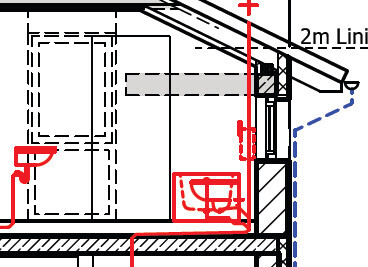
We have a large 80x180 cm (31x71 inch) bathtub in our bathroom. The bathtub is placed in front of a window with a sill height of 69.5 cm (27.4 inches) above the finished floor level. The tub itself is about 60 cm (24 inches) high. It is installed on a bathtub support frame set on the finished floor. The construction manager insists on this because I mentioned that the tub feels too high for us and we would prefer to place it directly on the rough floor. He says that it must be placed on the finished floor to prevent water damage from penetrating the building structure.
I continued planning and realized that there will be almost no space left for the faucet fittings, as there are only a few centimeters between the top edge of the bathtub and the window sill height. So, the faucet cannot be installed where it is planned in the execution drawings.
After confronting the construction manager, he now says he will check possible solutions. For example, removing the faucet fittings and instead supplying water through the overflow. This would incur additional costs, which we would have to bear!
I’m really not satisfied with this! Someone else who is also building with the general contractor has their tub placed directly on the rough floor—it seems they have a different construction manager.
My question to you:
What arguments can I give the construction manager to have the tub placed on the rough floor after all? Are there regulations or current best practices that require placing it only on the finished screed/floor for reasons like “water tightness” in case of water damage?
Is such a “compromise solution” to be paid for by the homeowner, or is it the contractor’s responsibility? According to the construction manager, “it’s your house, individually planned and built, so your wishes and your costs”...
Edit:
We set the window sill height as high as possible. Higher than 69.5 cm (27.4 inches) is not possible due to the window and knee wall.
We have a large 80x180 cm (31x71 inch) bathtub in our bathroom. The bathtub is placed in front of a window with a sill height of 69.5 cm (27.4 inches) above the finished floor level. The tub itself is about 60 cm (24 inches) high. It is installed on a bathtub support frame set on the finished floor. The construction manager insists on this because I mentioned that the tub feels too high for us and we would prefer to place it directly on the rough floor. He says that it must be placed on the finished floor to prevent water damage from penetrating the building structure.
I continued planning and realized that there will be almost no space left for the faucet fittings, as there are only a few centimeters between the top edge of the bathtub and the window sill height. So, the faucet cannot be installed where it is planned in the execution drawings.
After confronting the construction manager, he now says he will check possible solutions. For example, removing the faucet fittings and instead supplying water through the overflow. This would incur additional costs, which we would have to bear!
I’m really not satisfied with this! Someone else who is also building with the general contractor has their tub placed directly on the rough floor—it seems they have a different construction manager.
My question to you:
What arguments can I give the construction manager to have the tub placed on the rough floor after all? Are there regulations or current best practices that require placing it only on the finished screed/floor for reasons like “water tightness” in case of water damage?
Is such a “compromise solution” to be paid for by the homeowner, or is it the contractor’s responsibility? According to the construction manager, “it’s your house, individually planned and built, so your wishes and your costs”...
Edit:
We set the window sill height as high as possible. Higher than 69.5 cm (27.4 inches) is not possible due to the window and knee wall.
Vicky Pedia schrieb:
And as a nice side effect: The entry height is more comfortable. That is the only nice side effect. Otherwise, there are disadvantages, such as missing heating surface in the bathroom.
The fact that the fixtures don’t fit is simply a planning error.
There is nothing inherently wrong with placing the bathtub directly on the subfloor; it’s a matter of personal preference.
Vicky Pedia schrieb:
The main contractor’s argument is nonsense. If the bathtub leaks, the water will flow into the building anyway. Not nonsense at all. With a walk-in shower, there is an obligation to waterproof the entire floor area of the room. This is done above the screed. If you exclude the bathtub from this, you initially waive waterproofing unless it is agreed to extend the waterproofing (in whatever way) to the subfloor or bathtub.
Just keep following up and try to have the conversation again. In the end, it’s always about the money.
The topic of waterproofing doesn’t make much sense but involves extra effort compared to the general contractor option.
Bathtub on screed: waterproof the entire bathroom once before installing the bathtub support and you're done.
Bathtub on raw subfloor: finish the screed first, then if needed, level the height for pipes beneath the bathtub. After that, apply the first waterproofing layer under the tub, including connections to the wall and waterproofing on the screed. Then install the bathtub support. Finally, apply the screed waterproofing and seal it to the bathtub support.
Bathtub on screed: waterproof the entire bathroom once before installing the bathtub support and you're done.
Bathtub on raw subfloor: finish the screed first, then if needed, level the height for pipes beneath the bathtub. After that, apply the first waterproofing layer under the tub, including connections to the wall and waterproofing on the screed. Then install the bathtub support. Finally, apply the screed waterproofing and seal it to the bathtub support.
 bauenmk20205 Jan 2020 15:46
As far as I know, the bathtub support frame is made of styrofoam or a similar material.
The floor construction height is 17cm (7 inches).
Domski schrieb:Which method do you recommend?
The topic of waterproofing is nonsense, but it involves more effort compared to the general contractor’s method.
Bathtub on screed: waterproof the entire bathroom once before installing the bathtub support frame, and that’s it.
Bathtub on unfinished subfloor: leave the screed aside, then possibly level the height for pipes under the bathtub. After that, create the first waterproofing layer under the bathtub, including connections to the wall and waterproofing on the screed. Then install the bathtub support frame. Then apply the screed waterproofing and integrate it with the bathtub support frame.
The floor construction height is 17cm (7 inches).
bauenmk2020 schrieb:
As far as I know, the shower tray support is made of styrofoam or something similar.
Which option do you suggest?
The floor construction is 17cm (6.7 inches).Well, you are the builder, not me your site manager.
Your general contractor will likely request a change order for the additional work.
 Vicky Pedia5 Jan 2020 19:20
guckuck2 schrieb:
That is the only positive side effect. Otherwise, there are drawbacks, such as the lack of heating surface in the bathroom.Apart from the fact that the bathtub will be there regardless, it is not a heating surface anyway. The issue to be resolved is what happens with the faucet. The client ordered a functioning solution that is technically flawless. If the general contractor can only implement this with different (more expensive) faucets, that is not the client’s responsibility, especially since the client is not a planner. It is definitely the general contractor’s decision which method to choose (he is also responsible for the heat pump), but the costs cannot be passed on to the client. The client wants a bathtub with water in it—properly installed and without extra costs.Vicky Pedia schrieb:
Apart from the fact that the bathtub is there regardless, it is not a heating surface anyway. The real issue to solve is what will happen with the faucet. The client ordered a working solution that is technically flawless. If the general contractor (GC) can only implement this with different (more expensive) faucets, that is not the client’s responsibility, especially since the client is not a planner. Of course, it is the GC’s responsibility to decide which approach to take (after all, they are also installing the heat pump), but the costs should not be passed on to the client. The client wants a bathtub filled with water there. And it should be done professionally and without extra costs. You tend to generalize. How do you know the client did not specify the parapet height? Or that the planning documents were not prepared by an architect and the GC is just executing them?
Every bit of heating output helps in the bathroom. I would not want to do without heating both under the bathtub and in the shower and would consider it a disadvantage if the bathtub stands directly on the raw floor.
Similar topics