
ᐅ Basement Waterproofing / Drainage for Clay Soil and Brick Foundations
Created on: 1 May 2021 12:05
R
Rainer23Good day and a happy May 1st!
We have a problem with hydrostatic water pressure (groundwater); one basement room was literally flooded because of it. Moisture passed through the masonry. Now we want to stay "dry" in the future and are planning insulation/waterproofing of the basement exterior wall. For this, large amounts of digging were done, and it turned out that it is the clay soil that stores and releases the water.
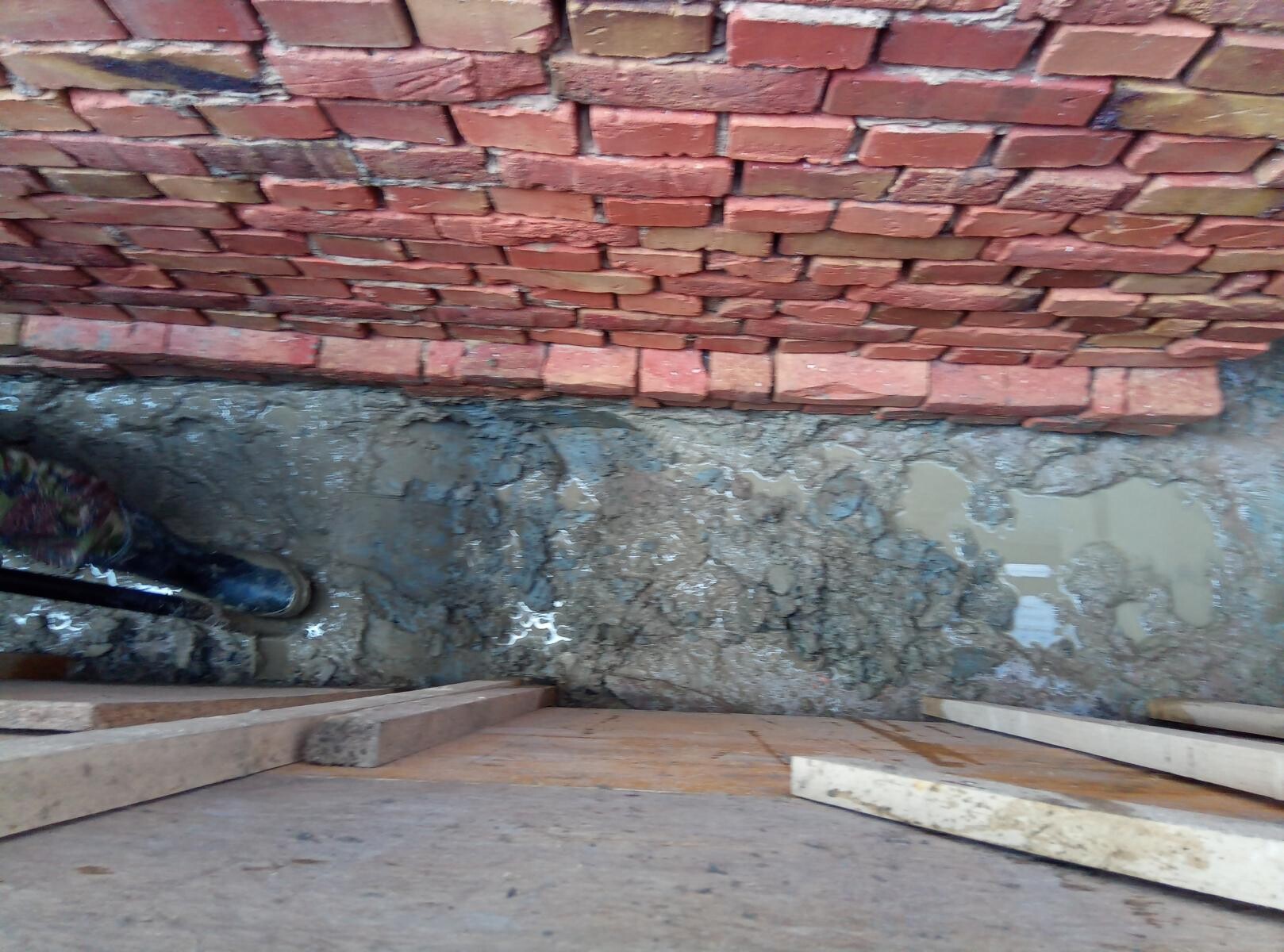
The facts are:
We have already cleaned and plastered the wall and brick foundation (two bricks stacked) multiple times with mortar and bitumen. After that, Styrofoam insulation boards were adhered to the wall. Now, the drainage system is still missing.
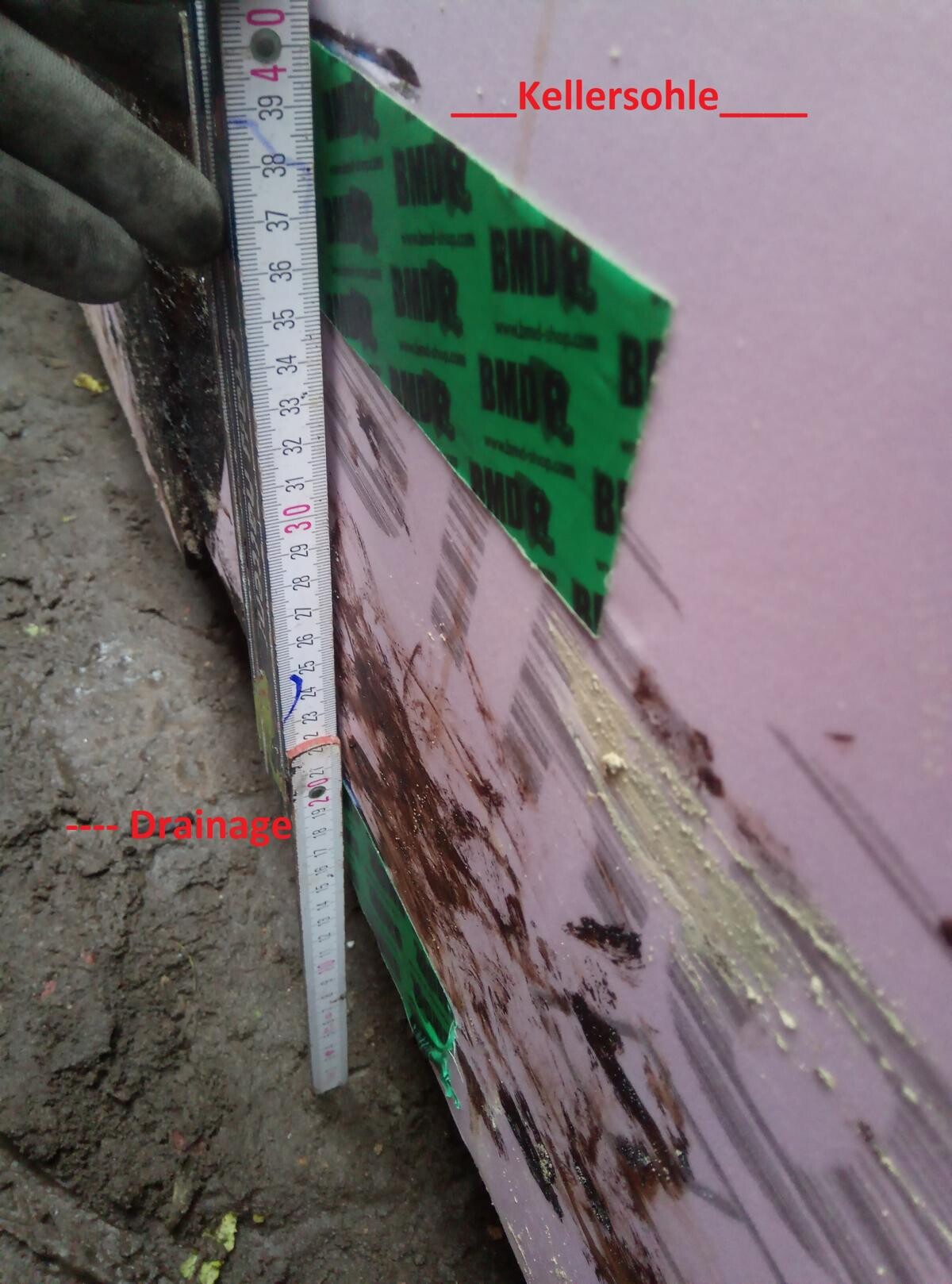
And now my question:
The exposed lower two bricks (serving as the foundation) that also lie beneath a layer of clay—should these simply be backfilled and compacted with soil/sand? Because a gap has formed there due to the adhesion of the Styrofoam boards. (see sketch)
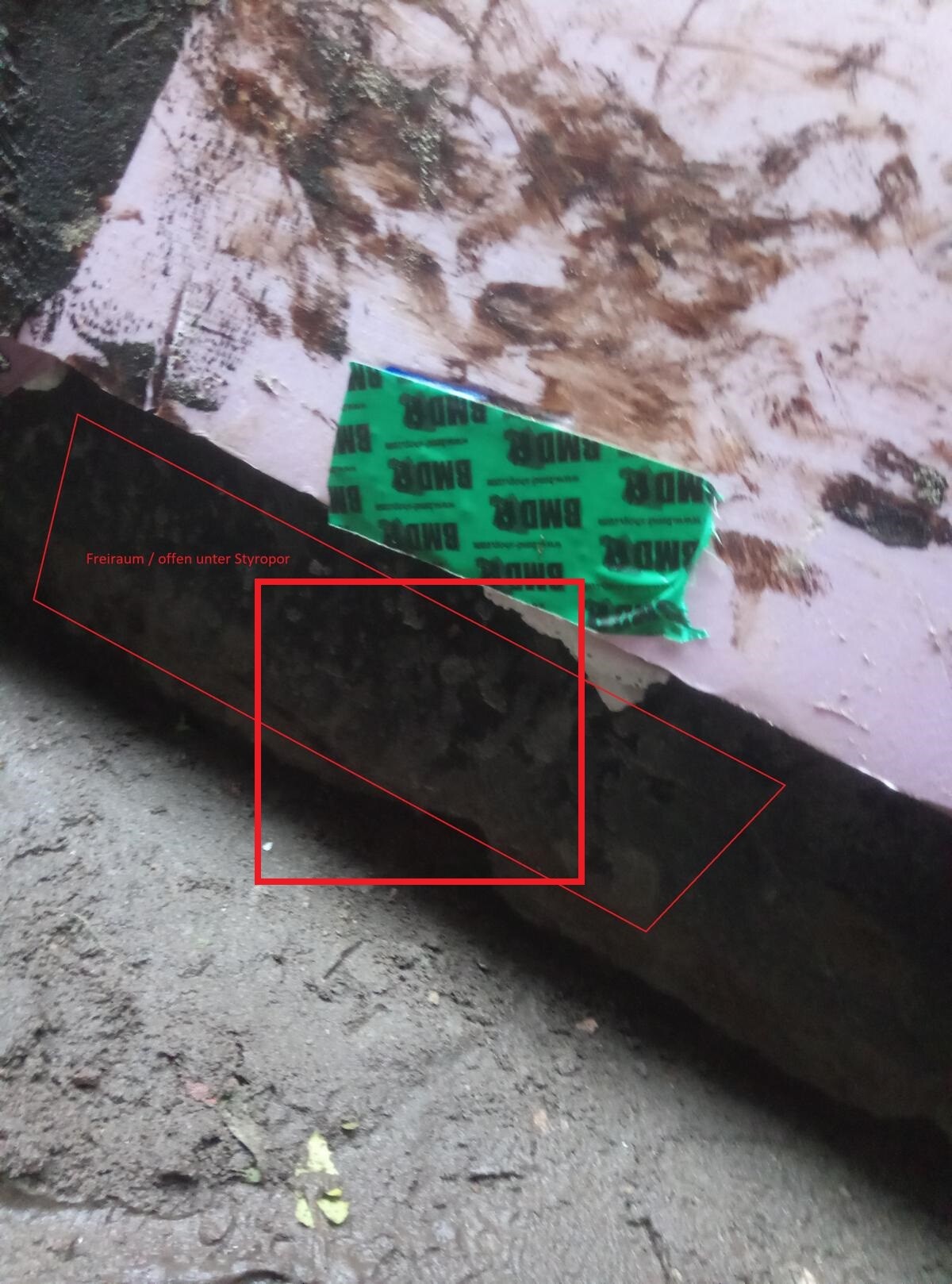
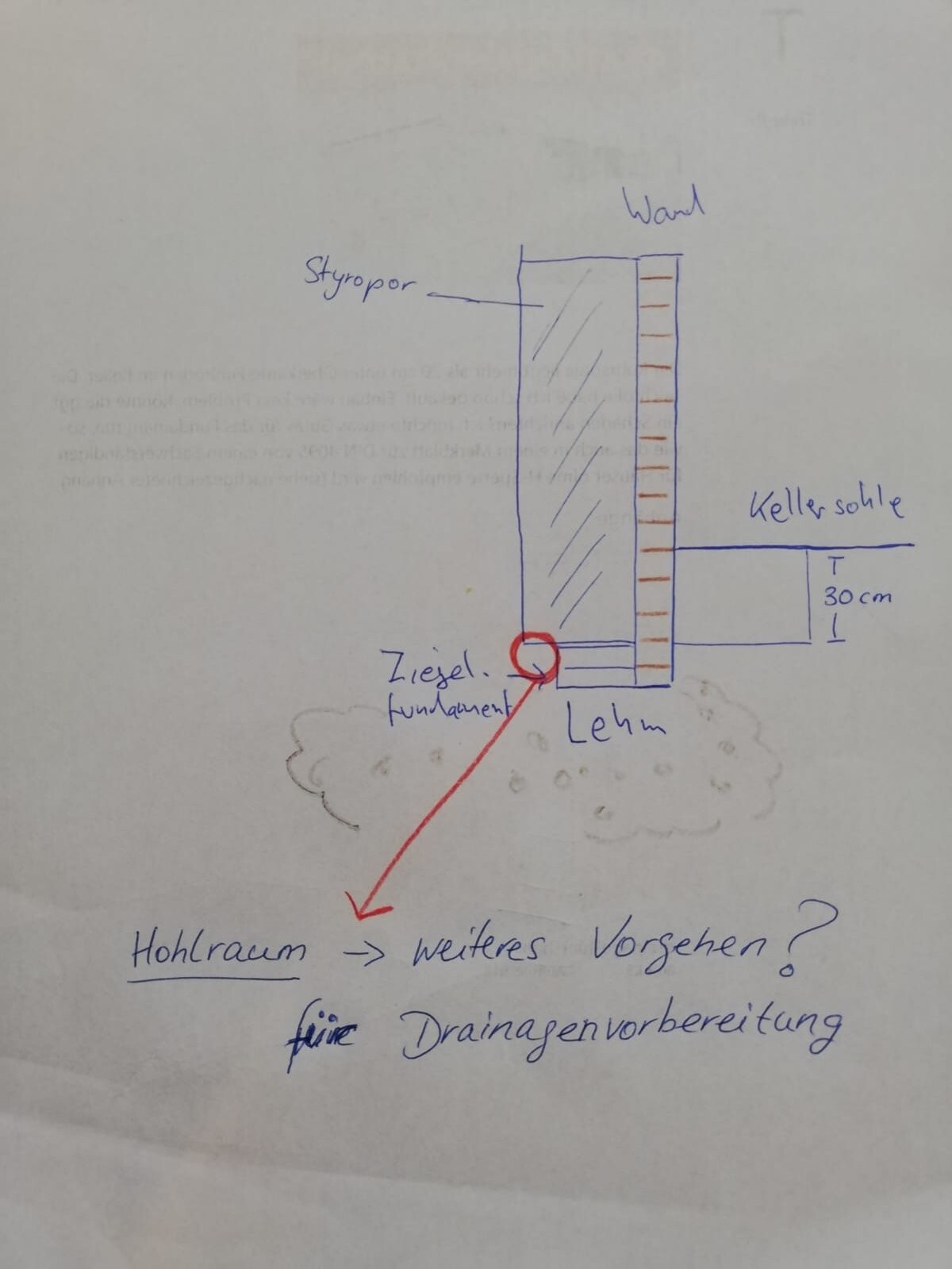
Or what would be the best/next step regarding preparation for drainage?
See sketch and photos.
I would be very grateful for helpful tips and answers...
Kind regards
Rainer
We have a problem with hydrostatic water pressure (groundwater); one basement room was literally flooded because of it. Moisture passed through the masonry. Now we want to stay "dry" in the future and are planning insulation/waterproofing of the basement exterior wall. For this, large amounts of digging were done, and it turned out that it is the clay soil that stores and releases the water.
The facts are:
We have already cleaned and plastered the wall and brick foundation (two bricks stacked) multiple times with mortar and bitumen. After that, Styrofoam insulation boards were adhered to the wall. Now, the drainage system is still missing.
And now my question:
The exposed lower two bricks (serving as the foundation) that also lie beneath a layer of clay—should these simply be backfilled and compacted with soil/sand? Because a gap has formed there due to the adhesion of the Styrofoam boards. (see sketch)
Or what would be the best/next step regarding preparation for drainage?
See sketch and photos.
I would be very grateful for helpful tips and answers...
Kind regards
Rainer
H
hanghaus20001 May 2021 12:23The clay soil does not retain water. It prevents water from draining downward.
Install a drainage pipe at the lowest point, connect the drainage to the sewer system, and cover the wall with a dimpled membrane. Then surround the drainage area with gravel. Cover the gravel with geotextile fabric (alternatively, you can completely wrap the gravel with a non-woven fabric), then backfill with a water-permeable material.
Install a drainage pipe at the lowest point, connect the drainage to the sewer system, and cover the wall with a dimpled membrane. Then surround the drainage area with gravel. Cover the gravel with geotextile fabric (alternatively, you can completely wrap the gravel with a non-woven fabric), then backfill with a water-permeable material.


 HausiKlausi1 May 2021 23:30
How does it look from below? The best external waterproofing is useless if water then finds the next shortest path and penetrates through the ground. Even if you can manage this with drainage around the house, there might still be groundwater pressing against it from below. I know this isn’t a solution, but since I have similar conditions, I just wanted to temper expectations regarding the newly installed insulation.
Similar topics