
ᐅ Basement versus Increased Living Space on the Ground Floor
Created on: 19 Apr 2022 20:36
H
HalloClarissa
Dear all,
We are planning to build a bungalow with 3 rooms and about 85 sqm (915 sq ft) of living space. Since the plot is on a slope, we need to build with a partial basement.
Which option would likely be more cost-effective:
1. Living area on the ground floor (including a guest room) of 85 sqm (915 sq ft) and a 50 sqm (538 sq ft) basement used mainly as a utility cellar with a technical room (then we would only need one bathroom).
2. Ground floor only 75 sqm (808 sq ft), guest room in the partially finished 50 sqm (538 sq ft) basement as living space (which would require a second bathroom but could be fitted out later by ourselves).
As soon as the basement is meant to have living space, the access routes must be heated and insulated. Also, an internal staircase is necessary. A purely utility basement could possibly be accessed only from outside without an internal staircase, saving space.
Theoretically, a room on the ground floor requires about 12 sqm (129 sq ft). If this room is located in the basement, additional space for stairs on both floors and another hallway is needed, approximately 24 sqm (258 sq ft).
Am I thinking about this correctly?
Has anyone calculated a similar case before?
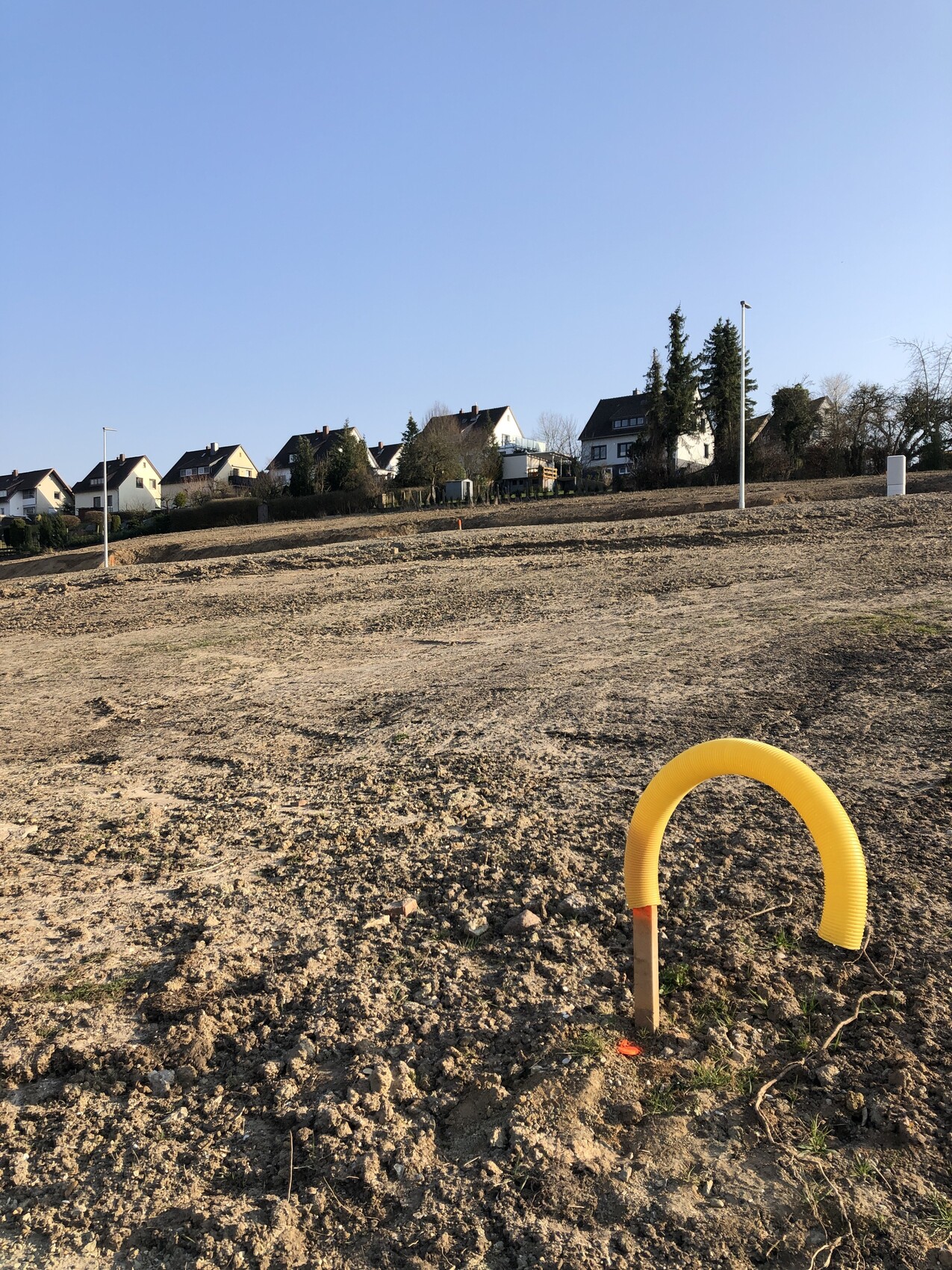
We are planning to build a bungalow with 3 rooms and about 85 sqm (915 sq ft) of living space. Since the plot is on a slope, we need to build with a partial basement.
Which option would likely be more cost-effective:
1. Living area on the ground floor (including a guest room) of 85 sqm (915 sq ft) and a 50 sqm (538 sq ft) basement used mainly as a utility cellar with a technical room (then we would only need one bathroom).
2. Ground floor only 75 sqm (808 sq ft), guest room in the partially finished 50 sqm (538 sq ft) basement as living space (which would require a second bathroom but could be fitted out later by ourselves).
As soon as the basement is meant to have living space, the access routes must be heated and insulated. Also, an internal staircase is necessary. A purely utility basement could possibly be accessed only from outside without an internal staircase, saving space.
Theoretically, a room on the ground floor requires about 12 sqm (129 sq ft). If this room is located in the basement, additional space for stairs on both floors and another hallway is needed, approximately 24 sqm (258 sq ft).
Am I thinking about this correctly?
Has anyone calculated a similar case before?
 HalloClarissa20 Apr 2022 09:46
haydee schrieb:
Yes, small trip hazards always become a nuisance eventually. It's frustrating when the care service can't properly access the shower and the kitchen can only be reached by maneuvering back and forth three times. Using a compass makes it quite manageable to achieve the 1.5 m (5 feet) turning radius.
I think the space needed around the bed should not be underestimated. I see with my parents how something that seemed spacious becomes a bit cramped.
If you build without a basement, you’ll have to support the house in some way—walls, stilts, etc., like @hampshire did. However, he didn’t necessarily focus on costs. His priority was more about personal preference.
With such a height difference, the most cost-effective solution is usually to reduce the footprint and put rooms in the basement. Reducing space is only possible to a limited extent for you.
I think the solution you sketched out is quite good: living areas upstairs, everything else downstairs. I would still plan a niche upstairs for the washer and dryer. Carrying the laundry basket downstairs could be cumbersome. I had been considering the possible necessary clearance space in the bedroom and thought about positioning the door so that the beds could be moved apart, creating double the clearance in the middle. I need to think this through again. On the other hand, in that case, the bedroom and TV room could also be swapped.
Also, the table in the open-plan kitchen-living area could then be placed differently.
H
Hausbautraum2020 Apr 2022 09:52HalloClarissa schrieb:
But how did those who built without a basement set up the house? On stilts?No one here uses stilts. Instead, the hillside was excavated to create a level area, and the houses are built with a shallow depth so that there isn’t a significant height difference. However, for most, the main entrance can only be reached by climbing many steps, which of course is not suitable for all ages.
Okay, that clarifies some thoughts. I can relate to many of them myself (I am in my mid-50s, my husband in his mid-60s). Also, personally, I want sunlight inside the house and an open living concept…
In my opinion, the price range or what you read everywhere is due to several factors: a) some include excavation work in the price, b) others calculate the difference compared to the slab foundation, or c) most basement cost estimates assume a flat lot. A simple basement with typical basement windows and a concrete floor outside the thermal envelope is naturally cheaper than a tiled, usable basement that includes a sewage lifting station. In my view, a living basement makes sense especially on a sloped lot (I almost always recommend considering the basement as a livable lower floor to save costs by not converting the attic). This effectively replaces the upper floor, moving living spaces downwards in the house. This can’t be analyzed theoretically because various costs offset each other.
A partial basement is often not worthwhile, as for about the same amount of money you can gain more usable space. However, I understand your thinking, because if you have €15,000 leftover for space you don’t actually need, I would also prefer to save that money or invest it in higher-quality finishes as a couple.
d) Some people estimate half of the living space construction costs for the basement, assuming that finishing work is halved or not required.
Regarding your design (to be upfront: I don’t find it very practical), I think the bedroom is unsuitable—even for younger people. It feels too cramped, with unnecessary corners making it a hazard for toes and feet, difficult to walk in, and not accessible for a wheelchair or similar. You’d have to be able to park a wheelchair near the bed somehow, which I do not see here. Ideally, bedrooms should be rectangular, with the closet quickly and conveniently accessible from the door, and there should be space all around the bed. Also, I believe the main bathroom should not be located opposite the hallway, especially not near a visible entrance door.
So… your design already looks expensive from the outside. The idea to bring sunlight and light through a shed roof is generally sensible, but here it’s not well thought out: the sun will already enter the house through the south side! The shed roof should be shifted so that the third, central gable is over the northern rooms, allowing the living room to receive light there. The living room should anyway get sufficient light from windows facing the garden, north, and west. Unfortunately, the house seems to turn its back completely on the garden. Sightlines towards the garden are missing.
When I think about my daily life and work, as well as that of my nearly 80-year-old parents (the avid reader will understand), laundry and storage for everyday items (tools, batteries, cleaning supplies) matter more than the evening path to the relaxation area.
In short: I don’t see a need here for a basement, basement rooms, or a utility room accessed via an uncomfortable narrow staircase. Instead, I would consider—don’t be shocked—a split-level design that separates living areas and daily chores from the quiet/sleep area including the bathroom, connected by a short, comfortable staircase covering about 1.5 to 2 meters (5 to 6.5 feet) of height difference within the house. A stair level like this could also connect the garden terrace to the north.
This could then be covered with an economical gable roof, which for example could make one or two rooms more open towards the ceiling. You could also install one or two double casement windows there for additional light and a special atmosphere at low cost.
Personally, I have experienced almost every leg injury: broken toe, damaged groin, foot surgery with three months of recovery, and currently a knee bruise. It has never bothered me to manage stairs in the evening, as long as they are comfortable. Later on—much later—I might add some kind of stair lift, but that probably won’t happen until I’m about 80.
Therefore, I advise you to take a few days to consider whether you might be creating several half-baked compromises with your current approach instead of making one small compromise by slightly adjusting the original bungalow concept.
Otherwise, I must say: the lot is not age-appropriate, but it is not impossible to live there in old age.
HalloClarissa schrieb:
I have been researching endlessly, but it’s impossible to find reliable prices anywhere for a basement. There are mentions of 1000 to 2500 €/sqm (square meter) or 400 € more than the slab, etc.
In my opinion, the price range or what you read everywhere is due to several factors: a) some include excavation work in the price, b) others calculate the difference compared to the slab foundation, or c) most basement cost estimates assume a flat lot. A simple basement with typical basement windows and a concrete floor outside the thermal envelope is naturally cheaper than a tiled, usable basement that includes a sewage lifting station. In my view, a living basement makes sense especially on a sloped lot (I almost always recommend considering the basement as a livable lower floor to save costs by not converting the attic). This effectively replaces the upper floor, moving living spaces downwards in the house. This can’t be analyzed theoretically because various costs offset each other.
A partial basement is often not worthwhile, as for about the same amount of money you can gain more usable space. However, I understand your thinking, because if you have €15,000 leftover for space you don’t actually need, I would also prefer to save that money or invest it in higher-quality finishes as a couple.
d) Some people estimate half of the living space construction costs for the basement, assuming that finishing work is halved or not required.
Regarding your design (to be upfront: I don’t find it very practical), I think the bedroom is unsuitable—even for younger people. It feels too cramped, with unnecessary corners making it a hazard for toes and feet, difficult to walk in, and not accessible for a wheelchair or similar. You’d have to be able to park a wheelchair near the bed somehow, which I do not see here. Ideally, bedrooms should be rectangular, with the closet quickly and conveniently accessible from the door, and there should be space all around the bed. Also, I believe the main bathroom should not be located opposite the hallway, especially not near a visible entrance door.
So… your design already looks expensive from the outside. The idea to bring sunlight and light through a shed roof is generally sensible, but here it’s not well thought out: the sun will already enter the house through the south side! The shed roof should be shifted so that the third, central gable is over the northern rooms, allowing the living room to receive light there. The living room should anyway get sufficient light from windows facing the garden, north, and west. Unfortunately, the house seems to turn its back completely on the garden. Sightlines towards the garden are missing.
When I think about my daily life and work, as well as that of my nearly 80-year-old parents (the avid reader will understand), laundry and storage for everyday items (tools, batteries, cleaning supplies) matter more than the evening path to the relaxation area.
In short: I don’t see a need here for a basement, basement rooms, or a utility room accessed via an uncomfortable narrow staircase. Instead, I would consider—don’t be shocked—a split-level design that separates living areas and daily chores from the quiet/sleep area including the bathroom, connected by a short, comfortable staircase covering about 1.5 to 2 meters (5 to 6.5 feet) of height difference within the house. A stair level like this could also connect the garden terrace to the north.
This could then be covered with an economical gable roof, which for example could make one or two rooms more open towards the ceiling. You could also install one or two double casement windows there for additional light and a special atmosphere at low cost.
Personally, I have experienced almost every leg injury: broken toe, damaged groin, foot surgery with three months of recovery, and currently a knee bruise. It has never bothered me to manage stairs in the evening, as long as they are comfortable. Later on—much later—I might add some kind of stair lift, but that probably won’t happen until I’m about 80.
Therefore, I advise you to take a few days to consider whether you might be creating several half-baked compromises with your current approach instead of making one small compromise by slightly adjusting the original bungalow concept.
Otherwise, I must say: the lot is not age-appropriate, but it is not impossible to live there in old age.
And how do you plan to design the entrance from the east? Will the area be filled up to that point?
What bothers me most is having to pass the kitchen, dining table, and entrance to get from the bedroom to the bathroom. I feel this lacks privacy, especially if one person has visitors while the other is bedridden or ill.
Carrying the laundry basket up and down such a steep staircase also poses a risk of accidents.
I agree with [USER=12491]@ypg that this is not suitable for aging in place. The layout is too cramped and convoluted. I like the idea of a large, wide, comfortable staircase with a split-level design! You’ll probably be able to use it for a long time, and if not, a small lift can be added later.
What bothers me most is having to pass the kitchen, dining table, and entrance to get from the bedroom to the bathroom. I feel this lacks privacy, especially if one person has visitors while the other is bedridden or ill.
Carrying the laundry basket up and down such a steep staircase also poses a risk of accidents.
I agree with [USER=12491]@ypg that this is not suitable for aging in place. The layout is too cramped and convoluted. I like the idea of a large, wide, comfortable staircase with a split-level design! You’ll probably be able to use it for a long time, and if not, a small lift can be added later.
ypg schrieb:
Otherwise, I have to say: the plot is not age-appropriate, but it is not impossible to live there in old age.Would a new plot be an option?HalloClarissa20 Apr 2022 12:52ypg schrieb:
Ok, some thoughts are becoming clearer. I can relate to many points (I’m in my mid-50s, my husband in his mid-60s). Also, personally, I want sunlight inside the house and an open living concept…
In my opinion, the wide price range you find everywhere is due to a) some including earthworks in the price, b) differences related to the foundation slab, or c) most basement cost estimates only referring to a flat plot of land. A basic basement with typical basement windows and a concrete floor outside the thermal envelope is, of course, cheaper than a tiled usable basement with a sump pump system. The living basement, which I usually recommend for sloped sites, is basically a habitable lower ground floor. To save costs, I usually advise not to convert the attic but to shift the living spaces downward instead. This can’t be viewed purely theoretically because many different costs balance each other out.
A partial basement usually doesn’t make sense for many, as you get only a little extra space for quite a bit more money. However, I understand your way of thinking—if you have an extra $15,000 available for space you don’t really need, as a couple, I would rather save that money or invest it in higher quality fittings.
D) Some just estimate half the total construction costs for basements, assuming (generally) that interior finishes make up about half the cost, and the finishing work for the basement is omitted.
Regarding your design (I’ll say right away: I don’t find it great, because I think the bedroom is unsuitable even for young people—too cramped, full of useless corners, which is a hazard for toes, feet, unsteady walkers, and completely unsuitable for wheelchairs. You would need to park the wheelchair somewhere near the bed, which I don’t see here at all. The bedroom should ideally be rectangular with the closet easily accessible from the door and enough space around the bed. Also, I believe the master bathroom should not be planned opposite the hallway, at least not near a visible entrance door.)
So… the outside of your design already looks expensive. The idea of bringing sunlight and light inside through a shed roof is always a good one, but here it’s not thought through: the sun already enters the house through the south side! The shed roof would need to be offset so that the third central gable sits over the northern rooms, allowing natural light into the living room. The living room should get enough light with windows facing the garden, ideally on the north and west sides. Unfortunately, the house seems to turn completely away from the garden. Visual connections to the garden are missing.
Now… thinking about my daily routine and that of my nearly 80-year-old parents (those who read a lot know why), laundry and storage for everyday items (tools, batteries, cleaning supplies) matter more than the evening retreat to the quiet zone.
In short: I don’t see a need here for a basement, basement rooms, or a utility room that has to be reached underground by an uncomfortable spare staircase. Instead, I would suggest—a bit scary—the split-level with separation of living and daily chores from the quiet/sleep area including the bathroom, connected by a short, comfortable staircase that spans about 1.5 to 2 meters (5 to 6.5 feet) height difference within the house. Similar or matching stair levels would also connect from the terrace to the north-facing garden.
This can then be covered with an inexpensive gable roof, which could make one or two rooms more open up to the ceiling. You could also add one or two casement or double casement windows for even more light and special ambiance, at relatively low cost.
Personally, I’ve had almost every leg injury imaginable: broken toe, injured groin, foot surgery with three months of immobility, currently a bruised knee. Climbing stairs in the evening hasn’t been a problem for me—it just has to be comfortable. Later on, much later, there will probably be some electric stair assistance, but that will probably only be when I’m 80 anyway…
Therefore, I advise you to think for a few days about whether you want to end up with several half-baked compromises instead of one small compromise by slightly modifying the original bungalow concept. Otherwise, I have to say: the plot is not age-appropriate, but it’s not impossible to live there at an older age. Split-level is supposed to be relatively expensive though.
Similar topics