
ᐅ Basement versus Increased Living Space on the Ground Floor
Created on: 19 Apr 2022 20:36
H
HalloClarissa
Dear all,
We are planning to build a bungalow with 3 rooms and about 85 sqm (915 sq ft) of living space. Since the plot is on a slope, we need to build with a partial basement.
Which option would likely be more cost-effective:
1. Living area on the ground floor (including a guest room) of 85 sqm (915 sq ft) and a 50 sqm (538 sq ft) basement used mainly as a utility cellar with a technical room (then we would only need one bathroom).
2. Ground floor only 75 sqm (808 sq ft), guest room in the partially finished 50 sqm (538 sq ft) basement as living space (which would require a second bathroom but could be fitted out later by ourselves).
As soon as the basement is meant to have living space, the access routes must be heated and insulated. Also, an internal staircase is necessary. A purely utility basement could possibly be accessed only from outside without an internal staircase, saving space.
Theoretically, a room on the ground floor requires about 12 sqm (129 sq ft). If this room is located in the basement, additional space for stairs on both floors and another hallway is needed, approximately 24 sqm (258 sq ft).
Am I thinking about this correctly?
Has anyone calculated a similar case before?
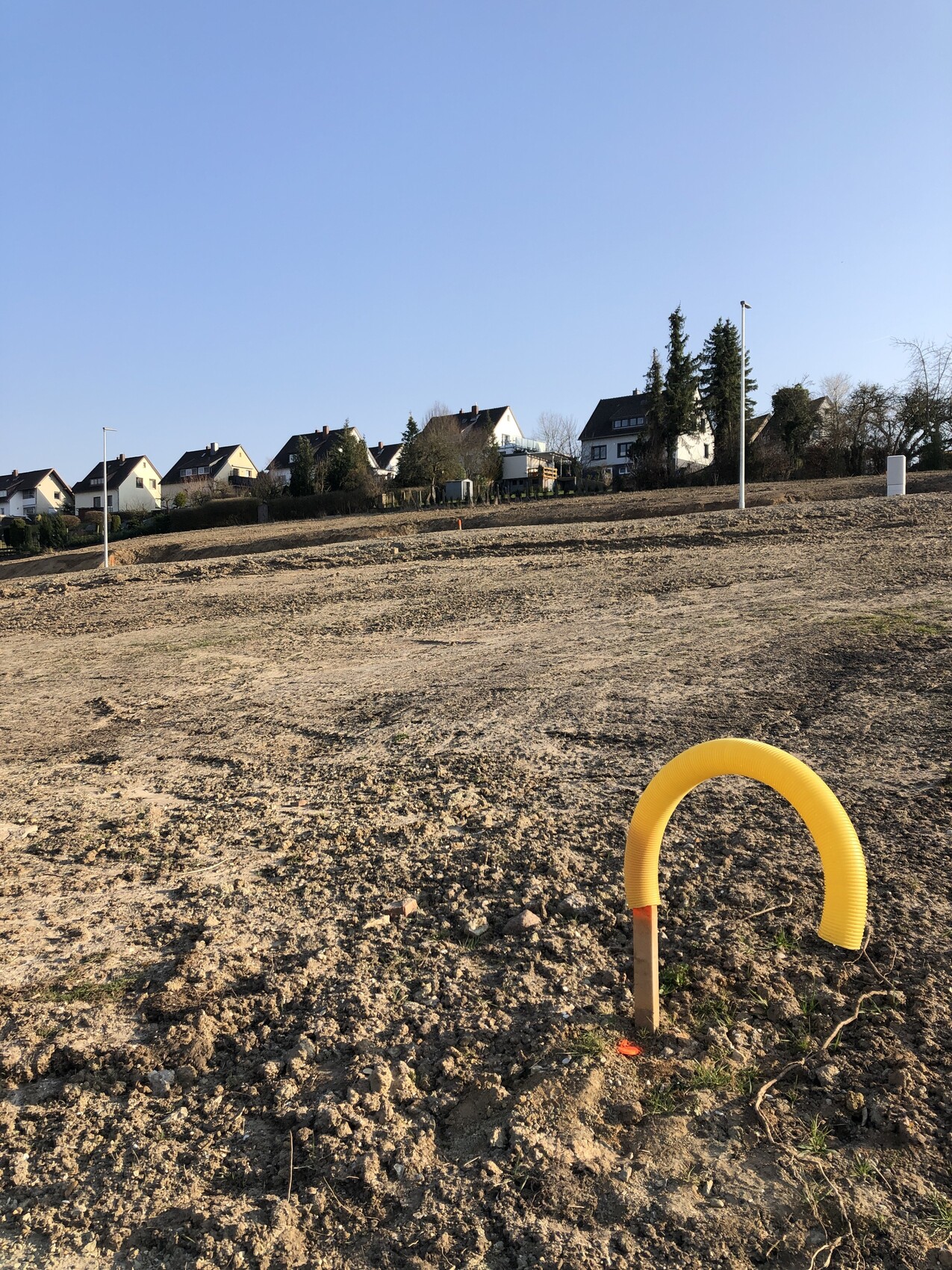
We are planning to build a bungalow with 3 rooms and about 85 sqm (915 sq ft) of living space. Since the plot is on a slope, we need to build with a partial basement.
Which option would likely be more cost-effective:
1. Living area on the ground floor (including a guest room) of 85 sqm (915 sq ft) and a 50 sqm (538 sq ft) basement used mainly as a utility cellar with a technical room (then we would only need one bathroom).
2. Ground floor only 75 sqm (808 sq ft), guest room in the partially finished 50 sqm (538 sq ft) basement as living space (which would require a second bathroom but could be fitted out later by ourselves).
As soon as the basement is meant to have living space, the access routes must be heated and insulated. Also, an internal staircase is necessary. A purely utility basement could possibly be accessed only from outside without an internal staircase, saving space.
Theoretically, a room on the ground floor requires about 12 sqm (129 sq ft). If this room is located in the basement, additional space for stairs on both floors and another hallway is needed, approximately 24 sqm (258 sq ft).
Am I thinking about this correctly?
Has anyone calculated a similar case before?
H
Hausbautraum2020 Apr 2022 08:24We live in a very steep building area.
I know 10 houses from the inside, and 5 of them do not have a basement due to cost reasons.
Two of those houses belong to architects themselves.
So, I don’t think a basement has to make sense from a cost perspective. Especially if you want to live age-friendly without stairs. I would skip it.
I know 10 houses from the inside, and 5 of them do not have a basement due to cost reasons.
Two of those houses belong to architects themselves.
So, I don’t think a basement has to make sense from a cost perspective. Especially if you want to live age-friendly without stairs. I would skip it.
 HalloClarissa20 Apr 2022 08:48
Hausbautraum20 schrieb:
We live in a very steep building area.
I know 10 houses from the inside, and 5 of them don’t have a basement for cost reasons.
Two of those houses are owned by architects themselves.
So, I don’t believe having a basement is necessarily cost-effective, especially if you want to live without stairs in an age-appropriate way. I would leave it out. How did you then position the house or retain the slope? Then only stilts would be possible, right?[/QUOTE]
Hausbautraum20 schrieb:
We live in a very steep building area.
I know 10 houses from the inside, and 5 of them don’t have a basement for cost reasons.
Two of those houses are owned by architects themselves.
So, I don’t believe having a basement is necessarily cost-effective, especially if you want to live without stairs in an age-appropriate way. I would leave it out. But how did the “no-basement builders” then position the house? On stilts?
I don’t think the basement is bad. It houses a guest room and a workshop. Both are rooms that are needed but not used daily. If both require a walker, they will no longer live in the house, or the basement will become a private area for a caregiver.
I read somewhere that you really need a barrier-free design, because you plan that using a walker or wheelchair should not be a reason to move out. I can recommend the website Nullbarriere for this. From my experience, you have to be very proactive to ensure that you can get from the driveway to the terrace with a walker. It’s not just about having no stairs and no shower curb. Many say, of course, no problem, and then there are the thresholds missing in the house and the shower curb. But what about everything else? At the moment, it’s only about whether the floor plan and furniture layout allow enough room for movement. The rest will come as needed and according to the state of the art.
I read somewhere that you really need a barrier-free design, because you plan that using a walker or wheelchair should not be a reason to move out. I can recommend the website Nullbarriere for this. From my experience, you have to be very proactive to ensure that you can get from the driveway to the terrace with a walker. It’s not just about having no stairs and no shower curb. Many say, of course, no problem, and then there are the thresholds missing in the house and the shower curb. But what about everything else? At the moment, it’s only about whether the floor plan and furniture layout allow enough room for movement. The rest will come as needed and according to the state of the art.
HalloClarissa schrieb:
But how did those who build without a basement actually set up the house? On stilts? Google @hampshire. This shows how a house can look without a basement. Not the cheapest solution.HalloClarissa20 Apr 2022 09:11haydee schrieb:
I don’t think the basement is bad. It houses the guest room and workshop, both rooms that are needed but not used daily. If both require a walker, they probably won’t live in the house anymore, or the basement will be a private space for a caregiver.
I once read that you really need a barrier-free design because you plan that using a walker or wheelchair should not be a reason to move out. I can recommend the website Nullbarriere for this. From my experience, you really have to be proactive to ensure that someone using a walker can get from the yard to the terrace. It’s not just about having no stairs and no shower tray. Many say, of course, no problem, but then thresholds in the house and the shower tray are missing. What about the rest? At the moment, it’s only a matter of the floor plan and furniture layout allowing enough space to move around. The rest will come as needed and according to the latest technology. That’s true. We’re not planning for the worst case scenario (electric wheelchair). However, the doors will be wide enough for a standard wheelchair, and thresholds will be eliminated. I’m trying to simplify things with the arrangement of doors and rooms so that at least one person can move straight from the door to the bed or to the level-access shower without extra turns, for example. Most people are still able to walk a few steps consciously as they age; everyday problems are usually small tripping hazards and routine tasks. For example, we will definitely install an outlet at standing height directly below each light switch for vacuum cleaners. I do have ideas and actually a professional background regarding age-appropriate renovation of older buildings. I’m just looking for a practical and cost-effective way to combine the idea of “living on one level” with the need or benefit of a basement due to the slope of the site.
Yes, small trip hazards always become problematic at some point. It’s just frustrating when the care service can’t properly access the shower and the kitchen can only be reached by moving back and forth three times. Using a compass works quite well to lay out the 1.5m (5 feet) turning area.
I think the space needed around the bed should not be underestimated. I see this with my parents—what was once spacious becomes a bit tight.
If you’re building without a basement, you need to support the house in some way—walls, stilts, etc.—just like @hampshire did. However, he didn’t really focus on costs. His priority was more about how he wanted it.
With such a height difference, the most cost-effective solution is always to reduce the building footprint and put rooms in the basement. Reducing the footprint is only somewhat possible in your case.
I think the solution you sketched out is quite good—living areas upstairs and everything else downstairs. I would also plan a niche upstairs for the washer and dryer. Carrying laundry down could be cumbersome.
I think the space needed around the bed should not be underestimated. I see this with my parents—what was once spacious becomes a bit tight.
If you’re building without a basement, you need to support the house in some way—walls, stilts, etc.—just like @hampshire did. However, he didn’t really focus on costs. His priority was more about how he wanted it.
With such a height difference, the most cost-effective solution is always to reduce the building footprint and put rooms in the basement. Reducing the footprint is only somewhat possible in your case.
I think the solution you sketched out is quite good—living areas upstairs and everything else downstairs. I would also plan a niche upstairs for the washer and dryer. Carrying laundry down could be cumbersome.
Similar topics