
A
andreas.delgaldo19 Feb 2022 17:41Hello everyone,
In another thread I asked why the exterior plaster on my house is discoloring and peeling off. To assess the damage, a building expert from a large nationwide company specializing in structural waterproofing stated that my base (plinth) is not properly sealed.
After my prefab house manufacturer reviewed the documents, I disagree with that assessment, except for the entrance area.
What are your opinions? Did we make a mistake with the building base? Is a continuous base waterproofing with multiple layers of sealing compound extending 30cm (12 inches) below ground level really necessary? If that were the case, I would need to completely redo the exterior plaster on a prefab house — which doesn’t seem practical, and I doubt the builder (“Häuslebauer”) intended that either (as they were also responsible for applying the exterior plaster). The base is coated with a plaster specifically designed for the base area.
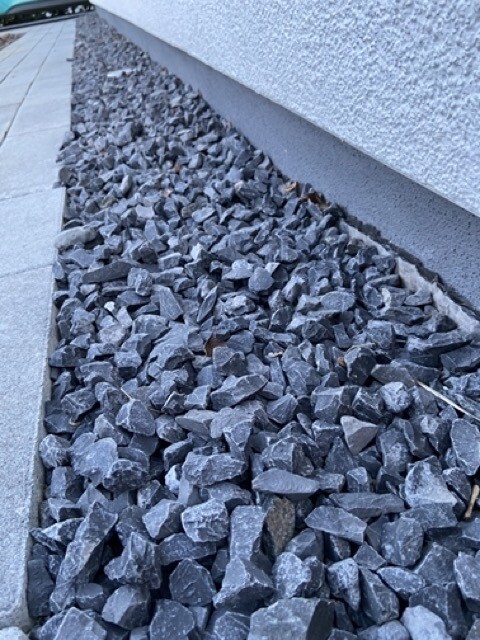
I have attached the technical drawing of the base and some photos showing my splash protection.
Thank you very much for your evaluation,
Andreas

In another thread I asked why the exterior plaster on my house is discoloring and peeling off. To assess the damage, a building expert from a large nationwide company specializing in structural waterproofing stated that my base (plinth) is not properly sealed.
After my prefab house manufacturer reviewed the documents, I disagree with that assessment, except for the entrance area.
What are your opinions? Did we make a mistake with the building base? Is a continuous base waterproofing with multiple layers of sealing compound extending 30cm (12 inches) below ground level really necessary? If that were the case, I would need to completely redo the exterior plaster on a prefab house — which doesn’t seem practical, and I doubt the builder (“Häuslebauer”) intended that either (as they were also responsible for applying the exterior plaster). The base is coated with a plaster specifically designed for the base area.
I have attached the technical drawing of the base and some photos showing my splash protection.
Thank you very much for your evaluation,
Andreas
Good evening,
First of all, which documents have you reviewed?
At first glance, the expert’s assessment seems reasonable.
The base waterproofing must be extended at least 30cm (12 inches) above the finished exterior surface of the construction, that is, behind the plaster.
The choice of product and waterproofing method mainly depends on the water exposure.
From the drawing, it appears that no base waterproofing was installed, which is technically incorrect.
I don’t quite understand your comment about 30cm (12 inches) below ground level—do you mean above ground level, as I described earlier?
Of course, the waterproofing must be extended into the soil and, depending on the water load, also “anchored,” but I’m not aware of the 30cm (12 inches) dimension in this context.
Regarding the base plaster:
It also does not seem to be indicated in the drawings, but it is required according to standards. This plaster should extend 5cm (2 inches) above the finished surface. It appears you have applied this. The important point here is that it is not just a tinted plaster but a moisture barrier from the system manufacturer (for example, one product is Flexyl by one manufacturer, while another brand states it can be omitted if their proper reinforcement is used—so check the manufacturer’s system portfolio).
Best regards,
Jann
First of all, which documents have you reviewed?
At first glance, the expert’s assessment seems reasonable.
The base waterproofing must be extended at least 30cm (12 inches) above the finished exterior surface of the construction, that is, behind the plaster.
The choice of product and waterproofing method mainly depends on the water exposure.
From the drawing, it appears that no base waterproofing was installed, which is technically incorrect.
I don’t quite understand your comment about 30cm (12 inches) below ground level—do you mean above ground level, as I described earlier?
Of course, the waterproofing must be extended into the soil and, depending on the water load, also “anchored,” but I’m not aware of the 30cm (12 inches) dimension in this context.
Regarding the base plaster:
It also does not seem to be indicated in the drawings, but it is required according to standards. This plaster should extend 5cm (2 inches) above the finished surface. It appears you have applied this. The important point here is that it is not just a tinted plaster but a moisture barrier from the system manufacturer (for example, one product is Flexyl by one manufacturer, while another brand states it can be omitted if their proper reinforcement is used—so check the manufacturer’s system portfolio).
Best regards,
Jann
A
andreas.delgaldo20 Feb 2022 16:55Jann St schrieb:
Good evening,
First of all, which documents have you reviewed?
At first glance, the expert’s assessment seems reasonable.
The base waterproofing must be extended up the structure to at least 30cm (12 inches) above the finished ground level (outside), behind the render.
The choice of product and waterproofing method mainly depends on the expected water exposure. Since we bought the house as a turnkey project including the render, I assume that the builder waterproofed the building envelope according to DIN 18195. We did not receive any special instructions regarding the base. You can also see, in the area around the openings (doors), a black waterproofing layer behind the render. I will have that confirmed again. The ground slab is made of waterproof concrete (WU concrete), sealed on top with bitumen membranes.
Jann St schrieb:
Looking at the drawing, it appears that no base waterproofing was applied here, which is technically incorrect.
I don’t quite understand your comment about 30cm below ground level; did you mean above ground level, as I described earlier? Exactly – that’s what I mean.
Jann St schrieb:
Of course, the waterproofing must continue into the soil and, depending on the water load, also be “anchored,” but I’m currently unsure about the 30cm figure.
Regarding the base render:
This was apparently not included in the drawings but is required by the standard. It should extend 5cm (2 inches) above the finished ground level. It seems you have done this. However, it is important that this is not just a tinted render but a moisture barrier from the system manufacturer (for example, Sto recommends Flexyl, Brillux states that with their system it can be omitted if the correct reinforcement is used, etc. – so you should check the manufacturer’s product range). Okay. This was certainly not executed properly. What do you think needs to be done now? At this point, I would rule out that anything needs to be done to the external render.
What I wonder is what I should have done to ensure that the base would be correctly rendered or waterproofed. What would you do now, and how?
Is it sufficient to waterproof and re-render the base, or is the problem actually within the building structure itself? Who is liable for this defect, and does the responsibility lie with the builder (general contractor) or the landscaping contractor? Who is accountable here?
Thank you for your help.
I don’t quite understand yet.
Did you create a base waterproofing layer or not? I mean, outside of the entrance area?
What exactly does your construction consist of? You are using timber frame construction, right?
How do you know, based on my statement, that the splash protection at the base area is not correct?
Could you please explain the problems and findings in more detail and describe the entire construction of the base?
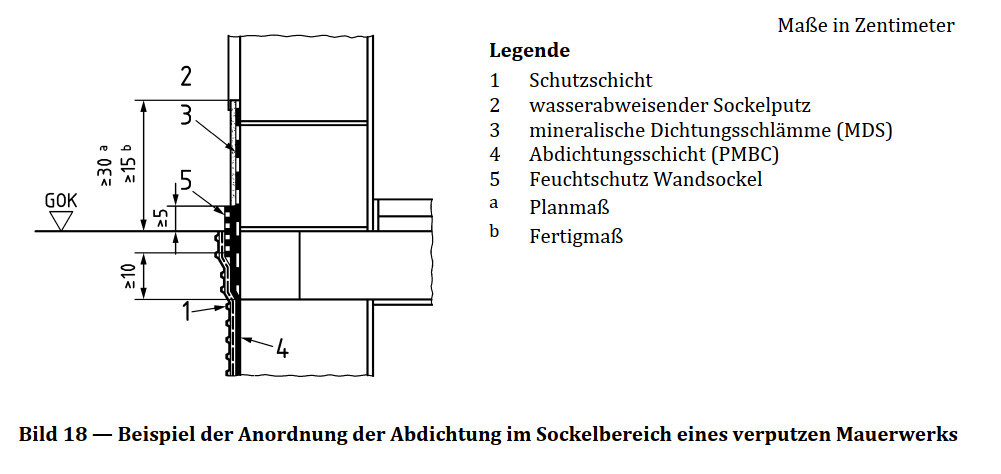
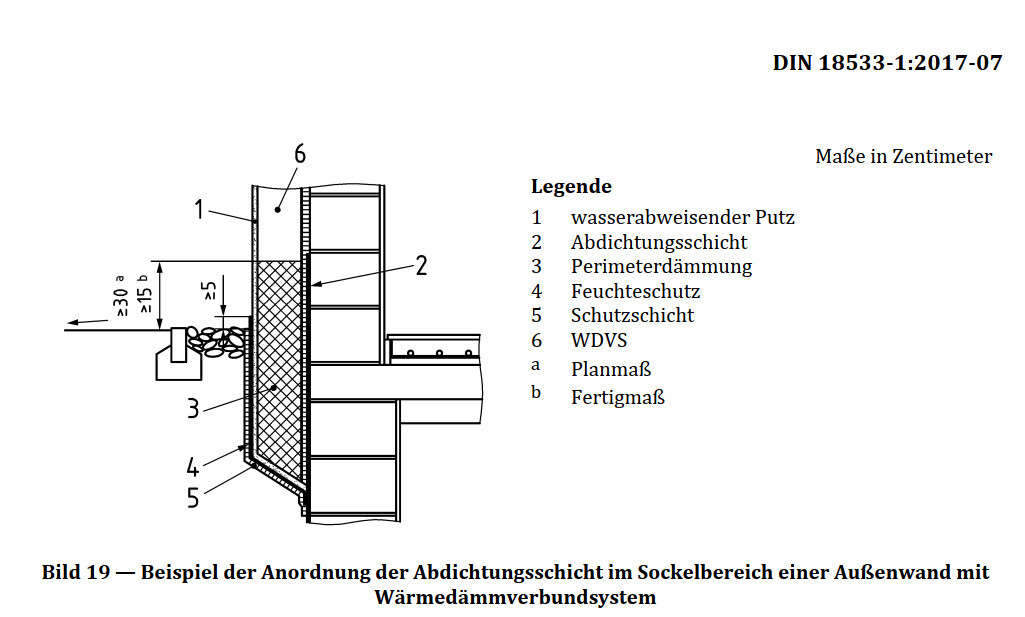
Here are example connections for plaster / ETICS (External Thermal Insulation Composite System)
Did you create a base waterproofing layer or not? I mean, outside of the entrance area?
What exactly does your construction consist of? You are using timber frame construction, right?
How do you know, based on my statement, that the splash protection at the base area is not correct?
Could you please explain the problems and findings in more detail and describe the entire construction of the base?
Here are example connections for plaster / ETICS (External Thermal Insulation Composite System)
A
andreas.delgaldo21 Feb 2022 14:03Hello,
No – after consulting with our home builder at the time, no separate base waterproofing was necessary (assuming we keep a 15cm (6 inches) clearance below the base). Therefore, we did not waterproof the base back then, but simply plastered and painted it above the insulation. Unfortunately, I can no longer recall which base plaster was used.
Since we are now investigating the damage to the exterior plaster (see another post) to understand what might have gone wrong and where we might have potential issues, we have turned our attention to the base and its waterproofing.
So – independent of the reveal area around the doors, my assessment is that the base waterproofing is completely missing.
Our base consists of watertight concrete (WU concrete) with 80mm (3 inches) Styrodur insulation, then two layers of base plaster plus paint. The house is a timber frame construction with ETICS (external thermal insulation composite system). Except for the vertical base waterproofing (as shown in the drawing), everything else has been completed.
No – after consulting with our home builder at the time, no separate base waterproofing was necessary (assuming we keep a 15cm (6 inches) clearance below the base). Therefore, we did not waterproof the base back then, but simply plastered and painted it above the insulation. Unfortunately, I can no longer recall which base plaster was used.
Since we are now investigating the damage to the exterior plaster (see another post) to understand what might have gone wrong and where we might have potential issues, we have turned our attention to the base and its waterproofing.
So – independent of the reveal area around the doors, my assessment is that the base waterproofing is completely missing.
Our base consists of watertight concrete (WU concrete) with 80mm (3 inches) Styrodur insulation, then two layers of base plaster plus paint. The house is a timber frame construction with ETICS (external thermal insulation composite system). Except for the vertical base waterproofing (as shown in the drawing), everything else has been completed.
Hi,
Ok, you don’t have a base waterproofing – understood.
I don’t understand that. Are you referring to the gravel strip? Because you keep the surface finish away from it, or do you mean that your base render (marked in black) is 15cm (6 inches) lower? Or the 15cm (6 inches) measured from what exactly?
Looking at the picture of your render, I don’t see why it would be acceptable to do without waterproofing.
In my opinion, your builder told you nonsense.
As I understand it – and we can explain in more detail by video or however you prefer – the builder or construction company is at fault here. Waterproofing cannot be omitted. Your damage with flaking render can also result from the construction absorbing moisture, which then evaporates through the render; so it doesn’t necessarily have to be moisture coming only from the outside. If that is the case, a moisture barrier might help, but I wouldn’t promise that.
Especially since you are working with wood, I would be very careful with moisture issues.
How many years ago did you build? Is it more than 5 years ago?
If it’s less than 5 years, you still have a builder’s warranty that, in my opinion, covers the damage.
If it’s longer ago, you might still have a claim for damages with the help of a lawyer since a technically necessary service was not provided.
Ok, you don’t have a base waterproofing – understood.
andreas.delgaldo schrieb:
in case we keep 15cm (6 inches) away from the base).
I don’t understand that. Are you referring to the gravel strip? Because you keep the surface finish away from it, or do you mean that your base render (marked in black) is 15cm (6 inches) lower? Or the 15cm (6 inches) measured from what exactly?
Looking at the picture of your render, I don’t see why it would be acceptable to do without waterproofing.
In my opinion, your builder told you nonsense.
As I understand it – and we can explain in more detail by video or however you prefer – the builder or construction company is at fault here. Waterproofing cannot be omitted. Your damage with flaking render can also result from the construction absorbing moisture, which then evaporates through the render; so it doesn’t necessarily have to be moisture coming only from the outside. If that is the case, a moisture barrier might help, but I wouldn’t promise that.
Especially since you are working with wood, I would be very careful with moisture issues.
How many years ago did you build? Is it more than 5 years ago?
If it’s less than 5 years, you still have a builder’s warranty that, in my opinion, covers the damage.
If it’s longer ago, you might still have a claim for damages with the help of a lawyer since a technically necessary service was not provided.
Similar topics