
ᐅ Base coat plaster is peeling off. Lime efflorescence present.
Created on: 28 Mar 2015 16:09
P
Paddo5819P
Paddo581928 Mar 2015 16:09Hello,
I have the following problem:
The base coat plaster, which is about 10 years old, is peeling off gradually. It seems to be affected by efflorescence. I can’t say whether cement-based plaster was used at the time by the plasterer.
The base coat plaster was applied with reinforcing mesh onto the masonry. There is no insulation on the facade; below the base coat plaster is the perimeter insulation along with a dimpled membrane.
Now my question is: what is the best way to repair this? I’m not keen on knocking everything off and starting from scratch.
I was thinking, for example, to let it dry thoroughly, re-plaster the damaged areas, and then apply a liquid waterproofing membrane from the base coat plaster up to 5cm (2 inches) above the paving level.
What do you think?
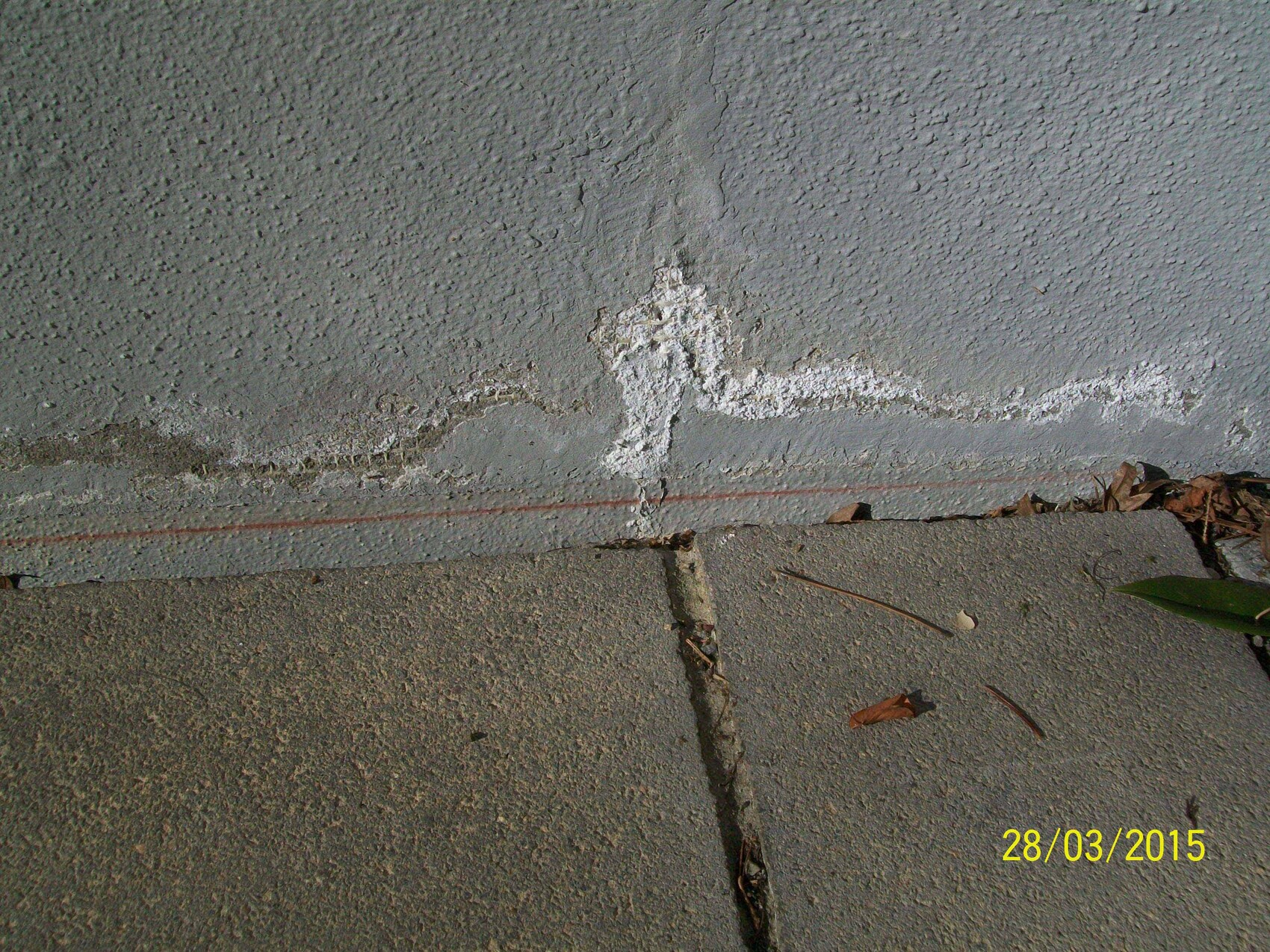
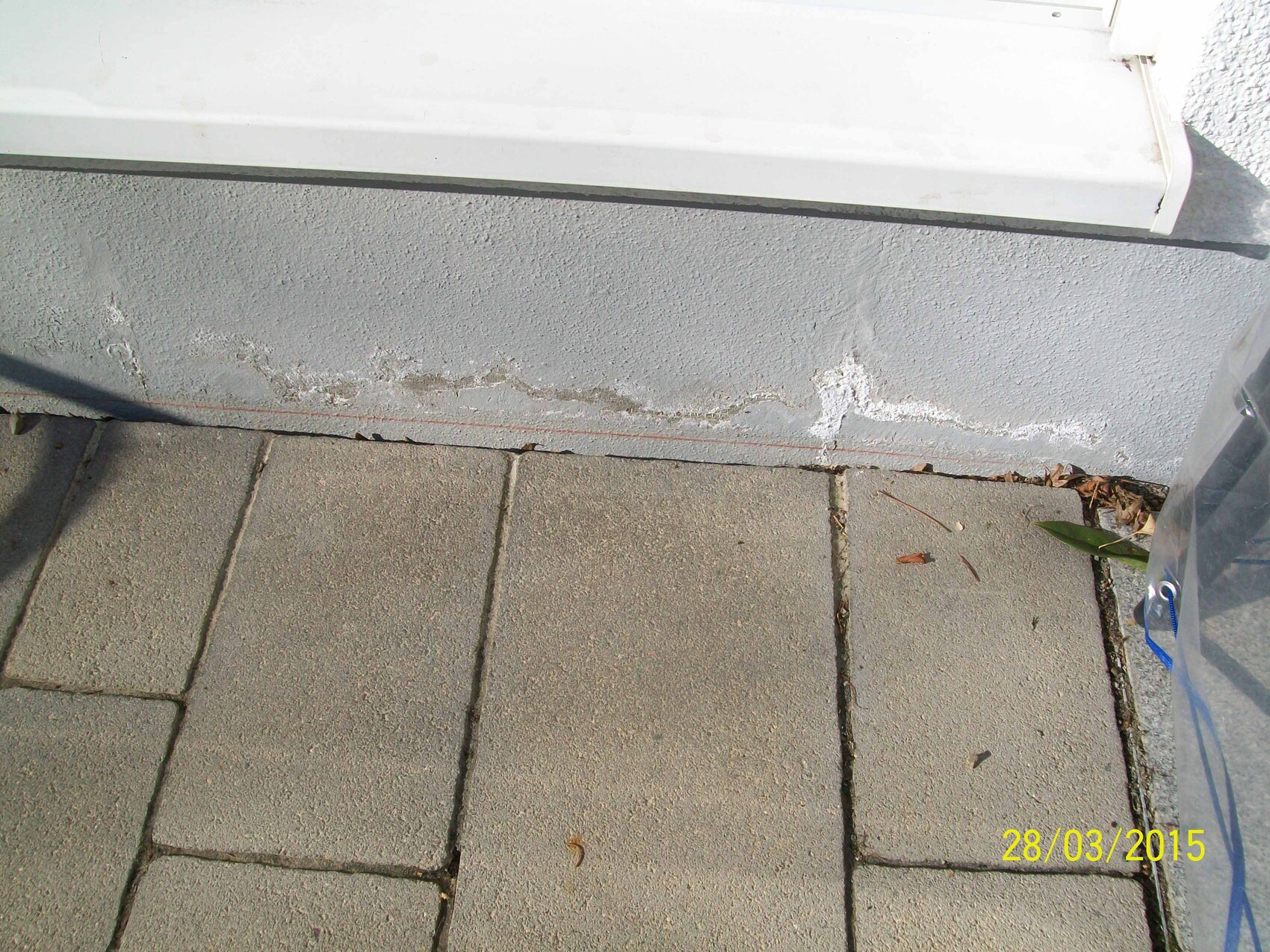
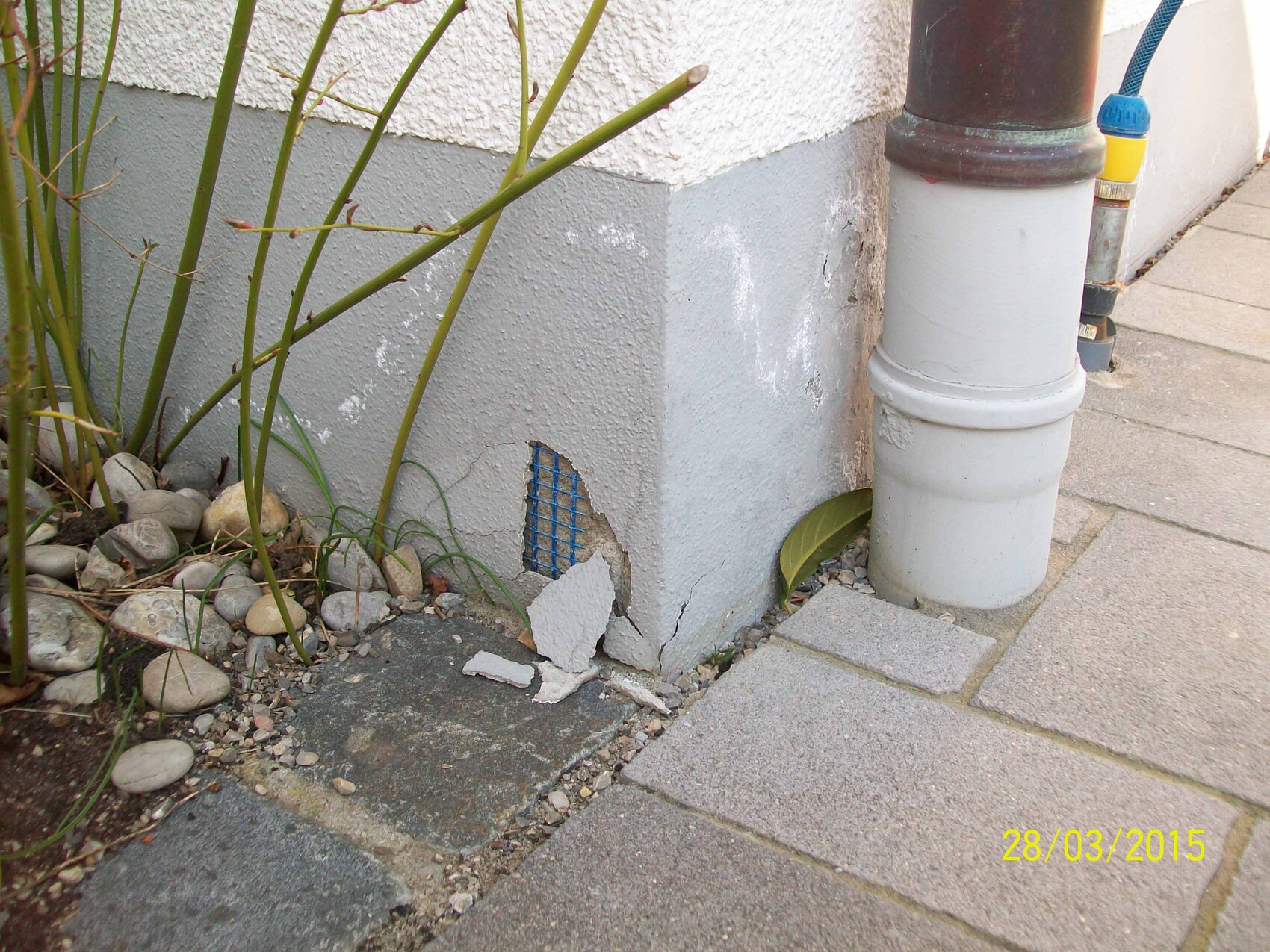
I have the following problem:
The base coat plaster, which is about 10 years old, is peeling off gradually. It seems to be affected by efflorescence. I can’t say whether cement-based plaster was used at the time by the plasterer.
The base coat plaster was applied with reinforcing mesh onto the masonry. There is no insulation on the facade; below the base coat plaster is the perimeter insulation along with a dimpled membrane.
Now my question is: what is the best way to repair this? I’m not keen on knocking everything off and starting from scratch.
I was thinking, for example, to let it dry thoroughly, re-plaster the damaged areas, and then apply a liquid waterproofing membrane from the base coat plaster up to 5cm (2 inches) above the paving level.
What do you think?
 EveundGerd28 Mar 2015 22:02
It looks like the base of my mother-in-law’s house.
There, rising damp was diagnosed. The construction is the same, and even the paving lies that close to the house.
The advice from the expert called in was as follows:
The paving should not be placed so close to the house. The structure with perimeter insulation including a dimpled membrane should be redone.
Additionally, a gravel strip should be installed at the base. This would prevent moisture from remaining at the base.
The membrane must only be cut after all work is completed, so that nothing can “fall” between the membrane and the base.
The damaged areas need to be chipped off and re-plastered.
By the way, we also asked about liquid waterproofing. He said it would not solve the problem.
There, rising damp was diagnosed. The construction is the same, and even the paving lies that close to the house.
The advice from the expert called in was as follows:
The paving should not be placed so close to the house. The structure with perimeter insulation including a dimpled membrane should be redone.
Additionally, a gravel strip should be installed at the base. This would prevent moisture from remaining at the base.
The membrane must only be cut after all work is completed, so that nothing can “fall” between the membrane and the base.
The damaged areas need to be chipped off and re-plastered.
By the way, we also asked about liquid waterproofing. He said it would not solve the problem.
P
Paddo581929 Mar 2015 08:24Thanks for the reply!
Yes, the worst part is simply having to remove all the paving... That’s why I was thinking about raising the dimpled membrane, which is already there but too deep, up to the top edge of the paving using liquid waterproofing.
I could manage that without removing the paving!
How far does the membrane extend beyond the edge in your case?
Yes, the worst part is simply having to remove all the paving... That’s why I was thinking about raising the dimpled membrane, which is already there but too deep, up to the top edge of the paving using liquid waterproofing.
I could manage that without removing the paving!
How far does the membrane extend beyond the edge in your case?
EveundGerd29 Mar 2015 10:59We haven’t started repairing the base/course yet.
We are currently busy with our new build and will only get to it during the summer. In our case, the base/course on the entrance side and the rear side almost completely needs to be removed. It’s a bungalow measuring 16 x 11 meters (52 x 36 feet)..... this will take a while ops:
There’s no way around it, we have to finish our house first. We need to move out of the apartment by August.
We are currently busy with our new build and will only get to it during the summer. In our case, the base/course on the entrance side and the rear side almost completely needs to be removed. It’s a bungalow measuring 16 x 11 meters (52 x 36 feet)..... this will take a while ops:
There’s no way around it, we have to finish our house first. We need to move out of the apartment by August.
Similar topics