
ᐅ Foundation Plinth – Older Buildings – XPS vs Wood Fiber Insulation – How to Construct?
Created on: 6 May 2026 08:03
D
derspeck84D
derspeck846 May 2026 08:03Hello everyone. We are currently insulating our house, mostly with wood fiber insulation. On the other walls, I have 30cm XPS, then 60mm (2.4 inches) wood fiber at the base/basement area. Now, on the last wall, I had to remove the old plaster because it was partly loose, and I can see that the damp-proof course is positioned quite high (1m (3.3 feet)). Apparently, the damp-proof course was simply extended at the base level. Should I continue with the current method or use XPS up to the damp-proof course? Inside is a heated basement. I’m concerned that too much XPS might prevent moisture from escaping…
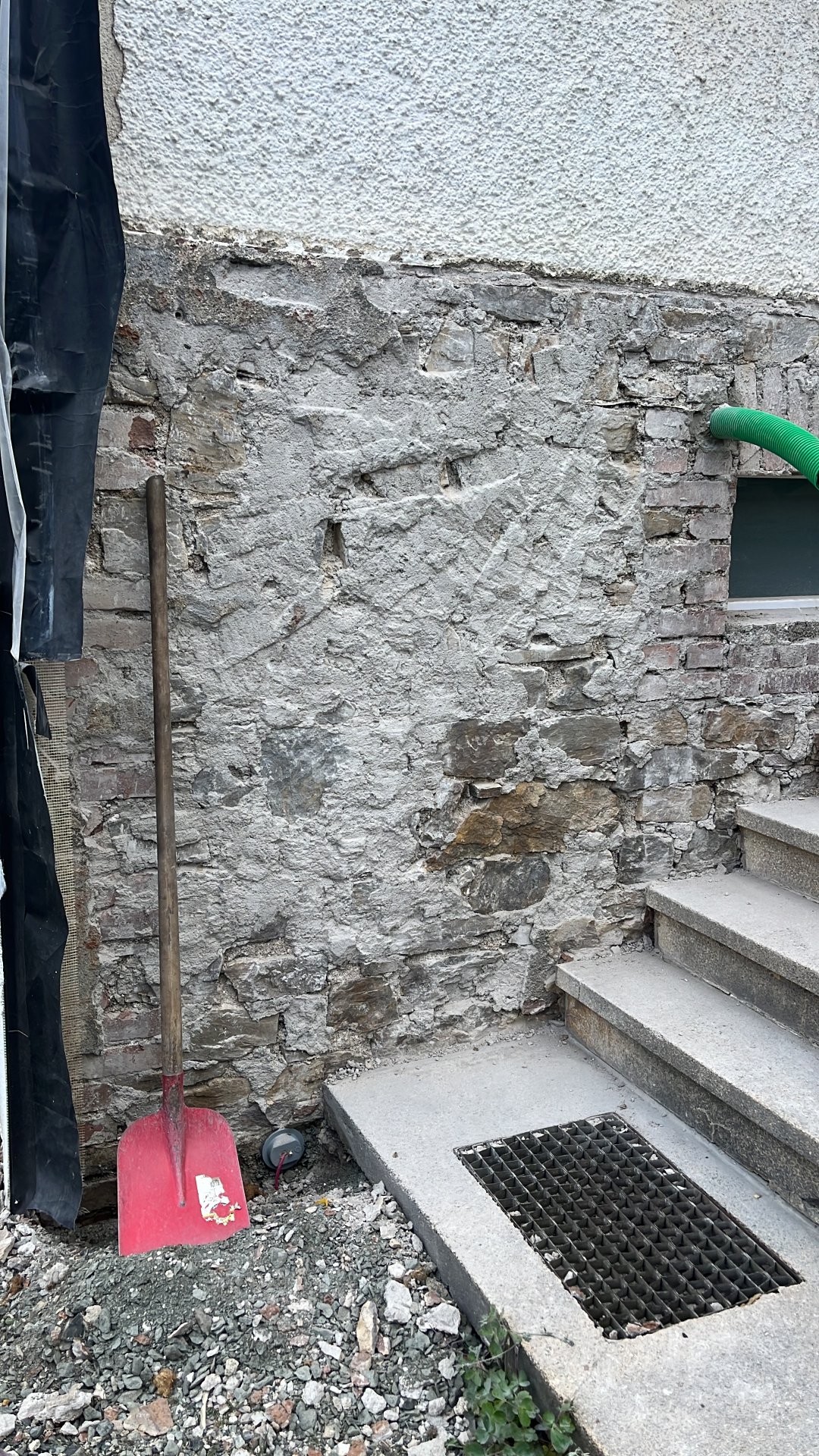
The damp-proof course is located at the level of the green pipes:
In the next picture, you can also see the transition between the wood fiber and XPS on the other wall:
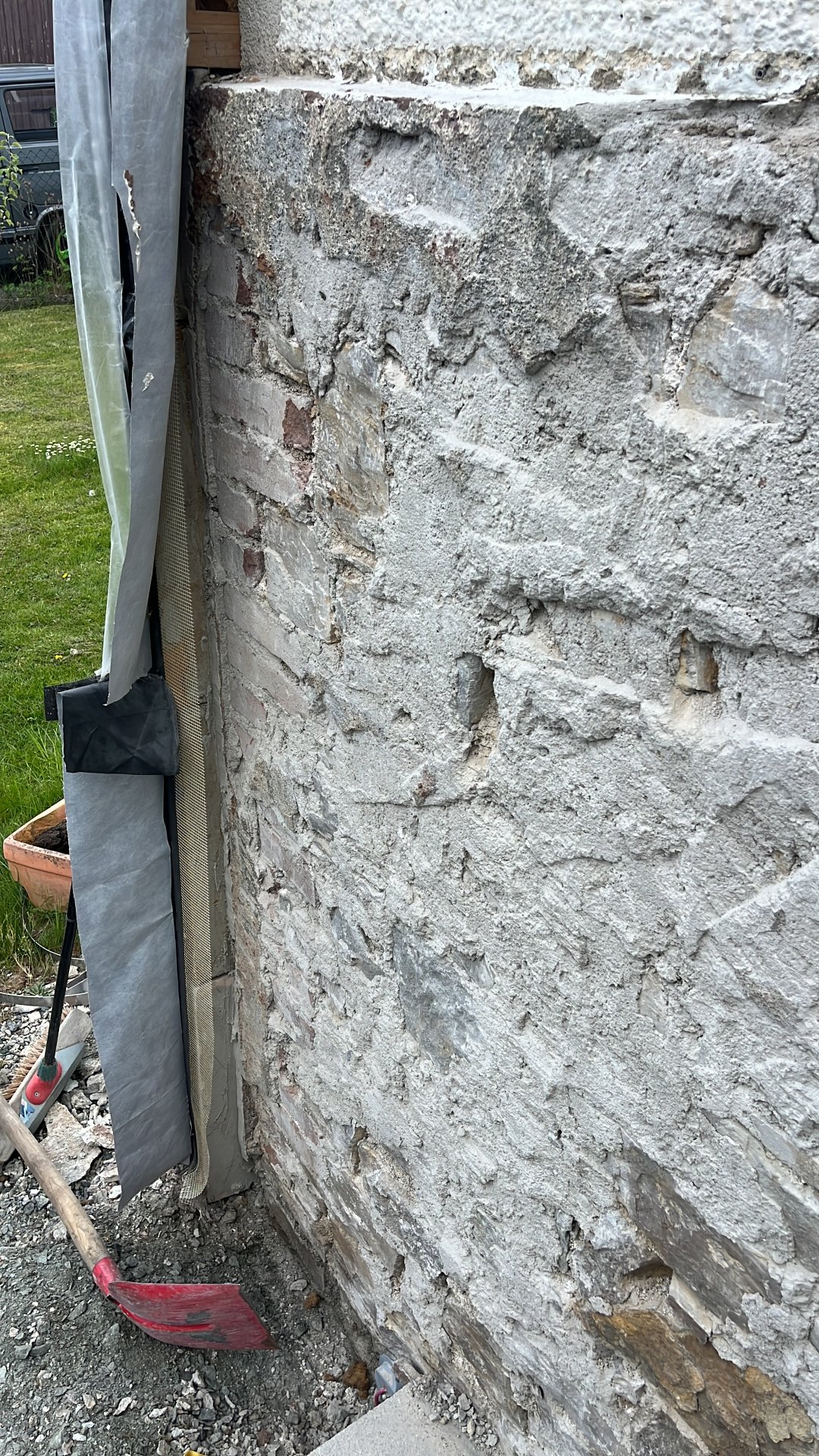
Applying only mineral plaster is not an option now because I have already finished the other wall (where the reinforcement is visible on the left in the picture) and have to bridge 60mm (2.4 inches) there. On that wall, I left the old plaster since it was still solid. However, I didn’t realize that the damp-proof course was positioned so high.
A mason friend suggested the idea of first applying a cement-based plaster (as a "barrier") and then using wood fiber again (so only XPS at the very bottom).
Thanks in advance.
The damp-proof course is located at the level of the green pipes:
In the next picture, you can also see the transition between the wood fiber and XPS on the other wall:
Applying only mineral plaster is not an option now because I have already finished the other wall (where the reinforcement is visible on the left in the picture) and have to bridge 60mm (2.4 inches) there. On that wall, I left the old plaster since it was still solid. However, I didn’t realize that the damp-proof course was positioned so high.
A mason friend suggested the idea of first applying a cement-based plaster (as a "barrier") and then using wood fiber again (so only XPS at the very bottom).
Thanks in advance.
If you simply add XPS rigid foam insulation to the outside, you effectively make the wall airtight from the outside, and the moisture will then find its way through, usually not where you want it.
The idea of using only 30–40cm (12–16 inches) of XPS in the splash water zone is much closer to what works in the long term. Keeping the area above mineral-based insulation is not only textbook practice but also prevents the shift of the dew point, which you often only notice after a few years when the plaster starts to deteriorate.
Adding wood fiber insulation on top sounds good, but combined with XPS underneath, you have a material junction that is not without its challenges in terms of building physics. It can be done, but the transition must be carefully designed; otherwise, the whole concept of vapor openness loses its effectiveness.
The idea of using only 30–40cm (12–16 inches) of XPS in the splash water zone is much closer to what works in the long term. Keeping the area above mineral-based insulation is not only textbook practice but also prevents the shift of the dew point, which you often only notice after a few years when the plaster starts to deteriorate.
Adding wood fiber insulation on top sounds good, but combined with XPS underneath, you have a material junction that is not without its challenges in terms of building physics. It can be done, but the transition must be carefully designed; otherwise, the whole concept of vapor openness loses its effectiveness.
D
derspeck846 May 2026 12:49Yes, that was exactly my thought and concern regarding the XPS.
The problem is: staying “mineral above it” only works to a limited extent for me because I need to maintain the same insulation thickness. The other side of the house is already completed—I can’t suddenly make a recess or step in the base on this side now.
I am aware of the material change from XPS to wood fiber insulation. That’s why I reinforced the transition multiple times.
What I am currently trying to assess is more of the hygrothermal trade-off:
If I extend the XPS up to the damp-proof course, I make the base more sealed against the outside. Existing moisture could then dry more inward or only upward.
If I start the wood fiber insulation already about 30cm (12 inches) above the base, as on the other wall, I’m more concerned that too much moisture could move outward below the relatively high damp-proof course and permanently affect the wood fiber. However, the base is currently rather dry.
The real issue is that I only now realized the exact position of the damp-proof course. The construction on the other wall is already set as it is.
That’s why I’m trying to weigh which solution presents the smaller practical risk. 🙂
The problem is: staying “mineral above it” only works to a limited extent for me because I need to maintain the same insulation thickness. The other side of the house is already completed—I can’t suddenly make a recess or step in the base on this side now.
I am aware of the material change from XPS to wood fiber insulation. That’s why I reinforced the transition multiple times.
What I am currently trying to assess is more of the hygrothermal trade-off:
If I extend the XPS up to the damp-proof course, I make the base more sealed against the outside. Existing moisture could then dry more inward or only upward.
If I start the wood fiber insulation already about 30cm (12 inches) above the base, as on the other wall, I’m more concerned that too much moisture could move outward below the relatively high damp-proof course and permanently affect the wood fiber. However, the base is currently rather dry.
The real issue is that I only now realized the exact position of the damp-proof course. The construction on the other wall is already set as it is.
That’s why I’m trying to weigh which solution presents the smaller practical risk. 🙂