
Hello everyone,
We have two plastic balcony doors installed in 1998. Over the years, they have developed a noticeable bulge. In the middle (measured from top to bottom), there is a 4mm (about 0.16 inches) larger gap between the door and frame than at the top and bottom (see pictures).
I was wondering why there is a draft in the living room and then realized you can actually see outside through the gap 🤨
Ideally, the windows including the roller shutters (which are also worn out) and the front door should be replaced, but financially that is not possible in the near future. Therefore, I’m looking for a short-term solution to seal this gap as effectively as possible.
The only thing that comes to mind is sealing with Tesa Moll, although sealing such a 4mm (0.16 inches) difference will be challenging.
Does anyone know a good solution? Is this a common issue?
Thanks & best regards
JanStu8
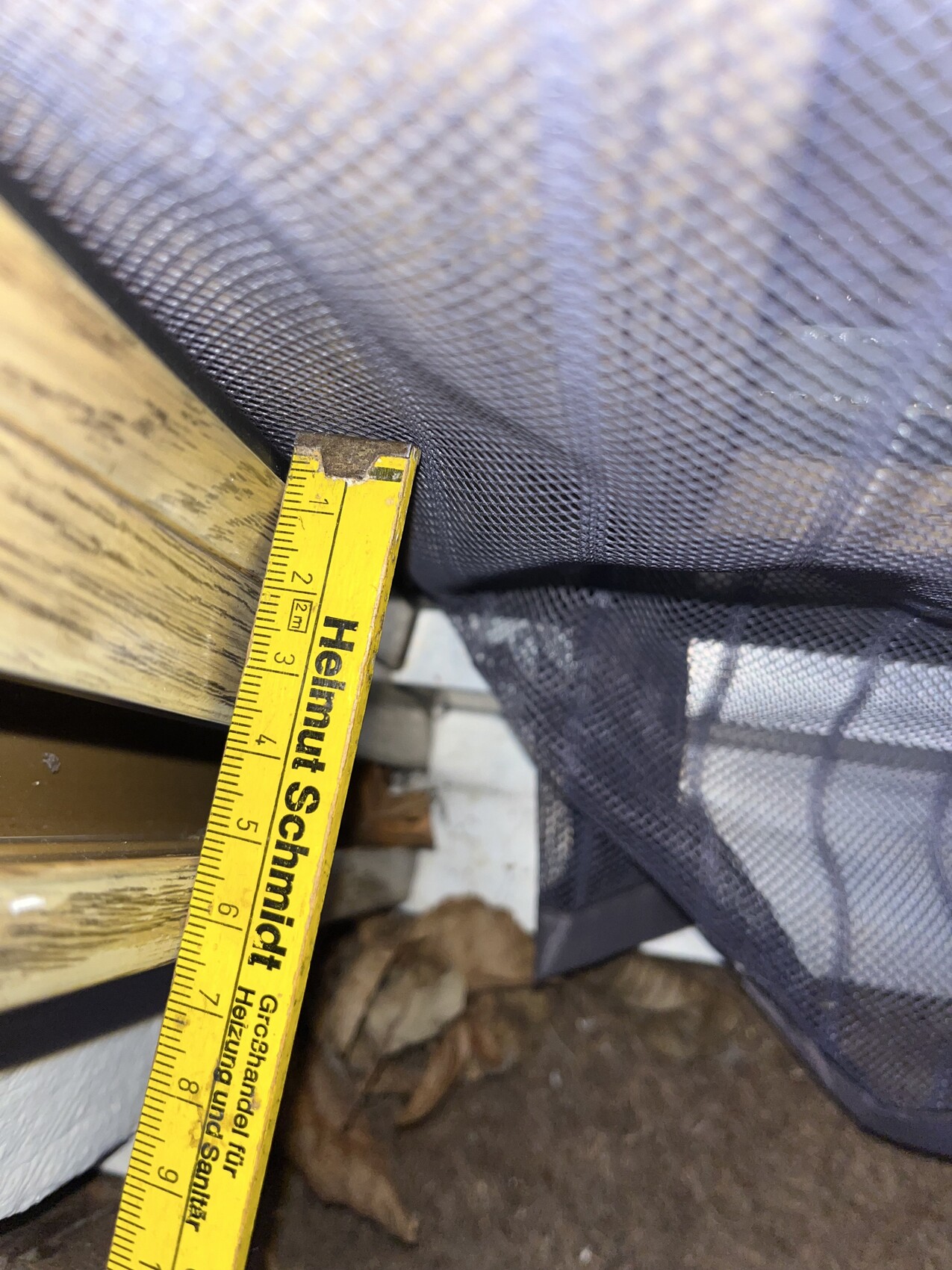
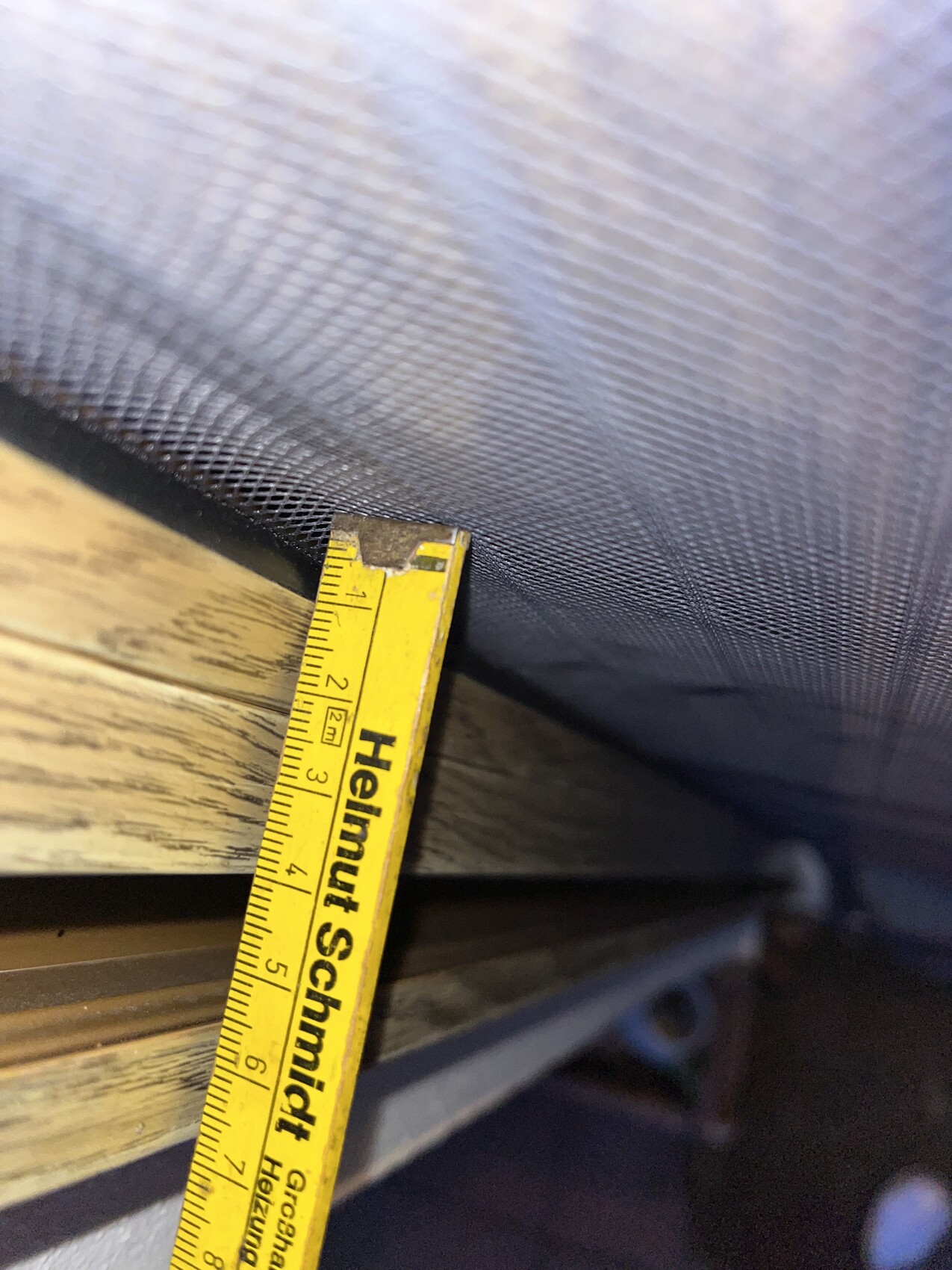
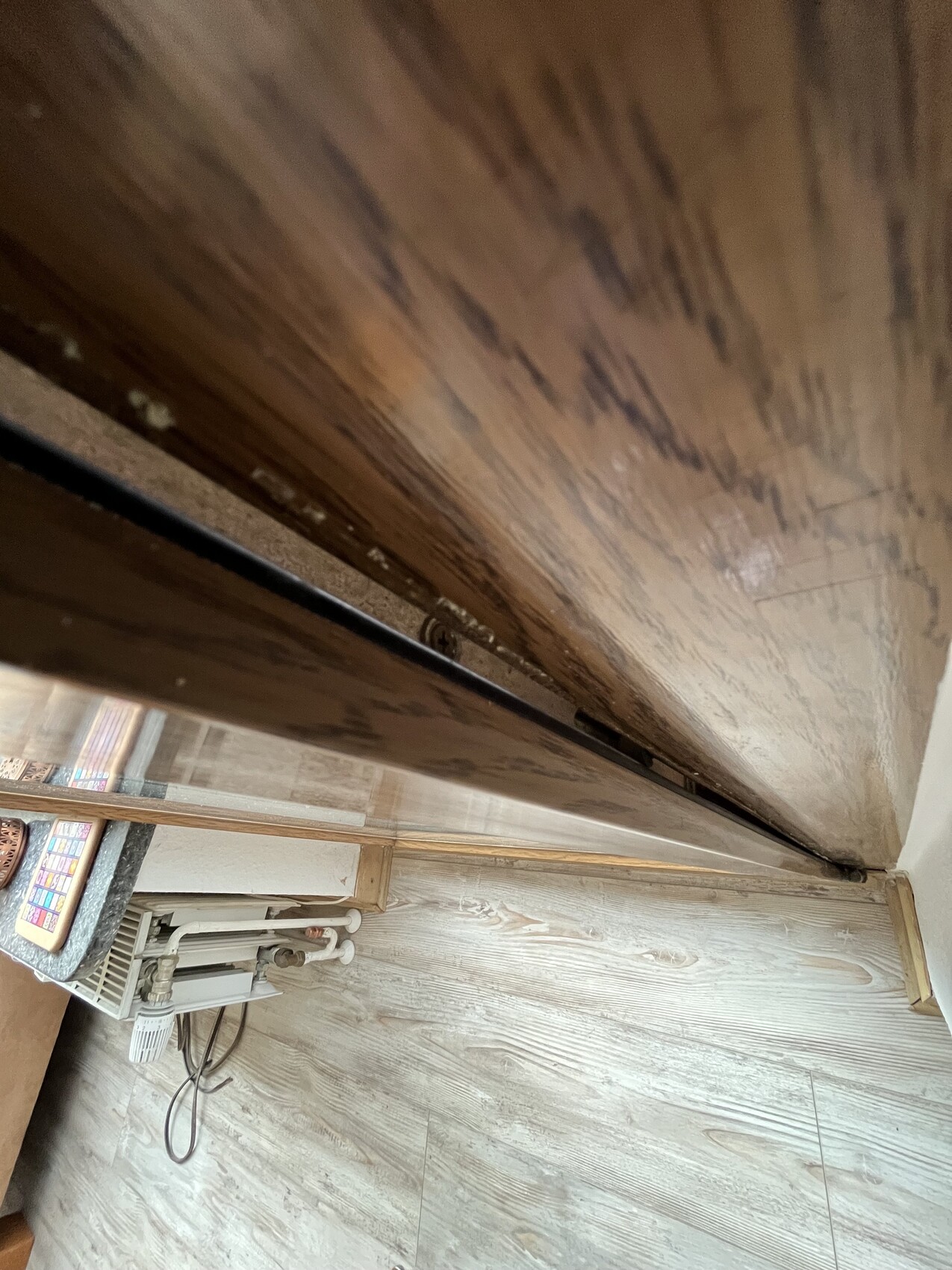
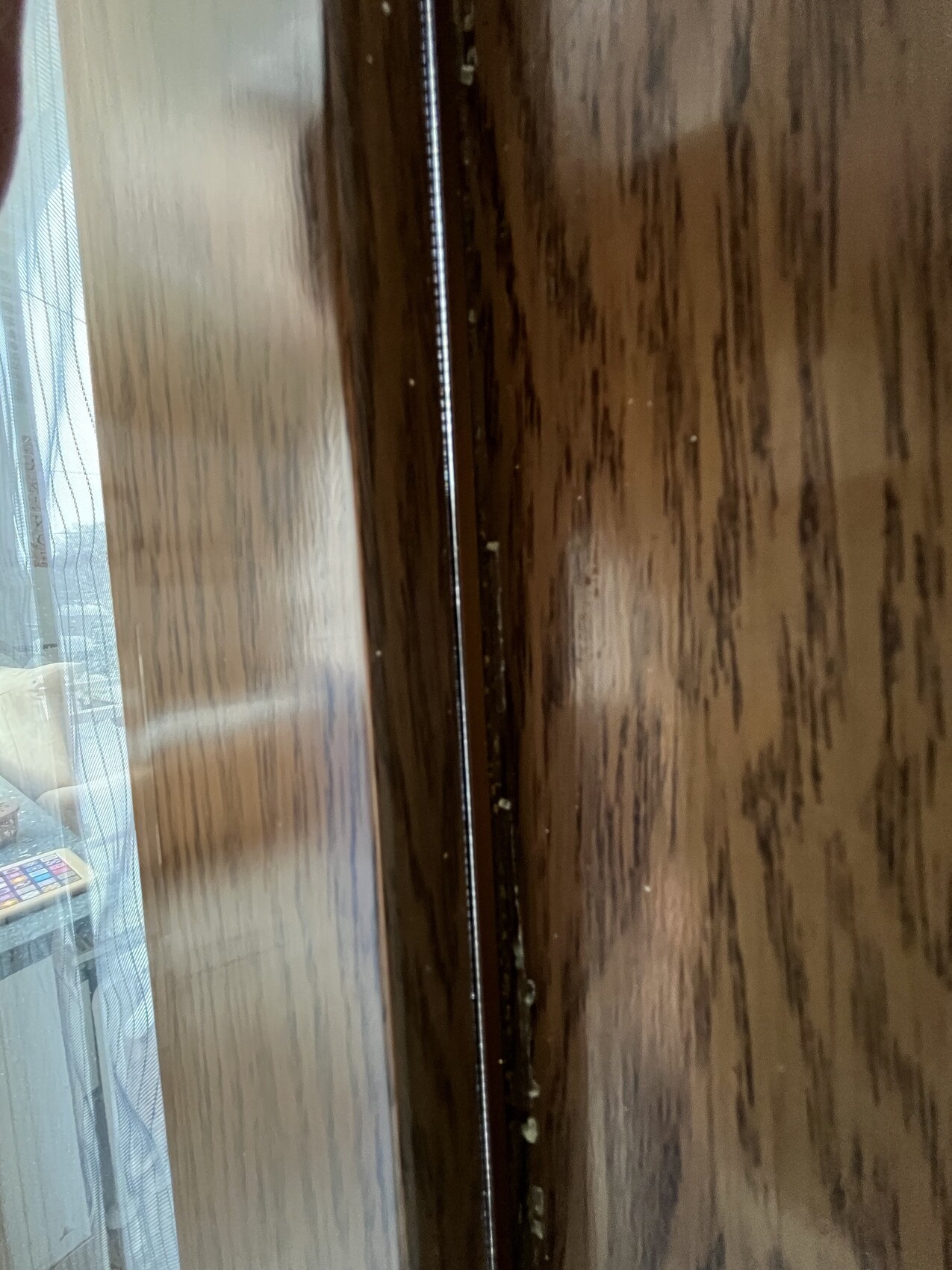
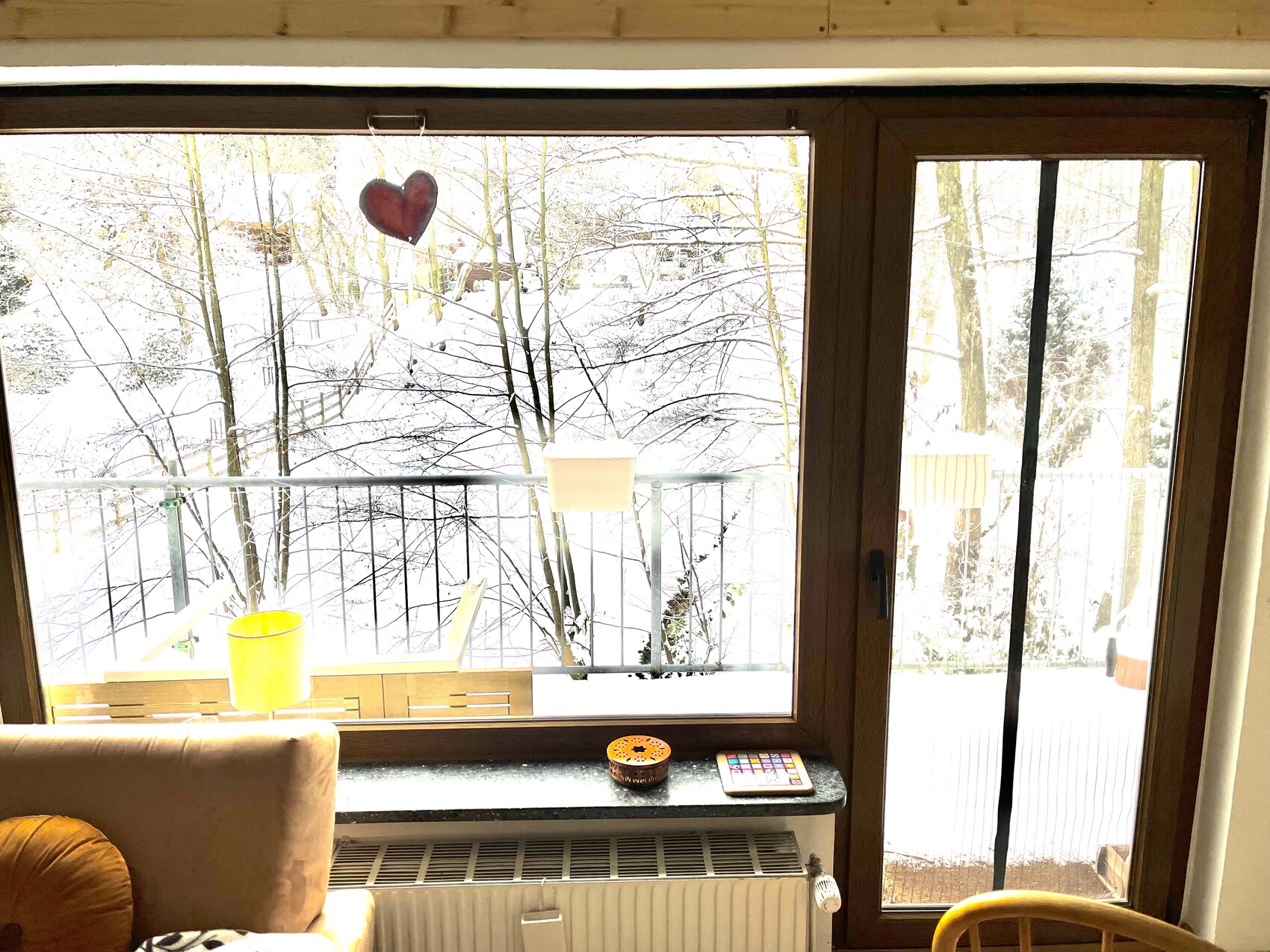
We have two plastic balcony doors installed in 1998. Over the years, they have developed a noticeable bulge. In the middle (measured from top to bottom), there is a 4mm (about 0.16 inches) larger gap between the door and frame than at the top and bottom (see pictures).
I was wondering why there is a draft in the living room and then realized you can actually see outside through the gap 🤨
Ideally, the windows including the roller shutters (which are also worn out) and the front door should be replaced, but financially that is not possible in the near future. Therefore, I’m looking for a short-term solution to seal this gap as effectively as possible.
The only thing that comes to mind is sealing with Tesa Moll, although sealing such a 4mm (0.16 inches) difference will be challenging.
Does anyone know a good solution? Is this a common issue?
Thanks & best regards
JanStu8
Plastic window door 1998 Glaskugel says...
What can be done:
First appointment:
Second appointment:
Causes:
- Generation with approximately 60-70 mm (2.4-2.8 inches) installation depth, 3-4 chambers
- Steel reinforcement too weak = main cause of sash warping
- Profiles optimized for thermal insulation, Uf about 1.7 (= not bad)
- Hardware multi-point locking usually adjustable (but not always; photos of the hardware would help). Spare parts are generally still available.
- Glass approx. Ug about 1.5 (= not bad)
What can be done:
- Main challenge is to find a window manufacturer/carpenter/glazier/... who can and wants to do this... many don’t want to anymore...
First appointment:
- Check whether the seals and hardware are still OK... if necessary, obtain replacement parts/seals.
- Remove the vertical glazing bead and check the rebate condition... obtain matching flat steel... unfortunately not always possible...
Second appointment:
- Relieve tension... straighten sash (with clamps and battens), screw flat steel into rebate...
- Replace glazing...
- Replace seals if necessary.
- If required
- Adjust and “oil” hardware
Causes:
- Permanent tilt function definitely not the cause...
- Sun (dark surface temperatures over 70°C (158°F)) and temperature differences
- Weak steel reinforcement
- Decor foils on the outside shrink... become shorter
- Profiles on the outside shrink... become shorter


profil65 schrieb:
- Constant tilting is definitely not the cause....
- Sun exposure (dark surface temperature over 70°C (158°F)) and temperature differences
- Weak steel reinforcements
- Decorative foils on the outside shrinking... becoming shorter
- Profiles on the outside shrinking... becoming shorter
I wasn’t referring to constant tilting itself, but rather the sun heating the dark surface combined with the simultaneous lack of reinforcement at several points of the frame over hours and years. I can see how such a damage pattern could develop in the “material’s pain memory” – maybe less so with stiffer profiles.https://www.instagram.com/11antgmxde/
https://www.linkedin.com/company/bauen-jetzt/
Background Information:
At temperatures above approximately 70°C (158°F), plastic profiles contract during cooling by up to about 1-2%. This shrinkage cannot be prevented or reversed. Regardless of this, length changes due to temperature occur—profiles expand when warm and contract when cold. Additionally, windows and patio doors experience large temperature differences, for example, from about -20 to +40 (+80 for dark colors)°C (-4 to 104 (176)°F) on the outside, while the interior side is usually around 18-30°C (64-86°F).
History:
Until the early 1990s, plastic windows and patio doors typically used 2-chamber profile systems with very large and strong steel reinforcements, approximately 1.5-2mm (0.06-0.08 inch) thick. These systems had poor thermal insulation, and the profiles felt quite cold on the interior side during winter (causing condensation). Their thermal performance was worse than wooden windows but significantly better than aluminum windows of the same period. Patio doors of this generation rarely had problems with warped or bent sashes, frames, or mullions, partly because the maximum allowed window sizes were comparatively small, especially for one- or two-sided dark-colored windows.
With the introduction of 3-chamber profiles in the early 1990s, while the profile depth remained the same, the steel reinforcements became significantly smaller and weaker. At the same time, improved insulation made the interior face of the profiles warmer. The greater the temperature difference, the stronger the reinforcement needs to be to prevent warping or distortion. When 4-chamber profiles were introduced in the mid to late 1990s, offering even better thermal insulation but with even smaller reinforcements, problems did not improve—in fact, maximum sash sizes continued to increase. By this time, standard steel reinforcements were no longer sufficient to compensate for the additional stresses caused by sunlight on east, south, and west-facing dark-colored surfaces, resulting in warped profiles.
It took many years before the stronger and more expensive “special reinforcements” became widely adopted for colored plastic windows in practical use.
Colored patio doors with sufficiently stable reinforcements do not experience issues when left tilted (tilt-and-turn ventilation). For colored patio doors with inadequate reinforcements, it would certainly help to avoid leaving the doors tilted in direct sunlight.
At temperatures above approximately 70°C (158°F), plastic profiles contract during cooling by up to about 1-2%. This shrinkage cannot be prevented or reversed. Regardless of this, length changes due to temperature occur—profiles expand when warm and contract when cold. Additionally, windows and patio doors experience large temperature differences, for example, from about -20 to +40 (+80 for dark colors)°C (-4 to 104 (176)°F) on the outside, while the interior side is usually around 18-30°C (64-86°F).
History:
Until the early 1990s, plastic windows and patio doors typically used 2-chamber profile systems with very large and strong steel reinforcements, approximately 1.5-2mm (0.06-0.08 inch) thick. These systems had poor thermal insulation, and the profiles felt quite cold on the interior side during winter (causing condensation). Their thermal performance was worse than wooden windows but significantly better than aluminum windows of the same period. Patio doors of this generation rarely had problems with warped or bent sashes, frames, or mullions, partly because the maximum allowed window sizes were comparatively small, especially for one- or two-sided dark-colored windows.
With the introduction of 3-chamber profiles in the early 1990s, while the profile depth remained the same, the steel reinforcements became significantly smaller and weaker. At the same time, improved insulation made the interior face of the profiles warmer. The greater the temperature difference, the stronger the reinforcement needs to be to prevent warping or distortion. When 4-chamber profiles were introduced in the mid to late 1990s, offering even better thermal insulation but with even smaller reinforcements, problems did not improve—in fact, maximum sash sizes continued to increase. By this time, standard steel reinforcements were no longer sufficient to compensate for the additional stresses caused by sunlight on east, south, and west-facing dark-colored surfaces, resulting in warped profiles.
It took many years before the stronger and more expensive “special reinforcements” became widely adopted for colored plastic windows in practical use.
Colored patio doors with sufficiently stable reinforcements do not experience issues when left tilted (tilt-and-turn ventilation). For colored patio doors with inadequate reinforcements, it would certainly help to avoid leaving the doors tilted in direct sunlight.
Similar topics