
ᐅ Balcony Door and Window Sills – Deficiencies in New Construction
Created on: 22 Feb 2019 21:30
D
drigli1984
Hello!
I have been reading in the forum for a while and now I registered because I have a few urgent questions.
We recently moved into our newly built apartment in Vienna and are facing some defects. Someone from the developer and the construction management will visit next week to inspect the issues. We already had someone here last week, and for each of our complaints, they mostly responded with "this is normal" or "this is within tolerance." Now I want to prepare a bit for next week and hope to get some support.
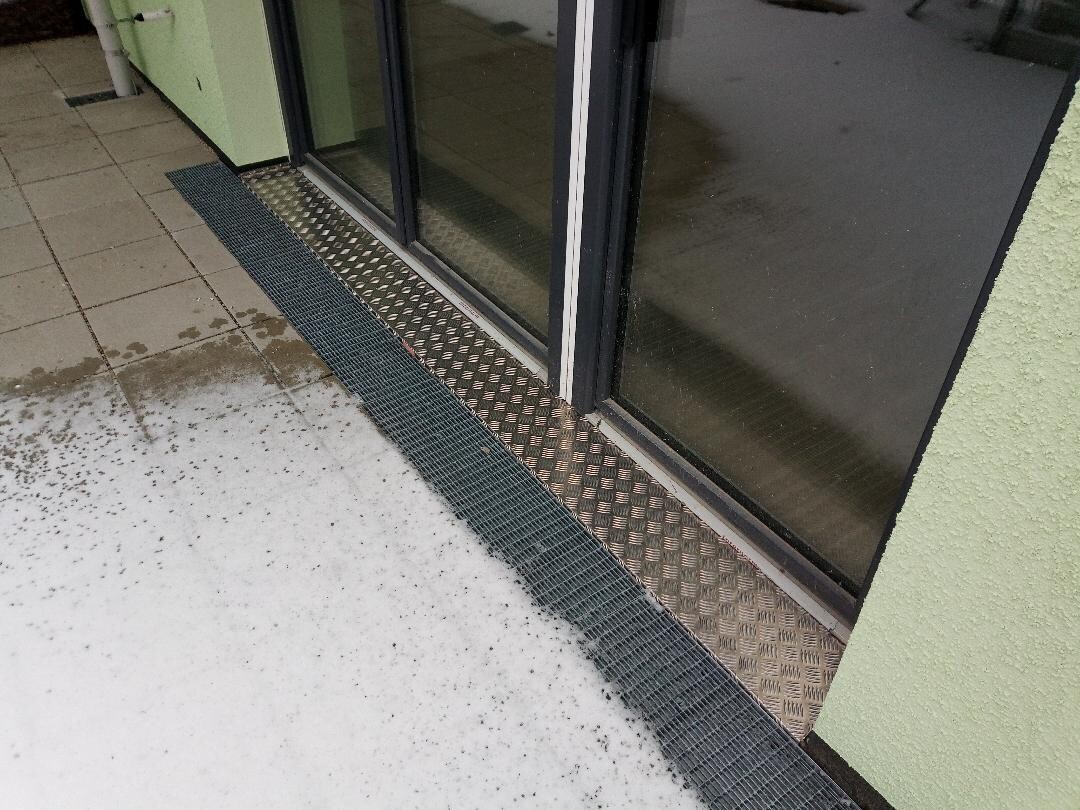
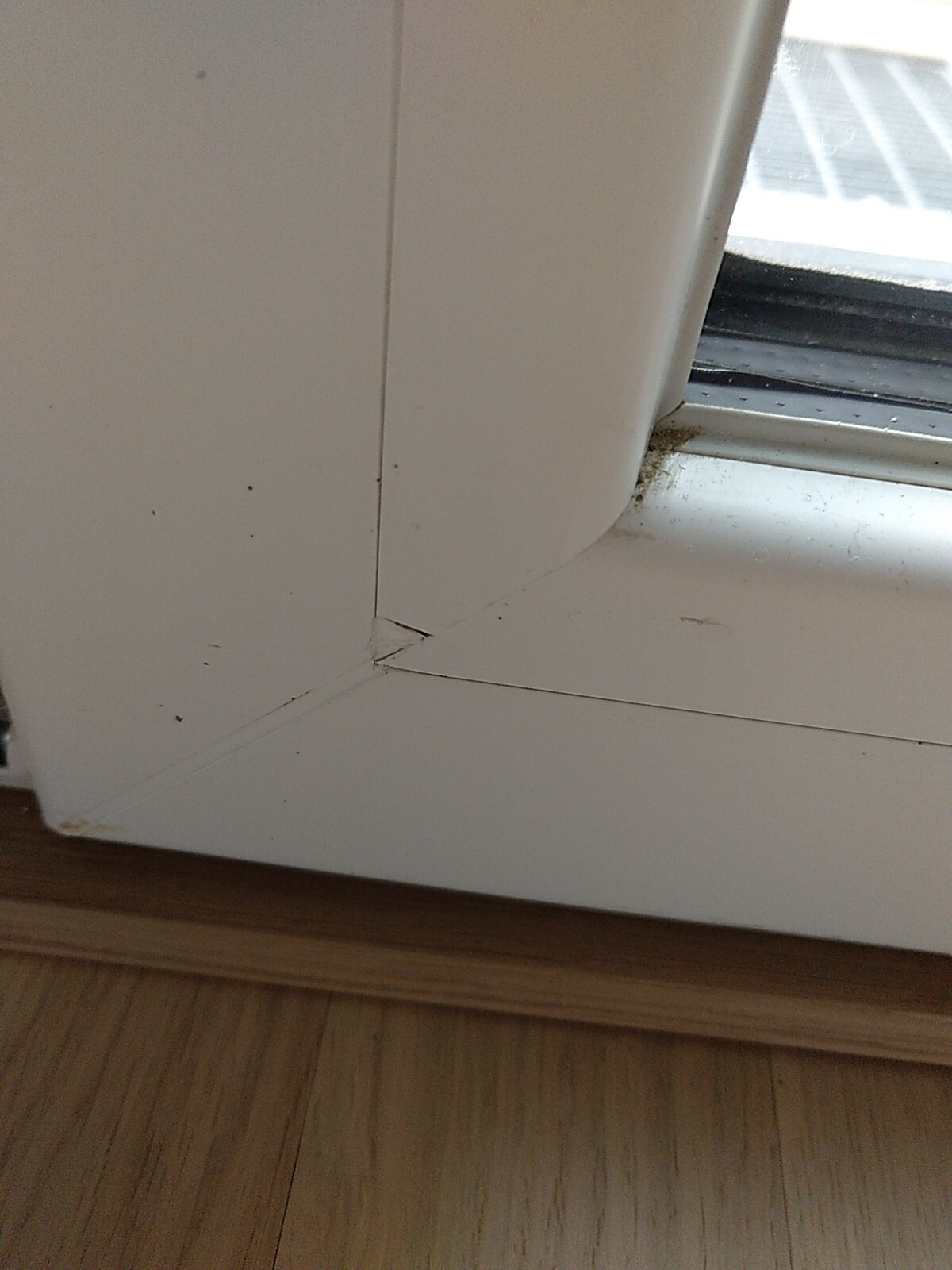
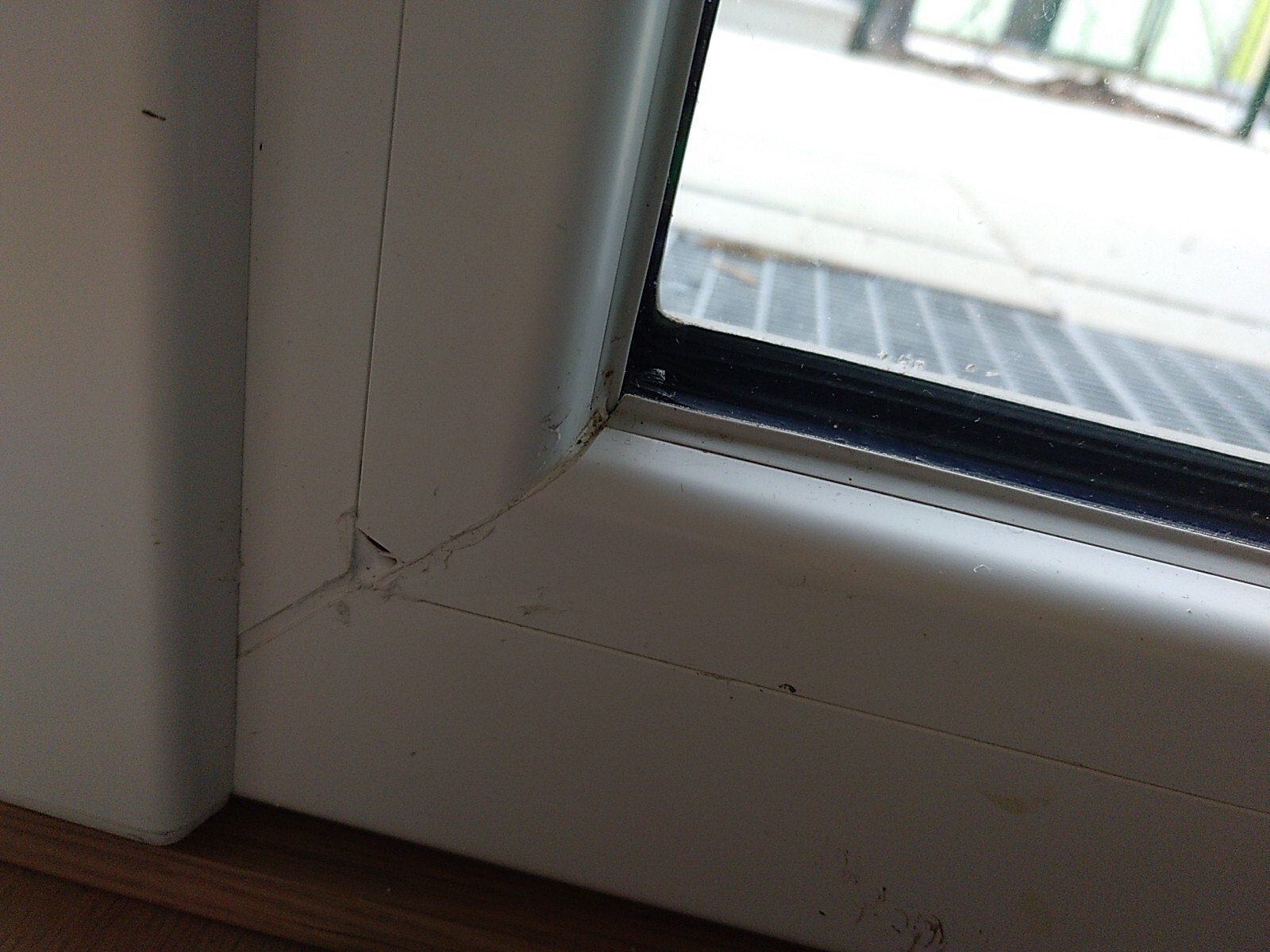
1) We have a double-leaf balcony door and right next to it a regular balcony door. There is a seal between the two elements. However, the seal does not extend all the way to the bottom (see photo); approximately 7-8mm (about 1/4 inch) are missing. On the outside, there is also no additional seal installed (see photo). Exactly where the seal is missing, there is a draft, and a relatively loud whistling sound can be heard constantly, even when the roller shutter is down. Should the seal be replaced, or is it sufficient if the window company repairs it with silicone? I want it to be done according to standard practice.
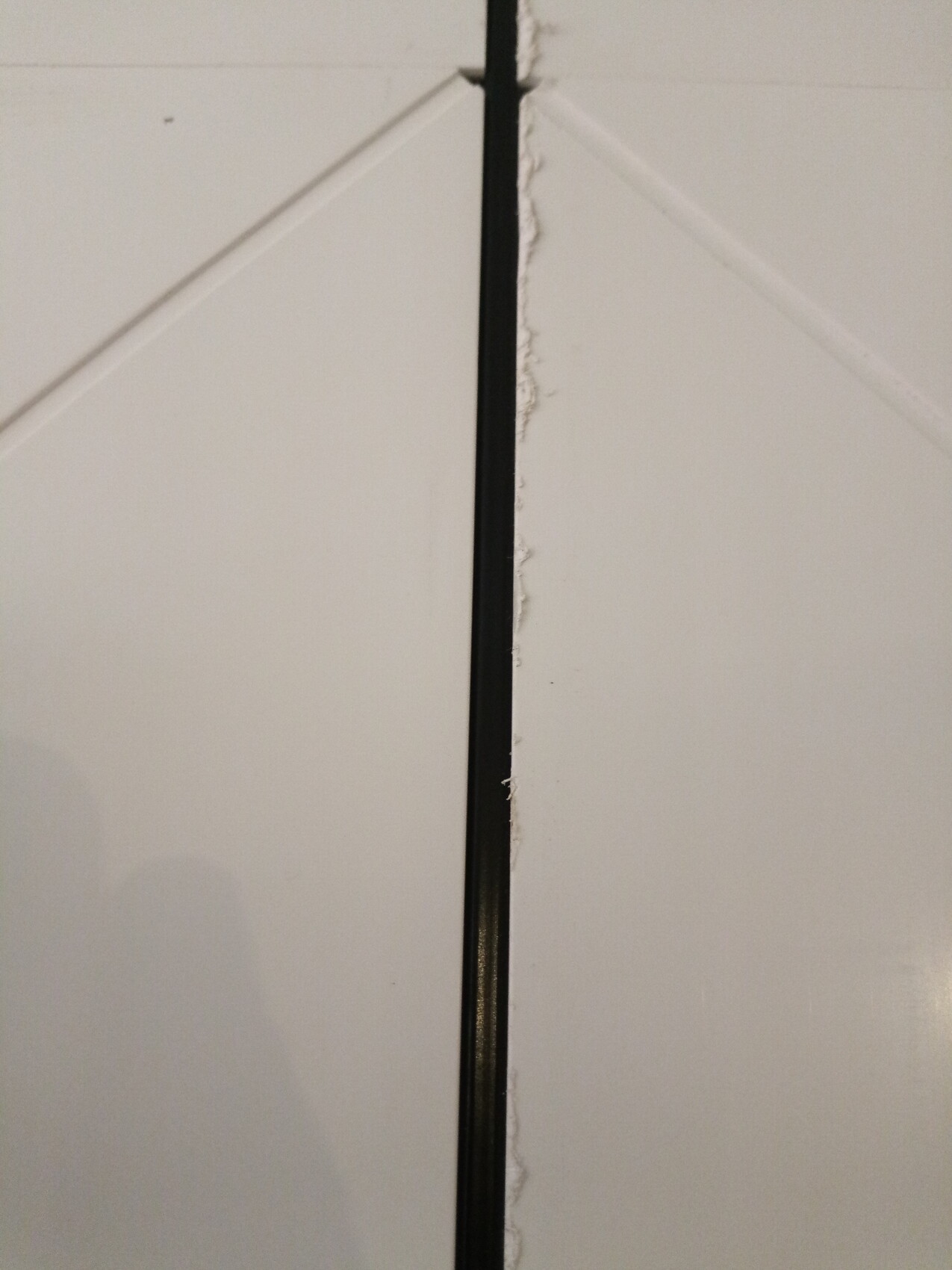
2) Between the two elements at the seal, the frame is slightly frayed (see photo). Is this normal or not? Also, how much silicone is acceptable when attaching the retaining strips? As shown in the photo, the work looks quite sloppy. In other places, the retaining strips are a bit too short (1-2mm) and were simply filled with silicone.
3) In our living room, we have two interior windowsills, each 133cm (52 inches) wide. The distance between the two windowsills is 34cm (13 inches). The windowsills protrude from the wall by between 2.7cm and 3.8cm (1 inch and 1.5 inches). So there is a difference of over 1cm (about 0.4 inch), which is clearly visible to the naked eye since the windowsills are at a height of 1.70m (5 ft 7 in). Is this still within tolerance?
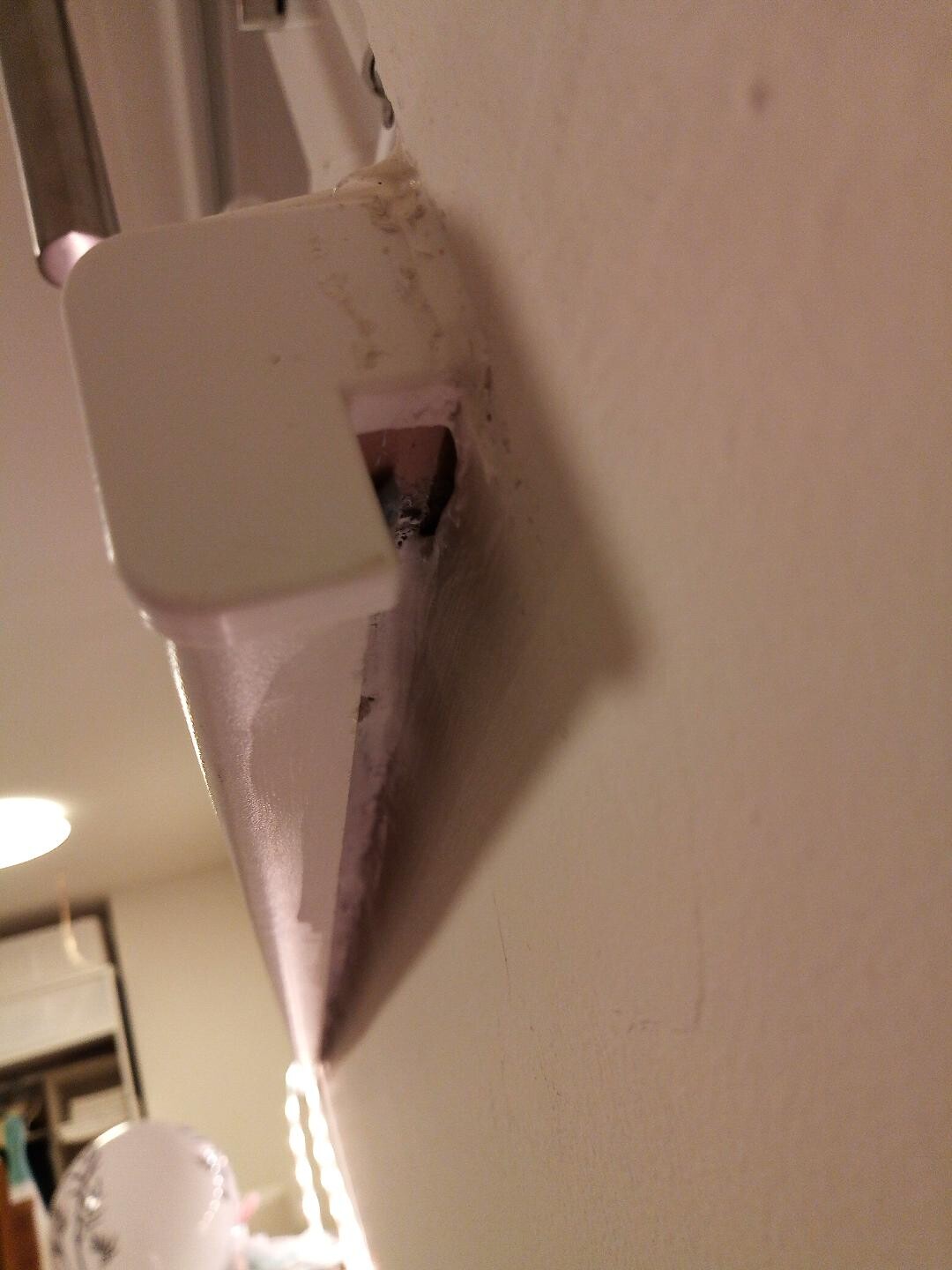
4) There is a hole under the windowsill that causes a draft. Is closing it with PU foam sufficient?
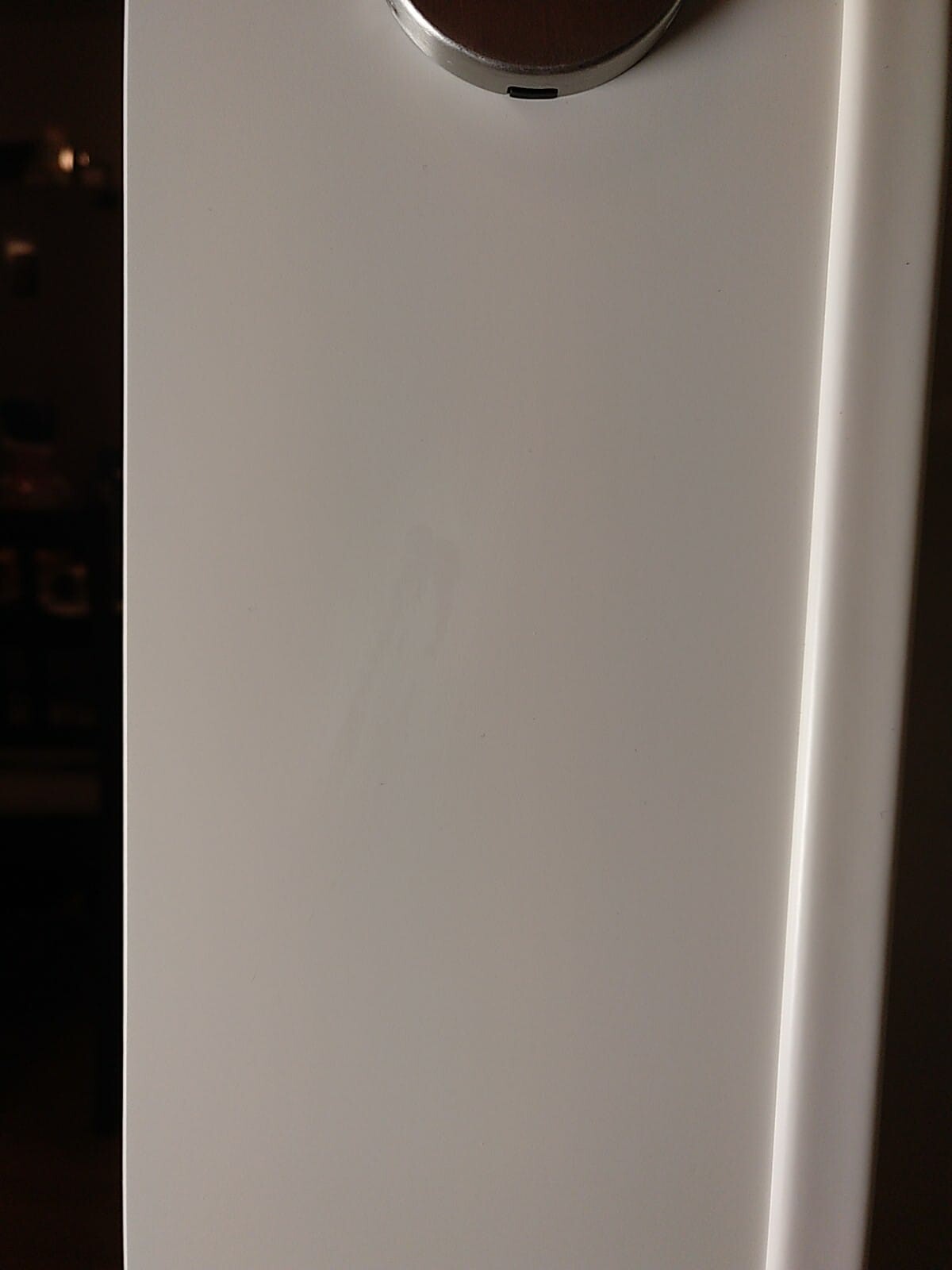
5) One of our interior doors had glue residues on it when we moved in. We have no idea where they came from. When trying to remove the glue, the door fitter slightly damaged the paint. Can we generally request a door replacement?
Basically, we just want an idea of how things should be done properly so that we can argue our case.
Thanks in advance.
Greetings from Vienna
Christoph

I have been reading in the forum for a while and now I registered because I have a few urgent questions.
We recently moved into our newly built apartment in Vienna and are facing some defects. Someone from the developer and the construction management will visit next week to inspect the issues. We already had someone here last week, and for each of our complaints, they mostly responded with "this is normal" or "this is within tolerance." Now I want to prepare a bit for next week and hope to get some support.
1) We have a double-leaf balcony door and right next to it a regular balcony door. There is a seal between the two elements. However, the seal does not extend all the way to the bottom (see photo); approximately 7-8mm (about 1/4 inch) are missing. On the outside, there is also no additional seal installed (see photo). Exactly where the seal is missing, there is a draft, and a relatively loud whistling sound can be heard constantly, even when the roller shutter is down. Should the seal be replaced, or is it sufficient if the window company repairs it with silicone? I want it to be done according to standard practice.
2) Between the two elements at the seal, the frame is slightly frayed (see photo). Is this normal or not? Also, how much silicone is acceptable when attaching the retaining strips? As shown in the photo, the work looks quite sloppy. In other places, the retaining strips are a bit too short (1-2mm) and were simply filled with silicone.
3) In our living room, we have two interior windowsills, each 133cm (52 inches) wide. The distance between the two windowsills is 34cm (13 inches). The windowsills protrude from the wall by between 2.7cm and 3.8cm (1 inch and 1.5 inches). So there is a difference of over 1cm (about 0.4 inch), which is clearly visible to the naked eye since the windowsills are at a height of 1.70m (5 ft 7 in). Is this still within tolerance?
4) There is a hole under the windowsill that causes a draft. Is closing it with PU foam sufficient?
5) One of our interior doors had glue residues on it when we moved in. We have no idea where they came from. When trying to remove the glue, the door fitter slightly damaged the paint. Can we generally request a door replacement?
Basically, we just want an idea of how things should be done properly so that we can argue our case.
Thanks in advance.
Greetings from Vienna
Christoph
D
drigli198425 Feb 2019 17:47I just had a discussion with an employee of the developer. At first, he tried to convince me that it is a prefabricated component. When I asked why there is a seal in between, he said that it is fine and represents the current state of the art. Where the seal is too short, they simply apply silicone, and then it fits, causing no further issues. When I asked if this was a final solution, he only replied that it is adequate as it is.
I now have three opinions regarding the patio door: one from you experts in the forum, one from my cousin who is a civil engineer, and one from two employees of a window company to whom we showed the photos. And from all sides, we hear: this is not how it should be done!
I don’t think I can proceed without a building surveyor or expert, but I have some concerns about how helpful that will be. We are located in Austria.
I now have three opinions regarding the patio door: one from you experts in the forum, one from my cousin who is a civil engineer, and one from two employees of a window company to whom we showed the photos. And from all sides, we hear: this is not how it should be done!
I don’t think I can proceed without a building surveyor or expert, but I have some concerns about how helpful that will be. We are located in Austria.

drigli1984 schrieb:
And from all sides we hear: This is not how it’s done! That’s true – although as a former window manufacturer I also count myself as part of a “window company” and I don’t like the word “expert.”
drigli1984 schrieb:
Where the seal is too short, silicone is simply applied, then it fits and causes no more problems. When I asked if this was a permanent solution, he just replied that it works. This method “works” at best in the sense that visible external damage will only appear after the warranty period has ended.
https://www.instagram.com/11antgmxde/
https://www.linkedin.com/company/bauen-jetzt/
drigli1984 schrieb:
Without a building expert, I don’t think I can make any progress, but I have some doubts about how much that will actually help. We are here in Austria.Actually, no.
Even a building expert can only point out the issue and say that the work was poorly done.
Sure, they might have some phrases on how to put it more clearly.
Still, it is up to you, the builder or client, to report the defect.
Therefore:
Send a formal defect notice by registered mail, including a deadline for the replacement or correction according to the relevant standard (e.g., DIN).
I couldn’t provide the exact wording now. But before you pay, or right after paying the installment, submit the formal written defect notice.
You can save yourself the expert’s fee, because they can’t do more for you than point out the problem.
D
drigli198426 Feb 2019 19:04@11ant Being an expert should not be an insult. Thanks again for your expertise.
@ypg Since this is a condominium, all defects are the responsibility of the developer. My knowledge on the subject is limited to what I have researched in the past few days. And I’m not just arguing against the window installer, but also against the site manager and the project manager.
These are definitely Internorm patio doors, and according to Internorm’s website, the installation was carried out by a "top-qualified partner" with "certified installers." The installer told me on the phone today (two appointments have already been missed) that these are connectable elements, that the seal belongs there, and that a cover strip can be added on top for a better appearance. Otherwise, everything was installed according to recognized technical standards.
@ypg Since this is a condominium, all defects are the responsibility of the developer. My knowledge on the subject is limited to what I have researched in the past few days. And I’m not just arguing against the window installer, but also against the site manager and the project manager.
These are definitely Internorm patio doors, and according to Internorm’s website, the installation was carried out by a "top-qualified partner" with "certified installers." The installer told me on the phone today (two appointments have already been missed) that these are connectable elements, that the seal belongs there, and that a cover strip can be added on top for a better appearance. Otherwise, everything was installed according to recognized technical standards.
Similar topics