
Hello everyone,
Summer is just around the corner, and we’re facing the issue of sunlight exposure.
We have a large window wall (southwest-facing) measuring nearly 8m by 2.5m (26 ft by 8 ft), and now we want to install some kind of sunshade.
An awning is currently our choice: what should we consider here? Which color is most suitable? I wanted a solid red, but apparently that color has the most problems with fading outdoors. Anthracite? Would that be too dark, and does it fade a lot?
What about dirt and stains — does it get warmer under a gray awning compared to, for example, a yellow one? Should we go for a full cassette or a half cassette awning? The half cassette seems to have the advantage that I can retract it just enough to stop at bird droppings and then wipe them off easily.
We have already arranged the electrical setup. The requirement is that it must protect the terrace and living room from the sun. We would also like to be able to sit under the awning during light rain. Does a rain and storm sensor make sense? Would you recommend having a light installed in the awning?
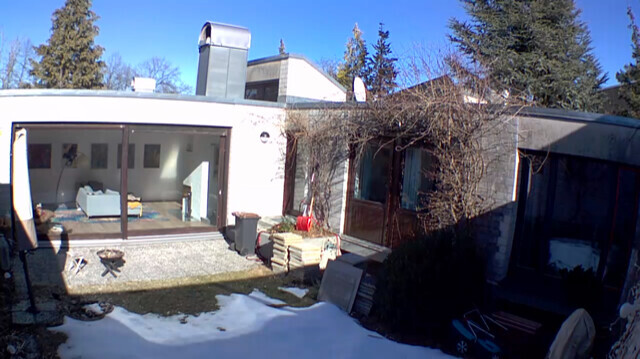
The windows will be replaced — the frames will be anthracite and fitted with external venetian blinds (is that the correct term for those slatted blinds?). But this will take a while and is quite expensive.
Thanks in advance for your suggestions. I don’t want to have the friendly salespeople come to the house unprepared.
Best regards,
Claudia
Summer is just around the corner, and we’re facing the issue of sunlight exposure.
We have a large window wall (southwest-facing) measuring nearly 8m by 2.5m (26 ft by 8 ft), and now we want to install some kind of sunshade.
An awning is currently our choice: what should we consider here? Which color is most suitable? I wanted a solid red, but apparently that color has the most problems with fading outdoors. Anthracite? Would that be too dark, and does it fade a lot?
What about dirt and stains — does it get warmer under a gray awning compared to, for example, a yellow one? Should we go for a full cassette or a half cassette awning? The half cassette seems to have the advantage that I can retract it just enough to stop at bird droppings and then wipe them off easily.
We have already arranged the electrical setup. The requirement is that it must protect the terrace and living room from the sun. We would also like to be able to sit under the awning during light rain. Does a rain and storm sensor make sense? Would you recommend having a light installed in the awning?
The windows will be replaced — the frames will be anthracite and fitted with external venetian blinds (is that the correct term for those slatted blinds?). But this will take a while and is quite expensive.
Thanks in advance for your suggestions. I don’t want to have the friendly salespeople come to the house unprepared.
Best regards,
Claudia
matte1987 schrieb:
What I find very important is the statement from another company that they no longer install awnings on brick walls made of T8/T9 bricks because they have had so many problems with the bricks not holding up over time!
(...)
Is this really such a big issue?We have two 4 m (13 ft) Markilux cassette awnings with a 3 m (10 ft) projection, anchored using brackets mounted into the concrete ceiling; the brackets bridge the insulation and the facing brick. The brackets were installed during construction (Markilux offers model-specific brackets for this), followed by the insulation and brick facade. Our interior wall is made of Ytong aerated concrete blocks.
If the wall structure cannot support this statically, then rollable sun sails (a roll mounted on support posts with a traverse bar or initially positioned in front of the patio; the sail is then pulled onto the wall or support posts) would be an alternative.
One supplier is, among others, Pina Sonnensegel.
B
brotpeter27 Feb 2019 10:16Otus11 schrieb:
We have two 4 m (13 ft) Markilux cassette awnings with a 3 m (10 ft) projection, which were anchored using brackets embedded in the concrete ceiling; the brackets span insulation wool plus brick veneer. The brackets were installed during construction, followed by insulation and brickwork. Our interior wall shell is Ytong aerated concrete.This is also the best method! During the construction phase, brackets (e.g., Isokorb, etc.) are integrated directly into the concrete ceiling. However, you need to decide in advance which awning model and size from which manufacturer you want, as the bracket spacing must match accordingly.
For example, we had two Schö** Isokorb installed and used adapter brackets to ensure the mounting plate for the awning could be fixed. It is not "plug & play" and requires significantly more detailed planning.
Well, during the planning phase I focused on many things, and most of them worked out, but the awning somehow completely slipped my mind.
I would have actually liked to have an overhang on the upper floor, but that was cut for cost reasons.
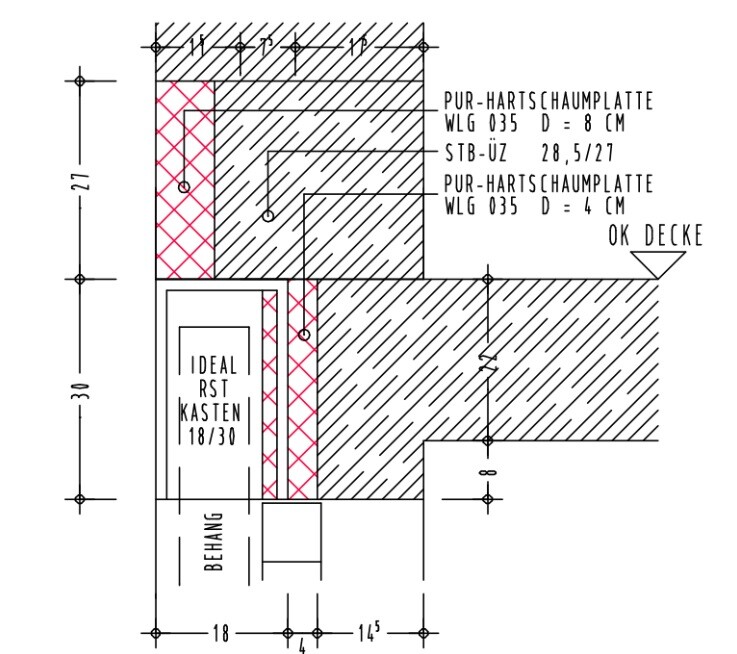
However, regardless of that, anchoring into our concrete ceiling would not have been possible anyway because the roller shutter boxes are located there (see attached image).
The issue is currently with the architect, who is checking whether we could mount the awning on the reinforced concrete lintel above the roller shutter box.
In the meantime, I contacted another company that at least didn’t reject the idea outright.
They would define, with the appropriate structural calculations, how the awning could be mounted on the brickwork. The calculations are included in their scope of services.
Now we have to wait for the offers and the architect’s assessment.
What minimum incline angle would you recommend for an awning?
If we go into the concrete, the awning would hang at just about 2.85m (9 feet 4 inches). With a 4m (13 feet) projection and the often suggested 15° incline (seriously??), I would bump my head every time, which is obviously not an option...
I would have actually liked to have an overhang on the upper floor, but that was cut for cost reasons.
However, regardless of that, anchoring into our concrete ceiling would not have been possible anyway because the roller shutter boxes are located there (see attached image).
The issue is currently with the architect, who is checking whether we could mount the awning on the reinforced concrete lintel above the roller shutter box.
In the meantime, I contacted another company that at least didn’t reject the idea outright.
They would define, with the appropriate structural calculations, how the awning could be mounted on the brickwork. The calculations are included in their scope of services.
Now we have to wait for the offers and the architect’s assessment.
What minimum incline angle would you recommend for an awning?
If we go into the concrete, the awning would hang at just about 2.85m (9 feet 4 inches). With a 4m (13 feet) projection and the often suggested 15° incline (seriously??), I would bump my head every time, which is obviously not an option...
B
brotpeter27 Feb 2019 19:54Now I’m curious to see what suggestion comes from the architect... the one with the venetian blinds is certainly a challenge.
A 15-degree pitch is standard... for example, Warema also offers this. To what extent it is adjustable can only be confirmed by the manufacturer.
And with 4m (13 feet) fully extended and about 2.85m (9 feet 4 inches) in height, you still end up with 1.82m (6 feet) clearance... This does not yet take into account the 1-2% slope of the terrace.
A 15-degree pitch is standard... for example, Warema also offers this. To what extent it is adjustable can only be confirmed by the manufacturer.
And with 4m (13 feet) fully extended and about 2.85m (9 feet 4 inches) in height, you still end up with 1.82m (6 feet) clearance... This does not yet take into account the 1-2% slope of the terrace.
The architect’s statement is in.
He has no concerns about attaching the awning to the concrete lintel but imagines that it might hang too low when fully extended.
Alternatively, he wouldn’t really have any issues if the installation were carried out with adhesive anchors in the masonry, provided there is appropriate certification from the contractor.
What he considers much more important is that the mounting brackets are not placed directly below the first-floor window, since the ceiling load does not rest there. If the brackets are positioned next to the first-floor window, he has no problem with that.
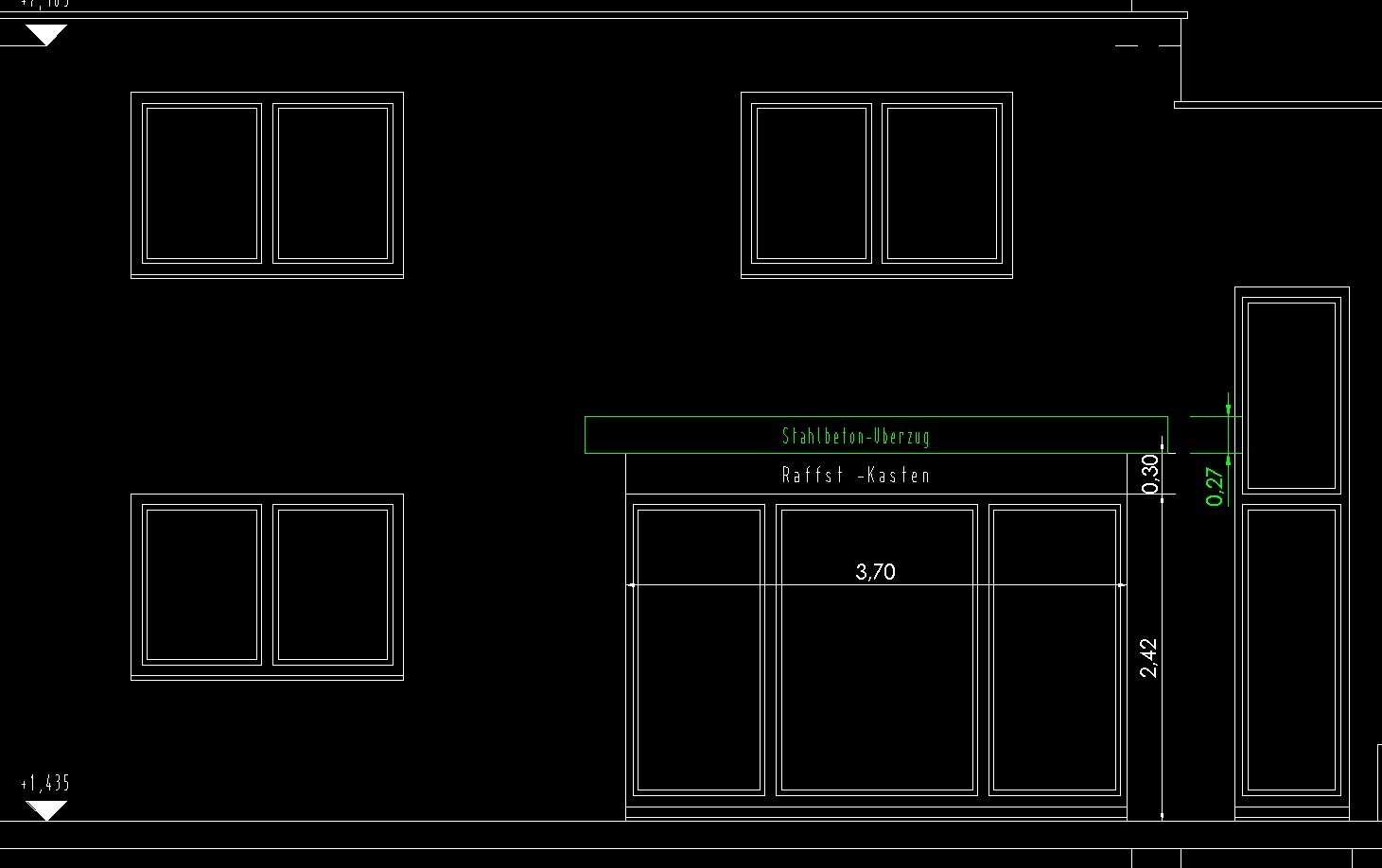
He has no concerns about attaching the awning to the concrete lintel but imagines that it might hang too low when fully extended.
Alternatively, he wouldn’t really have any issues if the installation were carried out with adhesive anchors in the masonry, provided there is appropriate certification from the contractor.
What he considers much more important is that the mounting brackets are not placed directly below the first-floor window, since the ceiling load does not rest there. If the brackets are positioned next to the first-floor window, he has no problem with that.
A
andreasonair4 Mar 2019 21:06We are currently searching as well. For our two-story house with a double-shell construction, the brackets are mounted on the solid facing bricks, and the fastening/anchoring goes through the bricks and insulation into the concrete slab (height fits). The electrical connection and the matching switch inside are already installed, so we do not need or want a radio control system from the awning manufacturer (we plan to control it remotely ourselves using a Fibaro Roller Shutter or similar device behind the switch). We are looking for an awning without lighting, without valance, or any other special features.
Our main requirements are a large width of at least 6.5 meters (21 feet) or preferably 7 meters (23 feet), with a projection of 3.5 meters (11.5 feet), as well as the desire for a full cassette, simple rectangular housing (no rounded shapes, no clearly visible brackets like on, for example, the Markilux 5010/6000). We have identified the following three candidates (all relatively new models):
- Weinor Kubata (only up to 6.5 meters width)
- Warema Terrea K70 (7 meters)
- Klaiber Camabox BX4500 (7 meters)
We visited two dealers and viewed the three models. According to their advice, occasional exposure to moisture on the awning is normal and not an issue (as long as you don't retract the awning while it’s still wet), and all should withstand wind up to force 5 on the Beaufort scale (considering the size). The quoted prices including installation are in the range of 5000 to 5600 euros.
Can anyone assess the quality of these three models, or are these products equivalent? When choosing the 7-meter width, we are left with two models, and we are unsure about the differences regarding especially construction and durability (Warema is said to be a bit cheaper with a slightly smaller cassette compared to Klaiber).
Our main requirements are a large width of at least 6.5 meters (21 feet) or preferably 7 meters (23 feet), with a projection of 3.5 meters (11.5 feet), as well as the desire for a full cassette, simple rectangular housing (no rounded shapes, no clearly visible brackets like on, for example, the Markilux 5010/6000). We have identified the following three candidates (all relatively new models):
- Weinor Kubata (only up to 6.5 meters width)
- Warema Terrea K70 (7 meters)
- Klaiber Camabox BX4500 (7 meters)
We visited two dealers and viewed the three models. According to their advice, occasional exposure to moisture on the awning is normal and not an issue (as long as you don't retract the awning while it’s still wet), and all should withstand wind up to force 5 on the Beaufort scale (considering the size). The quoted prices including installation are in the range of 5000 to 5600 euros.
Can anyone assess the quality of these three models, or are these products equivalent? When choosing the 7-meter width, we are left with two models, and we are unsure about the differences regarding especially construction and durability (Warema is said to be a bit cheaper with a slightly smaller cassette compared to Klaiber).
Similar topics