
S
Sebastian1232 Feb 2020 21:54Hello, I am currently insulating our attic. The house (bungalow) was built in 2011. The ceiling is insulated, including a vapor barrier membrane.
I am using 22mm (7/8 inch) insulation between the rafters.
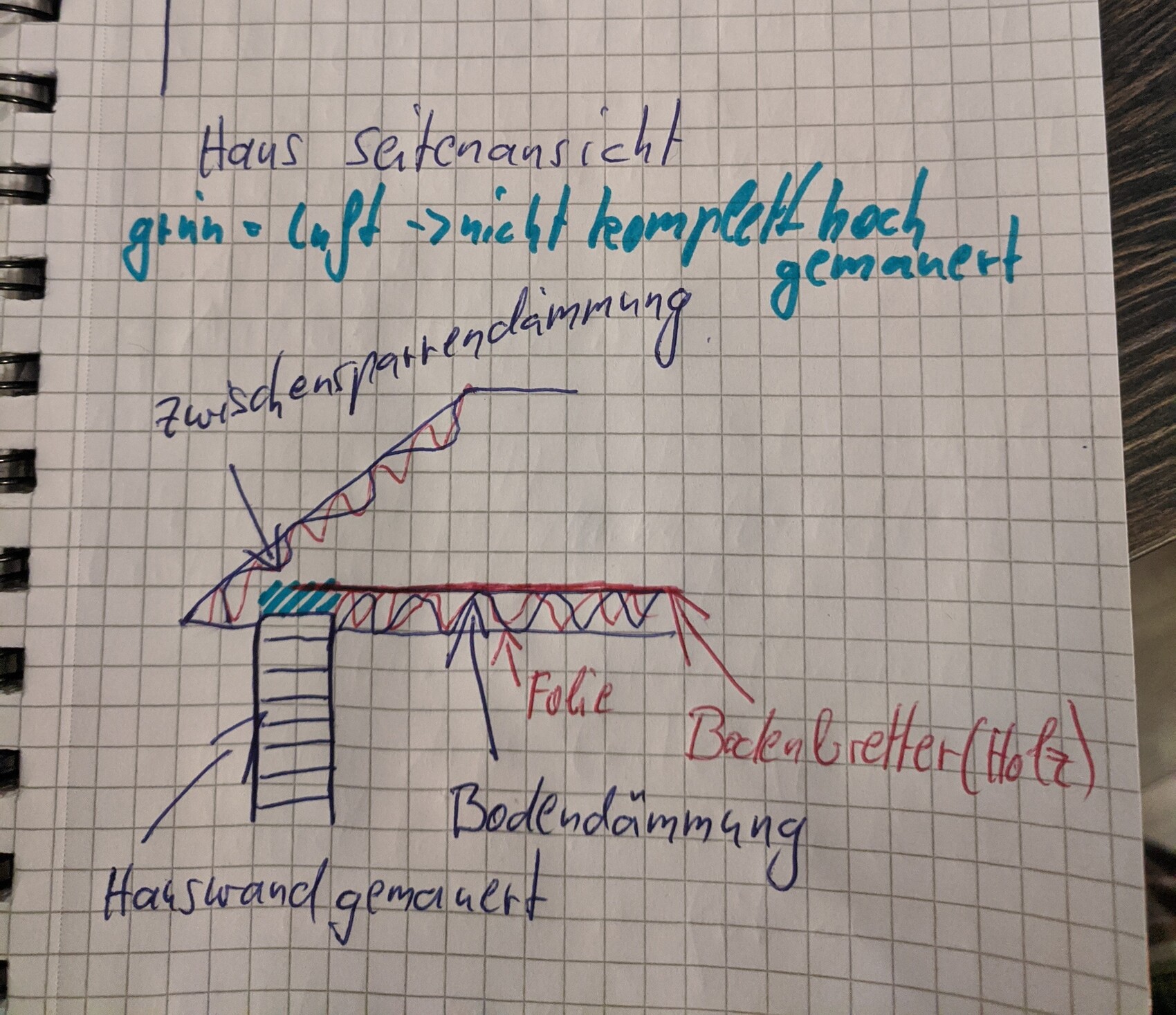
Now to the problem: How do I best connect the vapor barrier membrane from the attic insulation to the lower vapor barrier membrane? If I don’t make this connection, I am afraid that wind will penetrate there and cause heat loss.
To clarify, here are three pictures:
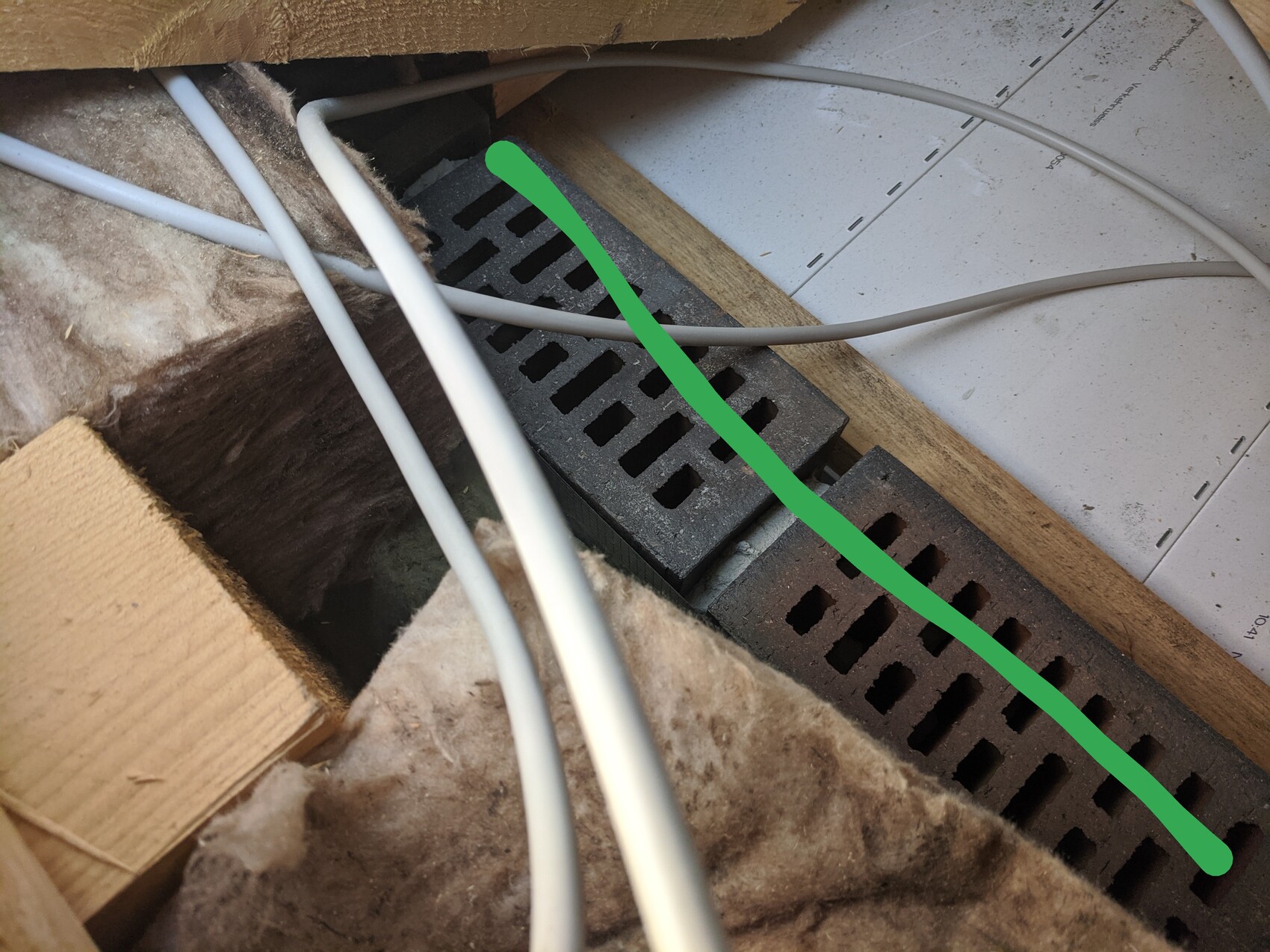
In the second picture, you can see that the wall ends slightly below the attic floor level. Behind the wall, there is an empty cavity, which I would like to fill with insulation material.
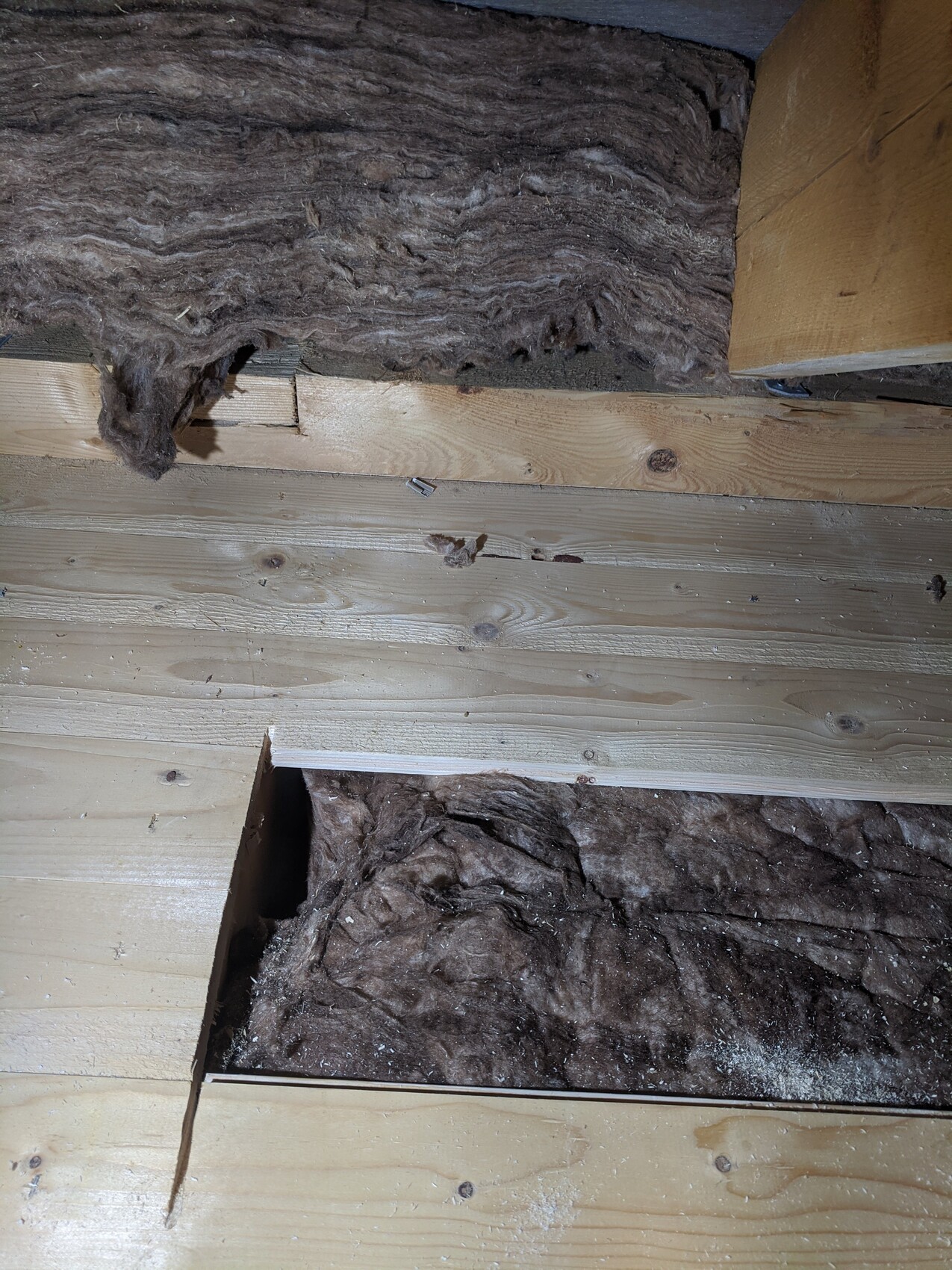
In the third picture, you can see the floor insulation (beneath it is the vapor barrier membrane). To check, I have cut a hole there.
Do I need to remove the floorboards here to tape the vapor barrier membrane coming from above to the lower vapor barrier membrane? Is there another solution?
I am using 22mm (7/8 inch) insulation between the rafters.
Now to the problem: How do I best connect the vapor barrier membrane from the attic insulation to the lower vapor barrier membrane? If I don’t make this connection, I am afraid that wind will penetrate there and cause heat loss.
To clarify, here are three pictures:
In the second picture, you can see that the wall ends slightly below the attic floor level. Behind the wall, there is an empty cavity, which I would like to fill with insulation material.
In the third picture, you can see the floor insulation (beneath it is the vapor barrier membrane). To check, I have cut a hole there.
Do I need to remove the floorboards here to tape the vapor barrier membrane coming from above to the lower vapor barrier membrane? Is there another solution?
B
Babenhausen5 Feb 2020 14:53Hello Sebastian,
I also have the installation of insulation between the rafters coming up in the next few months. The house originally had a flat roof, so I expect the ceiling structure to be similar to yours. Since there have been frequent visits from a marten in the attic, I first installed a barrier there.
After that, the insulation goes in, and then I staple the vapor retarder sheeting to the joists on the ceiling using battens.
Why do you want to connect the new vapor retarder with the old one?
Best regards from
Babenhausen
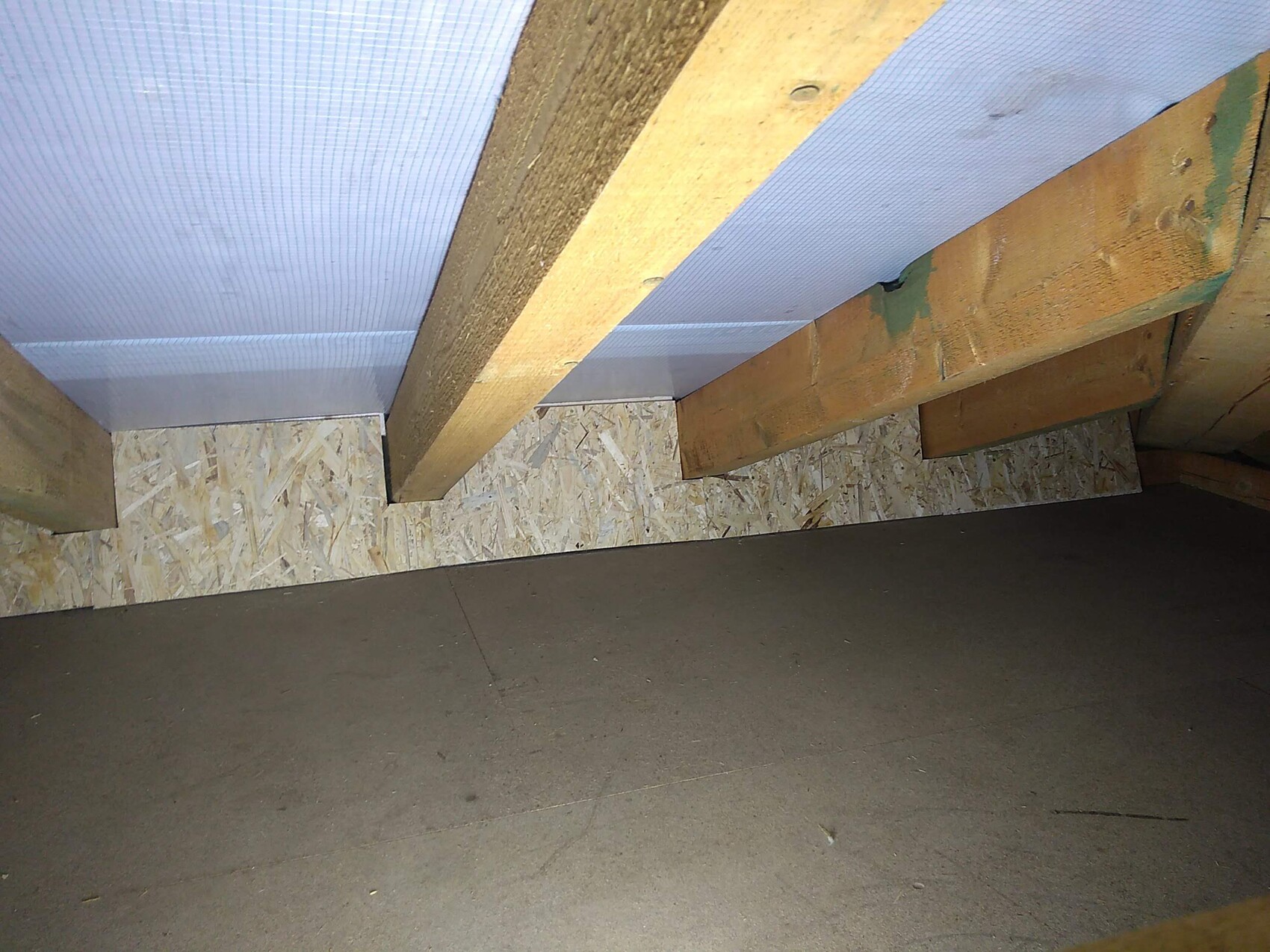
I also have the installation of insulation between the rafters coming up in the next few months. The house originally had a flat roof, so I expect the ceiling structure to be similar to yours. Since there have been frequent visits from a marten in the attic, I first installed a barrier there.
After that, the insulation goes in, and then I staple the vapor retarder sheeting to the joists on the ceiling using battens.
Why do you want to connect the new vapor retarder with the old one?
Best regards from
Babenhausen

S
Sebastian1235 Feb 2020 21:13@Babenhausen If the vapor barrier on the upper floor is not sealed to the vapor barrier on the ground floor, there will be an area in the middle of the house that is not protected against wind.
This allows wind to penetrate, causing heat loss and a cold floor in the attic.
@Mycraft Could you explain that in more detail? Is the ventilation flap on the window sufficient here? (4 units available)
This allows wind to penetrate, causing heat loss and a cold floor in the attic.
@Mycraft Could you explain that in more detail? Is the ventilation flap on the window sufficient here? (4 units available)
You need to ensure proper air exchange, otherwise the introduced moisture cannot escape and damage is likely. And moisture will definitely occur. Right now, the entire ridge is probably open.
The required air exchange can be calculated; whether the vents are sufficient is something you need to determine yourself.
The required air exchange can be calculated; whether the vents are sufficient is something you need to determine yourself.
S
Sebastian1239 Feb 2020 00:30Yes, that is clear.
Now I’m wondering what the easiest way is to join the vapor barrier sheets together?
Now I’m wondering what the easiest way is to join the vapor barrier sheets together?
Similar topics