
Hello everyone,
I’m new here and wanted to ask for advice. I hope I have posted my question in the right section, but I’m confident that I can get some help here.
We built our house two years ago, and after finishing the terrace last year, I want to work on the steps for the patio door and two floor-to-ceiling windows leading outside this year.
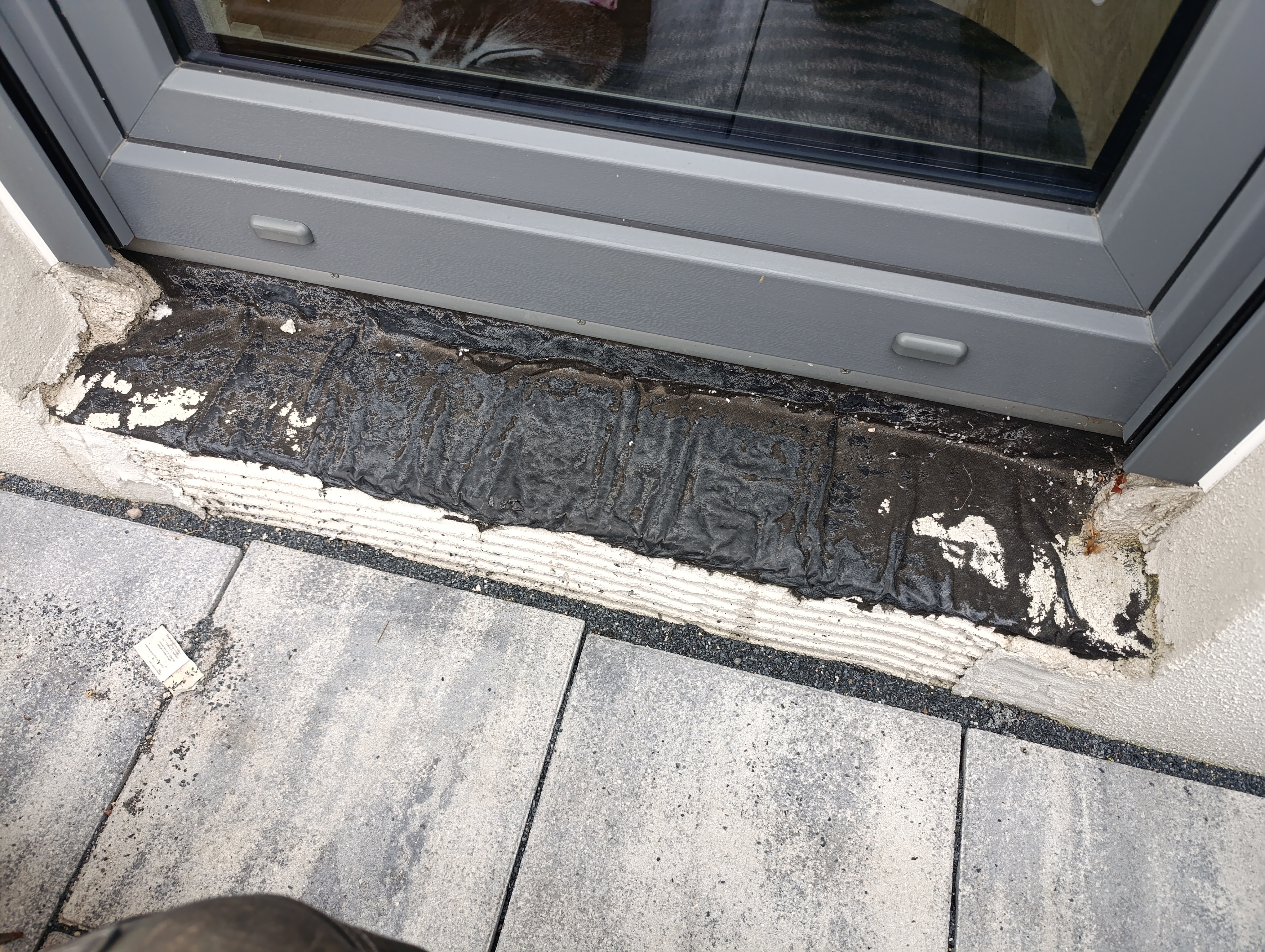
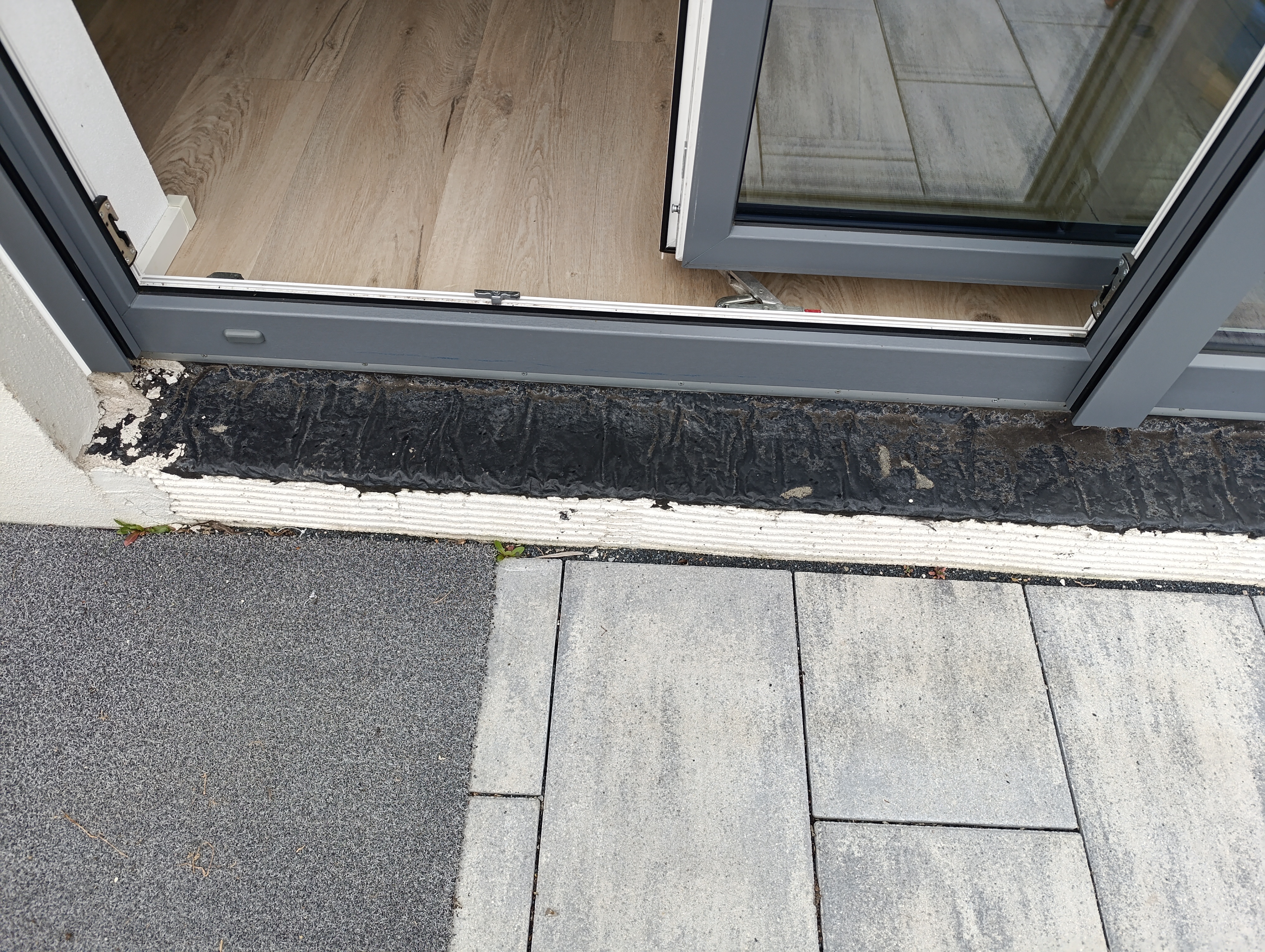
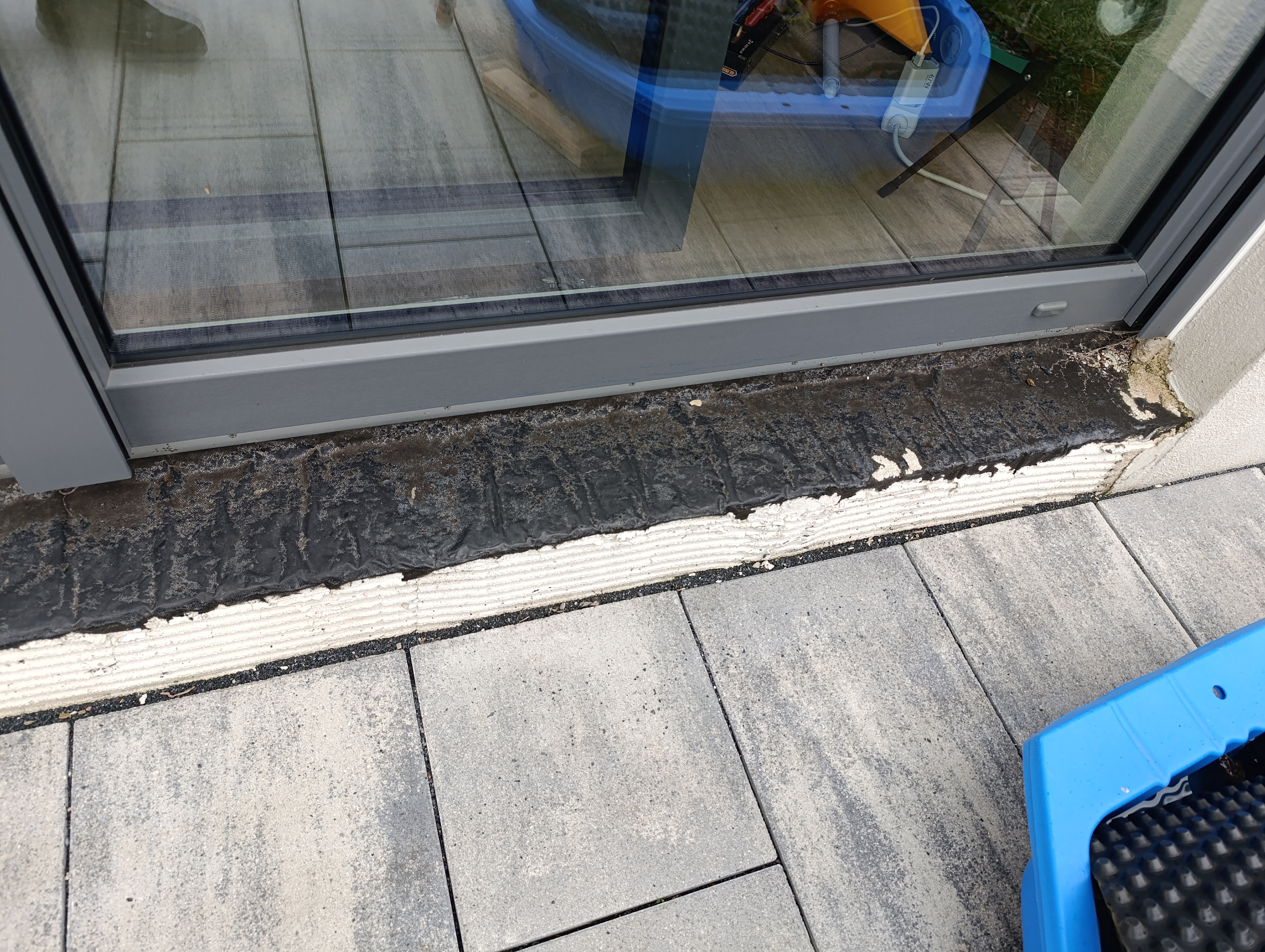
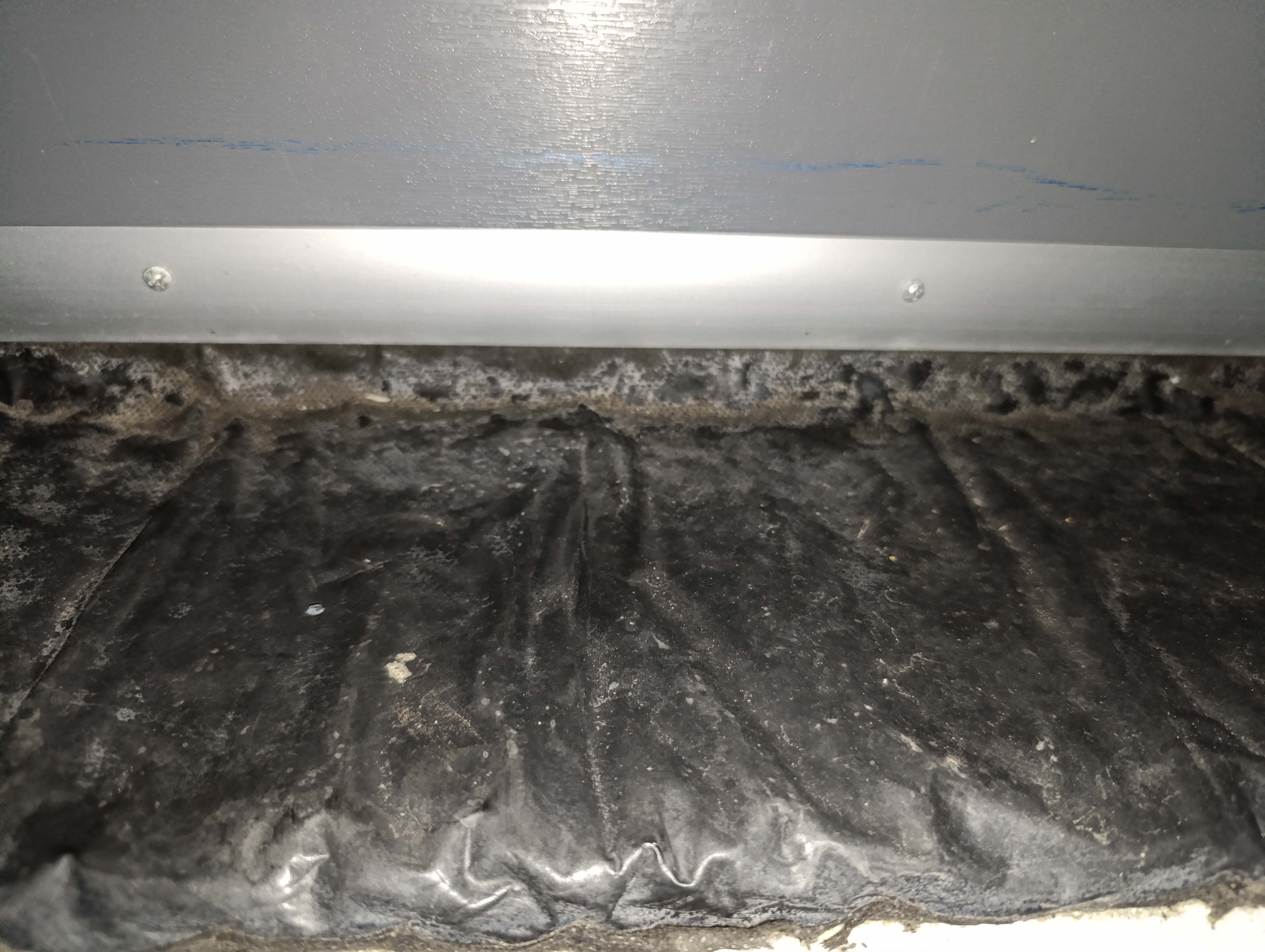
My question is: How should the tread step be fixed to the existing surface (see photos)? Apparently, it is some kind of bitumen membrane that was glued onto the underlying stones (no external thermal insulation system). According to our construction manager, it is waterproof, and our site supervisor didn’t raise any concerns at the time.
For the step, I was thinking of a 3 cm (1¼ inch) thick slab / window sill made of granite or rough-hewn slate. Slight slope, with a 4 cm (1½ inch) front overhang and a drip edge underneath. The exterior render below the step will be applied afterwards.
My question is whether I can simply apply a bed of trass cement mortar on this and then set the window sill / tread step on top, and if it will hold firmly and reliably over time without eventually starting to separate.
Thanks in advance and greetings from Thuringia.
I’m new here and wanted to ask for advice. I hope I have posted my question in the right section, but I’m confident that I can get some help here.
We built our house two years ago, and after finishing the terrace last year, I want to work on the steps for the patio door and two floor-to-ceiling windows leading outside this year.
My question is: How should the tread step be fixed to the existing surface (see photos)? Apparently, it is some kind of bitumen membrane that was glued onto the underlying stones (no external thermal insulation system). According to our construction manager, it is waterproof, and our site supervisor didn’t raise any concerns at the time.
For the step, I was thinking of a 3 cm (1¼ inch) thick slab / window sill made of granite or rough-hewn slate. Slight slope, with a 4 cm (1½ inch) front overhang and a drip edge underneath. The exterior render below the step will be applied afterwards.
My question is whether I can simply apply a bed of trass cement mortar on this and then set the window sill / tread step on top, and if it will hold firmly and reliably over time without eventually starting to separate.
Thanks in advance and greetings from Thuringia.
Hi,
From what you describe, you want to basically lay the slab directly on the existing surface and hope it will hold… in practice, that usually doesn’t work very well, even if the 3cm (1.2 inches) thickness seems solid at first. Especially outside, you have temperature changes, moisture, frost — all of which cause more movement than you might expect.
A crucial point is the substrate. If the surface underneath is not absolutely stable, load-bearing, and frost-resistant, even the most beautiful granite slab won’t help; it will eventually come loose from the bond. Typically, such steps are set in a mortar bed, preferably trass cement mortar, to reduce efflorescence and provide full-surface support. Just gluing it is more of a “that might somehow work” approach.
The drip edge is a good idea, but the overhang shouldn’t be too small — 2–3cm (about 1 inch) is common; otherwise, the water can run back onto the step. And by the way, have you considered a slight slope of around 1–2% forward? That’s often forgotten and then water collects exactly where you don’t want it.
I’d be interested to know what your existing surface actually is. Concrete, screed, tiles? That determines whether you can lay directly on it or if you’ll need additional work, even if that’s what you’d rather avoid.
And one more detail: how do you plan to handle the side connections — sealed or open? That’s where most unpleasant surprises happen later on.
From what you describe, you want to basically lay the slab directly on the existing surface and hope it will hold… in practice, that usually doesn’t work very well, even if the 3cm (1.2 inches) thickness seems solid at first. Especially outside, you have temperature changes, moisture, frost — all of which cause more movement than you might expect.
A crucial point is the substrate. If the surface underneath is not absolutely stable, load-bearing, and frost-resistant, even the most beautiful granite slab won’t help; it will eventually come loose from the bond. Typically, such steps are set in a mortar bed, preferably trass cement mortar, to reduce efflorescence and provide full-surface support. Just gluing it is more of a “that might somehow work” approach.
The drip edge is a good idea, but the overhang shouldn’t be too small — 2–3cm (about 1 inch) is common; otherwise, the water can run back onto the step. And by the way, have you considered a slight slope of around 1–2% forward? That’s often forgotten and then water collects exactly where you don’t want it.
I’d be interested to know what your existing surface actually is. Concrete, screed, tiles? That determines whether you can lay directly on it or if you’ll need additional work, even if that’s what you’d rather avoid.
And one more detail: how do you plan to handle the side connections — sealed or open? That’s where most unpleasant surprises happen later on.
To be honest, I wouldn’t install a traditional mortar bed on a bitumen membrane like that, because you won’t get a proper mechanical bond and you might damage the waterproofing. It’s better to either use a mechanically decoupled system or first create a stable, mineral-based layer that you can then set on cleanly with hydraulic lime mortar. Otherwise, you’ll have exactly the problem where the step comes loose or hollows out over time. It’s also important that the waterproofing stays properly sealed at the edge and isn’t compromised by load or the mortar in any specific spots.
Hello and thank you for the answers.
I was actually thinking of natural stone silicone to seal the edges like in the bathroom.
And what would the decoupled solution or the load-bearing layer look like?
The remains of the exterior plaster have held firmly on the surface for almost three years now and have not come loose.
Nauer schrieb:
And one more detail, how do you plan to handle the side connections, sealed or open? Most unpleasant surprises happen there later on.
I was actually thinking of natural stone silicone to seal the edges like in the bathroom.
faustus schrieb:
Better is either a mechanically decoupled solution or first creating a load-bearing, mineral-based layer on which you can then neatly apply the mortar with hydraulic lime.
And what would the decoupled solution or the load-bearing layer look like?
The remains of the exterior plaster have held firmly on the surface for almost three years now and have not come loose.
M
MachsSelbst25 Mar 2026 08:31It looked the same for me after installing the windows, and I would bet my beloved collection of lead flashing that the window installer simply set the granite window sill in place with mortar or adhesive.
It has held for 3 years now, and I’m certainly not some delicate person who just hovers over the window sill...
What could possibly go wrong? I wouldn’t use silicone though; use PU foam or something like Illbruck SP925 or similar.
It was apparently watertight for 2 years, even with walking on it. As long as you don’t damage the bitumen membrane and properly seal the connection joints... and install a slope...
People always say that nothing sticks to bitumen, but even the colored render I applied on the base, partially extending onto the bitumen layer, has been sticking like crazy for 2 years now.
It has held for 3 years now, and I’m certainly not some delicate person who just hovers over the window sill...
What could possibly go wrong? I wouldn’t use silicone though; use PU foam or something like Illbruck SP925 or similar.
It was apparently watertight for 2 years, even with walking on it. As long as you don’t damage the bitumen membrane and properly seal the connection joints... and install a slope...
People always say that nothing sticks to bitumen, but even the colored render I applied on the base, partially extending onto the bitumen layer, has been sticking like crazy for 2 years now.
Similar topics