
Hello everyone,
I’m not sure if this is the right place or if someone can help me.
We recently completed the renovation/refurbishment of our house (built in 1990).
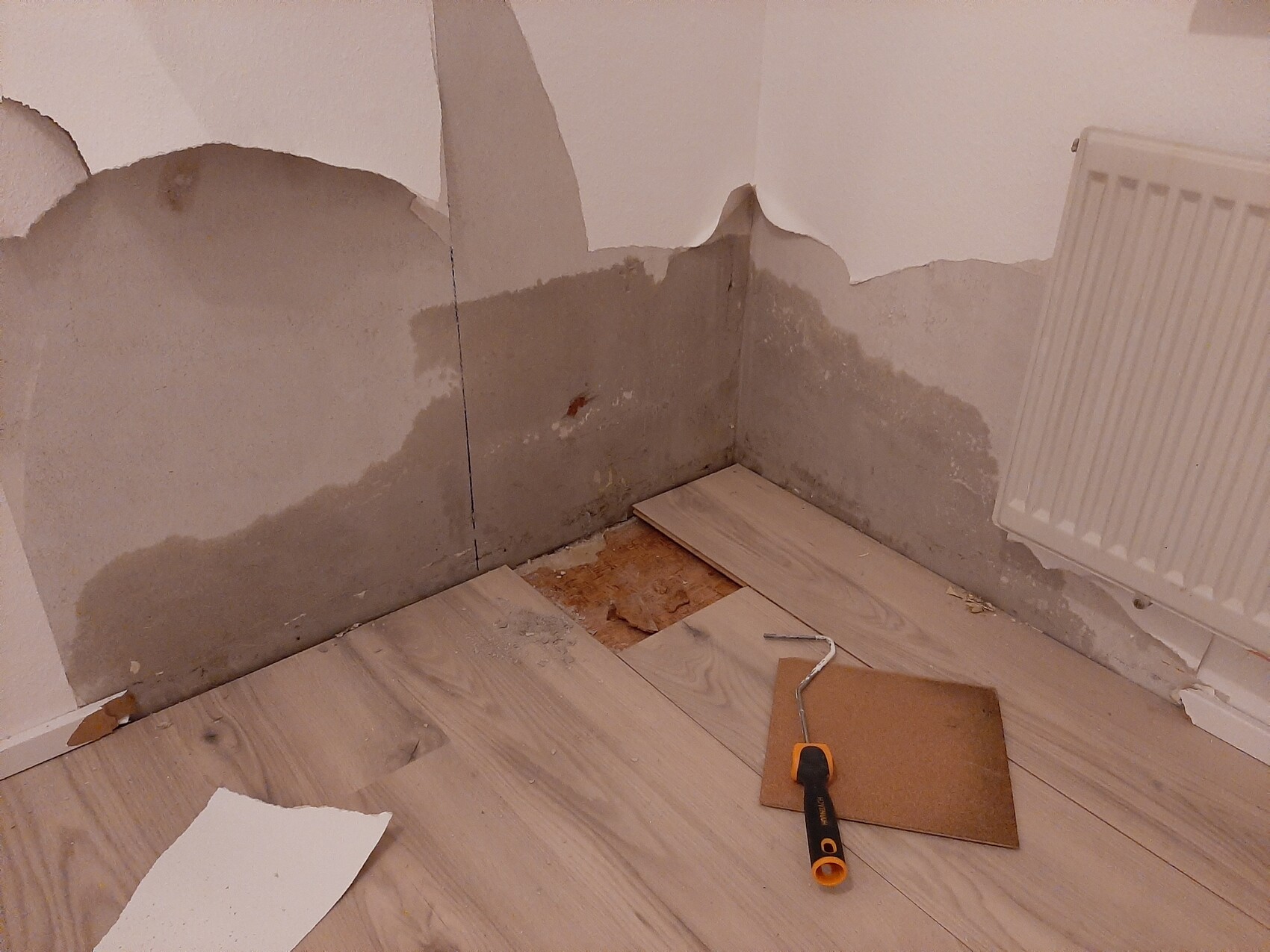
Today, while making the beds in the master bedroom, I noticed that the pillows resting directly against the wall were damp. We moved the bed and found black mold in the corner of the room. We removed the wallpaper and the plaster underneath was soaking wet.
I don’t know—probably the attached picture won’t help much. But maybe someone can still assist us? Is this purely condensation, or could it be an issue with the pipes or other structural defects?
The boundary between the dry and damp wall is very distinct. Behind this wall is the bathroom with a newly installed walk-in shower (done by a professional). The right wall is an exterior wall. Also, the entire corner is above an extension—so the floor there is essentially an exterior wall as well.
Can anyone help us?
I’m not sure if this is the right place or if someone can help me.
We recently completed the renovation/refurbishment of our house (built in 1990).
Today, while making the beds in the master bedroom, I noticed that the pillows resting directly against the wall were damp. We moved the bed and found black mold in the corner of the room. We removed the wallpaper and the plaster underneath was soaking wet.
I don’t know—probably the attached picture won’t help much. But maybe someone can still assist us? Is this purely condensation, or could it be an issue with the pipes or other structural defects?
The boundary between the dry and damp wall is very distinct. Behind this wall is the bathroom with a newly installed walk-in shower (done by a professional). The right wall is an exterior wall. Also, the entire corner is above an extension—so the floor there is essentially an exterior wall as well.
Can anyone help us?


I
Interrupt30 Sep 2021 10:28Waterproofing in the bathroom means that the floor and walls are sealed, for example with waterproof slurry and sealing tapes, to prevent water from penetrating into the masonry or the screed. This is the current standard practice. Protection provided by tiles and silicone joints alone is rather limited.
Either you remember that the tiler applied a dark waterproofing layer to the floor and walls before tiling, or you check the quote/invoice to see if waterproofing is mentioned. It would, of course, be problematic if the tiler only carried out the work he was contracted for and did not at least offer waterproofing.
However, this is only one possible cause. To me, the picture looks like rising damp, but I am not an expert in this area.
Either you remember that the tiler applied a dark waterproofing layer to the floor and walls before tiling, or you check the quote/invoice to see if waterproofing is mentioned. It would, of course, be problematic if the tiler only carried out the work he was contracted for and did not at least offer waterproofing.
However, this is only one possible cause. To me, the picture looks like rising damp, but I am not an expert in this area.
Similar topics