
Hello everyone,
I would like to ask the experts for an assessment of our offer (A1, A2, A3) – as far as it is technically and financially feasible.
We want to fully cover the south side of the roof (total 6.4 kWp (kilowatt peak)) without storage. Since we will also be getting a heat pump (SG ready), we want to supply it with photovoltaic power.
The system can be installed directly at the beginning of September, right after the roofer’s work is finished. It will be handled and carried out by an acquaintance who is always available to support us with advice and assistance. We are newcomers in this field ourselves.
With a total net cost of 10,000 €, I calculate an average of €1,562.50 per kWp.
Title 02 in the summary refers to the Home Manager, not to the energy storage (which I had removed from the offer, as it was originally included).
I look forward to your feedback.
Best regards,
Christian
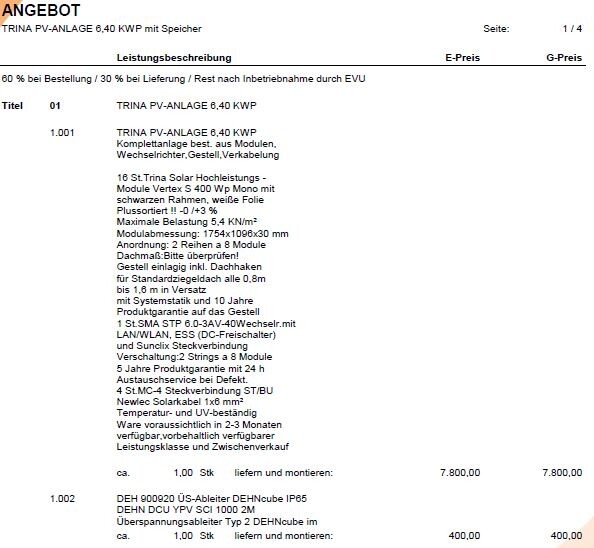
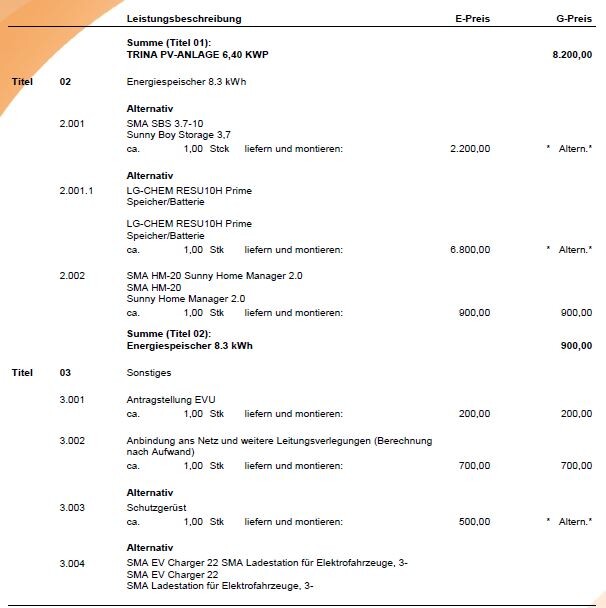
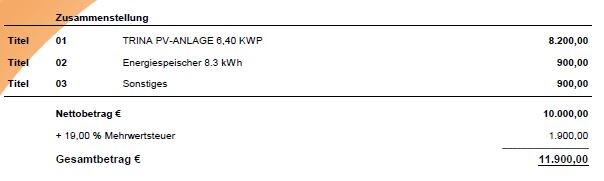
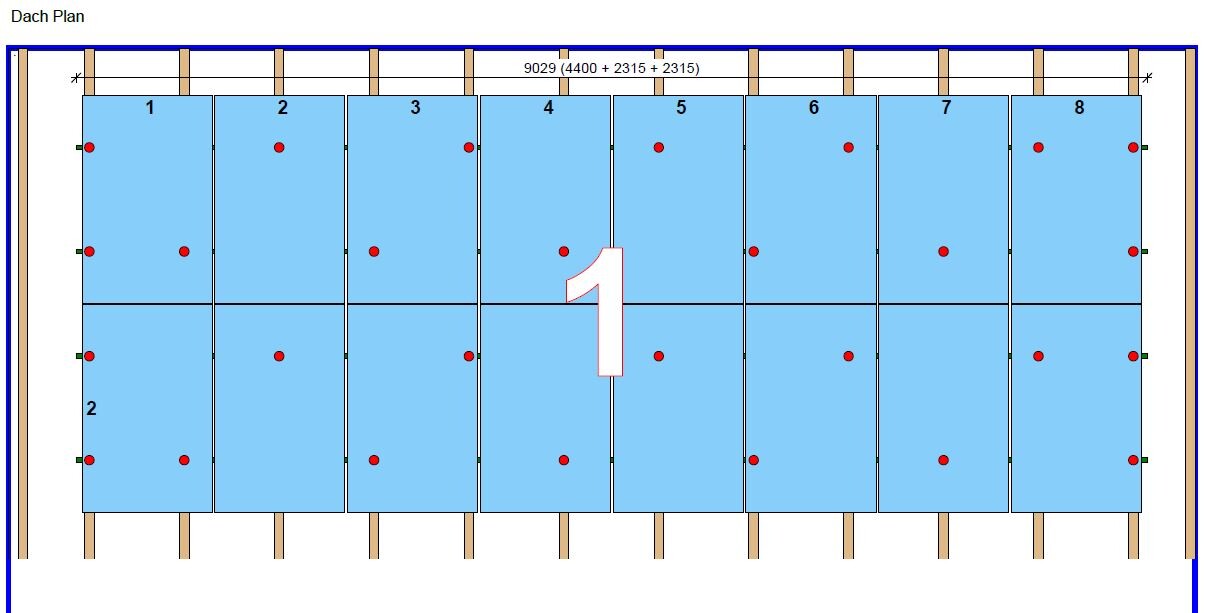
I would like to ask the experts for an assessment of our offer (A1, A2, A3) – as far as it is technically and financially feasible.
We want to fully cover the south side of the roof (total 6.4 kWp (kilowatt peak)) without storage. Since we will also be getting a heat pump (SG ready), we want to supply it with photovoltaic power.
The system can be installed directly at the beginning of September, right after the roofer’s work is finished. It will be handled and carried out by an acquaintance who is always available to support us with advice and assistance. We are newcomers in this field ourselves.
With a total net cost of 10,000 €, I calculate an average of €1,562.50 per kWp.
Title 02 in the summary refers to the Home Manager, not to the energy storage (which I had removed from the offer, as it was originally included).
I look forward to your feedback.
Best regards,
Christian
Fuchur schrieb:
The problem is that these losses would reduce your income tax only if you don’t classify it as a hobby. Your advice is like telling someone not to file an income tax return even though they would get a refund.Please read carefully. That was not advice, but an observation.
And no, depreciation is not always a good idea; there are catches. Depending on the purchase price of the system, whether it was paid in cash or financed, and how much it produces, things can quickly turn unfavorable after a few years. My tax advisor (who is well experienced with solar power systems and tax matters) ran the numbers for us. On top of that, there is a rather strict tax office that can make life quite difficult. In this situation, I simply trust the expert who has been through this several times before.
D
Deliverer17 Jun 2022 09:48Evolith schrieb:
it can quickly lead to tipping after a few years. That is clear. That’s why after the fifth full year, one switches to the KUR.Evolith schrieb:
And no, depreciation is not always a good idea, there are some catch. Depending on the purchase price of the system, whether it was bought outright or financed, and how much it produces, things can quickly turn after a few years. I have no idea what you are trying to tell me with that, nor how it relates to your previous statement.
Your statement was very simple: profit is not possible, therefore it is considered a hobby activity and you don’t have to worry.
And that is simply a distortion of the facts. Because a loss reduces my tax burden, of course I declare it in the tax return. Profit up to roughly €400 (about $430) is tax-free; above that, it is taxed as income. The idea of hobby activity only comes up if you don’t want to deal with the paperwork and willingly accept financial disadvantages for the sake of convenience.
Nowhere in this discussion has depreciation been mentioned. And even on that topic: what could possibly go wrong? Please explain with an example what catches you think could arise.
The whole VAT issue is a different matter altogether, independent of everything mentioned above.

You misunderstood me. The previous discussion focused exclusively on the operational financial result. The topic of depreciation comes before that, in the calculation of profit/loss. Arguments for or against depreciation issues are simply misplaced when discussing how to use the calculated outcome rather than the calculation method itself.
H
HoisleBauer2219 Jun 2022 15:24Deliverer schrieb:
after the fifth full year to VAT exemptionThe consumer testing organization recommends 7 years in the photovoltaic calculator (section "VAT exemption from the 7th calendar year?*"): "As a small business owner, you can be exempted from VAT again after five calendar years. Usually, it is most advantageous to apply for the exemption starting from the 7th calendar year. In that case, no input tax adjustment occurs."
Similar topics