
ᐅ Are thermal bridges and air leaks common in windows from the 1960s?
Created on: 17 Jul 2024 15:18
T
TorstenKandtT
TorstenKandt17 Jul 2024 15:18Hello Forum,
Today, I took thermal images in my new condominium from the 1960s and identified some thermal bridges around the windows (double glazing). Additionally, the windows are drafty even though the seals are new (if you place a sheet of paper in the window, it can be pulled out fairly easily).
I would prefer to install new windows, as I believe repairing 60-year-old windows is not worthwhile. However, the homeowners’ association argues that thermal bridges and drafty windows were completely normal or considered “state of the art” in the 1960s. Is this true? Were wooden windows from the 1960s (when new) already always drafty and showing thermal bridges at the hinges or between the window frame and trim?
The thermal bridges mainly occur at some (but not all) hinges, and between the window frame and the window cladding.
Best regards,
Torsten
Today, I took thermal images in my new condominium from the 1960s and identified some thermal bridges around the windows (double glazing). Additionally, the windows are drafty even though the seals are new (if you place a sheet of paper in the window, it can be pulled out fairly easily).
I would prefer to install new windows, as I believe repairing 60-year-old windows is not worthwhile. However, the homeowners’ association argues that thermal bridges and drafty windows were completely normal or considered “state of the art” in the 1960s. Is this true? Were wooden windows from the 1960s (when new) already always drafty and showing thermal bridges at the hinges or between the window frame and trim?
The thermal bridges mainly occur at some (but not all) hinges, and between the window frame and the window cladding.
Best regards,
Torsten
N
nordanney17 Jul 2024 15:44How old are the windows actually? Double glazing from the 1960s?
In all my apartments and the respective homeowners’ associations, it is unquestioned that windows older than 30-35 years are replaced.
Of course, that’s why they are replaced. This is called maintenance.
Today, drafty windows are not state of the art and therefore need to be replaced.
Two options:
1. You hire a window specialist who confirms that the windows need to be replaced due to defects (draftiness or other issues). Then you go to the management (association) and have the windows replaced.
2. You pay for it yourself and obtain approval from the management (association).
But first, please clarify how old the windows and the glass panes actually are. If both are from the 1960s, then no one can object to their replacement.
In all my apartments and the respective homeowners’ associations, it is unquestioned that windows older than 30-35 years are replaced.
TorstenKandt schrieb:
However, the homeowners’ association argues that thermal bridges and drafty windows were quite normal or considered "state of the art" in the 1960s.
Of course, that’s why they are replaced. This is called maintenance.
Today, drafty windows are not state of the art and therefore need to be replaced.
Two options:
1. You hire a window specialist who confirms that the windows need to be replaced due to defects (draftiness or other issues). Then you go to the management (association) and have the windows replaced.
2. You pay for it yourself and obtain approval from the management (association).
But first, please clarify how old the windows and the glass panes actually are. If both are from the 1960s, then no one can object to their replacement.
T
TorstenKandt18 Jul 2024 21:09Hello, unfortunately no one could say how old the windows are, but even if they are not from the 1960s, the windows are definitely old, very old.
Do you have a source for that, such as a court ruling, building regulation, DIN standard, or something else?
Malle Zwabber schrieb:Well, I would like to have your homeowners’ association.
that windows older than 30-35 years should be replaced.
Malle Zwabber schrieb:
Today, drafty windows are not state of the art and should therefore be replaced.
Do you have a source for that, such as a court ruling, building regulation, DIN standard, or something else?
T
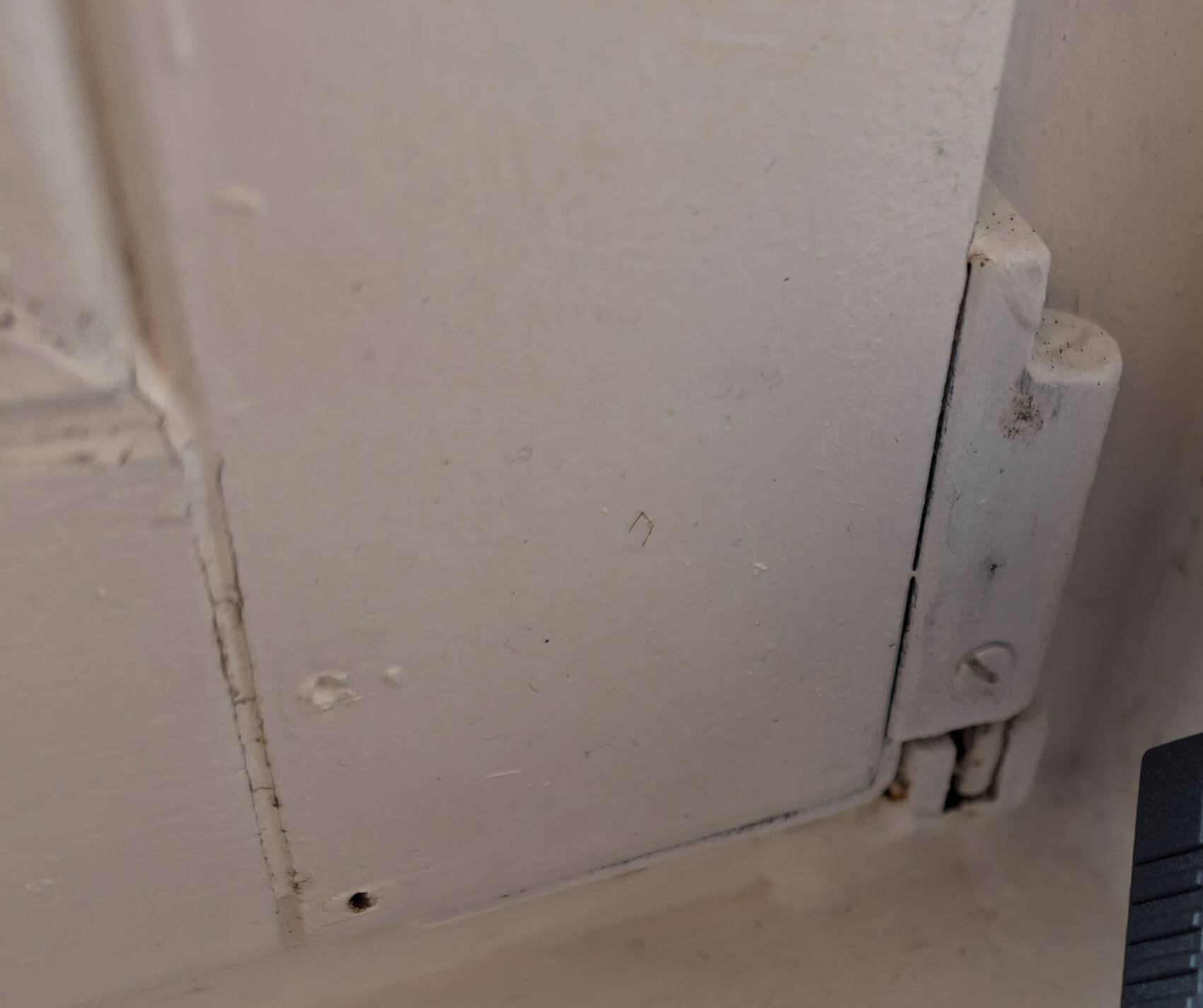
TorstenKandt18 Jul 2024 21:23Here are two photos of the hinges. Does this help to estimate their age?

B
Buchsbaum06618 Jul 2024 22:20Wood expands and contracts. Naturally, wooden windows do the same.
Wooden windows are no longer considered state-of-the-art. Your windows are probably from the 1980s, judging by how they look.
Of course, they can be replaced. Vinyl (uPVC) windows simply have advantages in this regard.
I don't see an urgent need, as they still serve their purpose for now, but in the long term I would also recommend replacement.
Wooden windows are no longer considered state-of-the-art. Your windows are probably from the 1980s, judging by how they look.
Of course, they can be replaced. Vinyl (uPVC) windows simply have advantages in this regard.
I don't see an urgent need, as they still serve their purpose for now, but in the long term I would also recommend replacement.
N
nordanney18 Jul 2024 22:32TorstenKandt schrieb:
Do you have a source for that, a court ruling, a DIN standard, or anything else? No matter what you refer to—Energy Saving Ordinance, Building Energy Act, DIN 4108-7, RAL, etc.—airtight windows have been state of the art for many years and have even been legally required for a long time.
TorstenKandt schrieb:
Here are two photos of the hinges. Does that help to estimate the age? Original construction from the 1960s. I’d bet on it. Possibly new panes from the 1980s; try googling how to check thermal insulation glazing (match test) and see whether it’s already insulated glass. Also show the windows from the outside (weatherboard and frame).
You will never get these old windows airtight again nor equip them properly with modern glass.
Reasons in favor of replacing the windows:
- Leaks
- Warped windows
- Defective hinges
etc.
There is no legal requirement, but usually after 20–30 years replacement should be considered, as the windows no longer meet current energy efficiency standards. The economic lifespan of wooden windows is generally considered to be 40–50 years, less if poorly maintained (e.g., paint, etc.).
TorstenKandt schrieb:
Well, I wish I had your homeowners’ association ;-). Plural. We recently agreed within a community three months ago to replace windows from the mid to late ’80s. They were plastic, but simply old, leaky, and energy inefficient. In the past 25 years, windows this old have never caused any problems.
In your situation, if I were you, three window specialists would already have come on site and given me written confirmation that the windows are simply rubbish (by today’s standards) and absolutely must be replaced before winter.
And then it’s off to the management company to get them replaced.
Similar topics