
ᐅ Condensation on Aluminum Windows, Lack of Insulation, How to Improve?
Created on: 9 Oct 2021 22:35
W
wdreizehn
Hello,
In the rear wall section of a residential complex featuring a protected historic facade, aluminum windows with muntins were installed to meet the visual requirements of the former facade (which likely originally had delicate cast iron frames), and this was achieved successfully. In the other newly constructed, non-protected areas, wooden windows were installed.
During the cold season, there is significant condensation forming on the interior of the installed aluminum windows in the bedrooms as well as in the kitchen/living room areas. By contrast, the wooden windows installed in the non-protected kitchen/living room areas show no condensation:
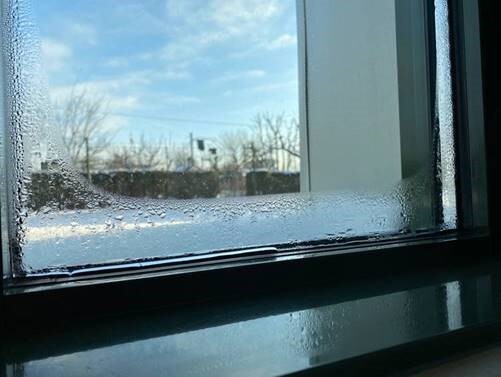
Other residents with windows in the protected historic facade experience the same issue, so I assume it is not due to (my) incorrect ventilation behavior (manual ventilation is performed regularly, and decentralized ventilation systems for individual rooms are additionally in operation).
Behind the protected historic facade, an interior drywall construction was installed, which also includes what I assume is the required insulation layer. Here is the basic wall composition:
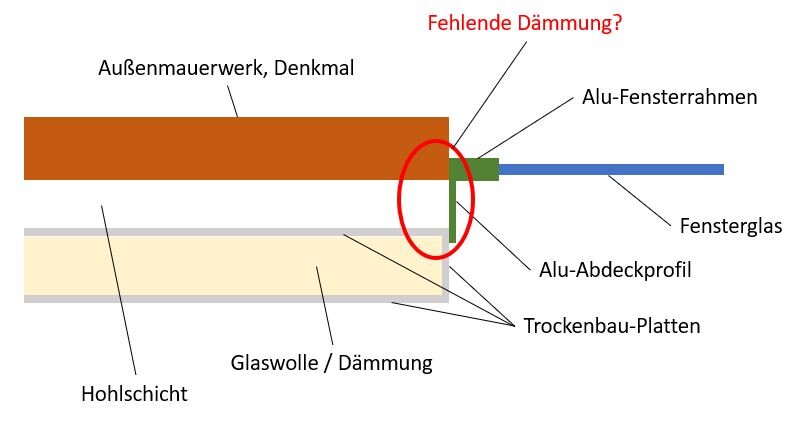
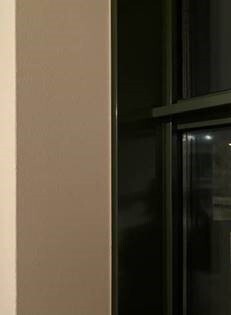
To bridge the gap between the solid exterior facade and the inner, insulated drywall construction, an aluminum profile was used without any additional insulation or insulating profile. Here is an interior view of the wide profile between the window plane/exterior wall and the inner drywall lining:
Here is a photo taken through an existing shaft of a decentralized ventilation unit:
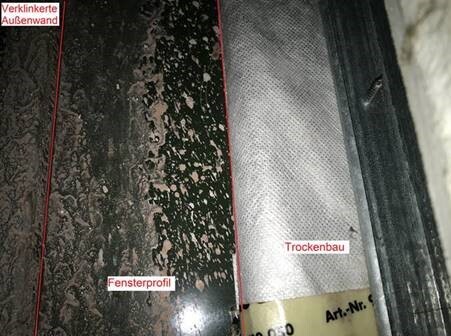
It can be seen that no insulation was used in the area of the aluminum cover profile ("window profile") between the exterior wall and the drywall construction, which I would generally have expected (the visible mud splatters originate from core drillings through the exterior wall for installing the decentralized ventilation units).
Therefore, I suspect there is a lack of insulation between the solid exterior wall and the inner insulated drywall construction at the window connection. This likely causes strong cooling at the surrounding aluminum profiles, which cool the entire window area (you can clearly feel the "cold draft" at the aluminum windows in winter, which is not the case for the wooden windows installed in the kitchen/living room areas).
My questions:
Is the installation of the windows without additional insulation between the historic exterior and the installed drywall construction considered professionally proper, or should insulating profiles have been used around the window reveal?
Are there any possibilities to improve the situation, for example by injecting construction/insulating foam through drillings into and behind the drywall construction, thus between it and the exterior wall?
Do you have any other suggestions for optimization?
Thank you very much!
Best regards
Guido
In the rear wall section of a residential complex featuring a protected historic facade, aluminum windows with muntins were installed to meet the visual requirements of the former facade (which likely originally had delicate cast iron frames), and this was achieved successfully. In the other newly constructed, non-protected areas, wooden windows were installed.
During the cold season, there is significant condensation forming on the interior of the installed aluminum windows in the bedrooms as well as in the kitchen/living room areas. By contrast, the wooden windows installed in the non-protected kitchen/living room areas show no condensation:
Other residents with windows in the protected historic facade experience the same issue, so I assume it is not due to (my) incorrect ventilation behavior (manual ventilation is performed regularly, and decentralized ventilation systems for individual rooms are additionally in operation).
Behind the protected historic facade, an interior drywall construction was installed, which also includes what I assume is the required insulation layer. Here is the basic wall composition:
To bridge the gap between the solid exterior facade and the inner, insulated drywall construction, an aluminum profile was used without any additional insulation or insulating profile. Here is an interior view of the wide profile between the window plane/exterior wall and the inner drywall lining:
Here is a photo taken through an existing shaft of a decentralized ventilation unit:
It can be seen that no insulation was used in the area of the aluminum cover profile ("window profile") between the exterior wall and the drywall construction, which I would generally have expected (the visible mud splatters originate from core drillings through the exterior wall for installing the decentralized ventilation units).
Therefore, I suspect there is a lack of insulation between the solid exterior wall and the inner insulated drywall construction at the window connection. This likely causes strong cooling at the surrounding aluminum profiles, which cool the entire window area (you can clearly feel the "cold draft" at the aluminum windows in winter, which is not the case for the wooden windows installed in the kitchen/living room areas).
My questions:
Is the installation of the windows without additional insulation between the historic exterior and the installed drywall construction considered professionally proper, or should insulating profiles have been used around the window reveal?
Are there any possibilities to improve the situation, for example by injecting construction/insulating foam through drillings into and behind the drywall construction, thus between it and the exterior wall?
Do you have any other suggestions for optimization?
Thank you very much!
Best regards
Guido
K
Klappradl15 Oct 2021 06:35A warm edge spacer, as you can see, is not installed.
How old are the windows?
If they are installed as described, it is obviously not ideal, but it does not necessarily cause condensation on the glass. Is there condensation on the frame as well, or only on the glass?
How old are the windows?
If they are installed as described, it is obviously not ideal, but it does not necessarily cause condensation on the glass. Is there condensation on the frame as well, or only on the glass?
...Moisture meters were used: Even in the open kitchen and living area, humidity did not exceed 60% last winter.Nothing works without the right tools!
Equipment for meaningful diagnostics and measurements usually costs less than 200€.
- Digital thermometer with external sensor
- Hygrometer (for relative humidity)
- Moisture meter (capacitive, for measuring water content in solid materials)
- Ideally also a metal detector, since capacitive moisture meters can give false readings
near metal in the walls (for cross-checking)
With a digital thermometer, you would measure the temperature of window sash glass
(press the sensor with a piece of polystyrene against the aluminum frame/glass)
to determine if it is significantly colder than the surrounding room temperature.
If so, there might be insulation problems within the window sash construction.
A moisture meter is more useful for detecting damp walls.
Without these tools, it’s just “groping around in the fog.”