
ᐅ Air in cold water pipe: Loud noises despite normal water pressure?
Created on: 9 Dec 2025 12:02
H
holp4444
Hello everyone,
For several weeks now, we have been experiencing air in the cold water pipe, which causes loud noises when water is running (for example, when the flush tank fills, the washing machine draws water, or when washing hands). You can also notice the water turning briefly cloudy at the faucet, indicating air in the system.
We live on the upper floors (1st and 2nd floor) of a two-family house built in 2004.
When I stand in the basement near the supply line or close to the expansion tank (refix DD 12) while water is running, I can clearly hear the noises.
Since I could not find any leaks or dripping pipes and the pressure seems fine (around 5.5 bar), I wanted to ask here if you can suggest possible causes?
I just pressed the valve on the expansion tank again, and only air came out...
I have attached a few photos. Could it be that air is entering the system through a defective component in the pipe run?
I hope enough is visible despite the poor lighting conditions.
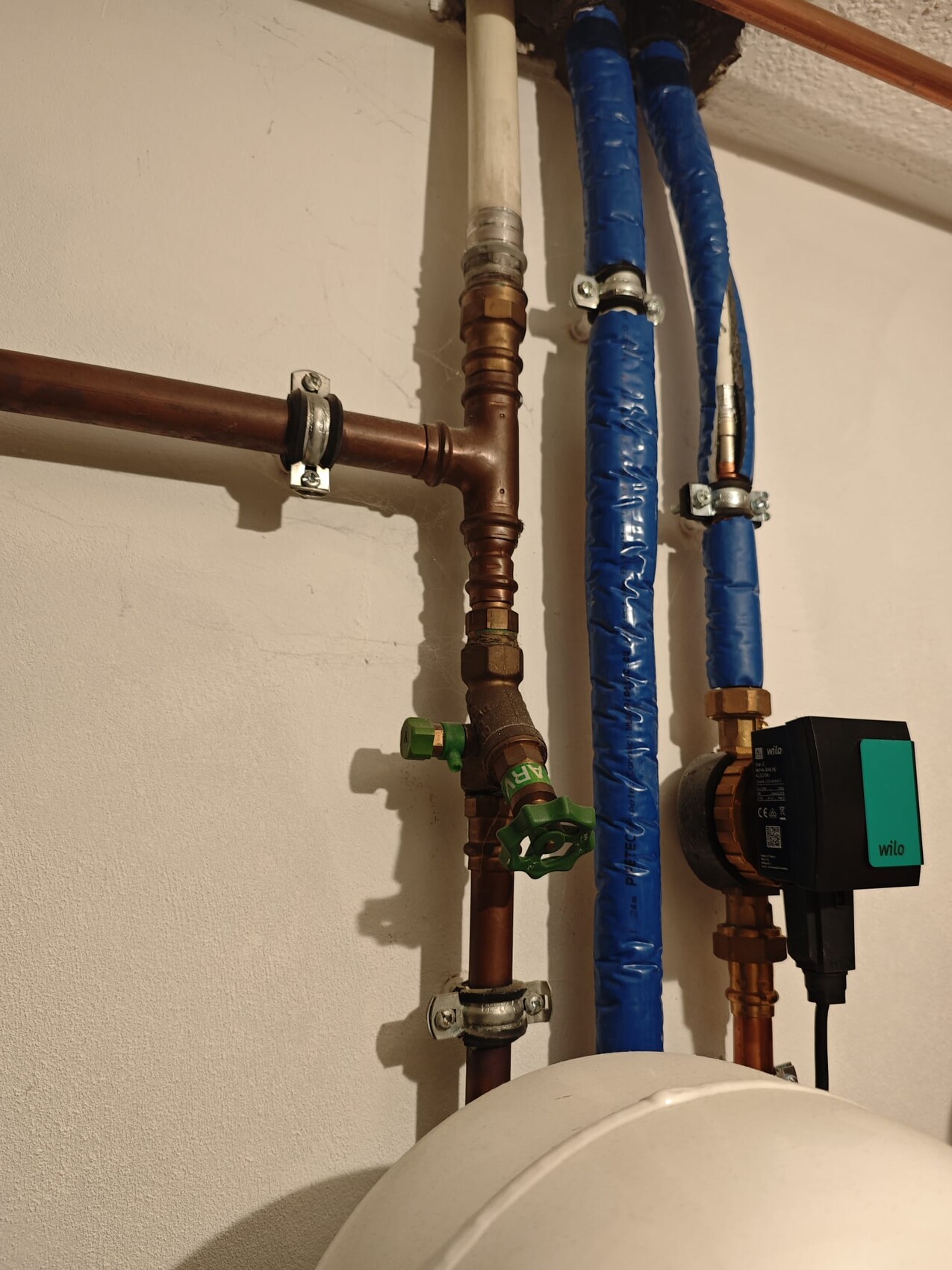
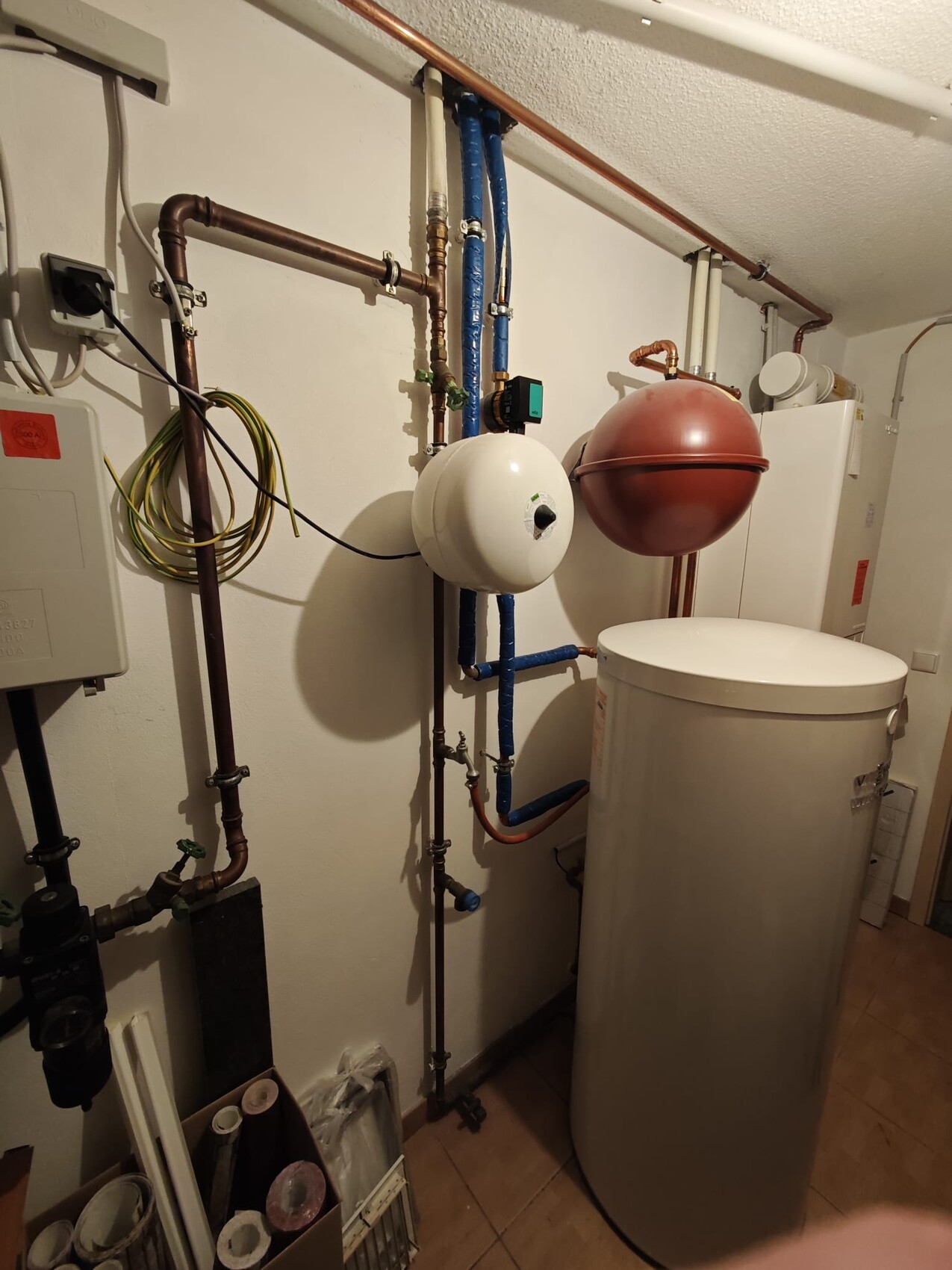

For several weeks now, we have been experiencing air in the cold water pipe, which causes loud noises when water is running (for example, when the flush tank fills, the washing machine draws water, or when washing hands). You can also notice the water turning briefly cloudy at the faucet, indicating air in the system.
We live on the upper floors (1st and 2nd floor) of a two-family house built in 2004.
When I stand in the basement near the supply line or close to the expansion tank (refix DD 12) while water is running, I can clearly hear the noises.
Since I could not find any leaks or dripping pipes and the pressure seems fine (around 5.5 bar), I wanted to ask here if you can suggest possible causes?
I just pressed the valve on the expansion tank again, and only air came out...
I have attached a few photos. Could it be that air is entering the system through a defective component in the pipe run?
I hope enough is visible despite the poor lighting conditions.

The pre-charge pressure of the expansion tank should be set according to the safety valve in the safety group and should be slightly below its value. Otherwise, the safety valve will open before the tank can absorb the pressure.
It is likely that the membrane in your tank is damaged, allowing air (nitrogen) to escape into the water line.
When the tank is empty, excess pressure is released through the safety valve, meaning the tank has reached the end of its lifespan. Unfortunately, these units are not very durable. It is advisable to monitor the safety valve closely and, if it is not installed above a drain trap (drain), at least place a bucket underneath it.
It is likely that the membrane in your tank is damaged, allowing air (nitrogen) to escape into the water line.
When the tank is empty, excess pressure is released through the safety valve, meaning the tank has reached the end of its lifespan. Unfortunately, these units are not very durable. It is advisable to monitor the safety valve closely and, if it is not installed above a drain trap (drain), at least place a bucket underneath it.
I haven’t had the chance to deal with the venting yet, but I was able to measure the pressure last night. At the safety valve, I measured 3.5 bar (pre-charge pressure 4 bar (58 psi) is indicated on the tank).
At first glance, this seems to be okay to me.
I will try to vent it tomorrow.
At first glance, this seems to be okay to me.
I will try to vent it tomorrow.
So today I closed the shut-off valve above the pressure equalization tank (circled in red) and vented the pipe to the left of it (circled in yellow).
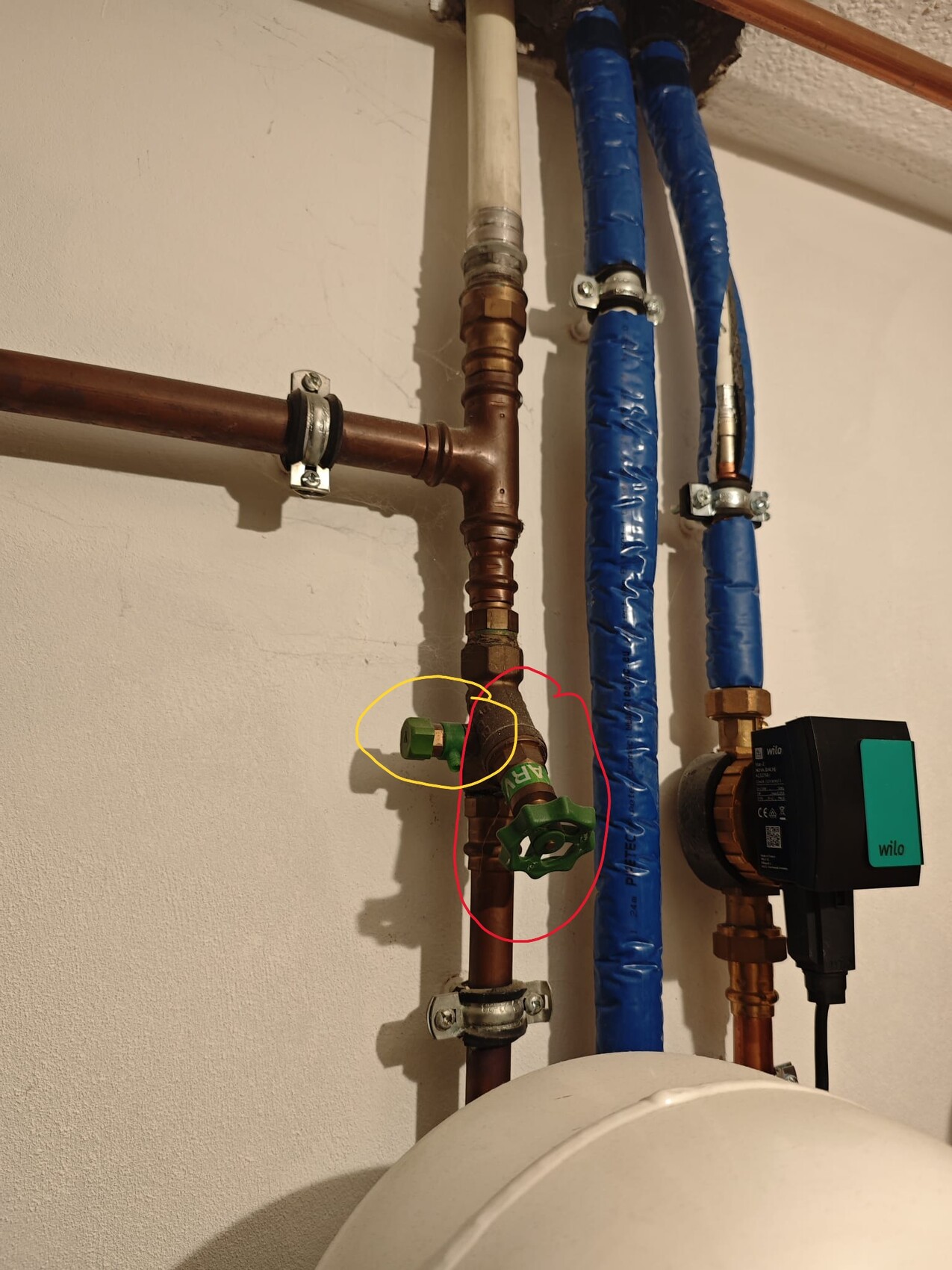
Only a very small amount of air came out, basically just water.
Then I slightly opened the safety valve at the bottom.
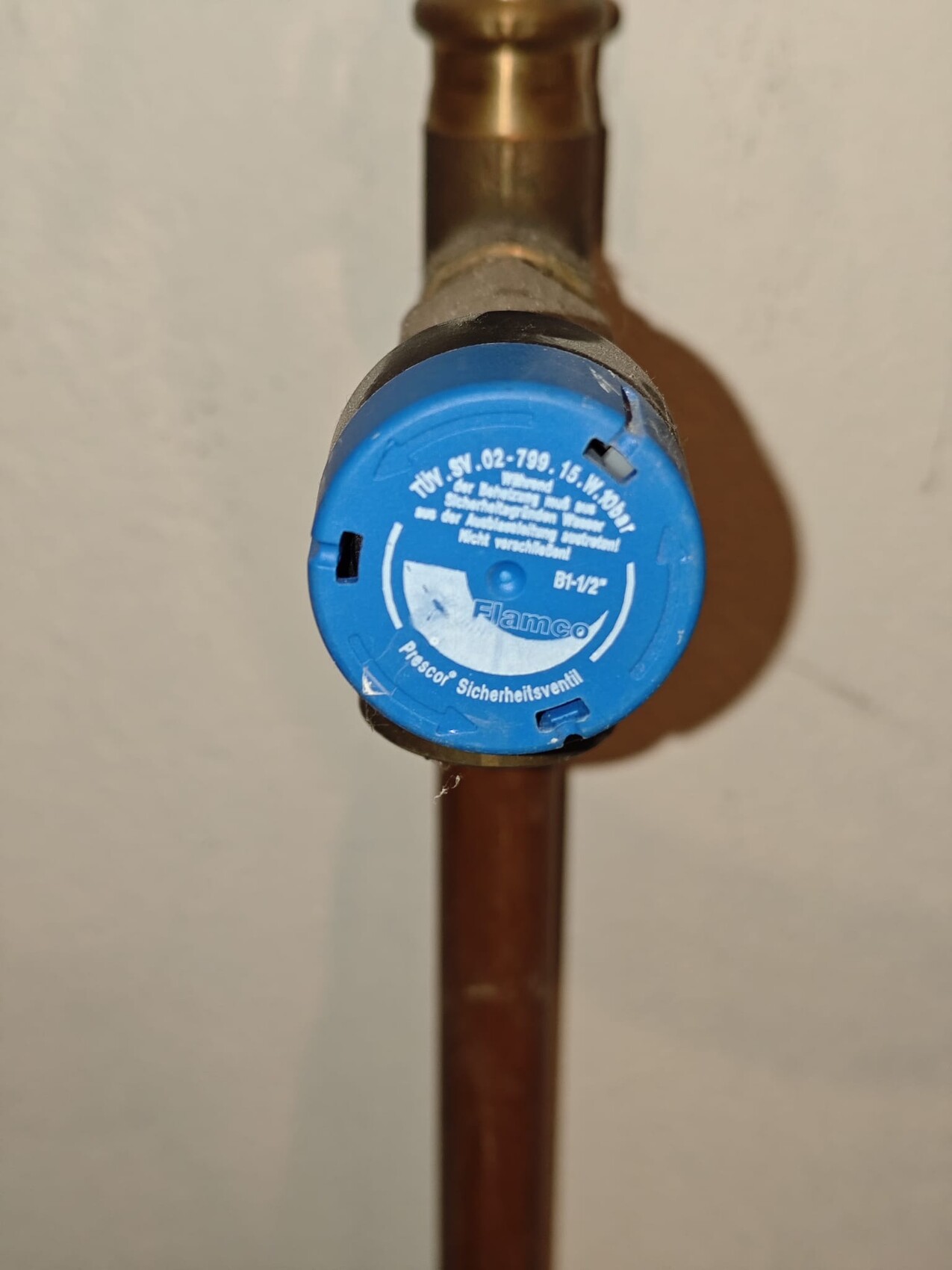
I hope the most important data can be seen at least. (The photo isn’t blurry, the printing is just really poor...).
Water sprayed out, so I immediately closed it again.
So far, no water seems to have come out due to overpressure. It has always been dry.
Now I don’t know if this whole procedure made any difference. BUT since then, I haven’t noticed any air in the system.
After venting, the pressure in the tank was just under 3 bar (about 44 psi), but it slowly rose back above 3 bar (I didn’t wait to check the final value).
Only a very small amount of air came out, basically just water.
Then I slightly opened the safety valve at the bottom.
I hope the most important data can be seen at least. (The photo isn’t blurry, the printing is just really poor...).
Water sprayed out, so I immediately closed it again.
So far, no water seems to have come out due to overpressure. It has always been dry.
Now I don’t know if this whole procedure made any difference. BUT since then, I haven’t noticed any air in the system.
After venting, the pressure in the tank was just under 3 bar (about 44 psi), but it slowly rose back above 3 bar (I didn’t wait to check the final value).
holp4444 schrieb:
Since I couldn’t find any leaks or dripping pipes anywhere and the pressure also seems to be fine (about 5.5 bar), I wanted to ask here if you can suggest possible causes?
By the way, I meant the water pressure I measured at the water filter in the main line.
A quick update from me.
After a few days of "quiet," the air in the pipes started again.
The next day, I went down to the basement and briefly released some water from the blue safety valve. Since then, everything has been quiet again.
I don’t understand why that helped. Does anyone have a technical explanation? Would a permanent solution be to replace the valve? Or does it maybe need a different size, meaning a different pressure rating (bar)?
After a few days of "quiet," the air in the pipes started again.
The next day, I went down to the basement and briefly released some water from the blue safety valve. Since then, everything has been quiet again.
I don’t understand why that helped. Does anyone have a technical explanation? Would a permanent solution be to replace the valve? Or does it maybe need a different size, meaning a different pressure rating (bar)?