
ᐅ After 3 days, dents and bumps appeared in the glued vinyl flooring.
Created on: 17 May 2026 11:36
S
Sandra1969S
Sandra196917 May 2026 11:36Good morning dear forum members,
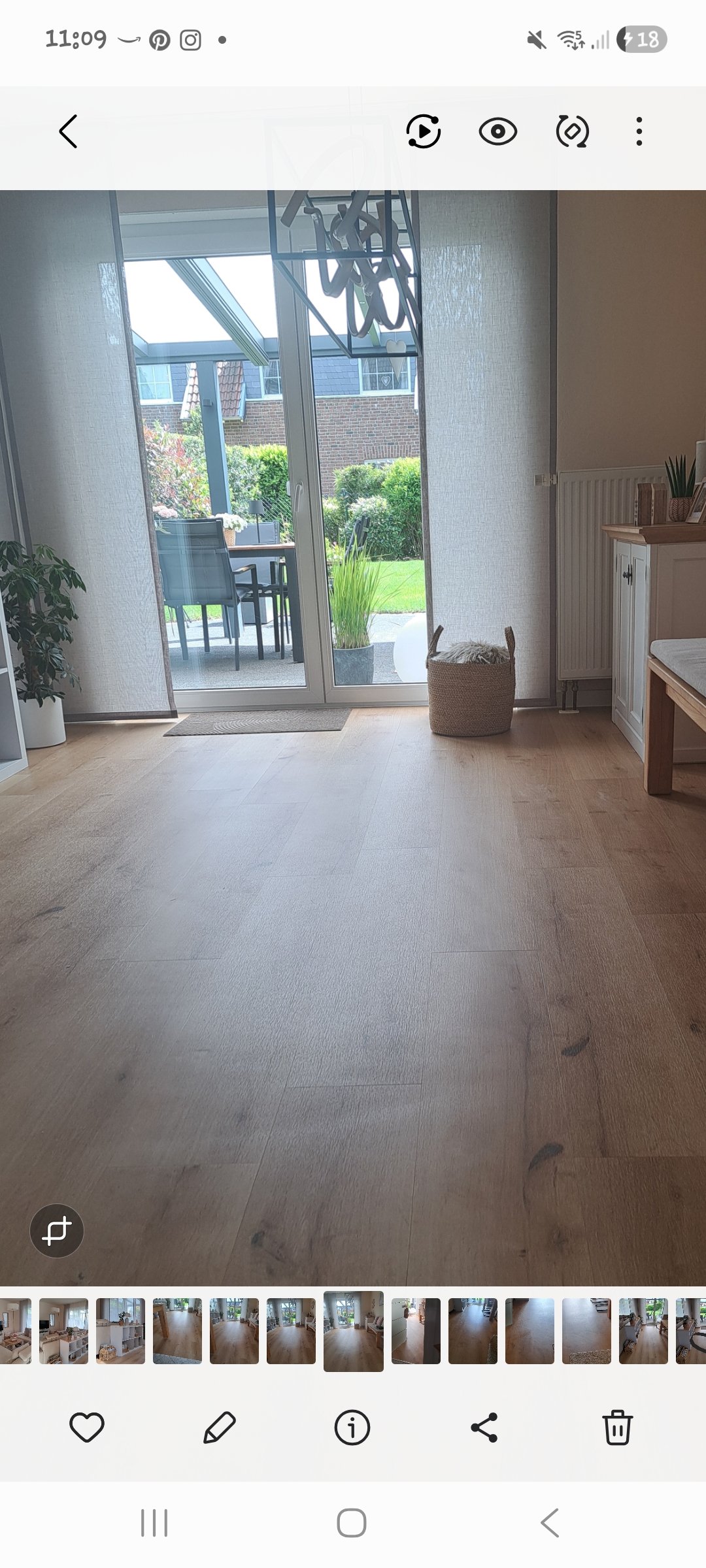
I am completely new here and an absolute building novice. So far, we have been lucky not to experience any problems with our renovation work, but now we have the above issue in the living room.
After extensive consultation, a carpentry company recommended applying a leveling compound over the tiles, then installing a Ter Huer Friends Dryback adhesive vinyl flooring. Three days later, the above problem appeared.
There are large dents that are immediately noticeable to anyone entering the room, one bump, and yesterday, when we tried to pull out the dining table, we saw that it had already left marks on the vinyl, and the same under the sofa. I don’t even want to think about what’s under the piano... but surely it can’t all be from that!
Upon investigation, we noticed that the flooring was not stored for 24 to 48 hours in the installation room or similar conditions as stated on the packaging. Instead, it was taken straight from the transport vehicle and laid on the floor. The heavy piano was moved back into the living room by the foreman himself after 24 hours, and we were told we could start putting our furniture back in. Shouldn’t we have waited longer?
The final acceptance was rather informal; no issues were visible at that time. The photos below were sent through the company’s WhatsApp business account, which we are also using for all communication. They have already contacted me and plan to schedule an inspection appointment for tomorrow. Now my questions:
Is that enough documentation? I have also documented everything myself with photos and timestamps. Or should I send a registered letter including the defects and photos?
How much time should I allow before the appointment? I know they have several projects, but I don’t want to wait for weeks until it suits their schedule.
We measured approximately a 2mm deviation over 1 meter (3.3 feet) using a water level. Do we have to accept this if it is within the tolerance range, even though it looks visually unacceptable?
If they admit the defects, can we insist on a full replacement of the flooring due to the distribution of the problems across the entire surface?
Sorry for the long text, but I’m just so disappointed—I was really looking forward to the new floor.
Thank you very much for reading, and have a nice Sunday!
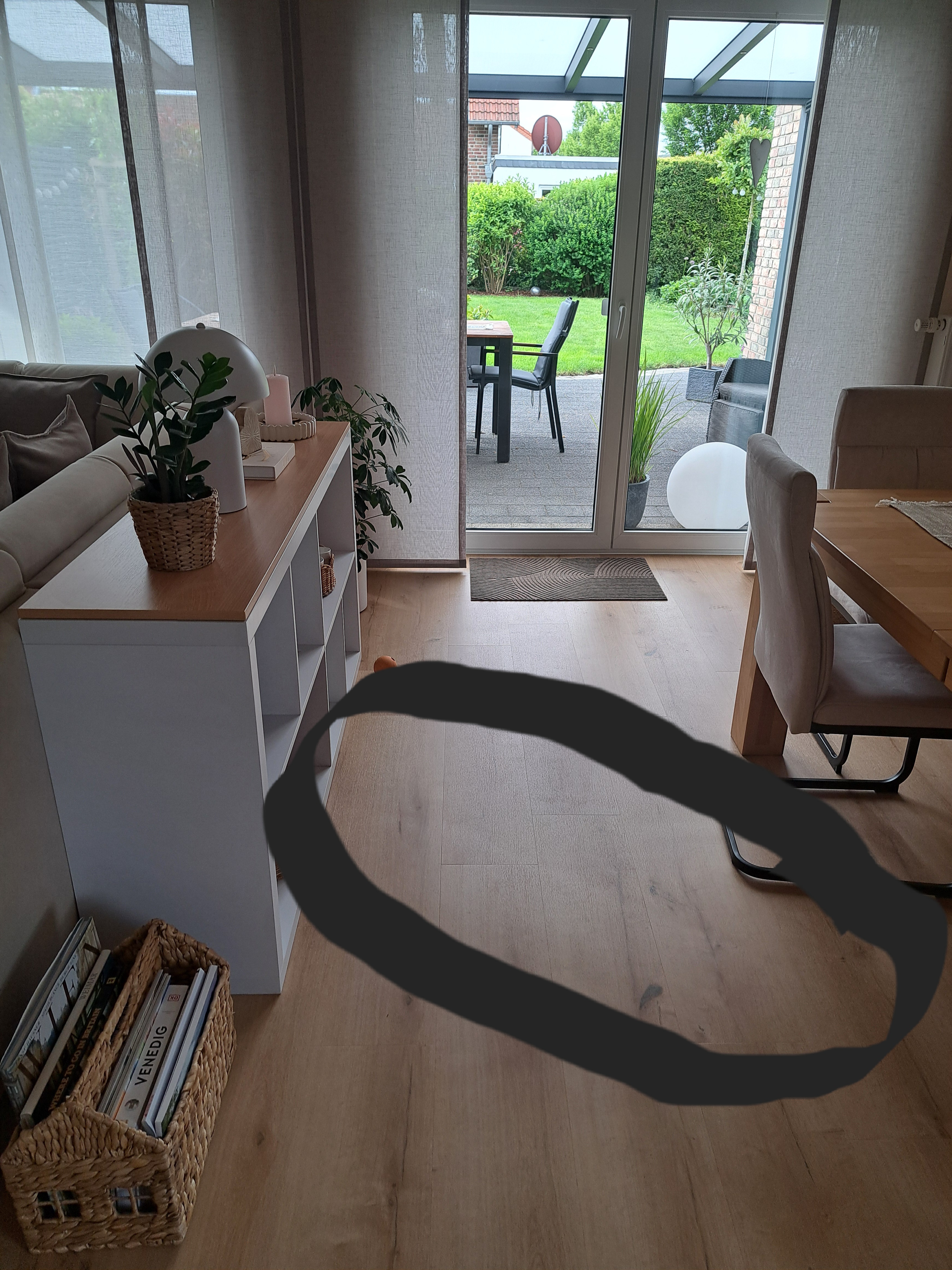
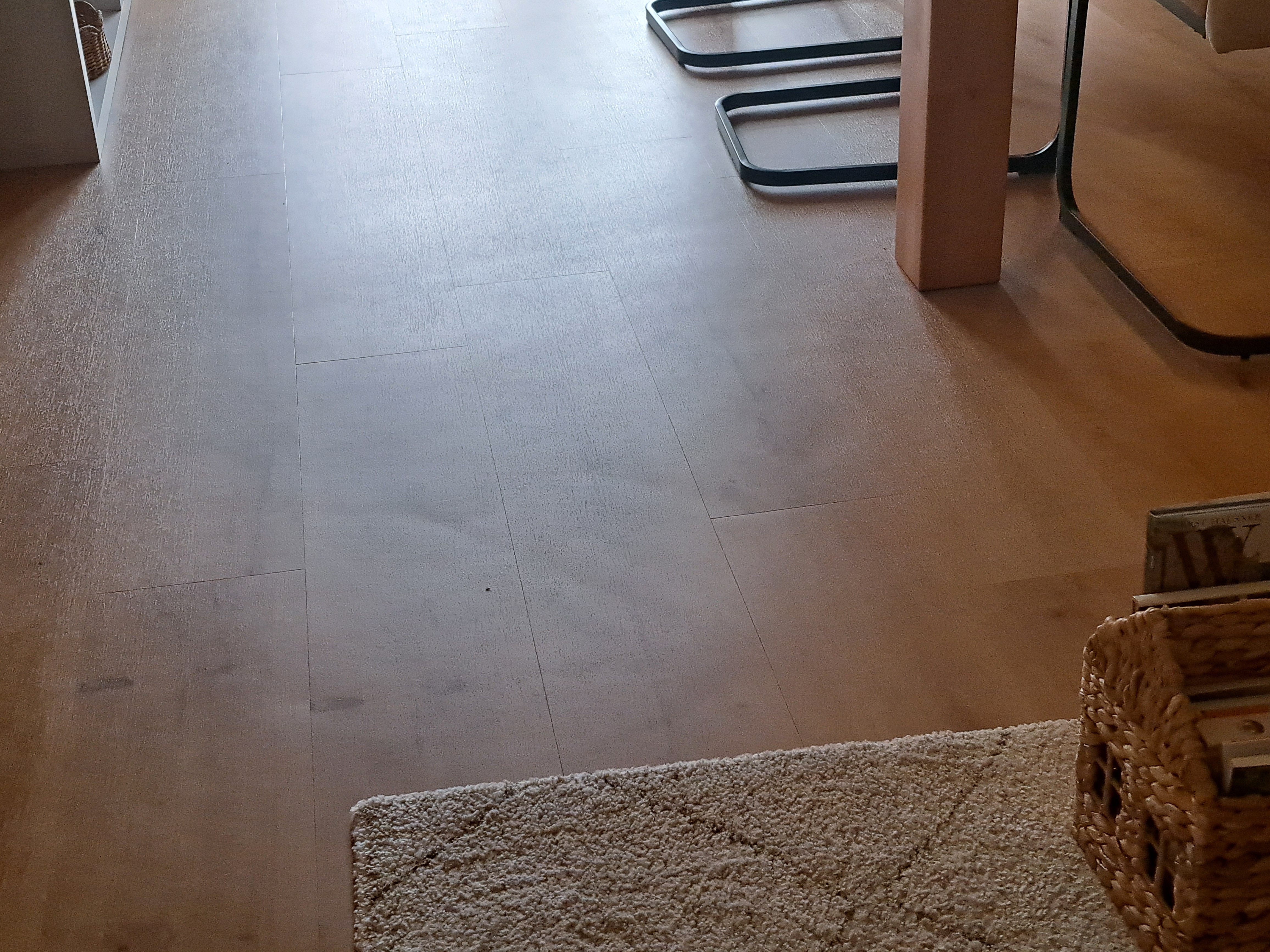
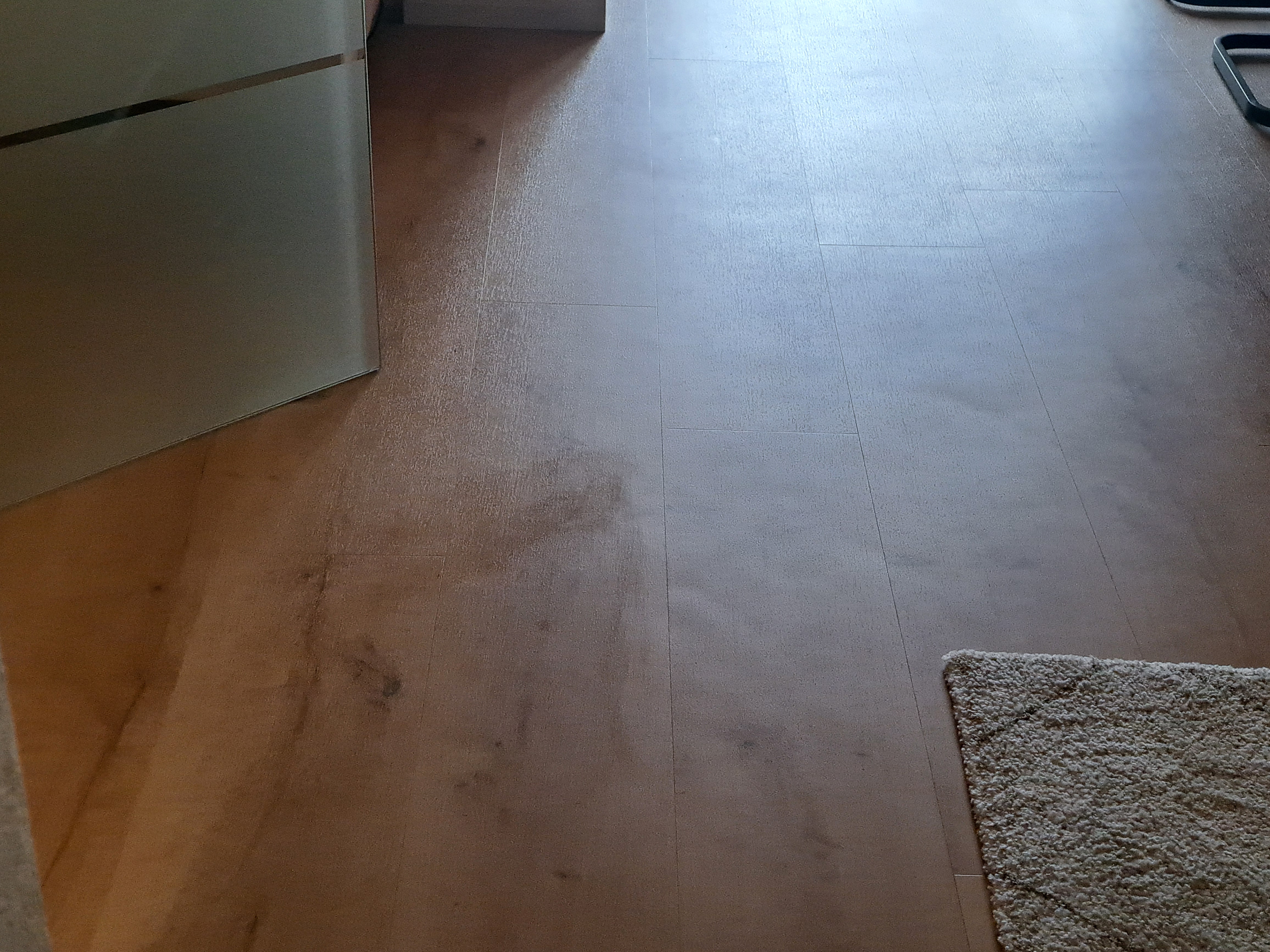
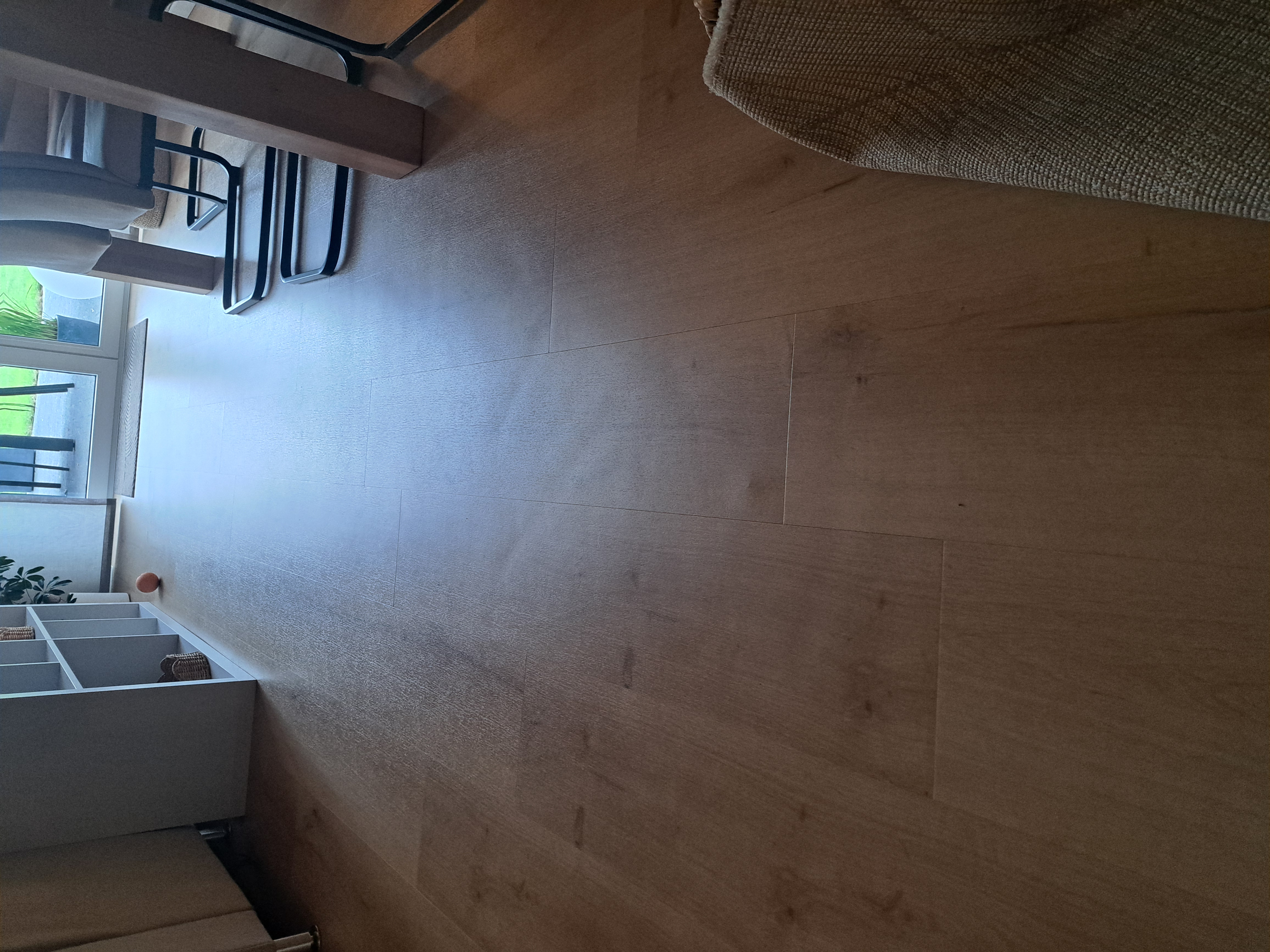
I am completely new here and an absolute building novice. So far, we have been lucky not to experience any problems with our renovation work, but now we have the above issue in the living room.
After extensive consultation, a carpentry company recommended applying a leveling compound over the tiles, then installing a Ter Huer Friends Dryback adhesive vinyl flooring. Three days later, the above problem appeared.
There are large dents that are immediately noticeable to anyone entering the room, one bump, and yesterday, when we tried to pull out the dining table, we saw that it had already left marks on the vinyl, and the same under the sofa. I don’t even want to think about what’s under the piano... but surely it can’t all be from that!
Upon investigation, we noticed that the flooring was not stored for 24 to 48 hours in the installation room or similar conditions as stated on the packaging. Instead, it was taken straight from the transport vehicle and laid on the floor. The heavy piano was moved back into the living room by the foreman himself after 24 hours, and we were told we could start putting our furniture back in. Shouldn’t we have waited longer?
The final acceptance was rather informal; no issues were visible at that time. The photos below were sent through the company’s WhatsApp business account, which we are also using for all communication. They have already contacted me and plan to schedule an inspection appointment for tomorrow. Now my questions:
Is that enough documentation? I have also documented everything myself with photos and timestamps. Or should I send a registered letter including the defects and photos?
How much time should I allow before the appointment? I know they have several projects, but I don’t want to wait for weeks until it suits their schedule.
We measured approximately a 2mm deviation over 1 meter (3.3 feet) using a water level. Do we have to accept this if it is within the tolerance range, even though it looks visually unacceptable?
If they admit the defects, can we insist on a full replacement of the flooring due to the distribution of the problems across the entire surface?
Sorry for the long text, but I’m just so disappointed—I was really looking forward to the new floor.
Thank you very much for reading, and have a nice Sunday!
S
Sandra196917 May 2026 11:41Here is a photo of the imprint of the table...
Hi Sandra
With glued vinyl on skim-coated tiles, every unevenness becomes visible, especially with light coming in from the side. And if the dents run throughout the entire living room, it’s unlikely to be just an isolated visual defect.
Lack of acclimatization can indeed be an issue, but it is probably not the only cause. More often, such problems are due to the substrate preparation. The leveling compound must be applied perfectly smoothly, fully dry, and above all flat. With design vinyl, you can usually see every half millimeter afterward, which some contractors tend to underestimate. Warps and dents after 3 days are definitely not normal.
The important thing now is not to make any changes or repairs yourself. So don’t move any furniture, don’t sign off without reservations on the handover, and take good pictures of the floor. Ideally, use natural daylight and also with light at a low angle. That reveals such defects very clearly. Have you already signed the acceptance, or was it more informal?
You basically have the right to request a correction. The contractor is normally allowed to fix the problem first before you can demand a complete replacement. However, if there is widespread use of leveling compound or faulty installation and the defects appear everywhere, a “small repair” often does not help. Especially with glued vinyl, it’s rarely possible to make transitions invisible. The companies actually know this as well.
Deadlines can be tricky. You should report the defect in writing if you haven’t done so yet, and set a reasonable deadline. Usually something around 10 to 14 days for a response or scheduling an appointment. Not too short, but not open-ended either. What’s more important is thorough documentation rather than creating pressure too hastily.
And don’t accept statements like “it will settle” or “the floor is just moving” right away. A properly glued vinyl floor shouldn’t look like gentle waves on the sea after just a few days, to put it loosely. A carpentry company in particular should know how sensitive these coverings are to substrate defects.
With glued vinyl on skim-coated tiles, every unevenness becomes visible, especially with light coming in from the side. And if the dents run throughout the entire living room, it’s unlikely to be just an isolated visual defect.
Lack of acclimatization can indeed be an issue, but it is probably not the only cause. More often, such problems are due to the substrate preparation. The leveling compound must be applied perfectly smoothly, fully dry, and above all flat. With design vinyl, you can usually see every half millimeter afterward, which some contractors tend to underestimate. Warps and dents after 3 days are definitely not normal.
The important thing now is not to make any changes or repairs yourself. So don’t move any furniture, don’t sign off without reservations on the handover, and take good pictures of the floor. Ideally, use natural daylight and also with light at a low angle. That reveals such defects very clearly. Have you already signed the acceptance, or was it more informal?
You basically have the right to request a correction. The contractor is normally allowed to fix the problem first before you can demand a complete replacement. However, if there is widespread use of leveling compound or faulty installation and the defects appear everywhere, a “small repair” often does not help. Especially with glued vinyl, it’s rarely possible to make transitions invisible. The companies actually know this as well.
Deadlines can be tricky. You should report the defect in writing if you haven’t done so yet, and set a reasonable deadline. Usually something around 10 to 14 days for a response or scheduling an appointment. Not too short, but not open-ended either. What’s more important is thorough documentation rather than creating pressure too hastily.
And don’t accept statements like “it will settle” or “the floor is just moving” right away. A properly glued vinyl floor shouldn’t look like gentle waves on the sea after just a few days, to put it loosely. A carpentry company in particular should know how sensitive these coverings are to substrate defects.
S
Sandra196918 May 2026 12:39Thank you very much for these very helpful assessments and recommendations.