
ᐅ Advice and Tips for House Floor Plans (1.5-Story Single-Family Homes)
Created on: 28 Jun 2015 18:57
C
Cinderella77
Hello fellow homeowners and experts,
After some time of quietly reading and learning, I have now registered and would like to discuss our floor plan design for our dream house.
It has been about six months since we bought our plot, and we have looked at what feels like thousands of floor plans and discarded them, ultimately designing one ourselves because none of the standard plans from homebuilders fit our needs. We have already sent the floor plan to various homebuilders to check and price it. The offers surprisingly didn’t differ much in price, but none gave constructive feedback on whether everything is feasible or practical in the end. As I have read before, every company praised the plan without any criticism, saying what a nice floor plan it is.
Before we sign a homebuilding contract, we would like to hear honest criticism and would be very grateful for advice, tips, ideas, and suggestions for improvement.
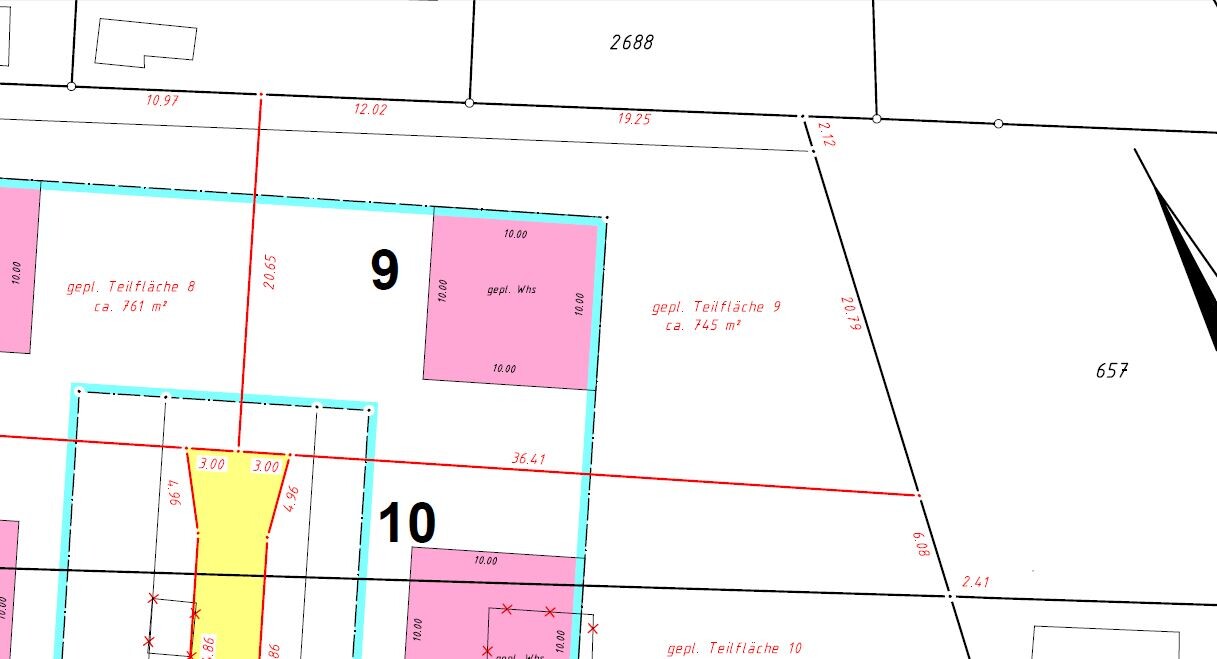
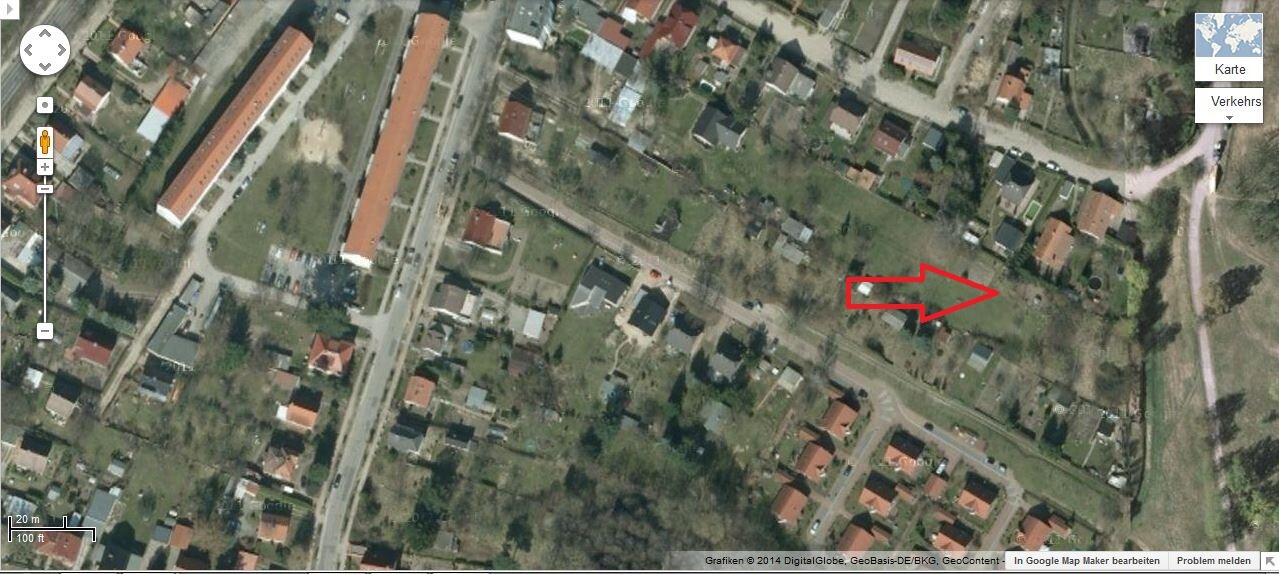
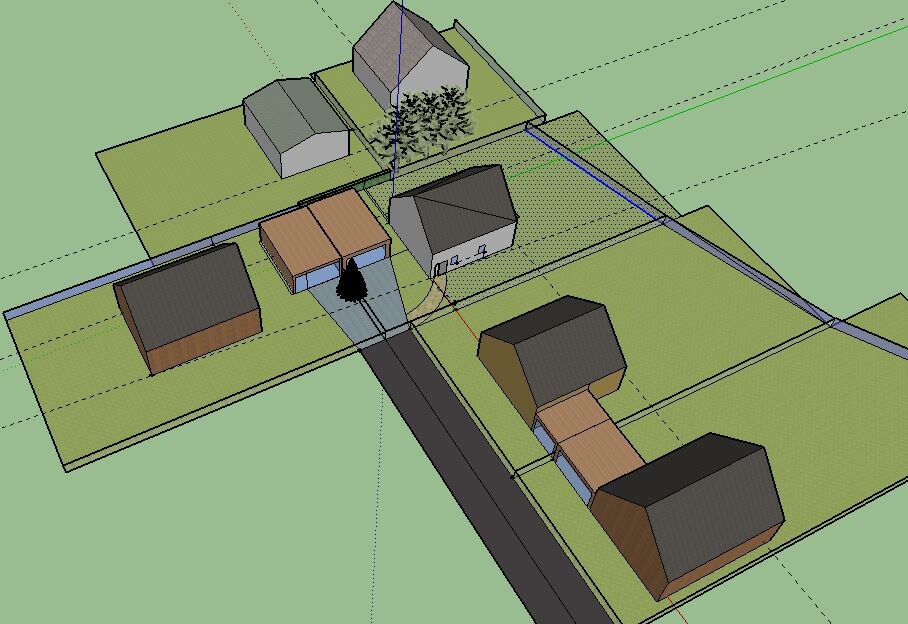
About the location of the plot: It is parcel 9 in a small new residential development with 11 plots, at the end of a private dead-end street (which still has to be built).
Unfortunately, the north arrow got lost on the attached graphics; north is at the top, east on the right, south at the bottom, and west on the left. Due to the drinking water protection zone, no further development is allowed to the east. Behind our garden is a northern neighbor’s garden, a stream, and then an open green area with a small path where dogs are walked.
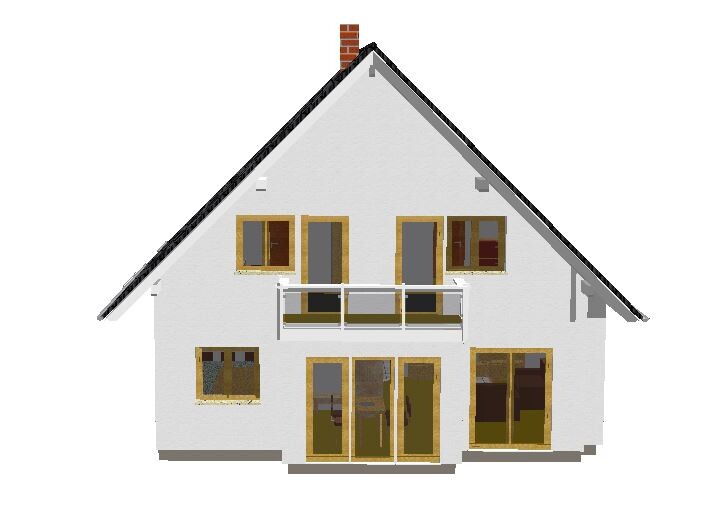
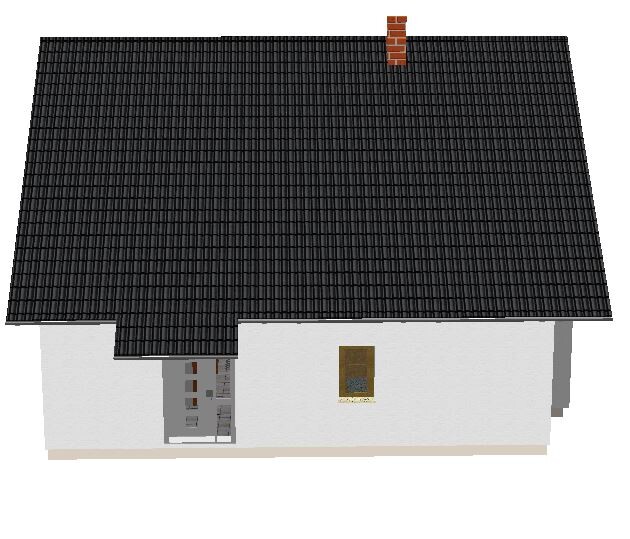
The house elevations still need to be revised carefully in terms of window symmetry.
Now to the list of questions:
Zoning plan/restrictions: Yes
Plot size: 796 sqm (8570 sq ft)
Slope: No
Building coverage ratio: No (only 1 full storey permitted)
Floor area ratio: 0.25
Building envelope, building line and boundary: see below
Edge development
Number of parking spaces: 2
Number of storeys: 1 full storey
Roof type: All permitted
Architectural style: All permitted
Orientation: East-West
Maximum height/limits: Ridge height max. 75.5 m above sea level, which for us is about 9 m (30 ft)
Other landscaping requirements: Shrubs along the northern plot boundary, 4 trees
Homeowners’ requirements
Style, roof form, building type: Classic single-family house, gable and half-hip roof
Basement/storeys: 1½ storeys without basement (high groundwater and drinking water protection zone), instead a converted attic
Number of residents, ages: 3 (39, 38, 2) + 3 cats
Space requirements ground floor, upper floor: approx. 140 - 150 sqm (1506 - 1615 sq ft). Ground floor: entrance hall, guest WC, utility/laundry room, kitchen, living room. Upper floor: bedroom, 1 child’s room, 1 study, bathroom
Office: Family use, not home office
Overnight guests per year: few, usually only for celebrations and so far accommodated in hotels
Open or closed architecture: Closed
Conservative or modern building style: Classic-conservative
Open kitchen with island: No
Number of dining places: Small prep and quick snack area in the kitchen, plus a separate dining area
Fireplace: Yes
Music/sound system wall: Yes
Balcony, roof terrace: Balcony
Garage, carport: Carport
Kitchen garden, greenhouse: No
Other wishes/features/daily routine: Entrance hall as a barrier for dirt and cats, a well-accessible staircase, pantry in the kitchen
House design
Who designed the plan:
- Planner from a construction company
- DIY by us
What do you especially like? Everything we wished for is included, bay window and balcony, large utility room
What do you dislike? Upper floor layout not yet optimal,
Bathroom layout (large bathroom but difficult to furnish),
House elevations need improvement,
We are debating the position of the window on the north side in the living room (whether it is necessary at all and if so, where best),
Possibly swapping the guest WC and entrance hall?
Possibly better without pantry in the kitchen?
Price estimate by architect/planner: 230,000 - 240,000
Personal price limit for the house, including fittings: 250,000
Preferred heating system: Gas boiler and solar, geothermal not possible because of drinking water protection zone 3
If you had to give up certain details/extensions
- What could you do without: Basically nothing, maybe the pantry the most
- What could you not do without: Entrance hall

After some time of quietly reading and learning, I have now registered and would like to discuss our floor plan design for our dream house.
It has been about six months since we bought our plot, and we have looked at what feels like thousands of floor plans and discarded them, ultimately designing one ourselves because none of the standard plans from homebuilders fit our needs. We have already sent the floor plan to various homebuilders to check and price it. The offers surprisingly didn’t differ much in price, but none gave constructive feedback on whether everything is feasible or practical in the end. As I have read before, every company praised the plan without any criticism, saying what a nice floor plan it is.
Before we sign a homebuilding contract, we would like to hear honest criticism and would be very grateful for advice, tips, ideas, and suggestions for improvement.
About the location of the plot: It is parcel 9 in a small new residential development with 11 plots, at the end of a private dead-end street (which still has to be built).
Unfortunately, the north arrow got lost on the attached graphics; north is at the top, east on the right, south at the bottom, and west on the left. Due to the drinking water protection zone, no further development is allowed to the east. Behind our garden is a northern neighbor’s garden, a stream, and then an open green area with a small path where dogs are walked.
The house elevations still need to be revised carefully in terms of window symmetry.
Now to the list of questions:
Zoning plan/restrictions: Yes
Plot size: 796 sqm (8570 sq ft)
Slope: No
Building coverage ratio: No (only 1 full storey permitted)
Floor area ratio: 0.25
Building envelope, building line and boundary: see below
Edge development
Number of parking spaces: 2
Number of storeys: 1 full storey
Roof type: All permitted
Architectural style: All permitted
Orientation: East-West
Maximum height/limits: Ridge height max. 75.5 m above sea level, which for us is about 9 m (30 ft)
Other landscaping requirements: Shrubs along the northern plot boundary, 4 trees
Homeowners’ requirements
Style, roof form, building type: Classic single-family house, gable and half-hip roof
Basement/storeys: 1½ storeys without basement (high groundwater and drinking water protection zone), instead a converted attic
Number of residents, ages: 3 (39, 38, 2) + 3 cats
Space requirements ground floor, upper floor: approx. 140 - 150 sqm (1506 - 1615 sq ft). Ground floor: entrance hall, guest WC, utility/laundry room, kitchen, living room. Upper floor: bedroom, 1 child’s room, 1 study, bathroom
Office: Family use, not home office
Overnight guests per year: few, usually only for celebrations and so far accommodated in hotels
Open or closed architecture: Closed
Conservative or modern building style: Classic-conservative
Open kitchen with island: No
Number of dining places: Small prep and quick snack area in the kitchen, plus a separate dining area
Fireplace: Yes
Music/sound system wall: Yes
Balcony, roof terrace: Balcony
Garage, carport: Carport
Kitchen garden, greenhouse: No
Other wishes/features/daily routine: Entrance hall as a barrier for dirt and cats, a well-accessible staircase, pantry in the kitchen
House design
Who designed the plan:
- Planner from a construction company
- DIY by us
What do you especially like? Everything we wished for is included, bay window and balcony, large utility room
What do you dislike? Upper floor layout not yet optimal,
Bathroom layout (large bathroom but difficult to furnish),
House elevations need improvement,
We are debating the position of the window on the north side in the living room (whether it is necessary at all and if so, where best),
Possibly swapping the guest WC and entrance hall?
Possibly better without pantry in the kitchen?
Price estimate by architect/planner: 230,000 - 240,000
Personal price limit for the house, including fittings: 250,000
Preferred heating system: Gas boiler and solar, geothermal not possible because of drinking water protection zone 3
If you had to give up certain details/extensions
- What could you do without: Basically nothing, maybe the pantry the most
- What could you not do without: Entrance hall
 Cinderella7729 Jun 2015 00:23
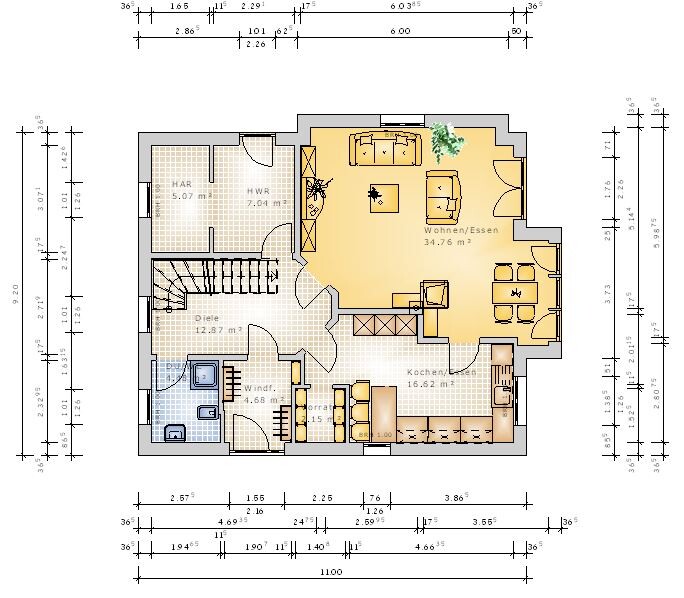
We do not want to rotate the house. Privacy is somewhat important to us. We don’t want to look onto the neighbor’s kitchen table or be able to say hello from bedroom window to bedroom window, as we have already seen during a house viewing. 6 meters (20 feet) from window to window. At the moment, it is 4 meters (13 feet) to the property boundary on the south side and 8 meters (26 feet) on the west side.
Cinderella7729 Jun 2015 00:27@Yvonne: It will definitely be bigger. But 1 by 2? I'm still thinking it over...
Cinderella77 schrieb:
@Yvonne: it will definitely be bigger . But 1 x 2? I’m still thinking....You shouldn’t buy it, but include it in the actual planning to get a sense of the scale.
A common standard size is also 180x90 cm (71x35 inches), which I have, for example, as a single person.
And I don’t want it any smaller because, for me, it’s just like Yvonne described. The laptop, candles, and plant decorations are also there. Usually, it comfortably seats 4 people, and for more, I have to clear away decorations and such. Currently, I’m considering replacing the table with a 140x140 cm (55x55 inches) table, extendable to 240x140 cm (94x55 inches).
Also, you have to consider that the terrace exit should be there as well, the one you actually use to bring grill stuff from the kitchen to the terrace.
And then there is the fireplace. You should keep at least 100 to 150 cm (39 to 59 inches) distance from it because otherwise it will get too hot there. Therefore, I definitely wouldn’t plan the fireplace in that corner but rather at the partition wall between the living area and kitchen. The chimney shaft can then be moved further to the right, where it will be better placed inside one of the children’s rooms and not awkwardly in the middle of the wall. Otherwise, you won’t have any space to extend the table somewhere.
The guest bathroom can be made a bit narrower, with the shower set as a walk-in type across the bottom of the plan and the toilet and small sink against the right wall. The window should shift slightly upwards on the plan. About 170 cm (67 inches) width will be enough, allowing the entrance area to be approximately 215 cm (85 inches) wide. Then you can extend the closet area on the right side continuously instead of having it on both sides irregularly.
The kitchen layout needs to be reconsidered. Keeping the seating on the ladder-style arrangement only works with a bench solution due to the distance from the wall. With the current floor plan, I would place the cooktop more to the right, leaving just a narrow window in the corner on the right, so that there is space for the cooktop above. The sink would be better placed at the bottom along the long kitchen run towards the peninsula. There you could also have a nice large window facing south. With this, the tall cabinets including the fridge would be closer to the main work area again. Having the sink at the bottom also makes it easier to work between the cooktop on the right and the sink for daily tasks, but you can also expand towards the left and the peninsula for baking, processing vegetables and fruit, etc., while keeping the sink relatively close by.
This also means less work for the extractor hood, as it can sit on the right wall more or less in a niche and doesn’t have to fight against cross-ventilation.
I would probably skip the pantry, straighten the space leading to the entrance area (so the guest bathroom doesn’t have to be made narrower), and create storage space under the stairs.
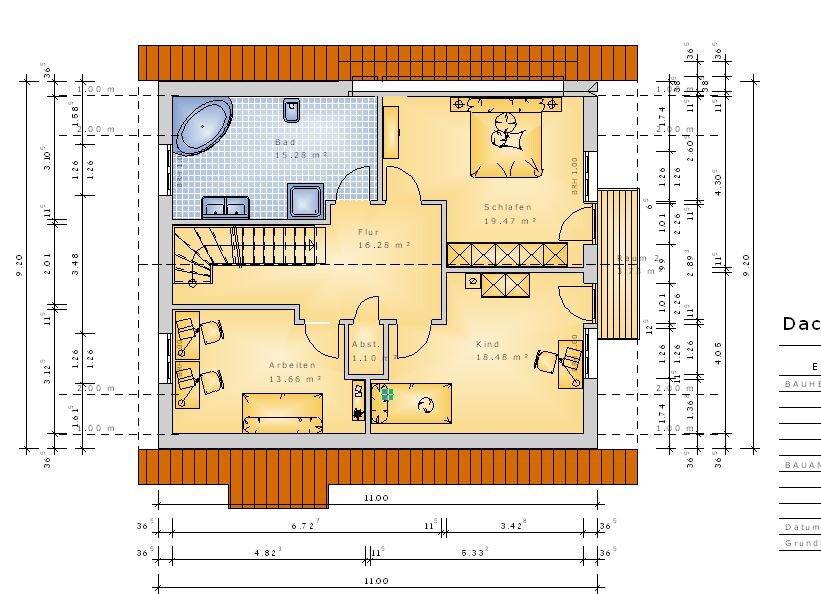
Upstairs, I would definitely leave out the entrance niches for the home office and second children’s room and run the wall straight across. The bathroom is very difficult to design because of the 2 m (6 ft 7 in) height line. The toilet can certainly not be placed where you put it—it’s impossible to get off the toilet without hitting your head.
I think this requires a more general rethink, including the staircase layout and where it connects. Overall, though, I like the basic location of the staircase.
And I don’t want it any smaller because, for me, it’s just like Yvonne described. The laptop, candles, and plant decorations are also there. Usually, it comfortably seats 4 people, and for more, I have to clear away decorations and such. Currently, I’m considering replacing the table with a 140x140 cm (55x55 inches) table, extendable to 240x140 cm (94x55 inches).
Also, you have to consider that the terrace exit should be there as well, the one you actually use to bring grill stuff from the kitchen to the terrace.
And then there is the fireplace. You should keep at least 100 to 150 cm (39 to 59 inches) distance from it because otherwise it will get too hot there. Therefore, I definitely wouldn’t plan the fireplace in that corner but rather at the partition wall between the living area and kitchen. The chimney shaft can then be moved further to the right, where it will be better placed inside one of the children’s rooms and not awkwardly in the middle of the wall. Otherwise, you won’t have any space to extend the table somewhere.
The guest bathroom can be made a bit narrower, with the shower set as a walk-in type across the bottom of the plan and the toilet and small sink against the right wall. The window should shift slightly upwards on the plan. About 170 cm (67 inches) width will be enough, allowing the entrance area to be approximately 215 cm (85 inches) wide. Then you can extend the closet area on the right side continuously instead of having it on both sides irregularly.
The kitchen layout needs to be reconsidered. Keeping the seating on the ladder-style arrangement only works with a bench solution due to the distance from the wall. With the current floor plan, I would place the cooktop more to the right, leaving just a narrow window in the corner on the right, so that there is space for the cooktop above. The sink would be better placed at the bottom along the long kitchen run towards the peninsula. There you could also have a nice large window facing south. With this, the tall cabinets including the fridge would be closer to the main work area again. Having the sink at the bottom also makes it easier to work between the cooktop on the right and the sink for daily tasks, but you can also expand towards the left and the peninsula for baking, processing vegetables and fruit, etc., while keeping the sink relatively close by.
This also means less work for the extractor hood, as it can sit on the right wall more or less in a niche and doesn’t have to fight against cross-ventilation.
I would probably skip the pantry, straighten the space leading to the entrance area (so the guest bathroom doesn’t have to be made narrower), and create storage space under the stairs.
Upstairs, I would definitely leave out the entrance niches for the home office and second children’s room and run the wall straight across. The bathroom is very difficult to design because of the 2 m (6 ft 7 in) height line. The toilet can certainly not be placed where you put it—it’s impossible to get off the toilet without hitting your head.
I think this requires a more general rethink, including the staircase layout and where it connects. Overall, though, I like the basic location of the staircase.

Overall, I think the floor plan is good. However, the dining area feels a bit too small.
The orientation is something everyone has to decide for themselves. A good mix is ideal. I would consider the following points regarding this:
1. For cost reasons, should the bay window on the north side be omitted? What is its purpose currently?
2. Enlarge the bay window on the east side. A width of 3m (10 feet) is okay, but I would make it much deeper so the table fits properly.
3. Move the fireplace away from the outer corner. No one can sit at the dining table comfortably when it is on. Try to find a better location for it—maybe on the inside near the door or on the straight wall.
4. While at it, enlarge the kitchen door and plan in glass panels, maybe even double doors?
5. On the south side in the kitchen, include larger windows. More light needs to enter the house there and indirectly also into the dining/living area...
That was my two cents for Monday!
The orientation is something everyone has to decide for themselves. A good mix is ideal. I would consider the following points regarding this:
1. For cost reasons, should the bay window on the north side be omitted? What is its purpose currently?
2. Enlarge the bay window on the east side. A width of 3m (10 feet) is okay, but I would make it much deeper so the table fits properly.
3. Move the fireplace away from the outer corner. No one can sit at the dining table comfortably when it is on. Try to find a better location for it—maybe on the inside near the door or on the straight wall.
4. While at it, enlarge the kitchen door and plan in glass panels, maybe even double doors?
5. On the south side in the kitchen, include larger windows. More light needs to enter the house there and indirectly also into the dining/living area...
That was my two cents for Monday!
ypg schrieb:
A good mix is always beneficial, but the bathroom and utility room on the premium side??? We placed the kitchen on the full south side. The toilet is on the north side.
Cinderella77 schrieb:
@Yvonne: it will definitely be bigger. But 1 by 2? I'm still thinking about it.... Well, a reasonable dining table should be about 0.90 x 1.60 meters (35 x 63 inches). We have one that size in our kitchen for 5 people, and it’s already almost too small. But as soon as grandma and grandpa visit, we move to our larger dining table in the living room, which is actually 1 by 2 meters (39 by 79 inches). It especially gets tight when it comes to kids' birthday parties.
Similar topics