
Hello everyone,
I am currently converting part of my warehouse into a living space.
The living area is inside the warehouse.
Exterior wall construction from inside to outside:
- Metal wall
- Stud frame with 6cm (2.4 inches) insulation wool
- Corrugated metal sheeting
The corrugated panels are not filled. This means the insulation is ventilated from the outside.
The windows are installed within the 6cm (2.4 inches) insulation layer. New ones have been ordered and will be installed in the same position.
Now I want to add additional insulation to the exterior wall. The first plan was to add sandwich panels to the outside of the wall. Unfortunately, the substructure is not designed for this, and I was advised against it, plus nobody is willing to take on this work!
So the only option left is to insulate from the inside. The metal wall acts as a vapor barrier to the outside.
My plan looks like this:
- Timber stud frame
- 6cm (2.4 inches) flexible wood fiber insulation
- OSB boards
I would press the wood fiber insulation tightly against the metal wall using the OSB boards to avoid any air gap between the insulation and the metal.
I do not want to use a vapor retarder so that moisture can return from the insulation back into the living space.
Attached is a photo of the current state.
Maybe someone can give me tips regarding the wall construction.
Thank you and best regards,
Peter
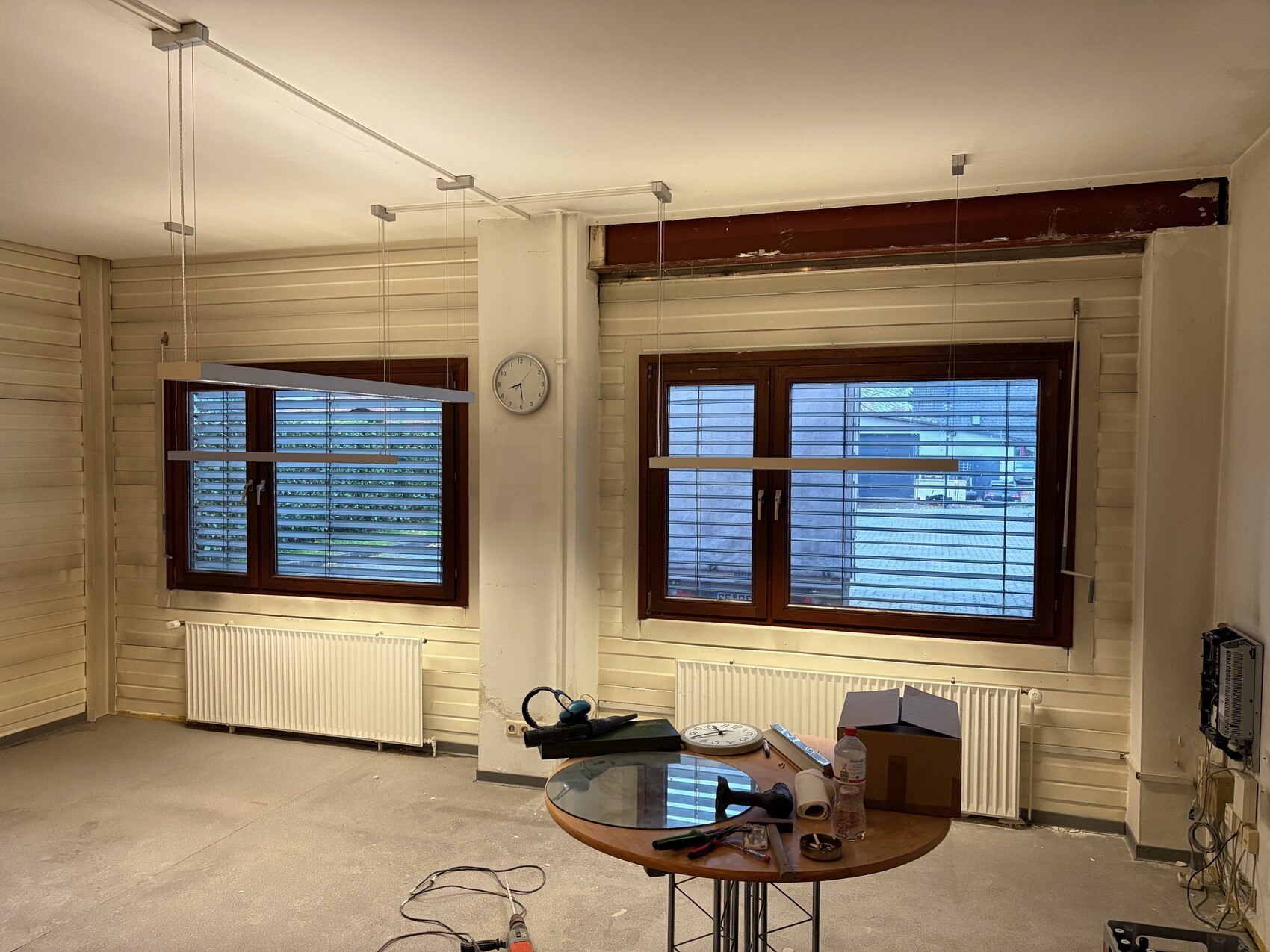
I am currently converting part of my warehouse into a living space.
The living area is inside the warehouse.
Exterior wall construction from inside to outside:
- Metal wall
- Stud frame with 6cm (2.4 inches) insulation wool
- Corrugated metal sheeting
The corrugated panels are not filled. This means the insulation is ventilated from the outside.
The windows are installed within the 6cm (2.4 inches) insulation layer. New ones have been ordered and will be installed in the same position.
Now I want to add additional insulation to the exterior wall. The first plan was to add sandwich panels to the outside of the wall. Unfortunately, the substructure is not designed for this, and I was advised against it, plus nobody is willing to take on this work!
So the only option left is to insulate from the inside. The metal wall acts as a vapor barrier to the outside.
My plan looks like this:
- Timber stud frame
- 6cm (2.4 inches) flexible wood fiber insulation
- OSB boards
I would press the wood fiber insulation tightly against the metal wall using the OSB boards to avoid any air gap between the insulation and the metal.
I do not want to use a vapor retarder so that moisture can return from the insulation back into the living space.
Attached is a photo of the current state.
Maybe someone can give me tips regarding the wall construction.
Thank you and best regards,
Peter
S
Simon-1894 Dec 2024 12:55Hello,
if the existing substructure is not sufficient, the only option usually is to completely replace the wall cladding. Remove the old wall, then have a continuous base with a HTU rail cast in concrete to fix the new sandwich wall panels. Depending on the orientation of the sandwich panels, wall studs may also be required.
Then, depending on preference or requirements, a suitable core thickness for the sandwich panels can be selected.
What is the exact roof construction of the modernized roof? Load-bearing deck with XXXmm (X inches) insulation and polyethylene (PE) foil? Sandwich panels as roof cladding? Suspended gutter or continuous parapet? External or internal drainage?
Are there any construction plans available for the existing hall?
if the existing substructure is not sufficient, the only option usually is to completely replace the wall cladding. Remove the old wall, then have a continuous base with a HTU rail cast in concrete to fix the new sandwich wall panels. Depending on the orientation of the sandwich panels, wall studs may also be required.
Then, depending on preference or requirements, a suitable core thickness for the sandwich panels can be selected.
What is the exact roof construction of the modernized roof? Load-bearing deck with XXXmm (X inches) insulation and polyethylene (PE) foil? Sandwich panels as roof cladding? Suspended gutter or continuous parapet? External or internal drainage?
Are there any construction plans available for the existing hall?
Thanks for the information so far. I have used the past few days to sketch out some additional options.
I have now cut out a piece of sheet metal from the inside. The sheet metal is detached and can be removed.
Behind it is the stud frame for attaching the trapezoidal metal sheets on the outside. The insulation is clamped in between.
It is 8cm (3 inches) of wool insulation. Attached is a photo.
Since I have about 24cm (9.5 inches) of wall buildup in the room anyway due to the cladding of the steel beams, my plan now is:
Remove the metal sheet on the inside completely. Build the Ytong block 17.5cm (7 inches) flush with the buildup.
This would leave an air gap of about 8cm (3 inches). This could either be left as is or filled with insulation wool.
If none of that works, the only option left is to completely remove the external wall.
Insulation could then be mounted on the existing walls and plastered from the outside.
However, I would prefer to keep the external wall in place.
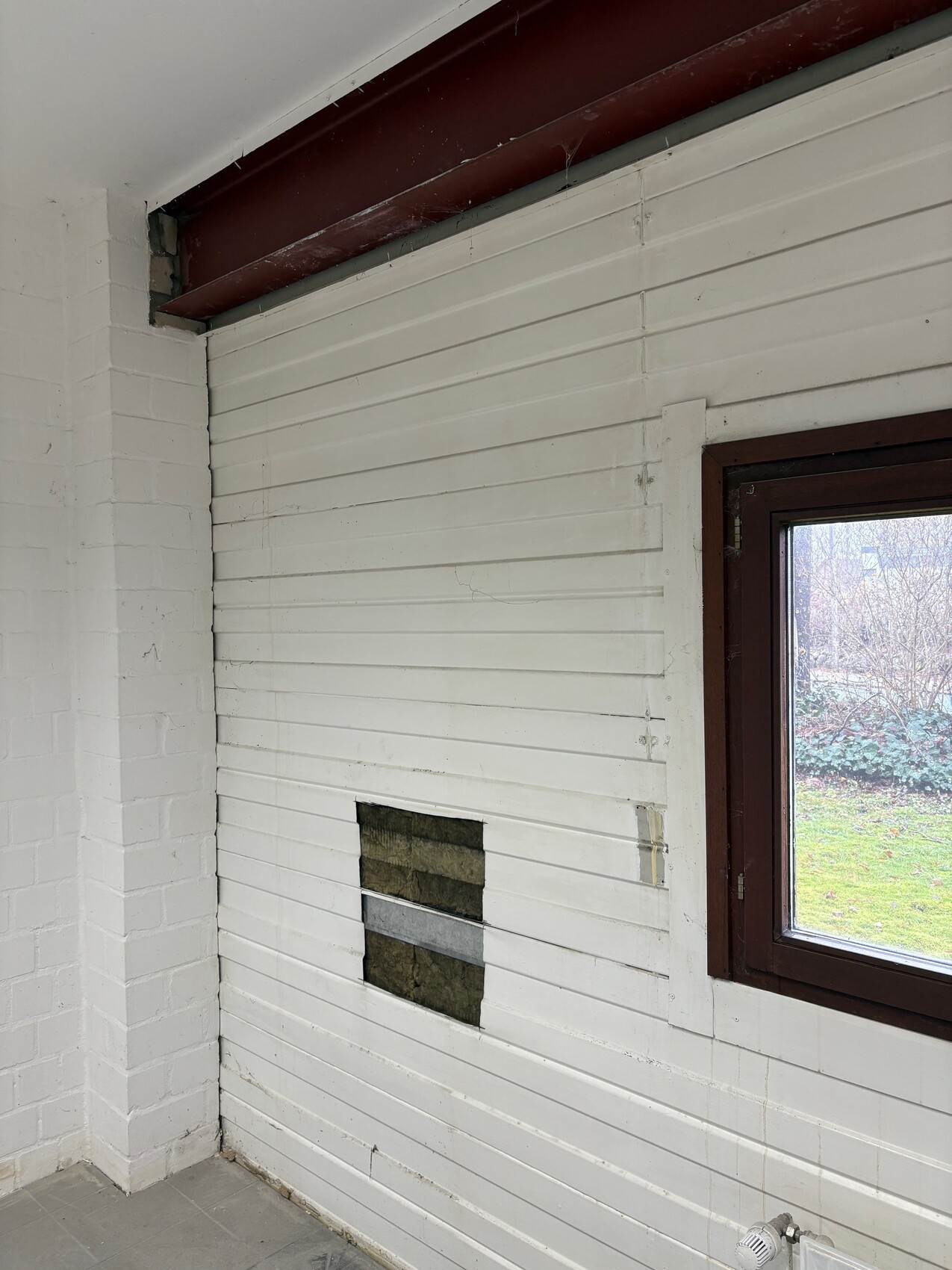
I have now cut out a piece of sheet metal from the inside. The sheet metal is detached and can be removed.
Behind it is the stud frame for attaching the trapezoidal metal sheets on the outside. The insulation is clamped in between.
It is 8cm (3 inches) of wool insulation. Attached is a photo.
Since I have about 24cm (9.5 inches) of wall buildup in the room anyway due to the cladding of the steel beams, my plan now is:
Remove the metal sheet on the inside completely. Build the Ytong block 17.5cm (7 inches) flush with the buildup.
This would leave an air gap of about 8cm (3 inches). This could either be left as is or filled with insulation wool.
If none of that works, the only option left is to completely remove the external wall.
Insulation could then be mounted on the existing walls and plastered from the outside.
However, I would prefer to keep the external wall in place.
B
BungaSeppel7 Dec 2024 13:15If I were you, I would invest a few hundred to have a building physicist run the calculations. Often, projects like this fail because you don’t know what hidden surprises might be inside the existing structure. In your case, it sounds like most things are known or it wouldn’t be a problem to open up a section of the existing building and take a look. That would make it easy for a building physicist to provide a reliable assessment of whether there is a risk of condensation or not.
What I wouldn’t do is ask a contractor how to proceed—unless they offer a warranty for more than five years that guarantees no moisture-related issues will occur, which they probably won’t.
Often the attitude is “We’ve done it this way ten times before, and nothing’s ever happened.” But which contractor can be held accountable 15 years after the work is done if a wall develops mold? Such damage may already have appeared once the five-year warranty period has expired, but it is usually noticed the least. Who opens a wall just before the warranty ends to check whether the idea of leaving out the vapor barrier actually worked back then?
What I wouldn’t do is ask a contractor how to proceed—unless they offer a warranty for more than five years that guarantees no moisture-related issues will occur, which they probably won’t.
Often the attitude is “We’ve done it this way ten times before, and nothing’s ever happened.” But which contractor can be held accountable 15 years after the work is done if a wall develops mold? Such damage may already have appeared once the five-year warranty period has expired, but it is usually noticed the least. Who opens a wall just before the warranty ends to check whether the idea of leaving out the vapor barrier actually worked back then?
Similar topics