
Hello everyone,
I am currently converting part of my warehouse into a living space.
The living area is inside the warehouse.
Exterior wall construction from inside to outside:
- Metal wall
- Stud frame with 6cm (2.4 inches) insulation wool
- Corrugated metal sheeting
The corrugated panels are not filled. This means the insulation is ventilated from the outside.
The windows are installed within the 6cm (2.4 inches) insulation layer. New ones have been ordered and will be installed in the same position.
Now I want to add additional insulation to the exterior wall. The first plan was to add sandwich panels to the outside of the wall. Unfortunately, the substructure is not designed for this, and I was advised against it, plus nobody is willing to take on this work!
So the only option left is to insulate from the inside. The metal wall acts as a vapor barrier to the outside.
My plan looks like this:
- Timber stud frame
- 6cm (2.4 inches) flexible wood fiber insulation
- OSB boards
I would press the wood fiber insulation tightly against the metal wall using the OSB boards to avoid any air gap between the insulation and the metal.
I do not want to use a vapor retarder so that moisture can return from the insulation back into the living space.
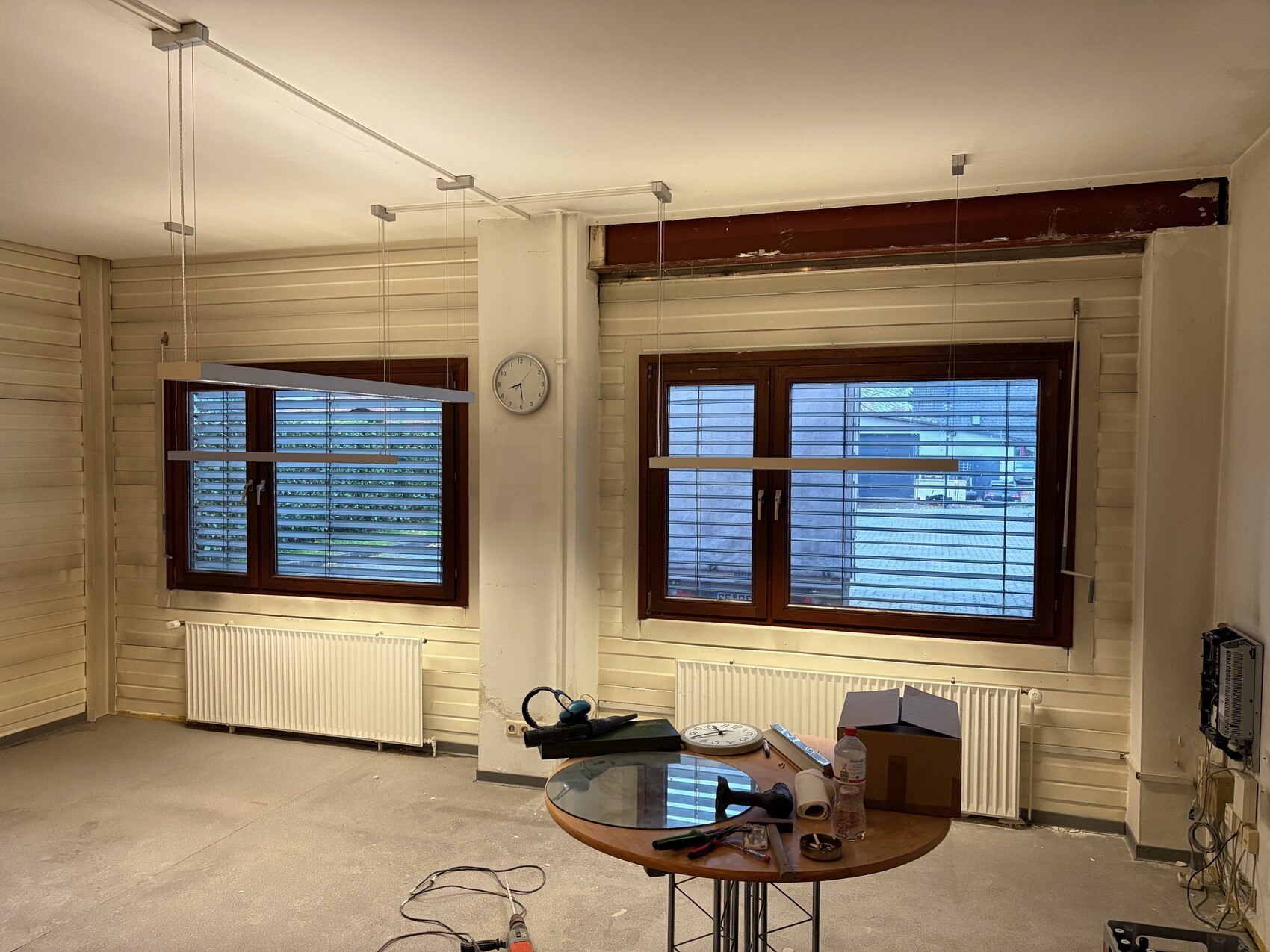
Attached is a photo of the current state.
Maybe someone can give me tips regarding the wall construction.
Thank you and best regards,
Peter
I am currently converting part of my warehouse into a living space.
The living area is inside the warehouse.
Exterior wall construction from inside to outside:
- Metal wall
- Stud frame with 6cm (2.4 inches) insulation wool
- Corrugated metal sheeting
The corrugated panels are not filled. This means the insulation is ventilated from the outside.
The windows are installed within the 6cm (2.4 inches) insulation layer. New ones have been ordered and will be installed in the same position.
Now I want to add additional insulation to the exterior wall. The first plan was to add sandwich panels to the outside of the wall. Unfortunately, the substructure is not designed for this, and I was advised against it, plus nobody is willing to take on this work!
So the only option left is to insulate from the inside. The metal wall acts as a vapor barrier to the outside.
My plan looks like this:
- Timber stud frame
- 6cm (2.4 inches) flexible wood fiber insulation
- OSB boards
I would press the wood fiber insulation tightly against the metal wall using the OSB boards to avoid any air gap between the insulation and the metal.
I do not want to use a vapor retarder so that moisture can return from the insulation back into the living space.
Attached is a photo of the current state.
Maybe someone can give me tips regarding the wall construction.
Thank you and best regards,
Peter
I probably should have added a few more details.
The floor will be completely rebuilt with insulation and underfloor heating.
The roof of the hall has just been modernized and insulated. The ceiling is a reinforced concrete slab.
The next step will be to build an additional apartment for my children on top of it.
Permits for both projects are already in place.
The floor will be completely rebuilt with insulation and underfloor heating.
The roof of the hall has just been modernized and insulated. The ceiling is a reinforced concrete slab.
The next step will be to build an additional apartment for my children on top of it.
Permits for both projects are already in place.
S
Simon-1893 Dec 2024 13:33Hello,
how exactly was the roof structure constructed? Is there an overhang over the existing facade? Any pictures from the outside?
how exactly was the roof structure constructed? Is there an overhang over the existing facade? Any pictures from the outside?
You wrote that the renovation is approved. So you should have specified the wall construction when submitting the plans, right?
They are not only afraid of condensation but probably also of a wall that tall—7 meters (23 feet)! You can’t just build it straight up without having the structural and engineering requirements sorted out.
Even a wall made of OSB, etc., can’t just be assembled however you like; the same considerations apply.
The metal wall of a storage hall can flex or dent a bit, but that’s definitely not acceptable for living spaces.
Are you thinking about underfloor heating? I actually believe that when it comes to insulation, you first need to significantly improve the setup.
I’m not sure if I’m misunderstanding, but an approved residential building with an additional apartment for the children and an exterior wall with less than 10 cm (4 inches) of material in total (6 cm plus OSB)...?
Rdnahe80 schrieb:
That’s the problem. No one dares to take it on. Everyone is afraid of condensation.
The idea then was to remove the old metal sheet and rebuild with a completely new exterior wall assembly.
But we’re talking about walls that are 7 meters (23 feet) high.
That can’t be the only solution.
They are not only afraid of condensation but probably also of a wall that tall—7 meters (23 feet)! You can’t just build it straight up without having the structural and engineering requirements sorted out.
Even a wall made of OSB, etc., can’t just be assembled however you like; the same considerations apply.
The metal wall of a storage hall can flex or dent a bit, but that’s definitely not acceptable for living spaces.
Rdnahe80 schrieb:
I’m aware that I can’t achieve perfect insulation with the existing construction.
...6 cm (2.4 inches) flexible wood fiber...
Are you thinking about underfloor heating? I actually believe that when it comes to insulation, you first need to significantly improve the setup.
I’m not sure if I’m misunderstanding, but an approved residential building with an additional apartment for the children and an exterior wall with less than 10 cm (4 inches) of material in total (6 cm plus OSB)...?
This is an approximately 1200 m² (13,000 sq ft) warehouse with a flat roof and no roof overhangs. A change of use was applied for and approved. The regulations are somewhat simpler in this case because the rooms already existed and were previously used as offices.
This, however, doesn’t solve my problem. The structural engineer suggested insulating from the inside with 10 cm (4 inches). I would have been more cautious with that approach to avoid moving the dew point too far inward.
There is already insulation present—about 6 cm (2.5 inches) in the existing wall.
My question is how I can optimize this most effectively. Perhaps someone here has done something similar.
This, however, doesn’t solve my problem. The structural engineer suggested insulating from the inside with 10 cm (4 inches). I would have been more cautious with that approach to avoid moving the dew point too far inward.
There is already insulation present—about 6 cm (2.5 inches) in the existing wall.
My question is how I can optimize this most effectively. Perhaps someone here has done something similar.

Rdnahe80 schrieb:
So here’s the question: how can you make the best of it without risking moisture or mold inside the wall?This issue could be addressed with a controlled ventilation system that automatically regulates humidity. Also consider an air conditioning or split system, since the hall will be cold in winter and very warm in summer. Construct the wall in multiple layers, similar to prefabricated houses, to meet structural requirements and provide thermal insulation.I can confirm this. The office rooms were used as storage for about 4 years. The heating was never on during that time.
There was never any frost, but of course it got warm in the summer.
A mechanical ventilation system with heat recovery has also been suggested to me. With air exchange, there is less risk of moisture.
If I understand correctly, the metal sheet on the inside is the main issue. It simply prevents any exchange with the outside.
There was never any frost, but of course it got warm in the summer.
A mechanical ventilation system with heat recovery has also been suggested to me. With air exchange, there is less risk of moisture.
If I understand correctly, the metal sheet on the inside is the main issue. It simply prevents any exchange with the outside.
Similar topics