
Hello everyone,
I am currently converting part of my warehouse into a living space.
The living area is inside the warehouse.
Exterior wall construction from inside to outside:
- Metal wall
- Stud frame with 6cm (2.4 inches) insulation wool
- Corrugated metal sheeting
The corrugated panels are not filled. This means the insulation is ventilated from the outside.
The windows are installed within the 6cm (2.4 inches) insulation layer. New ones have been ordered and will be installed in the same position.
Now I want to add additional insulation to the exterior wall. The first plan was to add sandwich panels to the outside of the wall. Unfortunately, the substructure is not designed for this, and I was advised against it, plus nobody is willing to take on this work!
So the only option left is to insulate from the inside. The metal wall acts as a vapor barrier to the outside.
My plan looks like this:
- Timber stud frame
- 6cm (2.4 inches) flexible wood fiber insulation
- OSB boards
I would press the wood fiber insulation tightly against the metal wall using the OSB boards to avoid any air gap between the insulation and the metal.
I do not want to use a vapor retarder so that moisture can return from the insulation back into the living space.
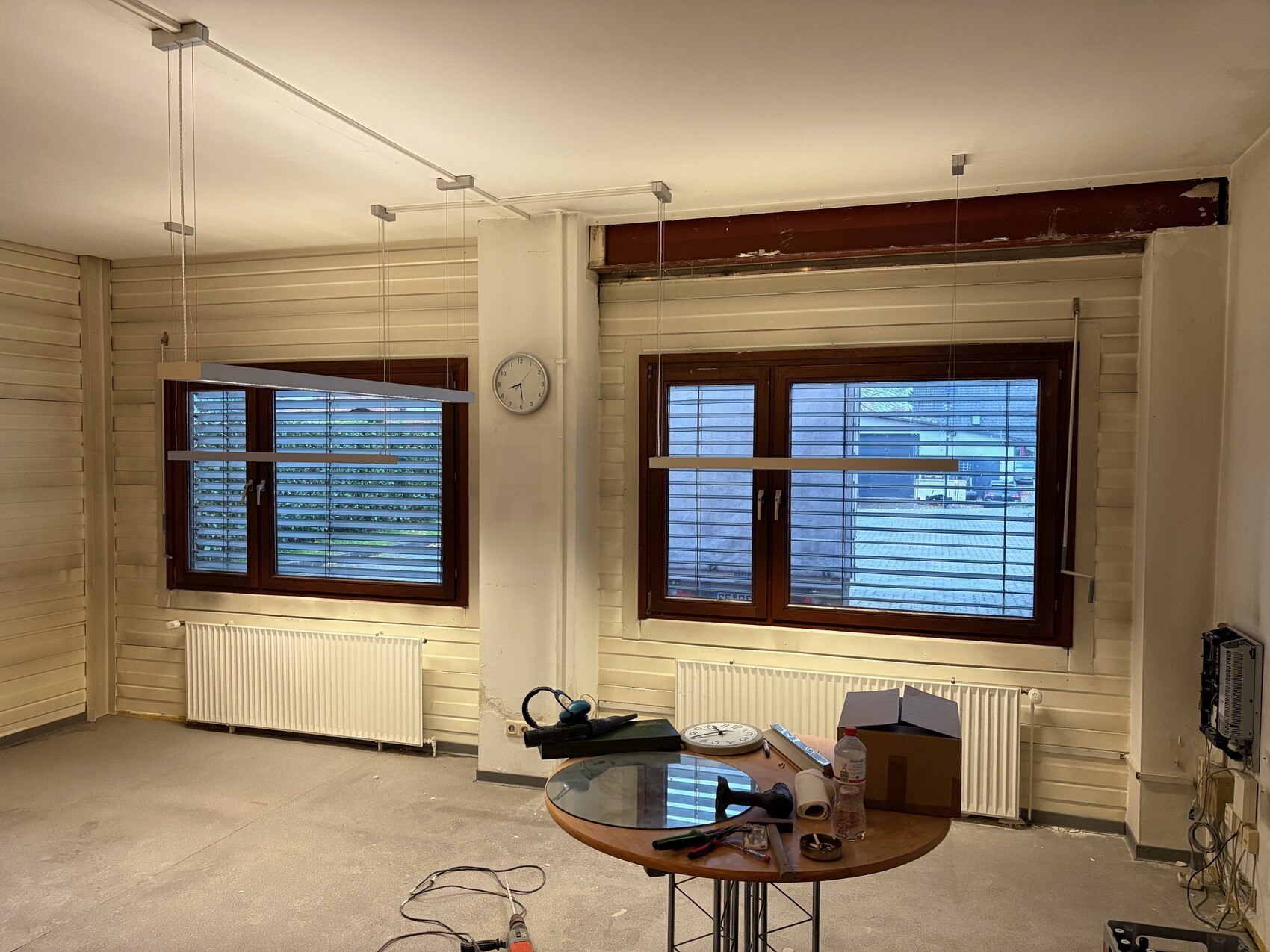
Attached is a photo of the current state.
Maybe someone can give me tips regarding the wall construction.
Thank you and best regards,
Peter
I am currently converting part of my warehouse into a living space.
The living area is inside the warehouse.
Exterior wall construction from inside to outside:
- Metal wall
- Stud frame with 6cm (2.4 inches) insulation wool
- Corrugated metal sheeting
The corrugated panels are not filled. This means the insulation is ventilated from the outside.
The windows are installed within the 6cm (2.4 inches) insulation layer. New ones have been ordered and will be installed in the same position.
Now I want to add additional insulation to the exterior wall. The first plan was to add sandwich panels to the outside of the wall. Unfortunately, the substructure is not designed for this, and I was advised against it, plus nobody is willing to take on this work!
So the only option left is to insulate from the inside. The metal wall acts as a vapor barrier to the outside.
My plan looks like this:
- Timber stud frame
- 6cm (2.4 inches) flexible wood fiber insulation
- OSB boards
I would press the wood fiber insulation tightly against the metal wall using the OSB boards to avoid any air gap between the insulation and the metal.
I do not want to use a vapor retarder so that moisture can return from the insulation back into the living space.
Attached is a photo of the current state.
Maybe someone can give me tips regarding the wall construction.
Thank you and best regards,
Peter

Welcome to the forum,
In which country is the hall located?
In Germany, there are regulations regarding thermal insulation.
Where the clock is hanging, there is a pillar of the hall—this is a significant thermal bridge.
Is this just for your own use, or is it intended to be rented out as a living space?
In which country is the hall located?
In Germany, there are regulations regarding thermal insulation.
Where the clock is hanging, there is a pillar of the hall—this is a significant thermal bridge.
Is this just for your own use, or is it intended to be rented out as a living space?
Hello, located in Germany, Schleswig-Holstein.
Yes, it is a column. The steel beams were later enclosed in masonry.
Unfortunately, thermal bridges cannot be avoided with this construction.
The apartment is for my own use.
I am already aware that with the existing structure, perfect insulation cannot be achieved.
Therefore, my question is how to make the best of it without risking moisture or mold inside the wall.
Yes, it is a column. The steel beams were later enclosed in masonry.
Unfortunately, thermal bridges cannot be avoided with this construction.
The apartment is for my own use.
I am already aware that with the existing structure, perfect insulation cannot be achieved.
Therefore, my question is how to make the best of it without risking moisture or mold inside the wall.
Rdnahe80 schrieb:
So here is the question of how to make the best of this without causing moisture or mold inside the wall.I wouldn’t dare to plan this myself. Don’t you have a drywall installer or something similar on your soccer team, etc., with whom you can share a beer for an hour or two?
That’s the problem. No one dares to tackle it. Everyone is worried about condensation.
The idea then was to remove the old metal and rebuild by fully reconstructing the exterior wall.
But we are talking about walls that are 7 meters (23 feet) high.
That can’t be the only solution.
The idea then was to remove the old metal and rebuild by fully reconstructing the exterior wall.
But we are talking about walls that are 7 meters (23 feet) high.
That can’t be the only solution.
Then go to a drywall company and talk to the site manager.
There is no insulation at the bottom, none at the ceiling, and the walls have thermal bridges.
Your apartment meets the standards of a prefabricated house, without cross ventilation (who would walk through the hall and open the doors).
There is no insulation at the bottom, none at the ceiling, and the walls have thermal bridges.
Your apartment meets the standards of a prefabricated house, without cross ventilation (who would walk through the hall and open the doors).
Similar topics