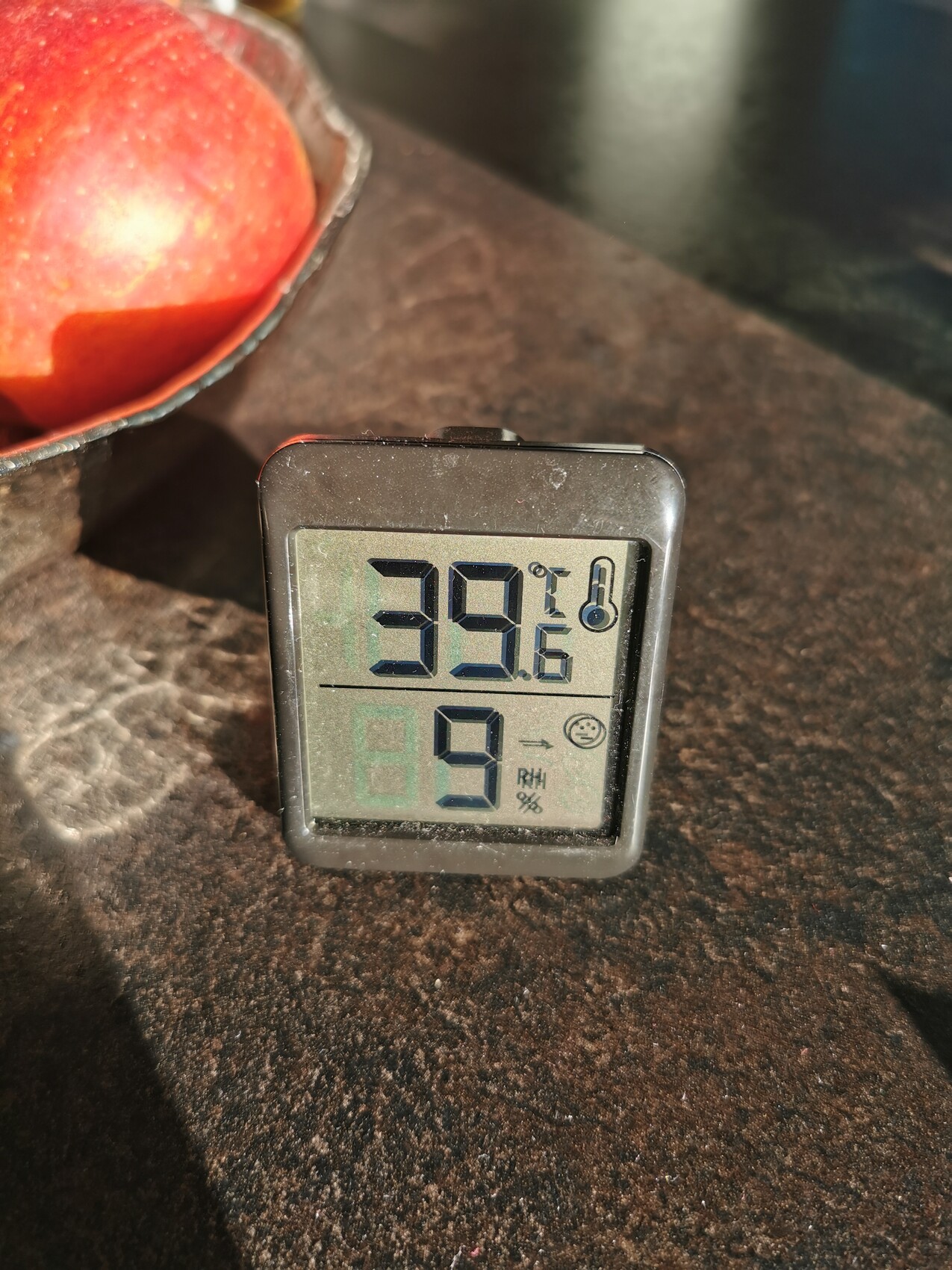
Hello everyone, the title already describes the problem. Approximately 20% humidity in all living and sleeping rooms. We moved in about two weeks ago. That can’t be normal, right? I expected such low humidity only after 2-3 years, but not right from the start...
The first night in the house was really horrible. On top of that, we have been dealing with colds and coughing the whole time. We now have a humidifier running all night in the bedroom (starting in the evening, about 12 hours total) and wake up with around 35-40% humidity.
Could something be set incorrectly in the mechanical ventilation system with heat recovery, or is this low humidity normal in a new house?
What can we do? Apart from the bedroom, we don’t notice it being a problem in any other room. Enthalpy exchangers are supposed to increase humidity by a maximum of 5%, right?!
Thanks for your feedback and best regards
The first night in the house was really horrible. On top of that, we have been dealing with colds and coughing the whole time. We now have a humidifier running all night in the bedroom (starting in the evening, about 12 hours total) and wake up with around 35-40% humidity.
Could something be set incorrectly in the mechanical ventilation system with heat recovery, or is this low humidity normal in a new house?
What can we do? Apart from the bedroom, we don’t notice it being a problem in any other room. Enthalpy exchangers are supposed to increase humidity by a maximum of 5%, right?!
Thanks for your feedback and best regards
Apolyxo schrieb:
Without a thermal wheel (EWT), the ventilation already throttles at -1°C (30°F) and eventually shuts down. Unless you install a preheating coil beforehand... This has nothing to do with a thermal wheel (EWT); it also applies to normal heat exchangers (WT) as frost protection. In fact, the thermal wheel is more problematic here because moisture can freeze on the EWT membranes due to outdoor air, which happens much later with a standard heat exchanger.
Apolyxo schrieb:
Because all other solutions do not work as well and passively – quite simply. Unfortunately, that is complete nonsense and works millions of times over in Germany alone.
Dogma schrieb:
That is complete nonsense and works millions of times over just in Germany alone.Yes, if you like indoor humidity levels of 20-30%, it works great. Alternatively, you can water hundreds of plants daily. Or you bring in energy-intensive humidifiers with contamination issues. Fantastic, really.
Dogma schrieb:
This has nothing to do with an ERV but also applies to regular heat exchangers as frost protection. In fact, the ERV is more of a problem here, since moisture on the ERV membranes can freeze from the outside air, which happens much later with a heat exchanger.If you have no clue...
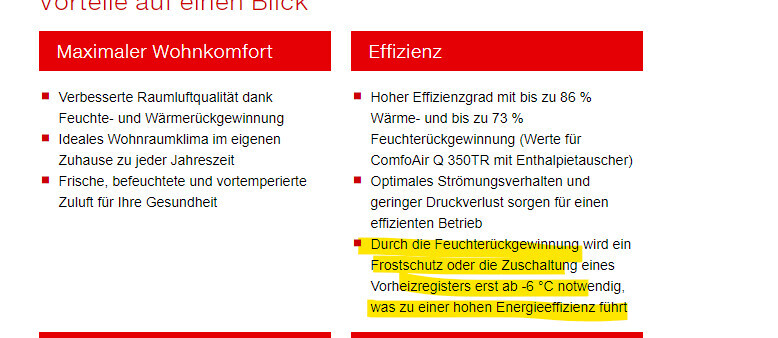
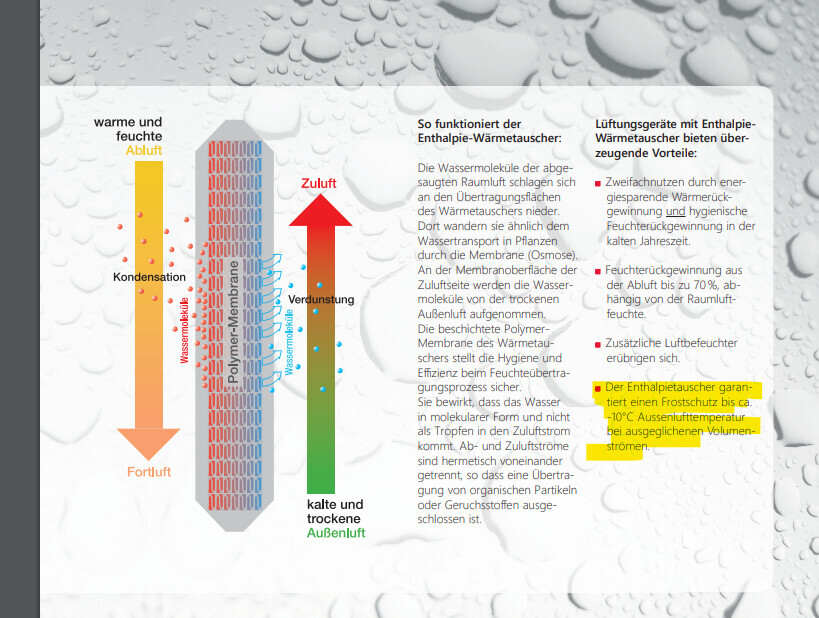
Seriously, what nonsense are you talking about? Regular heat exchangers have to activate frost protection starting at 0 degrees (in the form of preheating coils or mixing of outdoor air) – ERVs only start at -6 to -7°C (21 to 19°F) outdoor temperature. That is a fact. I have no idea what you are making up, but it’s not based on facts. Do you own a regular heat exchanger that you need to justify? If I were you, I would hold my breath, do some reading, and come back.
ERVs are also more efficient than regular heat exchangers because the evaporative energy is retained inside the house. Otherwise, you have to extract that energy again at high cost through humidifiers or plants.
Like Zehnder:
And Helios:
M
maulwurf7912 Mar 2023 14:24I don’t understand why there is any debate about 7,000 euros. Some people here act as if a mechanical ventilation system with heat recovery costs 20 or 30 thousand.
If you don’t install this in your new build, there’s no helping you anymore.
If you don’t install this in your new build, there’s no helping you anymore.
Apolyxo schrieb:
Yes, if you like indoor humidity levels of 20-30%, that works great. Alternatively, you can water hundreds of plants daily. Or you can bring in energy-intensive humidifiers with germ problems. Great, really.For me, it’s not 20-30%, but 55% that is regulated without additional humidification.Apolyxo schrieb:
If you don’t know anything...
Honestly, what nonsense are you talking about? Standard heat exchangers need to activate frost protection functions starting at 0°C (32°F) — either by preheating coils or mixing in outdoor air — while enthalpy wheels only do so starting at about -6 to -7°C (21 to 19°F). This is a fact. I don’t know what you’re fantasizing, but it’s not based on facts. Do you own a standard heat exchanger that you’re trying to justify? If I were you, I’d hold my breath, read up on the subject, then come back.
Enthalpy wheels are also more efficient than standard heat exchangers because the evaporative energy stays inside the house. Otherwise, you have to replace that energy expensively by using humidifiers or plants.
Here’s Zehnder:
And Helios:
What can I say except stay in your own world and that’s that, no point in arguing...Dogma schrieb:
In my case, it’s not 20-30% but 55% that gets regulated without additional humidification.That does not correspond to what I have seen reported as issues with mechanical ventilation with heat recovery during winter without earth-to-air heat exchangers (EWT) in various forums.
Dogma schrieb:
What else can I say except stay in your own world and that’s fine, no point in arguing...Okay, that might have been harsh. But honest.
You can’t just spread false information here. It contradicts the laws of physics – it’s quite straightforward to explain why EWTs provide benefits at low outdoor temperatures. This is not a marketing gimmick by manufacturers.
Y
Ypsi aus NI20 Jun 2023 12:45We have now ordered an EWT, with the delivery date still uncertain. The deciding factor was the 9%... Although the hygrometer was placed in the sun, it still showed very low humidity. It is still so dry everywhere (20% - max. 30%) despite the summer and humid weather.