
ᐅ 160 m² single-family house with timber frame construction on a north-facing slope, including a basement
Created on: 26 Aug 2018 17:03
L
Lbx
Hello,
below you will find our (almost) final floor plan. Only a few adjustments and changes to the windows are still being made. We would appreciate your feedback.
Development Plan / Restrictions
Construction according to Paragraph 34 of the Building Code. Neighboring buildings are 1.5 to 2 stories with pitched roofs.
Plot Size
3000m2 (approximately 0.74 acres), building area around 600m2 (0.15 acres) along the street
Slope
Approximately 2m (6.6 feet) diagonal incline where the house will be located, rising from southwest to northeast
Orientation
South (uphill side)
Client Requirements: Style, Roof Type, Building Type
Single-family house, pitched roof (most cost-effective), rather open design
Basement, Floors
Full basement + 2 floors
Number of Occupants, Age
2 adults + 2 children (planned)
Room Requirements on Ground Floor and Upper Floor
Open kitchen + dining area + living room, pantry, study, guest WC, parents’ area (bedroom, walk-in closet, bathroom), children’s area (2 bedrooms + bathroom), garage, utility room, storage room
Office: Family use or home office?
Family use + emergency children’s bedroom
Overnight Guests per Year
1-2
Open or Closed Architecture
Rather open
Conservative or Modern Building Style
Rather modern
Open Kitchen, Kitchen Island
Open kitchen, island not necessary
Number of Dining Seats
6
Fireplace
No
Music / Stereo Wall
5.1 surround, approx. 3 meters (10 feet) for TV, etc.
Balcony, Roof Terrace
No
Garage, Carport
In the basement
House Design
Who Created the Plan:
Floor plan from a construction company, modified according to our wishes by the planner of a prefab house company (structural engineer)
What Do You Like Especially? Why?
- Separate parents’ area
- Open design with living room accessible from two sides
- Staircase on the north side, where the street is
- Garage inside the house
- Large windows facing south
- Living room + kitchen + dining areas facing south
- Open ridge ceiling on the upper floor
What Do You Dislike? Why?
- Low, small windows on the upper floor due to the 1.8m (5.9 feet) knee wall height – we will probably raise this to 2.10m (6.9 feet)
- Boring exterior appearance
- Small study room, but currently the best compromise for us
- Kitchen windows not floor-to-ceiling, will be changed
- Possibly too few windows
Cost Estimate from Architect / Planner:
Approximately 400,000 Euro turnkey, including photovoltaic system and natural fiber insulation (ecological) fixed-price offer including basement, electric garage door, etc.
Laminate flooring
External roller blinds in living/kitchen/dining areas
No controlled mechanical ventilation.
No waterproof concrete basement (no “white tank” system).
Personal Price Limit for the House, Including Equipment:
House including all ancillary costs 470,000 Euro
Preferred Heating Technology:
Air-to-water heat pump + photovoltaic system
If You Had to Cut Back, Which Details / Extensions Could You Forgo:
Basement, but due to the slope it does not make much economic sense. Otherwise, we have already cut back as much as we can imagine.
Why Does the Design Look Like It Does Now?
We liked the design from the start, especially the south orientation of all main rooms suits the plot very well.
What Is the Most Important / Basic Question About the Floor Plan in 130 Characters or Less?
1. From what knee wall height do windows including rolling shutters below the knee wall really make sense? At 1.8m (5.9 feet) knee wall, windows would be at hip height, which is not a solution for us. For example, in the children’s room, a desk should fit underneath.
2. According to the soil report, we have about 1m (3.3 feet) of soil class 4 and below that soil class 5-6. What costs could be expected for earthworks on a sloped site?
3. Do you think a mechanical ventilation system is essential in a timber frame house? According to two reputable prefab house providers, it is mostly unnecessary and mainly important only for allergy sufferers.
A small note on the attached files: in the Google Maps image, south is at the top and the plot is where the two yellow markers are. In the views, I sketched around a bit unfortunately.
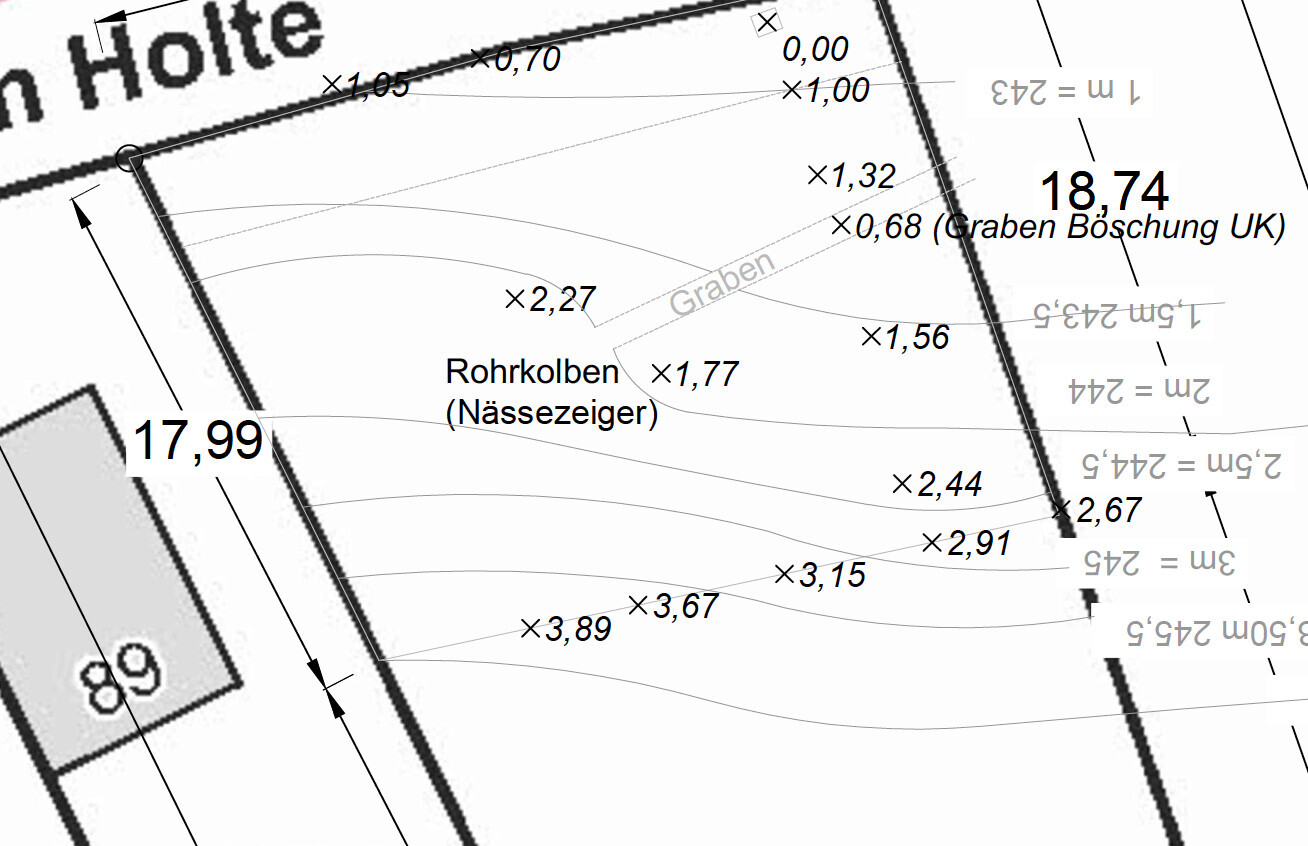
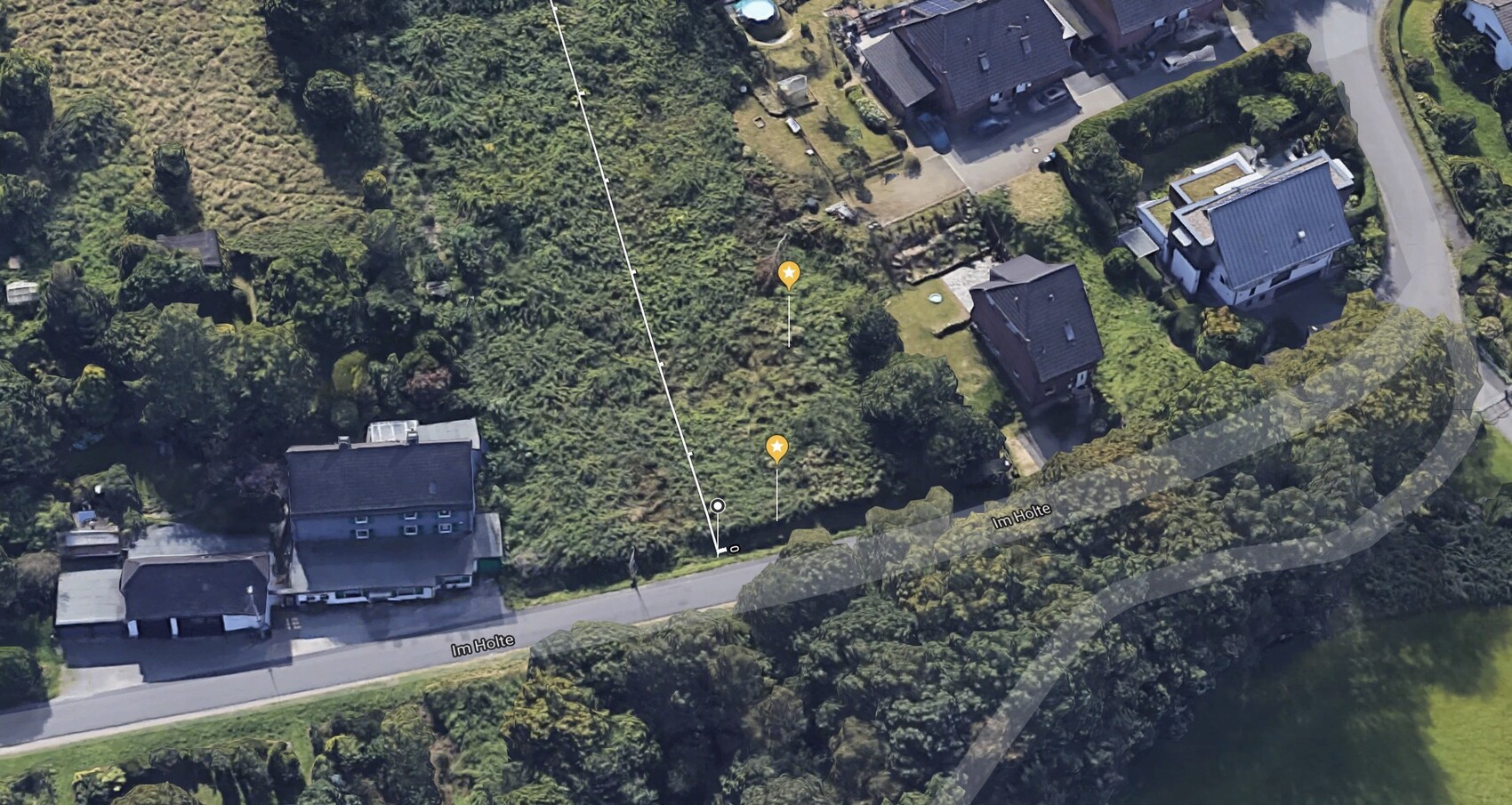
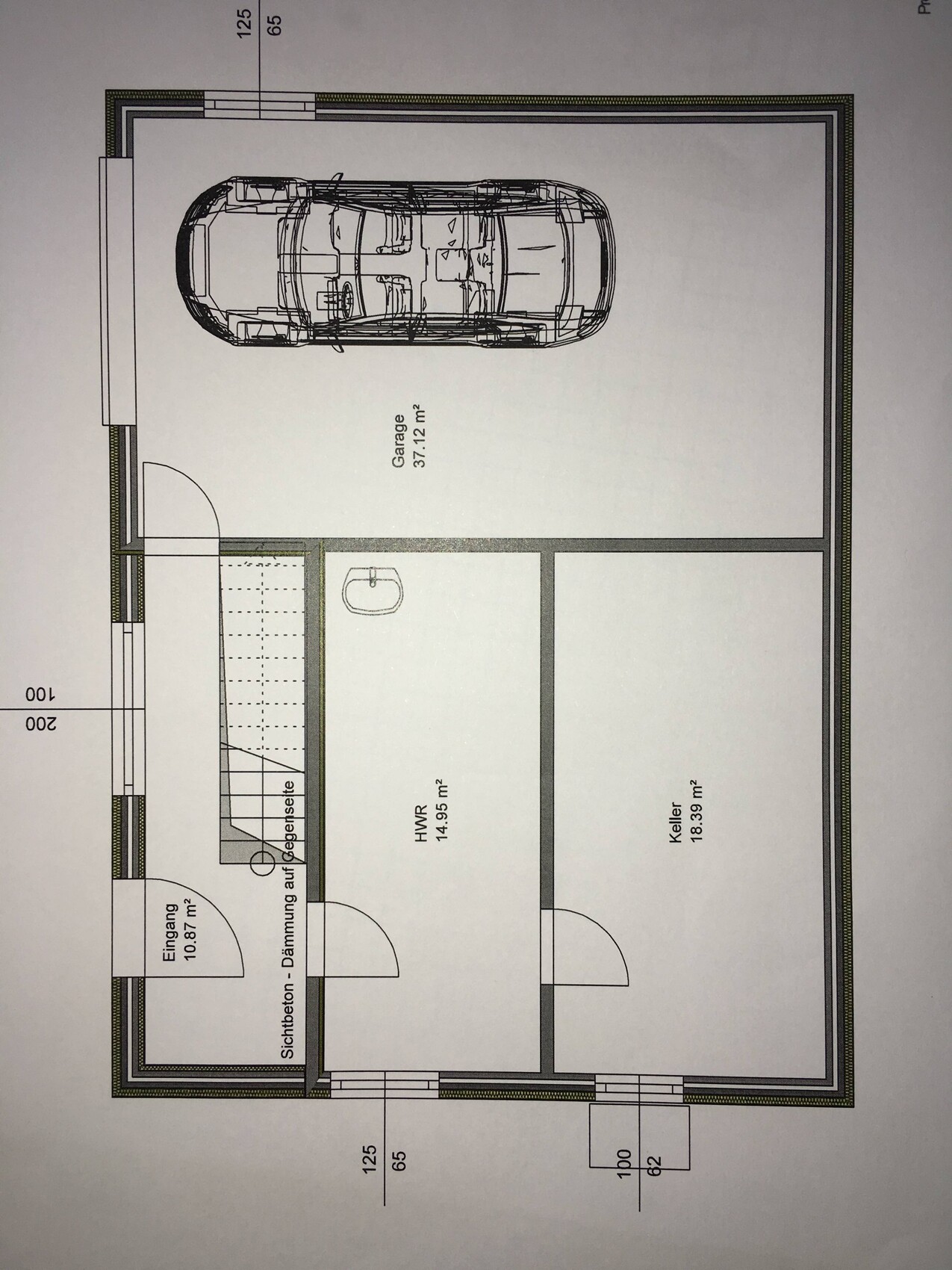
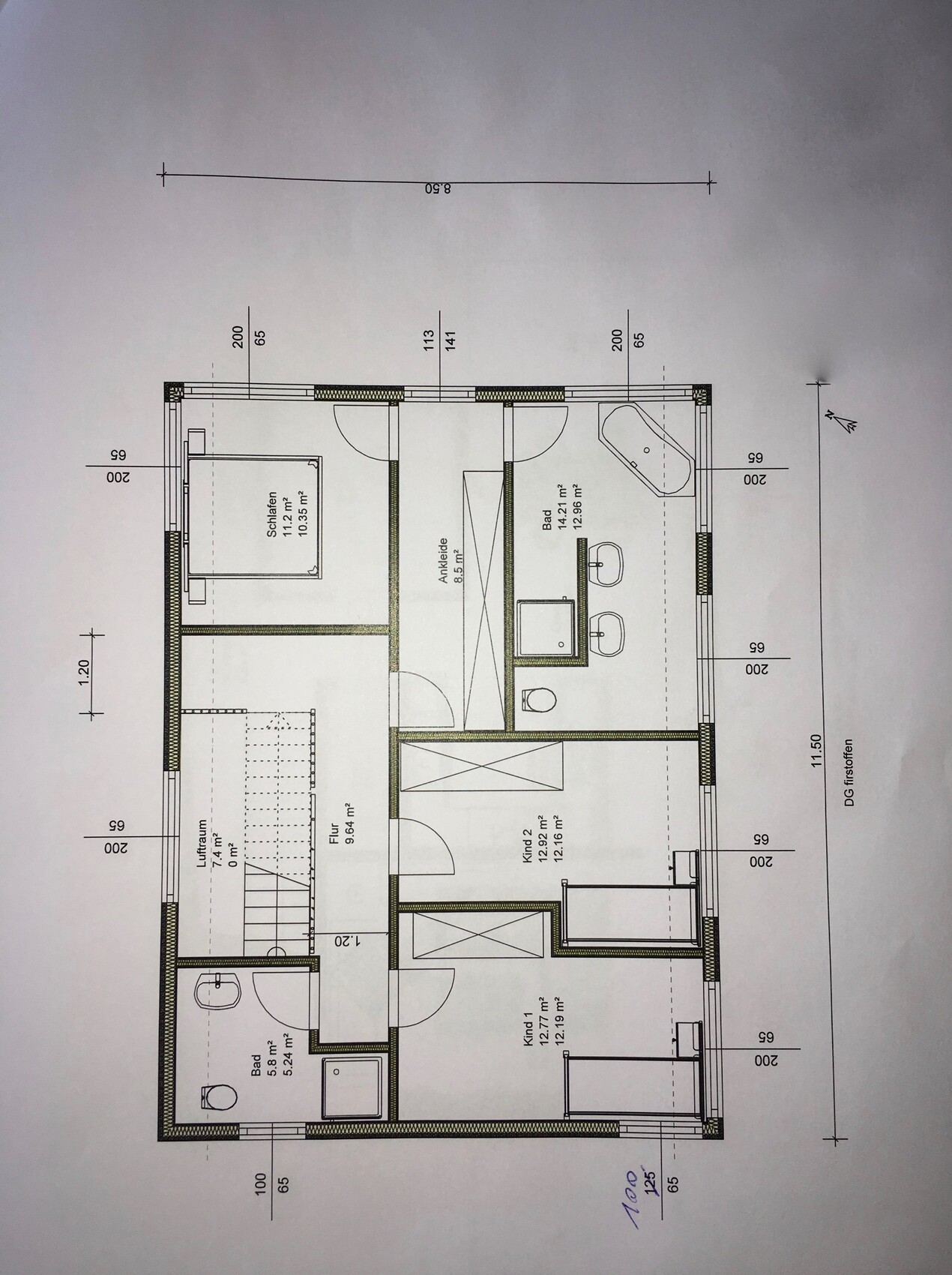
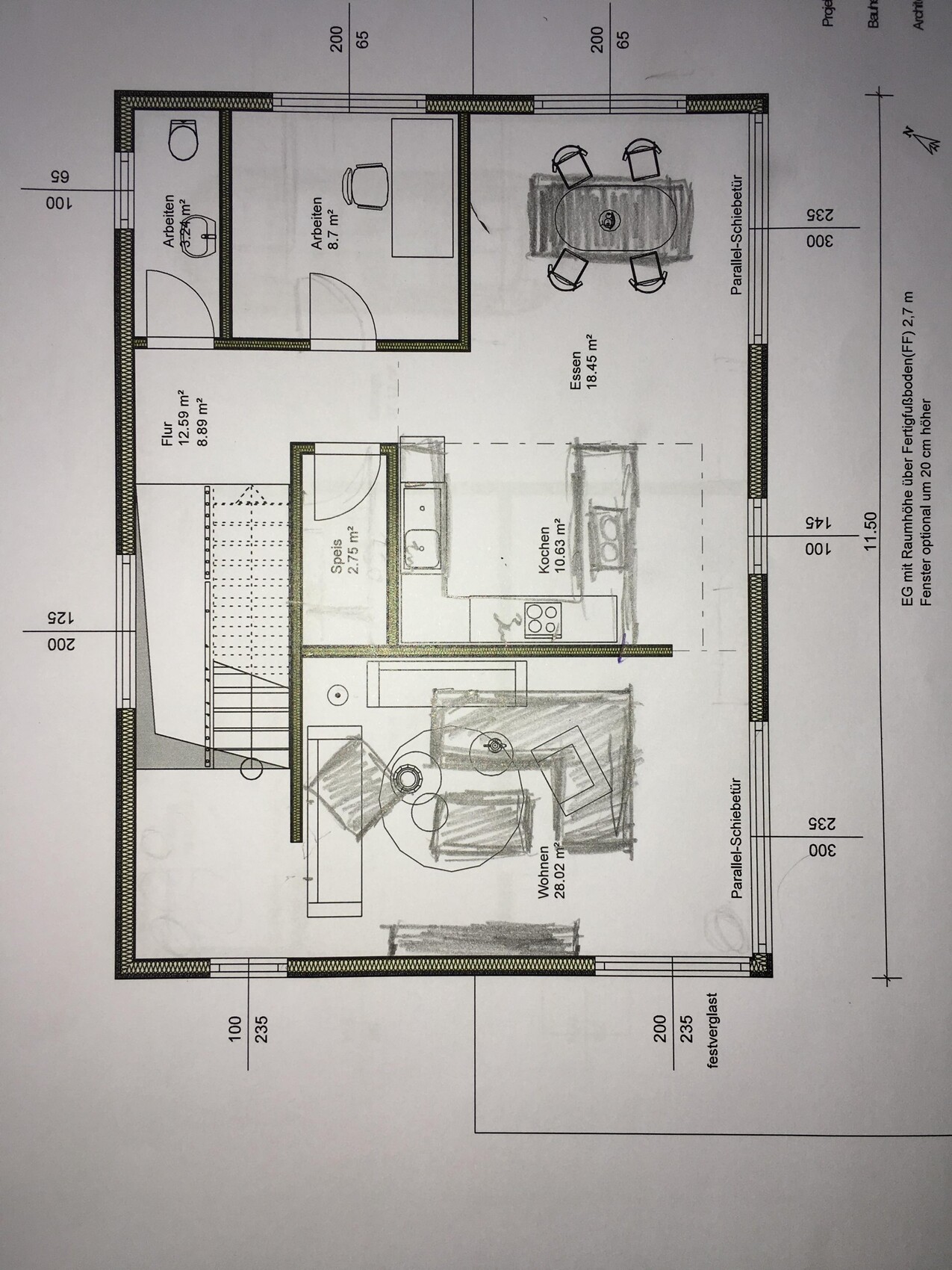
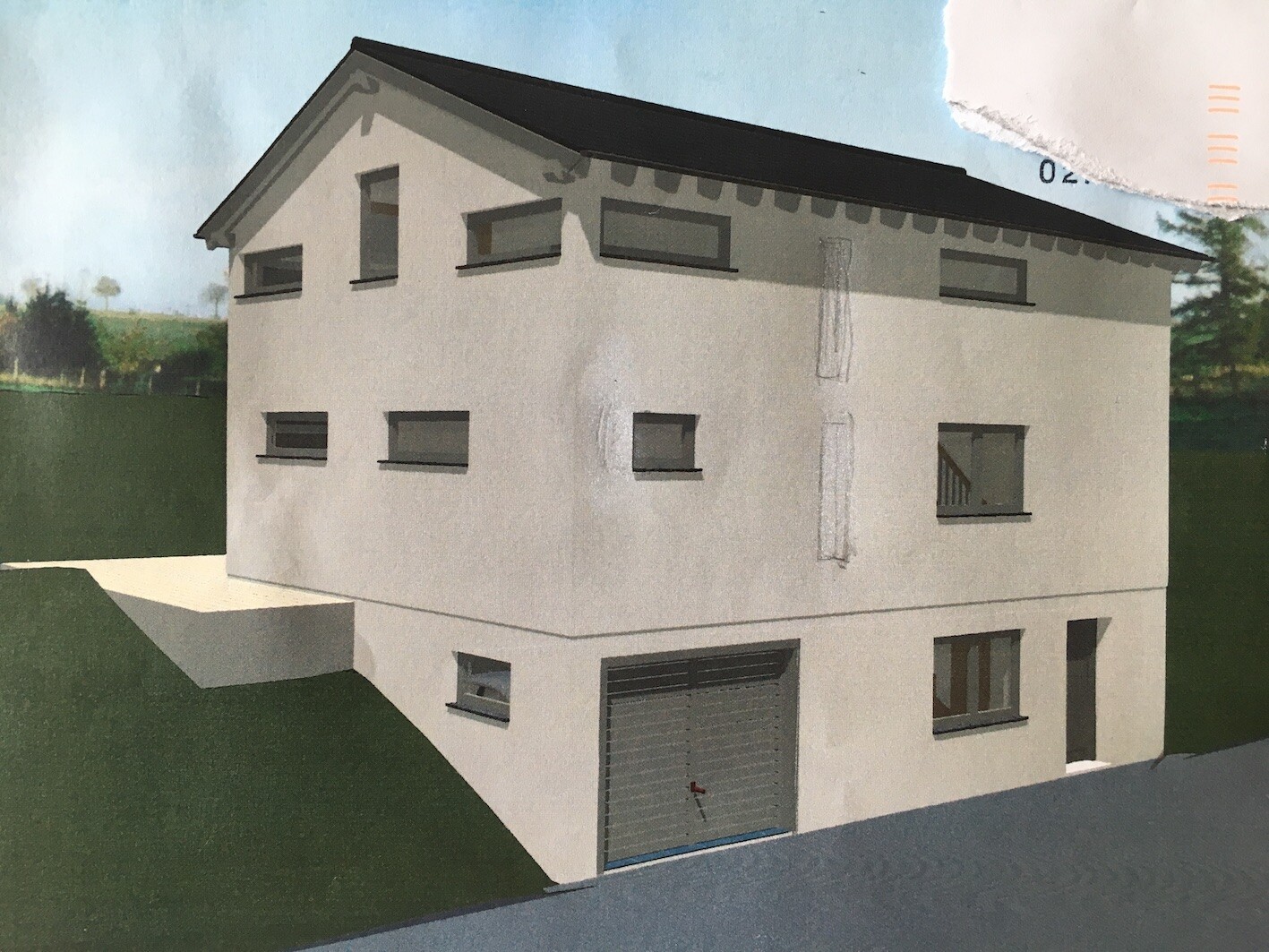
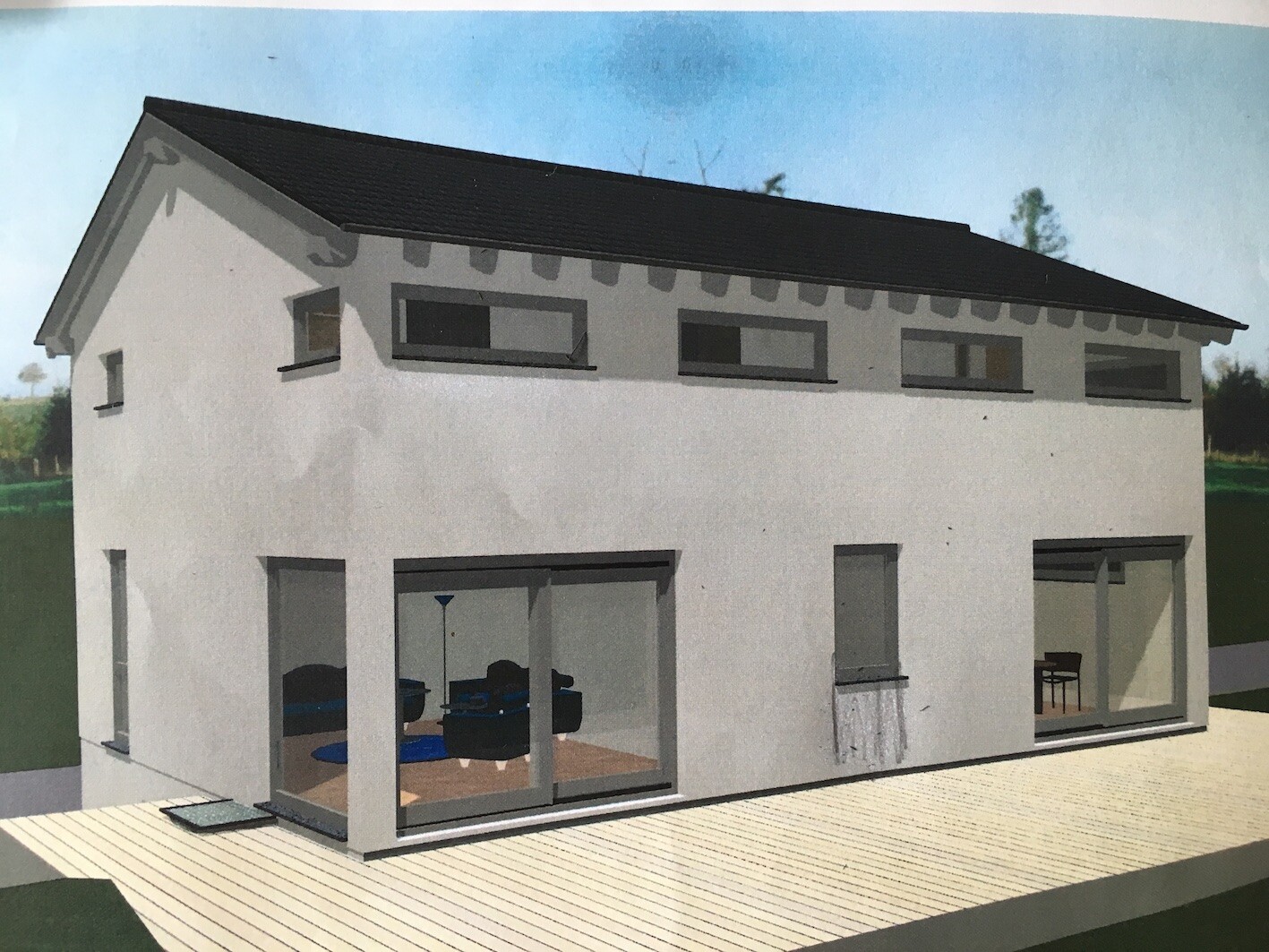
below you will find our (almost) final floor plan. Only a few adjustments and changes to the windows are still being made. We would appreciate your feedback.
Development Plan / Restrictions
Construction according to Paragraph 34 of the Building Code. Neighboring buildings are 1.5 to 2 stories with pitched roofs.
Plot Size
3000m2 (approximately 0.74 acres), building area around 600m2 (0.15 acres) along the street
Slope
Approximately 2m (6.6 feet) diagonal incline where the house will be located, rising from southwest to northeast
Orientation
South (uphill side)
Client Requirements: Style, Roof Type, Building Type
Single-family house, pitched roof (most cost-effective), rather open design
Basement, Floors
Full basement + 2 floors
Number of Occupants, Age
2 adults + 2 children (planned)
Room Requirements on Ground Floor and Upper Floor
Open kitchen + dining area + living room, pantry, study, guest WC, parents’ area (bedroom, walk-in closet, bathroom), children’s area (2 bedrooms + bathroom), garage, utility room, storage room
Office: Family use or home office?
Family use + emergency children’s bedroom
Overnight Guests per Year
1-2
Open or Closed Architecture
Rather open
Conservative or Modern Building Style
Rather modern
Open Kitchen, Kitchen Island
Open kitchen, island not necessary
Number of Dining Seats
6
Fireplace
No
Music / Stereo Wall
5.1 surround, approx. 3 meters (10 feet) for TV, etc.
Balcony, Roof Terrace
No
Garage, Carport
In the basement
House Design
Who Created the Plan:
Floor plan from a construction company, modified according to our wishes by the planner of a prefab house company (structural engineer)
What Do You Like Especially? Why?
- Separate parents’ area
- Open design with living room accessible from two sides
- Staircase on the north side, where the street is
- Garage inside the house
- Large windows facing south
- Living room + kitchen + dining areas facing south
- Open ridge ceiling on the upper floor
What Do You Dislike? Why?
- Low, small windows on the upper floor due to the 1.8m (5.9 feet) knee wall height – we will probably raise this to 2.10m (6.9 feet)
- Boring exterior appearance
- Small study room, but currently the best compromise for us
- Kitchen windows not floor-to-ceiling, will be changed
- Possibly too few windows
Cost Estimate from Architect / Planner:
Approximately 400,000 Euro turnkey, including photovoltaic system and natural fiber insulation (ecological) fixed-price offer including basement, electric garage door, etc.
Laminate flooring
External roller blinds in living/kitchen/dining areas
No controlled mechanical ventilation.
No waterproof concrete basement (no “white tank” system).
Personal Price Limit for the House, Including Equipment:
House including all ancillary costs 470,000 Euro
Preferred Heating Technology:
Air-to-water heat pump + photovoltaic system
If You Had to Cut Back, Which Details / Extensions Could You Forgo:
Basement, but due to the slope it does not make much economic sense. Otherwise, we have already cut back as much as we can imagine.
Why Does the Design Look Like It Does Now?
We liked the design from the start, especially the south orientation of all main rooms suits the plot very well.
What Is the Most Important / Basic Question About the Floor Plan in 130 Characters or Less?
1. From what knee wall height do windows including rolling shutters below the knee wall really make sense? At 1.8m (5.9 feet) knee wall, windows would be at hip height, which is not a solution for us. For example, in the children’s room, a desk should fit underneath.
2. According to the soil report, we have about 1m (3.3 feet) of soil class 4 and below that soil class 5-6. What costs could be expected for earthworks on a sloped site?
3. Do you think a mechanical ventilation system is essential in a timber frame house? According to two reputable prefab house providers, it is mostly unnecessary and mainly important only for allergy sufferers.
A small note on the attached files: in the Google Maps image, south is at the top and the plot is where the two yellow markers are. In the views, I sketched around a bit unfortunately.
T
Traumfaenger28 Aug 2018 09:31Bookstar schrieb:
Do banks actually have to take this into account in their calculations? The question was whether this is a confirmed fact. The quality of construction methods, both in solid (traditional) building and prefabricated construction, now varies so widely that I find this superficial criterion questionable as a measure of a property's value.
I want to avoid giving examples of extremely poor or excellent executions in both construction types here, as this has already been discussed often enough.
The question is, has anyone here actually experienced their bank consistently valuing a prefabricated house lower than a solid (traditional) house?
I don’t want to say that prefabricated houses are worse than solid construction.
However, solid houses clearly achieve significantly higher prices on the market compared to prefabricated houses. Of course, this is still true today. You can easily verify this on relevant real estate websites or by consulting experts.
The faster construction time is the main advantage of prefabricated houses, but this no longer applies in the secondary market.
Banks may have to auction the house if necessary. Therefore, it is clear that solid construction is always better for financing and is calculated differently. However, every bank will handle this differently.
I have personally gained experience with banks, and a friend of mine works as a mortgage broker.
This was also a main reason for me to choose against a prefabricated house. Real estate is an investment and a form of retirement provision. The chance to later get significantly more cash from the sale led me to prefer solid construction.
However, solid houses clearly achieve significantly higher prices on the market compared to prefabricated houses. Of course, this is still true today. You can easily verify this on relevant real estate websites or by consulting experts.
The faster construction time is the main advantage of prefabricated houses, but this no longer applies in the secondary market.
Banks may have to auction the house if necessary. Therefore, it is clear that solid construction is always better for financing and is calculated differently. However, every bank will handle this differently.
I have personally gained experience with banks, and a friend of mine works as a mortgage broker.
This was also a main reason for me to choose against a prefabricated house. Real estate is an investment and a form of retirement provision. The chance to later get significantly more cash from the sale led me to prefer solid construction.

Lbx schrieb:
First of all, thank you for the numerous, mostly constructive responses.It's interesting that you are in the floor plan discussion forum but do not address any of the criticism regarding the floor plan.M
Matthew0328 Aug 2018 10:39kaho674 schrieb:
Interesting that you are in the floor plan discussion forum but do not address any of the criticism of the floor plan.That’s exactly what I wanted to say as well. There has been a lot of factual and well-founded criticism, but the original poster hasn’t responded to any of it. Especially the points raised by Schnauzer, as well as the awkward living room corner and entrance area. I also find YPG’s suggestion of having living space in the basement absolutely worth discussing. I would be interested to see if there will be any response to this?!
Lbx schrieb:
There isn’t one, so ventilation is done manually. Several companies told us that to prevent mold in these houses, no controlled mechanical ventilation or similar systems are necessary. Even if you only build according to the energy saving regulations, your house will be airtight. Manual ventilation should be done several times a day.
I wonder if you are really working with a supplier who offers good equipment.
Lbx schrieb:
It’s not included but priced in. I don’t mean the structural engineer’s fees, but the extra costs that structural engineering can cause. More reinforcement, thicker foundation slab, thicker ceiling, thicker retaining wall –
and those are not priced in unless the builder has a good crystal ball.
Lbx schrieb:
They will be added on top. Is there a geotechnical report?
You definitely need a large contingency. Even with a geotechnical report, on-site inspection, and review of the offer by architects and experts, we still had an unexpected five-figure sum added due to surprises.
Lbx schrieb:
According to the soil report it’s necessary; according to the mentioned structural engineer probably not. I still plan to insist on it, I think. That would add to the cost. Have the wall additionally insulated from the inside.
Lbx schrieb:
We’re not yet sure how we will handle that. We will probably have the essentials done directly. The essentials have a domino effect. Make sure to also get quotes from landscaping contractors.
Lbx schrieb:
This is a high-quality turnkey house. The lower-priced product lines from the good brands cover plumbing. The electrical system includes everything needed. A few extra outlets here and there would have to be added, but nothing major. An electrical outlet costs between 25 and 90 euros.
How many door intercom systems are included?
Where are all the light switches located?
Even with high-end suppliers, the electrical installation is often insufficient.
Walk through your house and simulate daily routines to see where and when you need to operate light switches.
Go to your kitchen, living room, etc., count the outlets, identify where you use extension cords, and note where outlets are missing.
Especially here, small things add up.
Where do you want TVs? Don’t forget children’s rooms—they will need them eventually.
In times of Netflix and streaming, a LAN connection next to the TV outlet?
Is the satellite system large enough?
Consider spotlights as well.
Lbx schrieb:
We know that, which is why we chose a prefab house company. The risk of nasty surprises is lower than with an architect-designed house, especially with 110% financing... After the material selections, they can tell you exactly what your house will cost + earthworks + geotechnical engineer’s fees + structural engineer’s fees + surprises.
They don’t have a crystal ball or a magic solution either. They also protect themselves against uncertainties.
Don’t take it the wrong way. Change the floor plan. Eliminate the garage from the basement and build a carport instead. Use the basement not as storage but as living space. Your budget doesn’t allow for dead space.
Clear up all uncertainties. With 110% financing, you have no room for maneuver. What will you do if anything additional comes up afterward?
Get quotes for every small item marked “owner-supplied.”
Add up every extra cost from electrical outlets to paving stones for the driveway.
Browse through forum threads on construction costs, incidental expenses, reasons for requiring additional financing, and so on.
montessalet schrieb:
That used to be the case and still mostly applies to older prefabricated houses. Nowadays, timber frame constructions are on par with solid construction.Banks still make distinctions.
Matthew03 schrieb:
I also find YPG’s suggestion of living space in the basement absolutely worth discussing. I’d be interested to see if there’s any follow-up on this?!Where did I mention living space in the basement? You mean the study? Basically, the main point regarding basements is that they should be made a bit more livable.
Similar topics