
ᐅ 160 m² single-family house with timber frame construction on a north-facing slope, including a basement
Created on: 26 Aug 2018 17:03
L
Lbx
Hello,
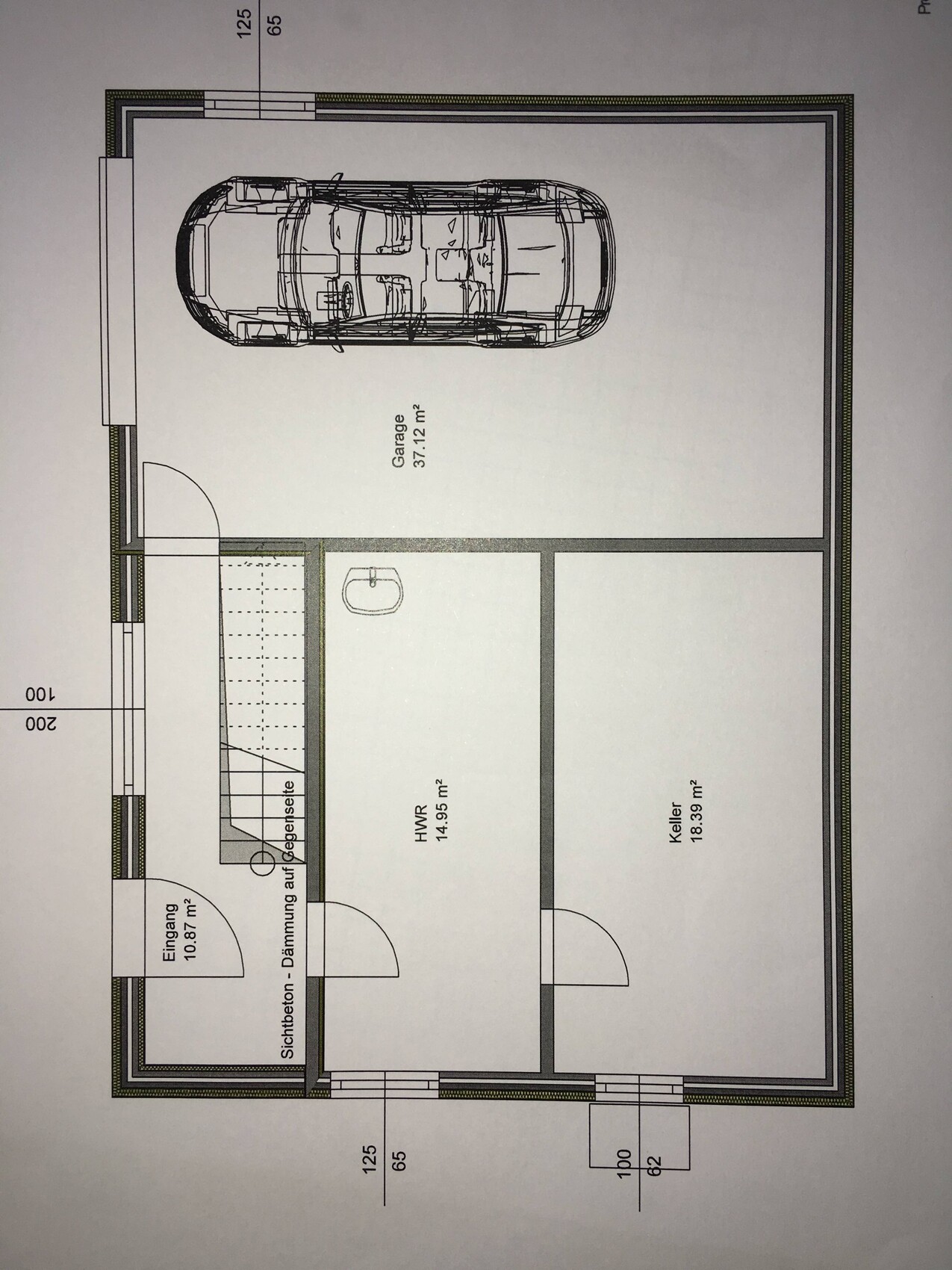
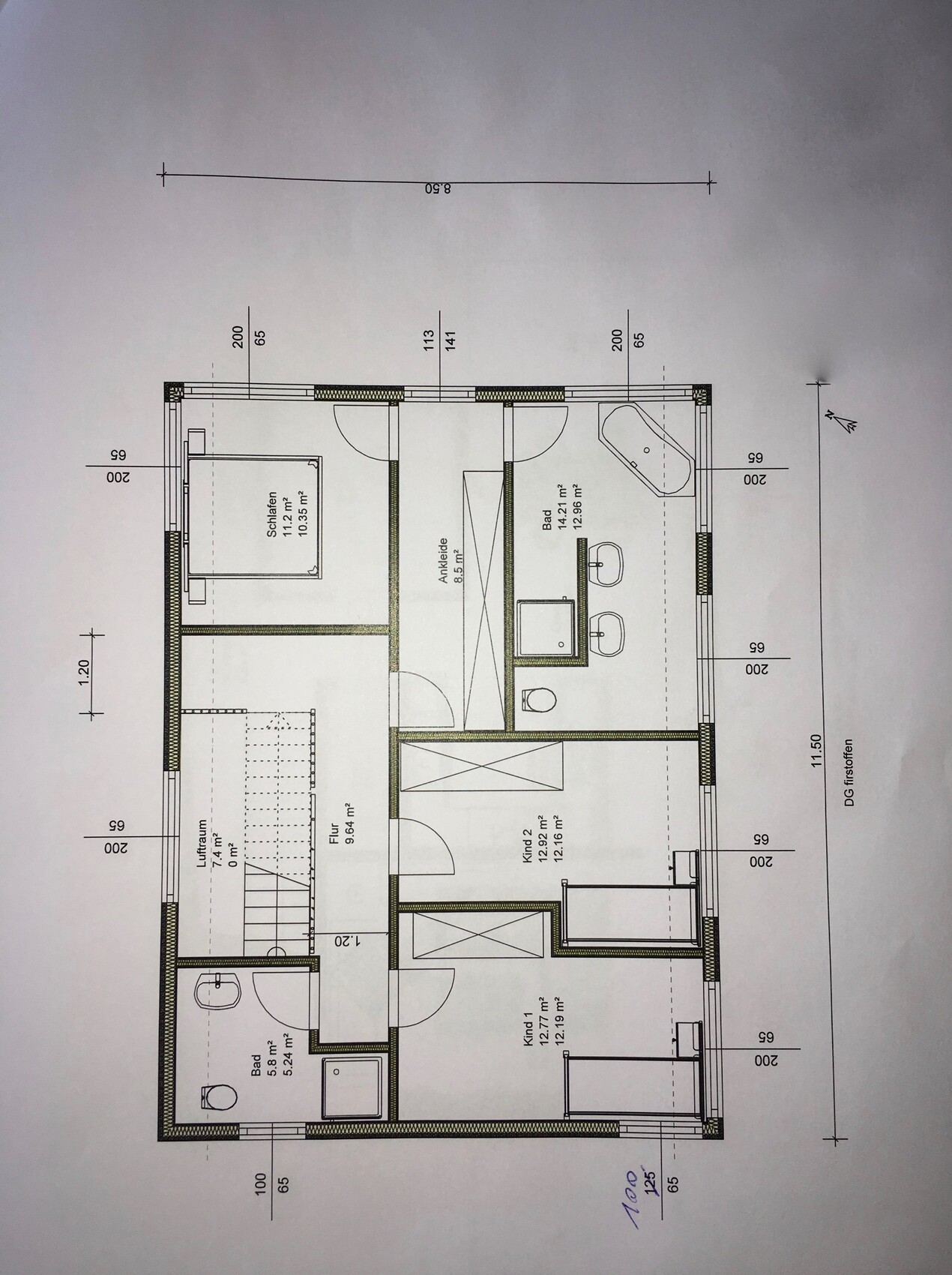
below you will find our (almost) final floor plan. Only a few adjustments and changes to the windows are still being made. We would appreciate your feedback.
Development Plan / Restrictions
Construction according to Paragraph 34 of the Building Code. Neighboring buildings are 1.5 to 2 stories with pitched roofs.
Plot Size
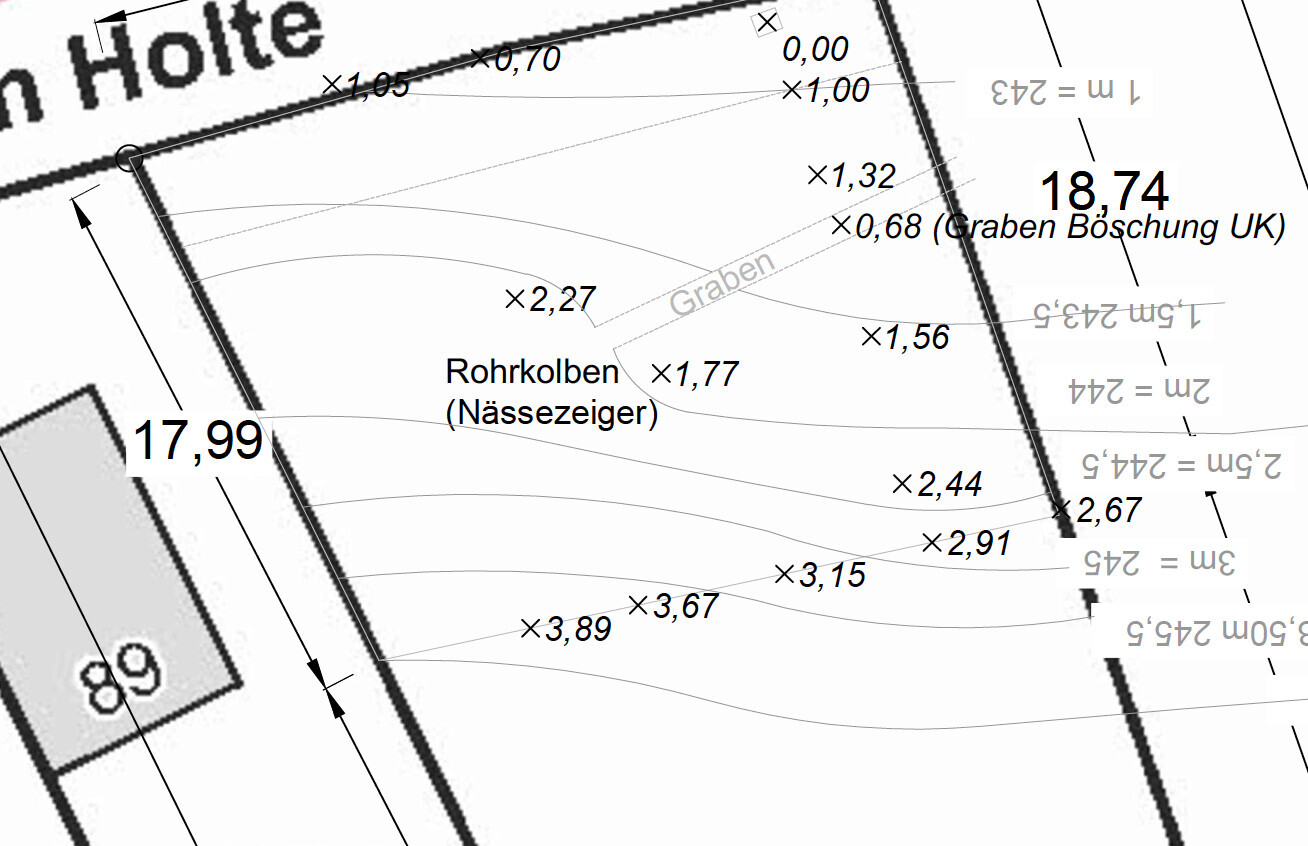
3000m2 (approximately 0.74 acres), building area around 600m2 (0.15 acres) along the street
Slope
Approximately 2m (6.6 feet) diagonal incline where the house will be located, rising from southwest to northeast
Orientation
South (uphill side)
Client Requirements: Style, Roof Type, Building Type
Single-family house, pitched roof (most cost-effective), rather open design
Basement, Floors
Full basement + 2 floors
Number of Occupants, Age
2 adults + 2 children (planned)
Room Requirements on Ground Floor and Upper Floor
Open kitchen + dining area + living room, pantry, study, guest WC, parents’ area (bedroom, walk-in closet, bathroom), children’s area (2 bedrooms + bathroom), garage, utility room, storage room
Office: Family use or home office?
Family use + emergency children’s bedroom
Overnight Guests per Year
1-2
Open or Closed Architecture
Rather open
Conservative or Modern Building Style
Rather modern
Open Kitchen, Kitchen Island
Open kitchen, island not necessary
Number of Dining Seats
6
Fireplace
No
Music / Stereo Wall
5.1 surround, approx. 3 meters (10 feet) for TV, etc.
Balcony, Roof Terrace
No
Garage, Carport
In the basement
House Design
Who Created the Plan:
Floor plan from a construction company, modified according to our wishes by the planner of a prefab house company (structural engineer)
What Do You Like Especially? Why?
- Separate parents’ area
- Open design with living room accessible from two sides
- Staircase on the north side, where the street is
- Garage inside the house
- Large windows facing south
- Living room + kitchen + dining areas facing south
- Open ridge ceiling on the upper floor
What Do You Dislike? Why?
- Low, small windows on the upper floor due to the 1.8m (5.9 feet) knee wall height – we will probably raise this to 2.10m (6.9 feet)
- Boring exterior appearance
- Small study room, but currently the best compromise for us
- Kitchen windows not floor-to-ceiling, will be changed
- Possibly too few windows
Cost Estimate from Architect / Planner:
Approximately 400,000 Euro turnkey, including photovoltaic system and natural fiber insulation (ecological) fixed-price offer including basement, electric garage door, etc.
Laminate flooring
External roller blinds in living/kitchen/dining areas
No controlled mechanical ventilation.
No waterproof concrete basement (no “white tank” system).
Personal Price Limit for the House, Including Equipment:
House including all ancillary costs 470,000 Euro
Preferred Heating Technology:
Air-to-water heat pump + photovoltaic system
If You Had to Cut Back, Which Details / Extensions Could You Forgo:
Basement, but due to the slope it does not make much economic sense. Otherwise, we have already cut back as much as we can imagine.
Why Does the Design Look Like It Does Now?
We liked the design from the start, especially the south orientation of all main rooms suits the plot very well.
What Is the Most Important / Basic Question About the Floor Plan in 130 Characters or Less?
1. From what knee wall height do windows including rolling shutters below the knee wall really make sense? At 1.8m (5.9 feet) knee wall, windows would be at hip height, which is not a solution for us. For example, in the children’s room, a desk should fit underneath.
2. According to the soil report, we have about 1m (3.3 feet) of soil class 4 and below that soil class 5-6. What costs could be expected for earthworks on a sloped site?
3. Do you think a mechanical ventilation system is essential in a timber frame house? According to two reputable prefab house providers, it is mostly unnecessary and mainly important only for allergy sufferers.
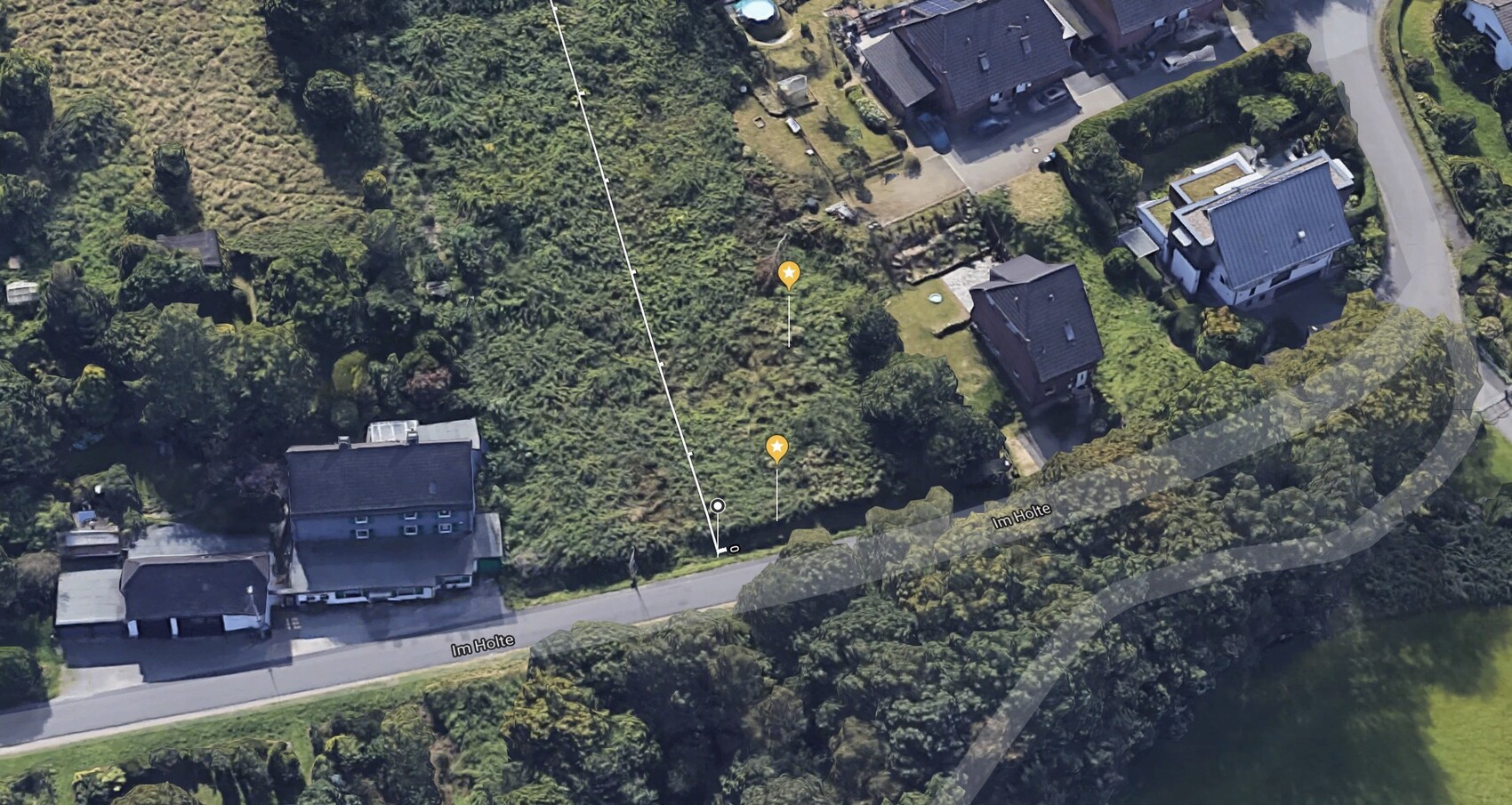
A small note on the attached files: in the Google Maps image, south is at the top and the plot is where the two yellow markers are. In the views, I sketched around a bit unfortunately.
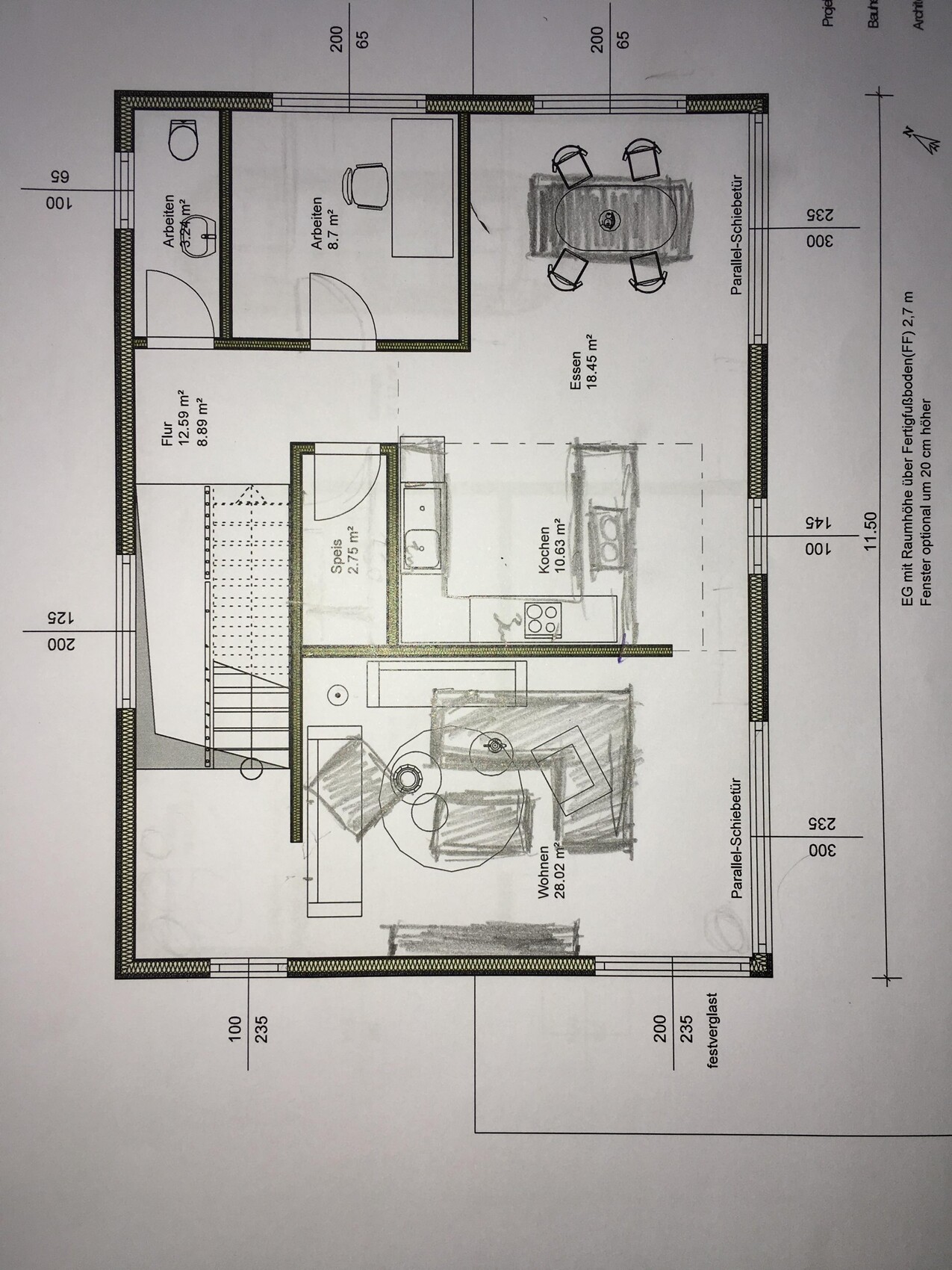
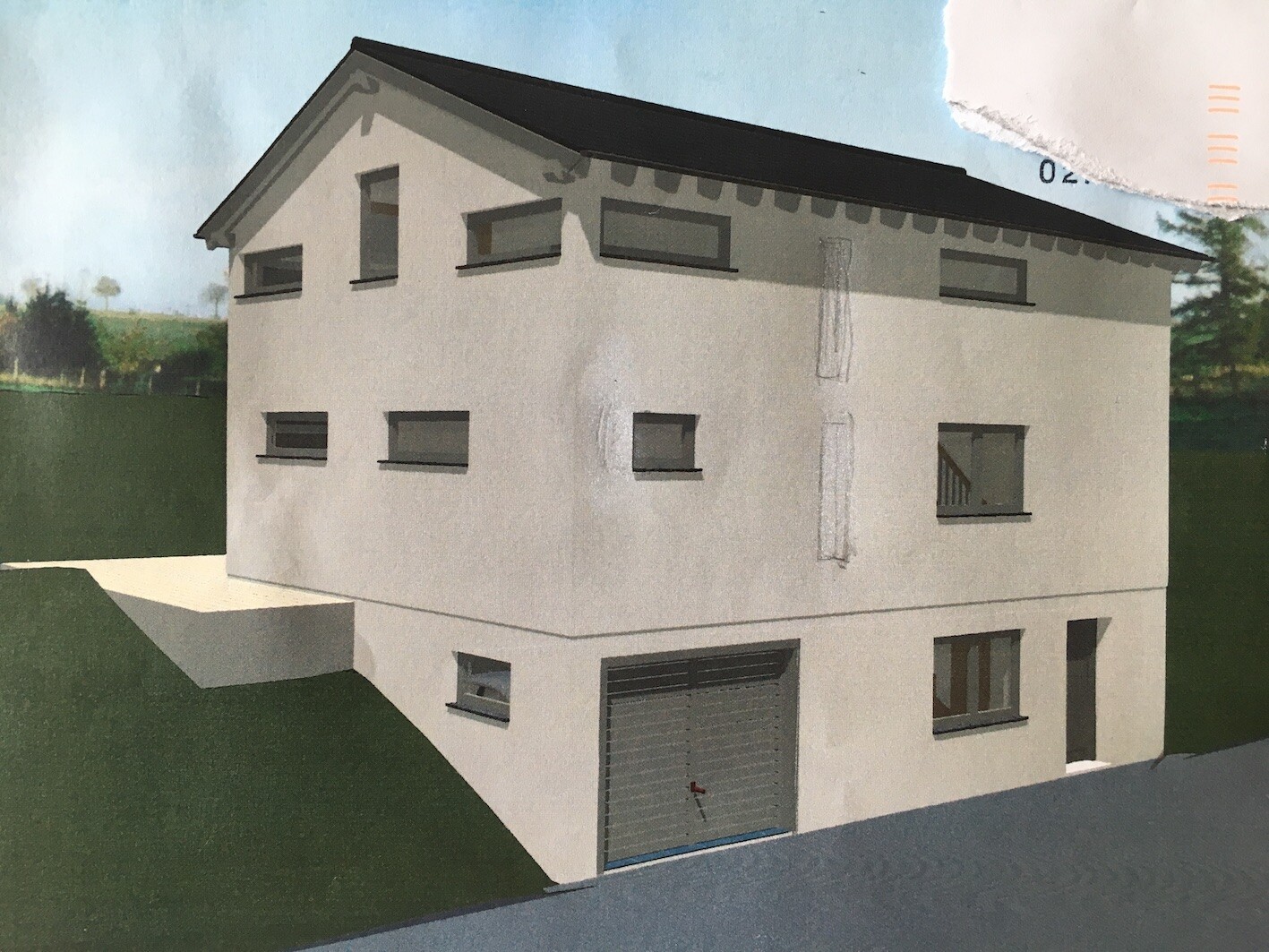
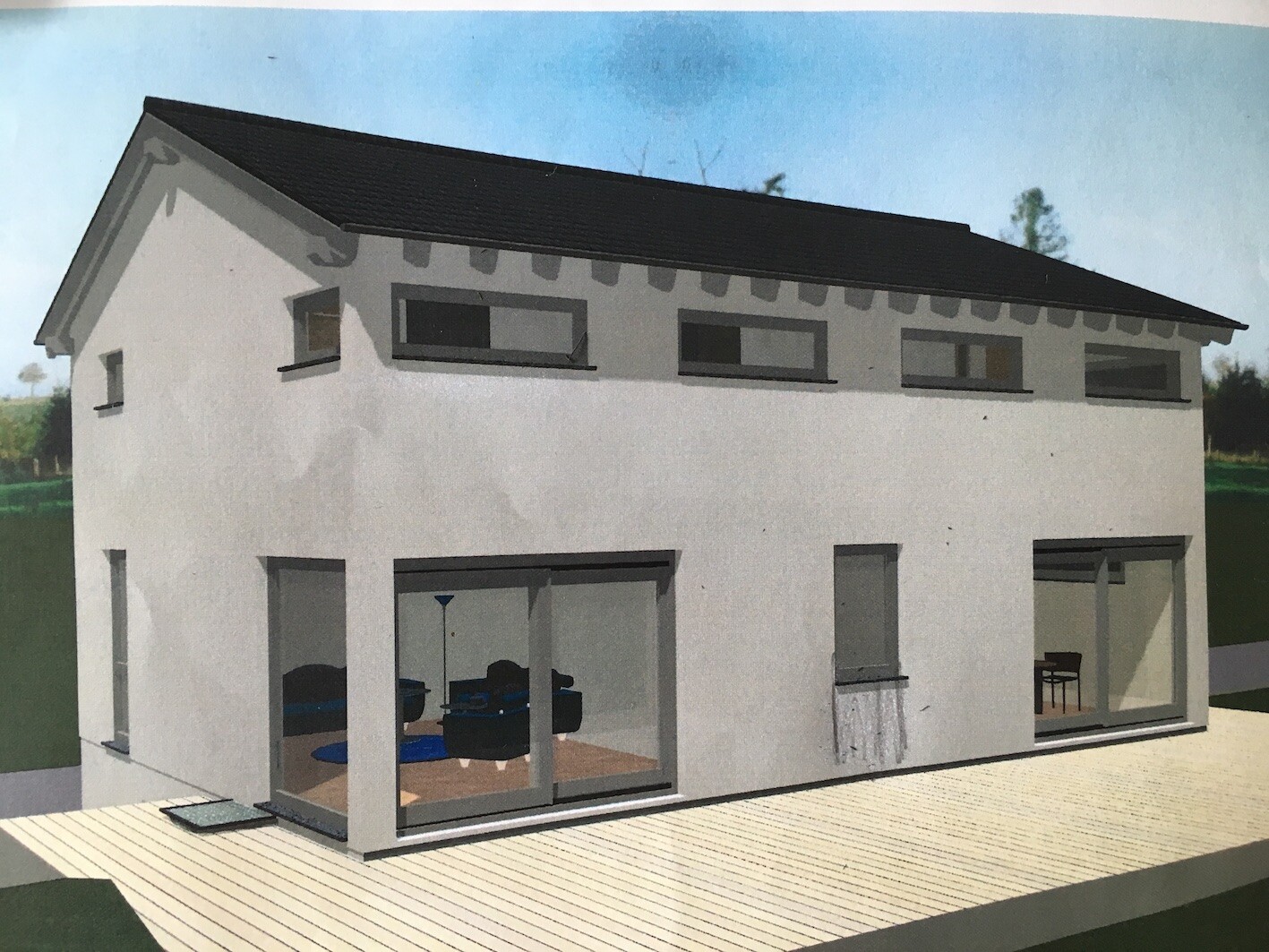
below you will find our (almost) final floor plan. Only a few adjustments and changes to the windows are still being made. We would appreciate your feedback.
Development Plan / Restrictions
Construction according to Paragraph 34 of the Building Code. Neighboring buildings are 1.5 to 2 stories with pitched roofs.
Plot Size
3000m2 (approximately 0.74 acres), building area around 600m2 (0.15 acres) along the street
Slope
Approximately 2m (6.6 feet) diagonal incline where the house will be located, rising from southwest to northeast
Orientation
South (uphill side)
Client Requirements: Style, Roof Type, Building Type
Single-family house, pitched roof (most cost-effective), rather open design
Basement, Floors
Full basement + 2 floors
Number of Occupants, Age
2 adults + 2 children (planned)
Room Requirements on Ground Floor and Upper Floor
Open kitchen + dining area + living room, pantry, study, guest WC, parents’ area (bedroom, walk-in closet, bathroom), children’s area (2 bedrooms + bathroom), garage, utility room, storage room
Office: Family use or home office?
Family use + emergency children’s bedroom
Overnight Guests per Year
1-2
Open or Closed Architecture
Rather open
Conservative or Modern Building Style
Rather modern
Open Kitchen, Kitchen Island
Open kitchen, island not necessary
Number of Dining Seats
6
Fireplace
No
Music / Stereo Wall
5.1 surround, approx. 3 meters (10 feet) for TV, etc.
Balcony, Roof Terrace
No
Garage, Carport
In the basement
House Design
Who Created the Plan:
Floor plan from a construction company, modified according to our wishes by the planner of a prefab house company (structural engineer)
What Do You Like Especially? Why?
- Separate parents’ area
- Open design with living room accessible from two sides
- Staircase on the north side, where the street is
- Garage inside the house
- Large windows facing south
- Living room + kitchen + dining areas facing south
- Open ridge ceiling on the upper floor
What Do You Dislike? Why?
- Low, small windows on the upper floor due to the 1.8m (5.9 feet) knee wall height – we will probably raise this to 2.10m (6.9 feet)
- Boring exterior appearance
- Small study room, but currently the best compromise for us
- Kitchen windows not floor-to-ceiling, will be changed
- Possibly too few windows
Cost Estimate from Architect / Planner:
Approximately 400,000 Euro turnkey, including photovoltaic system and natural fiber insulation (ecological) fixed-price offer including basement, electric garage door, etc.
Laminate flooring
External roller blinds in living/kitchen/dining areas
No controlled mechanical ventilation.
No waterproof concrete basement (no “white tank” system).
Personal Price Limit for the House, Including Equipment:
House including all ancillary costs 470,000 Euro
Preferred Heating Technology:
Air-to-water heat pump + photovoltaic system
If You Had to Cut Back, Which Details / Extensions Could You Forgo:
Basement, but due to the slope it does not make much economic sense. Otherwise, we have already cut back as much as we can imagine.
Why Does the Design Look Like It Does Now?
We liked the design from the start, especially the south orientation of all main rooms suits the plot very well.
What Is the Most Important / Basic Question About the Floor Plan in 130 Characters or Less?
1. From what knee wall height do windows including rolling shutters below the knee wall really make sense? At 1.8m (5.9 feet) knee wall, windows would be at hip height, which is not a solution for us. For example, in the children’s room, a desk should fit underneath.
2. According to the soil report, we have about 1m (3.3 feet) of soil class 4 and below that soil class 5-6. What costs could be expected for earthworks on a sloped site?
3. Do you think a mechanical ventilation system is essential in a timber frame house? According to two reputable prefab house providers, it is mostly unnecessary and mainly important only for allergy sufferers.
A small note on the attached files: in the Google Maps image, south is at the top and the plot is where the two yellow markers are. In the views, I sketched around a bit unfortunately.
Okay, I think you are right. It was just an idea. We would like to consult an architect, but I don’t like the unpredictable costs involved.
So it will probably end up being a 2.15m (7 ft) knee wall with children's rooms upstairs and a garage in the basement.
A combination of a shed roof/flat roof with a small master bedroom area in the attic and the rest as a roof terrace would probably not be cheaper than a gable roof covering the entire attic, right?!?
So it will probably end up being a 2.15m (7 ft) knee wall with children's rooms upstairs and a garage in the basement.
A combination of a shed roof/flat roof with a small master bedroom area in the attic and the rest as a roof terrace would probably not be cheaper than a gable roof covering the entire attic, right?!?

Lbx schrieb:
So it will probably be a 2.15m (7 ft) knee wall with children's rooms upstairs and a garage in the basement after all.Why would that help now? If you want to save money, you leave the car outside on the street or at least initially only on the parking space next to the house.
I see the children in the basement (even though that's the north side), living space on the ground floor, parents in the attic, all quite cramped together. You could put the children's rooms in the attic as well, but the older they get, the less they like that.
If you need to save even more, then only the bedroom is on the ground floor, as mentioned above, and no finished attic!

Lbx schrieb:
We would like to go to an architect, but I’m not happy about the unpredictable costs. The costs are not unpredictable with an architect (they are set out in the HOAI), but without one. The most unpredictable costs come from customizing a Pinterest floor plan yourself. The hope that at least copying a floor plan 1:1 would give you a predictable scope will not be fulfilled.
Lbx schrieb:
Then it will probably be a 2.15m knee wall after all You’re going from one extreme to the other, while keeping the pointlessness: the most inefficient knee wall heights in every respect (cost, usefulness, construction) are "zero or almost nothing" and "everything minus almost nothing." This would effectively be a full floor, and a roof slope as a “decorative trim on the eaves” looks odd, especially visually. People only do that in extreme cases to comply with ridge height restrictions.
Your approach shows a maximum cry for professional help.
Lbx schrieb:
A shed roof/flat roof combination with a small parent bedroom in the attic and the rest as a roof terrace probably wouldn’t be cheaper than a gable roof over the entire attic?!? A single-sloped shed roof with about 10° pitch, built as a truss construction and covered with corrugated metal, would be the most cost-effective option. Whether the local building regulations (or integration requirements) allow this is another matter. Roof terraces are never cheaper, see the previous paragraph.
haydee schrieb:
I’m not sure if the staircase in the attic will work. Your suspicion is spot on: without a dormer for the staircase, the head height would be extremely low.
https://www.instagram.com/11antgmxde/
https://www.linkedin.com/company/bauen-jetzt/
You need someone experienced in building on a slope.
Someone who doesn’t simply place a standard prefab house on top of a basement.
Your budget isn’t so far off that you can’t build at all. You just need to save costs. In my opinion, the best way to do this is by including the basement area in the living space. You should try to reduce the size of the foundation slab.
Take your latest floor plan for the living level:
Pantry – large kitchen cupboard, but you already have a storage room downstairs. Remove it.
Upper floor cloakroom – remove it.
Move the home office to the basement.
Reduce the size of the hallway.
Smaller overall footprint.
Upper floor with a reasonable knee wall height.
Master bedroom, bathroom, dressing room, and either one large or two smaller children’s bedrooms.
Basement: bathroom, second children’s bedroom, office, entrance with cloakroom, technical room, utility room.
Have you contacted other general contractors? Maybe a local brick-and-mortar builder.
What are the requirements of the building permit / planning permission? Roof pitch, roof type, building height?
Someone who doesn’t simply place a standard prefab house on top of a basement.
Your budget isn’t so far off that you can’t build at all. You just need to save costs. In my opinion, the best way to do this is by including the basement area in the living space. You should try to reduce the size of the foundation slab.
Take your latest floor plan for the living level:
Pantry – large kitchen cupboard, but you already have a storage room downstairs. Remove it.
Upper floor cloakroom – remove it.
Move the home office to the basement.
Reduce the size of the hallway.
Smaller overall footprint.
Upper floor with a reasonable knee wall height.
Master bedroom, bathroom, dressing room, and either one large or two smaller children’s bedrooms.
Basement: bathroom, second children’s bedroom, office, entrance with cloakroom, technical room, utility room.
Have you contacted other general contractors? Maybe a local brick-and-mortar builder.
What are the requirements of the building permit / planning permission? Roof pitch, roof type, building height?
O
Obstlerbaum4 Sep 2018 14:24I could understand that for teenagers, but a children's room in the basement when the children are only "planned" for now? That would be unused space for many years...
Similar topics