
Hello,
According to our builder, there will be a step of 12cm (5 inches) from the hallway down to the basement rooms because only screed without insulation (4cm [1.5 inches] thick) will be installed in the basement. The basement rooms are not within the thermal envelope, but the hallway is.
He has offered to install floor insulation in the basement rooms as well to reach a uniform floor height of 16cm (6.3 inches). This would cost an additional 4090€.
Is this justified, and is there possibly a more practical way to avoid this step?
"Installation of insulation without underfloor heating on the slab in the basement, total floor construction 160 mm (6.3 inches), consisting of:
Composite panel compact EPS-DEO 032, 30 mm (1.2 inches)
Thermal insulation EPS 035, 60 mm (2.4 inches)
Edge insulation strips
Supply and installation"
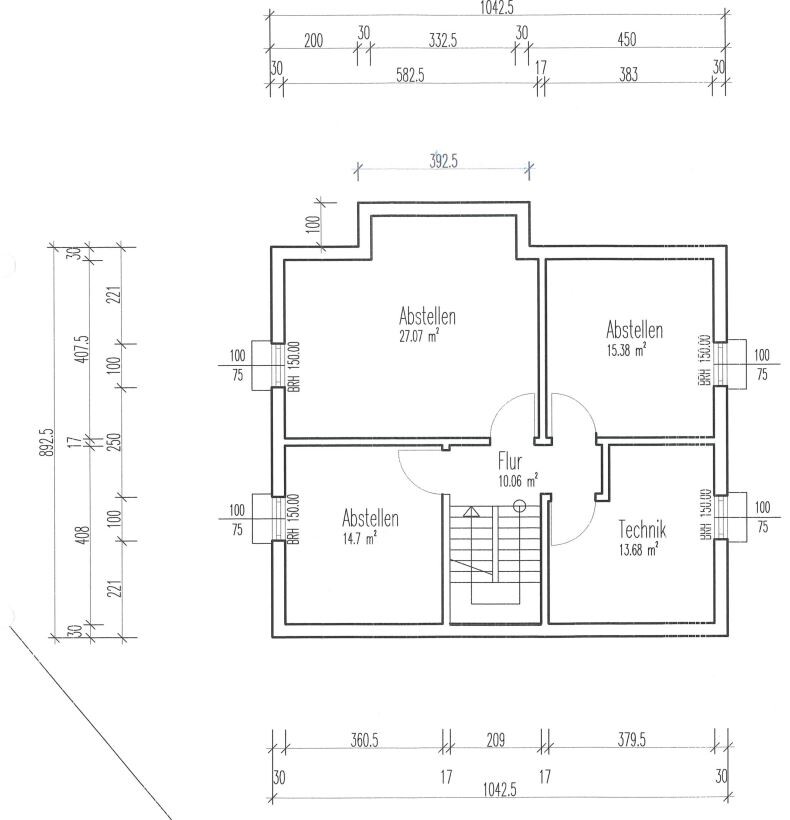
According to our builder, there will be a step of 12cm (5 inches) from the hallway down to the basement rooms because only screed without insulation (4cm [1.5 inches] thick) will be installed in the basement. The basement rooms are not within the thermal envelope, but the hallway is.
He has offered to install floor insulation in the basement rooms as well to reach a uniform floor height of 16cm (6.3 inches). This would cost an additional 4090€.
Is this justified, and is there possibly a more practical way to avoid this step?
"Installation of insulation without underfloor heating on the slab in the basement, total floor construction 160 mm (6.3 inches), consisting of:
Composite panel compact EPS-DEO 032, 30 mm (1.2 inches)
Thermal insulation EPS 035, 60 mm (2.4 inches)
Edge insulation strips
Supply and installation"
J
jens.knoedel12 Feb 2024 12:12Hissi schrieb:
He offers to install floor insulation in the basement rooms as well, to reach the same height of 16cm (6 inches). This would cost an additional €4090.Hissi schrieb:
Is there a more reasonable way to avoid this extra cost?Go to the building supply store and get the insulation yourselves (although I wonder why a 32mm (1.25 inch) thickness is necessary – but whatever). That way, you can easily save €3000.

Hissi schrieb:
According to our housebuilder, there will be a step of 12cm (5 inches) from the hallway into the basement rooms because only screed without insulation (4cm (1.5 inches) thick) will be installed in the basement. The basement rooms are not within the thermal envelope, but the hallway is.
[...] Is this justified, or is there perhaps a better way to avoid this step?Even though you unfortunately didn’t provide a cross-section and your question probably relates to additional costs, in my opinion this sounds highly questionable. If you want to accept this (presumably) nonsensical solution, I would simply suggest blending the difference with a wedge-shaped ramp.https://www.instagram.com/11antgmxde/
https://www.linkedin.com/company/bauen-jetzt/
I have attached a cross-section of the basement floor slab.
I would also like to install the EPS (expanded polystyrene) boards in the basement rooms myself. It’s not complicated. However, this is logistically not feasible because the screed installer will lay the welded waterproofing membrane and then immediately pour the screed.
Generally, I find the basement floor construction questionable. The perimeter insulation shown in the section has already been removed, as in the building energy code report the basement was incorrectly classified as a heated basement rather than an unheated cellar.
The basement corridor will still receive the two layers of EPS boards because it is supposedly within the thermal envelope, but the other basement rooms are not. This results in a step of 12cm (5 inches) leading down into the basement rooms.
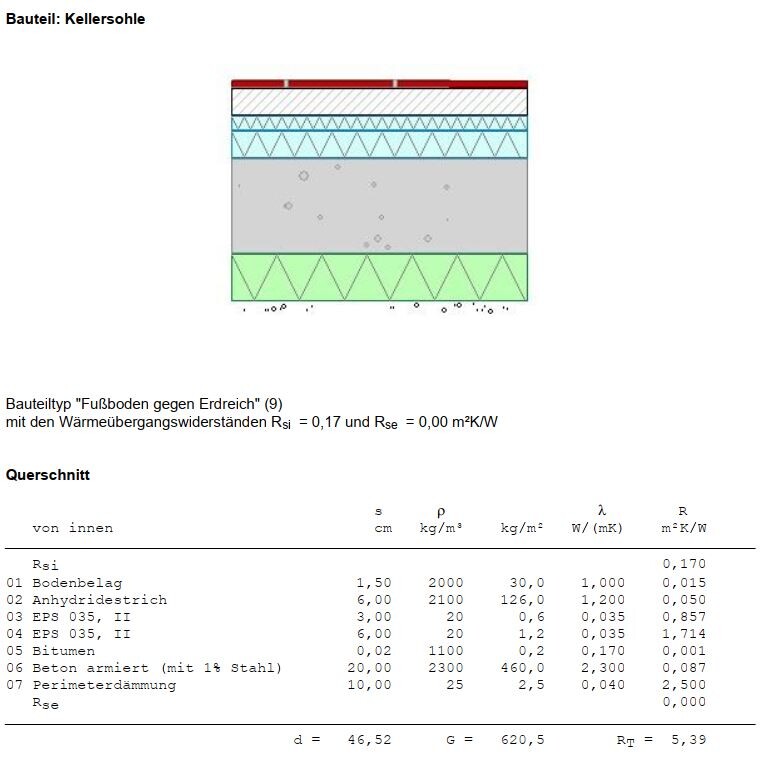
I would also like to install the EPS (expanded polystyrene) boards in the basement rooms myself. It’s not complicated. However, this is logistically not feasible because the screed installer will lay the welded waterproofing membrane and then immediately pour the screed.
Generally, I find the basement floor construction questionable. The perimeter insulation shown in the section has already been removed, as in the building energy code report the basement was incorrectly classified as a heated basement rather than an unheated cellar.
The basement corridor will still receive the two layers of EPS boards because it is supposedly within the thermal envelope, but the other basement rooms are not. This results in a step of 12cm (5 inches) leading down into the basement rooms.
Similar topics