
Hello everyone,
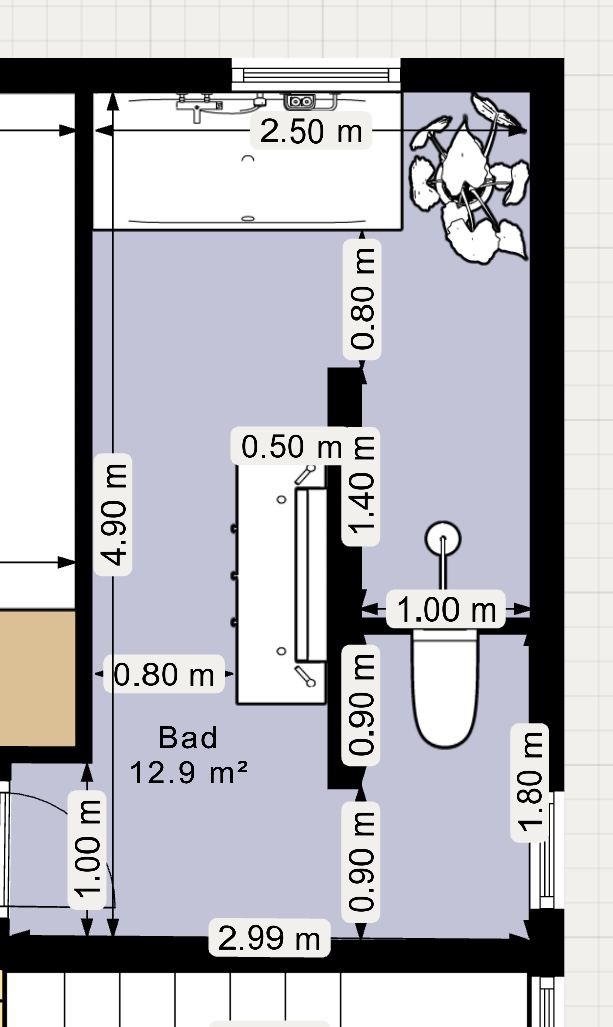
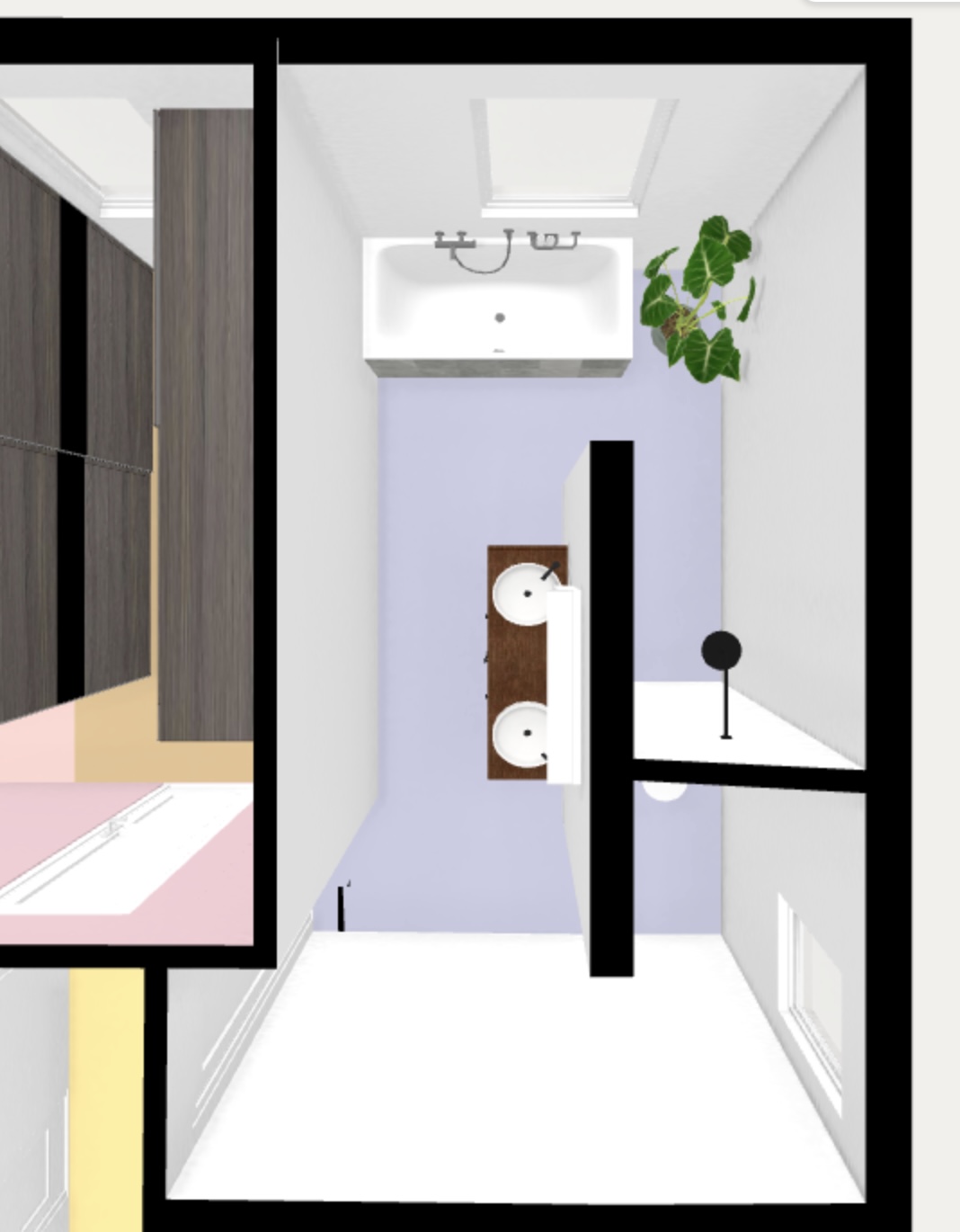
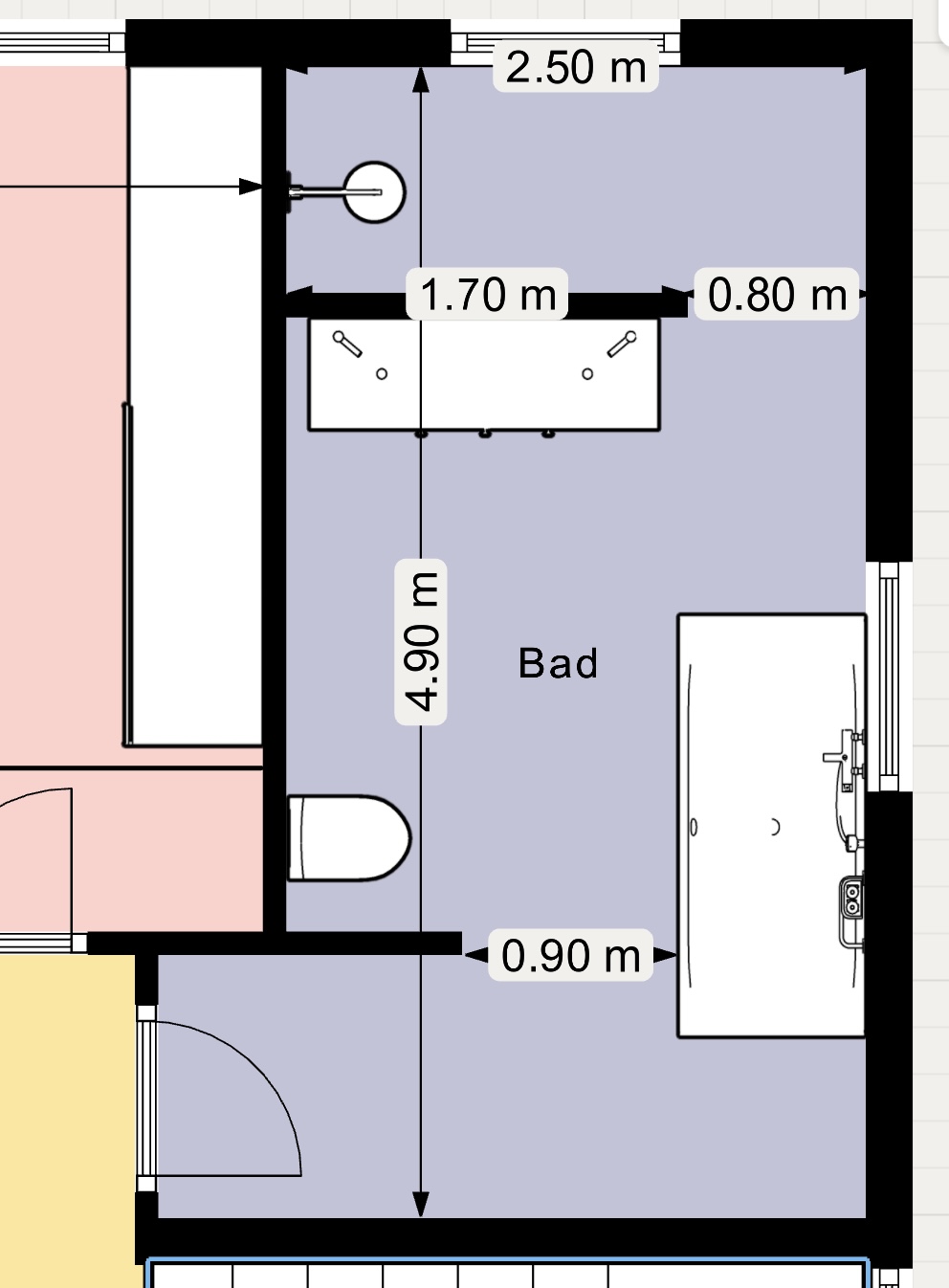
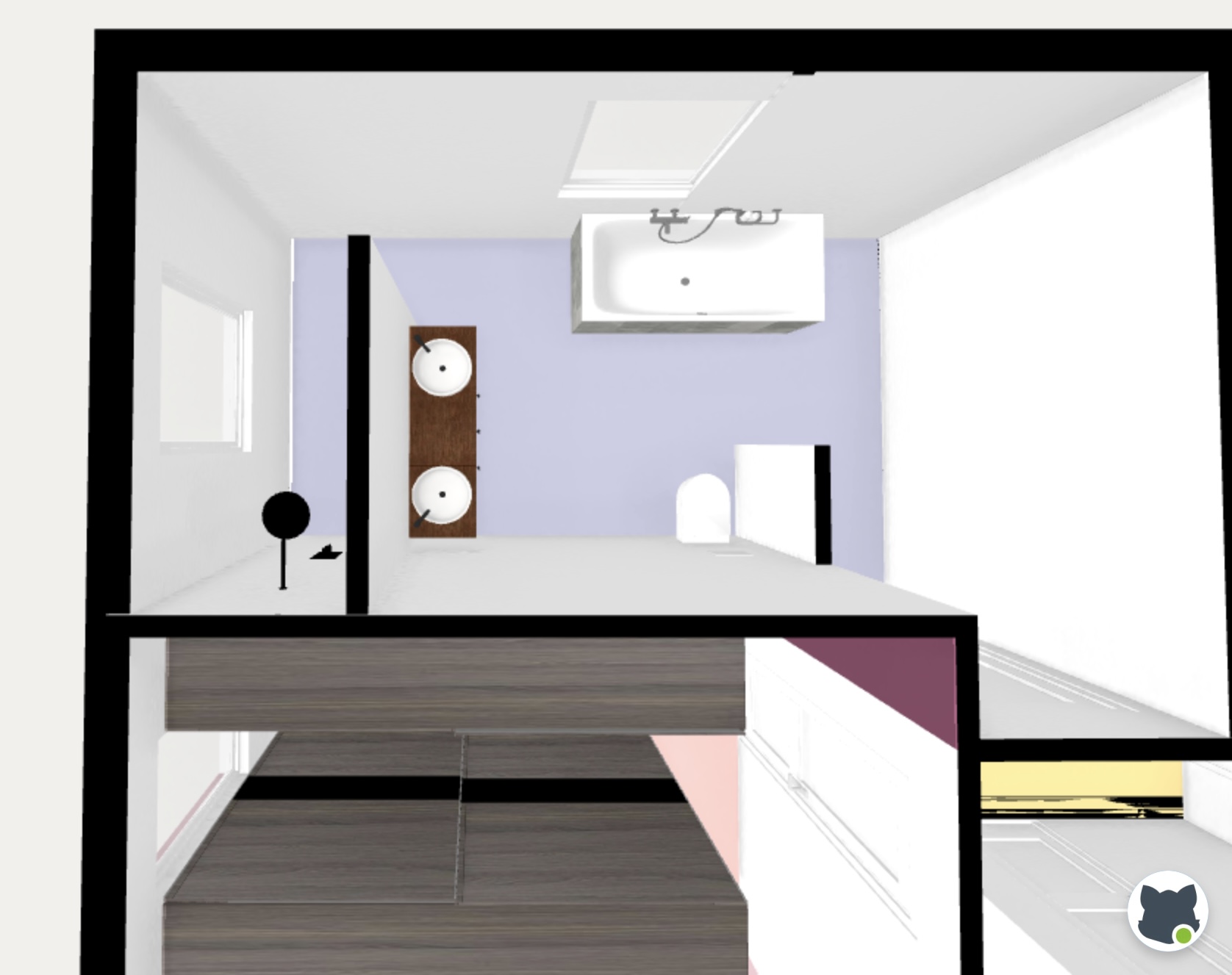
I am currently planning our bathroom and would really appreciate your feedback on the layout (see attached drawings/sketches in images 1/2).
1) Overall Impression / Basic Concept
What do you think of the general layout? We are trying to keep the routes comfortable (keyword ‘spa character’) and really like the T-shaped solution – but we also want to fit everything efficiently and space-savingly. I’m unsure if the arrangement feels balanced or if you already see potential for improvement at first glance.
2) Dimensions: Where can we reduce space – and where does it get critical?
I’m especially interested in your opinions on the spacing/passages:
• In which areas would you say: “You can easily reduce a few centimeters” (e.g., toilet wall, toilet passage instead of shower passage)?
• And where does it get tight or borderline – still “okay” but no longer comfortable? (Passage, shower, bathtub)
• Are there any areas where you would clearly say: “I wouldn’t do it like this, it will be too cramped”?
3) T-Wall: 20 cm thick – is that enough for two niches?
The T-wall where the sink will be placed is currently planned with a thickness of 20 cm (8 inches).
• 10 cm (4 inches) niche for a mirror cabinet/mirror area above the sink (also a related question – if the recessed cabinet is meant to protrude slightly, how deep should the niche be ideally?)
• 10 cm (4 inches) niche at a different position/height towards the shower (e.g., for shower shelves/built-in elements)
Do you consider this structurally and practically reasonable and feasible – or is 20 cm (8 inches) too tight (considering stability, plumbing, fittings, waterproofing, etc.)?
If a few centimeters could be shaved off here, that would be great for the room feel… but I doubt that is possible with all the pipes and electrical wiring.
4) Sink width / passage width
The plan currently shows a 50 cm (20 inches) wide sink.
Do you think it would make sense to reduce the width to 45 cm (18 inches) or similar to widen the passage a bit?
Or do you recommend keeping the 50 cm (20 inches) because 45 cm (18 inches) quickly becomes too small or inconvenient for everyday use?
5) Moving the washbasin towards the toilet + wall cabinet towards the shower
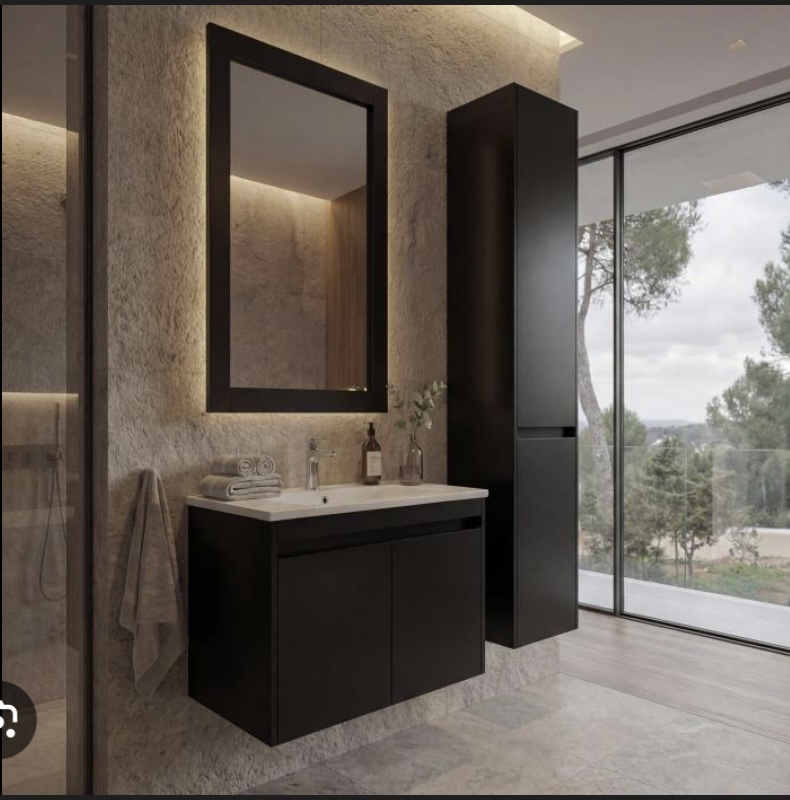
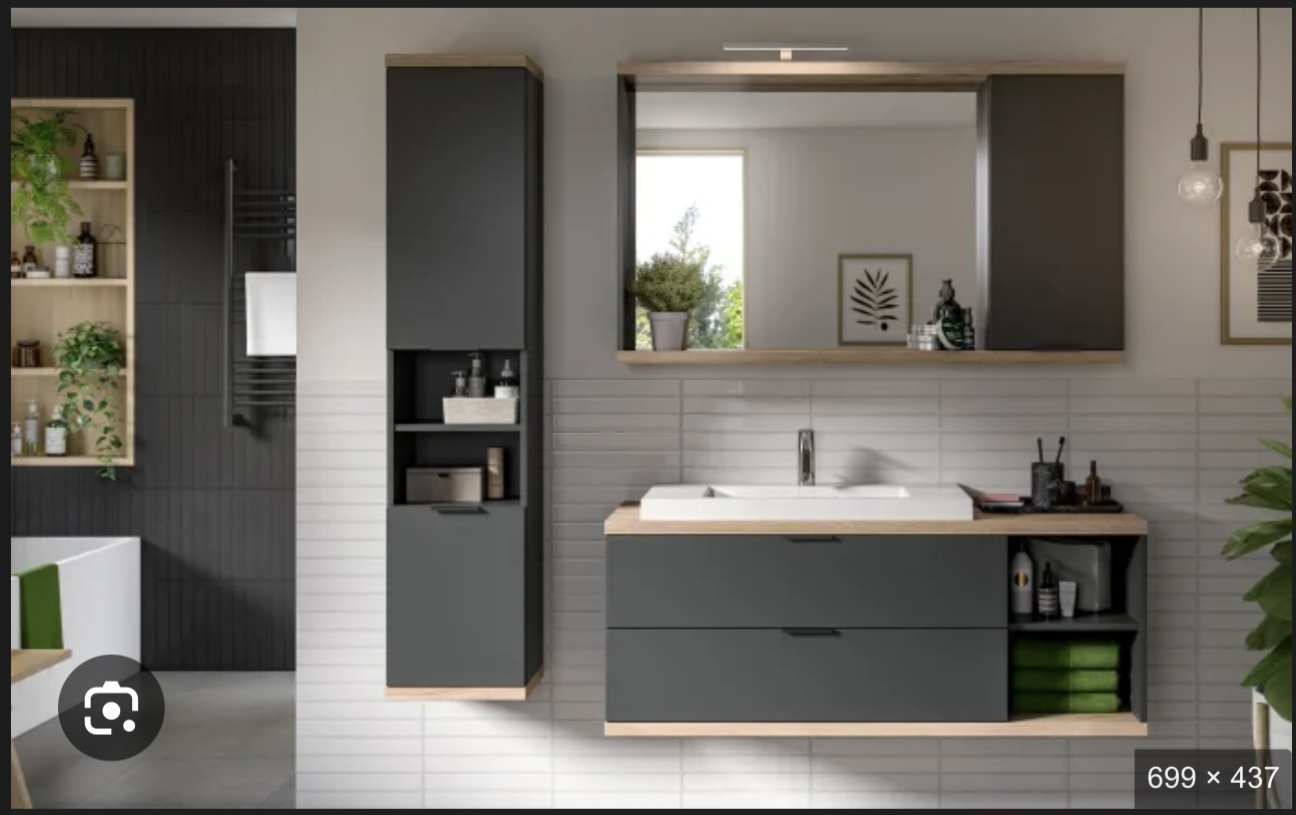
Additional idea: shift the washbasin slightly towards the toilet, not centered, and add a wall cabinet next to the basin (towards the shower) (see attached images 11/12).
The idea behind this:
• additional storage space
• possibly more “perceived width” in the passage at the back, as a wall cabinet doesn’t project as far as the basin or vanity cabinet, which moves more towards the entrance area
How practical do you find this? Would you do it this way, or would you rather keep the washbasin position and solve storage differently?
6) Bathtub: positioning
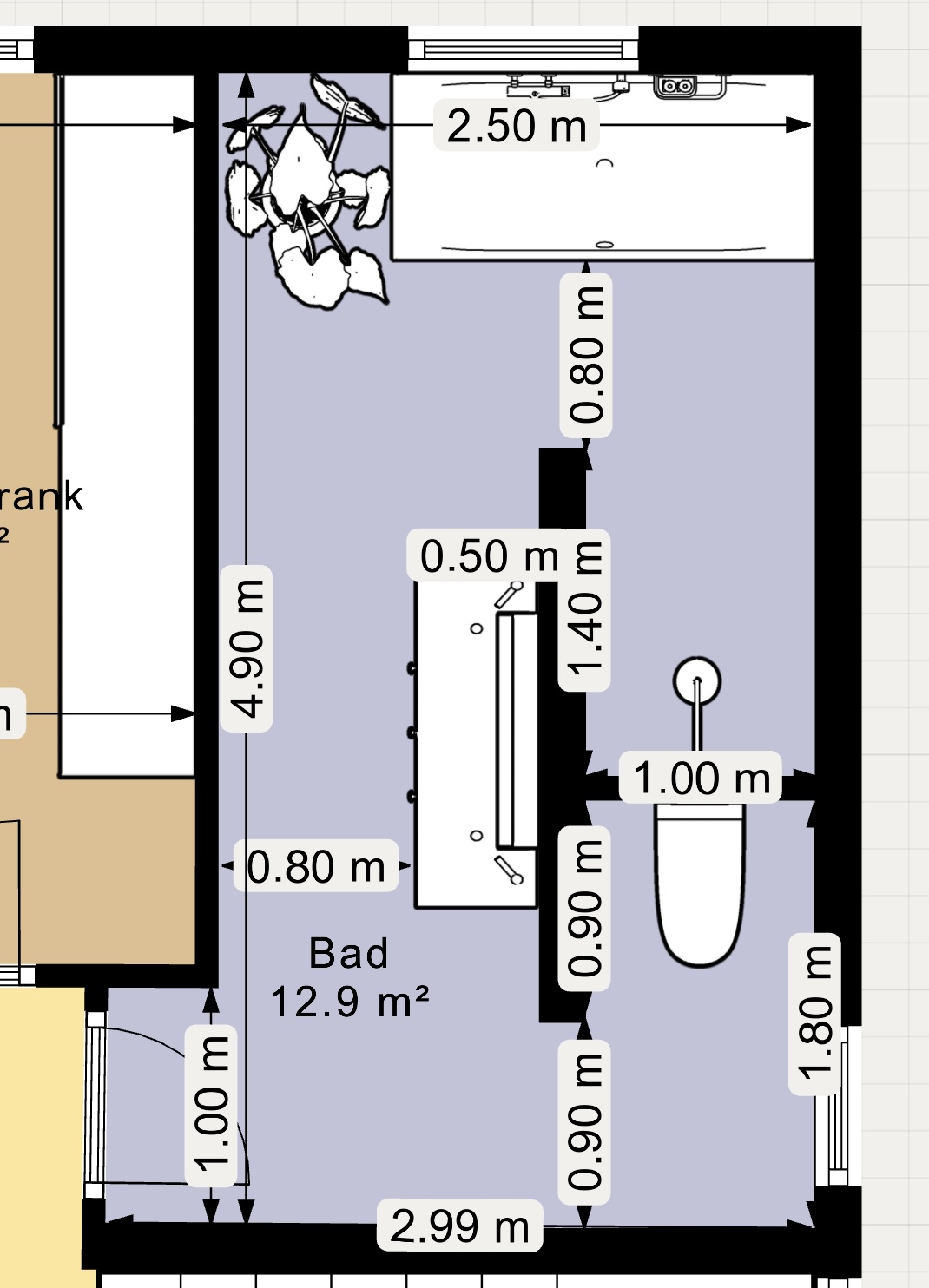
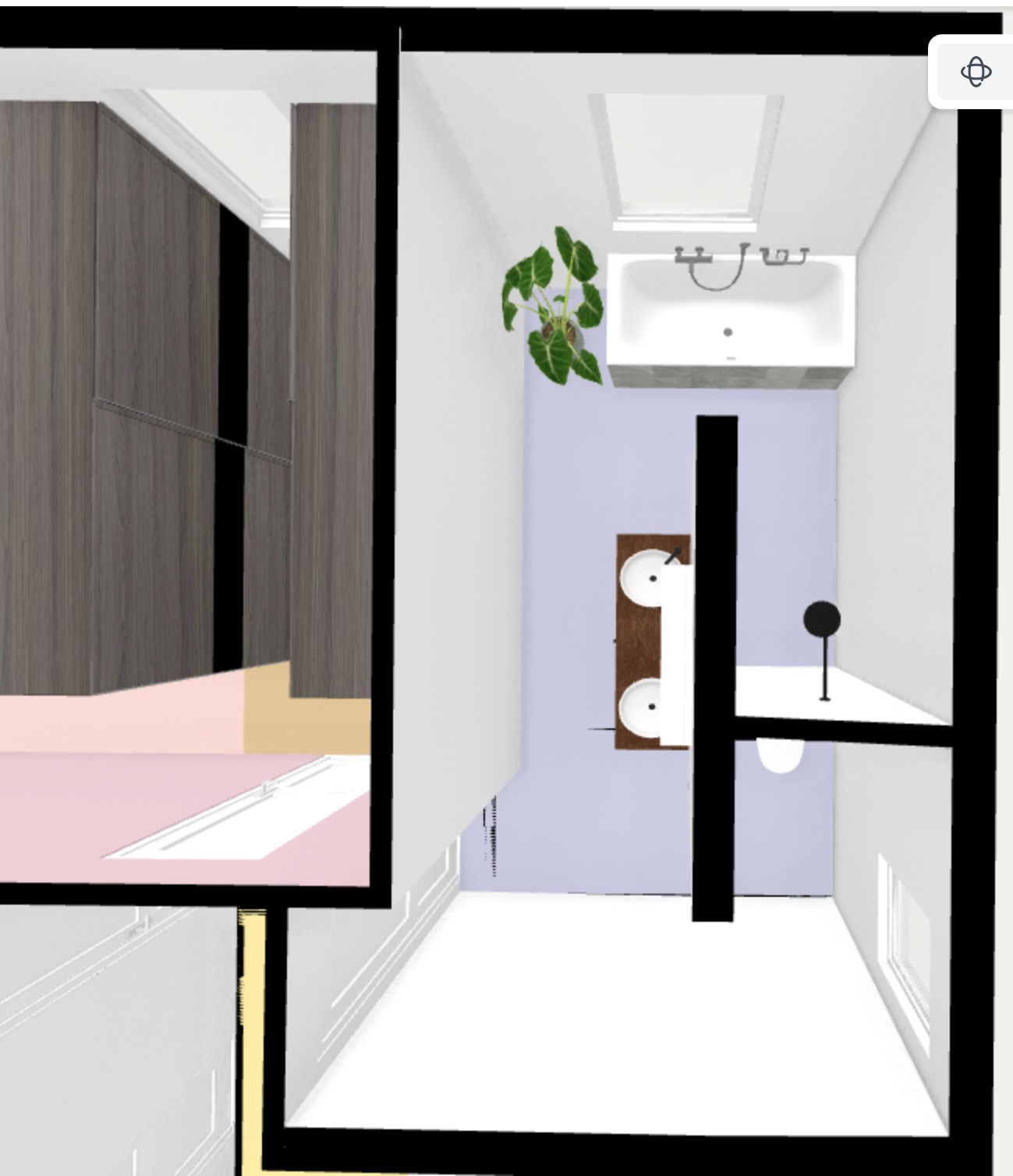
How would you ideally position the bathtub in a setup like this? Is there a clear preferred position from your point of view (e.g., considering walking routes, aesthetics, splash water, comfort, room feeling)? (see attached images 3/4 and 5/6)
7) Alternatives
And if none of the above suggestions convince you: I have two alternative layout variants. (Images 7/8 and 9/10)
Do you find any of the alternatives overall better than the currently posted layout?
Or do you perhaps have completely different ideas?
By the way, before the comments come up – yes, there is a separate toilet upstairs but we want two.
The wall to the right of the entrance door is load-bearing.
The window above the bathtub faces north, the other faces east.
As you can probably tell, if possible we would like to gain 5-10 cm (2-4 inches) for the passage at the front!
Thanks in advance! I’m looking forward to any feedback – also practical, straightforward experience (“we have it like this, would do it the same way again / wouldn’t do it like this again”).
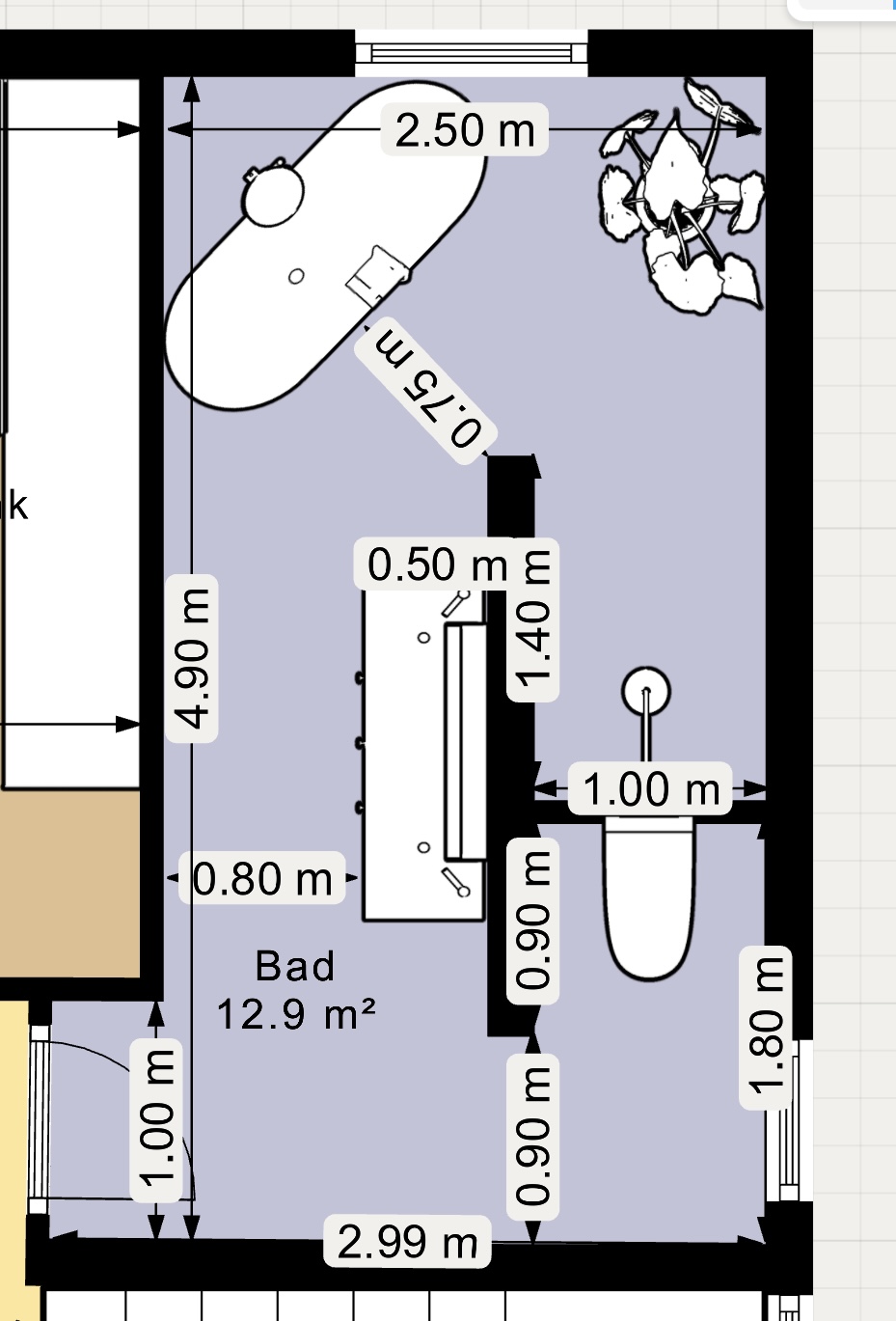
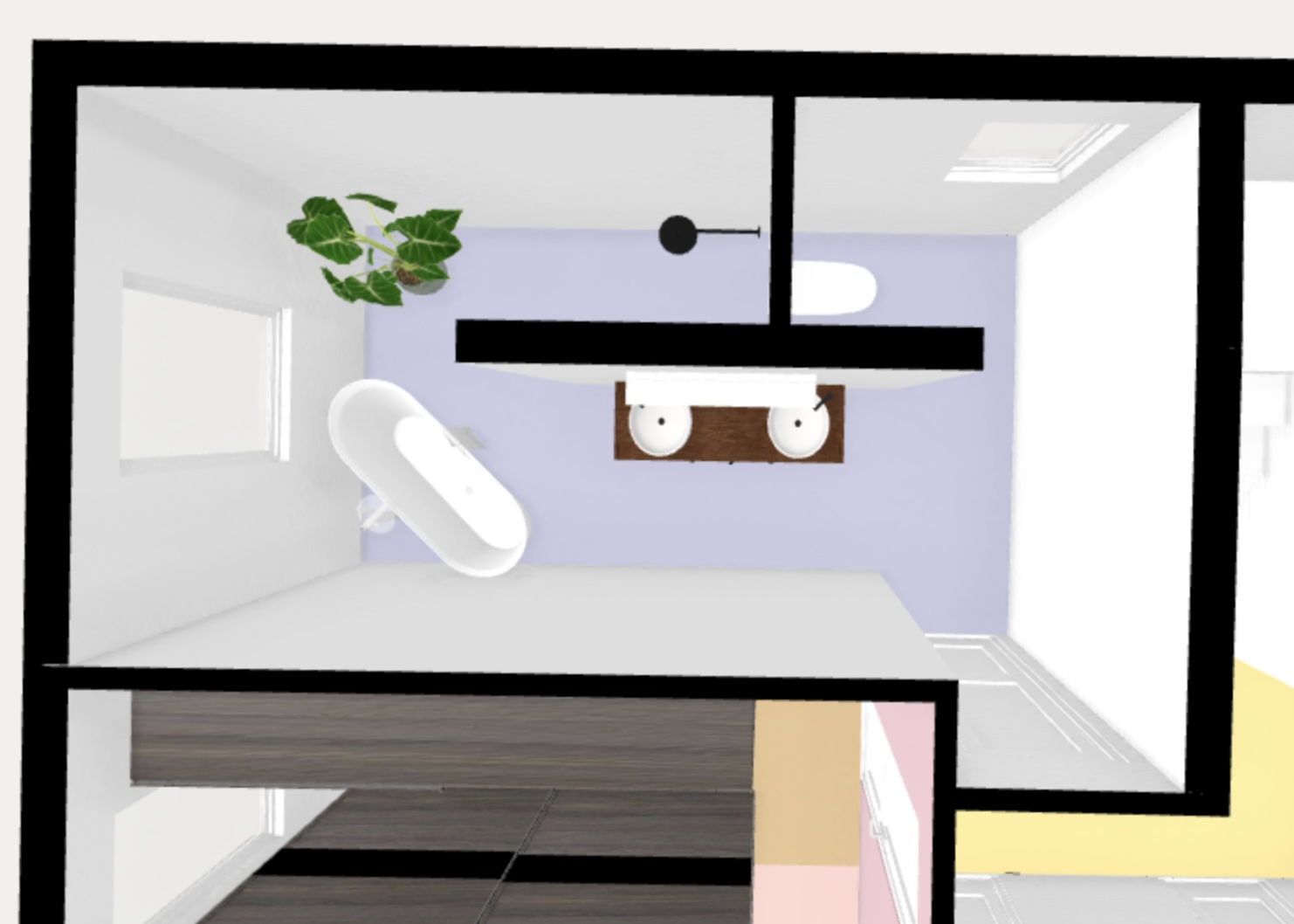
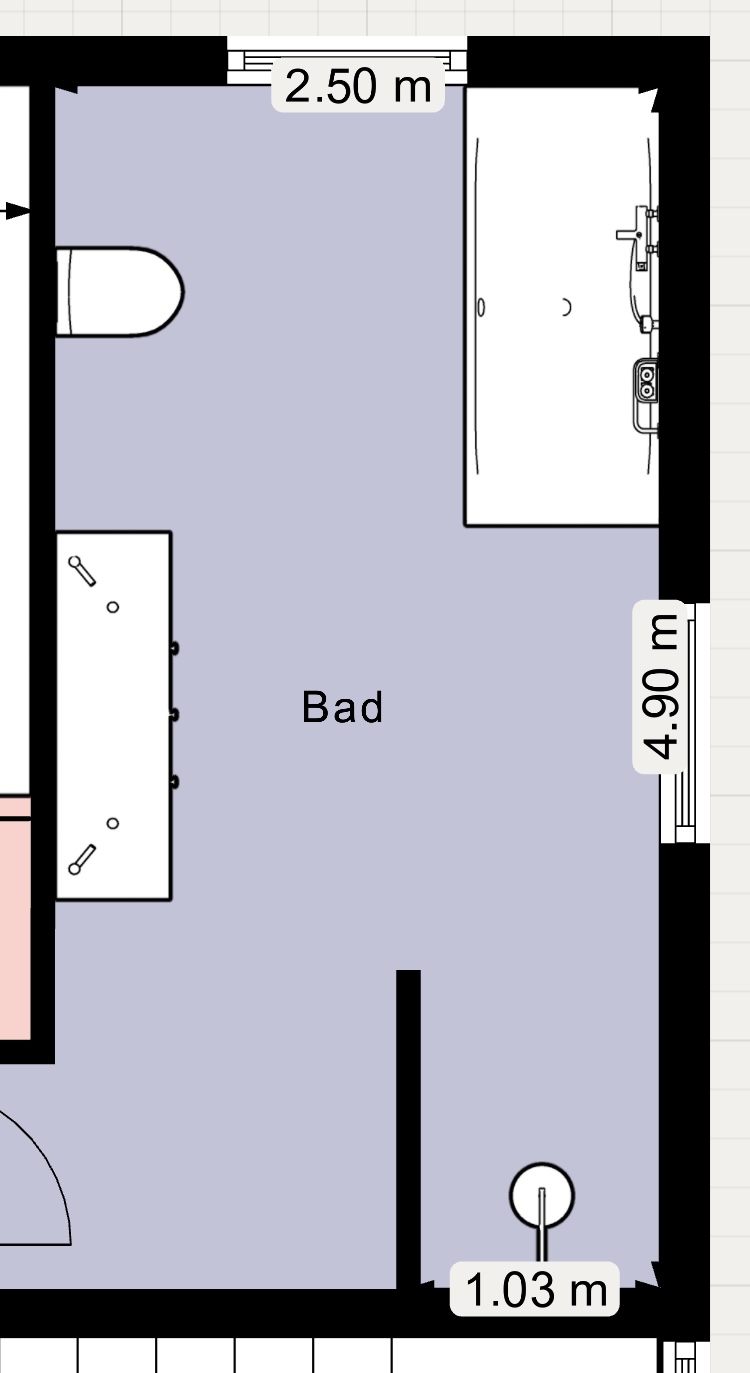
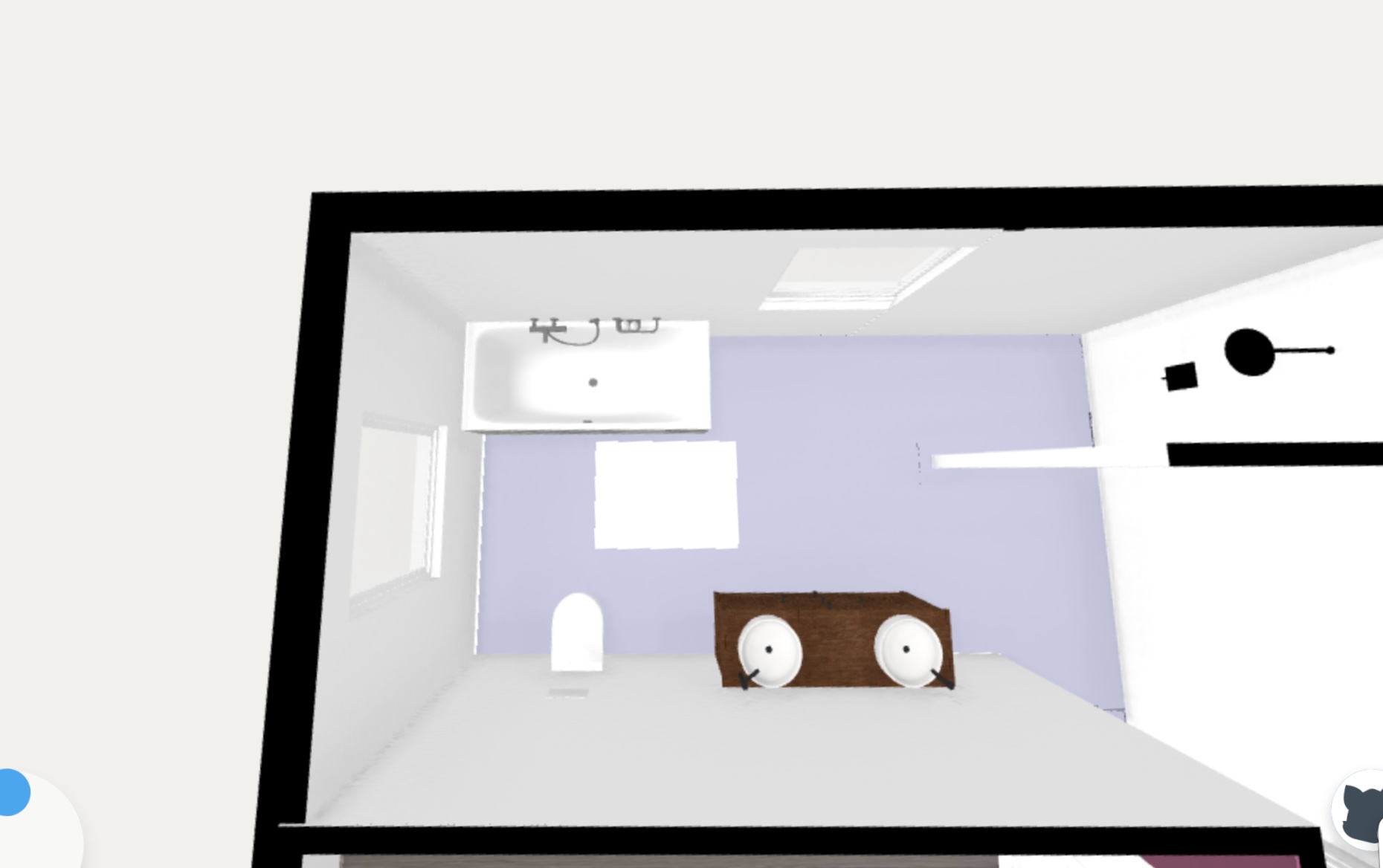
I am currently planning our bathroom and would really appreciate your feedback on the layout (see attached drawings/sketches in images 1/2).
1) Overall Impression / Basic Concept
What do you think of the general layout? We are trying to keep the routes comfortable (keyword ‘spa character’) and really like the T-shaped solution – but we also want to fit everything efficiently and space-savingly. I’m unsure if the arrangement feels balanced or if you already see potential for improvement at first glance.
2) Dimensions: Where can we reduce space – and where does it get critical?
I’m especially interested in your opinions on the spacing/passages:
• In which areas would you say: “You can easily reduce a few centimeters” (e.g., toilet wall, toilet passage instead of shower passage)?
• And where does it get tight or borderline – still “okay” but no longer comfortable? (Passage, shower, bathtub)
• Are there any areas where you would clearly say: “I wouldn’t do it like this, it will be too cramped”?
3) T-Wall: 20 cm thick – is that enough for two niches?
The T-wall where the sink will be placed is currently planned with a thickness of 20 cm (8 inches).
• 10 cm (4 inches) niche for a mirror cabinet/mirror area above the sink (also a related question – if the recessed cabinet is meant to protrude slightly, how deep should the niche be ideally?)
• 10 cm (4 inches) niche at a different position/height towards the shower (e.g., for shower shelves/built-in elements)
Do you consider this structurally and practically reasonable and feasible – or is 20 cm (8 inches) too tight (considering stability, plumbing, fittings, waterproofing, etc.)?
If a few centimeters could be shaved off here, that would be great for the room feel… but I doubt that is possible with all the pipes and electrical wiring.
4) Sink width / passage width
The plan currently shows a 50 cm (20 inches) wide sink.
Do you think it would make sense to reduce the width to 45 cm (18 inches) or similar to widen the passage a bit?
Or do you recommend keeping the 50 cm (20 inches) because 45 cm (18 inches) quickly becomes too small or inconvenient for everyday use?
5) Moving the washbasin towards the toilet + wall cabinet towards the shower
Additional idea: shift the washbasin slightly towards the toilet, not centered, and add a wall cabinet next to the basin (towards the shower) (see attached images 11/12).
The idea behind this:
• additional storage space
• possibly more “perceived width” in the passage at the back, as a wall cabinet doesn’t project as far as the basin or vanity cabinet, which moves more towards the entrance area
How practical do you find this? Would you do it this way, or would you rather keep the washbasin position and solve storage differently?
6) Bathtub: positioning
How would you ideally position the bathtub in a setup like this? Is there a clear preferred position from your point of view (e.g., considering walking routes, aesthetics, splash water, comfort, room feeling)? (see attached images 3/4 and 5/6)
7) Alternatives
And if none of the above suggestions convince you: I have two alternative layout variants. (Images 7/8 and 9/10)
Do you find any of the alternatives overall better than the currently posted layout?
Or do you perhaps have completely different ideas?
By the way, before the comments come up – yes, there is a separate toilet upstairs but we want two.
The wall to the right of the entrance door is load-bearing.
The window above the bathtub faces north, the other faces east.
As you can probably tell, if possible we would like to gain 5-10 cm (2-4 inches) for the passage at the front!
Thanks in advance! I’m looking forward to any feedback – also practical, straightforward experience (“we have it like this, would do it the same way again / wouldn’t do it like this again”).
I’ll be direct: I wouldn’t want to implement any of this. In my opinion, 2.50 meters (8 feet 2 inches) is simply too narrow, too little space to have a comfortable bathroom if you want to position furniture or sanitary fixtures freely in the room, either centered or arranged in a T-shape.
Let’s break down what you like or want:
“Comfortable pathways” means having free space, with enough room for movement and activity without constantly bumping into things.
Spa character, in terms of room design (not the tactile feel, surface, or materials), is open and clean. Minimalist.
One can debate the T-shape or not. Those who need it should have it.
But hiding areas is not really what a home spa is about. Even in public spa baths, there is at best only a vague separation of areas, which are otherwise open to each other. There are rarely any private “shame zones,” just activity zones.
Now, regarding the bathroom and the realization of the desired T-shape: the bathroom must be explicitly planned for this. In the design, room planning, and layout creation, certain minimum dimensions are necessary for successful implementation.
Otherwise, what are you dealing with? Windows above a bathtub, bottlenecks and corridors that effectively block the rest of the room for others using the bathroom, toilets where you can no longer assist someone in need (children, elderly, or disabled).
For a shower or toilet with a width of about 1 meter (3 feet 3 inches), you need a rough functional minimum room width (RBM) of 110 cm (43 inches). Built-in walls with shelves can be integrated on the opposite side, but a wall with double plasterboard should also be load-bearing if a mirrored cabinet is planned. Here, the wash basin is positioned so that with 2.50 m (8 feet 2 inches) width, there are about 70 cm (28 inches) between the wall and sink. And then you still want to open a drawer there. What about the other users? “Could you move for a moment? Not now, but now” will sooner or later turn into a constant source of frustration.
A privacy screen is intended so that others in the bathroom don’t see the person using the toilet. That’s why the toilet is usually placed at the back corner with a privacy screen that doesn’t dominate the space. Here the screen is useless. The toilet faces the door, which many also dislike.
Bathtub: ideally, a bathtub is installed centered and built-in so you have shelf space for a spa Buddha or lotus flower on top of stacked towels. You avoid dirty corners, even if some see them as the perfect spot for a houseplant. It’s better placed on a platform.
The window above the tub will also need cleaning. You can clean it from inside the tub, but you won’t have protection from water while bathing.
At 2.50 m (8 feet 2 inches), in my opinion, you can only achieve the desired spa style if you align yourself along the longer walls, bringing calm and space into the bathroom and avoiding unwanted tight spots and edges/corners.
I could bring up Feng Shui, but its first rule is to keep the center free, so that’s already addressed here.
Let’s break down what you like or want:
Seni99 schrieb:
We try to keep the pathways comfortable (keyword ‘spa character’ ????
“Comfortable pathways” means having free space, with enough room for movement and activity without constantly bumping into things.
Spa character, in terms of room design (not the tactile feel, surface, or materials), is open and clean. Minimalist.
Seni99 schrieb:
we really like the T-solution -
One can debate the T-shape or not. Those who need it should have it.
But hiding areas is not really what a home spa is about. Even in public spa baths, there is at best only a vague separation of areas, which are otherwise open to each other. There are rarely any private “shame zones,” just activity zones.
Now, regarding the bathroom and the realization of the desired T-shape: the bathroom must be explicitly planned for this. In the design, room planning, and layout creation, certain minimum dimensions are necessary for successful implementation.
Otherwise, what are you dealing with? Windows above a bathtub, bottlenecks and corridors that effectively block the rest of the room for others using the bathroom, toilets where you can no longer assist someone in need (children, elderly, or disabled).
For a shower or toilet with a width of about 1 meter (3 feet 3 inches), you need a rough functional minimum room width (RBM) of 110 cm (43 inches). Built-in walls with shelves can be integrated on the opposite side, but a wall with double plasterboard should also be load-bearing if a mirrored cabinet is planned. Here, the wash basin is positioned so that with 2.50 m (8 feet 2 inches) width, there are about 70 cm (28 inches) between the wall and sink. And then you still want to open a drawer there. What about the other users? “Could you move for a moment? Not now, but now” will sooner or later turn into a constant source of frustration.
A privacy screen is intended so that others in the bathroom don’t see the person using the toilet. That’s why the toilet is usually placed at the back corner with a privacy screen that doesn’t dominate the space. Here the screen is useless. The toilet faces the door, which many also dislike.
Bathtub: ideally, a bathtub is installed centered and built-in so you have shelf space for a spa Buddha or lotus flower on top of stacked towels. You avoid dirty corners, even if some see them as the perfect spot for a houseplant. It’s better placed on a platform.
The window above the tub will also need cleaning. You can clean it from inside the tub, but you won’t have protection from water while bathing.
At 2.50 m (8 feet 2 inches), in my opinion, you can only achieve the desired spa style if you align yourself along the longer walls, bringing calm and space into the bathroom and avoiding unwanted tight spots and edges/corners.
I could bring up Feng Shui, but its first rule is to keep the center free, so that’s already addressed here.
Similar topics