
ᐅ Floor Plan Silverager New Single-Family House with Option to Upgrade to a Two-Family House
Created on: 15 Nov 2025 20:20
U
Underdog
Hello everyone,
As our planned construction project is gradually taking shape, I would like to share a first draft for discussion.
The plot is already secured, and we want to make full use of the space to maximize potential living area. Retirement is foreseeable for both of us, but after 28 years, we still want to build once more.
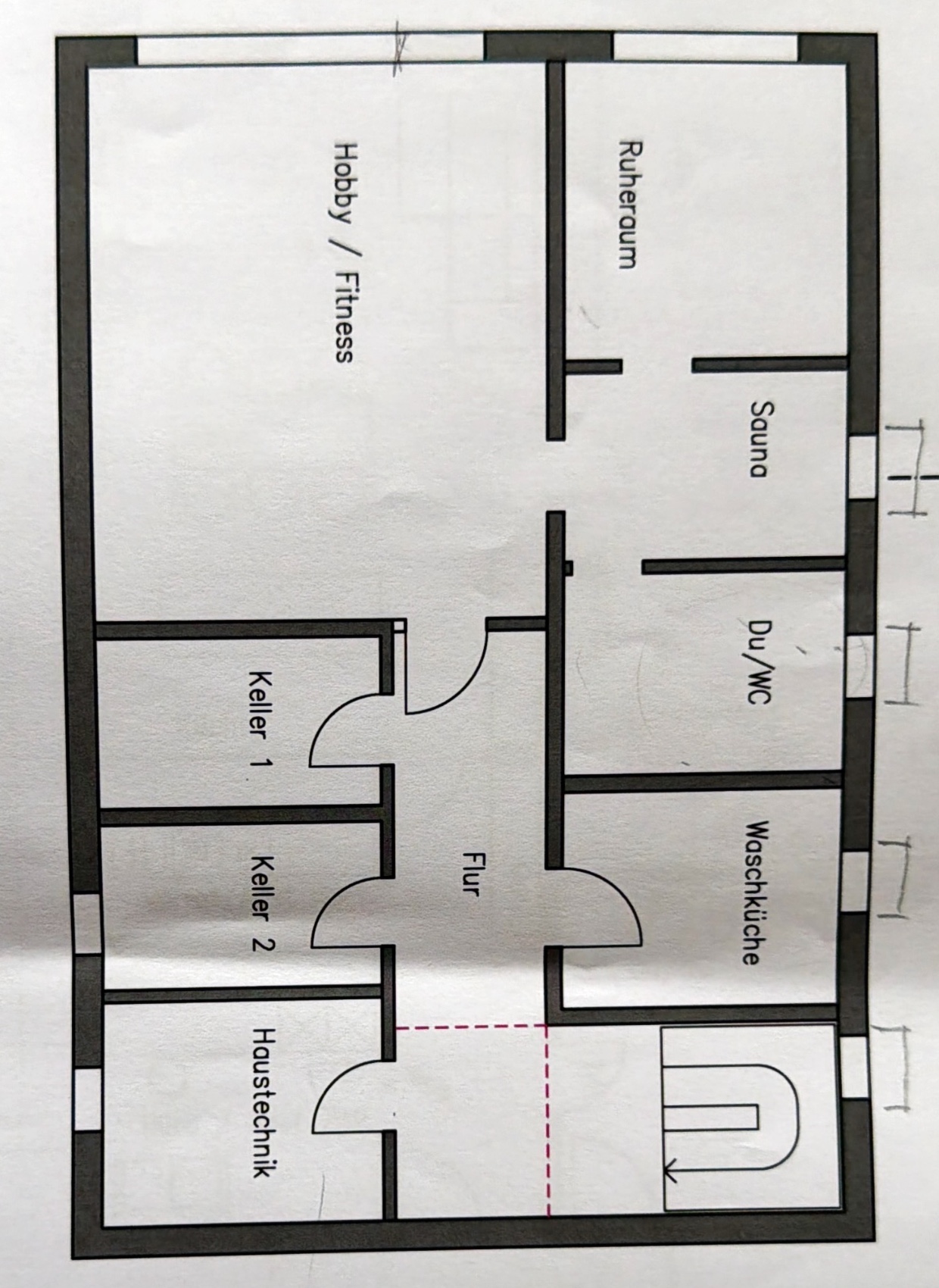
Our eldest daughter has made us grandparents twice over, and we often enjoy having the grandchildren stay during the day so their mother can go to work. Our younger daughter will be studying for about four more years and is planned to have her own space in the basement, which could later be converted into a guest room, office, etc. The plan includes a separate entrance via a generous lightwell, but with access to the ground floor (maximum of two living units).
The attic is not intended to be finished right away but will be designed for potential future development. Whether this will ever be implemented remains uncertain.
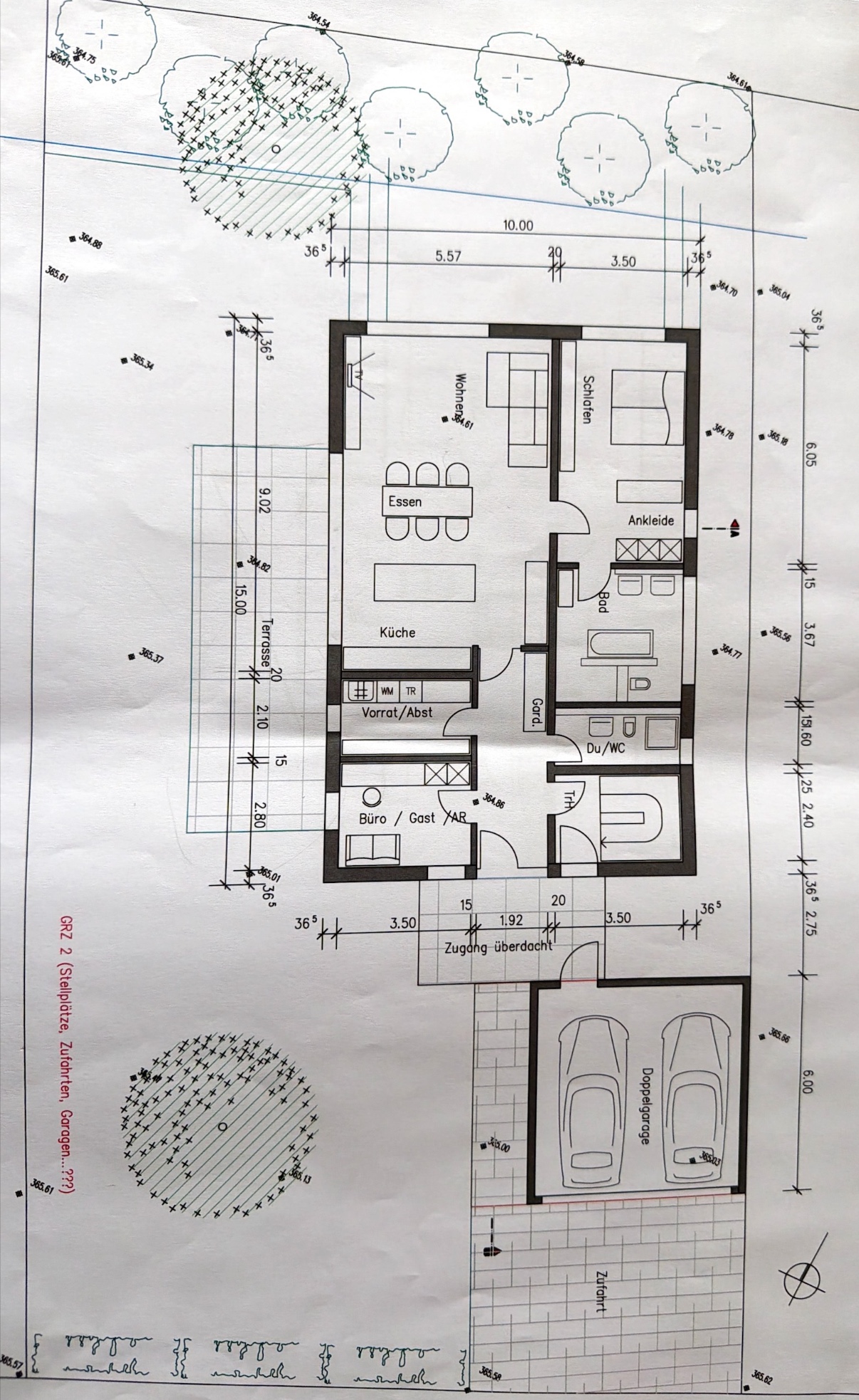
The ground floor should offer approximately 125 sqm (1,345 sq ft) within a 10x15m (33x49 ft) building envelope. The open kitchen/dining/living area should accommodate many guests, as we frequently host large family gatherings and groups of friends. The bathroom should be en suite, and the guest toilet should include a shower. A multipurpose room is planned as a utility/laundry room with direct access to the garden, serving as a mudroom with an integrated sink and/or washing machine. In emergencies, this room can also serve as a guest bedroom. This will be less necessary once the basement is available.
The ground floor is optimized for a couple without children but should also work well for families without needing to use the attic. The attic is designed to function as a fully independent living unit, which we consider important for maintaining property value.
Families with young children could use the utility room as a children's bedroom, while older children could occupy two bedrooms with a bathroom in the basement.
Our main request is constructive feedback on the draft. We like the ground floor layout so far but are open to improvements.
We haven’t spent much time on the attic plan yet; we find the concept acceptable for now. We do like the idea of accessing the attic via an external staircase, ensuring completely separate entrances for the attic and ground floor. If more information is needed, I am happy to provide it.
Development Plan / Restrictions
Plot size: 677 sqm (7,284 sq ft)
Slope: 1m (3 ft) decline from sidewalk to field path
Floor area ratio:
Floor space index:
Building envelope, building line, and boundary: Exact building envelope for garage and house as shown in the draft
Adjacent buildings: Gap site with similar neighboring plots on left and right, development plan
Parking spaces: Double garage
Number of floors: 1
Roof type: Gable roof
Style: Modern
Orientation: Sketch shows southwest at the top
Maximum heights/limits: Ridge line max 8m (26 ft) above ground floor level, side exterior walls max 4m (13 ft)
Additional requirements
Owners’ Requirements
Style, roof type, building type:
Basement, floors: Basement yes, attic planned but not to be finished
Number of occupants, ages: Couple nearing retirement on ground floor, daughter (with partner) in basement until end of studies in about 4 years
Space needs on ground floor and upper floor: approx. 125 sqm (1,345 sq ft) ground floor, potential about 100 sqm (1,076 sq ft) upper floor, approx. 60 sqm (646 sq ft) finished basement
Office: Family use or home office?
Number of overnight guests per year: about 2–3 times per year
Open or closed architecture: Open
Conservative or modern building style: Modern
Open kitchen, kitchen island: Yes
Number of dining seats: Many, at least for 8, preferably 12
Fireplace: Somewhat
Music/sound system: Large TV, but not a priority
Balcony, roof terrace: Balcony planned facing northwest, as this side overlooks open fields
Garage, carport: Double garage, wide covered side walkway to the main entrance, effectively functioning as a carport
Utility garden, greenhouse: Raised beds for herbs and various berries (for grandchildren)
Further wishes, special features, daily routine, including reasons for choices or exclusions
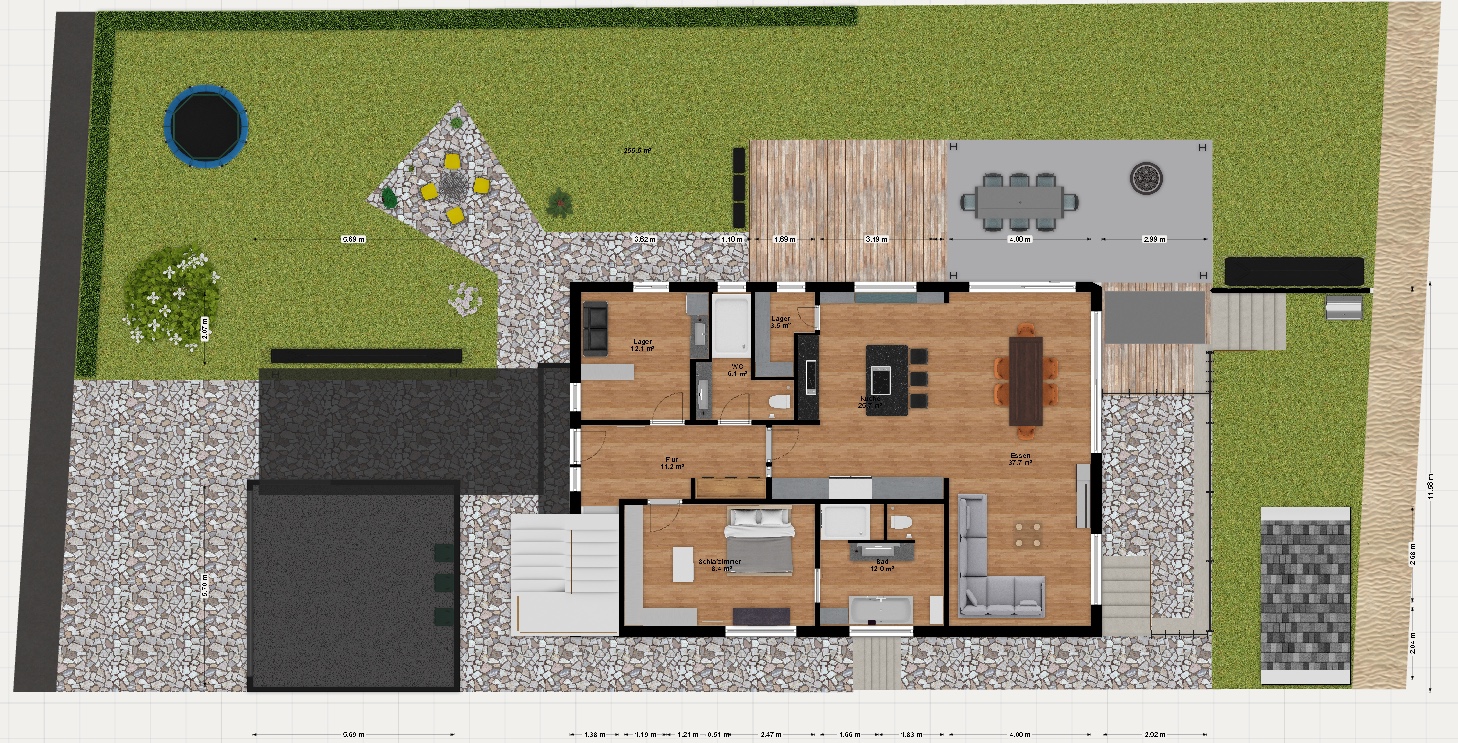
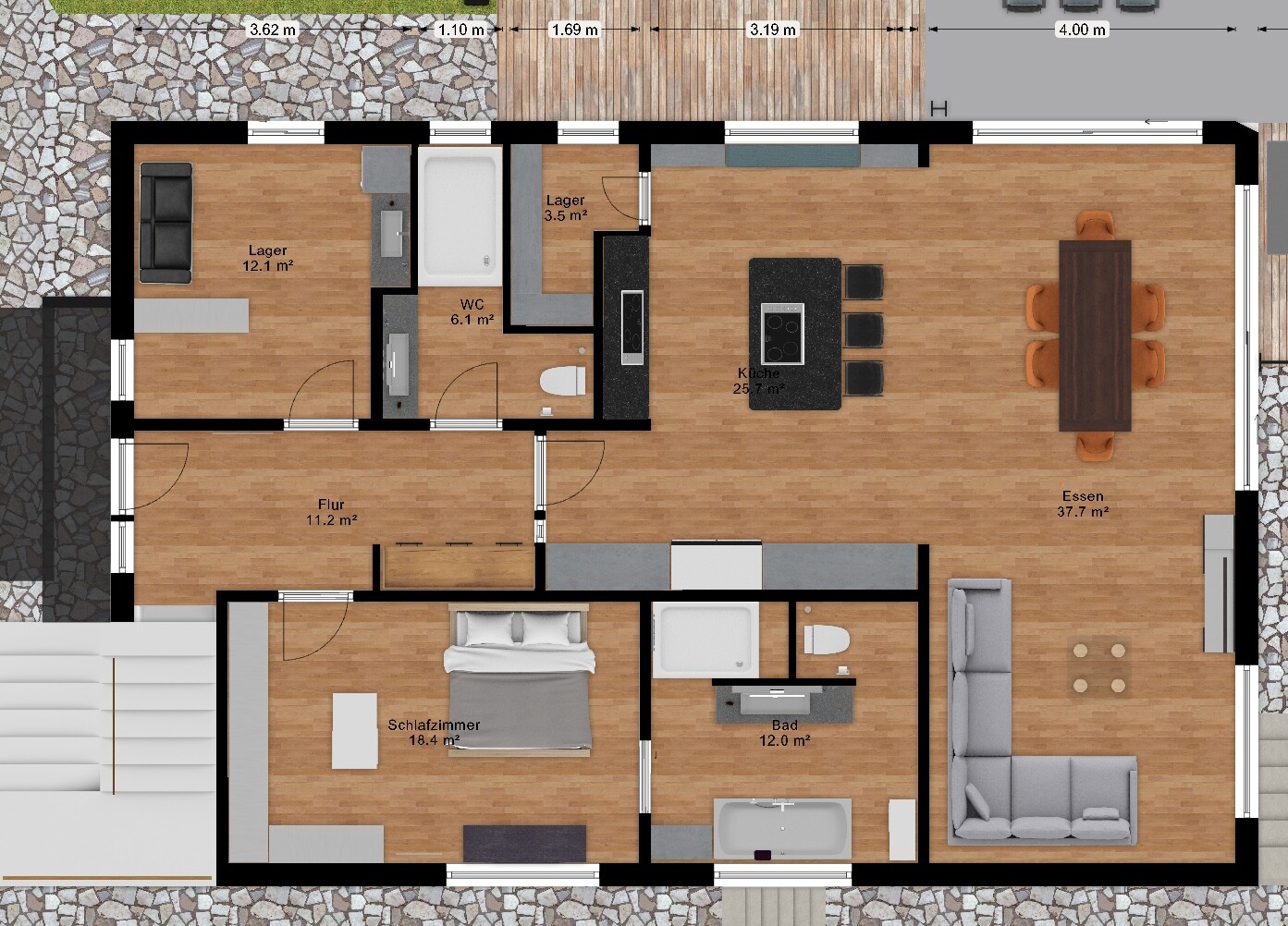
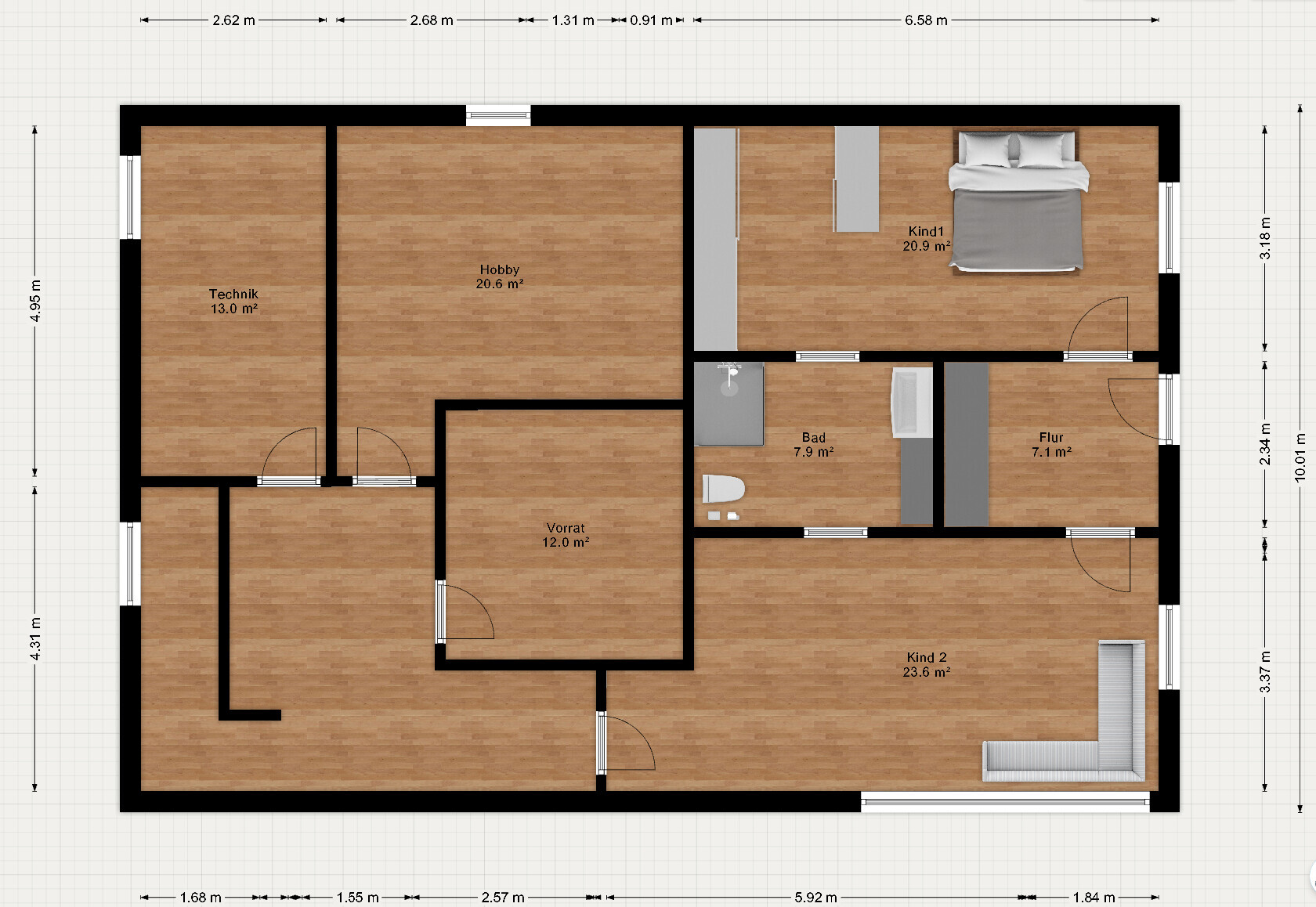
As our planned construction project is gradually taking shape, I would like to share a first draft for discussion.
The plot is already secured, and we want to make full use of the space to maximize potential living area. Retirement is foreseeable for both of us, but after 28 years, we still want to build once more.
Our eldest daughter has made us grandparents twice over, and we often enjoy having the grandchildren stay during the day so their mother can go to work. Our younger daughter will be studying for about four more years and is planned to have her own space in the basement, which could later be converted into a guest room, office, etc. The plan includes a separate entrance via a generous lightwell, but with access to the ground floor (maximum of two living units).
The attic is not intended to be finished right away but will be designed for potential future development. Whether this will ever be implemented remains uncertain.
The ground floor should offer approximately 125 sqm (1,345 sq ft) within a 10x15m (33x49 ft) building envelope. The open kitchen/dining/living area should accommodate many guests, as we frequently host large family gatherings and groups of friends. The bathroom should be en suite, and the guest toilet should include a shower. A multipurpose room is planned as a utility/laundry room with direct access to the garden, serving as a mudroom with an integrated sink and/or washing machine. In emergencies, this room can also serve as a guest bedroom. This will be less necessary once the basement is available.
The ground floor is optimized for a couple without children but should also work well for families without needing to use the attic. The attic is designed to function as a fully independent living unit, which we consider important for maintaining property value.
Families with young children could use the utility room as a children's bedroom, while older children could occupy two bedrooms with a bathroom in the basement.
Our main request is constructive feedback on the draft. We like the ground floor layout so far but are open to improvements.
We haven’t spent much time on the attic plan yet; we find the concept acceptable for now. We do like the idea of accessing the attic via an external staircase, ensuring completely separate entrances for the attic and ground floor. If more information is needed, I am happy to provide it.
Development Plan / Restrictions
Plot size: 677 sqm (7,284 sq ft)
Slope: 1m (3 ft) decline from sidewalk to field path
Floor area ratio:
Floor space index:
Building envelope, building line, and boundary: Exact building envelope for garage and house as shown in the draft
Adjacent buildings: Gap site with similar neighboring plots on left and right, development plan
Parking spaces: Double garage
Number of floors: 1
Roof type: Gable roof
Style: Modern
Orientation: Sketch shows southwest at the top
Maximum heights/limits: Ridge line max 8m (26 ft) above ground floor level, side exterior walls max 4m (13 ft)
Additional requirements
Owners’ Requirements
Style, roof type, building type:
Basement, floors: Basement yes, attic planned but not to be finished
Number of occupants, ages: Couple nearing retirement on ground floor, daughter (with partner) in basement until end of studies in about 4 years
Space needs on ground floor and upper floor: approx. 125 sqm (1,345 sq ft) ground floor, potential about 100 sqm (1,076 sq ft) upper floor, approx. 60 sqm (646 sq ft) finished basement
Office: Family use or home office?
Number of overnight guests per year: about 2–3 times per year
Open or closed architecture: Open
Conservative or modern building style: Modern
Open kitchen, kitchen island: Yes
Number of dining seats: Many, at least for 8, preferably 12
Fireplace: Somewhat
Music/sound system: Large TV, but not a priority
Balcony, roof terrace: Balcony planned facing northwest, as this side overlooks open fields
Garage, carport: Double garage, wide covered side walkway to the main entrance, effectively functioning as a carport
Utility garden, greenhouse: Raised beds for herbs and various berries (for grandchildren)
Further wishes, special features, daily routine, including reasons for choices or exclusions
@Nida35a It’s about time you finally organize the sauna festival you’ve promised so often in the forum. I would bring the pretzel sticks for it.
I still really like this basic concept of a house for two people, and the individual details can of course be adapted for everyone.
I still really like this basic concept of a house for two people, and the individual details can of course be adapted for everyone.
Why don’t we have a basement?
The heat pump doesn’t require storage for wood or oil.
The washing machine is located on the upper floor near the bedrooms. My husband didn’t want laundry running back and forth all the time. We also don’t need miles of clotheslines.
I no longer keep cider barrels. I don’t store trailers full of potatoes or stockpile preserved vegetables and fruits for months.
I want the sauna in a stylish bathroom with a window view.
We don’t need a party room. Celebrations take place in the garden or the living areas.
The attic provides plenty of storage space. The slot car track, Gravitrax, and air track mat also fit there.
With a basement, we wouldn’t have a level access to the garden. Our ground floor is fully wheelchair accessible.
And the basement would have been expensive. The slope should stay where it is. Just the costs for retaining walls and soil classes 5 to 6 wouldn’t make it cheaper.
Regarding the living spaces: We’ve had an apartment in a basement and one in an attic. I prefer looking up at the sky rather than down at feet. Living is comfortable in both.
By the way, there are timber frame builders who include a living basement made of masonry in their designs.
The heat pump doesn’t require storage for wood or oil.
The washing machine is located on the upper floor near the bedrooms. My husband didn’t want laundry running back and forth all the time. We also don’t need miles of clotheslines.
I no longer keep cider barrels. I don’t store trailers full of potatoes or stockpile preserved vegetables and fruits for months.
I want the sauna in a stylish bathroom with a window view.
We don’t need a party room. Celebrations take place in the garden or the living areas.
The attic provides plenty of storage space. The slot car track, Gravitrax, and air track mat also fit there.
With a basement, we wouldn’t have a level access to the garden. Our ground floor is fully wheelchair accessible.
And the basement would have been expensive. The slope should stay where it is. Just the costs for retaining walls and soil classes 5 to 6 wouldn’t make it cheaper.
Regarding the living spaces: We’ve had an apartment in a basement and one in an attic. I prefer looking up at the sky rather than down at feet. Living is comfortable in both.
By the way, there are timber frame builders who include a living basement made of masonry in their designs.
 Papierturm22 Nov 2025 20:34
Underdog schrieb:
In this forum, there seems to be a strong general resistance to the topic of basements.
Is this partly because there is a very active prefabricated house faction here?
The links to the prefab house providers make me a bit uneasy, in the sense of "can the rest still be considered neutral?" Links are generally not allowed. When providers are mentioned, it is only with reference to the corresponding forum. Since many solid construction builders tend to build regionally (for example, I know a few with a good reputation around here, but that doesn’t help people 100km (60 miles) away), mainly large, nationwide solid construction companies or franchise providers are discussed. Or prefab house manufacturers, because they can operate nationally. From my impression here, prefab houses are less represented within the community. Many newcomers are initially dazzled by the marketing language. (And I say this as someone who admits to currently building a prefab house.)
But to get back to the topic:
Anyone who hasn’t built in recent years is likely to underestimate how expensive basements have become. Partially basements hardly pay off anymore.
What makes basements so expensive?
On one hand, the actual construction costs: for usable basements, you can roughly estimate 1000€/m² (about 93$/ft²). (Partial basements are even more expensive because the real costs for usable basements don’t scale linearly.) When finished, the costs can exceed 3000€/m² (about 280$/ft²).
Then there are the earthworks. Labor costs for excavation. Potentially, if groundwater is an issue, significantly increased construction costs. And where do you put all the excavated soil?
Last year, we requested several offers. Simply disposing of the soil would have cost over €30,000 (about $33,000) for a basement at our place (with topsoil layer soil). That’s not including the excavation labor costs. And at this point, no basement walls have been installed nor any special measures due to groundwater or rain.
In the end, total basement costs (including earthworks, disposal, and related expenses) for a smaller house exceeded €150,000 (about $165,000) for a usable basement — and this assumes favorable conditions such as "no groundwater, no water issues." If finished as a living basement, it would have been about three-quarters as expensive as the whole house including slab and earthworks currently is.
I suspect this is why there is such broad rejection of basements here.
Underdog schrieb:
My dummy question is: roughly how much more does it cost now? No one here can tell you that. None of the active users are contractors.
And even contractors would have to calculate that for you, taking into account the structural engineering and the renewable energy requirements together.
Underdog schrieb:
I still have no real sense of how changes (open space, partial basement) affect the overall cost, so I can set priorities accordingly. The problem I see with setting priorities is that you are equating cost efficiency with space waste.
Basically, cost efficiency for a homeowner is about optimizing cost and usability based on what they personally want and need.
You are reversing the perspective by thinking more globally. Of course, as a company, city, or other institution, you would fill every usable square meter possible to generate a return.
But a homeowner usually cares less about return on investment because they want to live in the house themselves. Rarely do they want to create living space for others to generate capital. Indirectly, you admit that this is not your goal.
You want to prepare it for others and even take over planning for others in advance. I consider this conceptually confused because it is not economical in that sense.
You also emphasize your age. When someone in their mid-20s builds a house, it may be economical to build more living space, anticipating family growth and a larger nest than needed now. But your situation is the opposite: you want a bit more space (for your daughter) that won’t really be needed or wanted in the coming years. What is desired is simple “living on one level.” So it makes sense to integrate the daughter’s room well into later life or to separate it.
It does not make sense to spread out over THREE levels if you see yourself living on ONE level. Nor does it make sense to spread over TWO levels if you see yourself living on ONE level. The same applies to the utility and technical rooms.
I also find it pointless to justify additional rooms by later saying in a discussion that having a workshop is great and usable, if it wasn’t originally part of the room program. If the planning naturally results in it, that’s fine to include it.
It’s also not sensible to stick to outdated ideas like “a house without a basement is not a house” just because of tradition. Back then basements stored oil or coal supplies, laundry supplies, and shelves of preserves.
Anyone building a house does well to engage with the present day. Model homes, websites, and yes, even Instagram and Pinterest reflect today’s way of living. That doesn’t mean you have to adopt everything others do, but you should at least consider it.
Magazines like “Das Haus,” “Schöner Wohnen,” and also general publications such as “Die Zeit” or “Süddeutsche” offer insightful journalism about living and society, showing or describing how building and lifestyle today differ from the past. They at least stimulate thoughts. Almost every home builder chooses barrier-free or accessible homes by now, only they don’t call it “silver generation floor plans” but rather refer to the entire home type of age-appropriate living, for example in a bungalow.
Questions about costs actually come before floor plan design. Can I afford a basement, an open space, an 80sqm (860 sq ft) living room? And also what is really needed and how it will be used in 5 or 10 years — that comes before or during discussions with the architect.
If you later consider whether there will be a suitable target group for resale and see that as a problem, you should think about whether your current cost efficiency conflicts with what is “for others.” However, I don’t see a universal solution in building enough square meters for the next owner if you don’t even know what they want. I also think you can’t even envision yourselves in 10 years, since it’s not reflected in the floor plan.
Hello ypg,
I basically don’t want to disagree with your analysis, as there really is no real disagreement.
I have already moved on mentally from the initial approach, which is why there is a new appointment with the architect to restart the entire project.
That may be true, but the thought simply comes from the idea of not just putting a "small stripped-down" house on a not exactly small and not cheap plot.
This is a bit exaggerated and is not meant to annoy or provoke anyone, but to convey my original approach (which is now off the table).
Yes, that’s exactly where we are now (again)—hence my dummy questions.
The appointment with the architect should shed some light on this, but I asked here for preparation.
If this cannot be answered off the cuff, that’s okay with me.
Am I mistaken, or is the question of whether to have a basement or not a sensitive and emotional topic?
I’m definitely not dogmatic about it, but I’m simply used to basements, and most new houses I know still have them.
Maybe I haven’t searched thoroughly enough, but mostly you only find "living on two levels" or "bungalows for whole families."
We are currently more at the stage of a "bungalow for two plus a children’s room on another level."
Open space and basement are then secondary questions.
I basically don’t want to disagree with your analysis, as there really is no real disagreement.
I have already moved on mentally from the initial approach, which is why there is a new appointment with the architect to restart the entire project.
ypg schrieb:
The problem of prioritization here, I see with you, is that you equate cost-efficiency with space waste.
That may be true, but the thought simply comes from the idea of not just putting a "small stripped-down" house on a not exactly small and not cheap plot.
This is a bit exaggerated and is not meant to annoy or provoke anyone, but to convey my original approach (which is now off the table).
ypg schrieb:
If the design turns out that way, then you go with it, yes.
ypg schrieb:
The question of costs actually comes before the floor plan design. Can I afford a basement, an open space, an 80sqm (860 sq ft) living room?
Yes, that’s exactly where we are now (again)—hence my dummy questions.
The appointment with the architect should shed some light on this, but I asked here for preparation.
If this cannot be answered off the cuff, that’s okay with me.
Am I mistaken, or is the question of whether to have a basement or not a sensitive and emotional topic?
I’m definitely not dogmatic about it, but I’m simply used to basements, and most new houses I know still have them.
ypg schrieb:
Anyone planning to build a house would do well to engage with today’s trends. Show homes, websites, and yes, even Instagram and Pinterest reflect contemporary living.
Maybe I haven’t searched thoroughly enough, but mostly you only find "living on two levels" or "bungalows for whole families."
We are currently more at the stage of a "bungalow for two plus a children’s room on another level."
Open space and basement are then secondary questions.
Hi,
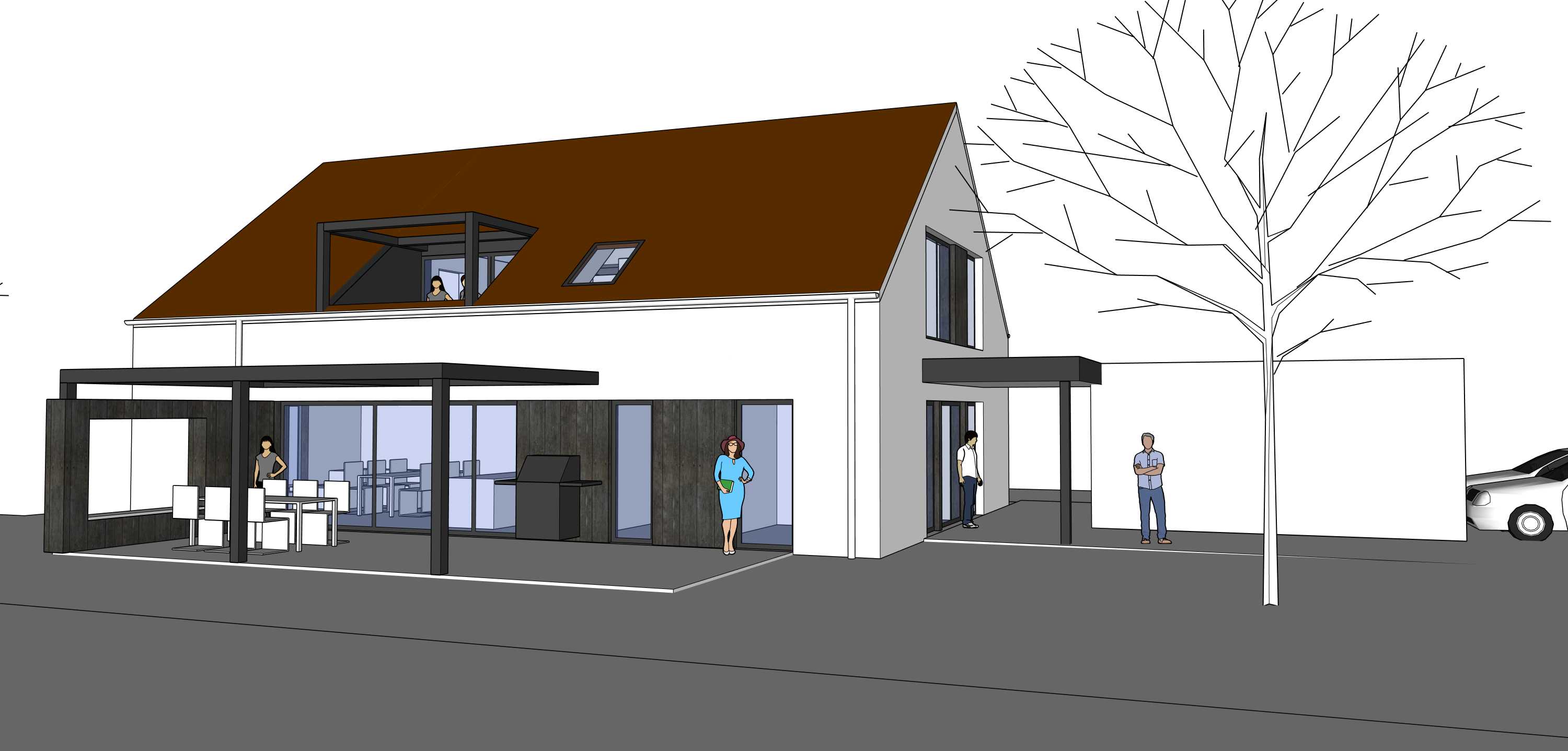
after a longer break to think things over, we have resumed the project and made some initial decisions.
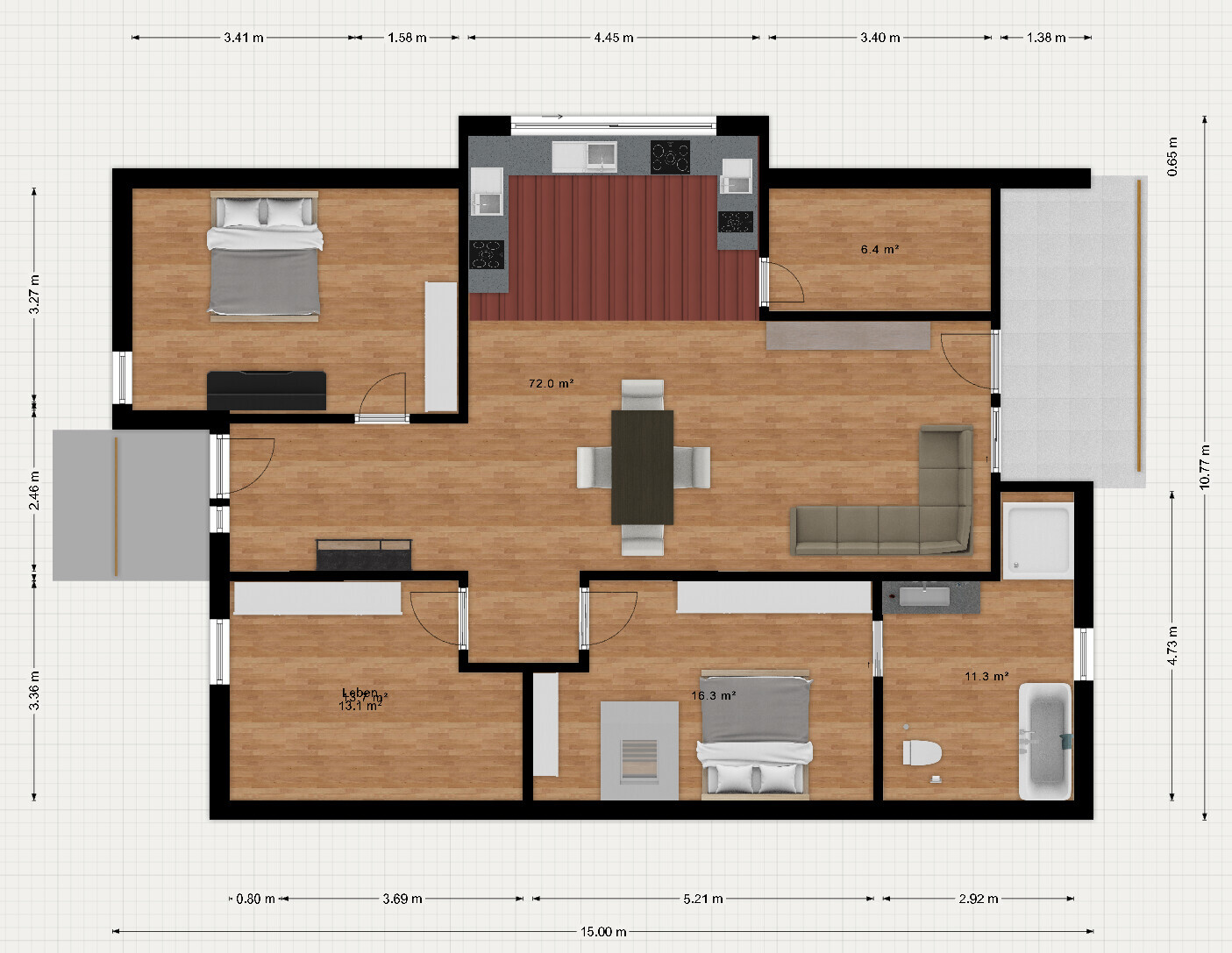
The plan now is to build a house with two separate units.
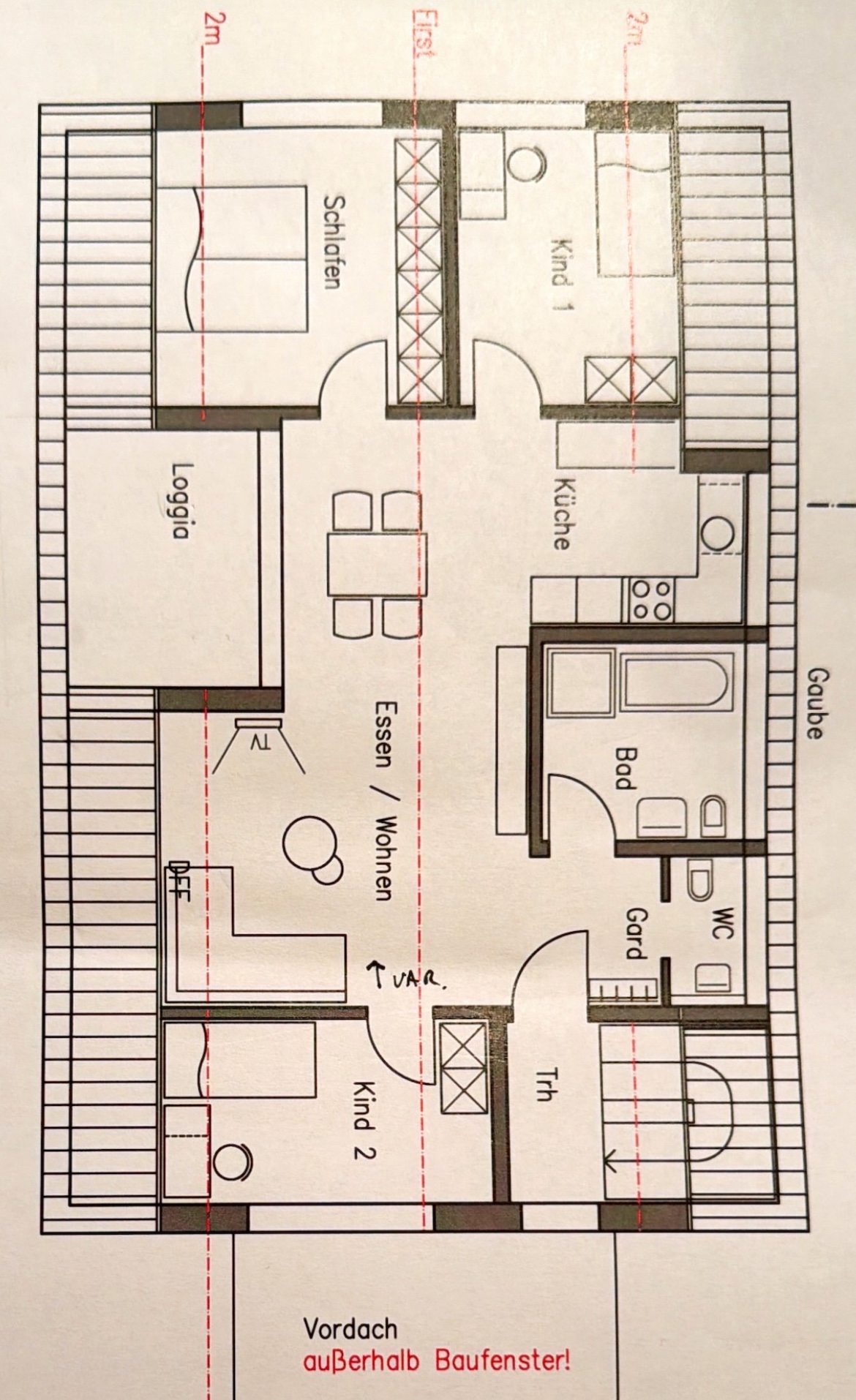
The ground floor is still intended for a couple in their late 50s, while an apartment for their adult daughter is planned on the upper floor.
The design is mostly complete, but there is still one decision to make regarding the upper floor, and I’m interested in the forum’s opinion.
We are uncertain whether to keep the loggia as it is or convert it into a balcony (the local development plan / building permit is a bit unclear).
An alternative would be to extend the porch into a balcony with access through Child 2’s room.
Child 2 could be fully included in the living room (with the option to install a partition wall later if needed).
after a longer break to think things over, we have resumed the project and made some initial decisions.
The plan now is to build a house with two separate units.
The ground floor is still intended for a couple in their late 50s, while an apartment for their adult daughter is planned on the upper floor.
The design is mostly complete, but there is still one decision to make regarding the upper floor, and I’m interested in the forum’s opinion.
We are uncertain whether to keep the loggia as it is or convert it into a balcony (the local development plan / building permit is a bit unclear).
An alternative would be to extend the porch into a balcony with access through Child 2’s room.
Child 2 could be fully included in the living room (with the option to install a partition wall later if needed).
Similar topics