
ᐅ Ground floor – open-plan kitchen with dining area or living room with dining area
Created on: 19 Mar 2026 11:04
J
jolovyn
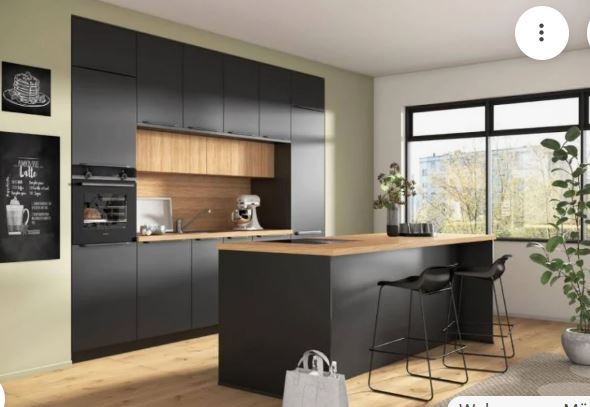
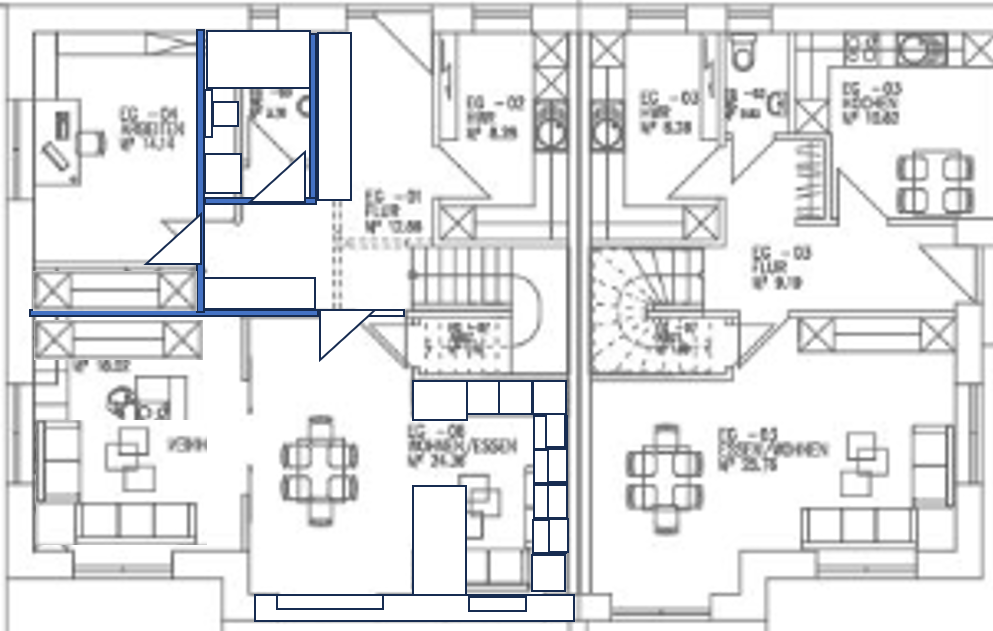
We have received the first draft for our semi-detached house. The architect put a lot of effort into it (symmetry with the other side of the house, etc.) and has generally incorporated our wishes very well, but we had actually envisioned an open-plan kitchen and a separate living room—not the other way around. Now we are considering swapping the rooms. Into the corner where the couch is currently drawn, there would be a kitchen unit (3.75 m / 12.3 feet) and an island (1.80 m / 5.9 feet with a cooktop). There would be a passage of 1.20 m (3.9 feet) and 75 cm (2.5 feet) on the right and left sides of the island. The island should be no more than 90 cm (35 inches) deep. A pantry would fit under the stairs (possibly with a custom-made door allowing direct access from the kitchen). The dining table could then be placed by the island or as currently shown. The windows should be turned into a large window front.
In the living room, we would use the back wall to place a terrarium somewhat hidden (200 x 60 cm / 79 x 24 inches). The only unclear point is where the TV (1 m / 3.3 feet wide) would go.
I’m torn, because the architect’s design also makes sense to me. The window symmetry (even though I’m not a fan of floor-to-ceiling windows right in front of the couch), more space behind the dining chairs, and a nice large kitchen with plenty of storage. Overall, it might feel a bit more “classic” and tidy this way.
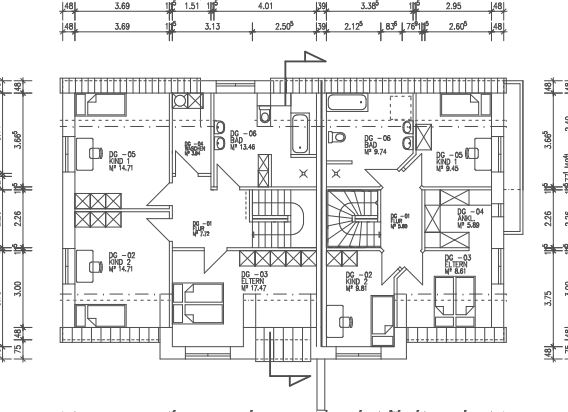
I’m attaching the current ground floor draft and, for context, the entire house plan as well as a picture of how I roughly imagined our kitchen. Any advice would be very appreciated.
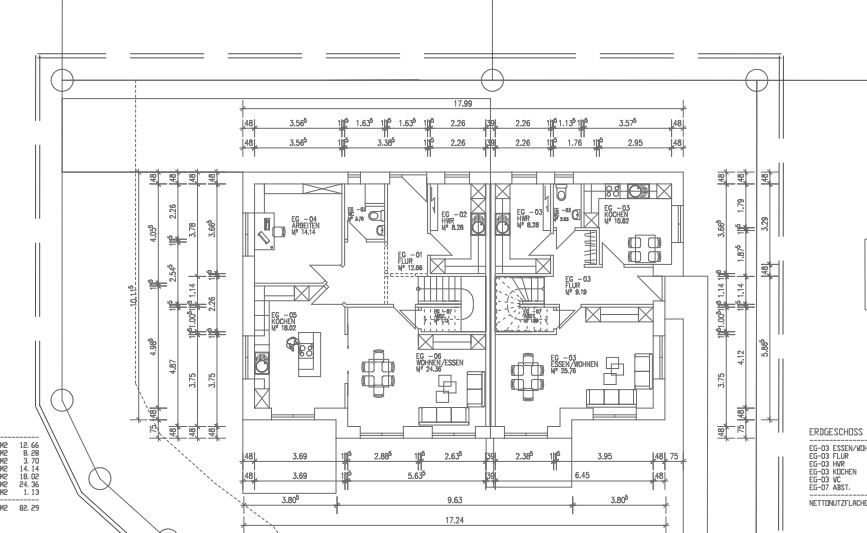
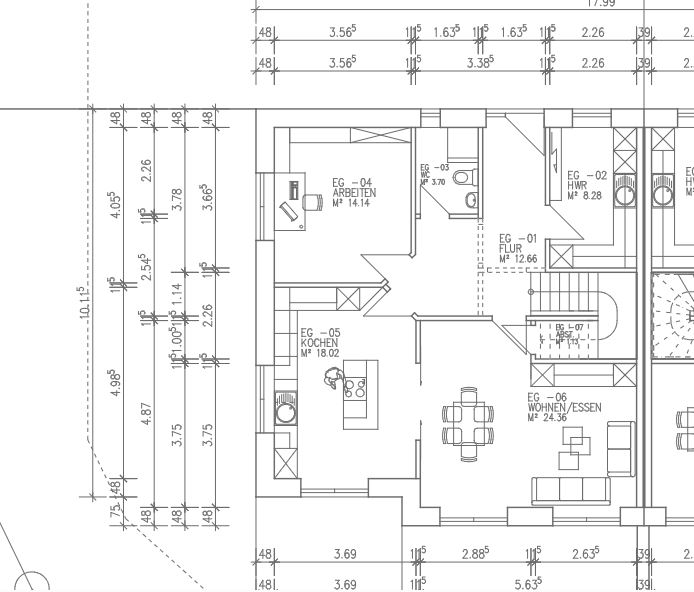
In the living room, we would use the back wall to place a terrarium somewhat hidden (200 x 60 cm / 79 x 24 inches). The only unclear point is where the TV (1 m / 3.3 feet wide) would go.
I’m torn, because the architect’s design also makes sense to me. The window symmetry (even though I’m not a fan of floor-to-ceiling windows right in front of the couch), more space behind the dining chairs, and a nice large kitchen with plenty of storage. Overall, it might feel a bit more “classic” and tidy this way.
I’m attaching the current ground floor draft and, for context, the entire house plan as well as a picture of how I roughly imagined our kitchen. Any advice would be very appreciated.
H
hanghaus202319 Mar 2026 21:52Here without the 45-degree angle. Plenty of space for a wardrobe. Living room like the neighbor’s. Even the windows are symmetrical.
hanghaus2023 schrieb:
symetrisch Cute 🙂
Question: where is south?
2. There are quite a few design mistakes here. It’s possible the architect overlooked that several clients want different things, but your neighbor has something you don’t, and you will miss it from the very first moment. Tell me what it is 😀
3. I find the hallway confusing, but that can still be changed. Does the architect have multiple duplex houses in the planning?
Please fill out the pinned questionnaire.
4. Your kitchen layout is too small – how many people is the house intended to accommodate?
5. A closed living/lounge area is definitely possible!
ypg schrieb:
Question: Where is south? South is at the bottom of the plan, so the windows in the kitchen/living room face south.
The left half of the house is designed for a family of four (2 adults, 2 children), while the right half is more suited for a family of three or a couple needing a home office (to be rented out). We plan to remove the walk-in closet there to create more space in the children’s and master bedrooms for additional wardrobes.
The 45-degree doors appeared during the drafting process because they made the rooms easier to access—I honestly didn’t give it much more thought and was just glad to find a practical way to connect the rooms. 😉
What does the smaller half have that ours doesn’t? Hmm, do you mean the cloakroom? We have planned a small guest cloakroom in the hallway and then a kids’ mudroom in the utility/technical room, which is directly accessible—hopefully that fits with the utility room layout.
Filled-in questionnaire will follow.
Development Plan / Restrictions
Only single-story allowed, meaning according to Lower Saxony building regulations there must be a knee wall (dormer wall), maximum ridge height is 9m (29.5 ft), current calculations estimate the knee wall height to be about 1.20m (4 feet)
Plot size: 700 square meters (7,535 square feet) for the entire semi-detached house
Slope: no
Site coverage ratio: 0.4
Floor area ratio: 0.6
Building setback lines and boundaries: 3m (10 feet) distance
Edge development: no
Number of parking spaces: 3
Number of stories: 1
Roof type: gable roof
Architectural style: somewhat country house style, brick-clad
Orientation: North is at the top
Maximum heights / limits: 9m (29.5 feet)
Other requirements
Homeowner Requirements
Style, roof shape, building type: none except maybe brick slips
Basement, floors: no basement (high groundwater, impossible), 1 full floor, 1 upper floor with knee wall
Number of occupants, age: 2 adults, 2 children aged 5 and 9 in the larger half, smaller half will be rented out
Space requirements on ground floor and upper floor
Office: family use or home office? 100% home office for one person
Overnight guests per year: 2-4
Open or closed architecture: visually we like open, but in practical use we need more closed rooms
Conservative or modern construction: conservative
Open kitchen, kitchen island: yes, preferably a free-standing island with cooktop; desire is kitchen and large dining table in one room, sliding door to living room (which will be used less than the kitchen)
Number of dining seats: 6
Fireplace: no
Music / stereo wall: no
Balcony, roof terrace: no
Garage, carport: no, only parking spaces; a carport might be added later
Utility garden, greenhouse: no, only a few raised beds
Other wishes / special features / daily routine, including reasons why some things should or should not be included:
Due to our lifestyle (adults have different visitors), we want the possibility for living room and kitchen with large dining table to be separately accessible, so one person can relax on the couch while the other plays board games with guests. Also, as the children grow older, when teenagers put frozen pizza in the oven with friends in the evening, I would like to be able to close a sliding door to the living room while I lounge in pajamas on the couch.
We absolutely need a home office (100%) and preferably a second quiet workspace that could be located either in the master bedroom or under the roof.
We particularly liked the internal layout from the architect, allowing the ground floor and upper floor to be spatially separated later (parents living downstairs in old age, a child upstairs). Since we wanted separate access to the living room (instead of through the kitchen) anyway, it would be great to have that as well.
House Design
Designed by:
- Architect working with a family-run builder, based on our initial ideas and wishes
What do you especially like? Why?
The possible later separation of ground and upper floors, the separate access to individual rooms, a “laundry room” for washer and dryer on the upper floor
What do you dislike? Why?
We find the bathroom downstairs a bit small, originally we would have preferred a staircase with a window. The idea was to make the attic usable, so a second staircase was planned. Now, due to restrictions, the average standing height in the attic is only 2.09m (6 feet 10 inches), and with a 40% roof pitch it is not suitable as a second workspace at all.
Estimated price according to architect/planner: entire semi-detached half 650,000
Personal price limit for the house, including fixtures: acceptable as is
Preferred heating technology: air source heat pump planned, photovoltaic system on the roof required (Lower Saxony state regulation)
If you have to give up anything, which details / extensions:
- Can give up: larger bathroom on the ground floor, pantry under the stairs accessible from the kitchen
- Cannot give up: separation of living and dining (by sliding door), office for home office (may be somewhat smaller), kitchen with large table, all rooms individually accessible
Why is the design as it is now? For example:
The design is determined by the corner plot and cardinal directions, as well as the idea that the rooms should be individually accessible and that the ground floor could possibly be separated later.
Only single-story allowed, meaning according to Lower Saxony building regulations there must be a knee wall (dormer wall), maximum ridge height is 9m (29.5 ft), current calculations estimate the knee wall height to be about 1.20m (4 feet)
Plot size: 700 square meters (7,535 square feet) for the entire semi-detached house
Slope: no
Site coverage ratio: 0.4
Floor area ratio: 0.6
Building setback lines and boundaries: 3m (10 feet) distance
Edge development: no
Number of parking spaces: 3
Number of stories: 1
Roof type: gable roof
Architectural style: somewhat country house style, brick-clad
Orientation: North is at the top
Maximum heights / limits: 9m (29.5 feet)
Other requirements
Homeowner Requirements
Style, roof shape, building type: none except maybe brick slips
Basement, floors: no basement (high groundwater, impossible), 1 full floor, 1 upper floor with knee wall
Number of occupants, age: 2 adults, 2 children aged 5 and 9 in the larger half, smaller half will be rented out
Space requirements on ground floor and upper floor
Office: family use or home office? 100% home office for one person
Overnight guests per year: 2-4
Open or closed architecture: visually we like open, but in practical use we need more closed rooms
Conservative or modern construction: conservative
Open kitchen, kitchen island: yes, preferably a free-standing island with cooktop; desire is kitchen and large dining table in one room, sliding door to living room (which will be used less than the kitchen)
Number of dining seats: 6
Fireplace: no
Music / stereo wall: no
Balcony, roof terrace: no
Garage, carport: no, only parking spaces; a carport might be added later
Utility garden, greenhouse: no, only a few raised beds
Other wishes / special features / daily routine, including reasons why some things should or should not be included:
Due to our lifestyle (adults have different visitors), we want the possibility for living room and kitchen with large dining table to be separately accessible, so one person can relax on the couch while the other plays board games with guests. Also, as the children grow older, when teenagers put frozen pizza in the oven with friends in the evening, I would like to be able to close a sliding door to the living room while I lounge in pajamas on the couch.
We absolutely need a home office (100%) and preferably a second quiet workspace that could be located either in the master bedroom or under the roof.
We particularly liked the internal layout from the architect, allowing the ground floor and upper floor to be spatially separated later (parents living downstairs in old age, a child upstairs). Since we wanted separate access to the living room (instead of through the kitchen) anyway, it would be great to have that as well.
House Design
Designed by:
- Architect working with a family-run builder, based on our initial ideas and wishes
What do you especially like? Why?
The possible later separation of ground and upper floors, the separate access to individual rooms, a “laundry room” for washer and dryer on the upper floor
What do you dislike? Why?
We find the bathroom downstairs a bit small, originally we would have preferred a staircase with a window. The idea was to make the attic usable, so a second staircase was planned. Now, due to restrictions, the average standing height in the attic is only 2.09m (6 feet 10 inches), and with a 40% roof pitch it is not suitable as a second workspace at all.
Estimated price according to architect/planner: entire semi-detached half 650,000
Personal price limit for the house, including fixtures: acceptable as is
Preferred heating technology: air source heat pump planned, photovoltaic system on the roof required (Lower Saxony state regulation)
If you have to give up anything, which details / extensions:
- Can give up: larger bathroom on the ground floor, pantry under the stairs accessible from the kitchen
- Cannot give up: separation of living and dining (by sliding door), office for home office (may be somewhat smaller), kitchen with large table, all rooms individually accessible
Why is the design as it is now? For example:
The design is determined by the corner plot and cardinal directions, as well as the idea that the rooms should be individually accessible and that the ground floor could possibly be separated later.

jolovyn schrieb:
Hmmm, do you mean the cloakroom? We plan to have a small guest cloakroom in the hallway and a children’s mudroom in the utility/household room. In this forum, people often put a lot of emphasis on the cloakroom. We don’t have one directly in the hallway either, not even coat hooks. However, in our case, the utility room isn’t a technical room (that’s in the basement) but a proper household room with a large cloakroom area, a big shoe cabinet, etc. In everyday life, this isn’t a disadvantage. Yes, the child sometimes leaves shoes right by the door, but even with a cloakroom cabinet 30cm (12 inches) instead of 1m (39 inches) away, those shoes wouldn’t get tidied up.
If you truly want to skip the cloakroom, make sure to design the utility room as a comfortable living space, perhaps with a separate area for the technical installations, and place the utility room door right next to the main entrance. No one wants to walk 3m (10 feet) through the house with muddy shoes first.
jolovyn schrieb:
We would have actually preferred a staircase with a window Well, these are the typical limitations with a semi-detached house. One wall has no windows, so you have to choose the staircase over the study or bathroom in that space ;-) .
Similar topics