
ᐅ Floor plan design for a single-family house including basement and double garage
Created on: 16 Mar 2026 19:52
M
Minerva121
Hello everyone,
I’m new here and would like to briefly introduce myself and especially the construction project in Franconia / Bavaria: We originally planned to start in 2022, but due to unexpected changes in my family situation, I put the project on hold. The plot was / is already owned by us (with an older building still standing – it still needs to be demolished), but the timing wasn’t right.
Now we are entering the second phase, and all signals are “green.”
The current floor plan was created back then; since then, we’ve had some minor change requests and questions, which I have added below. But first, some basic data about the floor plans (including basement).
Zoning plan / restrictions
Plot size: 676m² (rectangular, approx. 26m wide and 26m long (86ft by 86ft))
Slope: none, completely flat
Site occupancy ratio (floor area ratio): 0.4
Plot ratio (floor space index): 0.8
Building envelope, building line and boundary: A front garden area of 5.00m (16ft) depth is defined that must remain free of construction; the building envelope starts from this 5-meter line and extends over the rear parts of the plot. The building envelope covers most of the plot’s width, but setback distances to the side plot boundaries (usually open construction, 3m / 10ft) must be maintained.
Edge construction: As far as I can see, permitted for trash storage shed, garage, and bike shelter
Number of parking spaces: space for 2 cars planned
Number of floors allowed: 2 full storeys allowed
Roof type: Gable roof with a pitch between 20° and 35°
Design style: no specific requirements
Orientation: no specific requirements
Maximum heights / limits: Knee wall max 0.5m (1.6ft) measured from the top edge of the structural ceiling of the attic floor to where the exterior wall meets the roof covering; eaves height max 7.5m (25ft)
Additional requirements: roof extensions are allowed
Client requirements
Style, roof shape, building type: Gable roof house with relatively shallow roof slope, planned as a prefab house.
Basement, floors: basement planned; plus ground floor (GF) and upper floor (UF)
Number and age of occupants: 4 people (two adults around 45 years old, children aged 7 and 13)
Room requirements on GF, UF: GF --> living-dining area, guest toilet including small shower – ideally barrier-free, office (frequently used), small pantry (directly connected to kitchen), UF --> bathroom, 2 children's rooms, 1 bedroom with small walk-in closet, possibly small storage room, possibly small second workspace for occasional remote working by both adults (can usually be avoided).
Guest overnight stays per year: very few --> no guest room needed or could be solved with sofa bed in the office.
Open or closed architecture: GF rather open, UF rather closed
Conservative or modern construction: likely more conservative
Open kitchen, kitchen island: open kitchen with kitchen island, accessible from both sides.
Number of dining seats: dining table for 6 people
Fireplace: no (or optional)
Music / stereo system: flat-screen TV mounted on the wall in the living area
Balcony, roof terrace: no
Garage, carport: garage for two cars, with trash shed and bike shelter desired at the edge of the plot (but less urgent)
Utility garden, greenhouse: not planned
Additional wishes / special features / daily routine, also explanations why certain things should or should not be: The desire is for a classic single-family home for a family of four with a permanent home office. Designed pragmatically, not fancy or architecturally elaborate. The house should be built as a “climate-friendly new construction.”
About the house design
Who is the designer?
Initial design by an independent architect based on our sketch
What do you particularly like? Why?
What don’t you like? Why?
Price estimate from architect / planner: no estimate yet
Personal price limit for the house including fittings: 750,000€ (house incl. basement, ancillary costs, kitchen, garage, driveway/terrace; demolition of the existing building is calculated separately)
Preferred heating system: heat pump
If you have to compromise, on which details / expansions?
Why is the design as it is?
We thought about room use in this family setup including home office needs, but we are not professionals. It is not something extravagant, just pragmatic.
Final comments
We appreciate honest assessments, tips, and constructive criticism – if we’ve missed important information, we’ll happily provide it. We plan to have the construction supervised by a prefab house expert, since we are complete novices regarding building inspections.
A heartfelt thanks in advance for your time and valuable feedback on our floor plan.
Minerva121
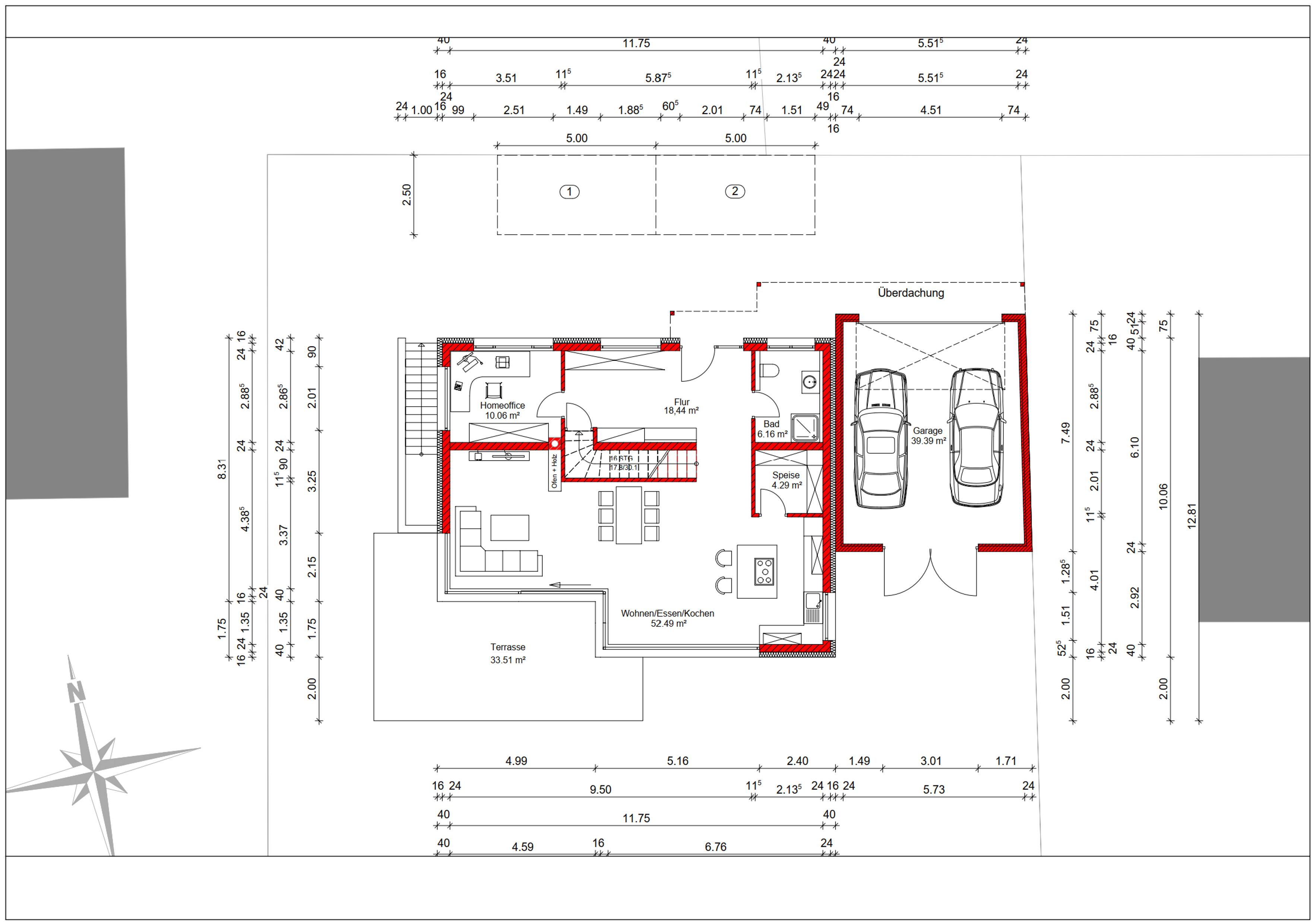
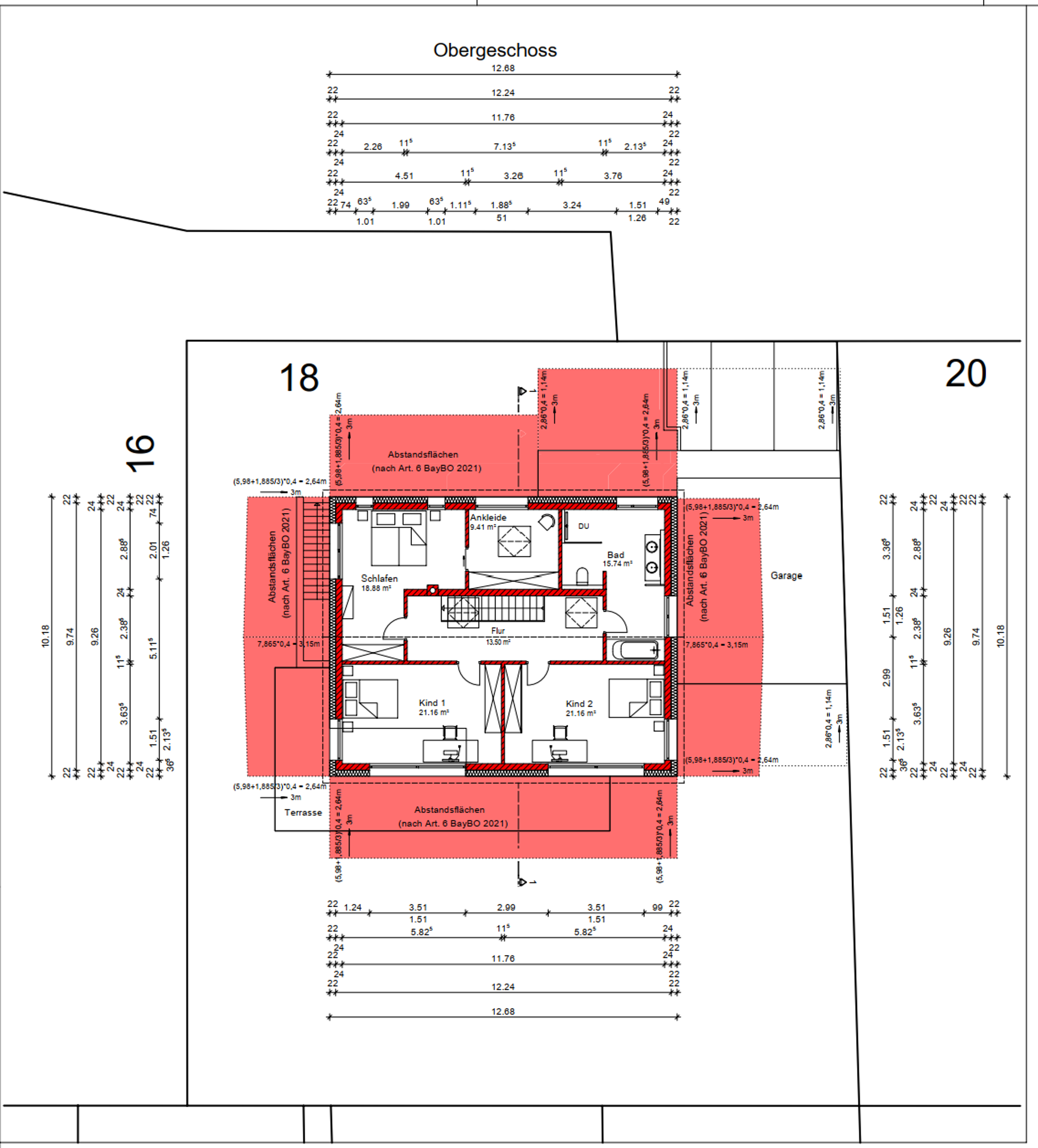
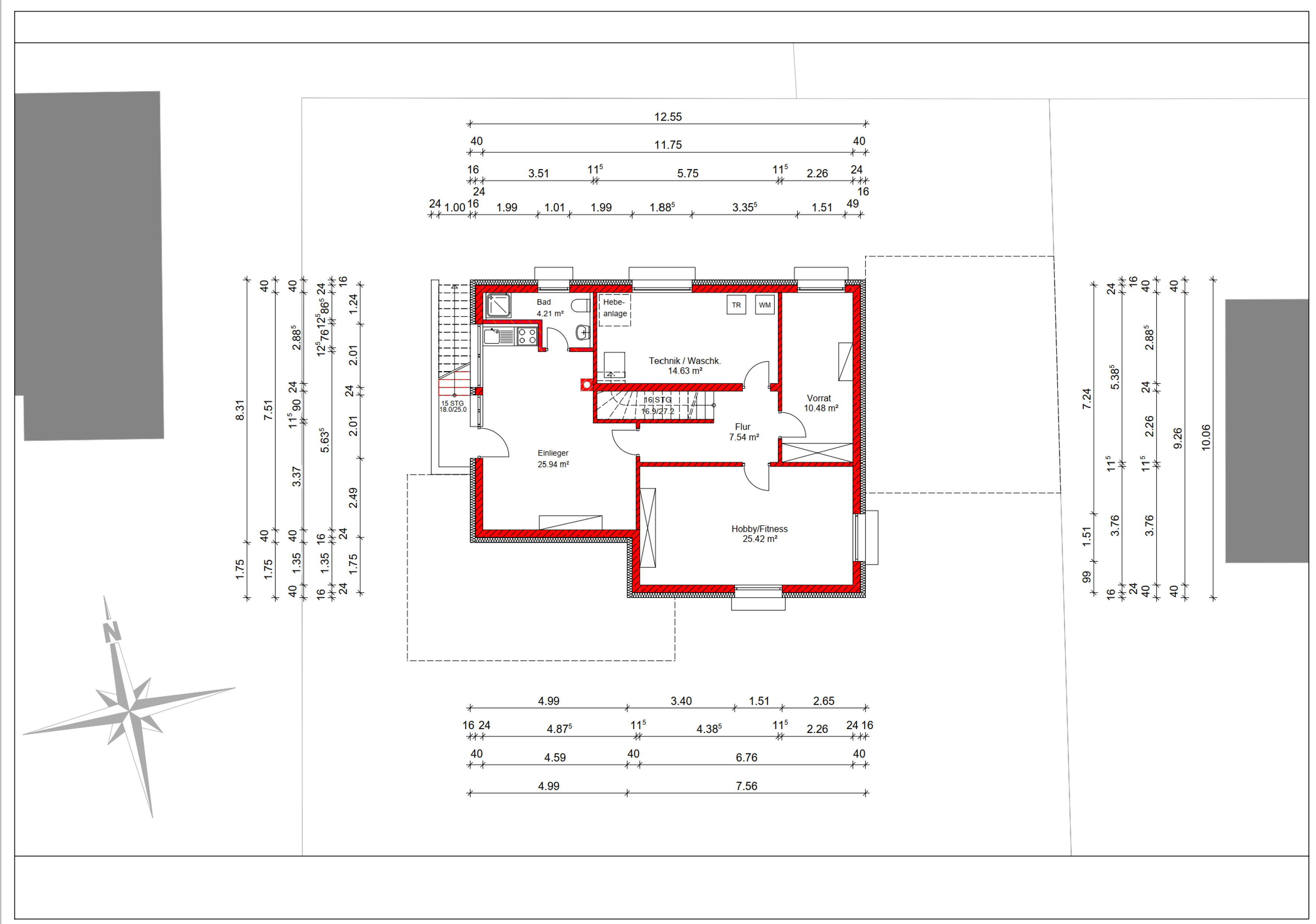
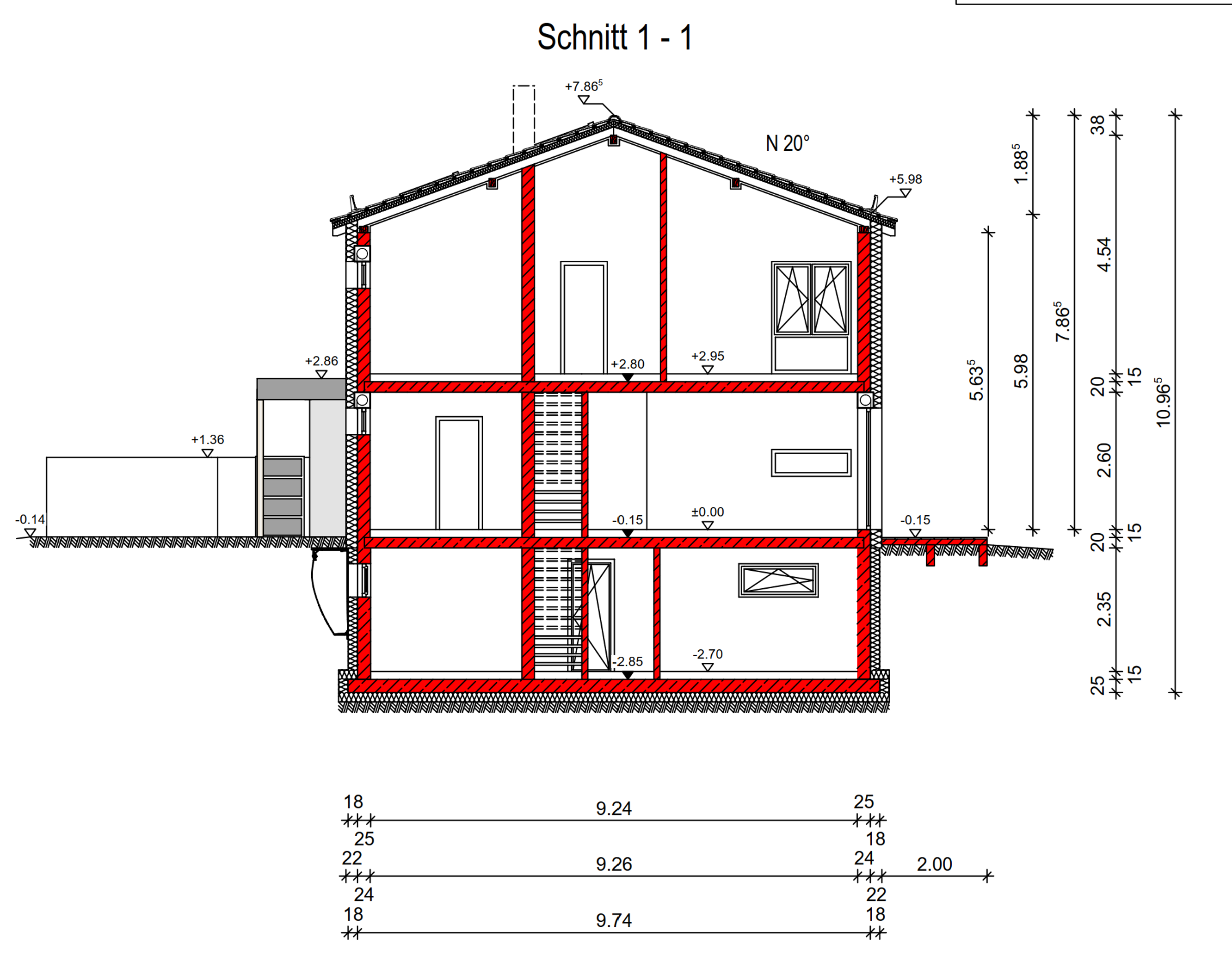
I’m new here and would like to briefly introduce myself and especially the construction project in Franconia / Bavaria: We originally planned to start in 2022, but due to unexpected changes in my family situation, I put the project on hold. The plot was / is already owned by us (with an older building still standing – it still needs to be demolished), but the timing wasn’t right.
Now we are entering the second phase, and all signals are “green.”
The current floor plan was created back then; since then, we’ve had some minor change requests and questions, which I have added below. But first, some basic data about the floor plans (including basement).
Zoning plan / restrictions
Plot size: 676m² (rectangular, approx. 26m wide and 26m long (86ft by 86ft))
Slope: none, completely flat
Site occupancy ratio (floor area ratio): 0.4
Plot ratio (floor space index): 0.8
Building envelope, building line and boundary: A front garden area of 5.00m (16ft) depth is defined that must remain free of construction; the building envelope starts from this 5-meter line and extends over the rear parts of the plot. The building envelope covers most of the plot’s width, but setback distances to the side plot boundaries (usually open construction, 3m / 10ft) must be maintained.
Edge construction: As far as I can see, permitted for trash storage shed, garage, and bike shelter
Number of parking spaces: space for 2 cars planned
Number of floors allowed: 2 full storeys allowed
Roof type: Gable roof with a pitch between 20° and 35°
Design style: no specific requirements
Orientation: no specific requirements
Maximum heights / limits: Knee wall max 0.5m (1.6ft) measured from the top edge of the structural ceiling of the attic floor to where the exterior wall meets the roof covering; eaves height max 7.5m (25ft)
Additional requirements: roof extensions are allowed
Client requirements
Style, roof shape, building type: Gable roof house with relatively shallow roof slope, planned as a prefab house.
Basement, floors: basement planned; plus ground floor (GF) and upper floor (UF)
Number and age of occupants: 4 people (two adults around 45 years old, children aged 7 and 13)
Room requirements on GF, UF: GF --> living-dining area, guest toilet including small shower – ideally barrier-free, office (frequently used), small pantry (directly connected to kitchen), UF --> bathroom, 2 children's rooms, 1 bedroom with small walk-in closet, possibly small storage room, possibly small second workspace for occasional remote working by both adults (can usually be avoided).
Guest overnight stays per year: very few --> no guest room needed or could be solved with sofa bed in the office.
Open or closed architecture: GF rather open, UF rather closed
Conservative or modern construction: likely more conservative
Open kitchen, kitchen island: open kitchen with kitchen island, accessible from both sides.
Number of dining seats: dining table for 6 people
Fireplace: no (or optional)
Music / stereo system: flat-screen TV mounted on the wall in the living area
Balcony, roof terrace: no
Garage, carport: garage for two cars, with trash shed and bike shelter desired at the edge of the plot (but less urgent)
Utility garden, greenhouse: not planned
Additional wishes / special features / daily routine, also explanations why certain things should or should not be: The desire is for a classic single-family home for a family of four with a permanent home office. Designed pragmatically, not fancy or architecturally elaborate. The house should be built as a “climate-friendly new construction.”
About the house design
Who is the designer?
Initial design by an independent architect based on our sketch
What do you particularly like? Why?
- Most of our basic concept and wishes have been implemented and, in our opinion, successfully
- Well-balanced room layout on the upper floor
What don’t you like? Why?
- For cost reasons, we might reduce to approximately 150m² (1615 sq ft) because the room sizes overall seem quite generous
- We would no longer want a granny flat; the basement should be purely utility space, not living space
- Are windows really necessary in the basement?
- The guest toilet on the ground floor should be barrier-free
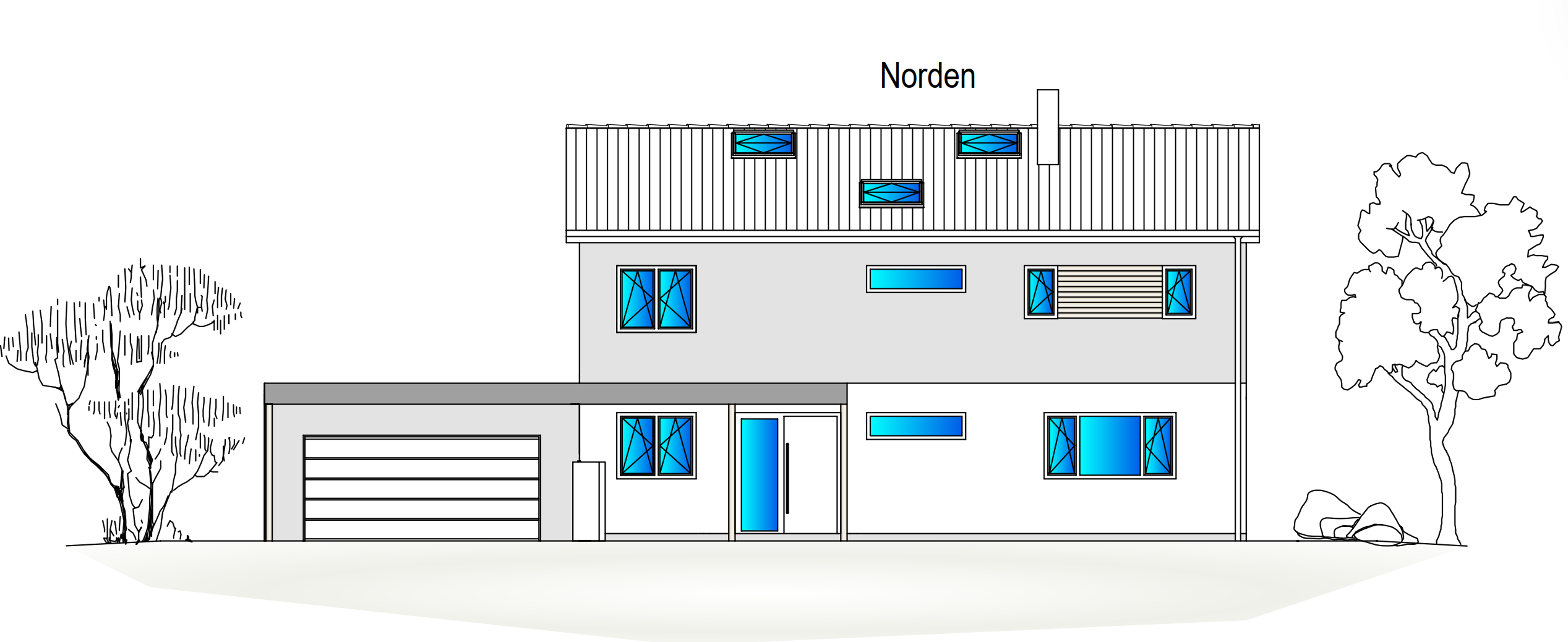
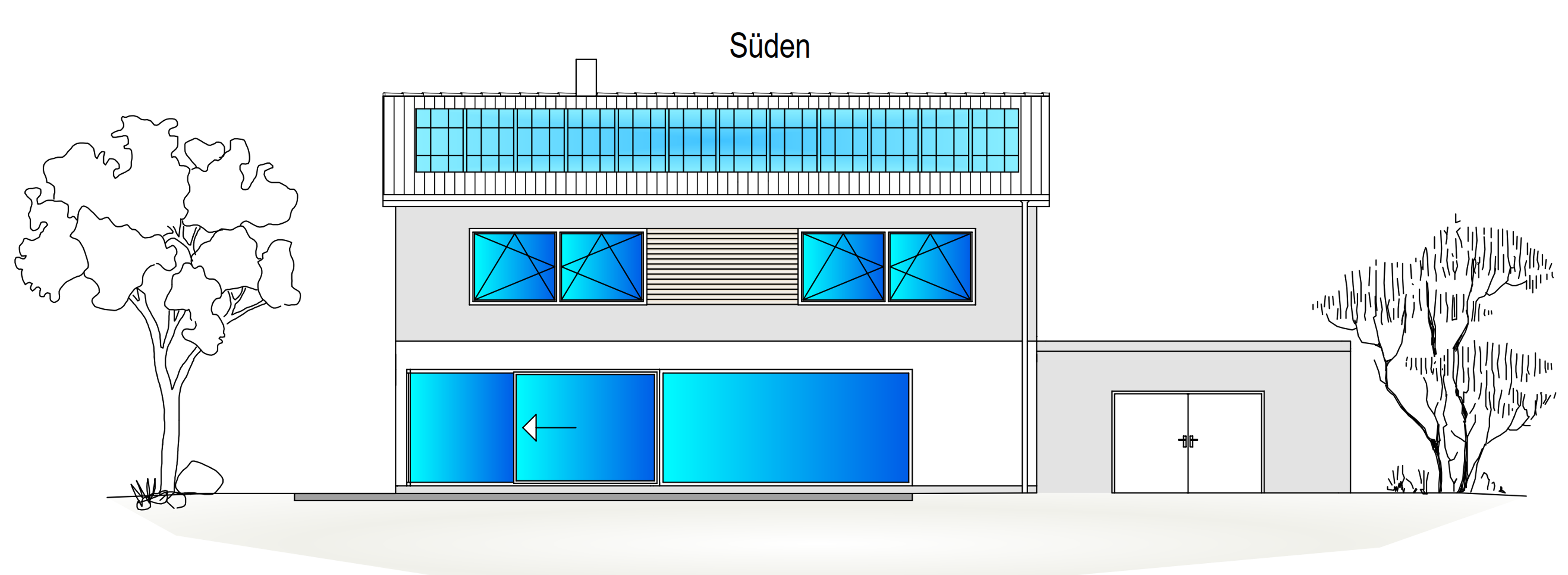
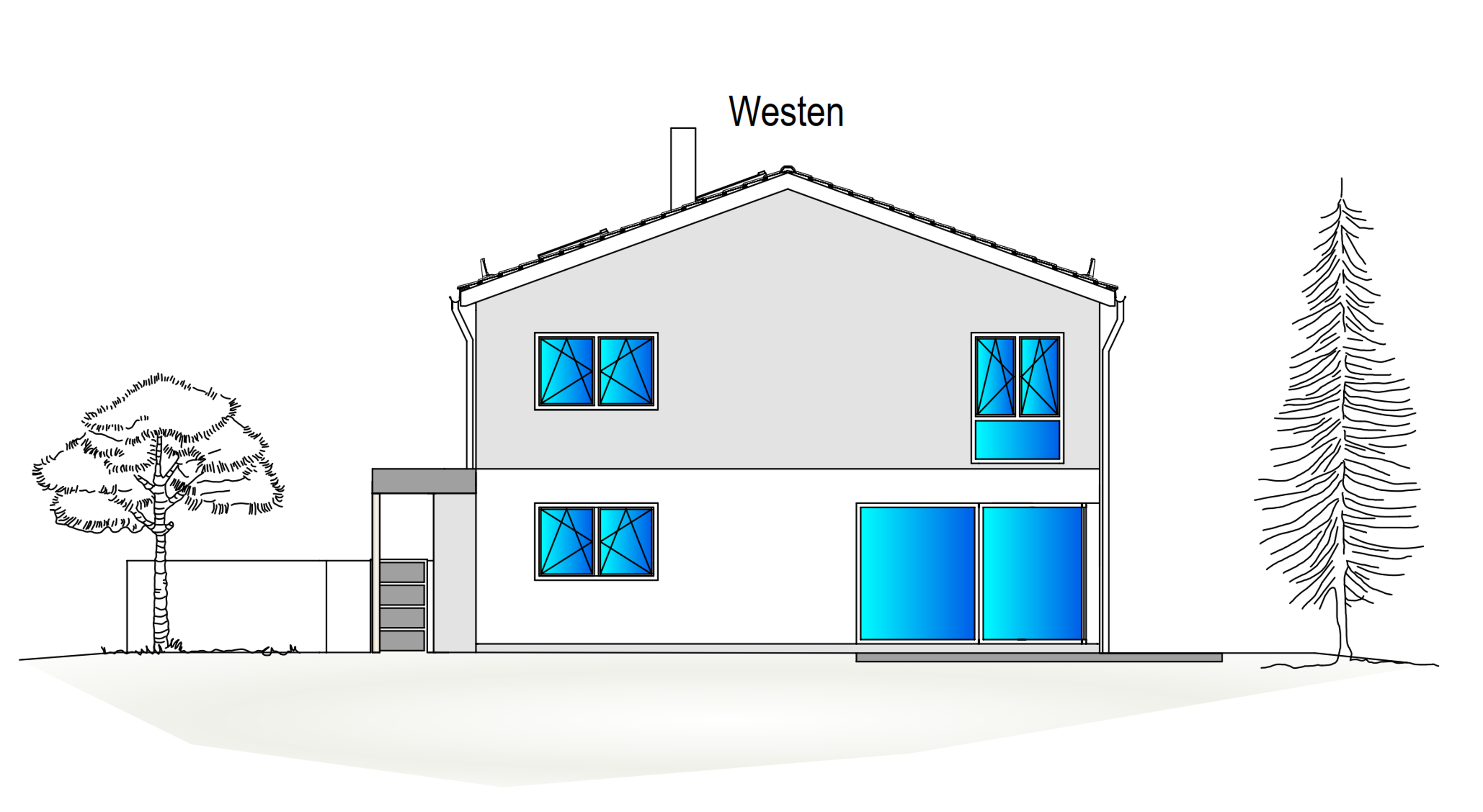
- The glass façades in the living area on the ground floor are too large for us: this increases costs and limits usable space for placing the sofa – which would have to be right in front of the glass façade, not ideal from our point of view
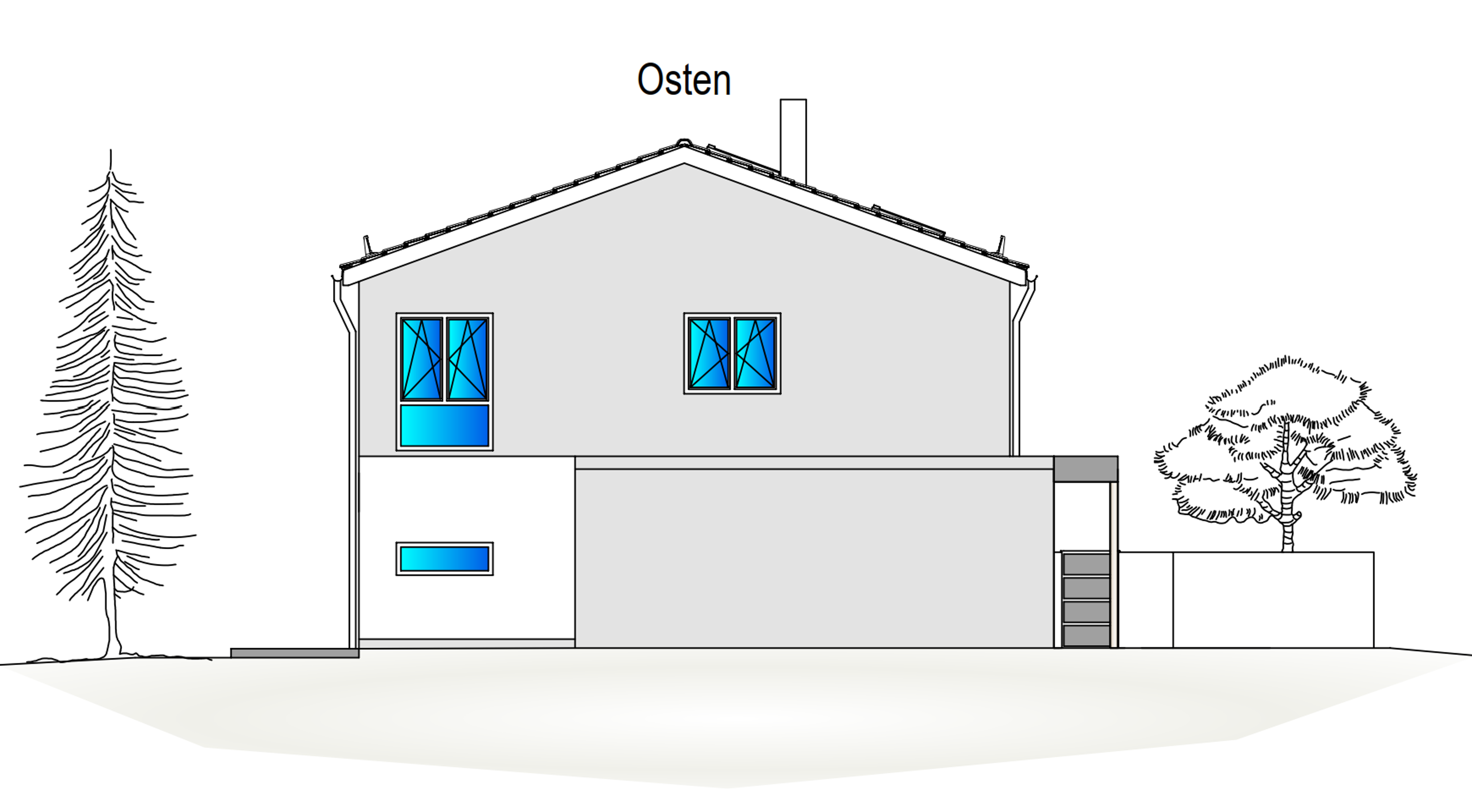
- The section shows we originally wanted an open sloped ceiling; since this was described by many prefab house providers in early talks as a “major cost driver,” we would waive it (which would mean the roof windows would also be omitted)
Price estimate from architect / planner: no estimate yet
Personal price limit for the house including fittings: 750,000€ (house incl. basement, ancillary costs, kitchen, garage, driveway/terrace; demolition of the existing building is calculated separately)
Preferred heating system: heat pump
If you have to compromise, on which details / expansions?
- Can do without: granny flat, open sloped ceiling, large glass fronts on the ground floor, overall floor area can be smaller
- Cannot do without: basement, kitchen island
Why is the design as it is?
We thought about room use in this family setup including home office needs, but we are not professionals. It is not something extravagant, just pragmatic.
Final comments
We appreciate honest assessments, tips, and constructive criticism – if we’ve missed important information, we’ll happily provide it. We plan to have the construction supervised by a prefab house expert, since we are complete novices regarding building inspections.
A heartfelt thanks in advance for your time and valuable feedback on our floor plan.
Minerva121
M
Minerva12119 Mar 2026 09:55ypg schrieb:
I would reconsider this: someone configured a BMW SUV but ends up buying a Dacia Duster because they have to, not because they want to. The priority is placed on the cargo area instead of comfort in the driver's area. You have to know whether the cargo space (basement) is justified. Very interesting comparison – I just fear that, due to my husband’s DIY hobby (which means a need for a workshop) and the space required for sports equipment, we have no choice regarding the basement. I know the basement discussion from friends – nowadays I would almost say it can be as sensitive a topic as religion, football teams, or politics! Without wanting to get psychological about it, I would also consider us more of “collectors” (e.g., keeping kids’ stuff “for later,” etc.).
The limitations that come with having to give up the BMW SUV are less significant than sacrificing priorities related to our hobbies. That’s probably the proverbial “bitter pill” we have to swallow.
H
hanghaus202319 Mar 2026 10:12Those who can afford to bite the bullet are clearly in a better position.
N
nordanney19 Mar 2026 10:19Minerva121 schrieb:
that we have no choice regarding the basement due to my husband’s affinity for DIY projects (-> workshop space) as well as the space needed for sports equipment. Saying "no choice" is more about what you want than a rational necessity. That’s perfectly fine, as long as it fits the budget.
… or you can think outside the box (workshop as an extension to the garage, storing miscellaneous stuff in the attic, an extra room for sports equipment, and no basement).
If the budget allows, go ahead and build the basement. But the quality of living is ultimately not defined by underground rooms, but first and foremost by a comfortable home. It’s a matter of priorities: a pleasant living space or an expensive home for all the clutter.

Minerva121 schrieb:
The Genese 2022 was a project planned with an independent architect who would have contracted and tendered individual trades with us in solid construction. However, the project could not be realized back then due to external factors (rising costs and uncertainties), as well as family changes, so we have now started to question these plans [...] The question about recommendations for finding an architect is probably hard to answer, but the sheer number of options makes the search complicated for us – like looking for a needle in a haystack. Reference projects, fixed-price billing instead of HOAI, independence from suppliers, etc. – there are many possible criteria for decision-making. There are also platforms that mediate architects. Maybe you have tips and experiences to share. With a single-family home, you are a small client for large architecture firms in terms of fees, so you should only look for architects who match that profile (I have explained this repeatedly: a one-person practice with a combined draftsman-construction manager and a part-time office assistant, listed in the industry directory with a basic entry and a barely existent website if any at all). Very often, an architect has more expertise in masonry than in timber construction, but this is not a problem as long as you have them create a design-neutral preliminary draft and only refine the draft specifically once insights from the initial phase arise. But I have mentioned and explained all this extensively here and on the external channel linked in my signature. The question about reference projects alone (not design examples, but budget-compliant completions!) reduces the haystack by a factor of one hundred and fifty with a single stroke. Billing different from the HOAI yes, but a fixed fee is unnecessary; a budget bonus is more helpful. I do not mediate architects, but I do assist in specifically searching for and finding them. What about the architect found in 2022: have they retired or would clever criteria have excluded them in the first place?
Minerva121 schrieb:
Reducing space requirements is one lever; professional changes associated with long-term planning security and greater financial leeway are another. [...] However, the project could not be realized back then due to external factors (rising costs and uncertainties), as well as family changes, so we have now started to question these plans [...] We have taken that on board and will significantly reduce space – we want to place the planned living space at about 160 sqm (roughly 1,722 sq ft). We do not want to give up the basement yet. We are now searching for an independent architect to create a new design including some proposals from these discussions here. It is important to clarify space requirements not in the drawing phase but before starting to draft. I don’t understand why this is handled so awkwardly: most people asking questions don’t live under a bridge or in a hotel but already have stable living conditions that can be analyzed. First, they can write down their program of requirements and check it: if they continue it 1:1, the two children will each want their own room, should the dining area be integrated into the kitchen, the living room, or should there be an open-plan space, should the wardrobe move out of the bedroom and the desk as well, and so on. Then you sketch the rooms of the current home and note the bottlenecks (absolute bottlenecks: places where you literally get bruised / relative bottlenecks: a desired margin of comfort, like a wish to luck). From this, a list of rooms with their current and desired sizes emerges. Don’t forget circulation allowances, multiply the total floor area by 3k, and check if the budget can handle that. Dumping all the notes and forum opinions on the architect’s desk is nonsense – it’s better to make a checklist against which you verify the scribbles from the architect discussions. I did not quite understand the comments about the budget: the plans from 2022 could not be implemented due to rising costs, now funds are more flexible, but how exactly: just enough to realize the old plans, or more generous? (If more generous, I would still avoid over-satisfying needs, as according to fuel price boards, there will likely be further purchasing power losses before moving in.)
Minerva121 schrieb:
hence the post in this forum, where we had previously only been readers. What exactly have you followed so far or in the meantime: just the revival of @wiltshire, the disappearance of @Nordlys, the still unresolved deletion of @i_b_n_a_n’s construction blog, the steady minor progress of @LordNibblers changing a wheel while driving, the warnings about blacklisted architects by @Gerddieter, my input here and elsewhere, or only the earth cellar of @Steffi33?
Minerva121 schrieb:
Minerva121
We do not want to give up the basement yet. If the productivity of the workbench in the husband’s hobby room outweighs the additional cost of the basement, then why not. @ateliersiegel is probably the most active workbench advocate here, does your husband exceed this benchmark significantly? - if not, I still see my question mark behind your basement as unresolved.
https://www.instagram.com/11antgmxde/
https://www.linkedin.com/company/bauen-jetzt/
H
hanghaus202319 Mar 2026 12:53If the basement is non-negotiable, then a house smaller than 11 x 9 meters (36 x 30 feet) can still be planned very well without significantly reducing the size of the living room, dining area, and kitchen.
In that case, it would be more of a utility basement.
In that case, it would be more of a utility basement.
M
motorradsilke19 Mar 2026 14:28nordanney schrieb:
Or you can think outside the box (a workshop as an extension to the garage, storage space for odds and ends in the attic, an additional exercise room, and no basement).
If the budget allows, then build the basement. However, living quality is defined less by underground spaces and more by having a comfortable home. These are priorities you need to set: live nicely or provide expensive space for clutter. But for year-round use, the extension would also need to be insulated and heated. Is that really cheaper? And does it offer the same level of usability?
Sports and hobbies are important aspects of life that also contribute to living quality.
Similar topics