
Hello everyone,
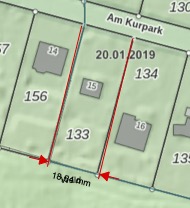
we are planning our single-family home and need your support. We have received the initial designs from the architect and are generally quite satisfied with them. What we really don’t like is the huge hallway on the ground floor, which despite its size doesn’t offer a good place for a coat rack and a bench, but we also can’t think of a better alternative. Due to restrictions (neighboring buildings), we are not allowed to build larger than 12x12m (39x39 ft) and we have to install an elevator so the upper floor is accessible for me as a (part-time) wheelchair user. We want to install a platform lift (probably from the company aritco); it does not have to be directly next to the stairs but could be installed anywhere else in the house.
Development plan / Restrictions
Plot size: approx. 900sqm (9700 sq ft)
Slope: the plot slightly slopes upward towards the back (towards the forest)
Site coverage ratio: 1
Floor area ratio: 2
Parking spaces: 2
Number of floors: max 2 full floors
Roof type: hipped roof
Style: modern
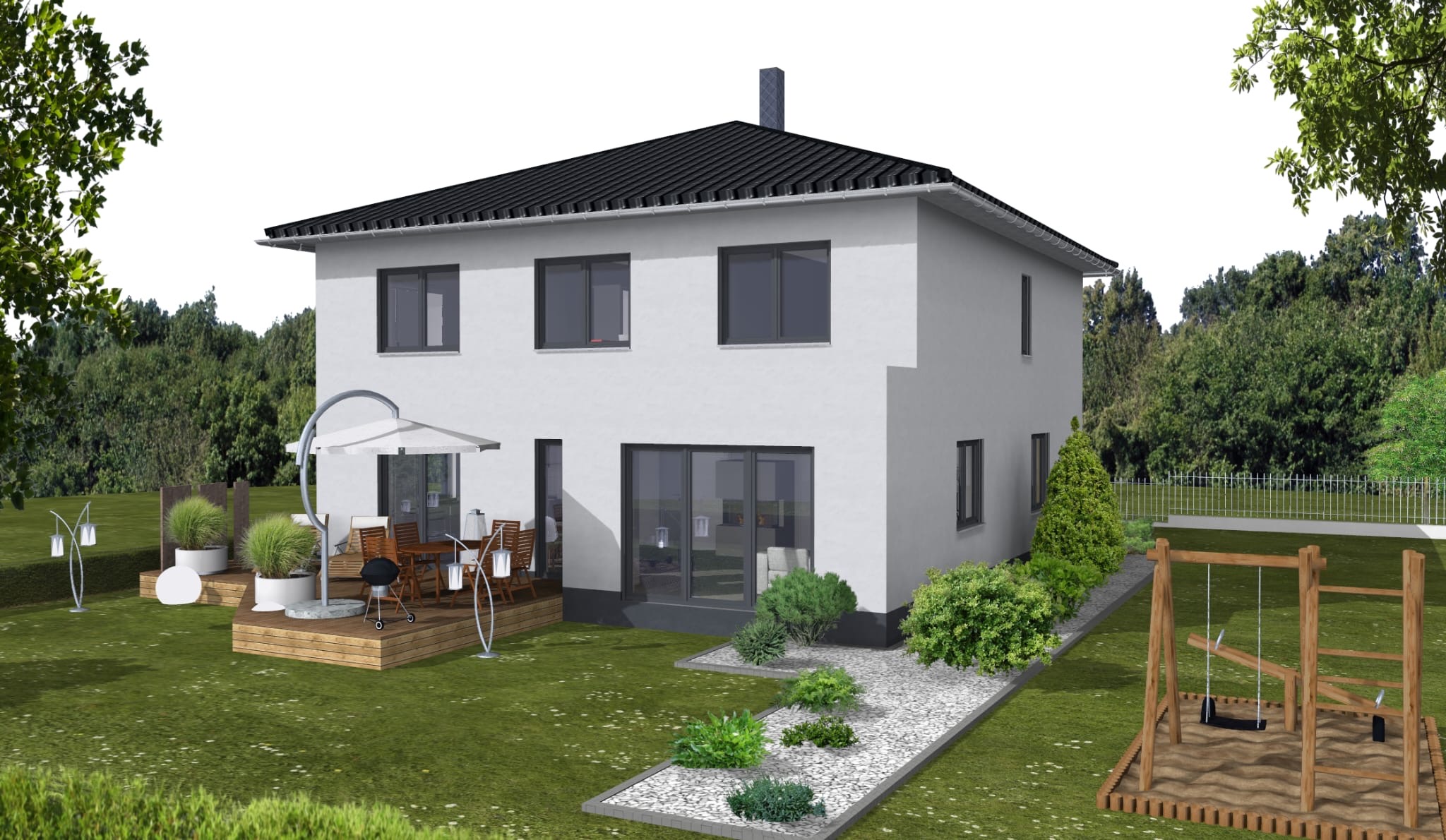
Orientation: terrace facing south (forest)
Other requirements: neighboring buildings: max 12x12m (39x39 ft) footprint plus roof overhang
Owners’ requirements
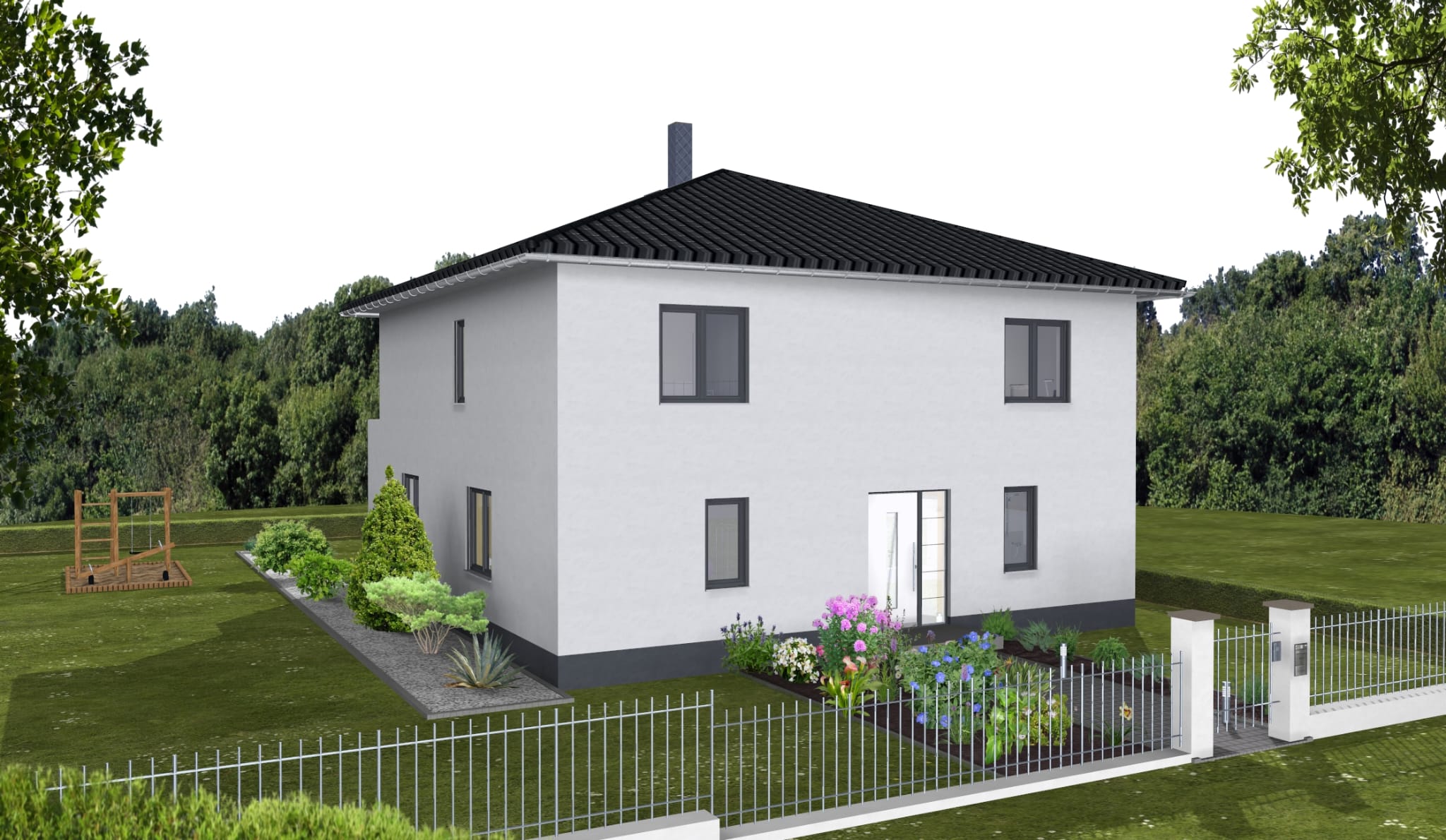
Style, roof type, building type: “city villa” with two full floors, hipped roof
Basement, floors: no basement
Number of occupants, age: two adults, one of whom is a wheelchair user, currently one child (2 years old), another child planned
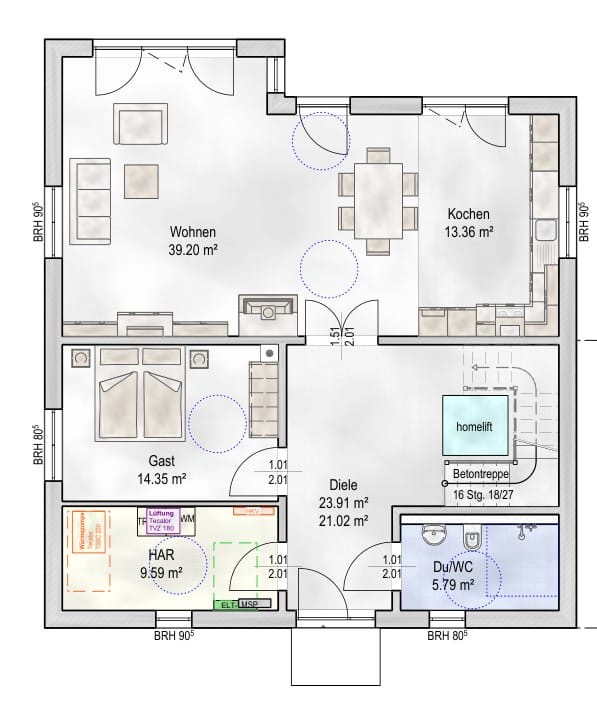
Space requirements on the ground floor: guest room (non-negotiable due to frequent overnight guests), guest bathroom with shower, utility room, living area with open kitchen
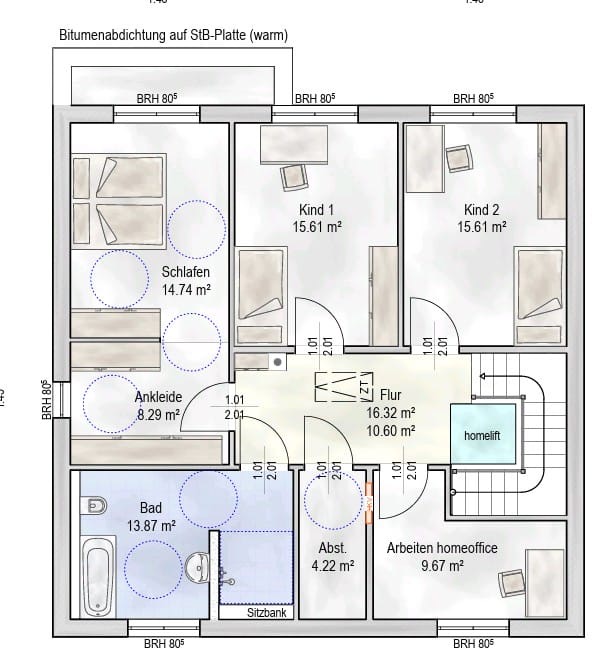
Space requirements on the upper floor: bedroom with walk-in closet, two children’s rooms, office, bathroom with tub and shower
Office: permanent home office
Number of overnight guests per year: many
Open kitchen with cooking island
Number of dining seats: currently 3, later 4
Fireplace: yes
Music / stereo wall: yes
Balcony, roof terrace: ground floor terrace
Garage, carport: probably a carport, not yet planned
Additional wishes / special features / daily routine: It is particularly important that the entire house is easy to use with a wheelchair.
House design
Who designed it:
- Design comes from the architect of the construction company
Overall, we like the design, but we find the ground floor hallway far too large and impractical. What we have already redesigned is the storage room on the upper floor; here we distributed the space to the bathroom and office. We could also imagine swapping the utility room and guest bathroom on the ground floor; it is important that there is space for a coat rack with a bench near the front door. We had considered planning a storage room under the stairs for the wheelchair and stroller, but currently you would have to walk through the entire hallway to get there, making everything dirty.
We cannot do without the guest room or the office; it doesn’t work for us to combine both in one room as we have guests very often during the week and the home office is used permanently.
I look forward to your ideas.
we are planning our single-family home and need your support. We have received the initial designs from the architect and are generally quite satisfied with them. What we really don’t like is the huge hallway on the ground floor, which despite its size doesn’t offer a good place for a coat rack and a bench, but we also can’t think of a better alternative. Due to restrictions (neighboring buildings), we are not allowed to build larger than 12x12m (39x39 ft) and we have to install an elevator so the upper floor is accessible for me as a (part-time) wheelchair user. We want to install a platform lift (probably from the company aritco); it does not have to be directly next to the stairs but could be installed anywhere else in the house.
Development plan / Restrictions
Plot size: approx. 900sqm (9700 sq ft)
Slope: the plot slightly slopes upward towards the back (towards the forest)
Site coverage ratio: 1
Floor area ratio: 2
Parking spaces: 2
Number of floors: max 2 full floors
Roof type: hipped roof
Style: modern
Orientation: terrace facing south (forest)
Other requirements: neighboring buildings: max 12x12m (39x39 ft) footprint plus roof overhang
Owners’ requirements
Style, roof type, building type: “city villa” with two full floors, hipped roof
Basement, floors: no basement
Number of occupants, age: two adults, one of whom is a wheelchair user, currently one child (2 years old), another child planned
Space requirements on the ground floor: guest room (non-negotiable due to frequent overnight guests), guest bathroom with shower, utility room, living area with open kitchen
Space requirements on the upper floor: bedroom with walk-in closet, two children’s rooms, office, bathroom with tub and shower
Office: permanent home office
Number of overnight guests per year: many
Open kitchen with cooking island
Number of dining seats: currently 3, later 4
Fireplace: yes
Music / stereo wall: yes
Balcony, roof terrace: ground floor terrace
Garage, carport: probably a carport, not yet planned
Additional wishes / special features / daily routine: It is particularly important that the entire house is easy to use with a wheelchair.
House design
Who designed it:
- Design comes from the architect of the construction company
Overall, we like the design, but we find the ground floor hallway far too large and impractical. What we have already redesigned is the storage room on the upper floor; here we distributed the space to the bathroom and office. We could also imagine swapping the utility room and guest bathroom on the ground floor; it is important that there is space for a coat rack with a bench near the front door. We had considered planning a storage room under the stairs for the wheelchair and stroller, but currently you would have to walk through the entire hallway to get there, making everything dirty.
We cannot do without the guest room or the office; it doesn’t work for us to combine both in one room as we have guests very often during the week and the home office is used permanently.
I look forward to your ideas.
gsn24 schrieb:
(part-time) wheelchair user Oh, that doesn’t sound good. But what does it mean for you and the house? What is your prognosis? Since the house is meant to be your home for quite some time, it would be important for me as an advisor to know what to expect going forward.
As a quick idea, I would convert the large guest room into a bedroom with a master bathroom and move the technical room and guest room upstairs.
(The large hallway is due to the elevator’s placement within the staircase core). This might be optimized.
ypg schrieb:
But what does it mean for you and the house? What is your outlook? Hello ypg, thanks for your quick reply. For us, it means building the entire house wheelchair-accessible, so that the most important rooms remain easily accessible and usable for me in the long term. I can’t give you a precise outlook; it’s possible that I will need to use the wheelchair inside the house in the future, although currently I only use it outdoors.
ypg schrieb:
My immediate thought would be to convert the large guest room into a bedroom with an ensuite bathroom, and move the technical room and guest room upstairs. Why would you do it that way? With the lift, the upper floor is always accessible to me as well.
ypg schrieb:
that might work better. Yes, that was also our idea. Do you have a suggestion?
gsn24 schrieb:
Why would you do it that way? With the elevator, the upper floor is always accessible to me. But with some effort! When I think about how often I use the stairs just to get something from the walk-in closet, to go to my spacious bathroom, or because I forgot something by the bed—and have cursed the stairs more than once—an elevator is certainly practical for moving between floors, but it still represents an obstacle, even if only a time-related one.
When I first read about the 12 x 12, I thought (without seeing the design): great, 120m² (1300 sq ft) on one level is the best setup for two people living on one floor. Then adding two kids’ rooms and an office/guest room in the attic provides a well-organized single-story home with a finished roof space underneath.
Then I read the word “townhouse,” and I thought that, for me, this doesn’t really fit with the concept of wheelchair-accessible living. Of course, I don’t want to exaggerate the 12 x 12 footprint too much, so upstairs space is necessary, but even an elevator doesn’t offer unlimited freedom of movement. Sitting in the elevator cabin with an infant going up to the bedroom is far from simple. I’m also looking for adequate space in this rather large house for washing and drying laundry.
gsn24 schrieb:
Space requirements on the ground floor: guest room (non-negotiable as there are frequent overnight visitors) I think it’s pointless to keep a large room free on the ground floor for guests who will supposedly visit frequently when that space is really needed for everyday living by the residents themselves—not by guests who are just visitors and have their own homes.
I’m not doubting the guest room at all, but it can be placed upstairs as well.
Now you also mention that you can currently manage in the house without a wheelchair. But apparently, this applies more to an extension of the house rather than being a temporary situation; it’s more permanent and has a rather negative outlook.
But that’s just my opinion.
gsn24 schrieb:
yes, that. that was our thought too, do you have a suggestion? Well, you can’t just move the stairs and call it done. That will affect and change every room.
I completely agree with Yvonne @ypg on this.
12x12 m (39x39 feet) … square houses are basically the worst starting point for a well-designed room layout.
If I am reading this correctly, the circulation spaces are currently planned with a diameter of 100 cm (39 inches). Is that ideal if wheelchair use inside the house is also a possibility? Shouldn’t at least the private sleeping and bathroom areas have circulation spaces up to 150 cm (59 inches)?
Who is using the home office? The wheelchair user?
I believe this house design should be developed with specialists experienced in accessible housing design.
And all life situations should really be considered. I would also expect guests to be accommodated upstairs, possibly along with the technical room / utility room.
12x12 m (39x39 feet) … square houses are basically the worst starting point for a well-designed room layout.
If I am reading this correctly, the circulation spaces are currently planned with a diameter of 100 cm (39 inches). Is that ideal if wheelchair use inside the house is also a possibility? Shouldn’t at least the private sleeping and bathroom areas have circulation spaces up to 150 cm (59 inches)?
Who is using the home office? The wheelchair user?
I believe this house design should be developed with specialists experienced in accessible housing design.
And all life situations should really be considered. I would also expect guests to be accommodated upstairs, possibly along with the technical room / utility room.

gsn24 schrieb:
further requirements: neighboring buildings: max 12x12m (39x39 ft) built-up area plus roof overhang kbt09 schrieb:
12x12 m (39x39 ft)... square houses are basically the worst basis for a successful room layout. From the cadastral excerpt, I don’t see any such specific building envelope defined, nor can I really imagine a clearly codified 12x12 m (39x39 ft) square being prescribed under §34. It would be more likely based on the actual floor area ratio, which would result in around 140 m² (1507 ft²) of floor space. A square floor plan would only be tolerable starting at about 12 m (39 ft) edge length (excluding any allowance for mobility impairments). I would therefore clearly prefer and recommend a rectangular ratio further from square (at least 5:4). What is the purpose of the living room indentation?
gsn24 schrieb:
We have received the architect’s first drafts and are basically quite satisfied with them. The integration into the surroundings does not seem realistic to me. I assume the “architect” is located in the back office of the sales representative and generally recommend a supplier- (and construction method-) neutral “Module A” planning, and also to have a look at nullbarriere.de. One swallow does not make a summer, and likewise, just marking wheelchair turning circles does not guarantee accessibility.
gsn24 schrieb:
I can’t give you an exact forecast; it is possible that I will use the wheelchair inside the house in the future, currently I only use it outside. A forecast combined with currently only outdoor use suggests something like MS or similar. Muscle weakness, balance disorders, these are just some of the reasons for using a mobility aid. How far is it determined whether an elevator is actually more suitable than a stairlift?
ypg schrieb:
I consider it pointless to reserve a large room on the ground floor for guests who are supposed to visit frequently, if the room or space is more practically needed for daily use by the residents, not by guests who are just guests and have their own home. At least placing a guest room on the ground floor also “puts load” there, which can influence a decision for a “one-and-a-half-story” house instead of a villa with full additional floor. In any case, I would locate it where it better balances the overall floor plan planning considerations.
https://www.instagram.com/11antgmxde/
https://www.linkedin.com/company/bauen-jetzt/
Similar topics