
Hello everyone,
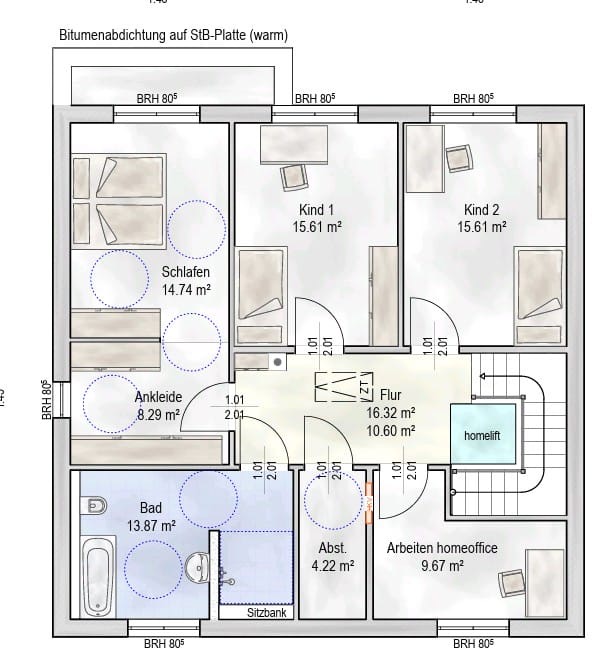
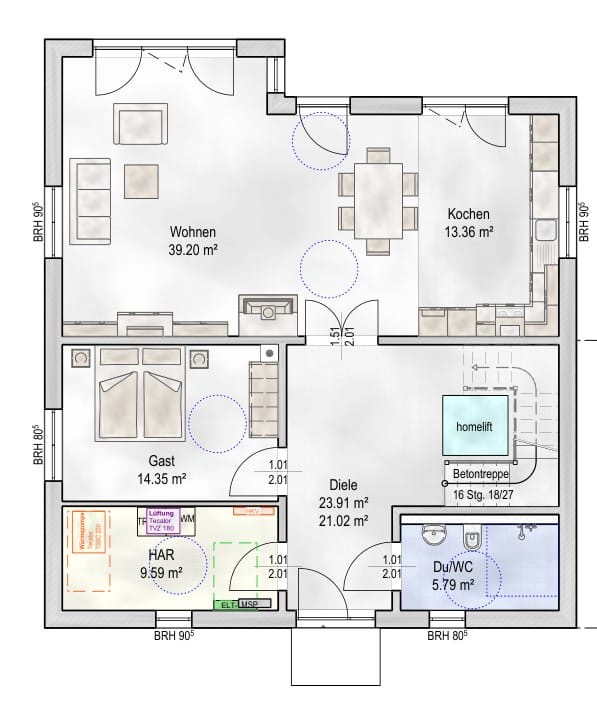
we are planning our single-family home and need your support. We have received the initial designs from the architect and are generally quite satisfied with them. What we really don’t like is the huge hallway on the ground floor, which despite its size doesn’t offer a good place for a coat rack and a bench, but we also can’t think of a better alternative. Due to restrictions (neighboring buildings), we are not allowed to build larger than 12x12m (39x39 ft) and we have to install an elevator so the upper floor is accessible for me as a (part-time) wheelchair user. We want to install a platform lift (probably from the company aritco); it does not have to be directly next to the stairs but could be installed anywhere else in the house.
Development plan / Restrictions
Plot size: approx. 900sqm (9700 sq ft)
Slope: the plot slightly slopes upward towards the back (towards the forest)
Site coverage ratio: 1
Floor area ratio: 2
Parking spaces: 2
Number of floors: max 2 full floors
Roof type: hipped roof
Style: modern
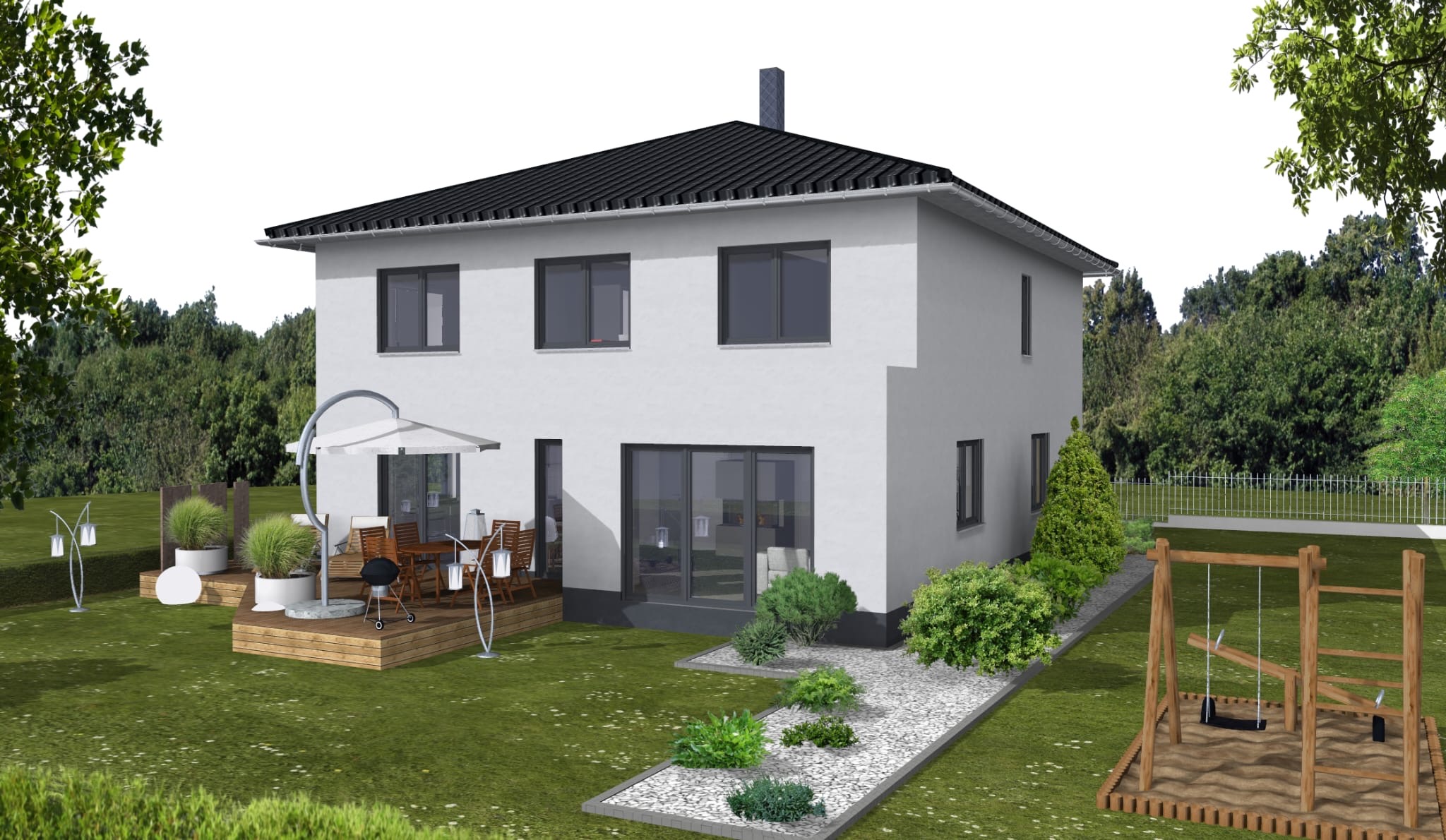
Orientation: terrace facing south (forest)
Other requirements: neighboring buildings: max 12x12m (39x39 ft) footprint plus roof overhang
Owners’ requirements
Style, roof type, building type: “city villa” with two full floors, hipped roof
Basement, floors: no basement
Number of occupants, age: two adults, one of whom is a wheelchair user, currently one child (2 years old), another child planned
Space requirements on the ground floor: guest room (non-negotiable due to frequent overnight guests), guest bathroom with shower, utility room, living area with open kitchen
Space requirements on the upper floor: bedroom with walk-in closet, two children’s rooms, office, bathroom with tub and shower
Office: permanent home office
Number of overnight guests per year: many
Open kitchen with cooking island
Number of dining seats: currently 3, later 4
Fireplace: yes
Music / stereo wall: yes
Balcony, roof terrace: ground floor terrace
Garage, carport: probably a carport, not yet planned
Additional wishes / special features / daily routine: It is particularly important that the entire house is easy to use with a wheelchair.
House design
Who designed it:
- Design comes from the architect of the construction company
Overall, we like the design, but we find the ground floor hallway far too large and impractical. What we have already redesigned is the storage room on the upper floor; here we distributed the space to the bathroom and office. We could also imagine swapping the utility room and guest bathroom on the ground floor; it is important that there is space for a coat rack with a bench near the front door. We had considered planning a storage room under the stairs for the wheelchair and stroller, but currently you would have to walk through the entire hallway to get there, making everything dirty.
We cannot do without the guest room or the office; it doesn’t work for us to combine both in one room as we have guests very often during the week and the home office is used permanently.
I look forward to your ideas.
we are planning our single-family home and need your support. We have received the initial designs from the architect and are generally quite satisfied with them. What we really don’t like is the huge hallway on the ground floor, which despite its size doesn’t offer a good place for a coat rack and a bench, but we also can’t think of a better alternative. Due to restrictions (neighboring buildings), we are not allowed to build larger than 12x12m (39x39 ft) and we have to install an elevator so the upper floor is accessible for me as a (part-time) wheelchair user. We want to install a platform lift (probably from the company aritco); it does not have to be directly next to the stairs but could be installed anywhere else in the house.
Development plan / Restrictions
Plot size: approx. 900sqm (9700 sq ft)
Slope: the plot slightly slopes upward towards the back (towards the forest)
Site coverage ratio: 1
Floor area ratio: 2
Parking spaces: 2
Number of floors: max 2 full floors
Roof type: hipped roof
Style: modern
Orientation: terrace facing south (forest)
Other requirements: neighboring buildings: max 12x12m (39x39 ft) footprint plus roof overhang
Owners’ requirements
Style, roof type, building type: “city villa” with two full floors, hipped roof
Basement, floors: no basement
Number of occupants, age: two adults, one of whom is a wheelchair user, currently one child (2 years old), another child planned
Space requirements on the ground floor: guest room (non-negotiable due to frequent overnight guests), guest bathroom with shower, utility room, living area with open kitchen
Space requirements on the upper floor: bedroom with walk-in closet, two children’s rooms, office, bathroom with tub and shower
Office: permanent home office
Number of overnight guests per year: many
Open kitchen with cooking island
Number of dining seats: currently 3, later 4
Fireplace: yes
Music / stereo wall: yes
Balcony, roof terrace: ground floor terrace
Garage, carport: probably a carport, not yet planned
Additional wishes / special features / daily routine: It is particularly important that the entire house is easy to use with a wheelchair.
House design
Who designed it:
- Design comes from the architect of the construction company
Overall, we like the design, but we find the ground floor hallway far too large and impractical. What we have already redesigned is the storage room on the upper floor; here we distributed the space to the bathroom and office. We could also imagine swapping the utility room and guest bathroom on the ground floor; it is important that there is space for a coat rack with a bench near the front door. We had considered planning a storage room under the stairs for the wheelchair and stroller, but currently you would have to walk through the entire hallway to get there, making everything dirty.
We cannot do without the guest room or the office; it doesn’t work for us to combine both in one room as we have guests very often during the week and the home office is used permanently.
I look forward to your ideas.
H
hanghaus202316 Mar 2026 13:37What do you understand by a slight slope? In my opinion, the planner has not taken it into account.
Is there a site plan with elevation levels?
Where will the parking space for the vehicle be located?
Forget quickly about the subsidy from the care insurance. €4180 is not enough to justify considering an elevator. Are there any other residents with a care level?
Did I miss the information about the budget?
A house measuring 10m by 15m (33 by 49 feet) with 1.5 floors and a pitched roof is easier to plan than the city villa.
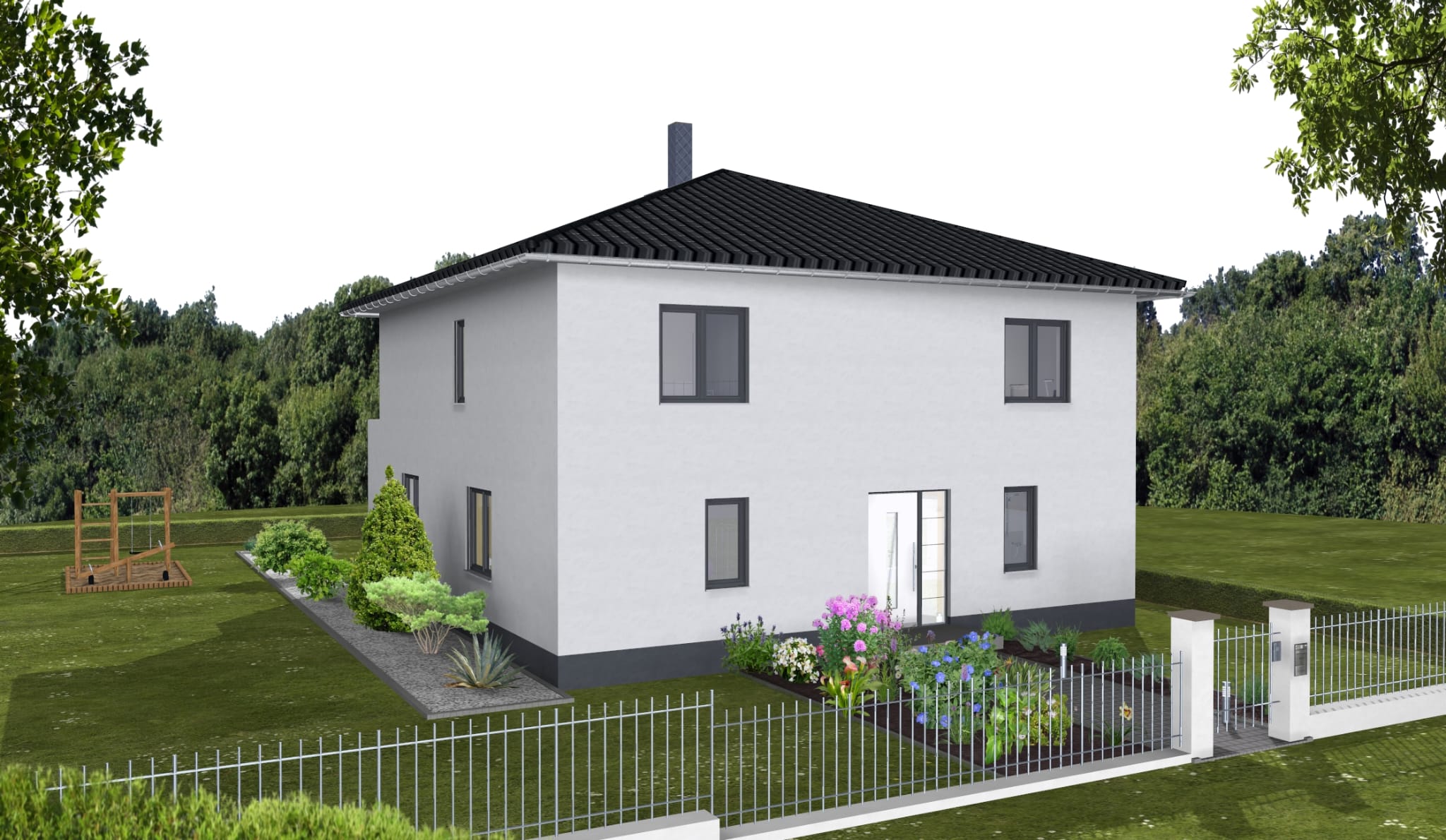
Including the exterior landscaping in the planning is essential when there is a mobility impairment. Does the entrance have stairs? Unfortunately, this is not visible in the elevations.
Is there a site plan with elevation levels?
Where will the parking space for the vehicle be located?
Forget quickly about the subsidy from the care insurance. €4180 is not enough to justify considering an elevator. Are there any other residents with a care level?
Did I miss the information about the budget?
A house measuring 10m by 15m (33 by 49 feet) with 1.5 floors and a pitched roof is easier to plan than the city villa.
Including the exterior landscaping in the planning is essential when there is a mobility impairment. Does the entrance have stairs? Unfortunately, this is not visible in the elevations.
hanghaus2023 schrieb:
Forget about the care fund subsidy for now. €4180 (about $4600) is not worth considering an elevator. Are there any other residents with a care level? It doesn’t really matter. With 220 sqm (2370 sq ft) of living space, every cent you can get is welcome.

nordanney schrieb:
the time when the kids “curse” you, precisely because they sleep on the same floor as you I generally recommend to those seeking advice to group the rooms designated as "child, guest, office" and think of them fluidly—that is, arranged in a gradation of interchangeable sizes and distributed throughout the house. If all the rooms in the "KGB" group are equipped with network outlets and sized, for example, at 13/15/17 sqm (140/160/180 sq ft), then their uses can be swapped flexibly and evolve with the family. Very young children sleep near the parents, small children share the same room, older children want their own spaces, and teenagers generally prefer more distance from the parents. The home office occupies whatever space remains.
hanghaus2023 schrieb:
A 10 by 15-meter house with 1.5 stories and a pitched roof is easier to plan than a townhouse. There is no universally better house shape!
It has already been mentioned that the available footprint is limited. This raises the question of whether the required living area can be accommodated on about 1.2 times the footprint (then a one-and-a-half-story house makes sense) or whether 1.6 times the footprint is needed (then a townhouse-type house would be appropriate). It all starts with a qualified room program sorted into three categories (assignments to upper floor, lower floor, or flexible), where storage rooms belong in the "flexible" category. A utility room can be divided if necessary: entries downstairs, technical equipment upstairs. Next, you create two totals (A with all flexible rooms upstairs, B with all flexible rooms downstairs) and compare them. A structural load distribution ground floor:upper floor of about 65:35 suggests a one-and-a-half-story house; about 50:50 suggests a townhouse. Then you adjust the flexible rooms until one of these load distribution patterns is approximated. It can help to also include the “KGB” rooms in this consideration.
A typical family can thus search for catalog house proposals accordingly. If there is a third child and/or a second home office, this usually leads to extending the building lengthwise (adding rooms along the ridge axis of a catalog house proposal). In cases of mobility restrictions, standard catalog house proposals are no longer suitable for unchanged or simply “extended” adoption but may only serve as inspiration for a floor plan layout—usually requiring upscale adjustments in both dimensions. For accessibility, a central staircase location is preferred, which is otherwise usually free in the townhouse design.
Both house types share the fact that a fixed square footprint is almost certain to cause frustration not only for amateur planners. Favorable aspect ratios usually range between about 5:4 and 5:3. It is best to begin detailed planning on the more demanding floor, which is regularly (in both house types) the upper floor. For users with folding wheelchairs or crutches, an increase of about ten percent in space may be sufficient; with powered wheelchairs, significantly more space will generally be needed, depending on the walking pattern with rollators.
I mentioned the alternative of a stair lift instead of a vertical lift (and likewise an attic floor instead of an upper floor) merely as a suggestion, without giving a fundamental preference to either option. A vertical lift is usually most economically placed within the stairwell, as outlined in the original post—something not foreseen in standard catalog house designs.
So I see the original poster facing two main questions: first, “Does she have a typical family (two adults, two children)?” and second, “Does her budget allow for approximately 180+ sqm (2000+ sq ft)?” If the planned size fits these criteria, then dimensions around 10.30 by 12.80 m (34 by 42 ft) or 9.00 by 14.50 m (30 by 48 ft) would represent a suitable footprint frame without too many square meters.
https://www.instagram.com/11antgmxde/
https://www.linkedin.com/company/bauen-jetzt/
kbt09 schrieb:
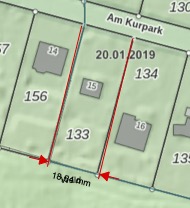
Is there a building plan for this? Here are the promised details about the location of the plot.
kbt09 schrieb:
What is its width? Maybe a Google Maps screenshot showing the current surrounding development The plot is 18 meters wide and 50 meters long (59 feet by 164 feet). It is labeled with number 15 on the development plan. Currently, there is an old bungalow from the former East Germany (GDR) on it, which we still need to demolish. We are free to position the house anywhere on the plot. As you can see, the neighbors to the left have their bungalow set quite far back towards the forest, while the neighbors on the right have their one-and-a-half-story house placed relatively close to the front. We would rather follow the example of the neighbors on the right, so our house would roughly end where the existing bungalow currently ends.
hanghaus2023 schrieb:
Is there a site plan with elevation details? Unfortunately, not yet. We estimate that the land slopes upwards by about 2 to 3 meters (6 to 10 feet) from the street level towards the forest over the 50 meters. It is correct that this is not reflected in the current design, but we have communicated this and included an additional €10,000 (around $11,000) in the budget for the resulting earthworks. I hope this will be incorporated into the design during further planning stages.
hanghaus2023 schrieb:
Where will the parking space for the vehicles be located? We plan to have the parking space on the right side in front of the house.
hanghaus2023 schrieb:
Did I miss the budget information? No, you didn’t miss it. I haven’t mentioned it yet. We are planning with a budget of €650,000 (about $700,000) including additional building costs but excluding the plot itself.
11ant schrieb:
If the previously suggested size fits, it would be about 10.30 by 12.80 It will probably end up around 10.80 by 12.20 meters (35 feet by 40 feet).
We have gone through several more rounds with the architect and have now settled on this floor plan. By changing the shape of the stairs, we have created a wardrobe in the hallway, more space in the rooms overall, and a slightly smaller corridor. Unfortunately, because of the elevator shaft, each of the children’s rooms has a corner taken up. The other option (swapping the shaft and the stairs) would have resulted in an impractical layout for the bathroom and dressing room.
What do you think? The furniture placement is not final in some areas (for example, the dining table is obviously not meant to be in the kitchen).
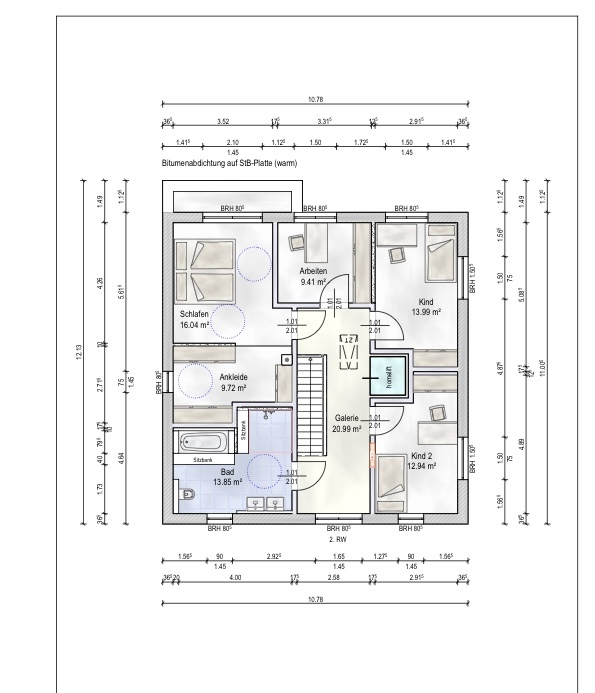
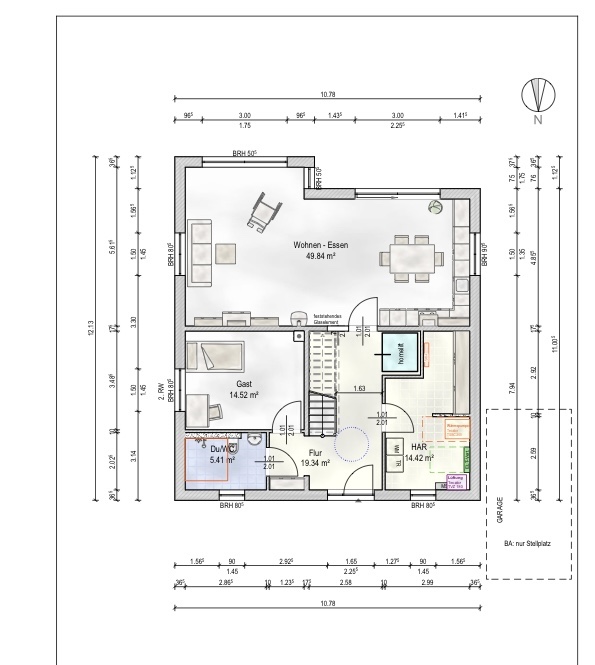
What do you think? The furniture placement is not final in some areas (for example, the dining table is obviously not meant to be in the kitchen).
gsn24 schrieb:
We have gone through several rounds with the architect again and have now arrived at this floor plan. Square rounds, it seems to me ;-)
The "bay window," which only adds extra costs with no benefits (as I said, double-checked, it is neither necessary for avoiding boredom nor useful), is still there. At least the layout has worsened; at first glance, I don’t see any budget-friendly changes to the building’s shape or size. The elevator is shown as just the bare cabin—without a motor or counterweight, essentially filling the shaft by itself. Does its machinery fit in the attic space?
https://www.instagram.com/11antgmxde/
https://www.linkedin.com/company/bauen-jetzt/
Similar topics