
ᐅ Single-family house converted for two families: experiences with floor-by-floor separation?
Created on: 8 Apr 2026 07:45
M
mmyellow
Hello everyone,
We are currently at the beginning of a construction project in Ludwigsburg (Sonnenberg South-West development area) and would like to gather early feedback on the choice of plot and the overall concept.
The plots are allocated through an application process (up to 3 preferences possible, selection not guaranteed). We currently have 4 possible plots shortlisted and need to prioritize them.
Development Plan / Restrictions
Plot size: approx. 440 – 525 m² (4730 – 5650 sq ft)
Slope: no (relatively flat)
Site coverage ratio: 0.4
Number of floors: 2 full stories
Building type: detached construction, single-family or semi-detached houses allowed
Roof style: flat roof (max. 3° pitch, specified)
Maximum height: approx. 9 m (30 ft) to parapet
Special conditions:
• Green roof required
• Photovoltaic system planned / can be integrated effectively
• No underground garage allowed
Homeowners’ Requirements
The plan is not for a conventional single-family house but:
A single-family house to be used by two families, separated by floors
(confirmed provisionally by phone and building regulations, final feedback pending)
Concept:
• Ground floor: approx. 140–160 m² (1500–1700 sq ft) + garden
• Upper floor: approx. 150–160 m² (1600–1700 sq ft)
• Goal: long-term use, not an investment
• rather modern, clear architecture (flat roof is mandatory anyway)
Households:
• two families (each early 40s, each with one child)
Additional requirements:
• preferably quiet location within the development area (no through traffic)
• good orientation (garden ideally facing south)
• practical access / parking solution (2 garages + 2 carports planned)
House Design / Current Status
Who is designing it:
Currently do-it-yourself / concept phase
What is still open:
• Construction method (prefabricated vs. solid, wood vs. concrete)
• Floor plans
• Basement (partial vs. full)
Our Questions to You
Which plots would you generally prefer in such a development area (quietness, location, orientation)?
From your experience, are there any “typical mistakes” in plot selection that only become apparent later?
How critical do you consider the concept of “two families in one single-family house separated by floors” from a practical point of view (sound insulation, everyday life, usage)?
What would you pay special attention to regarding the placement of garage/carport and access?
We are aware that we are still early in the planning and open to honest feedback.
The concept is still under discussion, especially regarding a suitable second family. If anyone is in a similar situation or wants more information, just search for “Sonnenberg South-West”; we are happy to exchange ideas.
Thank you very much!
Best regards
Richard
We are currently at the beginning of a construction project in Ludwigsburg (Sonnenberg South-West development area) and would like to gather early feedback on the choice of plot and the overall concept.
The plots are allocated through an application process (up to 3 preferences possible, selection not guaranteed). We currently have 4 possible plots shortlisted and need to prioritize them.
Development Plan / Restrictions
Plot size: approx. 440 – 525 m² (4730 – 5650 sq ft)
Slope: no (relatively flat)
Site coverage ratio: 0.4
Number of floors: 2 full stories
Building type: detached construction, single-family or semi-detached houses allowed
Roof style: flat roof (max. 3° pitch, specified)
Maximum height: approx. 9 m (30 ft) to parapet
Special conditions:
• Green roof required
• Photovoltaic system planned / can be integrated effectively
• No underground garage allowed
Homeowners’ Requirements
The plan is not for a conventional single-family house but:
A single-family house to be used by two families, separated by floors
(confirmed provisionally by phone and building regulations, final feedback pending)
Concept:
• Ground floor: approx. 140–160 m² (1500–1700 sq ft) + garden
• Upper floor: approx. 150–160 m² (1600–1700 sq ft)
• Goal: long-term use, not an investment
• rather modern, clear architecture (flat roof is mandatory anyway)
Households:
• two families (each early 40s, each with one child)
Additional requirements:
• preferably quiet location within the development area (no through traffic)
• good orientation (garden ideally facing south)
• practical access / parking solution (2 garages + 2 carports planned)
House Design / Current Status
Who is designing it:
Currently do-it-yourself / concept phase
What is still open:
• Construction method (prefabricated vs. solid, wood vs. concrete)
• Floor plans
• Basement (partial vs. full)
Our Questions to You
Which plots would you generally prefer in such a development area (quietness, location, orientation)?
From your experience, are there any “typical mistakes” in plot selection that only become apparent later?
How critical do you consider the concept of “two families in one single-family house separated by floors” from a practical point of view (sound insulation, everyday life, usage)?
What would you pay special attention to regarding the placement of garage/carport and access?
We are aware that we are still early in the planning and open to honest feedback.
The concept is still under discussion, especially regarding a suitable second family. If anyone is in a similar situation or wants more information, just search for “Sonnenberg South-West”; we are happy to exchange ideas.
Thank you very much!
Best regards
Richard
OK. First of all, many thanks for the quick and really helpful feedback. Always pointing out the issues directly. That’s exactly the kind of communication I need and understand.
The tender says: “Building plots for the construction of single-family houses or semi-detached houses.” You couldn’t make it clearer with a hint…
Extra thick slab between ground floor and first floor (marked in red).
Me neither. I need to check whether §19 is excluded or applies implicitly here. Until that’s clarified, I’m sticking exactly to the 0.4 (rounded to the nearest millimeter).
The ground floor will be slightly smaller than the first floor just to comply with the floor area ratio and is compensated by the garden.
In my opinion, the utility room traditionally belongs in the basement if there is one. Otherwise, it makes more sense on the ground floor than on the first floor. Do you agree?
Sorry, I don’t quite understand the question. I am planning normal garages at ground floor level. Underground garages are prohibited according to the development plan.
I’ll google it after this post.
I think a fully basemented house would be overkill for my project. Partial basement – really only for what you need there – and to avoid disadvantaging the difference between ground and first floor.
I want to keep it fair to avoid potential conflicts. Partial basements as a kind of fail-safe (Poka Yoke).
My wife is terrified of break-ins.
I come from a town with 7,000 inhabitants and grew up in a village. By now I have spent several years living in cities with 8, 10, and 25 million people—always in high-rise buildings on the 20th or 40th floor.
Through endurance sports, I also spend enough time outdoors.
Neither my wife nor I need the ground floor or a garden. Let’s be honest: the child won’t be playing soccer or running around in the garden anymore.
I like how ypg puts it: nest-building.
This house is meant to be that nest for my family. It’s not an investment property, it’s a lifelong dream.
And that’s exactly the problem: finding a second builder.
My childhood friends have already built or live elsewhere. We need to find someone who has the same goals:
The problem is the deadline: application by May 10.
Honestly: The whole idea behind this is that no one (at least no one I know) can or wants to afford over 1,000 €/m² (over 100 $/ft²).
But with two people, it suddenly becomes doable.
The downside: you have to share the house.
And yes, that’s similar to looking for a spouse or life partner.
Worst case: everything that could go wrong must be discussed and clearly agreed on upfront.
And as I said: it must be fair but with compromises.
I think that’s well separable under German law.
Example:
I want water connections for a Japanese-style toilet and for a wash/vacuum robot.
Obviously, if additional plumbing lines are necessary, that will be my cost.
Did this get longer than expected?
Next post will include pictures about floor area ratio and design.
nordanney schrieb:
By the way, that’s called a two-family house…
11ant schrieb:
Please enlighten us why you don’t simply call it a "two-family house"
The tender says: “Building plots for the construction of single-family houses or semi-detached houses.” You couldn’t make it clearer with a hint…
nordanney schrieb:
Noise can always be an issue
Extra thick slab between ground floor and first floor (marked in red).
ypg schrieb:
I don’t see anything about Paragraph 19 BauNVO in the local development plan
Me neither. I need to check whether §19 is excluded or applies implicitly here. Until that’s clarified, I’m sticking exactly to the 0.4 (rounded to the nearest millimeter).
11ant schrieb:
So the ground floor can be a bit smaller than the first floor—does that mean a shared utility room on the ground floor?
The ground floor will be slightly smaller than the first floor just to comply with the floor area ratio and is compensated by the garden.
In my opinion, the utility room traditionally belongs in the basement if there is one. Otherwise, it makes more sense on the ground floor than on the first floor. Do you agree?
11ant schrieb:
How is a basement understood if underground garages are excluded?
Sorry, I don’t quite understand the question. I am planning normal garages at ground floor level. Underground garages are prohibited according to the development plan.
11ant schrieb:
A construction method-neutral preliminary design is always a good idea. In my external series about basements, I also covered partial basements. See "Partial Basement: The Solution Between Yes and No?".
I’ll google it after this post.
I think a fully basemented house would be overkill for my project. Partial basement – really only for what you need there – and to avoid disadvantaging the difference between ground and first floor.
I want to keep it fair to avoid potential conflicts. Partial basements as a kind of fail-safe (Poka Yoke).
11ant schrieb:
Who would the second party be, do they already exist, and would you prefer the lower or the upper bedroom bunk bed?
ypg schrieb:
There are very few who imagine their nest-building in a single-family home only on the first floor.
My wife is terrified of break-ins.
I come from a town with 7,000 inhabitants and grew up in a village. By now I have spent several years living in cities with 8, 10, and 25 million people—always in high-rise buildings on the 20th or 40th floor.
Through endurance sports, I also spend enough time outdoors.
Neither my wife nor I need the ground floor or a garden. Let’s be honest: the child won’t be playing soccer or running around in the garden anymore.
ypg schrieb:
I don’t see the second builder.
nordanney schrieb:
And of course: What is the setup? Who will own the house? Who finances it? Two condominiums? Rental? Etc.
I like how ypg puts it: nest-building.
This house is meant to be that nest for my family. It’s not an investment property, it’s a lifelong dream.
And that’s exactly the problem: finding a second builder.
My childhood friends have already built or live elsewhere. We need to find someone who has the same goals:
- large apartment on one level
- not an investment property
- desire for a garden
- interest in planning and implementation
The problem is the deadline: application by May 10.
Honestly: The whole idea behind this is that no one (at least no one I know) can or wants to afford over 1,000 €/m² (over 100 $/ft²).
But with two people, it suddenly becomes doable.
The downside: you have to share the house.
And yes, that’s similar to looking for a spouse or life partner.
Worst case: everything that could go wrong must be discussed and clearly agreed on upfront.
And as I said: it must be fair but with compromises.
ypg schrieb:
how to split the land use/allocation in terms of costs.
I think that’s well separable under German law.
- Costs for house + land → 50/50
- Individual special requests → paid by the person requesting
Example:
I want water connections for a Japanese-style toilet and for a wash/vacuum robot.
Obviously, if additional plumbing lines are necessary, that will be my cost.
Did this get longer than expected?
Next post will include pictures about floor area ratio and design.
N
nordanney9 Apr 2026 11:11mmyellow schrieb:
The listing states: “Building plots for the construction of single-family houses or semi-detached houses.” It doesn’t get clearer than that... Who is signaling what?
Single-family house = detached with one dwelling
Semi-detached house = single-family houses built side by side on separate plots
You want to build a multi-family house (with two apartments). Where am I missing something?
mmyellow schrieb:
I like how ypg puts it: nest building.
This house is meant to be a nest for my family. It’s not an investment property, it’s a lifelong dream.
And that’s exactly where the problem lies: finding a second builder If it’s a nest, why have someone living with you who throws parties in the evening and annoys you upstairs?
To have a second builder, you have to divide the house into apartments and then build together. Like in a multi-family house – you’re no longer in full control. If the ground floor apartment is bigger than yours, you’ll get stuck with some communal decisions.
And if the second builder rents out or sells? Renting to eight students forming a shared flat, or to the family of 14 who slaughter lambs in the garden or have no idea about the local waste separation culture?
P.S. Really think carefully about this topic. Even the financing will be difficult – each party takes out a loan. Who will be the owner? (See above). This setup only works under condominium law (HOA) or with rental arrangements.
ypg schrieb:
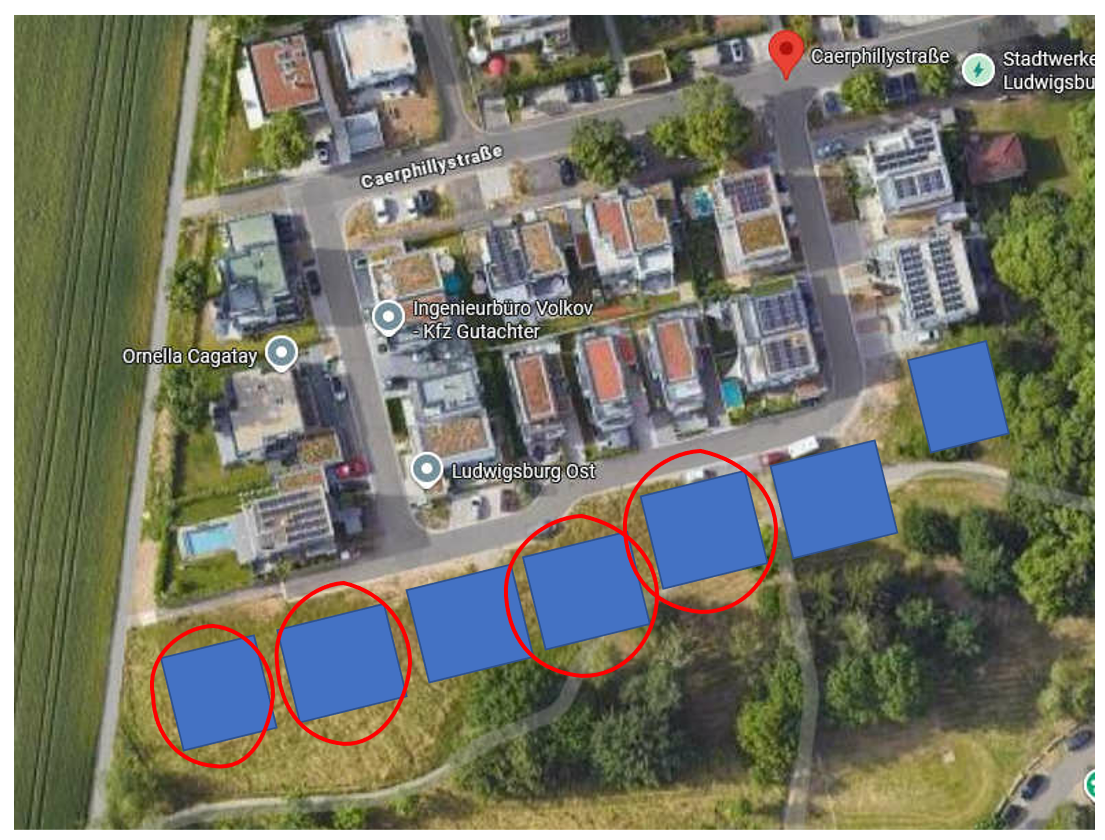
Since the dimensions, heights, or slope values aren’t known, you could try to fit a 190 m² (2045 sq ft) rectangle template onto the house first. Mark a staircase centrally on the front side. Additionally, place four 3 × 6 m (10 × 20 ft) templates for parking spaces.
Altogether, that’s already 250 m² (2690 sq ft)… plus a garden shed and so on would also need to be included. That goes far beyond the 0.4 floor space index.
Also, remember the mandatory planting of several small trees. These are important on moist soil to help absorb rainwater. The template idea is so simple and brilliant. I’ve started with it. First, I measured in PowerPoint how many inches it is, then, since it’s exactly rectangular, I calculated length and width in meters based on the square meters.
So far, I’ve only done this for numbers 2 and 3+4.
Next, I began building the template in PowerPoint, but that turned out to be complicated, especially because of this comment:
ypg schrieb:
Mark a staircase centrally on the front side. I have now extended the staircase 1.5 m (5 ft) outwards and made it 3.5 m (11.5 ft) wide. Although this staircase will be on the north side, I still imagine it looking nice. Here is the first draft for 458 m² (4933 sq ft), which at a floor space index of 0.4 allows just under 183 m² (1970 sq ft).
Main building ground floor:
15.05 × 12.25 m = 184.36 m² (1983 sq ft)
Extension:
1.5 × 3.5 m = 5.25 m² (56.5 sq ft)
Garage (yellow):
3 × 6 m = 18 m² (194 sq ft)
Total:
184.36 + 5.25 + 18 = 207.61 m² (2234 sq ft)
Brief explanation:
- Yellow is a garage with water-permeable paving stones in front, probably with a carport above.
- On the front side, blue indicates the other garage, which reduces the ground floor apartment area by about 18 m² (194 sq ft). I would prefer to have a garage on both sides like the yellow one, but then you couldn’t access the garden on either side. It’s unknown how the neighbors will build. This way, another parking space can also be created.
- Red indicates a thick concrete slab between the ground floor and upper floor.
- Pink is the ground floor and turquoise is the upper floor.
- Gray is the roof terrace.
Since I exceed the floor space index by about 24 m² (258 sq ft), I recalculated and set back the ground floor by 1.62 m (5.3 ft) on the garden side.
Then I considered whether the upper floor really needs the red-circled area or if this could be omitted to save costs. So I would leave out the red-circled part if necessary, and the thick terrace slab probably doesn’t need to be as thick as in the living area.
Stage is set! Please feel free to critique the idea thoroughly.
N
nordanney9 Apr 2026 12:18mmyellow schrieb:
Red indicates a thick slab between the ground floor and the first floor. Is that supposed to provide better performance? Just because it is a few centimeters (inches) thicker doesn’t automatically mean the sound insulation is improved. Airborne noise, structure-borne noise, impact noise—all need to be addressed together as a system.
Soundproof windows during garden parties?
Well, the calculation doesn’t add up, because already from
which you then reduce, and where this main area still includes a garage, you don’t get
of living space.
And then you should
analyze this carefully and also connect
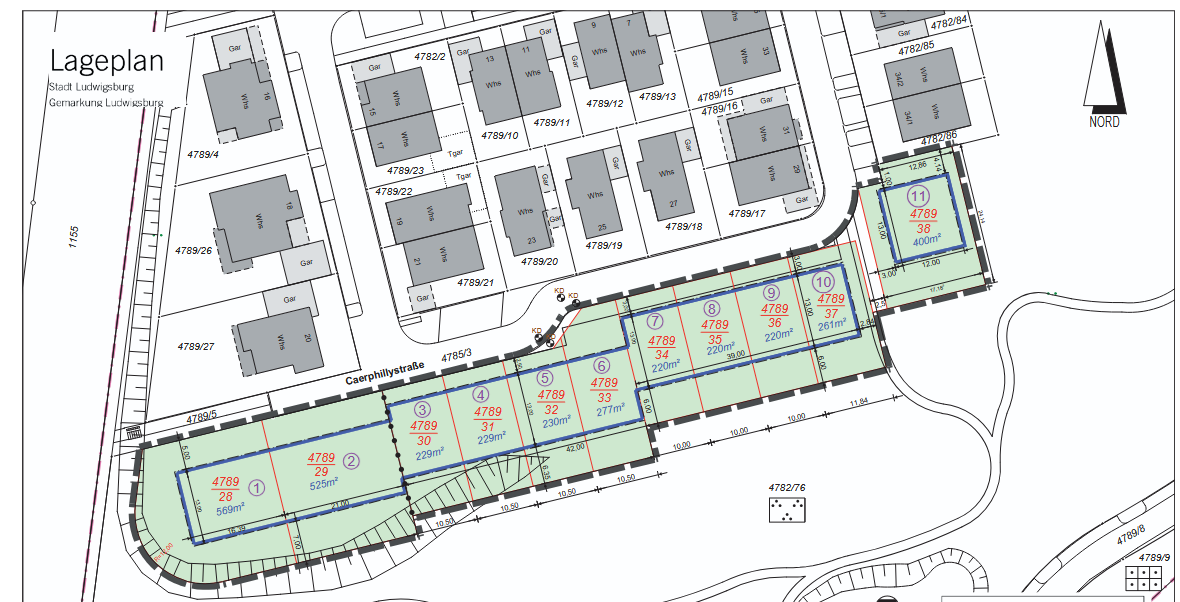
and
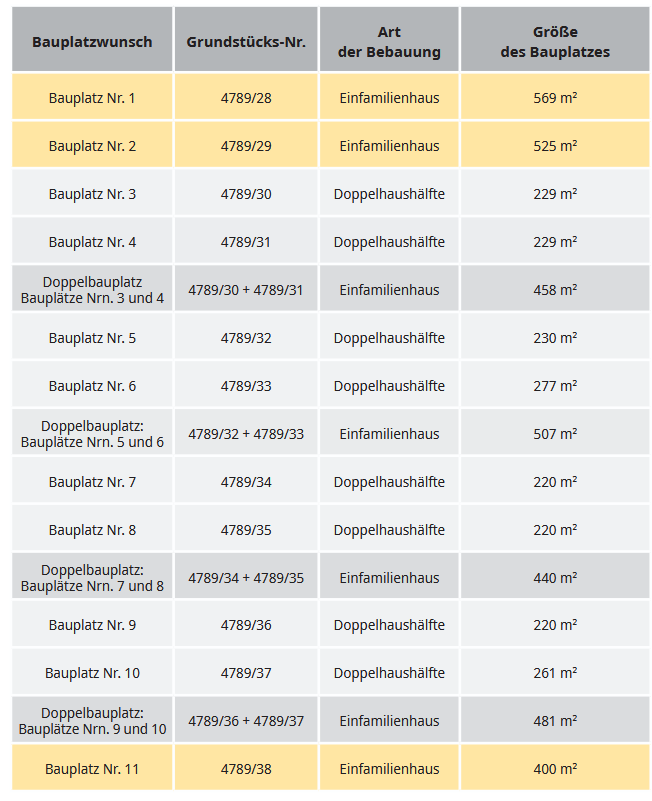
with the text from the exposé Exposee_Sonnenberg_SW.pdf (Ludwigsburg .. in case anyone wants to look it up):
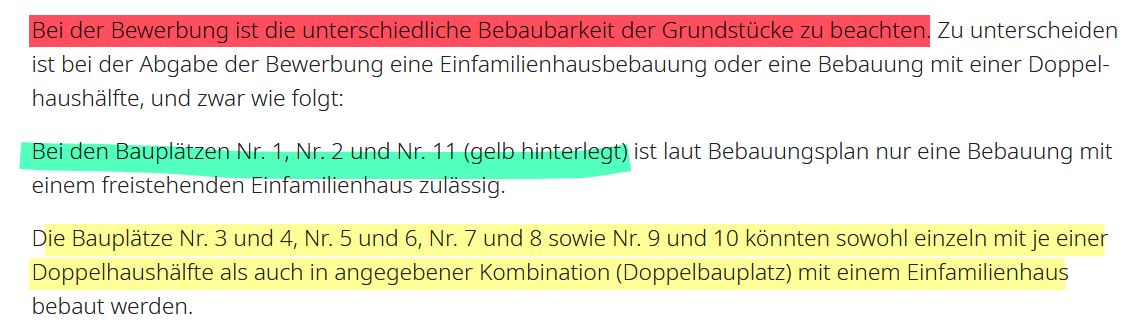
and I don’t see your two-family house integrated there.
mmyellow schrieb:
Main building ground floor
15.05 × 12.25 = 184.36 m² (1984 sq ft)
which you then reduce, and where this main area still includes a garage, you don’t get
mmyellow schrieb:
Ground floor: approx. 140–160 m² (1507–1722 sq ft)
of living space.
And then you should
nordanney schrieb:
Who calls what?
Single-family house = detached with a single dwelling
Semi-detached house = two single-family houses built side by side on separate plots
analyze this carefully and also connect
and
with the text from the exposé Exposee_Sonnenberg_SW.pdf (Ludwigsburg .. in case anyone wants to look it up):
and I don’t see your two-family house integrated there.

mmyellow schrieb:
Stage is set! Please start firing away with your ideas. [ / ] Always putting my finger on the sore spot. That’s exactly the kind of communication I need and understand. Well then, I hope the “and understand” applies as well. I usually only trade my ice cream gloves for boxing gloves against so-called “architects” in quotation marks and other planners who know nothing about cream. Although, judging by your amusing thought processes, the latter actually applies to you too – but please, consider your wish my command:
May 10 is a very short time to iron out the issues here, absorb a crash course in error correction, and find a co-borrower.
To spare the readers a flood of individual quotations, I’ll address in one go everything you wrote as “child’s talk.” Soooo – thies, take a deep breath:
E/D plots do not mean that every landowner is free to choose between E and D as they please. If the winner of the neighboring purchase option decides on D and submits his building application before you, that locks in both of you (login for him, lock-in for you) and forces you to also build D, thus killing your E. Then you must attach your building to his house. Admittedly, with a 21 m (69 feet) wide plot and over 400 m² (4,300 sq ft) of land, it is very unlikely that the neighbor will choose D. Your idea of using a smaller ground floor to meet the site coverage ratio means in practice a building that is more demanding thermally and structurally. Praising the security from burglary on the fortieth floor by making access difficult — that’s a joke I have to remember. Still, I see little chance of finding an interested party for the “floor plot beneath you,” since there is simply no market for such a thing – conversely, depending on the size of the city, it would be easier to find a “penthouse plot” above the current top floor of a multi-family building. In the targeted building area, there will be two types of buyers: those looking for detached single-family homes (who only apply for plots of the shown size and width) and those interested in semi-detached houses (typically on around or under 300 m² (3,230 sq ft) of land), and I find it scandalous that such plots are still allocated to single applicants by lottery. For the plots shown, your chances are far higher to find a co-builder for a classic semi-detached house with a condominium division of the land. Do I understand correctly that you need a co-buyer because of a land price of 1k/m² (93 sq ft)? If so, definitely look further away; if a town with about 7,000 inhabitants is acceptable, something should be available.
Briefly for those readers who want to “save” themselves the effort of reading my partial basement post (which is definitely worth it), the summary is: the Second 11ant Basement Rule roughly states that basement construction costs decrease only with the square root of the reduced area, so a 50% basement costs about 70%, and a 90% basement—efficiency-wise—is a Pyrrhic victory. Please explain briefly where you see a “Poka Yoke” application there.
Your idea of an acoustic armored plate between floors comes a bit more than a week too late — in April, readers usually expect such pranks on time :-) (or was that a greeting to fans of Tünnes & Schäl humor?)
https://www.instagram.com/11antgmxde/
https://www.linkedin.com/company/bauen-jetzt/
Similar topics