
ᐅ Floor Plan Design for a Single-Family Home – Starting from Scratch?
Created on: 12 May 2026 22:31
T
tbhr27
Hello everyone,
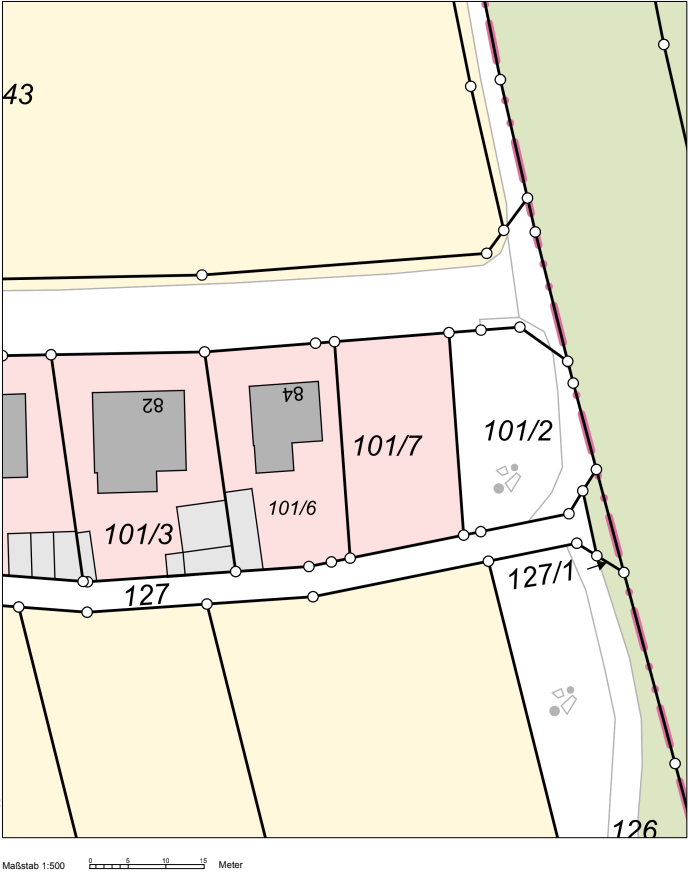
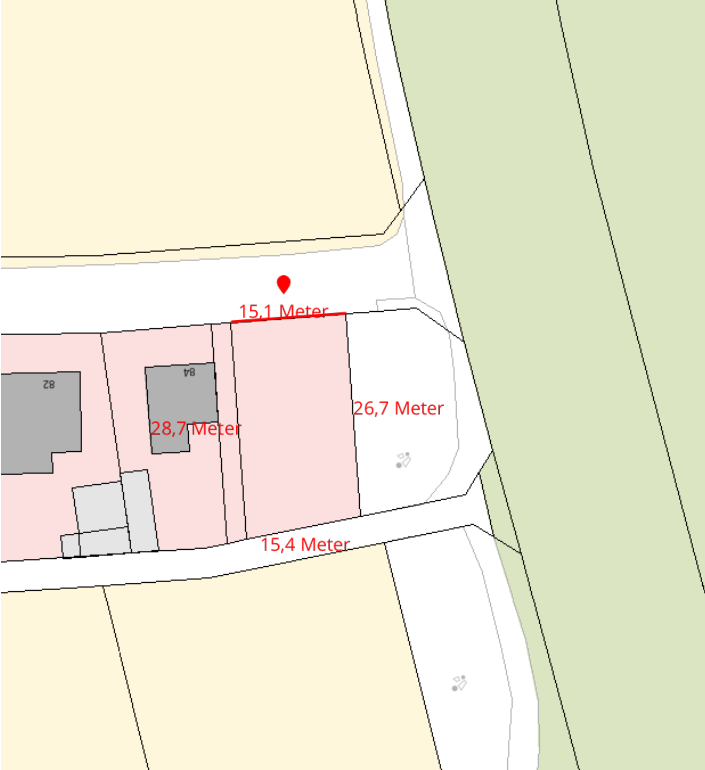
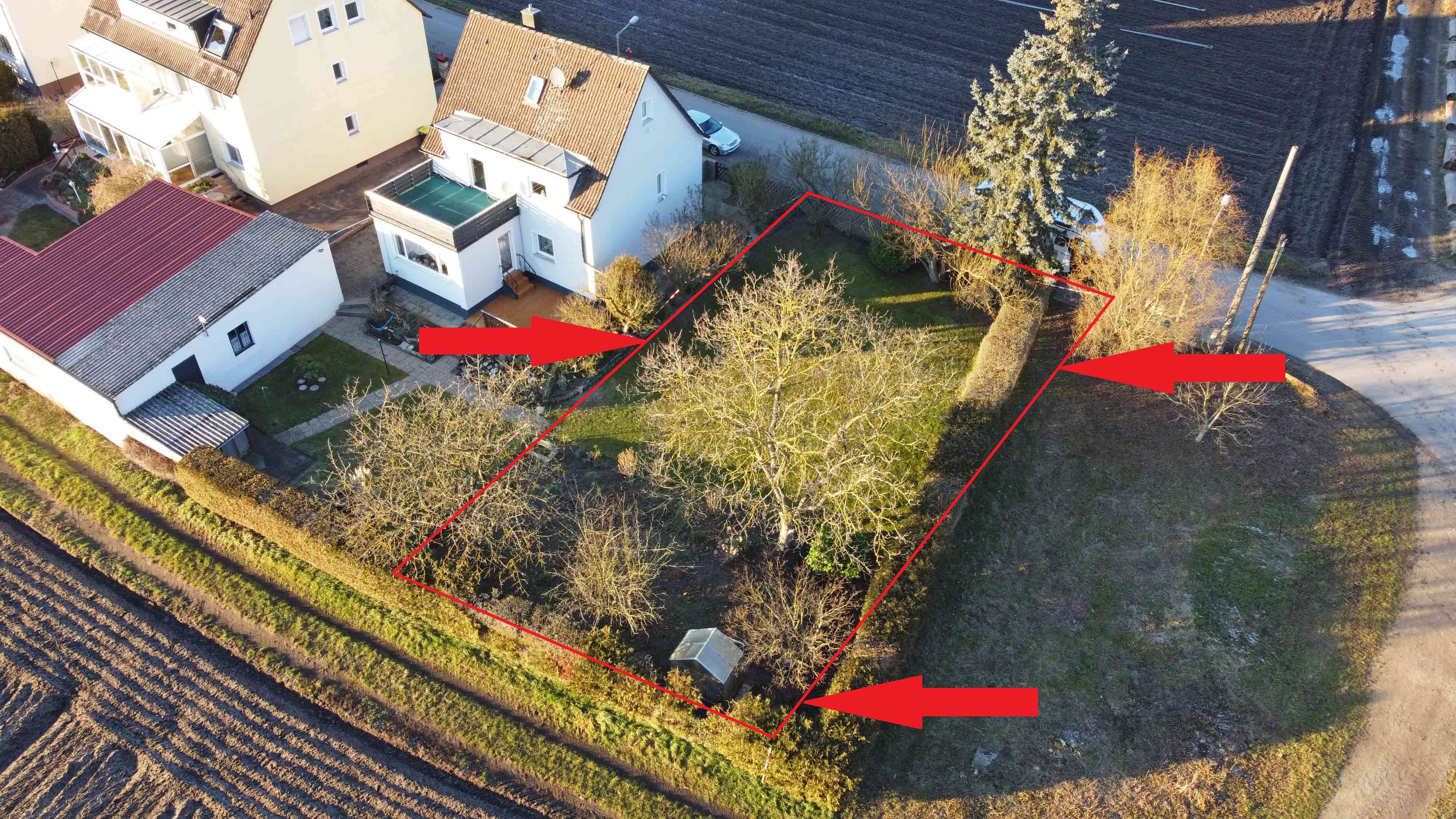
Last year, we purchased a plot of land in Bavaria where we would like to build a single-family house.
Since the city classified the land as an outside development area, we had to apply for a preliminary building permit (building permit / planning permission), which was ultimately approved.
The architect who supported us through this process was basically willing to continue working with us. However, due to his location, age, and our relatively “standard” requirements, he advised us to first consider whether a standard design from a construction company might suit us.
We then spoke with several local construction companies and obtained offers from three of them (all standard designs or only slightly modified).
Company A was somewhat pushy in their communication and was therefore rejected by us (even though they were the cheapest on paper).
For Company B, we had the construction contract reviewed by a specialist attorney who identified several pitfalls. The company was unwilling to make any adjustments, so we dismissed them as well.
Company C was our overall favorite; however, it became clear fairly late in the process that they act as a construction supervisor rather than a general contractor (GC) / main contractor (we had never heard of this model before and therefore did not actively inquire). After weighing the pros and cons of this concept with our lawyer, we concluded that we would prefer to stick with the GC model (only one point of contact, clear warranties, etc.).
So now we find ourselves somewhat back at the beginning (although with much more knowledge and clearer ideas) and wonder what the next steps should be. Should we contact more construction companies? Or return to an architect for an original design or individual planning?
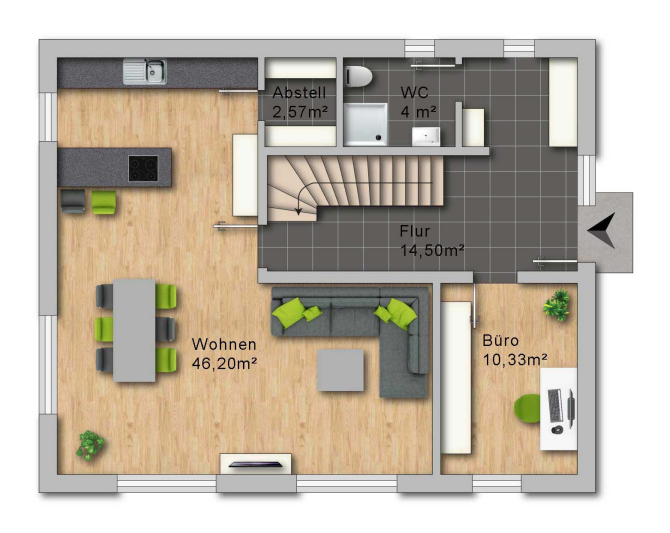
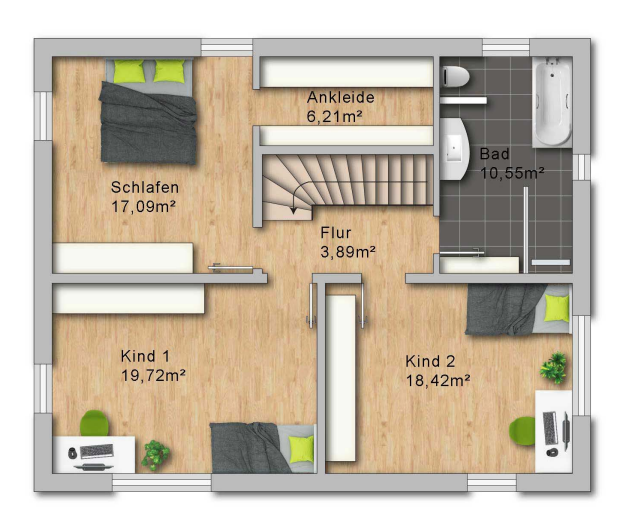
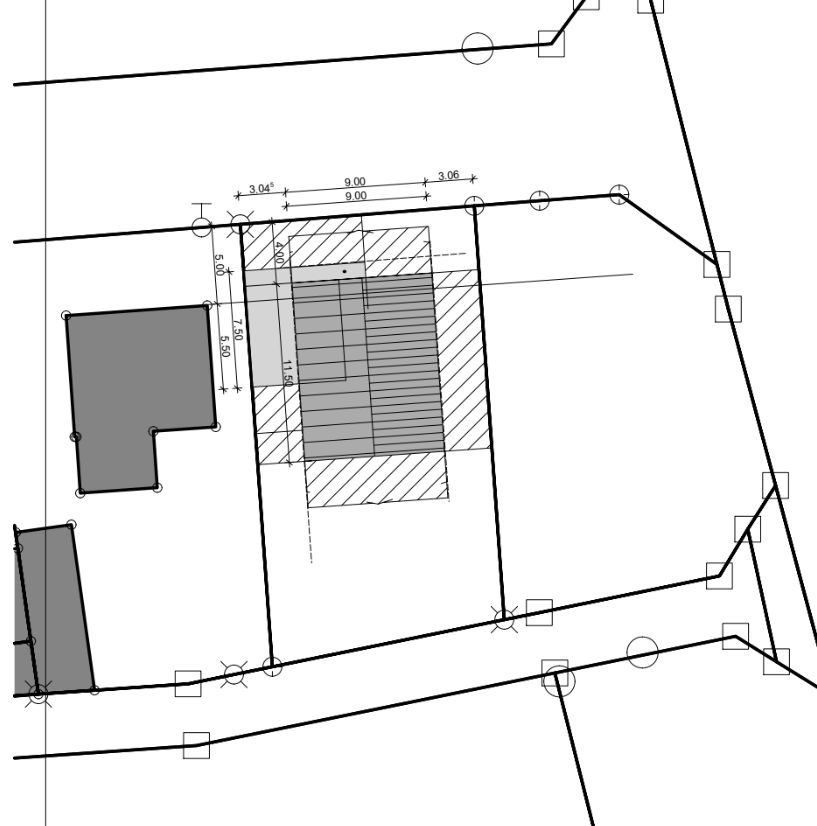
As a basis for discussion, I am attaching the standard design from Company C. We had planned to extend the original 9 x 11 m (30 x 36 ft) floor plan by 50 cm (20 inches) on the entrance side (to fully utilize the building envelope of 9 x 11.5 m / 30 x 38 ft) and allocate the additional space to an office, guest toilet, bathroom, and second child’s room.
The living area would thus increase from approximately 153 to 158 m2 (1,645 to 1,700 sq ft). The entrance was planned on the north side, with the garage and parking space on the west side. Unfortunately, we only have the design without dimensions.
P.S.: The preliminary building permit initially included a double garage/carport because the previous parking regulation required individually accessible parking spaces. Fortunately, this regulation has since changed so that the two required parking spaces may now be arranged in tandem, which should hopefully simplify the planning and construction.
Development Plan / Restrictions
Plot size: 416 m2 (4,478 sq ft)
Slope: no
Floor area ratio (FAR): 0.6
Site coverage ratio (no zoning plan, according to neighboring development)
Building envelope, building line, and boundaries: see preliminary building permit
Edge development: no (only garage)
Number of parking spaces: 2
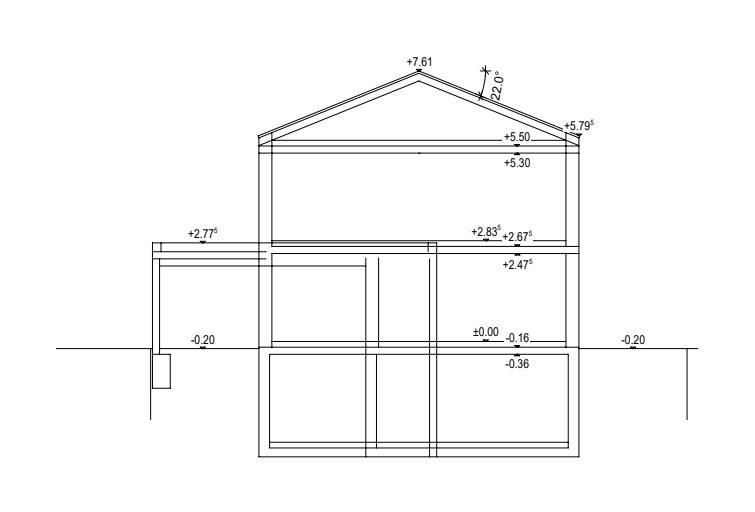
Number of storeys: 2
Roof type: pitched roof
Architectural style: –
Orientation: see preliminary building permit
Maximum heights / restrictions: see preliminary building permit
Other requirements: –
Owner Requirements
Style, roof type, building type: single-family house with pitched roof, solid construction
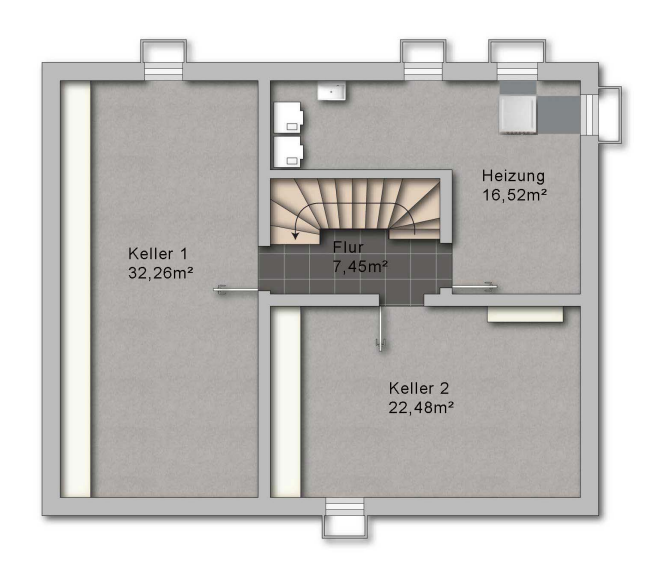
Basement, storeys: 2 full storeys plus basement
Number of occupants and ages: 2 adults (36 & 34 years old), 1 child (2 years old), 1 more child on the way
Room requirements for ground and upper floors: 2 children’s rooms, master bedroom, 1 office, guest toilet (preferably with shower)
Office: both regularly work from home (2-3 days per week), but only one day together. One desk is currently sufficient (wife mainly phone calls, husband uses two monitors)
Overnight guests per year: currently irregular as there is only one sleeping spot on the couch; having 2 guest beds would be great
Open or closed architecture: rather open (at least for the living/dining area)
Conservative or modern construction: rather modern
Open kitchen, island: rather open
Number of dining seats: at least 6
Fireplace: no
Music / stereo wall: no
Balcony, roof terrace: no
Garage, carport: prefabricated garage planned with 1 parking space, 2nd parking space in front
Utility garden, greenhouse: possibly a small vegetable garden and garden shed, but nothing unusual
Additional wishes / special features / daily routine:
- No special wishes (due to hobbies etc.)
- Typically, everyone gets up around the same time, then breakfast, one takes the child to daycare, then either office or home office work
- On weekends, often meet with family/friends (barbecues etc.)
House Design
Designer: standard design from a local construction company
What do you particularly like and why?
- Large children’s rooms
- Orientation of rooms toward the nicer sides of the property (south/east)
- Plenty of space in the entrance area
- Dimensions fit well in the building envelope
What do you dislike and why?
- Is the bathroom large enough for 4 people?
- Does the kitchen layout work?
Price estimate by architect/planner: 573k (offer from Company C, turnkey including garage, excluding additional construction costs/kitchen/outdoor facilities)
- We currently estimate additional construction costs at 70-75k
- We are still unsure whether to include photovoltaics right away (estimated approx. 20k)
Personal price limit for the house, including fittings: 800k (may not fully cover outdoor facilities)
Preferred heating technology: heat pump
If you had to give up something, what details/extensions could you do without?
- Could do without: walk-in closet
- Could not do without:
Why was the design created as it is now? Standard design from the construction company that aligned well with our ideas
Last year, we purchased a plot of land in Bavaria where we would like to build a single-family house.
Since the city classified the land as an outside development area, we had to apply for a preliminary building permit (building permit / planning permission), which was ultimately approved.
The architect who supported us through this process was basically willing to continue working with us. However, due to his location, age, and our relatively “standard” requirements, he advised us to first consider whether a standard design from a construction company might suit us.
We then spoke with several local construction companies and obtained offers from three of them (all standard designs or only slightly modified).
Company A was somewhat pushy in their communication and was therefore rejected by us (even though they were the cheapest on paper).
For Company B, we had the construction contract reviewed by a specialist attorney who identified several pitfalls. The company was unwilling to make any adjustments, so we dismissed them as well.
Company C was our overall favorite; however, it became clear fairly late in the process that they act as a construction supervisor rather than a general contractor (GC) / main contractor (we had never heard of this model before and therefore did not actively inquire). After weighing the pros and cons of this concept with our lawyer, we concluded that we would prefer to stick with the GC model (only one point of contact, clear warranties, etc.).
So now we find ourselves somewhat back at the beginning (although with much more knowledge and clearer ideas) and wonder what the next steps should be. Should we contact more construction companies? Or return to an architect for an original design or individual planning?
As a basis for discussion, I am attaching the standard design from Company C. We had planned to extend the original 9 x 11 m (30 x 36 ft) floor plan by 50 cm (20 inches) on the entrance side (to fully utilize the building envelope of 9 x 11.5 m / 30 x 38 ft) and allocate the additional space to an office, guest toilet, bathroom, and second child’s room.
The living area would thus increase from approximately 153 to 158 m2 (1,645 to 1,700 sq ft). The entrance was planned on the north side, with the garage and parking space on the west side. Unfortunately, we only have the design without dimensions.
P.S.: The preliminary building permit initially included a double garage/carport because the previous parking regulation required individually accessible parking spaces. Fortunately, this regulation has since changed so that the two required parking spaces may now be arranged in tandem, which should hopefully simplify the planning and construction.
Development Plan / Restrictions
Plot size: 416 m2 (4,478 sq ft)
Slope: no
Floor area ratio (FAR): 0.6
Site coverage ratio (no zoning plan, according to neighboring development)
Building envelope, building line, and boundaries: see preliminary building permit
Edge development: no (only garage)
Number of parking spaces: 2
Number of storeys: 2
Roof type: pitched roof
Architectural style: –
Orientation: see preliminary building permit
Maximum heights / restrictions: see preliminary building permit
Other requirements: –
Owner Requirements
Style, roof type, building type: single-family house with pitched roof, solid construction
Basement, storeys: 2 full storeys plus basement
Number of occupants and ages: 2 adults (36 & 34 years old), 1 child (2 years old), 1 more child on the way
Room requirements for ground and upper floors: 2 children’s rooms, master bedroom, 1 office, guest toilet (preferably with shower)
Office: both regularly work from home (2-3 days per week), but only one day together. One desk is currently sufficient (wife mainly phone calls, husband uses two monitors)
Overnight guests per year: currently irregular as there is only one sleeping spot on the couch; having 2 guest beds would be great
Open or closed architecture: rather open (at least for the living/dining area)
Conservative or modern construction: rather modern
Open kitchen, island: rather open
Number of dining seats: at least 6
Fireplace: no
Music / stereo wall: no
Balcony, roof terrace: no
Garage, carport: prefabricated garage planned with 1 parking space, 2nd parking space in front
Utility garden, greenhouse: possibly a small vegetable garden and garden shed, but nothing unusual
Additional wishes / special features / daily routine:
- No special wishes (due to hobbies etc.)
- Typically, everyone gets up around the same time, then breakfast, one takes the child to daycare, then either office or home office work
- On weekends, often meet with family/friends (barbecues etc.)
House Design
Designer: standard design from a local construction company
What do you particularly like and why?
- Large children’s rooms
- Orientation of rooms toward the nicer sides of the property (south/east)
- Plenty of space in the entrance area
- Dimensions fit well in the building envelope
What do you dislike and why?
- Is the bathroom large enough for 4 people?
- Does the kitchen layout work?
Price estimate by architect/planner: 573k (offer from Company C, turnkey including garage, excluding additional construction costs/kitchen/outdoor facilities)
- We currently estimate additional construction costs at 70-75k
- We are still unsure whether to include photovoltaics right away (estimated approx. 20k)
Personal price limit for the house, including fittings: 800k (may not fully cover outdoor facilities)
Preferred heating technology: heat pump
If you had to give up something, what details/extensions could you do without?
- Could do without: walk-in closet
- Could not do without:
Why was the design created as it is now? Standard design from the construction company that aligned well with our ideas
H
hanghaus202314 May 2026 16:24I would like the window facing west in the kitchen.
The carport costs significantly less. You don’t have to scrape off ice in winter. If you have a particularly valuable car, then just go for the garage. There are solutions for that as well.
I liked the entrance area as planned by the architect. The entrance canopy connects directly to the carport.
That’s what I mean. Or the architect does.
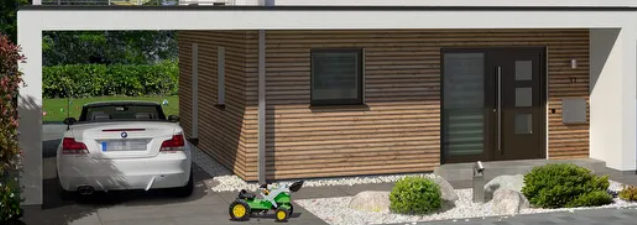
The carport costs significantly less. You don’t have to scrape off ice in winter. If you have a particularly valuable car, then just go for the garage. There are solutions for that as well.
I liked the entrance area as planned by the architect. The entrance canopy connects directly to the carport.
That’s what I mean. Or the architect does.
hanghaus2023 schrieb:
My blue window is supposed to be a CP, with a glass roof so that light can also reach the windows. There are terrace roofs that can be used for this. They also cost about half as much.I quickly visualized it with your CP suggestion.
I only added a partial glass roof.
But I think it’s easy to see where the glass roof is necessary to allow light into the two small windows.
For your idea with the additional window in the kitchen on the west side, it should work.
H
hanghaus202316 May 2026 07:16If you are not planning a side wall, you can also do without the glass roof. Either fully glass or no glass at all. A mix costs money and causes additional problems.
H
hanghaus202316 May 2026 07:18mmyellow schrieb:
to let light into the two small windows. Why are the windows so small?
hanghaus2023 schrieb:
Why are the windows so small? This isn’t my plan/house, it just looks small on the drawing.
In the bathroom, probably so that nobody shows too much to the camera :d
The window in the hallway could probably be made larger.