
ᐅ New Single-Family Home Construction on a Slope in Baden-Württemberg: Floor Plan, Building Method & Architect – Looking for Opinions
Created on: 22 Dec 2025 01:39
B
beicampiWe are just at the very beginning of the process, but precisely for that reason, I would like to make use of the forum’s expertise right away instead of only asking questions once we possibly already have fixed ideas. I will orient myself along the list of questions from the floor plan section to “introduce” our project. I am interested in your opinions and ideas regarding the general layout and also the basic construction method.
We do not have an architect yet, and I’m not quite sure where to start finding the right one. Also, I’m uncertain whether it’s better to plan independently or to work with an architect employed by a construction company.
The location of the project is in BW. The plot is already owned, and an existing building will be demolished.
Development plan / restrictions
Plot size:
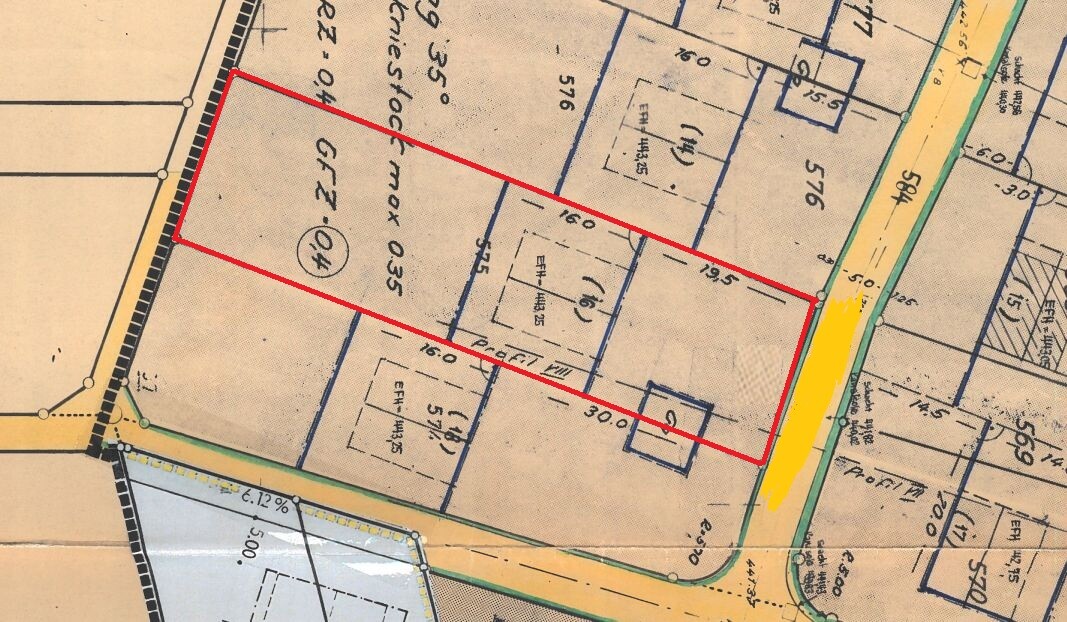
1,250 m² (13,455 sq ft), only 20 meters (66 feet) wide and approximately 60 meters (197 feet) long
The short side is the street frontage on the north side of the plot
Slope: the plot rises about 4 meters (13 feet) from street level in the north towards the south over more than 60 meters (197 feet) in length (I still need to measure this precisely and create an elevation profile)
Floor area ratio 0.4
Site occupancy index 0.4
Building envelope, building line, and boundary
The building envelope starts 20 meters (66 feet) back from the street and extends 16 meters (52 feet) “long/deep.” Officially, it spans the entire width of the plot, although I do not want construction up to the boundary, and this would not seem practical either.
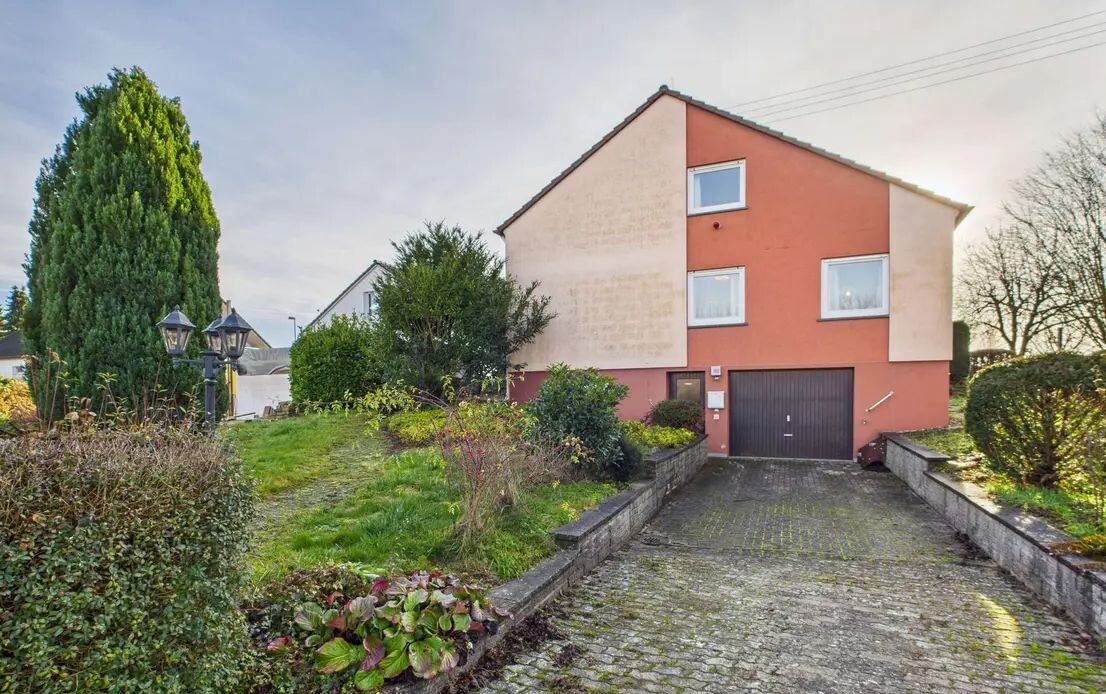
There is an existing building that we plan to demolish to build a new one, including a basement. Due to the slope of the land, the basement is visible from the street side (although currently, even the existing building’s basement is somewhat below street level to allow garage access). Some neighboring buildings have only the “upper half” of their basements visible, see attached picture. On the south side, the ground floor opens directly onto the slightly sloping garden.
Number of parking spaces
We would like 3 parking spaces for cars in garages, plus space for bicycles etc. One or two garage spaces integrated into the building itself would be preferred.
Number of floors
One full story plus basement and attic (somewhat limited by the low knee wall height)
Roof shape
A gable roof with a 35° pitch is required. Ridge direction north-south, knee wall only 35 cm (14 inches) high. Dormers are officially not allowed according to the development plan but have become possible through an amendment (maximum width 4 meters (13 feet)).
Architectural style
A classic single-family home built to today’s standards, with a traditional plaster façade. I do not like very modern houses without roof overhangs. An attractive design is important to me, though I do not have very clear ideas yet.
Orientation: ridge direction north-south
Maximum heights / limits
Only the single-family house type is specified in the development plan, which means most surrounding houses have a small staircase up to the ground floor to make up for the last meter of height. Due to the slight slope, a basement will be practically necessary, which suits me well.
Further specifications
Style, roof shape, building type
I am a big fan of timber construction. Although I am open to solid construction and would consider it as well, I prefer wooden ceilings, the indoor climate, and the general idea of a wooden house. However, this is not set in stone, more of a strong preference. I find solid timber construction especially interesting but without an overuse of wood. Interior walls should be classic white (drywall), but ceilings and floors preferably made of solid wood with some additional wooden accents, such as a window seat. For example, houses made of dowel-laminated timber (e.g., from Kaufmannbau) are interesting to me in this context.
Number of occupants, ages
4 people: parents around 40 years old, children aged 9 and 6.
Space requirements on ground and upper floors
We like spacious rooms and higher ceilings, even in the basement. I would aim for 220+ m² (2,368+ sq ft) and rather one room too many than too few.
The upper floor would be completely for the children’s bedrooms, possibly with an additional guest room. Either one children’s bathroom or each bedroom with a small en-suite.
The ground floor should have the parents’ bedroom, dressing room, parents’ bathroom, kitchen, dining area, living room, and guest toilet.
In the basement, I would like a fitness room. Possibly also a mancave/home cinema (?) or basement bar. A guest room in the basement could be an alternative to the upper floor. An office could be located either in the basement or ground floor.
Office: family use or home office?
Currently no home office use, but possibly in the future. The office should be large enough for a double desk and some filing cabinets.
Guest stays per year: rare but possible.
Open or closed architecture: not extremely open, at least no open atriums or similar.
Conservative or modern construction: I’m not sure how to clearly define this, probably more modern.
Open kitchen, preferably with cooking island.
Number of dining seats: when we have guests, usually many; a large dining table is a must.
Fireplace: nice to have but not essential.
Music / home theater wall: typical setup with TV mounted on the living room wall.
Balcony, roof terrace: not necessary, although a balcony facing the garden (south side) could be nice.
Garage, carport: no carport, only garage(s).
Utility garden, greenhouse: not needed, maybe a raised bed.
Other wishes / special features / daily routine, also reasons why you want or don’t want something
I would like to build so that living on one level, suitable for aging in place, is possible in the future. In an extreme case, a shaft for a lift might be prepared?
House design
Who made the plan: none yet / existing building as reference.
What do you like most? Why? Based on the current building: the basement garage with house access is something I find very good.
What do you dislike? Why? The current ground floor entrance is outside via stairs, which I don’t like long-term (not suitable for aging in place, in my view). Perhaps ground reshaping would be possible to allow entrance level with the house despite the slope.
Estimated price according to architect/planner: N/A
Personal price expectation for the house: without land, €1.2 million (approx. 1.2 M€) would be my target, but not a strict limit.
Preferred heating technology: ground-source heat pump with active cooling and dew point monitoring; alternatively ground-source heat pump plus split air conditioning units (which are less attractive visually).
All without significant self-build, I am not capable and do not have time for that. I would like to have as turnkey a construction as possible.
If you had to give up something, which details/extra features could you omit?
- Could do without a dedicated guest room; it could also be used as a mancave or something similar.
- Garage integrated into the building would be nice but might be omitted. This would reduce the visible basement from the street side, possibly making the house more attractive overall.
What is non-negotiable:
- Active climate control
Specific questions:
We do not have an architect yet, and I’m not quite sure where to start finding the right one. Also, I’m uncertain whether it’s better to plan independently or to work with an architect employed by a construction company.
The location of the project is in BW. The plot is already owned, and an existing building will be demolished.
Development plan / restrictions
Plot size:
1,250 m² (13,455 sq ft), only 20 meters (66 feet) wide and approximately 60 meters (197 feet) long
The short side is the street frontage on the north side of the plot
Slope: the plot rises about 4 meters (13 feet) from street level in the north towards the south over more than 60 meters (197 feet) in length (I still need to measure this precisely and create an elevation profile)
Floor area ratio 0.4
Site occupancy index 0.4
Building envelope, building line, and boundary
The building envelope starts 20 meters (66 feet) back from the street and extends 16 meters (52 feet) “long/deep.” Officially, it spans the entire width of the plot, although I do not want construction up to the boundary, and this would not seem practical either.
There is an existing building that we plan to demolish to build a new one, including a basement. Due to the slope of the land, the basement is visible from the street side (although currently, even the existing building’s basement is somewhat below street level to allow garage access). Some neighboring buildings have only the “upper half” of their basements visible, see attached picture. On the south side, the ground floor opens directly onto the slightly sloping garden.
Number of parking spaces
We would like 3 parking spaces for cars in garages, plus space for bicycles etc. One or two garage spaces integrated into the building itself would be preferred.
Number of floors
One full story plus basement and attic (somewhat limited by the low knee wall height)
Roof shape
A gable roof with a 35° pitch is required. Ridge direction north-south, knee wall only 35 cm (14 inches) high. Dormers are officially not allowed according to the development plan but have become possible through an amendment (maximum width 4 meters (13 feet)).
Architectural style
A classic single-family home built to today’s standards, with a traditional plaster façade. I do not like very modern houses without roof overhangs. An attractive design is important to me, though I do not have very clear ideas yet.
Orientation: ridge direction north-south
Maximum heights / limits
Only the single-family house type is specified in the development plan, which means most surrounding houses have a small staircase up to the ground floor to make up for the last meter of height. Due to the slight slope, a basement will be practically necessary, which suits me well.
Further specifications
Style, roof shape, building type
I am a big fan of timber construction. Although I am open to solid construction and would consider it as well, I prefer wooden ceilings, the indoor climate, and the general idea of a wooden house. However, this is not set in stone, more of a strong preference. I find solid timber construction especially interesting but without an overuse of wood. Interior walls should be classic white (drywall), but ceilings and floors preferably made of solid wood with some additional wooden accents, such as a window seat. For example, houses made of dowel-laminated timber (e.g., from Kaufmannbau) are interesting to me in this context.
Number of occupants, ages
4 people: parents around 40 years old, children aged 9 and 6.
Space requirements on ground and upper floors
We like spacious rooms and higher ceilings, even in the basement. I would aim for 220+ m² (2,368+ sq ft) and rather one room too many than too few.
The upper floor would be completely for the children’s bedrooms, possibly with an additional guest room. Either one children’s bathroom or each bedroom with a small en-suite.
The ground floor should have the parents’ bedroom, dressing room, parents’ bathroom, kitchen, dining area, living room, and guest toilet.
In the basement, I would like a fitness room. Possibly also a mancave/home cinema (?) or basement bar. A guest room in the basement could be an alternative to the upper floor. An office could be located either in the basement or ground floor.
Office: family use or home office?
Currently no home office use, but possibly in the future. The office should be large enough for a double desk and some filing cabinets.
Guest stays per year: rare but possible.
Open or closed architecture: not extremely open, at least no open atriums or similar.
Conservative or modern construction: I’m not sure how to clearly define this, probably more modern.
Open kitchen, preferably with cooking island.
Number of dining seats: when we have guests, usually many; a large dining table is a must.
Fireplace: nice to have but not essential.
Music / home theater wall: typical setup with TV mounted on the living room wall.
Balcony, roof terrace: not necessary, although a balcony facing the garden (south side) could be nice.
Garage, carport: no carport, only garage(s).
Utility garden, greenhouse: not needed, maybe a raised bed.
Other wishes / special features / daily routine, also reasons why you want or don’t want something
I would like to build so that living on one level, suitable for aging in place, is possible in the future. In an extreme case, a shaft for a lift might be prepared?
House design
Who made the plan: none yet / existing building as reference.
What do you like most? Why? Based on the current building: the basement garage with house access is something I find very good.
What do you dislike? Why? The current ground floor entrance is outside via stairs, which I don’t like long-term (not suitable for aging in place, in my view). Perhaps ground reshaping would be possible to allow entrance level with the house despite the slope.
Estimated price according to architect/planner: N/A
Personal price expectation for the house: without land, €1.2 million (approx. 1.2 M€) would be my target, but not a strict limit.
Preferred heating technology: ground-source heat pump with active cooling and dew point monitoring; alternatively ground-source heat pump plus split air conditioning units (which are less attractive visually).
All without significant self-build, I am not capable and do not have time for that. I would like to have as turnkey a construction as possible.
If you had to give up something, which details/extra features could you omit?
- Could do without a dedicated guest room; it could also be used as a mancave or something similar.
- Garage integrated into the building would be nice but might be omitted. This would reduce the visible basement from the street side, possibly making the house more attractive overall.
What is non-negotiable:
- Active climate control
Specific questions:
- Should the demolition of the existing building be delayed and coordinated with construction, or should it be done beforehand? In the latter case, the site would need securing.
- Ideas for floor plans, possibly based on existing prefabricated house plans.
- Free planning vs. planning by a construction company offering turnkey building.
- Solid timber house: alternatives to dowel-laminated timber, supplier selection, possibly recommendations? Turnkey delivery is key for me.
- Solid construction vs. timber construction: what ultimately should reasonably determine the choice?
W
wiltshire22 Dec 2025 10:47This looks like a nice plot of land. Congratulations.
Plan the demolition now and carry it out shortly before construction starts.
Special wishes and requirements: plan individually.
Basically no deviations from the "standard" wishes: use a proven existing floor plan.
Custom design vs. design by a construction company that delivers turnkey
Custom design if a high level of individualization is required. Otherwise, turnkey with what the provider offers as standard.
We had contact with Fullwood and there are several houses from this provider in the region. Their reputation is good. Unfortunately, we were not able to develop our individual requirements with them.
Both options can be "excellent" or "poor." Much depends on taste and attitude.
Differences include (but are not limited to) the following aspects – and there is no clear overall advantage:
ecological footprint
construction time
energy efficiency
summer thermal insulation
soundproofing
planning effort for non-standard designs
resale acceptance
Our decision for wood was ultimately emotional. We attribute a higher "healthy indoor environment" to the materials used, which cannot generally be proven for "wood or stone." We have read many positive reports about wood, cellulose insulation, and clay plaster. This does not mean that a masonry house is objectively worse. We wanted a short construction time and not to deal with construction moisture issues, as we had experienced twice before. I like that the insulation is part of the structure. We also found a local company we could trust to meet the planning challenges required by a highly customized bespoke build.
beicampi schrieb:
Specific questions:
- Delay demolition of the building and coordinate with construction, or demolish in advance? In the latter case, the site would need to be secured.
- Floor plan ideas, possibly based on existing prefabricated house layouts
- Custom design vs. design by a construction company that delivers a turnkey build
- Solid timber house: alternatives to dowelled timber, choice of suppliers, possibly even recommendations? Turnkey delivery is key for me.
- Solid construction vs. timber construction: What ultimately determines the best choice?
Plan the demolition now and carry it out shortly before construction starts.
Special wishes and requirements: plan individually.
Basically no deviations from the "standard" wishes: use a proven existing floor plan.
Custom design vs. design by a construction company that delivers turnkey
Custom design if a high level of individualization is required. Otherwise, turnkey with what the provider offers as standard.
We had contact with Fullwood and there are several houses from this provider in the region. Their reputation is good. Unfortunately, we were not able to develop our individual requirements with them.
Both options can be "excellent" or "poor." Much depends on taste and attitude.
Differences include (but are not limited to) the following aspects – and there is no clear overall advantage:
ecological footprint
construction time
energy efficiency
summer thermal insulation
soundproofing
planning effort for non-standard designs
resale acceptance
Our decision for wood was ultimately emotional. We attribute a higher "healthy indoor environment" to the materials used, which cannot generally be proven for "wood or stone." We have read many positive reports about wood, cellulose insulation, and clay plaster. This does not mean that a masonry house is objectively worse. We wanted a short construction time and not to deal with construction moisture issues, as we had experienced twice before. I like that the insulation is part of the structure. We also found a local company we could trust to meet the planning challenges required by a highly customized bespoke build.
I recommend consulting an architect! They can also implement your wishes in a more stylish way. Three garages make quite a statement, and it’s not obvious whether the garages are allowed outside the building envelope or planning permission area. Otherwise, there could be an issue.
You generally want to avoid having a garage inside the thermal envelope.
What year was the building constructed? The house doesn’t look that old yet.
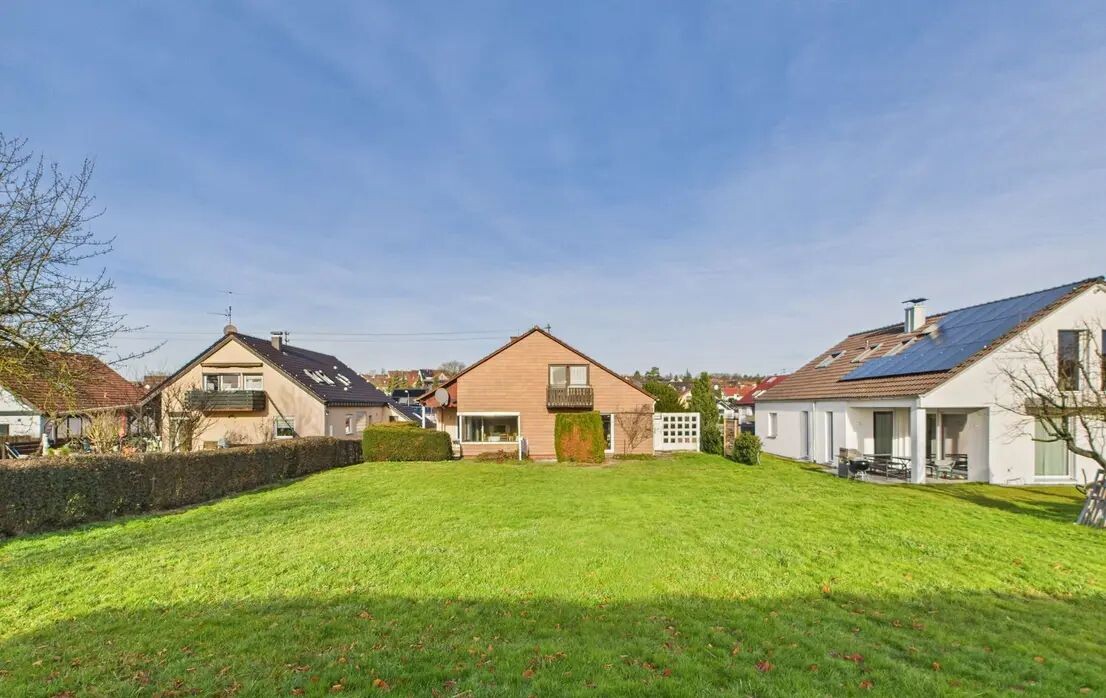
The white house (on a photo to the right) already looks quite appealing.
You generally want to avoid having a garage inside the thermal envelope.
What year was the building constructed? The house doesn’t look that old yet.
The white house (on a photo to the right) already looks quite appealing.

beicampi schrieb:
We don’t have an architect yet, and I’m not quite sure where to start to find the right one. Also, whether it’s better to design freely or to work with an architect from a construction company. [...]
Specific questions:
- Should the demolition of the building be delayed and coordinated with the construction, or should it be demolished beforehand? In the latter case, the site would need to be secured.
- Ideas for the floor plan, possibly based on existing prefab house layouts
- Free design versus design by a construction company that offers turnkey solutions
- Solid wood house: alternatives to dowel-laminated wood, supplier selection, possibly even recommendations? But turnkey is key for me.
- Solid construction (e.g., concrete or masonry) versus timber construction: what ultimately determines the best choice?
[...] Origin of the plans: none created yet / existing building as reference You must have a significant budget to even consider demolition on a project like this. Hire an architect experienced in renovating existing buildings, avoid increasing ceiling heights, and if needed, allow the roof overhangs to be extended. Opportunities to incorporate a healthy living wood atmosphere can be easily found and applied in the desired amount. Two additional parking spaces can also be arranged on the property somehow.
https://www.instagram.com/11antgmxde/
https://www.linkedin.com/company/bauen-jetzt/
11ant schrieb:
You must have a lot of money to even consider demolition for a property like this. Hire an architect experienced in renovating existing buildings, skip increasing ceiling heights, and if you want, raise the eaves. Opportunities to create a healthy living environment with wood are easy to find and can be applied in the desired amount. You can also somehow fit two more parking spaces on the property. That’s one way to look at it. I’ve already completed a house renovation, and the result is acceptable. But for my next project, it will be a new build, even if that might be considered a luxury choice. The house dates back to the 1960s, and for me personally, demolition is the only option. Heating system, electrical wiring, room layout, room sizes, ceiling heights, roof… nothing fits our needs, so I’d rather start fresh.
ypg schrieb:
I recommend consulting an architect!
They can also realize your wishes in a more stylish way. Three garages make quite a statement, and it’s not obvious whether garages are allowed outside the building zone. Otherwise, there’s a problem.
You generally want to avoid having a garage within the thermal envelope.
What is the construction year of the existing building? The house doesn’t look that old.
The white house (in the photo on the right) already looks quite appealing. There is already a garage on the property located outside the building zone. Other houses in the neighborhood also have at least a double garage set back. The neighbor with the attractive house is currently building a new double garage outside the building zone. So I think the chances are not too bad to get approval for this. Three garages would be my preference, but two would be acceptable if necessary.
The existing building dates from the 1960s and is in poor condition. The house has been unoccupied for a long time. The white house was recently renovated.
Garage and thermal envelope: That point makes sense to me. Maybe it’s possible to create a connecting door to an attached garage or at least a well-planned, short exterior path into the house. We currently have a door between house and garage and really appreciate it. But it’s definitely not a must-have, especially if there are strong technical reasons against it.
Architect: I will start looking for one. Are there best practices for finding the right architect (chamber, directories, etc.)? Personal experiences would be very helpful, as I have no references in this area so far but have heard many horror stories.
Similar topics