
ᐅ Floor Plan Design for a Single-Family Home with Approximately 170 m² of Living Space
Created on: 7 Dec 2025 08:54
F
FlynooM
Hello,
We have been planning our own home for a long time now and finally see the start of construction at the end of the tunnel. I actually have an urgent question about the bathrooms, but I thought you could also take a look at the rest of the floor plan to make sure we don't overlook any details during the detailed planning phase.
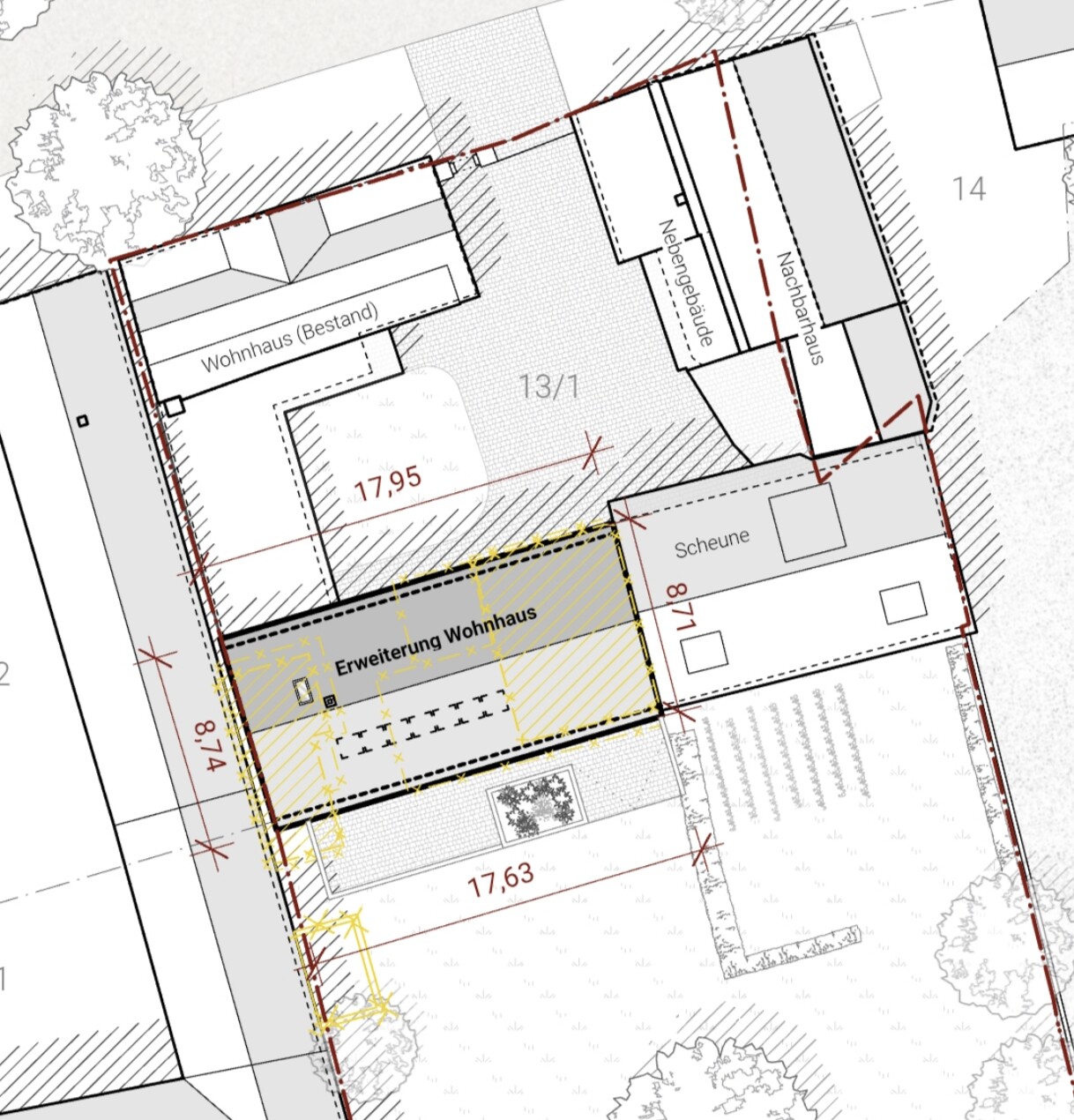
We are building on a family property in a “gap” within a four-sided courtyard.
Unfortunately, I can’t provide all the requested information. If something crucial is missing, I would have to look through the documents again.
Development Plan / Restrictions
Plot size: approx. 2000 m2 (0.5 acres)
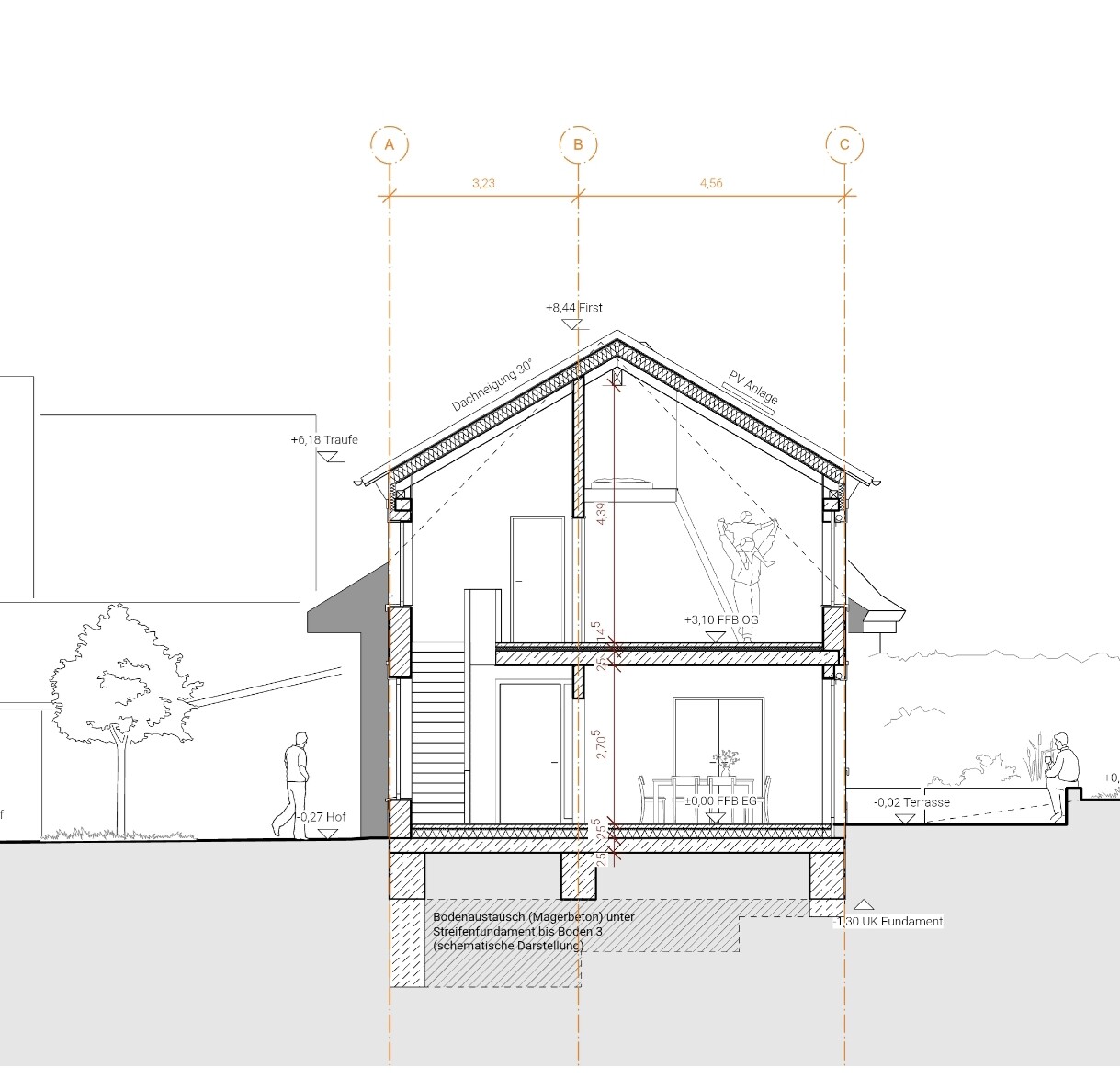
Slope: slight elevation difference between courtyard and garden (approx. 0.5–1 m (1.5–3 ft)), but the house will be built at courtyard level, and only the passage to the garden will have a rise; the terrace will then be about 0.5 m (1.5 ft) lower than the rest of the garden.
Site coverage ratio (floor area ratio): approx. 157 m2 (1690 sq ft)
Stories: 2.5 (2 full floors plus a raised bed level and attic above the bathroom)
Boundary construction: up to the neighbor (but with a narrow passage to the neighbor’s house); otherwise integrated into the four-sided courtyard
Roof type: gable roof, very flat
Style: farmhouse with brick veneer on the facade
Orientation: north-south
House design
Planner: independent architect
Why does the design look like this?
The final design is the result of many compromises and multiple revisions, with which everyone is satisfied. Unfortunately, due to closing the gap in the courtyard and building regulations aimed at preserving the village’s character, we are somewhat restricted, but most issues could still be resolved satisfactorily.
My main question concerns the bathrooms on the upper floor and basement.
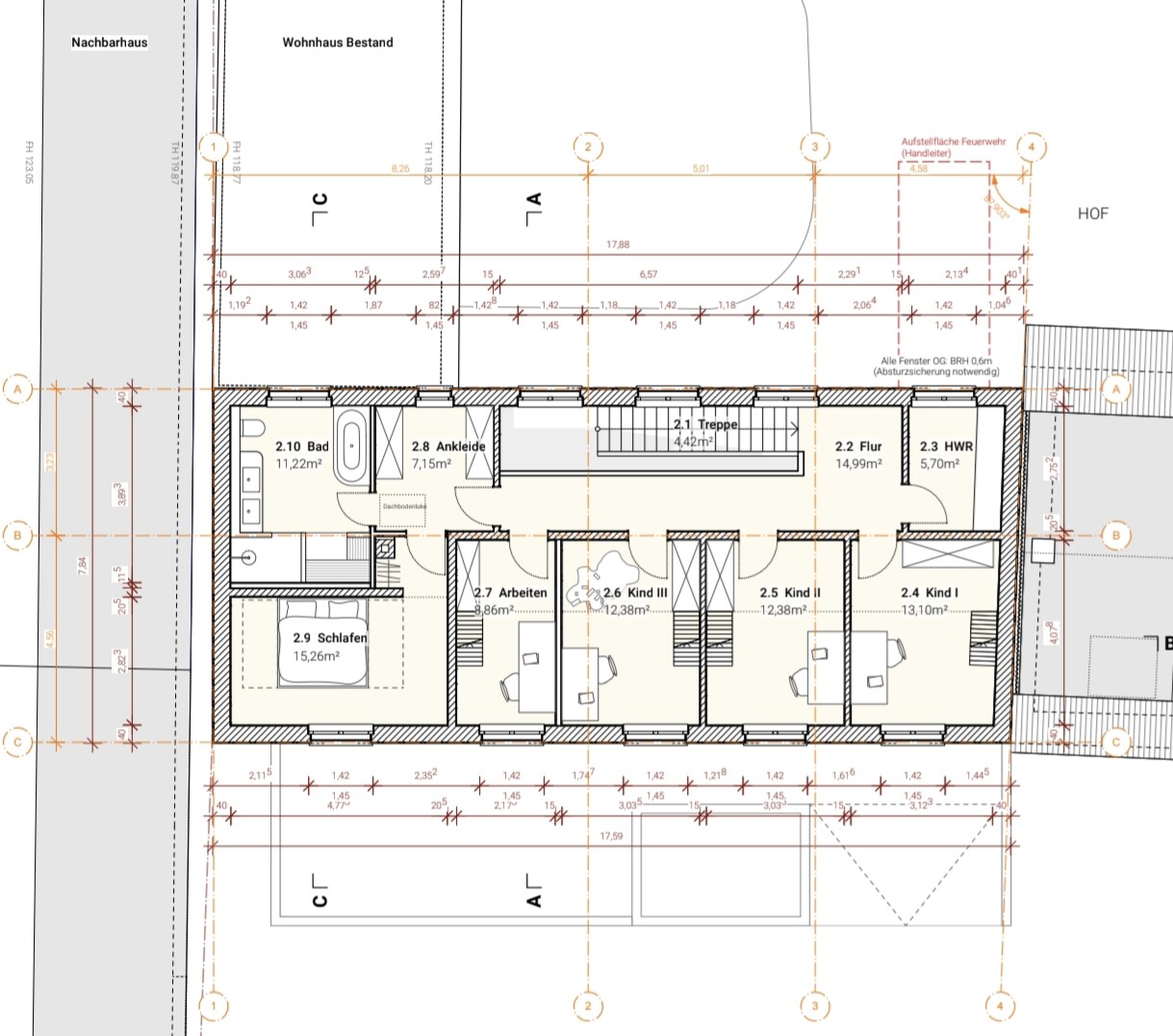
I want a masonry walk-in shower in both bathrooms, with a 1 to 2 cm (0.4–0.8 inch) step down to prevent water from running out. The current design is still incorrect: the sauna and shower on the upper floor were switched for better plumbing layout.
The architects recommend a shower entrance at least 60 cm (24 inches) wide and strongly advise a door to prevent water splashing out.
In the basement bathroom: shower length is 143 cm (56 inches) minus 60 cm (24 inches) entrance = 83 cm (33 inches) wall segment
On the upper floor: shower length is about 153 cm (60 inches) minus 60 cm (24 inches) entrance = 93 cm (37 inches) wall segment
I actually don’t want a door. Is the remaining wall enough to act as a splash guard? Do you have experience with how long such a wall must be at minimum to prevent flooding the bathroom? And how narrow can the entrance be? Is it possible to make the sauna smaller?
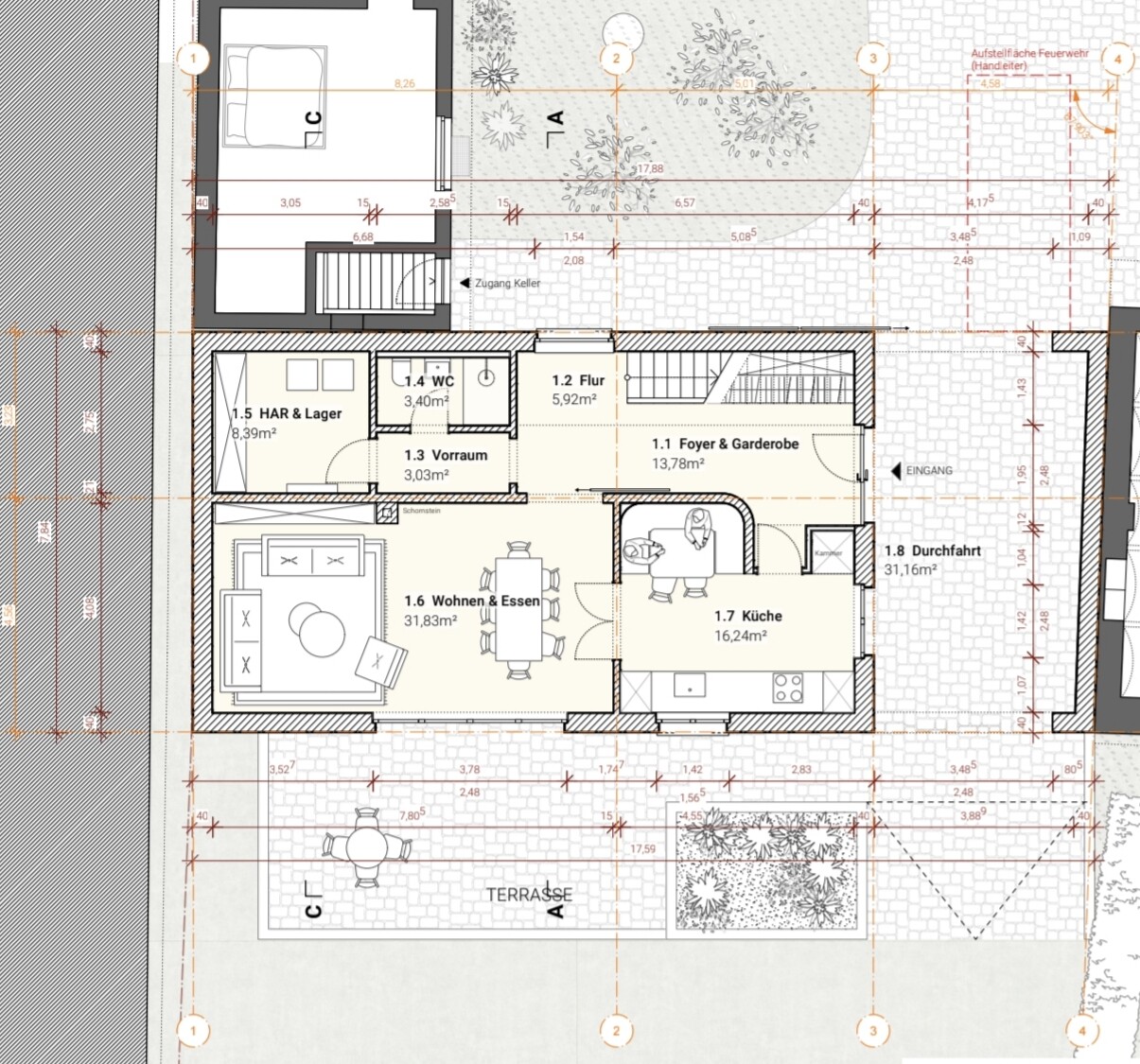
And regarding the kitchen: do you think the space will be sufficient? We don’t need a huge kitchen, but it should have room for the usual appliances, like a toaster and kettle, and enough countertop workspace.
Thank you very much for your help!
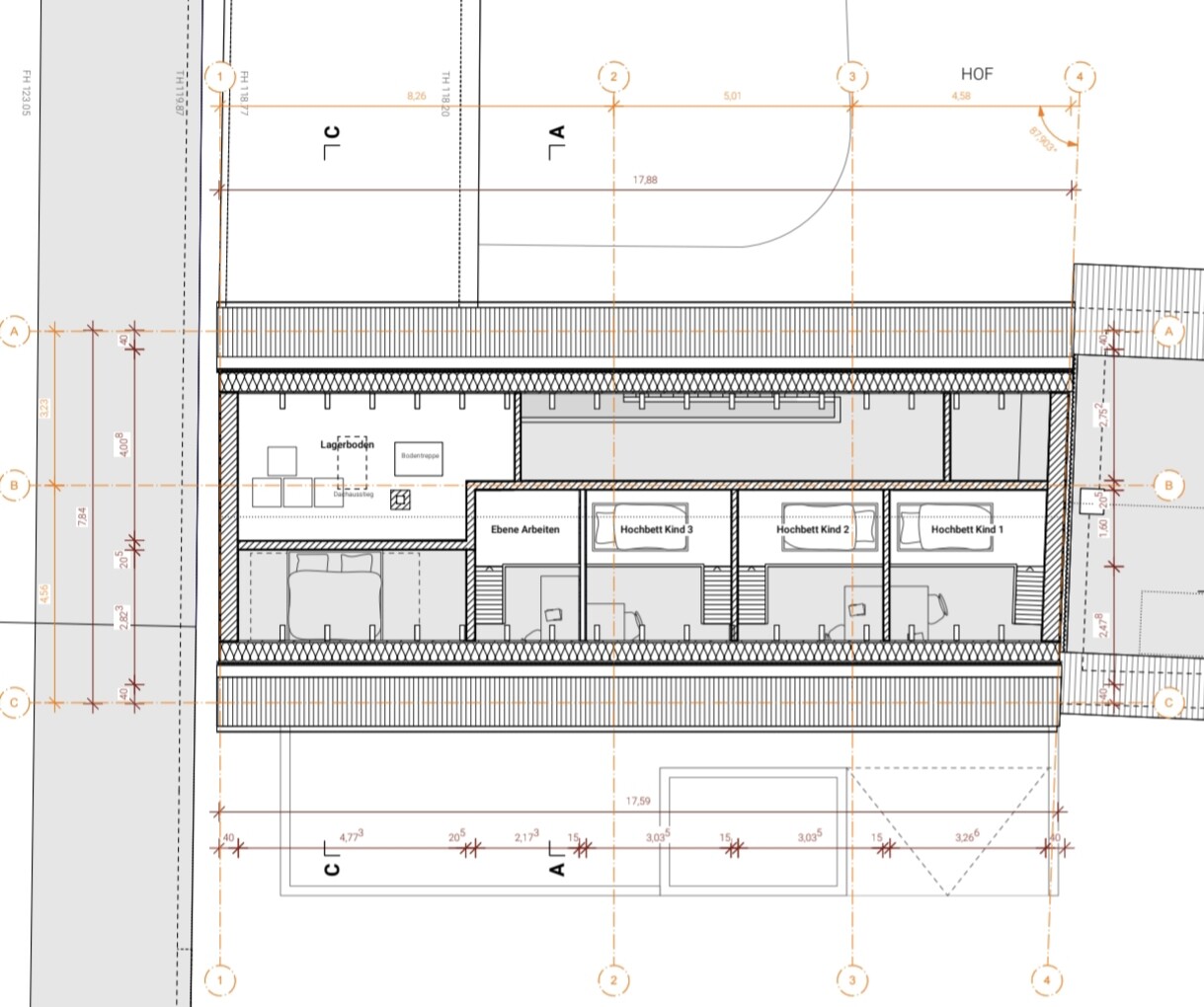
We have been planning our own home for a long time now and finally see the start of construction at the end of the tunnel. I actually have an urgent question about the bathrooms, but I thought you could also take a look at the rest of the floor plan to make sure we don't overlook any details during the detailed planning phase.
We are building on a family property in a “gap” within a four-sided courtyard.
Unfortunately, I can’t provide all the requested information. If something crucial is missing, I would have to look through the documents again.
Development Plan / Restrictions
Plot size: approx. 2000 m2 (0.5 acres)
Slope: slight elevation difference between courtyard and garden (approx. 0.5–1 m (1.5–3 ft)), but the house will be built at courtyard level, and only the passage to the garden will have a rise; the terrace will then be about 0.5 m (1.5 ft) lower than the rest of the garden.
Site coverage ratio (floor area ratio): approx. 157 m2 (1690 sq ft)
Stories: 2.5 (2 full floors plus a raised bed level and attic above the bathroom)
Boundary construction: up to the neighbor (but with a narrow passage to the neighbor’s house); otherwise integrated into the four-sided courtyard
Roof type: gable roof, very flat
Style: farmhouse with brick veneer on the facade
Orientation: north-south
House design
Planner: independent architect
Why does the design look like this?
The final design is the result of many compromises and multiple revisions, with which everyone is satisfied. Unfortunately, due to closing the gap in the courtyard and building regulations aimed at preserving the village’s character, we are somewhat restricted, but most issues could still be resolved satisfactorily.
My main question concerns the bathrooms on the upper floor and basement.
I want a masonry walk-in shower in both bathrooms, with a 1 to 2 cm (0.4–0.8 inch) step down to prevent water from running out. The current design is still incorrect: the sauna and shower on the upper floor were switched for better plumbing layout.
The architects recommend a shower entrance at least 60 cm (24 inches) wide and strongly advise a door to prevent water splashing out.
In the basement bathroom: shower length is 143 cm (56 inches) minus 60 cm (24 inches) entrance = 83 cm (33 inches) wall segment
On the upper floor: shower length is about 153 cm (60 inches) minus 60 cm (24 inches) entrance = 93 cm (37 inches) wall segment
I actually don’t want a door. Is the remaining wall enough to act as a splash guard? Do you have experience with how long such a wall must be at minimum to prevent flooding the bathroom? And how narrow can the entrance be? Is it possible to make the sauna smaller?
And regarding the kitchen: do you think the space will be sufficient? We don’t need a huge kitchen, but it should have room for the usual appliances, like a toaster and kettle, and enough countertop workspace.
Thank you very much for your help!
I’ll try to summarize what I wrote more briefly this time. I need to leave out quoting because it’s really hard to use on a smartphone. Maybe I’m just not handling it well.
The house will be built on a spot where there are currently a few sheds and a large garden pathway. The new passage will also be a garden passage. So, a car will never drive through there, at most it will be used for parking.
Actually, it was meant less emotionally than it was understood: I just work a lot, and it would be fair if the house works well for the other people who spend much more time there, working from home and doing homework.
Here is a summary of the ideas for the basement level (entrance relocated and kitchen enlarged). It also creates more wall space for cabinets despite the large windows facing south.
We just need to make sure the northern part of the kitchen doesn’t get too dark.
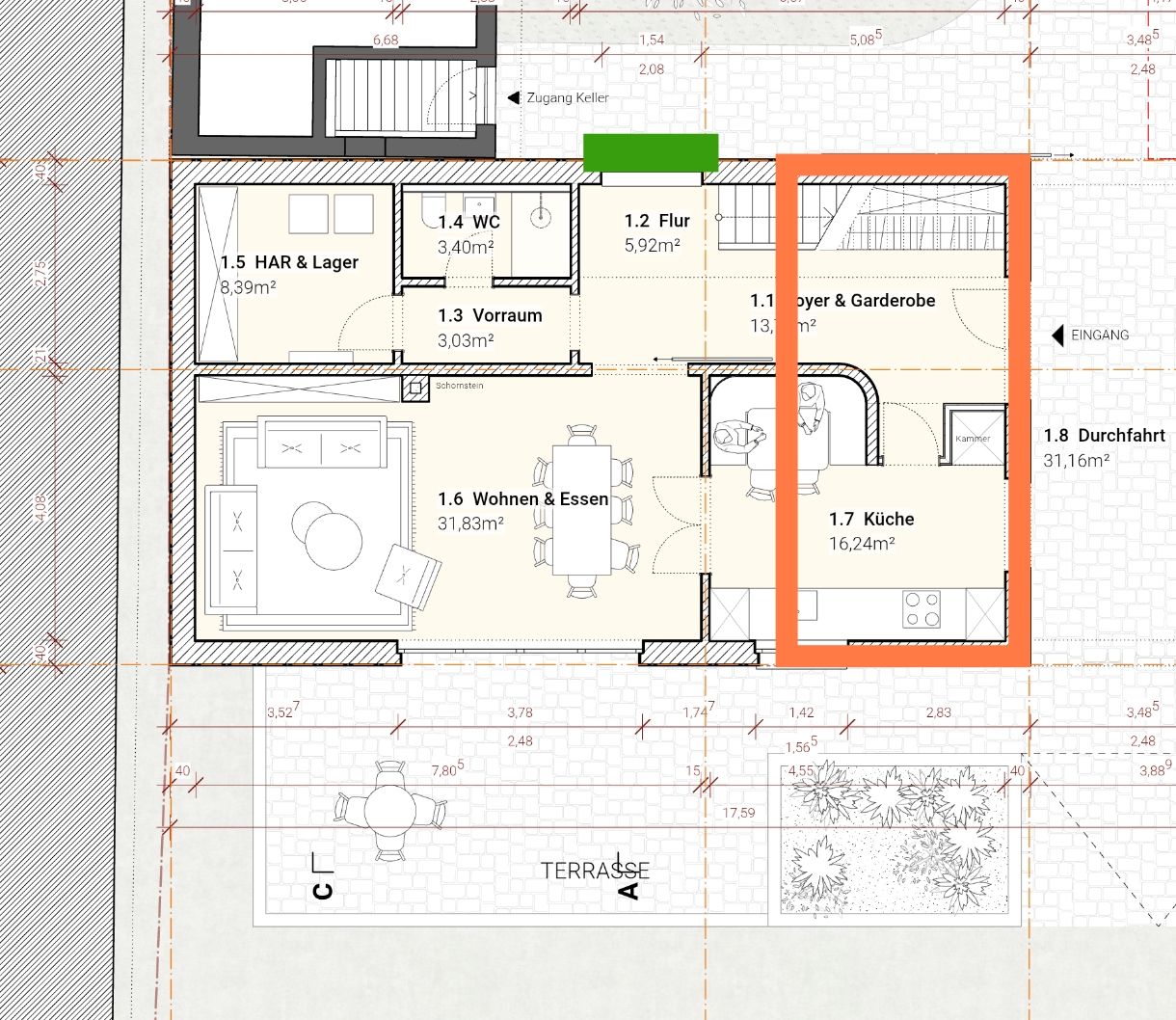
It’s difficult to communicate within the family because everyone feels they want something different. Those who don’t cook don’t need a large kitchen, and those who rarely clean don’t mind muddy shoes in the hallway. Building a house becomes family therapy.
The comments about the fireplace were very helpful. Without going into all the details you discussed (I still have no real knowledge about fireplaces): we want underfloor heating and an air source heat pump with solar panels on the roof (we like underfloor heating and are familiar with it, and the energy consultant recommended the rest).
I’ve already informed the architects about the problem that the fireplace apparently can’t be installed where it’s shown on the plans, and we will discuss that further.
Since a fireplace is a luxury item and we have never had one, it’s currently okay if we leave out the chimney pipe. I just hope we won’t regret it later.
Fireplace owners have advised us to build it in from the start because we might miss it later and then it would be complicated and unattractive to add it from the outside.
On the other hand, I only know my father-in-law’s fireplace, and he struggles with it. The living room gets unbearably hot and you’re still not allowed to open the doors so the rest of the house doesn’t get cold.
We plan to have sliding doors to the hallway and the staircase with a gallery, partly because these doors usually don’t close as tightly as others and so the rest of the house can share some of the heat.
Regarding the small size of the living room, I measured and placed boxes and chairs to mark areas, and I found that our current living room (excluding the kitchen) is only slightly smaller. With the wall system and sofa in front of it and a small cabinet next to the fireplace pipe, the seating and storage space is about the same as now and we manage well. Especially since some things from the living room will move to the children’s rooms and the office. That will even free up some cabinets. Only the large dining table will have to be placed across the room so it can be easily extended.
As for the upper floor: the dressing room as a passage to the bathroom was actually the architects’ idea.
I had originally planned the dressing room between the bathroom and bedroom because we really do need a wall with a door between the bedroom and the closets/shelves or at least a walk-in closet so that one person can quietly choose clothes without waking the other. I’m not exactly sure how to solve this. If the gallery is removed, the bathroom extended there, and the dressing room placed instead of the shower and sauna, it creates a long, narrow, and dark corridor and a long bathroom.
On the other hand, if it is left as is and a nice room divider or curtain is used in the dressing room to hide the closets, you get the feel of a stylish fitting room in a clothing store, and the path to the bathroom still gets natural light. At least that’s my idealistic vision.
I read a lot about “the same topics.”
Many issues have been raised. Which discussions exactly are they (I’ve already noted fireplace and heating system), and which posts do you recommend? Are there any posts that are updated after the house is built? That is, where someone later writes about how they actually implemented the advice, what was changed or not, and whether it was a good or bad decision?
The house will be built on a spot where there are currently a few sheds and a large garden pathway. The new passage will also be a garden passage. So, a car will never drive through there, at most it will be used for parking.
Actually, it was meant less emotionally than it was understood: I just work a lot, and it would be fair if the house works well for the other people who spend much more time there, working from home and doing homework.
Here is a summary of the ideas for the basement level (entrance relocated and kitchen enlarged). It also creates more wall space for cabinets despite the large windows facing south.
We just need to make sure the northern part of the kitchen doesn’t get too dark.
It’s difficult to communicate within the family because everyone feels they want something different. Those who don’t cook don’t need a large kitchen, and those who rarely clean don’t mind muddy shoes in the hallway. Building a house becomes family therapy.
The comments about the fireplace were very helpful. Without going into all the details you discussed (I still have no real knowledge about fireplaces): we want underfloor heating and an air source heat pump with solar panels on the roof (we like underfloor heating and are familiar with it, and the energy consultant recommended the rest).
I’ve already informed the architects about the problem that the fireplace apparently can’t be installed where it’s shown on the plans, and we will discuss that further.
Since a fireplace is a luxury item and we have never had one, it’s currently okay if we leave out the chimney pipe. I just hope we won’t regret it later.
Fireplace owners have advised us to build it in from the start because we might miss it later and then it would be complicated and unattractive to add it from the outside.
On the other hand, I only know my father-in-law’s fireplace, and he struggles with it. The living room gets unbearably hot and you’re still not allowed to open the doors so the rest of the house doesn’t get cold.
We plan to have sliding doors to the hallway and the staircase with a gallery, partly because these doors usually don’t close as tightly as others and so the rest of the house can share some of the heat.
Regarding the small size of the living room, I measured and placed boxes and chairs to mark areas, and I found that our current living room (excluding the kitchen) is only slightly smaller. With the wall system and sofa in front of it and a small cabinet next to the fireplace pipe, the seating and storage space is about the same as now and we manage well. Especially since some things from the living room will move to the children’s rooms and the office. That will even free up some cabinets. Only the large dining table will have to be placed across the room so it can be easily extended.
As for the upper floor: the dressing room as a passage to the bathroom was actually the architects’ idea.
I had originally planned the dressing room between the bathroom and bedroom because we really do need a wall with a door between the bedroom and the closets/shelves or at least a walk-in closet so that one person can quietly choose clothes without waking the other. I’m not exactly sure how to solve this. If the gallery is removed, the bathroom extended there, and the dressing room placed instead of the shower and sauna, it creates a long, narrow, and dark corridor and a long bathroom.
On the other hand, if it is left as is and a nice room divider or curtain is used in the dressing room to hide the closets, you get the feel of a stylish fitting room in a clothing store, and the path to the bathroom still gets natural light. At least that’s my idealistic vision.
I read a lot about “the same topics.”
Many issues have been raised. Which discussions exactly are they (I’ve already noted fireplace and heating system), and which posts do you recommend? Are there any posts that are updated after the house is built? That is, where someone later writes about how they actually implemented the advice, what was changed or not, and whether it was a good or bad decision?
 Papierturm21 Dec 2025 12:59
FlynooM schrieb:
I'll try to summarize more briefly what I wrote before. I have to skip quoting because it's really exhausting to use on a smartphone. Maybe I'm just doing it wrong.I feel the same. I only write longer posts when I’m on my laptop. Otherwise, I just ghost around here, give "thumbs up," and write at most three-line responses. The house will be built on a spot where there are currently some sheds and a large garden path. The new path will also be a garden path. So, cars will never pass through, only park at most. This is already very important information because it significantly eases the situation around the front door!
You just have to make sure it doesn’t get too dark in the northern part of the kitchen. North-facing windows provide diffuse light. Especially in the evening, that’s quite pleasant. Around midday, however, you get full shade from the house.
As I understand the floor plan now (orange box = kitchen), it has become extremely large—almost the opposite of before. But if there is still room for a seating area, that fits very well.
Windows on the north (under the stairs), east, and south. Depending on how the rest is designed, the lighting should work fine most of the time.
(If it’s a closed kitchen: use doors with glass panels so that light from the west can also come in.)
It’s unfortunately hard to mediate within the family because everyone seems to want something different. Those who don’t cook don’t need a big kitchen, and those who rarely clean don’t mind muddy shoes in the hallway. Building a house becomes family therapy. Absolutely. Building a house is one of the most stressful and difficult tasks a family can face.
Everyone wants something different.
Everyone has different priorities.
But that can also be good later on because different tasks can be divided during construction.
Still: family therapy fits very well.
On the other hand, I only know my father-in-law’s fireplace, and he doesn’t handle it well at all. The living room is burning hot, yet you are not allowed to open the doors, so the rest of the house stays cold.
We plan to have sliding doors to the hallway and the stairwell with gallery, partly because they usually don’t close as tightly as other doors, allowing the rest of the house to benefit from the heat. Fireplaces are always a hot topic. See also the related thread.
My view is: the important thing is to be able to make an informed decision for yourself.
So, do some research and decide whether you want it or not. There is no right or wrong answer here.
Regarding the tightness of the living room, I measured and placed boxes and chairs to mark boundaries and found that our current living room (excluding the kitchen) is only slightly bigger. With the built-in wall unit, the sofa in front of it, and a small cupboard next to the fireplace pipe, the seating and storage space is just like we have now and we manage well. Great! You should actually do that with (almost) every room. Physically arrange furniture or use boxes and see if the space works.
About the upper floor: the walk-in wardrobe as a passage to the bathroom was actually the architects’ idea. What do you think about that? Architects don’t always have the best ideas or are always right. That would drive me crazy.
On the other hand, if you keep it that way and use a nice room divider or curtain in the walk-in to hide the closets, you get the ambiance of a fancy dressing room in a clothing store, and the path to the bathroom still gets light. That’s at least my romanticized idea. That could work. Hmm.
A key point in the planning would definitely be sound insulation. Regardless of the construction method, I would invest in a soundproof wall between the bathroom and bedroom.
Note: An 84 cm (33 inches) window (currently planned for the walk-in), if that is the rough opening, is not very wide! The frame takes up space inside the wall, plus the sash frame. In the end, you are left with about 50 cm (20 inches) of visible glass, depending on the window design. I would see if it could be made wider. Every extra centimeter means an extra centimeter of glass. Since it’s also a north-facing window, that would be helpful.
Are there posts updated after house completion, meaning someone writes about how they actually implemented the advice and what was changed or not, and whether it was a good or bad decision? Unfortunately, many people seem to (more or less understandably) put the topic of housebuilding aside after completion and are no longer active.
The closest thing is probably the house thread, estimated to have about 2000 pages, where such topics are occasionally discussed. I don’t know any other sources.

Papierturm schrieb:
The fireplace is such an ongoing debate. See also in that thread. If it were still nineteen eighty, I would be firmly in the pro-fireplace camp. But the world has moved on since then.
https://www.instagram.com/11antgmxde/
https://www.linkedin.com/company/bauen-jetzt/
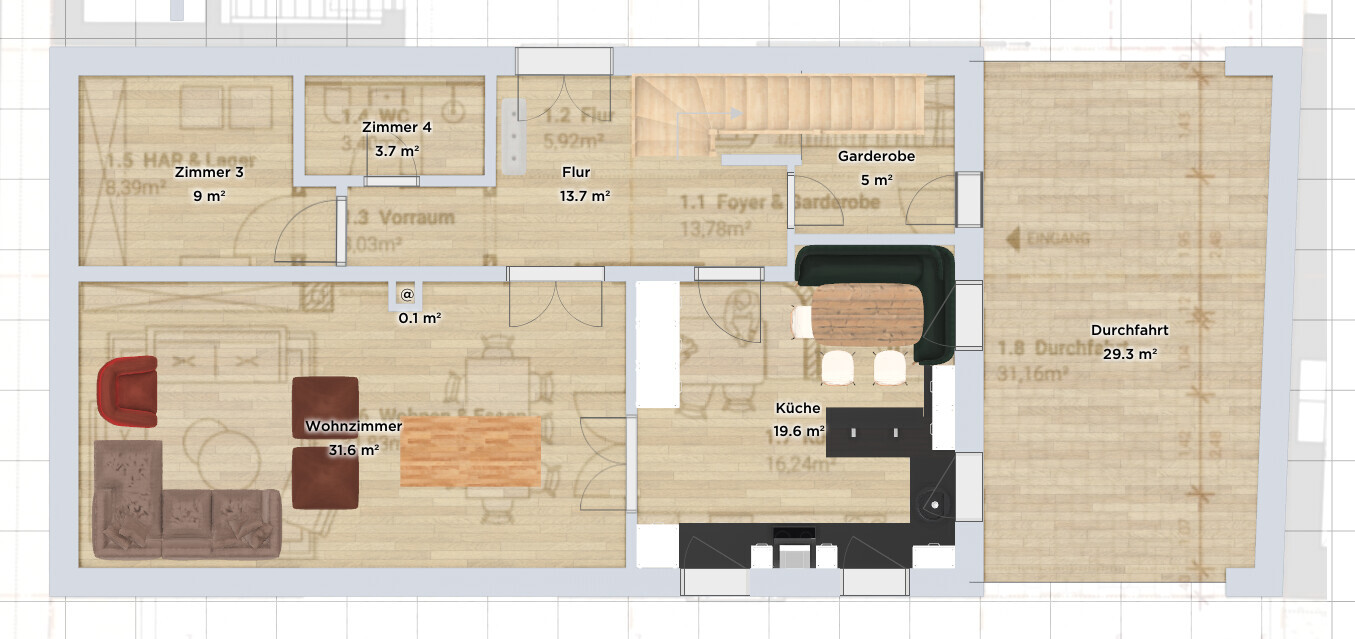
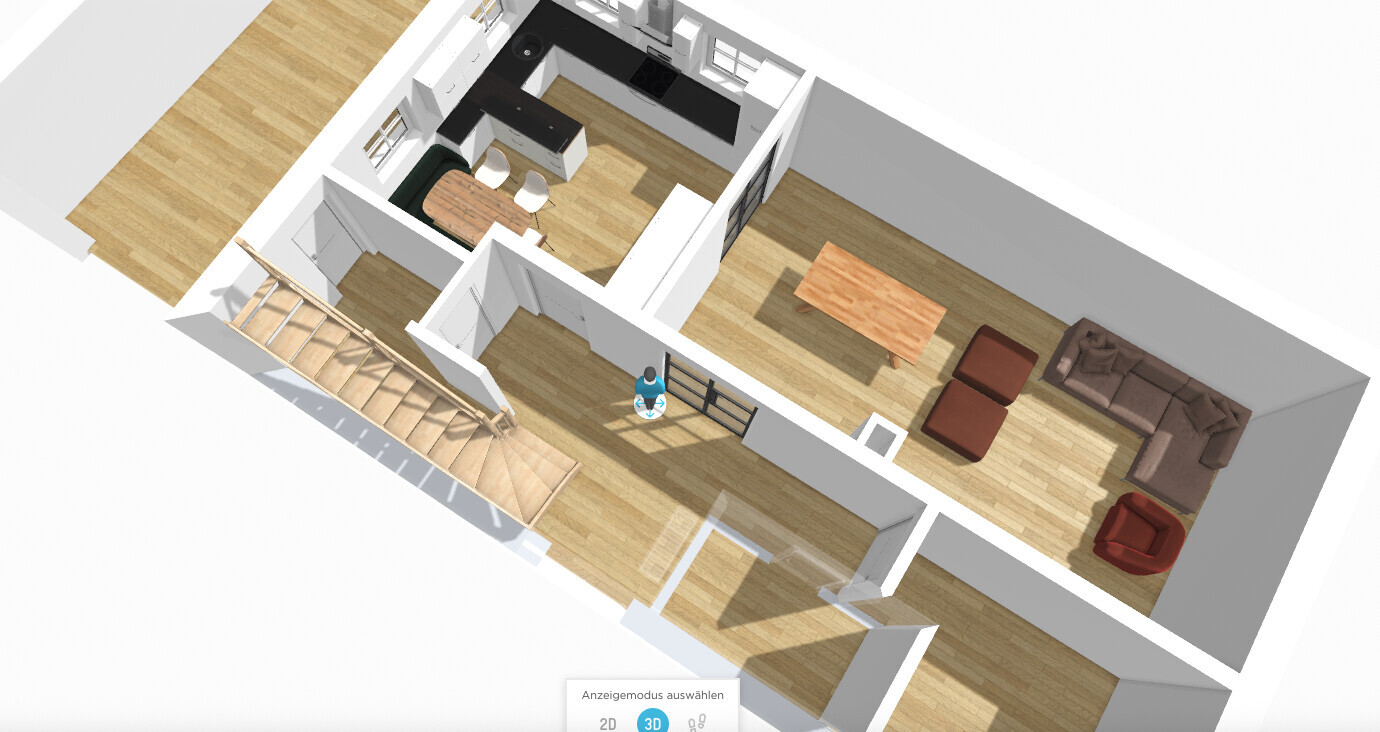
I still found this in my tool, so it hasn’t been deleted yet. It’s more or less an initial idea, not everything is included yet. The main entrance is on the north side, and a second emergency exit is located in a large cloakroom suitable for five people. There are also fireplaces built into the chimney. Danwood uses those as well, but I can’t recall the name right now.
Papierturm21 Dec 2025 21:21As often, I really like the planning by @ypg!
Well, having a fireplace today is like driving a car from nineteen eighty: a matter of passion.
That’s how I treat it as well. If the budget is tight, I always recommend leaving it out. Otherwise, I point out its particular characteristics.
I believe knowing these is important. Modern houses require very little heating power and therefore overheat extremely quickly, and underfloor heating systems are very slow to respond. As a result, in my opinion, fireplaces only work really well and comfortably if they are truly integrated into the overall design. It’s like driving a classic car—they need a bit more care. (And are not exactly cost-efficient.)
11ant schrieb:
If we were still in nineteen eighty, I would firmly be in the pro-fireplace camp. But the world has moved on since then.
Well, having a fireplace today is like driving a car from nineteen eighty: a matter of passion.
That’s how I treat it as well. If the budget is tight, I always recommend leaving it out. Otherwise, I point out its particular characteristics.
I believe knowing these is important. Modern houses require very little heating power and therefore overheat extremely quickly, and underfloor heating systems are very slow to respond. As a result, in my opinion, fireplaces only work really well and comfortably if they are truly integrated into the overall design. It’s like driving a classic car—they need a bit more care. (And are not exactly cost-efficient.)
M
MachsSelbst21 Dec 2025 22:05I always smile when I read about power outages where the fireplace is supposed to be the savior. It’s like with preppers who live off canned food their whole lives, constantly rotating their stock to buy new supplies…
The Münsterland power outage happened 20 years ago and lasted 4 days. That’s very unfortunate, but during that time a modern house doesn’t completely cool down. Personally, I’d rather put a gas heater with a 25kg (55 lb) cylinder in the shed…
If the outage is more widespread, there are bigger problems anyway. No one seriously believes that everyone else outside is freezing to death while the house next door is happily steaming from the fireplace. People who are drowning cling to those who can still hold on—that’s just how it is.
So, why not an ethanol fireplace? It creates a similar atmosphere, but it’s smaller and not as pointless or complicated as a real fireplace.
The Münsterland power outage happened 20 years ago and lasted 4 days. That’s very unfortunate, but during that time a modern house doesn’t completely cool down. Personally, I’d rather put a gas heater with a 25kg (55 lb) cylinder in the shed…
If the outage is more widespread, there are bigger problems anyway. No one seriously believes that everyone else outside is freezing to death while the house next door is happily steaming from the fireplace. People who are drowning cling to those who can still hold on—that’s just how it is.
So, why not an ethanol fireplace? It creates a similar atmosphere, but it’s smaller and not as pointless or complicated as a real fireplace.
Similar topics