
ᐅ New Construction Planning – Single-Family Home, 160 sqm without Basement – Floor Plan, Costs, and More
Created on: 29 Sep 2014 17:33
C
ChrisBr
Hello forum members!
We are a family of four (parents and two young children) who have been planning to build a new single-family home for some time now. We are building in NRW, postal code area 34439, which is close to Paderborn.
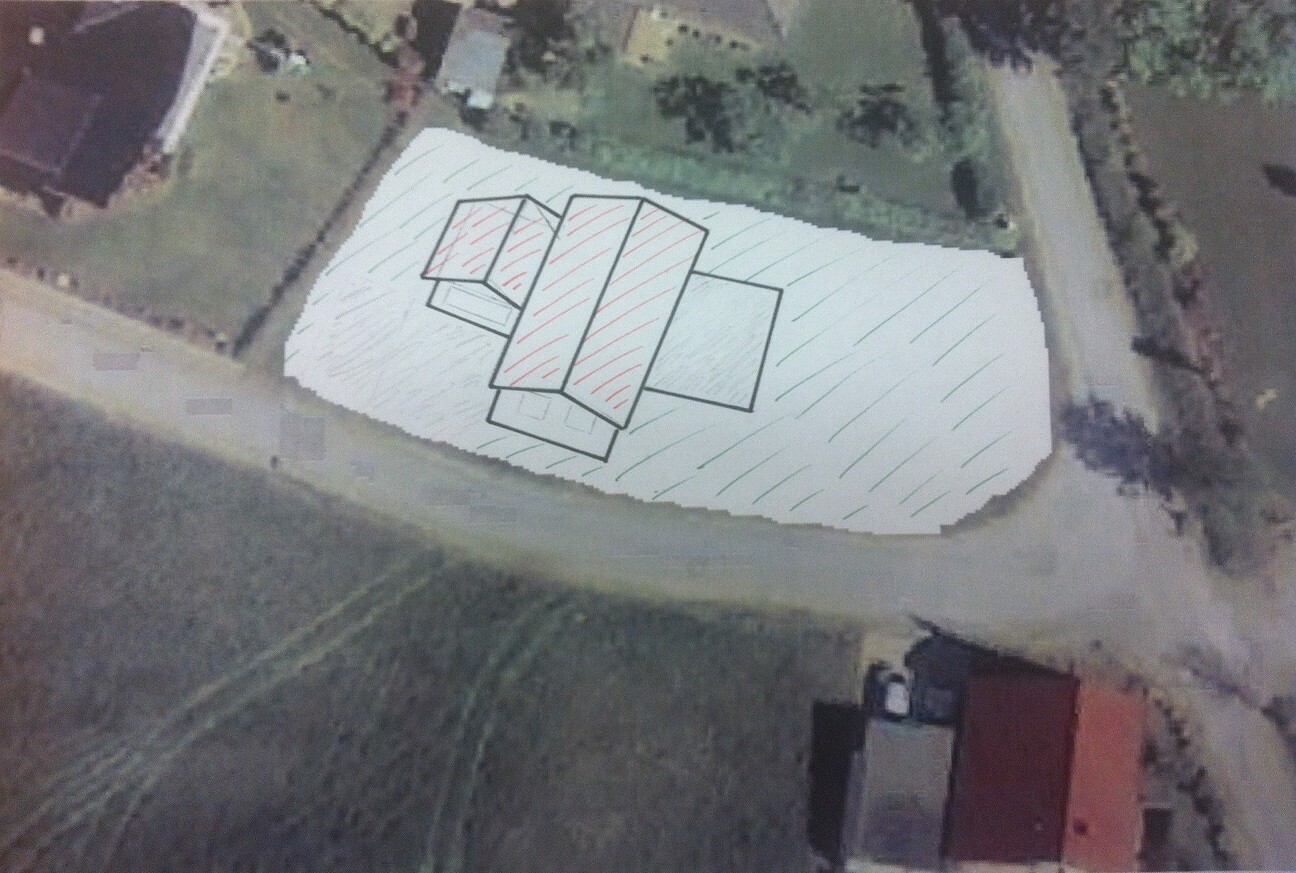
Our reserved plot measures 880 square meters (9,470 square feet) and is flat, not on a slope. We created our own design adapted to the plot and brought it to the architect, who adopted the drawing almost unchanged. Originally, we planned to include a basement level - but after receiving the cost estimate and weighing the pros and cons, we decided to omit the basement and widen the above-ground footprint instead.
The house now has a footprint of 9.11 by 10.31 meters (30 by 34 feet), plus an extension including an entrance area, utility room, and double garage.
It was important for us to have an extra room on the ground floor (intended as a guest bedroom). Since we no longer have a basement, we had to find space for the utility room inside. At the same time, I wanted direct access from the garage to the house, so we added an entrance vestibule.
The total living area including the extensions is now 165 square meters (1,776 square feet) (605 cubic meters [21,368 cubic feet] of enclosed volume in the main house, about 218 cubic meters [7,698 cubic feet] in the extension). Construction will be according to the latest standards using solid construction with 24 cm (9.5 inches) Unipor T14 bricks and 16 cm (6.3 inches) external wall insulation (EPS20, thermal conductivity 0.035 W/mK). The exterior will have plaster with paint; no facing bricks.
We have a clear favorite for the construction work but are gathering competitive bids as well. As a rough estimate, the turnkey house costs about 230,000, while the extension (entrance area, utility room, garage) is around 50,000. Additional costs include finishing works for the kitchen, flooring, stove, interior fittings and attic conversion (35,000), the plot (35,000 – yes, land prices are still reasonable in this rural area), landscaping (10,000), and additional construction-related expenses (5,000). Altogether, the budget stands at about 365,000, which we still plan to optimize with some sweat equity.
This is the first offer; over the next few days, we expect two more quotes from solid construction companies and two from prefabricated house builders. After that, we will continue to evaluate our options.
For the technical equipment: we will install a gas condensing boiler, underfloor heating, and a wood stove in the living room. My architect insists on adding two solar panels for hot water, as at least 5% of the energy demand must come from solar.
That’s it for now... I’m attaching the floor plans and elevations. Feedback and suggestions are very welcome.
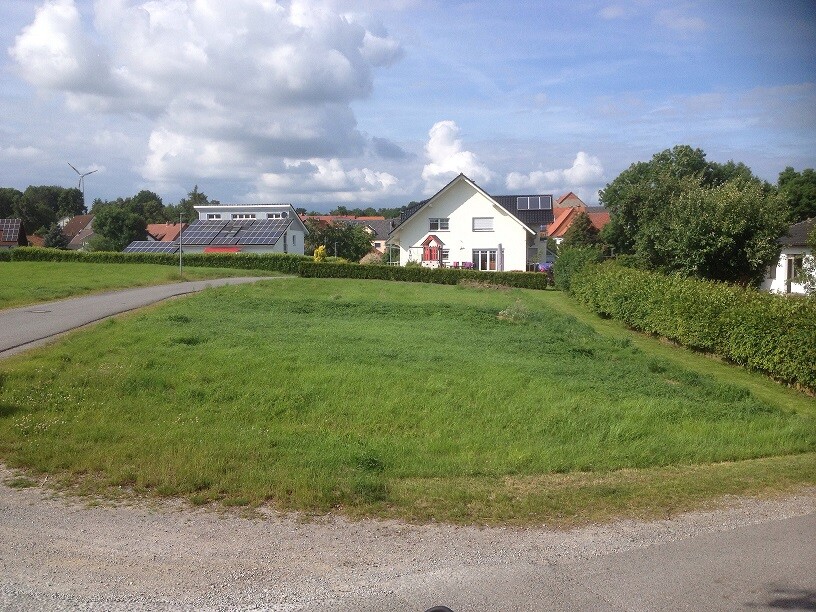
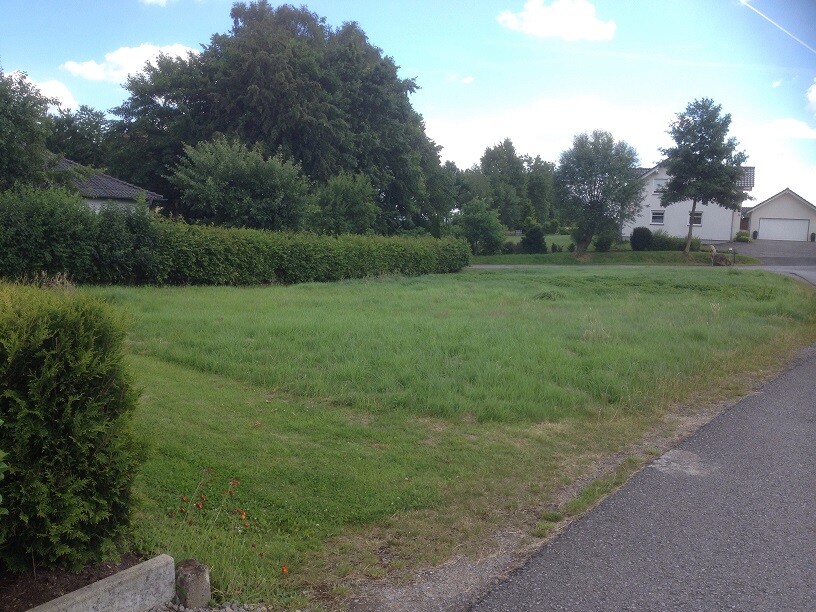
Edit: I have also added photos of the plot afterwards, which I will repost later.
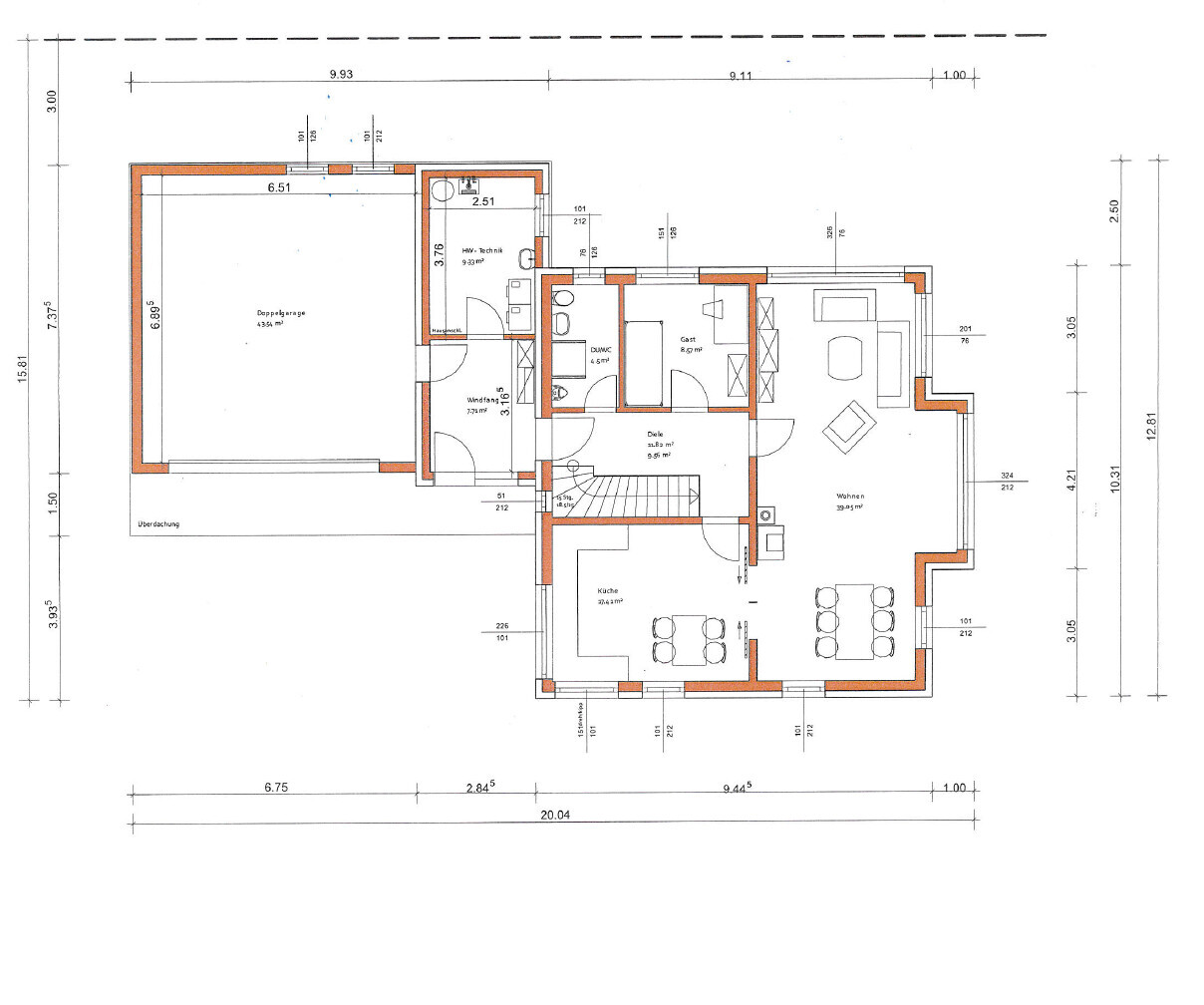
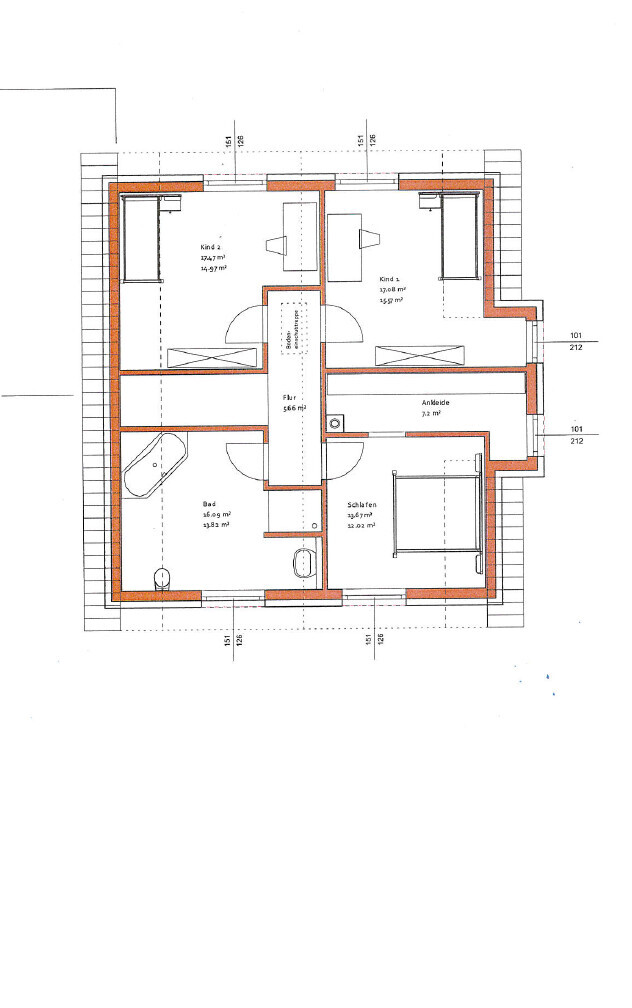
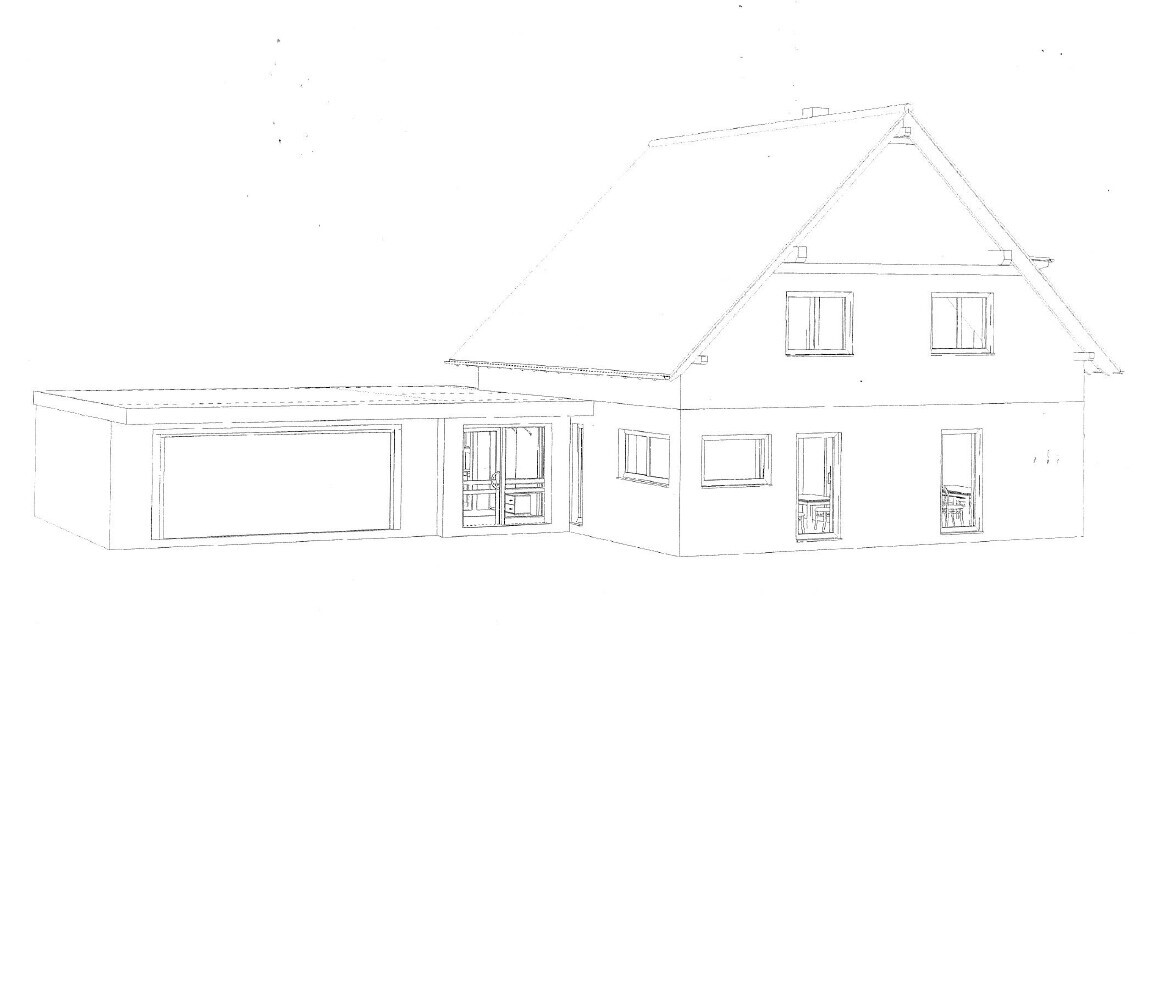
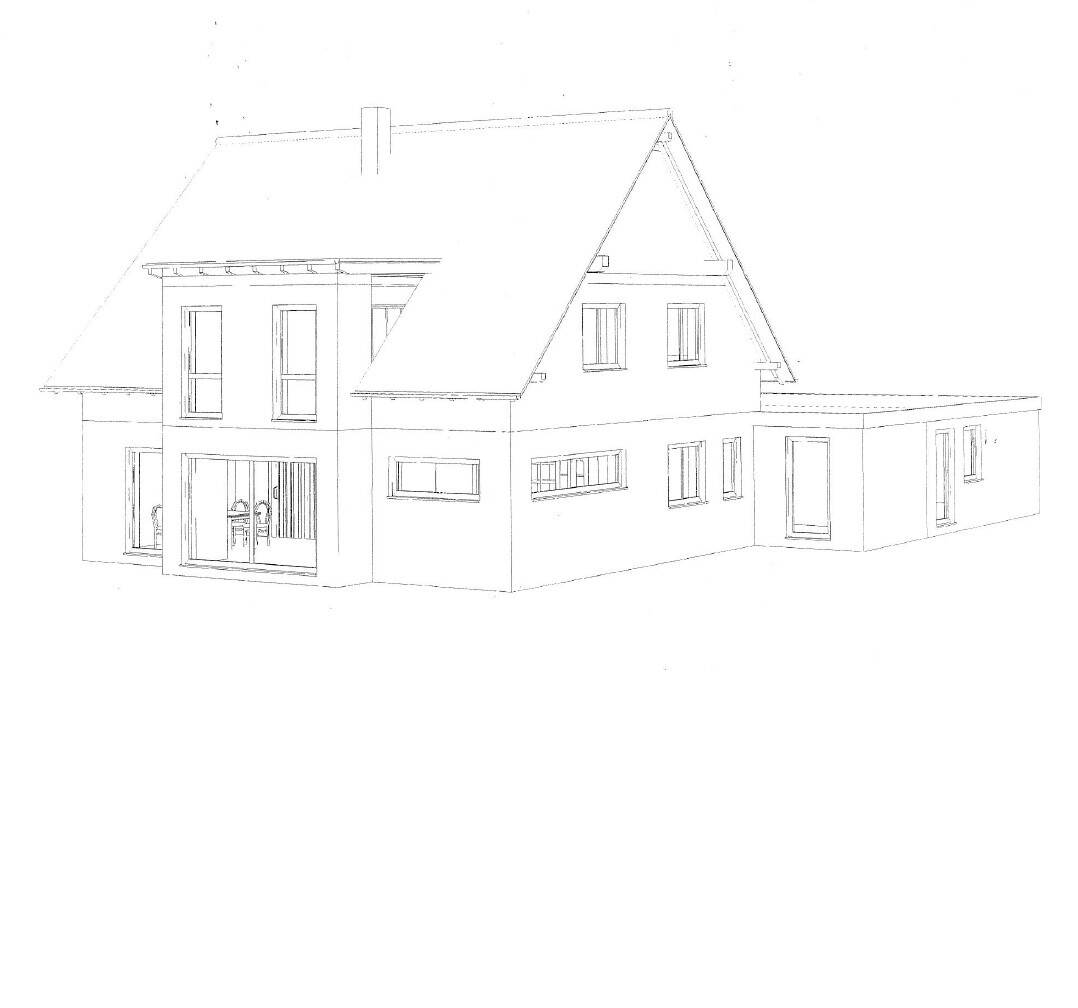

We are a family of four (parents and two young children) who have been planning to build a new single-family home for some time now. We are building in NRW, postal code area 34439, which is close to Paderborn.
Our reserved plot measures 880 square meters (9,470 square feet) and is flat, not on a slope. We created our own design adapted to the plot and brought it to the architect, who adopted the drawing almost unchanged. Originally, we planned to include a basement level - but after receiving the cost estimate and weighing the pros and cons, we decided to omit the basement and widen the above-ground footprint instead.
The house now has a footprint of 9.11 by 10.31 meters (30 by 34 feet), plus an extension including an entrance area, utility room, and double garage.
It was important for us to have an extra room on the ground floor (intended as a guest bedroom). Since we no longer have a basement, we had to find space for the utility room inside. At the same time, I wanted direct access from the garage to the house, so we added an entrance vestibule.
The total living area including the extensions is now 165 square meters (1,776 square feet) (605 cubic meters [21,368 cubic feet] of enclosed volume in the main house, about 218 cubic meters [7,698 cubic feet] in the extension). Construction will be according to the latest standards using solid construction with 24 cm (9.5 inches) Unipor T14 bricks and 16 cm (6.3 inches) external wall insulation (EPS20, thermal conductivity 0.035 W/mK). The exterior will have plaster with paint; no facing bricks.
We have a clear favorite for the construction work but are gathering competitive bids as well. As a rough estimate, the turnkey house costs about 230,000, while the extension (entrance area, utility room, garage) is around 50,000. Additional costs include finishing works for the kitchen, flooring, stove, interior fittings and attic conversion (35,000), the plot (35,000 – yes, land prices are still reasonable in this rural area), landscaping (10,000), and additional construction-related expenses (5,000). Altogether, the budget stands at about 365,000, which we still plan to optimize with some sweat equity.
This is the first offer; over the next few days, we expect two more quotes from solid construction companies and two from prefabricated house builders. After that, we will continue to evaluate our options.
For the technical equipment: we will install a gas condensing boiler, underfloor heating, and a wood stove in the living room. My architect insists on adding two solar panels for hot water, as at least 5% of the energy demand must come from solar.
That’s it for now... I’m attaching the floor plans and elevations. Feedback and suggestions are very welcome.
Edit: I have also added photos of the plot afterwards, which I will repost later.

I also don’t find the floor plan very successful.
The guest bathroom seems too narrow to me. Even if the sanitary fixtures are not finalized yet, how else are you going to arrange it? Because of the window at the end of the room, you are quite limited in where you can place the shower.
The bay window doesn’t really bring you any advantage—as many others have already pointed out. You don’t really need it downstairs, and upstairs two rooms only get a small corner of it.
The upstairs bathroom is HUGE! Yet all the fixtures are pushed into the corners. It’s more a space to dance the tango in.
I’m not convinced about east-facing sunlight for the children’s rooms either. The kids are usually at kindergarten or school in the morning and come home to play in the afternoon. By then, the sun is gone and it’s already getting dark. In our old rental apartment, our son’s window faced north, and in winter we often had to turn the lights on already in the afternoon. It probably won’t be much different for you.
The upstairs hallway feels way too narrow! How wide is it? When two people meet there, they will have to squeeze past each other.
Ask your architect to come up with a completely different alternative and be surprised.
The guest bathroom seems too narrow to me. Even if the sanitary fixtures are not finalized yet, how else are you going to arrange it? Because of the window at the end of the room, you are quite limited in where you can place the shower.
The bay window doesn’t really bring you any advantage—as many others have already pointed out. You don’t really need it downstairs, and upstairs two rooms only get a small corner of it.
The upstairs bathroom is HUGE! Yet all the fixtures are pushed into the corners. It’s more a space to dance the tango in.
I’m not convinced about east-facing sunlight for the children’s rooms either. The kids are usually at kindergarten or school in the morning and come home to play in the afternoon. By then, the sun is gone and it’s already getting dark. In our old rental apartment, our son’s window faced north, and in winter we often had to turn the lights on already in the afternoon. It probably won’t be much different for you.
The upstairs hallway feels way too narrow! How wide is it? When two people meet there, they will have to squeeze past each other.
Ask your architect to come up with a completely different alternative and be surprised.
ChrisBr schrieb:
H
3. The technical equipment should be completely located in the basement – however, due to the significant additional costs, the basement was omitted, so there was no longer space for the utility room. It was then improvised behind the entrance hall, which I actually found to be a good solution since, for example, it provides a direct exit to the outside where you can, for instance, take laundry out directly.I forgot to mention this earlier. Basically, I also think this idea is great! Here in the development area, the technical room in one house was placed behind the garage or carport. The carport is now slightly in front of the house. That might be another option. This way, you could access the technical room from the back of the garage.
Hello Jaydee,
I had also considered relocating the entrance from the garage to the utility room instead of the vestibule, which would free up space in the vestibule for a coat storage area. However, this would reduce the usable space in the utility room, and when coming in from the garage with groceries, you would have to pass through the "laundry room" to get into the house... (hmm, is that acceptable?).
I can also imagine extending the house towards the north to incorporate both rooms (vestibule/coat storage and utility room), which would also create extra space on the other side (kitchen). However, with this ridge orientation, the roof pitch naturally becomes shallower, and it must not be less than 38° (38 degrees).
I had also considered relocating the entrance from the garage to the utility room instead of the vestibule, which would free up space in the vestibule for a coat storage area. However, this would reduce the usable space in the utility room, and when coming in from the garage with groceries, you would have to pass through the "laundry room" to get into the house... (hmm, is that acceptable?).
I can also imagine extending the house towards the north to incorporate both rooms (vestibule/coat storage and utility room), which would also create extra space on the other side (kitchen). However, with this ridge orientation, the roof pitch naturally becomes shallower, and it must not be less than 38° (38 degrees).
W
Wanderdüne30 Sep 2014 09:57ChrisBr schrieb:
We approached this by first thinking about what we wanted ourselves, creating a sketch and a wishlist, and then taking that to the architect. You can see the result. You often refer to an architect, but also mention that no project phase has been completed. However, the outcome shown corresponds to a (unsuccessful) deliverable within phase 3, meaning two phases should be finished.
Based on the result, I also suspect that this is not an independent architect hired by you, but one working for a home builder. This doesn’t have to be a bad thing, but it often does not lead to a truly customized home.
Perhaps you should reconsider this approach.
You need to develop a design (with whomever) that is also optimized in terms of costs. In other words, the money spent on the unusable bay window and the laundry room located outside the main building could be better used to create more comfort inside or saved altogether.
Considering your young children, having a bathroom for them and at least a laundry-related utility room on the upper floor would be desirable.
WD
B
Bauexperte30 Sep 2014 10:08Hello Chris,
Regards, Bauexperte
ChrisBr schrieb:Honestly, I would change him as soon as possible. I expect more from an architect than just copying amateur sketches.
We went to the architect with a self-made design adapted to the plot, which he almost completely adopted as-is.
ChrisBr schrieb:The rough cost breakdown seems to add up... except for the additional construction costs. Mathematically, you have about 39k (thousand euros) for this part, but you also mention “own finishing costs for kitchen, etc.” and include these in the total 365k. That likely won’t fit.
The house now has 165 sqm (including extensions) of living area (605 cbm (21,400 cu ft) of enclosed space in the house, about 218 cbm (7,700 cu ft) in the extension). It will be built according to the latest standards using solid construction with 24 cm (9.5 inches) Unipor T14 blocks and 16 cm (6.3 inches) external thermal insulation composite system (ETICS) with polystyrene boards, thermal conductivity WLG035. The exterior will be finished with plaster and paint, no brick veneer.
We have a clear favorite for the builder but are legitimately getting comparison offers. Roughly, the turnkey house costs around 230k, the extension (vestibule, utility room, garage) about 50k, plus our own finishing costs for kitchen, flooring, stove, interior fittings and attic conversion (35k), the plot (35k – yes, it’s still cheap in this rural area), exterior landscaping (10k), and additional construction-related costs (5k). Altogether, that brings us to about 365k, which we still need to trim as much as possible with personal effort.
Regards, Bauexperte
The construction company is a general contractor. The architect is the senior principal and planner, while the junior principal (personally known to me) is responsible for execution. The company employs the workers for the entire shell construction – the trades are also coordinated by the general contractor. Everything is managed under one roof with a single point of contact. This was exactly what appealed to me, and many acquaintances who have built with the same company have had exclusively positive experiences so far.
I didn’t want to run around first consulting an independent architect, then the mason, then the carpenter and roofer, and each individual trade in order to manage having them all on site just in time – and in case something goes wrong, to deal with each one individually while they blame each other.
Hello Wanderdüne, in this case, we are probably at design phase 3. We have a concrete offer.
Hello Bauexperte. I think my cost breakdown is complete, but here it’s just presented a bit disorganized.
1. Ancillary land purchase costs (property transfer tax, notary, registrations) are included in the 35k for the plot of land.
2. Financing costs (arrangement fee, etc.) are not yet included, only counted as a buffer within the 35k for “self-construction” (wrong allocation).
3. Construction preparation (surveying is included in the 35k for the plot, construction water and electricity, fees and insurance were included in the 5k).
4. Earthworks are included in the 230k for the house.
5. Utility connection fees (gas, water, miscellaneous) are partly included in the 35k for the plot as well as the 35k for “self-construction costs” (wrong allocation, I will reassign these to “additional construction costs”).
6. Fees (this was my original category “additional construction costs,” including insurance).
I will reorganize my list for the allocation again.
I didn’t want to run around first consulting an independent architect, then the mason, then the carpenter and roofer, and each individual trade in order to manage having them all on site just in time – and in case something goes wrong, to deal with each one individually while they blame each other.
Hello Wanderdüne, in this case, we are probably at design phase 3. We have a concrete offer.
Hello Bauexperte. I think my cost breakdown is complete, but here it’s just presented a bit disorganized.
1. Ancillary land purchase costs (property transfer tax, notary, registrations) are included in the 35k for the plot of land.
2. Financing costs (arrangement fee, etc.) are not yet included, only counted as a buffer within the 35k for “self-construction” (wrong allocation).
3. Construction preparation (surveying is included in the 35k for the plot, construction water and electricity, fees and insurance were included in the 5k).
4. Earthworks are included in the 230k for the house.
5. Utility connection fees (gas, water, miscellaneous) are partly included in the 35k for the plot as well as the 35k for “self-construction costs” (wrong allocation, I will reassign these to “additional construction costs”).
6. Fees (this was my original category “additional construction costs,” including insurance).
I will reorganize my list for the allocation again.
Similar topics