
B
bauen2024d16 Nov 2025 17:00Hello,
we are building a single-family house with dimensions of 9.99 by 8.11 meters (33 by 27 feet). We have not submitted the application yet and are still in the planning phase.
The architect mentioned that he has discussed with the structural engineer whether the floor plan is possible without a beam. The engineer said yes, but suggested using a 26 cm (10 inch) thick slab instead of a 22 cm (8.7 inch) one (I believe a precast slab is meant here).
The soil is average, so we will need to replace it. A ground survey has already been done.
I’m unsure whether this is worth it. My gut feeling is that I’d rather live with one (or are two beams needed??) than push everything to the limit. The costs should not explode either. The architect also said that making the slab thicker or using a beam would result in similar costs.
If I understand correctly, the beams would be located along the extension of the stairwell walls. Possibly one could be placed where the kitchen line is (and then forgo the upper cabinets in that area).
Especially on the first floor, there are still load-bearing walls shown. Does that even make sense? And if we submit the application already, does that mean we have a maximum allowed height which we cannot exceed if the slab becomes thicker? Should we apply with a buffer? I also want a ceiling height of 260 cm (102 inches) clear, at least on the ground floor.
I know you cannot give a clear recommendation, but I would like to gather ideas.
-- More steel?
-- Thicker slab?
-- One or two beams and that’s it?
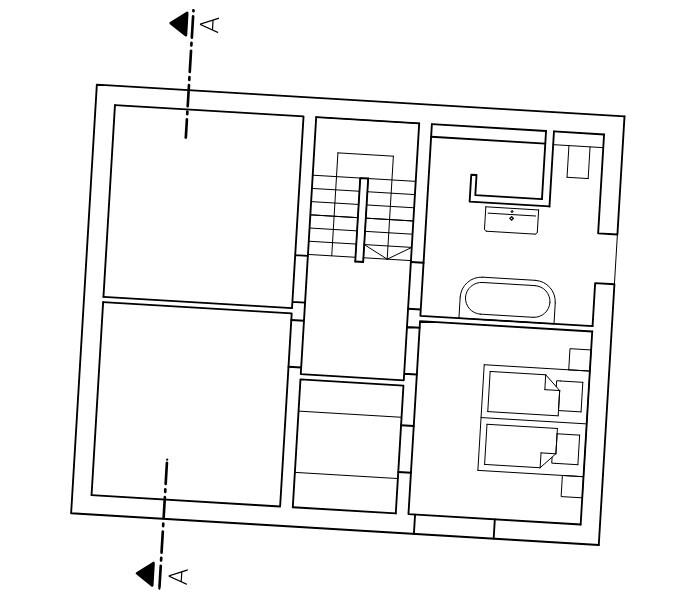
we are building a single-family house with dimensions of 9.99 by 8.11 meters (33 by 27 feet). We have not submitted the application yet and are still in the planning phase.
The architect mentioned that he has discussed with the structural engineer whether the floor plan is possible without a beam. The engineer said yes, but suggested using a 26 cm (10 inch) thick slab instead of a 22 cm (8.7 inch) one (I believe a precast slab is meant here).
The soil is average, so we will need to replace it. A ground survey has already been done.
I’m unsure whether this is worth it. My gut feeling is that I’d rather live with one (or are two beams needed??) than push everything to the limit. The costs should not explode either. The architect also said that making the slab thicker or using a beam would result in similar costs.
If I understand correctly, the beams would be located along the extension of the stairwell walls. Possibly one could be placed where the kitchen line is (and then forgo the upper cabinets in that area).
Especially on the first floor, there are still load-bearing walls shown. Does that even make sense? And if we submit the application already, does that mean we have a maximum allowed height which we cannot exceed if the slab becomes thicker? Should we apply with a buffer? I also want a ceiling height of 260 cm (102 inches) clear, at least on the ground floor.
I know you cannot give a clear recommendation, but I would like to gather ideas.
-- More steel?
-- Thicker slab?
-- One or two beams and that’s it?
N
nordanney16 Nov 2025 17:10bauen2024d schrieb:
I know you can’t really give a clear recommendation, but I would like to gather some ideas. What exactly is the problem?
If the structural engineer and architect say it works with a thicker floor slab, then that should be settled. Why would you prefer a) intrusive beams or girders that b) are probably even more expensive?
bauen2024d schrieb:
Especially on the first floor, the load-bearing walls are still shown. Does that even make sense? Are you a structural engineer? Are we structural engineers? If the structural engineer specifies load-bearing walls, then they will be built. Case closed. Do you have a problem with that?
bauen2024d schrieb:
but I would like to gather some ideas. Choose a different floor plan 😉. Otherwise, the options have been mentioned. I wouldn’t know why anyone would look for alternatives to a thicker floor slab in the first place.
B
bauen2024d16 Nov 2025 17:24nordanney schrieb:
Choose a different floor plan 😉. Otherwise, the possibilities have been mentioned. I don’t see why anyone would look for alternatives to a thicker ceiling. Do you mean that the floor plan is problematic?
N
nordanney16 Nov 2025 17:44bauen2024d schrieb:
Do you think the floor plan is problematic? No, but you probably need a thicker ceiling or supporting beams. I meant to say that you simply have the option of a completely different floor plan—one without large spans and therefore a "thinner" ceiling. However, I don't think you seriously want that.
Hi,
looking at the previous discussion, I notice that the architect seems quite confident without it being clear whether the structural calculations are actually complete. A thicker slab can technically compensate for the removal of a beam, but only if the spans, load assumptions, and support conditions have been checked precisely. The additional self-weight of the slab is often underestimated in terms of how much it affects the design of the walls and foundations. This can lead to subsequent adjustments that can disrupt the supposedly similar cost picture again. That’s why I find the general statement that the costs are comparable a bit confusing. Did he explain to you how the additional reinforcement and the changed formwork were taken into account, and whether the construction heights of the adjacent components will fit without issues?
I would recommend asking for the structural analysis in writing and specifically inquiring why he considers the beam unnecessary. Especially since you can live with having a beam, it would be useful to clarify which of the two options is structurally more robust and carries fewer long-term risks. Sometimes the less visually appealing solution is the one that works better from a technical point of view. A small, almost amusing side note: when an architect says that everything is no problem, it’s always worthwhile to have a second look to make sure no problems actually arise. Are you sure he has already taken into account the building services pipes and conduits that will later run through the slab? A small oversight there can quickly have major consequences.
Good luck!
looking at the previous discussion, I notice that the architect seems quite confident without it being clear whether the structural calculations are actually complete. A thicker slab can technically compensate for the removal of a beam, but only if the spans, load assumptions, and support conditions have been checked precisely. The additional self-weight of the slab is often underestimated in terms of how much it affects the design of the walls and foundations. This can lead to subsequent adjustments that can disrupt the supposedly similar cost picture again. That’s why I find the general statement that the costs are comparable a bit confusing. Did he explain to you how the additional reinforcement and the changed formwork were taken into account, and whether the construction heights of the adjacent components will fit without issues?
I would recommend asking for the structural analysis in writing and specifically inquiring why he considers the beam unnecessary. Especially since you can live with having a beam, it would be useful to clarify which of the two options is structurally more robust and carries fewer long-term risks. Sometimes the less visually appealing solution is the one that works better from a technical point of view. A small, almost amusing side note: when an architect says that everything is no problem, it’s always worthwhile to have a second look to make sure no problems actually arise. Are you sure he has already taken into account the building services pipes and conduits that will later run through the slab? A small oversight there can quickly have major consequences.
Good luck!
N
nordanney16 Nov 2025 18:54Nauer schrieb:
and specifically ask why he considers the beam unnecessary.bauen2024d schrieb:
The structural engineer suggests yes, but to use a 26cm (10 inches) slab instead of a 22cm (9 inches) one.The structural engineer has already provided that answer.Similar topics