
ᐅ Floor plan design for a new build modern semi-detached house with 6-meter ceiling height and 239 square meters of living space
Created on: 9 Nov 2025 23:46
L
lucaskilam
Hello everyone,
I am planning to demolish my existing semi-detached house and build a modern residential building on my property.
The new house will again be attached directly to the existing neighboring half.
The plot measures 1,027 sqm (about 11,060 sq ft), and the design comes from my architect.
I would appreciate honest and constructive feedback on the floor plan and room layout.
Elevations and floor plans are attached.
Development plan / restrictions
Client requirements
House design
I look forward to honest criticism and suggestions for improvement, especially regarding:
Thank you in advance for your feedback!
Best regards,
lucaskilam
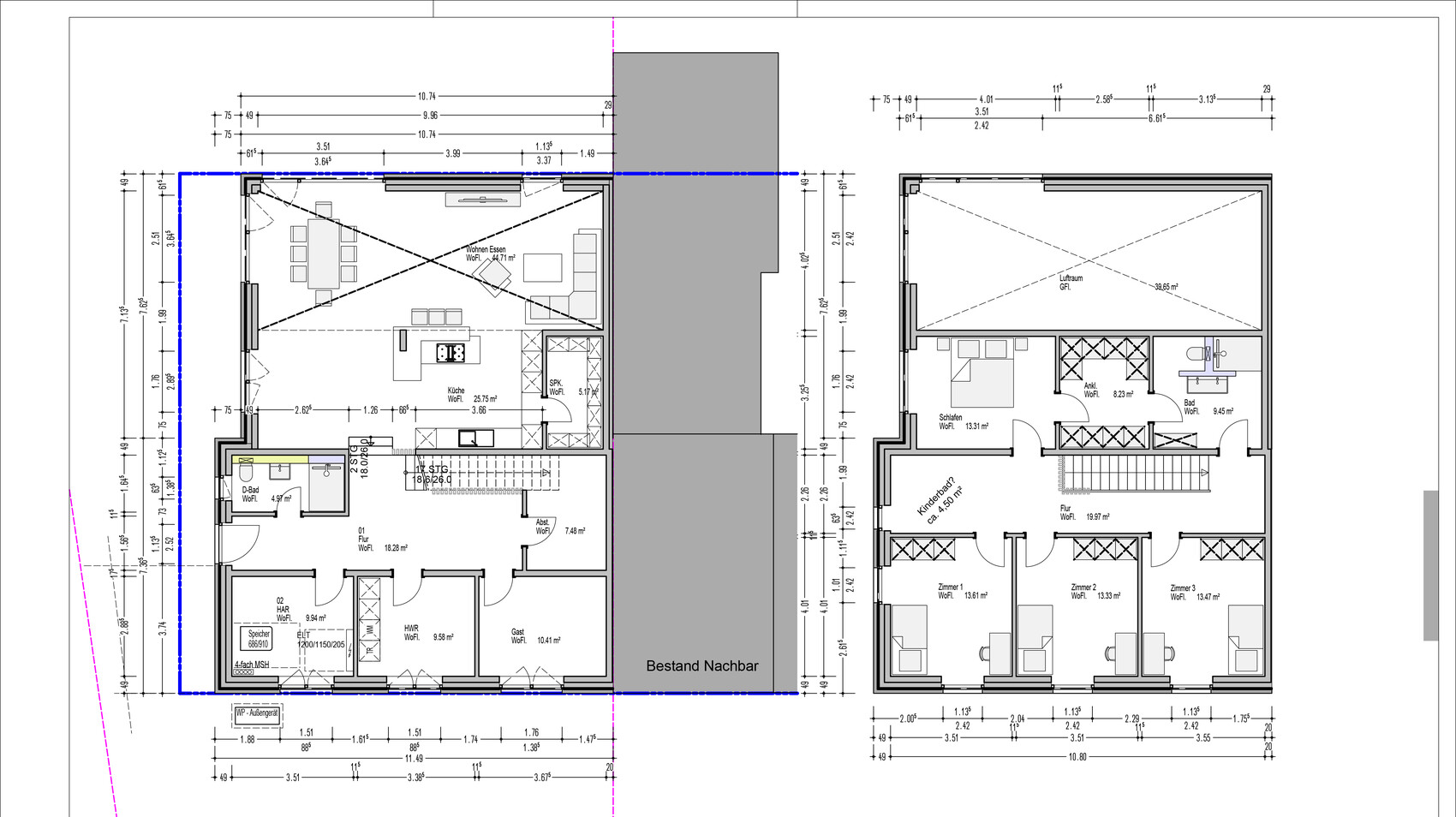
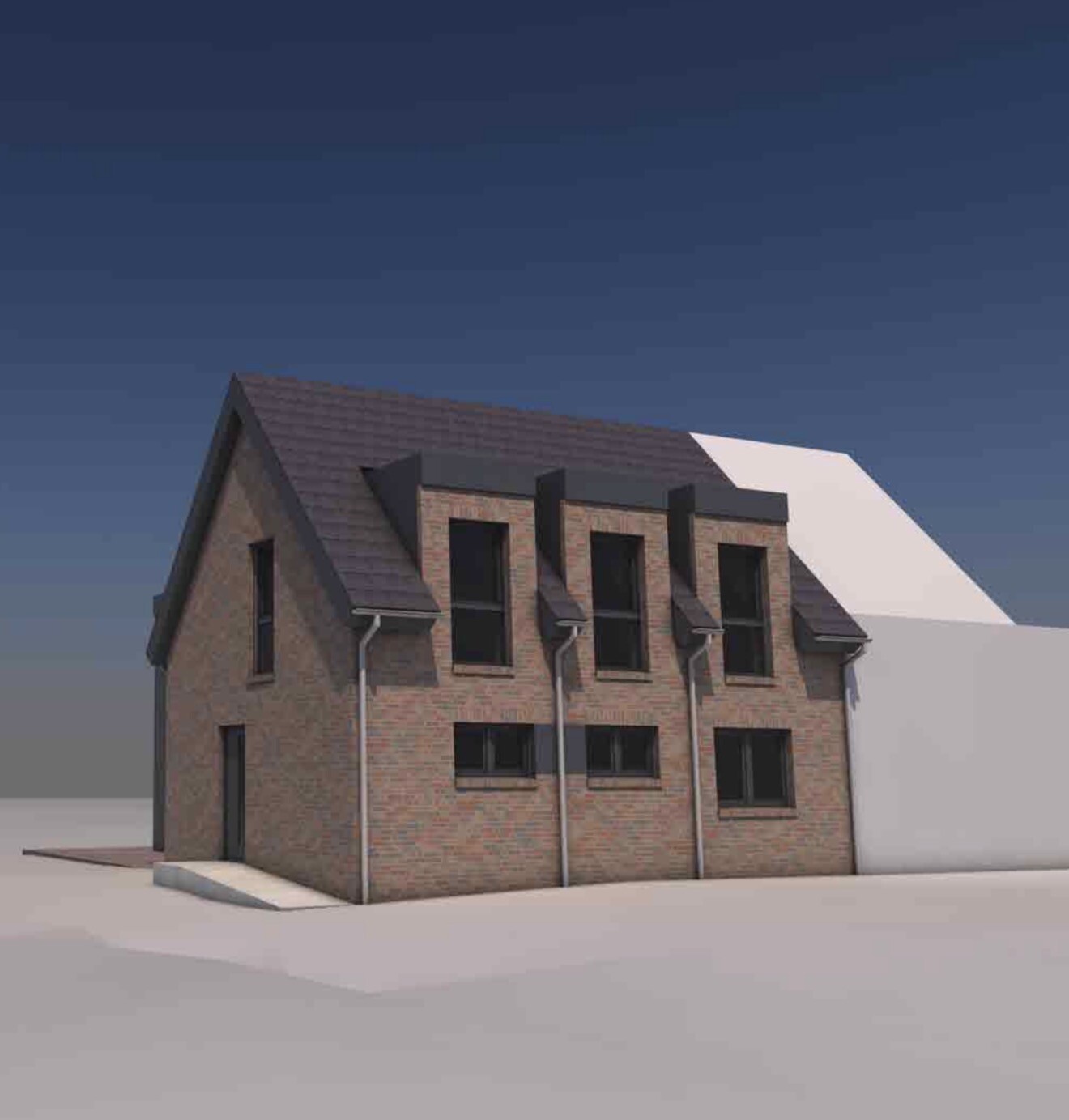
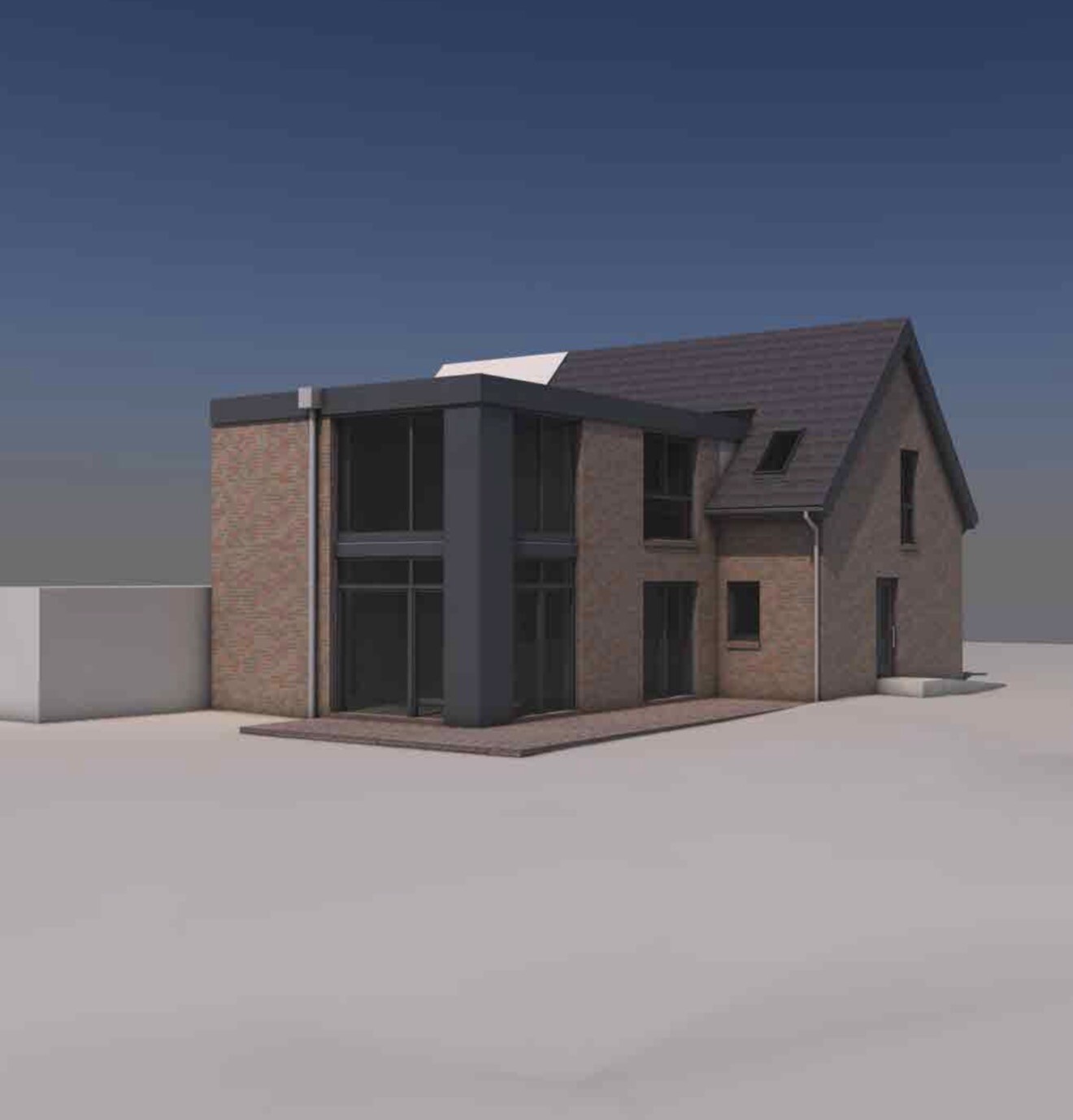
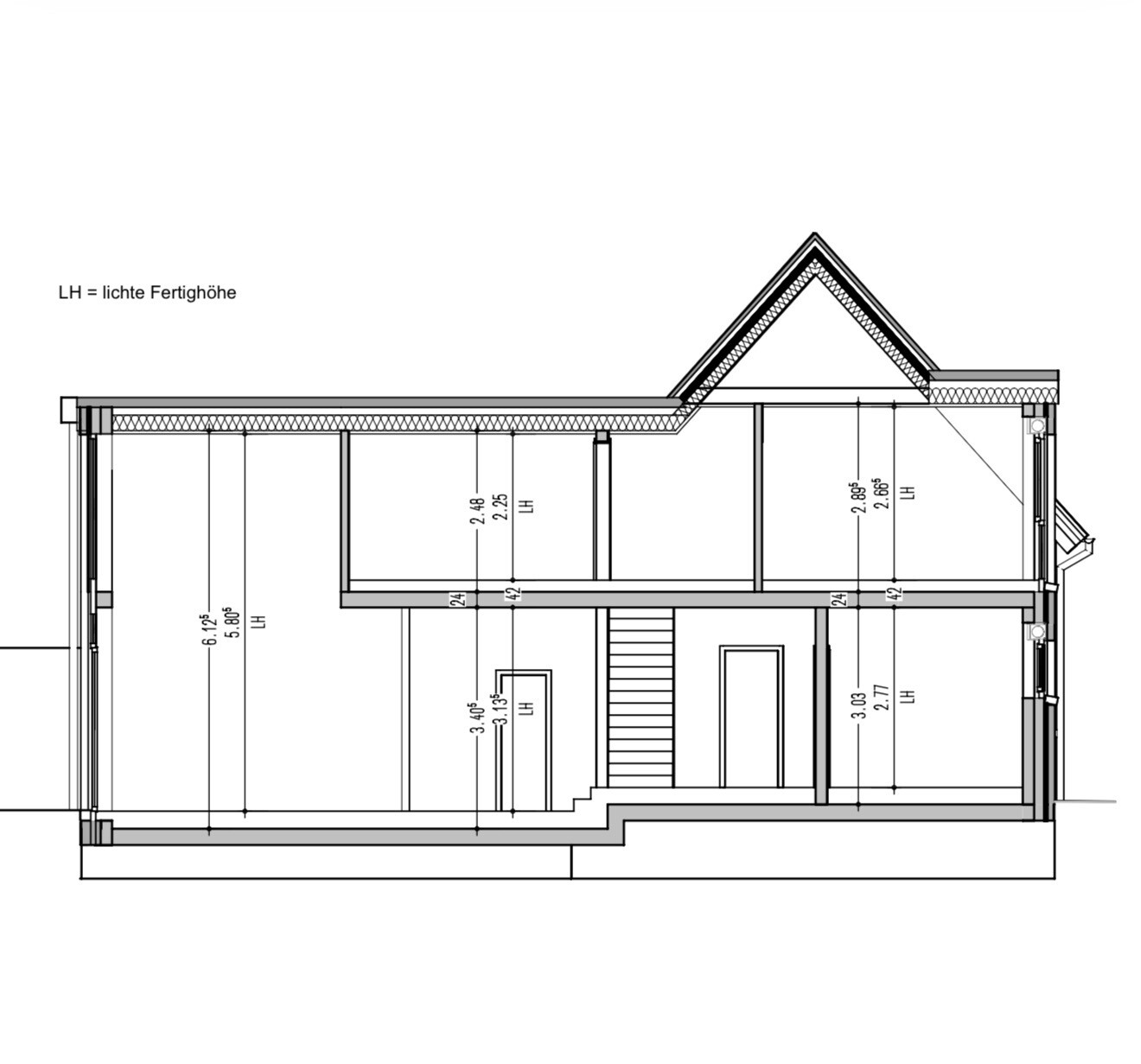
I am planning to demolish my existing semi-detached house and build a modern residential building on my property.
The new house will again be attached directly to the existing neighboring half.
The plot measures 1,027 sqm (about 11,060 sq ft), and the design comes from my architect.
I would appreciate honest and constructive feedback on the floor plan and room layout.
Elevations and floor plans are attached.
Development plan / restrictions
- Plot size: 1,027 sqm (half share use for semi-detached house)
- Slope: no slope, flat area
- Site coverage ratio: 0.3
- Floor area ratio: 0.5
- Building envelope / building line / building boundary: according to development plan, semi-detached house permitted
- Edge development: attached to existing neighboring half
- Number of parking spaces: 2
- Number of floors: 1.5 floors
- Roof type: gable roof
- Architectural style: modern, clean lines
- Orientation: garden facing southwest
- Maximum building height: 10 m (33 ft)
- Other requirements: only one full storey allowed
Client requirements
- Building type: semi-detached house, new build after demolition
- Basement: no
- Living area: approx. 239 sqm (2,572 sq ft)
- Occupants: 5 persons (2 adults, 3 children)
- Ceiling height in living area: approx. 6 m (20 ft)
- Living/dining area: approx. 44 sqm (473 sq ft), open and bright
- Office: home office on ground floor
- Guest bedrooms: rare use (max. 2–3 times per year)
- Architecture: open, modern, large windows
- Construction method: solid construction
- Kitchen: open with cooking island
- Seating capacity: 6–8 people
- Fireplace: not planned
- Music/stereo wall: possible
- Balcony / roof terrace: currently not planned
- Garage / carport: double carport
- Garden: low maintenance, for family use
- Special features: high, open living area with gallery
House design
- Designed by: independent architect
- Positive aspects: the open living area with gallery and high ceiling, generous lighting
- Less favorable aspects: access to the gallery not yet optimal
- Price estimate according to architect: approx. 850,000 euros (including fittings, excluding landscaping)
- Personal budget limit: approx. 900,000 euros
- Heating system: air-to-water heat pump with underfloor heating
- Could be omitted: guest room on ground floor
- Must have: high ceiling in living area, open kitchen, gallery
- Reason for design: combination of modern living concept and development plan requirements (only 1 full storey, mandatory attachment)
- Special features: despite semi-detached structure, a spacious feel through 6 m ceiling height and open gallery
I look forward to honest criticism and suggestions for improvement, especially regarding:
- Floor plan layout
- Lighting and window areas
- Proportions with 1.5 floors
- Practical everyday use (family with three children)
Thank you in advance for your feedback!
Best regards,
lucaskilam
L
lucaskilam13 Nov 2025 10:29ypg schrieb:
That’s not what I meant. Not the approval, but the difficulties.
You showed a screenshot from Google Maps – if you’re somewhat familiar with Hamburg, you can quickly find the plot or the semi-detached houses from the 1930s. The house is even documented in the Hamburg archive with its half-timbered structure.
All the old houses in the settlement have prominent basements. Many of the neighbors with the same house have already renovated and made use of the basement by building split-level layouts. Using split-level designs also allows for higher ceilings. Just visit your street and see how they have implemented it. In my opinion, there are many more possibilities than the architect has drawn.
Additionally, a tip: if you don’t close off the entire partition wall but keep a 3-meter (10 feet) distance, this creates an inner courtyard, which also provides more options to add windows on the north side. Although the ground floor area is reduced, I believe this is compensated on the upper floor by having windows. Maybe it’s the wrong architect after all? Someone mentioned this here at the beginning. Oh, now I understand what you mean. Yes, the existing old building and also the neighbor’s semi-detached house have prominent basements. However, this is not planned for the new build, and the architect did not include it. Probably because we wanted high ceilings in the living area, and he has to stay within the permitted total height?
He also suggested a larger distance from the neighbor, but that was not an option for us because we would lose too much usable space.
L
lucaskilam13 Nov 2025 10:33ypg schrieb:
Maybe this is the wrong architect after all? Someone mentioned it here at the beginning. Can I simply change the architect? I assume I have to pay for his work so far, meaning the initial design, even if we don't like it. I just hope he doesn't charge extra for having to start over.
N
nordanney13 Nov 2025 10:54lucaskilam schrieb:
Can I simply change the architect? It depends on what you have contracted him for. If it's all phases of service, he will rightfully expect compensation.
lucaskilam schrieb:
I assume that I have to pay for his work so far, meaning the initial design, even if we don't like it. Refer to the contract with the architect.
lucaskilam schrieb:
I just hope he doesn’t charge extra for having to start over now. At this stage, he owes you a result that satisfies you—not just any design. So it is his responsibility if he has not coordinated with you further during the development phase.
lucaskilam schrieb:
Can I simply change the architect? I assume that I have to pay for the work done so far, meaning the initial design, even if we don’t like it. I just hope he won’t charge extra for having to start over. Just because you mention it and consider checking it, it doesn’t mean you have to switch right away 😉
Does he have any references?
In the end, you also have to trust him, especially if you don’t fully understand the zoning plan or lack knowledge about the possibilities. I just wanted to point out that with a split-level design, you can also take advantage of ceiling height.
I would ask him everything you’re brainstorming about here.
kbt09 schrieb:
Is it really that simple? Shouldn’t there even be a 6 m (20 feet) setback since the neighbor’s building is on the property line, and then their required setback area would extend onto your lot? I’m not sure. The original house is being expanded again. You can also designate an inner courtyard so that it counts as part of the house. Or you make a clear L-shape.
It is a small development area from the 1930s, where nowadays a lot is approved fairly flexibly. Hamburg is happy to see more living space created.
The red area is the building envelope, then there is this dashed line for “other structures.” It might be possible to position the conservatory here if marketed cleverly. It could be attached to the house with a 3 m (10 feet) height – it would be considered just a garden-type extension 😉
ypg schrieb:
One more tip: if you don’t fully close off the partition wall but instead keep a distance of about 3 meters (10 feet), creating an internal courtyard, you gain more options to place windows on the north side. I find this idea very interesting and it reminds me of a house construction nearby. There, they didn’t build directly adjacent but kept a gap of about 50 centimeters (20 inches), which in my opinion resulted in a really unfortunate space between the two houses. My idea was similar—stepping back a bit to create such an internal courtyard, and on the neighboring wall (a barn) possibly adding a trellis for plants or, if necessary, leaving enough wall space to create a cozy courtyard.
Seeing it now, I really think it’s a pity how the two buildings are squeezed together, and even slightly skewed. Of course, it shouldn’t turn into a storage area, but rather a thoughtfully designed space, for example with a wooden terrace, lots of plants, comfortable furniture, and so on. You can see examples like this in many beautiful historic towns today, and as mentioned, it would also offer advantages for window placement on the upper floor. Perhaps an agreement with the neighbor regarding the treatment and maintenance of the shared wall could be made, benefiting both parties. This was also missed in the example mentioned, where one side had to replaster the entire building facade but didn’t paint it for cost reasons, and now the other party has to look at it. Such a missed opportunity.
lucaskilam schrieb:
He also suggested a larger distance to the neighbor, but that wasn’t an option for us because it would reduce our usable living space too much. That’s true to some extent, but this creates the current problem upstairs with the windowless wall, while the ground floor could potentially benefit from it; and additionally there is the interesting topic of an internal courtyard.
I mentioned possibly changing the architect, but only if it becomes clear that they can’t deliver better results. As already said, I would ask to see references first, because that way you can tell if they can think beyond the standard and plan creatively. But I have to admit I’m often surprised when I visit so-called architect-designed houses, and the example mentioned is also one of those. For me, I would have to find someone whose style really appeals to me; otherwise, I might as well just go with the draftsman from the general contractor.
Quick and dirty 🙂 Letting ideas run wild is allowed..
Shed and half of the ancillary rooms are single-story, above that is a block for the children and a block for the parents’ section.
The courtyard can also be designed with an overhang from the upper floor. The south side is at the bottom..
Now I have to go walk the dog, he’s waiting.
Similar topics