
ᐅ Floor Plan Design for New Single-Family Home, Narrow Plot, Initial Architect Draft
Created on: 10 Nov 2025 22:30
I
Ian_Mer
Hello everyone,
we are currently planning our single-family home. We now have the first draft of our floor plan, but it is not perfect yet. So I thought I’d ask for your advice on what we could still change or improve. Everything is still possible at this stage.
Development Plan / Restrictions
Plot size: 450 m² (4,844 sq ft)
Slope: no
Floor area ratio (FAR): 0.3
Site coverage ratio: 0.6
Building envelope, building line, and boundary: see plan
Edge development: not yet present, as the building area is currently being developed
Number of parking spaces: 2
Number of full stories: 2
Roof type: flat roof with mandatory green roofing
Architectural style: modern
Orientation: south
Maximum heights / limits
Other requirements: 10.5 m (34 ft 5 in) maximum height, Hessian building regulations (Hesse, Germany), new: 2.5 m (8 ft 2 in) setback from neighboring property.
Client Requirements
Modern house for 2 adults and two children aged 4 and 6, including basement, 2 full floors.
Space requirements on the ground floor: office, kitchen, pantry, dining area, living room, guest bathroom with shower. Upper floor: 2 children’s bedrooms, master bedroom with walk-in closet, bathroom with bathtub and double sinks. Basement: technical room, utility room, second office, creativity room for crafts, playing, or making music.
Office use: family use or home office? Home office; both parents work three days per week from home.
Number of overnight guests per year: 6, regular overnight visitors.
Open or closed layout:
Conventional or modern construction:
Open kitchen with cooking island: yes
Number of dining places: usually 4, more for guests, birthdays, etc.
Fireplace: no
Music / stereo wall: only TV wall
Balcony or roof terrace: no
Garage or carport: garage plus bike storage
Vegetable garden or greenhouse: yes, vegetable garden
Other wishes / special features / daily routine preferences, including reasons why something should or should not be included: built-in closet in the entrance hall, lots of storage space.
House Design
Planner: (interior) architect
What do you particularly like? Why?
Window seat in the kitchen, living room somewhat separated in the bay window, space for an outdoor kitchen on the covered terrace.
What don’t you like? Why?
Location of the shed, we would prefer the staircase as a platform staircase or with straight steps, we wonder if the kitchen is large enough and provides enough storage space. The utility room is too small. Instead of the skylight, we would rather plan a window in the stairwell.
Cost estimate according to the architect/planner: unknown
Personal budget for the house including fittings: 650,000
Preferred heating system: heat pump
Why was the design developed this way? Needs analysis with the architect, after which she created the first draft.
Which wishes were implemented by the architect? From the sofa, there should be a view of the garden, lots of storage, master bed 1.60 m x 2 m (5 ft 3 in x 6 ft 7 in) (no need for 2 m x 2 m bed), walk-in closet accessible from the bedroom, covered terrace, covered entrance gate.
What do you think makes it particularly good or bad? We find the layout basically good but not yet perfect.
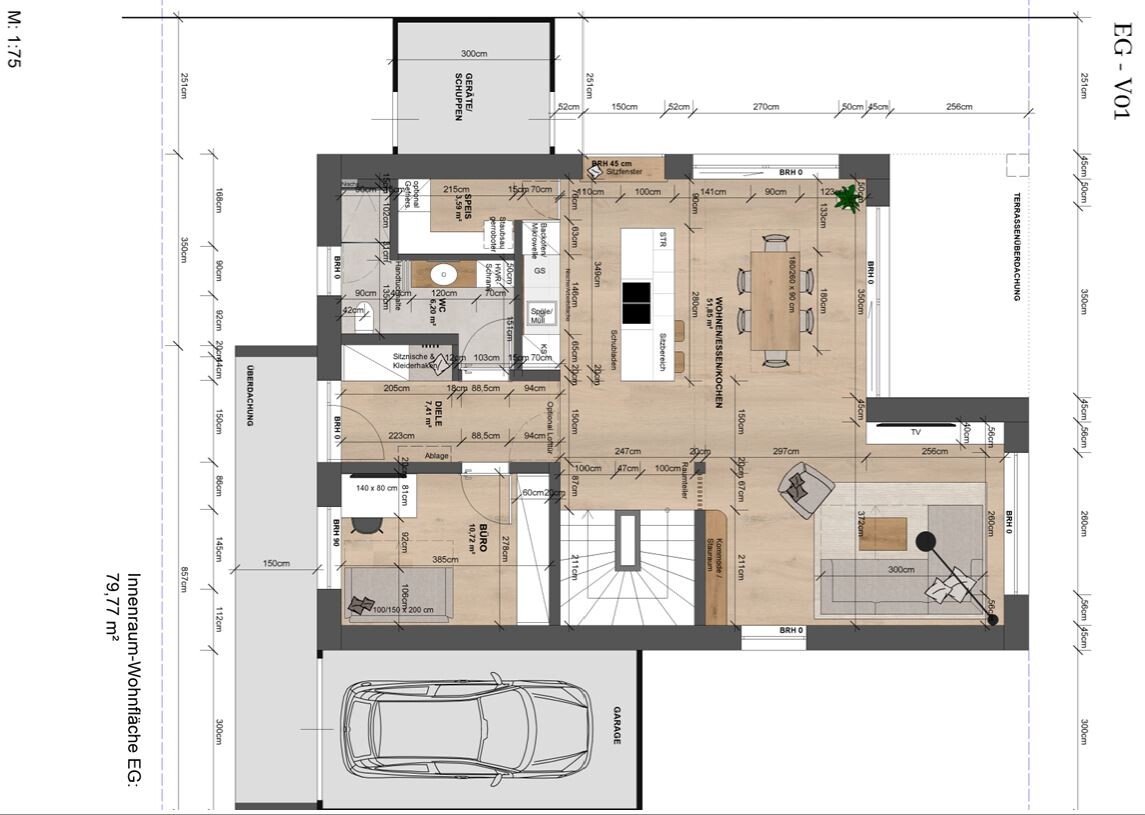 [ATTACH type="full" width="500px" alt="2D floor plan of a house with living area, kitchen, dining area, bedroom, and garage">
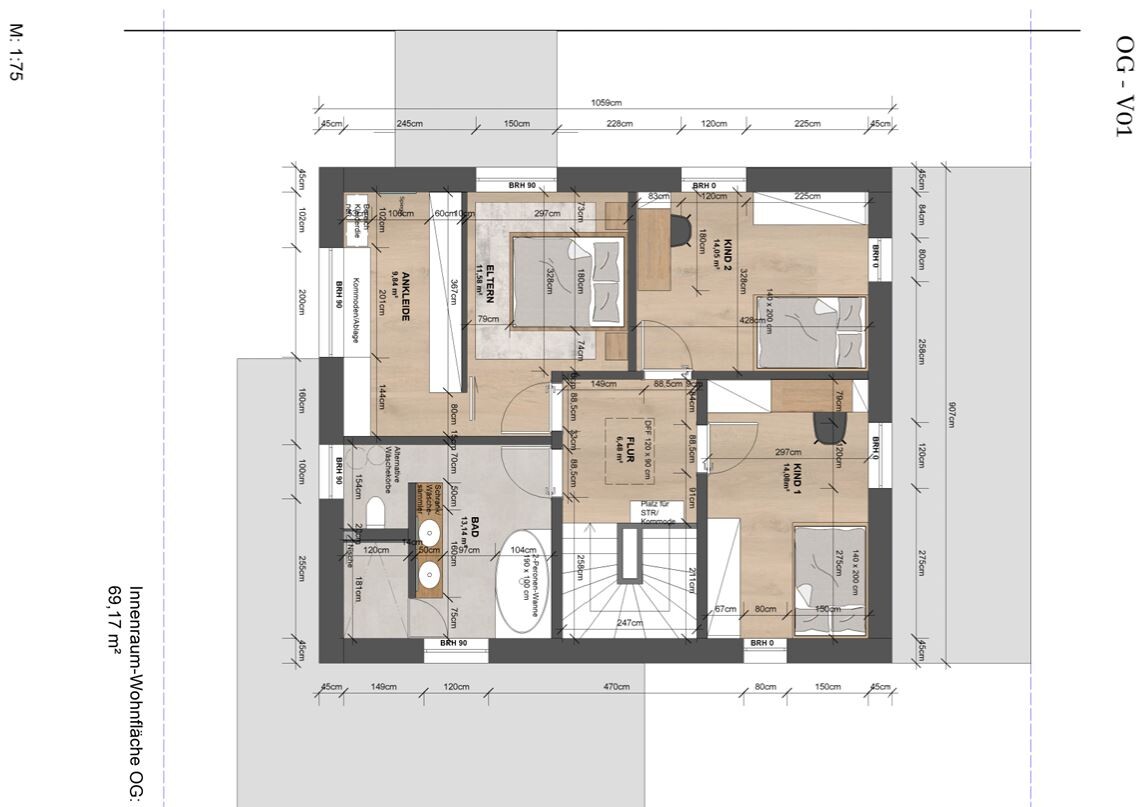
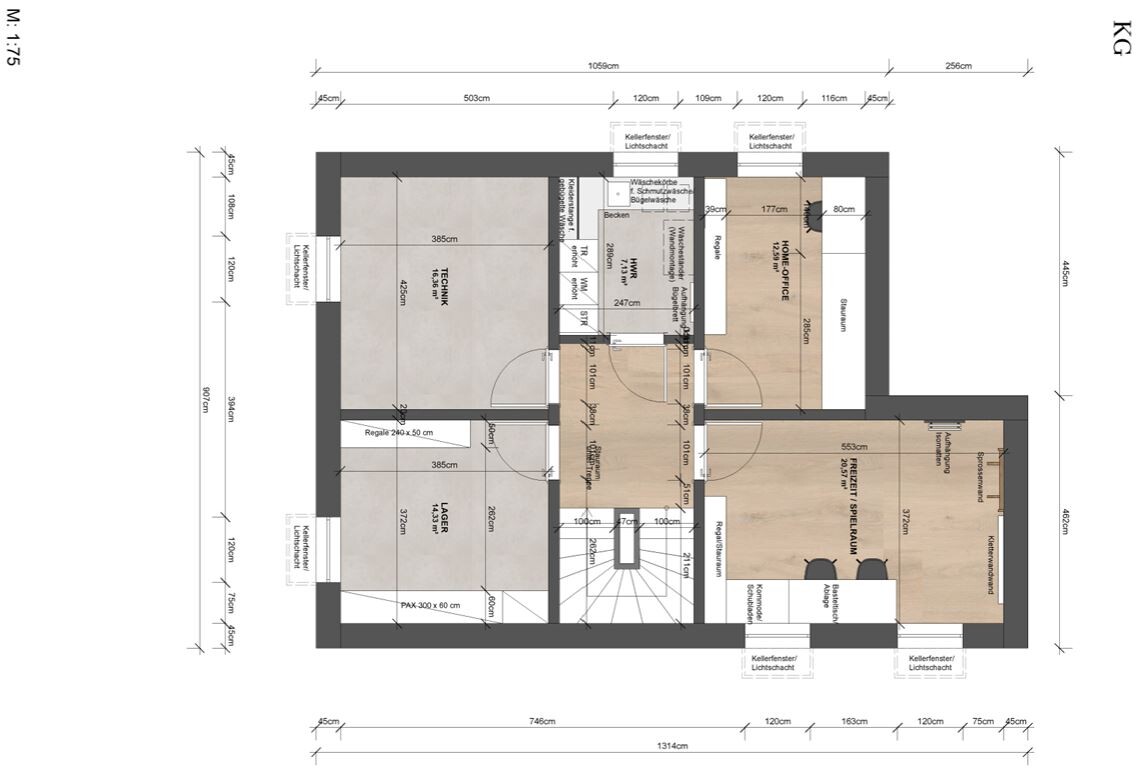
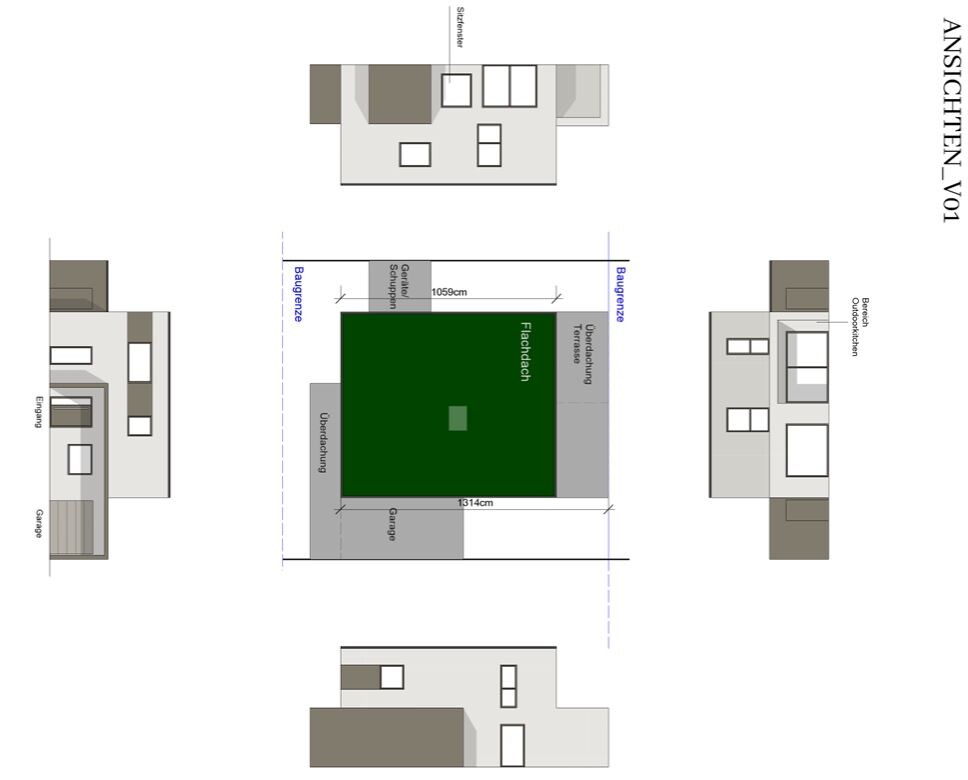
we are currently planning our single-family home. We now have the first draft of our floor plan, but it is not perfect yet. So I thought I’d ask for your advice on what we could still change or improve. Everything is still possible at this stage.
Development Plan / Restrictions
Plot size: 450 m² (4,844 sq ft)
Slope: no
Floor area ratio (FAR): 0.3
Site coverage ratio: 0.6
Building envelope, building line, and boundary: see plan
Edge development: not yet present, as the building area is currently being developed
Number of parking spaces: 2
Number of full stories: 2
Roof type: flat roof with mandatory green roofing
Architectural style: modern
Orientation: south
Maximum heights / limits
Other requirements: 10.5 m (34 ft 5 in) maximum height, Hessian building regulations (Hesse, Germany), new: 2.5 m (8 ft 2 in) setback from neighboring property.
Client Requirements
Modern house for 2 adults and two children aged 4 and 6, including basement, 2 full floors.
Space requirements on the ground floor: office, kitchen, pantry, dining area, living room, guest bathroom with shower. Upper floor: 2 children’s bedrooms, master bedroom with walk-in closet, bathroom with bathtub and double sinks. Basement: technical room, utility room, second office, creativity room for crafts, playing, or making music.
Office use: family use or home office? Home office; both parents work three days per week from home.
Number of overnight guests per year: 6, regular overnight visitors.
Open or closed layout:
Conventional or modern construction:
Open kitchen with cooking island: yes
Number of dining places: usually 4, more for guests, birthdays, etc.
Fireplace: no
Music / stereo wall: only TV wall
Balcony or roof terrace: no
Garage or carport: garage plus bike storage
Vegetable garden or greenhouse: yes, vegetable garden
Other wishes / special features / daily routine preferences, including reasons why something should or should not be included: built-in closet in the entrance hall, lots of storage space.
House Design
Planner: (interior) architect
What do you particularly like? Why?
Window seat in the kitchen, living room somewhat separated in the bay window, space for an outdoor kitchen on the covered terrace.
What don’t you like? Why?
Location of the shed, we would prefer the staircase as a platform staircase or with straight steps, we wonder if the kitchen is large enough and provides enough storage space. The utility room is too small. Instead of the skylight, we would rather plan a window in the stairwell.
Cost estimate according to the architect/planner: unknown
Personal budget for the house including fittings: 650,000
Preferred heating system: heat pump
Why was the design developed this way? Needs analysis with the architect, after which she created the first draft.
Which wishes were implemented by the architect? From the sofa, there should be a view of the garden, lots of storage, master bed 1.60 m x 2 m (5 ft 3 in x 6 ft 7 in) (no need for 2 m x 2 m bed), walk-in closet accessible from the bedroom, covered terrace, covered entrance gate.
What do you think makes it particularly good or bad? We find the layout basically good but not yet perfect.
I’m bumping my question again:
..
That is basically correct, but the plan should also be realistic.
Some people think that’s a good approach, others don’t. I believe giving things up is always painful. While you might have to say goodbye to many wishes around which the house was originally planned, I think it’s better to have a solid preliminary plan and then include a budget buffer so you can upgrade the house with a few nice-to-haves. But, generally speaking, you can’t apply this to every house or every building project.
ypg schrieb:
Have you already talked to house-building companies? Looked at model homes and their prices?
..
Ian_Mer schrieb:
Our plan was first to design a house according to our wishes and needs, and then approach different prefabricated house suppliers with the design to get comparable offers.
That is basically correct, but the plan should also be realistic.
Ian_Mer schrieb:
Of course, at the beginning you naturally start with all your wishes.
Some people think that’s a good approach, others don’t. I believe giving things up is always painful. While you might have to say goodbye to many wishes around which the house was originally planned, I think it’s better to have a solid preliminary plan and then include a budget buffer so you can upgrade the house with a few nice-to-haves. But, generally speaking, you can’t apply this to every house or every building project.
 Papierturm12 Nov 2025 19:22
Ian_Mer schrieb:
Our plan was initially to design a house according to our wishes and needs, and then approach various prefab house suppliers with the design to obtain comparable quotes. A few comments on this: 1. Prefab house suppliers sell houses. Unfortunately, many sellers underestimate the costs for earthworks. If there is a basement involved, this applies even more. It’s not just a few bad actors, but actually many!
(Personal experience, as we started the same way: Among the “usual suspects,” estimates for earthworks ranged from around 15,000 to 20,000. The highest quote was 60,000. In reality, we are looking at about 80,000; however, almost all local masonry and civil engineering companies expected this, which is why we planned using their figures from the start. By the way: this was for a slab-on-grade foundation. A basement would have cost us over 200,000. The high costs were due to two particular characteristics of the plot, one of which was known from the beginning. Costs under roughly 50,000 were unrealistic from the outset.)
2. Unless the plot requires a specific building method, I would not commit to one method in advance and instead request quotes for both construction methods.
3. To make quotes truly comparable, you need not only a design but also a detailed list of specifications and a good understanding of the details. If a supplier seems cheaper, there is often a reason for it. It is best to find suppliers who closely match the desired level of finishes from the beginning and request quotes from them. Also: do a preliminary sample selection.
ypg schrieb:
I’m bumping my question again:
..
That is basically correct, but the plan should also be realistic.
One person thinks this way is good, another does not. I believe that giving up something always hurts. While you may have to say goodbye to many wishes for which the house was originally planned, I think it’s better to have a solid pre-planning phase and then include a budget buffer, so you can upgrade the house with some nice-to-have features. But you can’t apply this approach as a general rule to every house or construction project. ypg schrieb:
I’m bumping my question again:
Have you already talked to any house building companies? Looked at show homes and their prices? We have already contacted some providers and want to reach out to prefabricated house companies that build environmentally friendly—meaning no Styrofoam or plastic foil in the walls. They should also implement custom planning. For example, Weberhaus, Isowood, Luxhaus, and Schwörerhaus are among those. We have also had talks with Fingerhaus, but they offer fewer custom planning options and we didn’t like their wall construction, so they are out.
The wall construction is one aspect and not noticeable from the inside. I basically understand that, but if you want to maintain this consistently, you need to deal with a variety of building materials, as all of them contain different substances, some potentially harmful.
We tried this approach within our timber frame construction... but it’s challenging.
Consider interior paints, screed, floor waterproofing, complete bathroom sealing, roofing membranes, limited insulation performance of so-called ecological products, and much more.
Don’t exclude a reliable builder just because they install a membrane somewhere, only to end up with a "less suitable" one who uses all sorts of questionable materials elsewhere. I believe that prefabricated house manufacturers don’t allow much control over details such as which paint brand, interior plaster, or floor coating is used.
Perhaps you would be better off with truly custom design and subcontracting trades according to those or your own product specifications.
We tried this approach within our timber frame construction... but it’s challenging.
Consider interior paints, screed, floor waterproofing, complete bathroom sealing, roofing membranes, limited insulation performance of so-called ecological products, and much more.
Don’t exclude a reliable builder just because they install a membrane somewhere, only to end up with a "less suitable" one who uses all sorts of questionable materials elsewhere. I believe that prefabricated house manufacturers don’t allow much control over details such as which paint brand, interior plaster, or floor coating is used.
Perhaps you would be better off with truly custom design and subcontracting trades according to those or your own product specifications.
Ian_Mer schrieb:
We have already looked into some providers and want to contact prefabricated house manufacturers that build ecologically, meaning no polystyrene or plastic foil in the walls. They should also be able to implement custom designs. For example, Weberhaus, Isowood, Luxhaus, Schwörerhaus fit these criteria. We have also talked to Fingerhaus, but they offer less freedom in planning and we did not like their wall construction, so they are out. Except Fingerhaus, you haven’t checked them out properly. You probably have one or more show home centers nearby. In the end, it doesn’t matter much if Weberhaus, Schwörerhaus, Luxhaus, and the others are represented there. Visit the homes on display and ask about the base prices and foundations, then find out how much the fully fitted show home with all the added upgrades and extras costs. You should get familiar with house sizes and building costs. Ecological living does not have to be expensive, but of course, it is still generally more costly than building with plastic foil and polystyrene.
150 square meters (1,615 square feet)!
H
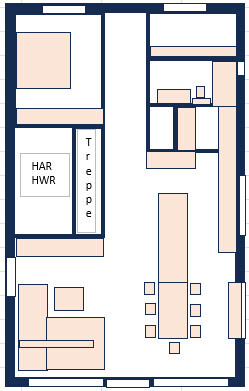
hanghaus202313 Nov 2025 13:42Here is the ground floor plan quickly.
Similar topics