
ᐅ Floor Plan Design for New Single-Family Home, Narrow Plot, Initial Architect Draft
Created on: 10 Nov 2025 22:30
I
Ian_Mer
Hello everyone,
we are currently planning our single-family home. We now have the first draft of our floor plan, but it is not perfect yet. So I thought I’d ask for your advice on what we could still change or improve. Everything is still possible at this stage.
Development Plan / Restrictions
Plot size: 450 m² (4,844 sq ft)
Slope: no
Floor area ratio (FAR): 0.3
Site coverage ratio: 0.6
Building envelope, building line, and boundary: see plan
Edge development: not yet present, as the building area is currently being developed
Number of parking spaces: 2
Number of full stories: 2
Roof type: flat roof with mandatory green roofing
Architectural style: modern
Orientation: south
Maximum heights / limits
Other requirements: 10.5 m (34 ft 5 in) maximum height, Hessian building regulations (Hesse, Germany), new: 2.5 m (8 ft 2 in) setback from neighboring property.
Client Requirements
Modern house for 2 adults and two children aged 4 and 6, including basement, 2 full floors.
Space requirements on the ground floor: office, kitchen, pantry, dining area, living room, guest bathroom with shower. Upper floor: 2 children’s bedrooms, master bedroom with walk-in closet, bathroom with bathtub and double sinks. Basement: technical room, utility room, second office, creativity room for crafts, playing, or making music.
Office use: family use or home office? Home office; both parents work three days per week from home.
Number of overnight guests per year: 6, regular overnight visitors.
Open or closed layout:
Conventional or modern construction:
Open kitchen with cooking island: yes
Number of dining places: usually 4, more for guests, birthdays, etc.
Fireplace: no
Music / stereo wall: only TV wall
Balcony or roof terrace: no
Garage or carport: garage plus bike storage
Vegetable garden or greenhouse: yes, vegetable garden
Other wishes / special features / daily routine preferences, including reasons why something should or should not be included: built-in closet in the entrance hall, lots of storage space.
House Design
Planner: (interior) architect
What do you particularly like? Why?
Window seat in the kitchen, living room somewhat separated in the bay window, space for an outdoor kitchen on the covered terrace.
What don’t you like? Why?
Location of the shed, we would prefer the staircase as a platform staircase or with straight steps, we wonder if the kitchen is large enough and provides enough storage space. The utility room is too small. Instead of the skylight, we would rather plan a window in the stairwell.
Cost estimate according to the architect/planner: unknown
Personal budget for the house including fittings: 650,000
Preferred heating system: heat pump
Why was the design developed this way? Needs analysis with the architect, after which she created the first draft.
Which wishes were implemented by the architect? From the sofa, there should be a view of the garden, lots of storage, master bed 1.60 m x 2 m (5 ft 3 in x 6 ft 7 in) (no need for 2 m x 2 m bed), walk-in closet accessible from the bedroom, covered terrace, covered entrance gate.
What do you think makes it particularly good or bad? We find the layout basically good but not yet perfect.
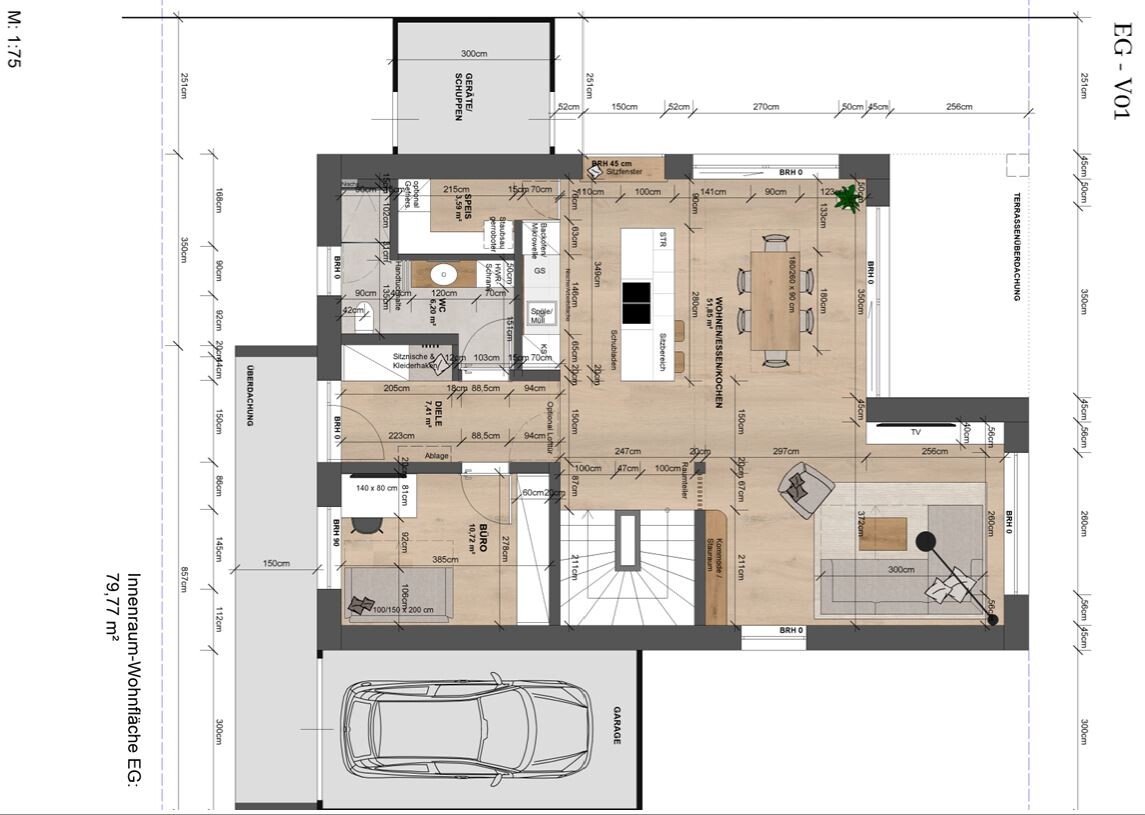 [ATTACH type="full" width="500px" alt="2D floor plan of a house with living area, kitchen, dining area, bedroom, and garage">
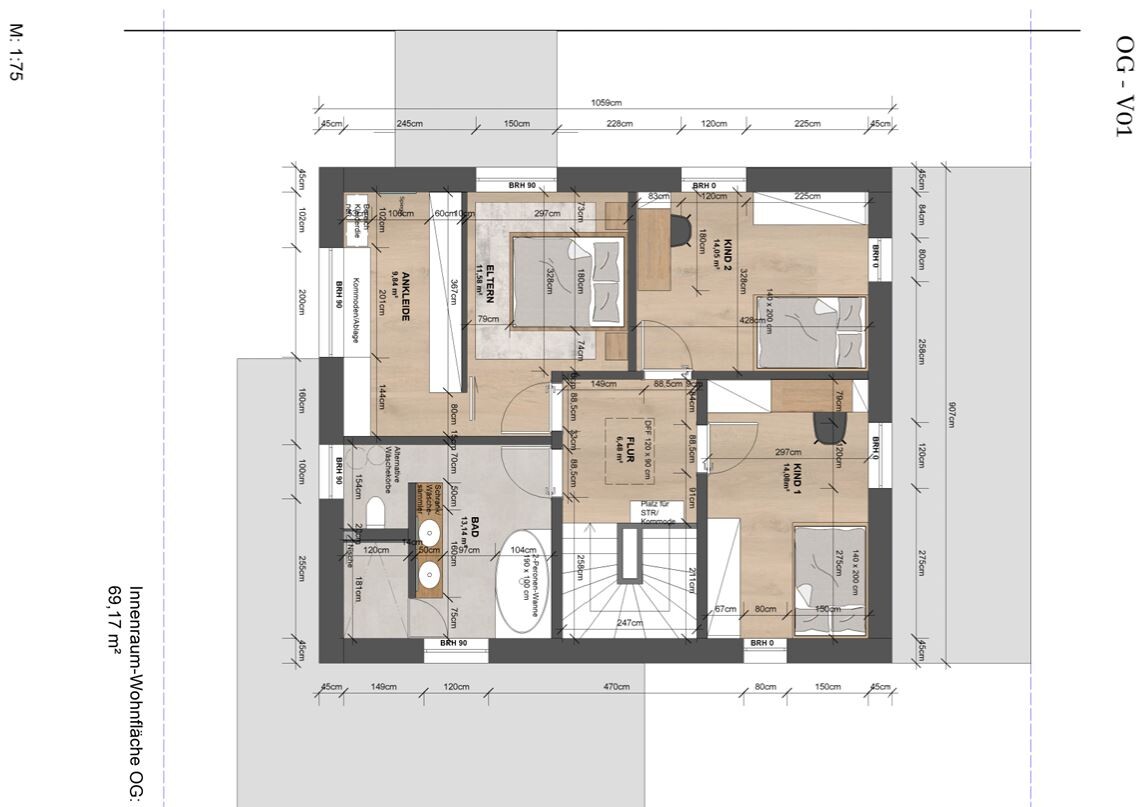
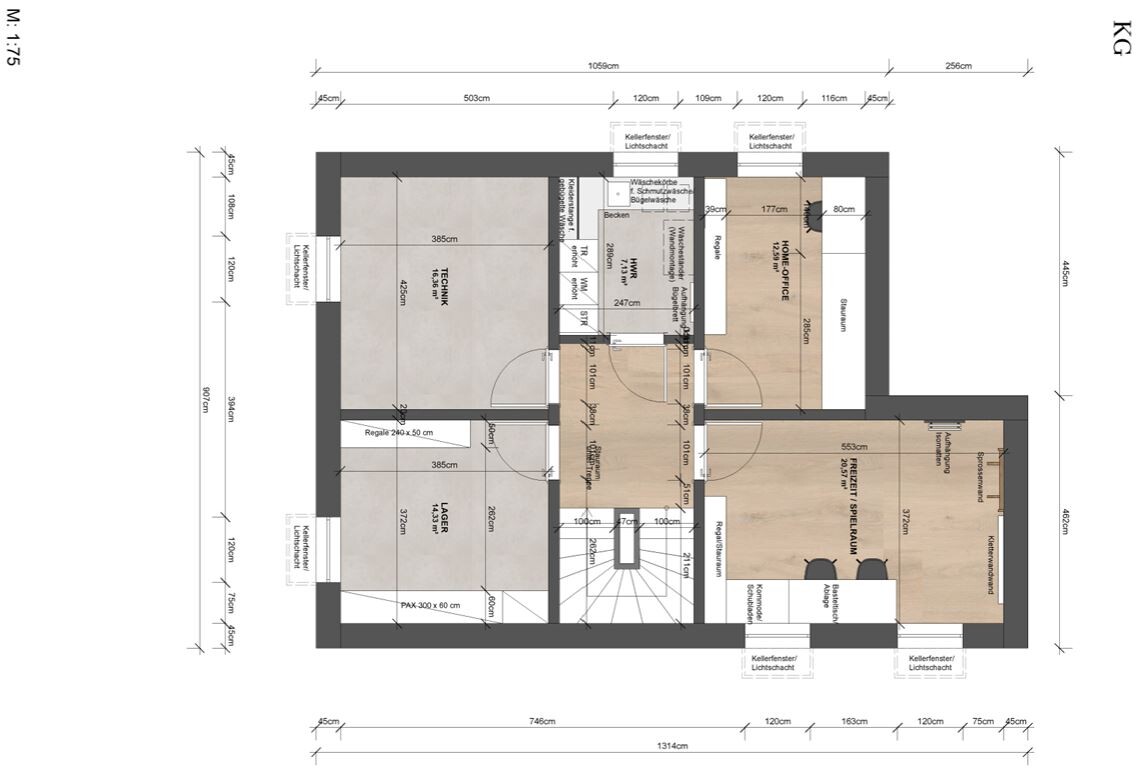
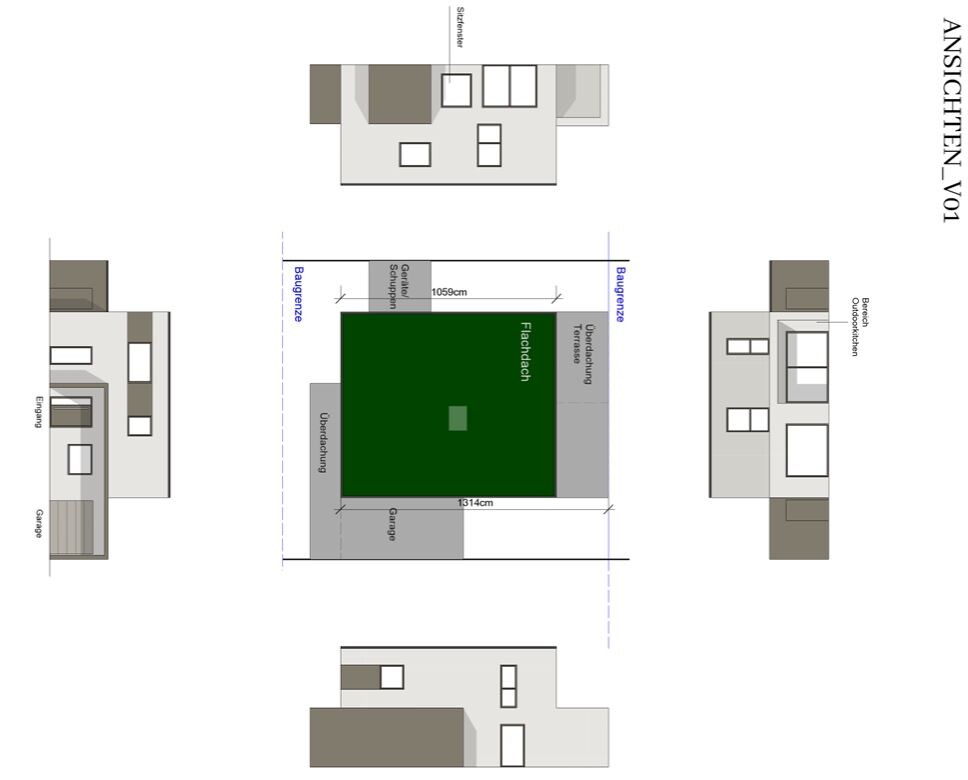
we are currently planning our single-family home. We now have the first draft of our floor plan, but it is not perfect yet. So I thought I’d ask for your advice on what we could still change or improve. Everything is still possible at this stage.
Development Plan / Restrictions
Plot size: 450 m² (4,844 sq ft)
Slope: no
Floor area ratio (FAR): 0.3
Site coverage ratio: 0.6
Building envelope, building line, and boundary: see plan
Edge development: not yet present, as the building area is currently being developed
Number of parking spaces: 2
Number of full stories: 2
Roof type: flat roof with mandatory green roofing
Architectural style: modern
Orientation: south
Maximum heights / limits
Other requirements: 10.5 m (34 ft 5 in) maximum height, Hessian building regulations (Hesse, Germany), new: 2.5 m (8 ft 2 in) setback from neighboring property.
Client Requirements
Modern house for 2 adults and two children aged 4 and 6, including basement, 2 full floors.
Space requirements on the ground floor: office, kitchen, pantry, dining area, living room, guest bathroom with shower. Upper floor: 2 children’s bedrooms, master bedroom with walk-in closet, bathroom with bathtub and double sinks. Basement: technical room, utility room, second office, creativity room for crafts, playing, or making music.
Office use: family use or home office? Home office; both parents work three days per week from home.
Number of overnight guests per year: 6, regular overnight visitors.
Open or closed layout:
Conventional or modern construction:
Open kitchen with cooking island: yes
Number of dining places: usually 4, more for guests, birthdays, etc.
Fireplace: no
Music / stereo wall: only TV wall
Balcony or roof terrace: no
Garage or carport: garage plus bike storage
Vegetable garden or greenhouse: yes, vegetable garden
Other wishes / special features / daily routine preferences, including reasons why something should or should not be included: built-in closet in the entrance hall, lots of storage space.
House Design
Planner: (interior) architect
What do you particularly like? Why?
Window seat in the kitchen, living room somewhat separated in the bay window, space for an outdoor kitchen on the covered terrace.
What don’t you like? Why?
Location of the shed, we would prefer the staircase as a platform staircase or with straight steps, we wonder if the kitchen is large enough and provides enough storage space. The utility room is too small. Instead of the skylight, we would rather plan a window in the stairwell.
Cost estimate according to the architect/planner: unknown
Personal budget for the house including fittings: 650,000
Preferred heating system: heat pump
Why was the design developed this way? Needs analysis with the architect, after which she created the first draft.
Which wishes were implemented by the architect? From the sofa, there should be a view of the garden, lots of storage, master bed 1.60 m x 2 m (5 ft 3 in x 6 ft 7 in) (no need for 2 m x 2 m bed), walk-in closet accessible from the bedroom, covered terrace, covered entrance gate.
What do you think makes it particularly good or bad? We find the layout basically good but not yet perfect.
H
hanghaus202311 Nov 2025 08:55Are underground parking spaces allowed?
nordanney schrieb:
Basement (70k)Ian_Mer schrieb:
Yes, I understand your concerns. The landscaping wasn’t included in the budget yet, and we also have a buffer. So it should work out.He probably made a typo there. I’m at €180,000 for the basement. That’s more than 100 square meters (1,076 square feet) of floor area in an L-shape. Half of it is finished, so the entire basement is within the thermal envelope. The utility rooms with the light wells are not considered habitable rooms. The client probably won’t get approval for that. To qualify as habitable rooms, the windows need to be more open, and one must serve as a second emergency exit.
Your budget is good for a spacious house, but 220 square meters (2,368 square feet) is too ambitious.
Basically, I like the floor plan. Even if you only need a 160cm (63 inch) bed, I would still design the room so that a 2m (79 inch) bed could fit at any time; things change – people change.
Although the basement is expensive, it offers more planning options for the ground floor. Therefore, the calculation INCLUDING the basement should be thoroughly and carefully reviewed. Simply saying "we still have some buffer" is not enough and should be supported by numbers. Ultimately, you have too much space (in the basement) that you have to pay for, and usually the actual living areas become cramped as a result. The garage could also be replaced by a parking space to redirect that money into comfort INSIDE the house. In my neighborhood, I see large double garages and expensive landscaping, while the interior is lacking; I find that unfortunate.
In the upstairs bathroom, I see no storage options at all. The peculiar “T” element also takes up space that the interior designer could probably use more efficiently, especially since 13sqm (140 sq ft) is quite large.
I would also avoid floor-to-ceiling windows in the children’s rooms; practical experience outweighs theory here.
The parking situation is important as well. If two parking spaces are used one behind the other, the window in that area becomes unnecessary since no one wants to look out onto a parked car like the Opel Senator there. How have the neighbors in the area solved this?
Despite the relatively small plot, I would at least try to create a design without a basement and invest the "saved" money in actual living comfort (maximum insulation, controlled residential ventilation, air conditioning, external blinds on the sun-exposed windows, furniture, lighting, two covered terraces, and much more).
Although the basement is expensive, it offers more planning options for the ground floor. Therefore, the calculation INCLUDING the basement should be thoroughly and carefully reviewed. Simply saying "we still have some buffer" is not enough and should be supported by numbers. Ultimately, you have too much space (in the basement) that you have to pay for, and usually the actual living areas become cramped as a result. The garage could also be replaced by a parking space to redirect that money into comfort INSIDE the house. In my neighborhood, I see large double garages and expensive landscaping, while the interior is lacking; I find that unfortunate.
In the upstairs bathroom, I see no storage options at all. The peculiar “T” element also takes up space that the interior designer could probably use more efficiently, especially since 13sqm (140 sq ft) is quite large.
I would also avoid floor-to-ceiling windows in the children’s rooms; practical experience outweighs theory here.
The parking situation is important as well. If two parking spaces are used one behind the other, the window in that area becomes unnecessary since no one wants to look out onto a parked car like the Opel Senator there. How have the neighbors in the area solved this?
Despite the relatively small plot, I would at least try to create a design without a basement and invest the "saved" money in actual living comfort (maximum insulation, controlled residential ventilation, air conditioning, external blinds on the sun-exposed windows, furniture, lighting, two covered terraces, and much more).
H
hanghaus202311 Nov 2025 09:34Here are my first changes.
Parking space in front of the shed. Shed slightly smaller.
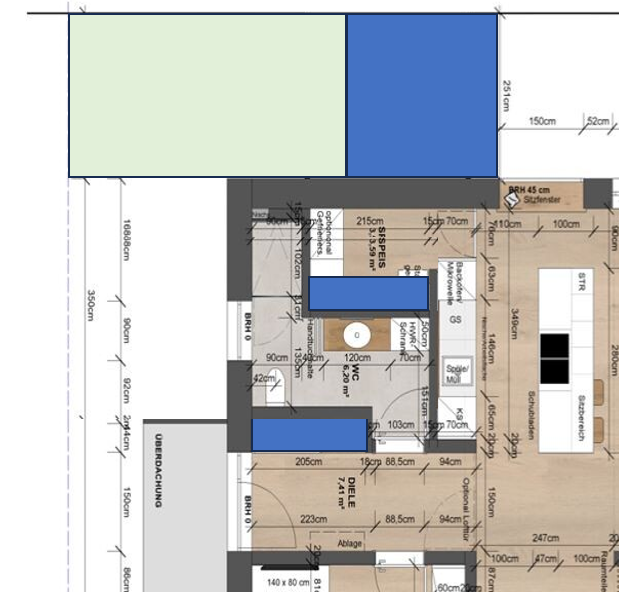
A 60cm (24 inch) wardrobe niche is enough. This allows the bathroom to be moved slightly downwards, providing more space in the pantry. The shower is a bit longer. My robot vacuum only needs 40cm (16 inches). Then there is still room for a kitchen unit.
Upstairs, swap the bedroom and bathroom – bathrooms should ideally be planned one above the other.
Tilt-and-slide doors are not within the budget. Definitely reconsider. One door and the rest fixed glazing. In my opinion, this is also more practical.
The floor-to-ceiling windows throughout the house are questionable anyway. What does the energy consultant say about that?
Window seats are a bit of a trend. But do you really want that in the kitchen?
Without a basement, the budget might just be enough.
Parking space in front of the shed. Shed slightly smaller.
A 60cm (24 inch) wardrobe niche is enough. This allows the bathroom to be moved slightly downwards, providing more space in the pantry. The shower is a bit longer. My robot vacuum only needs 40cm (16 inches). Then there is still room for a kitchen unit.
Upstairs, swap the bedroom and bathroom – bathrooms should ideally be planned one above the other.
Tilt-and-slide doors are not within the budget. Definitely reconsider. One door and the rest fixed glazing. In my opinion, this is also more practical.
The floor-to-ceiling windows throughout the house are questionable anyway. What does the energy consultant say about that?
Window seats are a bit of a trend. But do you really want that in the kitchen?
Without a basement, the budget might just be enough.
ypg schrieb:
He probably made a typo there.
My basement costs are around €180,000 (about $190,000) for over 100 square meters (about 1,080 sq ft) of floor area in an L-shape. Half of that is finished, so the entire basement is within the thermal envelope. The habitable rooms don’t qualify as such with the light wells as they are. The client wouldn’t get approval for that. For rooms to be classified as habitable, the windows need to be more open, and one must serve as a secondary escape route.
Your budget is fine for a spacious house, but 220 square meters (about 2,370 sq ft) is a bit too ambitious. What do you think about a partial basement? For example, would it make sense not to basement the bay window? Or does that save nothing because you would then need a concrete slab there anyway?
We need to discuss the point about the light wells and the secondary escape route again with the architect, thanks!
H
hanghaus202311 Nov 2025 10:13Here is the upper floor with a landing staircase. Why is the architect planning without it when this is your request?

The landing staircase can also be narrower, which benefits the bedroom and the office.
The landing staircase can also be narrower, which benefits the bedroom and the office.
Similar topics